
While researching medicinal mushrooms, I came across the spagyric method, an herbal preparation rooted in alchemy. In this post, I'll explain what it is and why I don't practice it as a Christian.
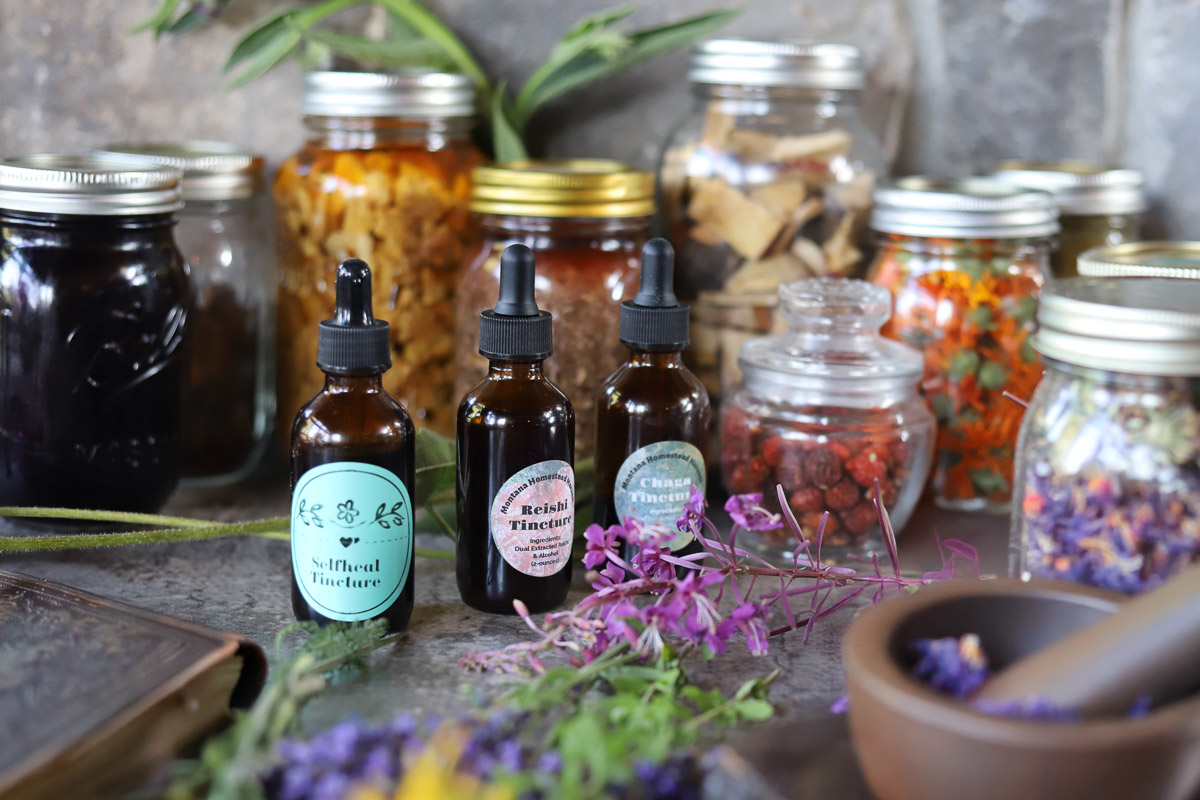
Ever since I started making tinctures with mushrooms like chaga and plants such as ghost pipe, I've been bombarded with tincture ads on Facebook, including some using the Spagyric Method (pronounced (spuh-JEER-ik). I have to admit, I sometimes stop scrolling to read about the ingredients or the extraction method, especially when I see terms like dual extraction. I suppose that's why the algorithm thinks I'm interested in this topic. 😂
Jump to:
What Is the Spagyric Method?
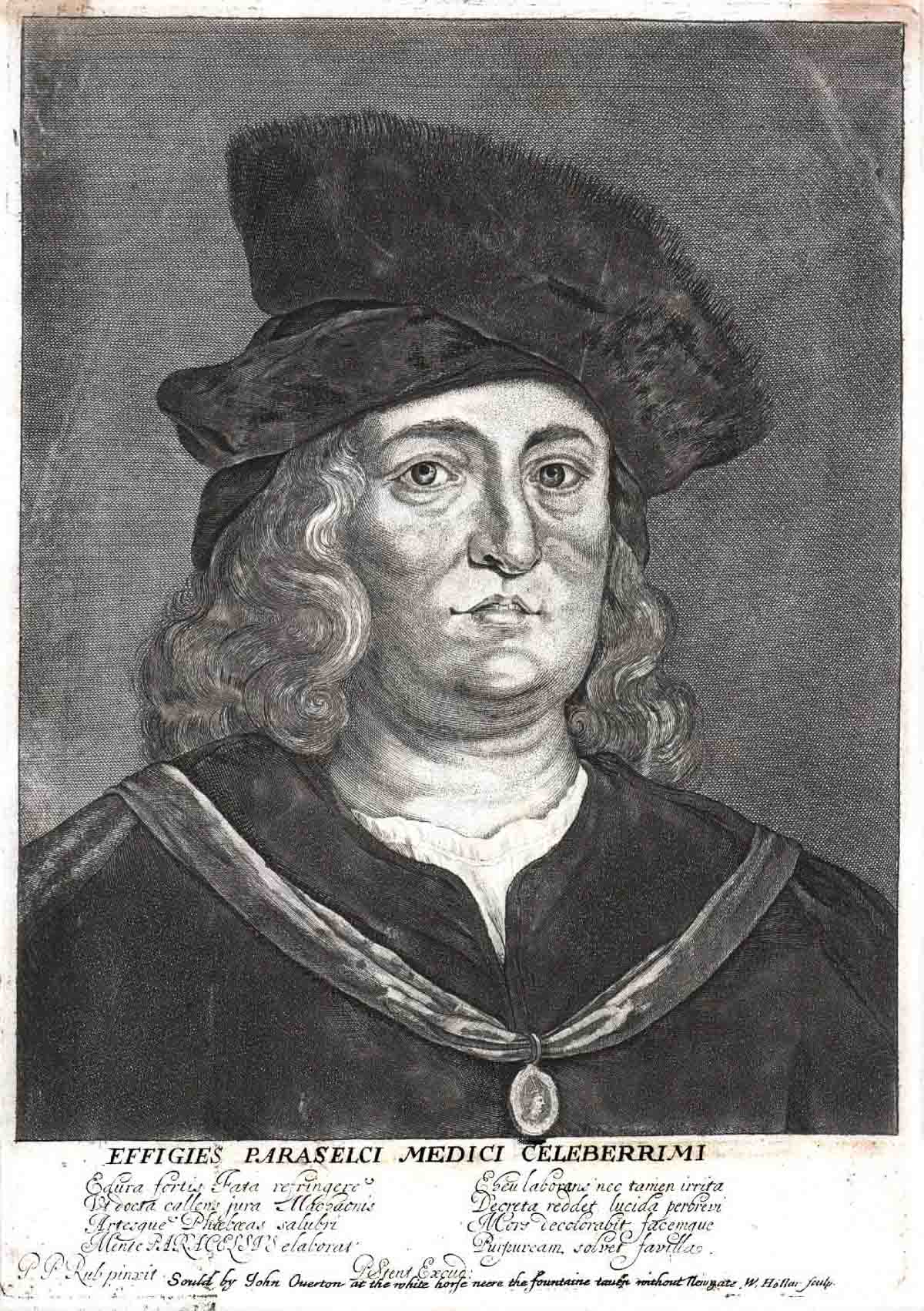
The spagyric method was developed by the 16th-century Swiss physician and alchemist Paracelsus. The word spagyric comes from Greek words meaning "to separate" and "to reunite," reflecting the process of separating a plant into its components before recombining them into a finished preparation.
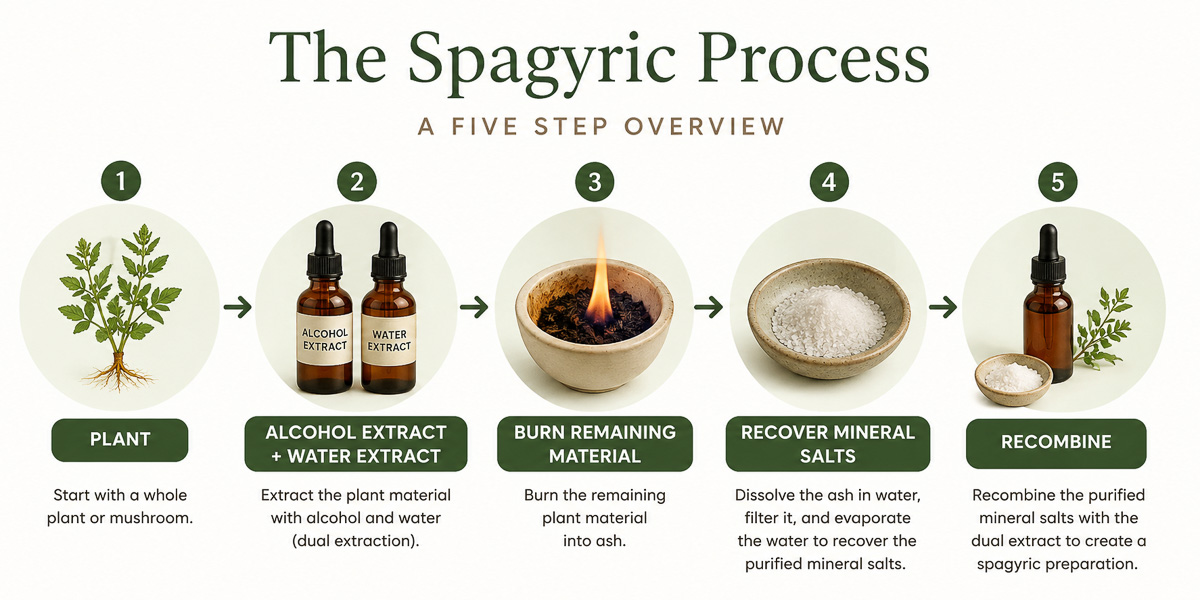
In its simplest form, the spagyric method involves extracting a plant or mushroom with alcohol and water, (using an alcohol-and-water solvent, known in herbalism as the menstruum), then taking it a step further by burning the remaining plant material (called the marc) into ash.
Next, the mineral salts are recovered from the ash by dissolving it in water, filtering it, and evaporating the water. Finally, the purified salts are recombined with the dual extract. Practitioners believe this process creates a more complete or "perfected" herbal preparation.
The Philosophy Behind the Spagyric Method
While the spagyric method may sound like an advanced extraction technique, it is rooted in alchemy and incorporates a philosophical worldview. In traditional spagyric philosophy, practitioners believe plants consist of three essential principles:
- Mercury: The spirit, represented by the alcohol extract.
- Sulfur: The Soul, represented by the plant's volatile compounds.
- Salt: The body, represented by the purified mineral salts recovered from the ash.
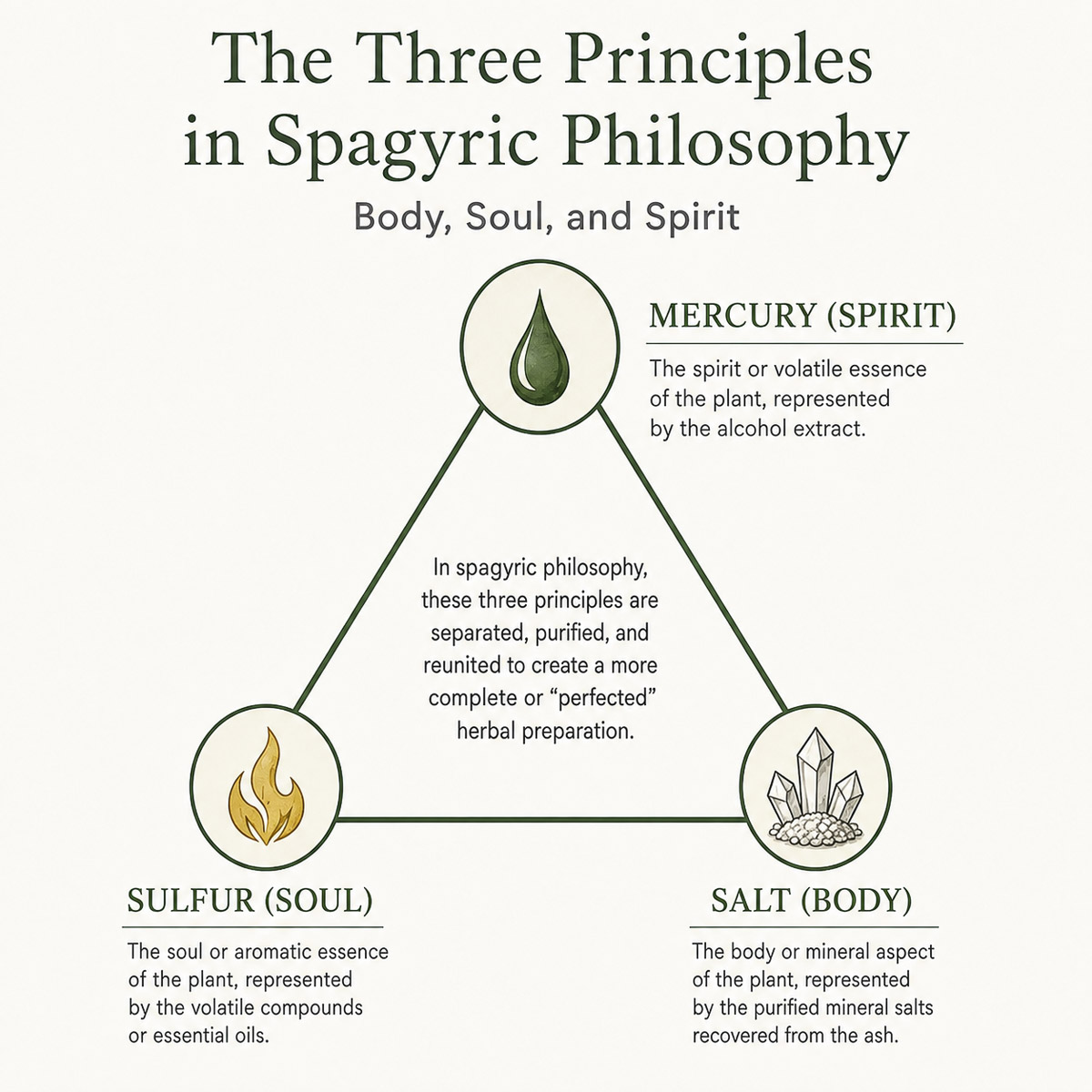
In spagyric philosophy, the final step of recombining the purified mineral salts with the extract is often described as reuniting the soul of the plant with its body, resulting in what practitioners believe is a more complete or "perfected" medicine.
Mountain Rose Herbs, a well-known supplier of herbal products, describes the philosophy behind the spagyric process as being "deeply alchemical, rooted in the Hermetic and Paracelsian worldview." That philosophical foundation is one of the reasons I choose not to practice spagyrics as a Christian.
Why I Don't Practice the Spagyric Method
As I researched the spagyric method, I realized it wasn't simply another way to prepare herbs. While I have no concerns about making tinctures, dual extracts, teas, hydrosols, or infused oils, I became uncomfortable with the philosophy behind this method.
The idea of separating and reuniting a plant's body, soul, and spirit is rooted in alchemical beliefs rather than biblical teaching.
As I researched the spagyric method, I wanted to hear directly from practitioners rather than relying only on critics. One of the clearest explanations I found was from Natura Sophia Spagyrics, whose website describes spagyrics as working with the chemical, energetic, and spiritual properties of plants, with the goal of supporting the body, soul, and spirit. Reading their explanation confirmed that the practice is built on a spiritual philosophy that I cannot reconcile with Scripture.
Modern practitioners often tie it to beliefs that conflict with biblical Christianity. You'll commonly see references to:
- Hermetic philosophy, including the principle "As above, so below"
- Astrology, including harvesting according to planetary alignments.
- Planetary correspondences, the belief that plants are spiritually connected to specific planets and their influences.
- Spiritual energies or vibrations, the belief that plants possess invisible spiritual or energetic properties that can influence healing.
- The "spirit" of the plant in an occult sense
- Personal spiritual transformation through alchemical practices
What Does the Bible Say?
The ideas behind the spagyric method conflict with Scripture because the Bible repeatedly warns against occult practices, divination, and seeking hidden spiritual knowledge apart from God. Here are some Biblical references:
Deuteronomy 18:10-12:
10 Let no one be found among you who sacrifices their son or daughter in the fire, who practices divination or sorcery, interprets omens, engages in witchcraft, 11 or casts spells, or who is a medium or spiritist or who consults the dead. 12 Anyone who does these things is detestable to the Lord; because of these same detestable practices the Lord your God will drive out those nations before you.
Isaiah 8:19
19 When someone tells you to consult mediums and spiritists, who whisper and mutter, should not a people inquire of their God? Why consult the dead on behalf of the living?
Colossians 2:8
8 See to it that no one takes you captive through hollow and deceptive philosophy, which depends on human tradition and the elemental spiritual forces[a] of this world rather than on Christ.
1 Thessalonians 5:21-22
21 but test them all; hold on to what is good, 22 reject every kind of evil.
James 1:5
5 If any of you lacks wisdom, you should ask God, who gives generously to all without finding fault, and it will be given to you.
Psalm 103:2-3
2 Praise the Lord, my soul,
and forget not all his benefits-
3 who forgives all your sins
and heals all your diseases,
Can Christians Use Herbs?
Christians can absolutely use herbs for medicine. Genesis 1:29 tells us that God created plants for food. Scripture also mentions medicinal uses for plants and oils. For example, Jeremiah 8:22 (Is there no balm in Gilead? Is there no physician there? Why then is there no healing for the wound of my people?)
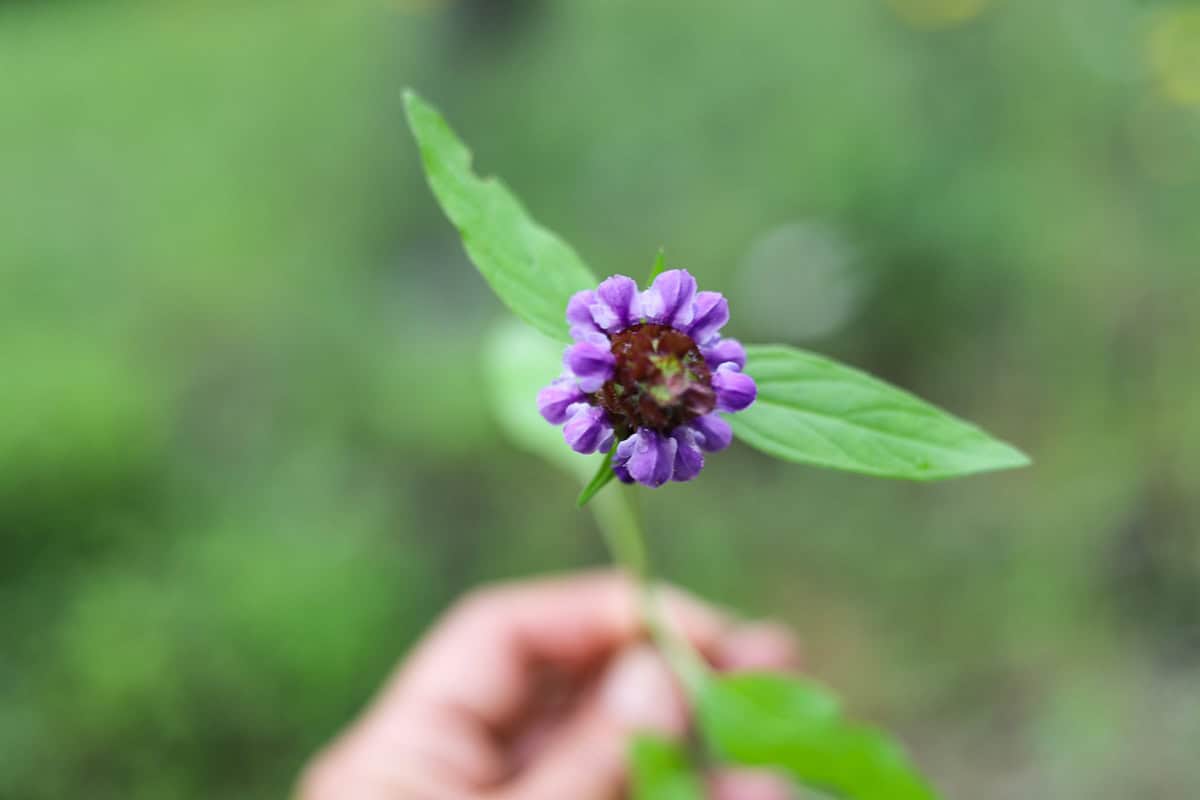
I have no hesitation making remedies like mullein oil for earaches, herbal salves, or tinctures because I believe God created plants with beneficial properties. Using herbs isn't the issue; attributing spiritual power to a process or object is.
My Personal Approach
I make tinctures, infused oils, salves, teas, and other herbal preparations because I believe God created plants with beneficial properties. However, I choose to avoid practices rooted in occult or esoteric philosophies because I want my faith to guide every aspect of my life.
My trust isn't in hidden knowledge or mystical processes, but in the God who created the plants and is the ultimate source of healing.
Related Posts
These are my favorite dishes to serve with [this recipe]:

Shala Carter says
Shlamaloch! What an interesting and well thought out article.
I dabbled in a coven for a while. We never really did anything but I know all of the practices you described. They all seemed pretty benign to me until I read this article.
Thank you so much.
with love
Shala
Hilda Sterner says
Hi Shala, thank you for reading the article and I'm happy to hear that you got something out of it too, Glory to God!