
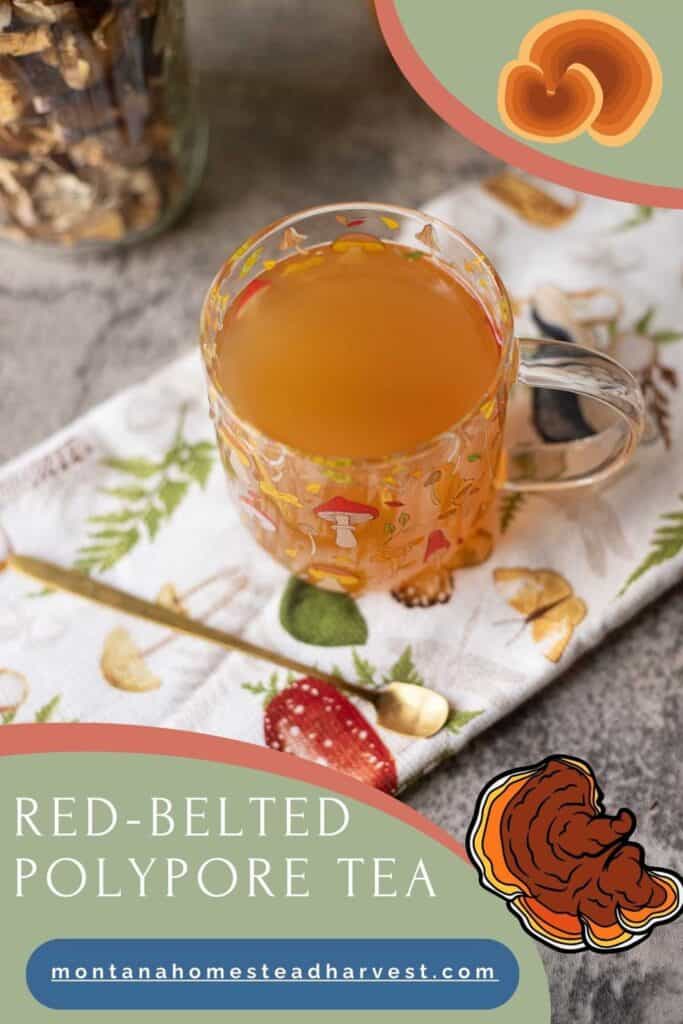

If you've spent any time wandering through conifer forests, chances are you've walked past the red belted polypore without giving it a second thought. Also known as red belted conk (Fomitopsis pinicola), this shelf-like fungus is one of the most useful medicinal mushrooms you'll find in the wild! In this post, I'll share how to identify and forage it, then use it to make tea and tincture. You may also enjoy this morel mushroom foraging post!
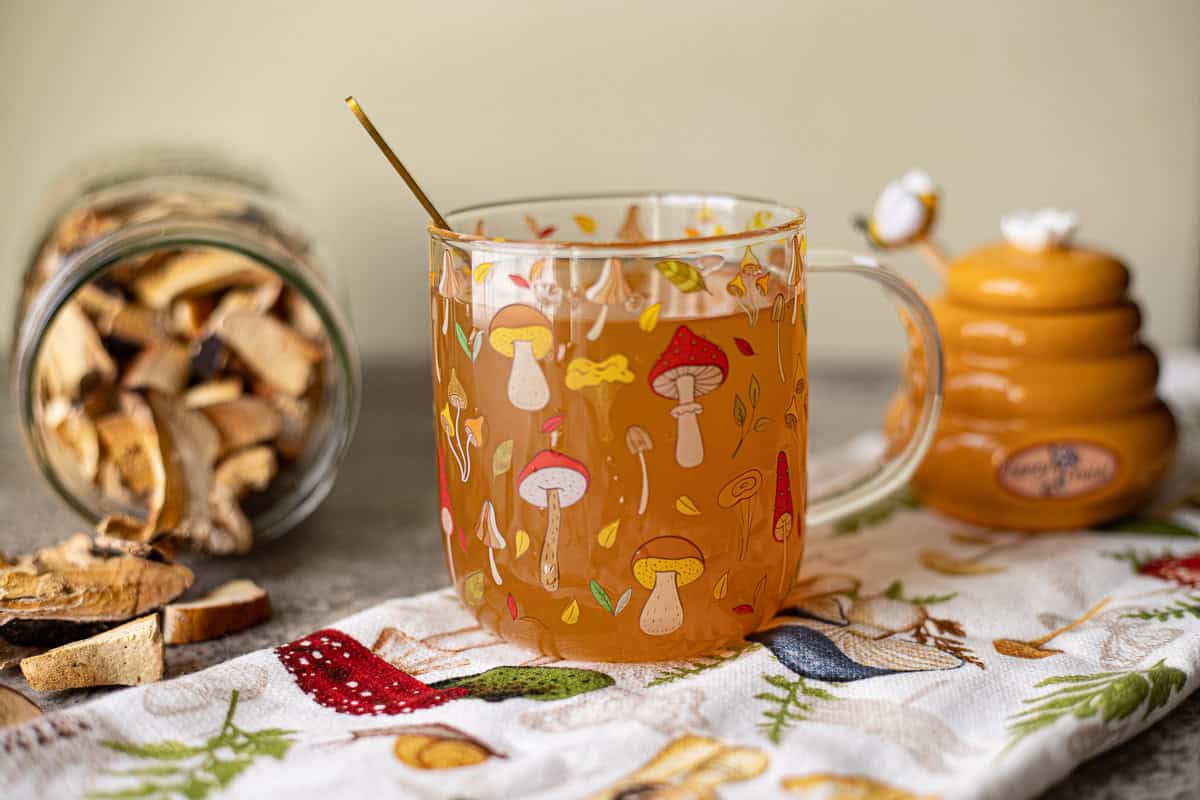
I stumble across this mushroom regularly here in Montana and often harvest it for tinctures and tea. Several indigenous tribes used the red belted conk. The Coast Salish brewed it as a medicinal tea for fevers, inflammation, and digestive issues, and some healers dried thin strips and smoked them to ease headaches.
The Haida and Tlingit often dried the fungus for slow-burning fire starter material, while the Tsimshian used decoctions or poltices to help clean wounds or support immunity. This mushroom is also a natural mild emetic (induces vomiting) and styptic (stops bleeding). It is also being studied for its anti-tumor properties.
In this post, I'll cover how to identify it, what makes it unique, and how it compares to other conks such as reishi, artist's conk, and birch polypore. And if you don't live in the Middle of the forest as I do, you can purchase sliced and dried red-belted polypore that's been harvested by yours truly!
If you're interested in functional mushrooms, you may also enjoy my guide to the best mushroom coffees, where I compare popular brands made with mushrooms like chaga, lion's mane, reishi, cordyceps, and turkey tail and share my honest impressions of each one.
Jump to:
- What is A Red-Belted Polypore & How to Identify it?
- Red Belted Conk Benefits
- How to Prepare Red Belted Polypore Tea by the Cup
- Tea Dosage Guide
- How to Make Red Belted Polypore Tincture (Double Extracted)
- How to Take
- Best Alcohol to Use For Making Tinctures
- Red Belted Conk vs Other Common Conks
- Equipment Required For Making Tinctures
- Storage
- FAQ
- Pro Tips
- More Mushroom Posts
- Recipe
- Comments
What is A Red-Belted Polypore & How to Identify it?
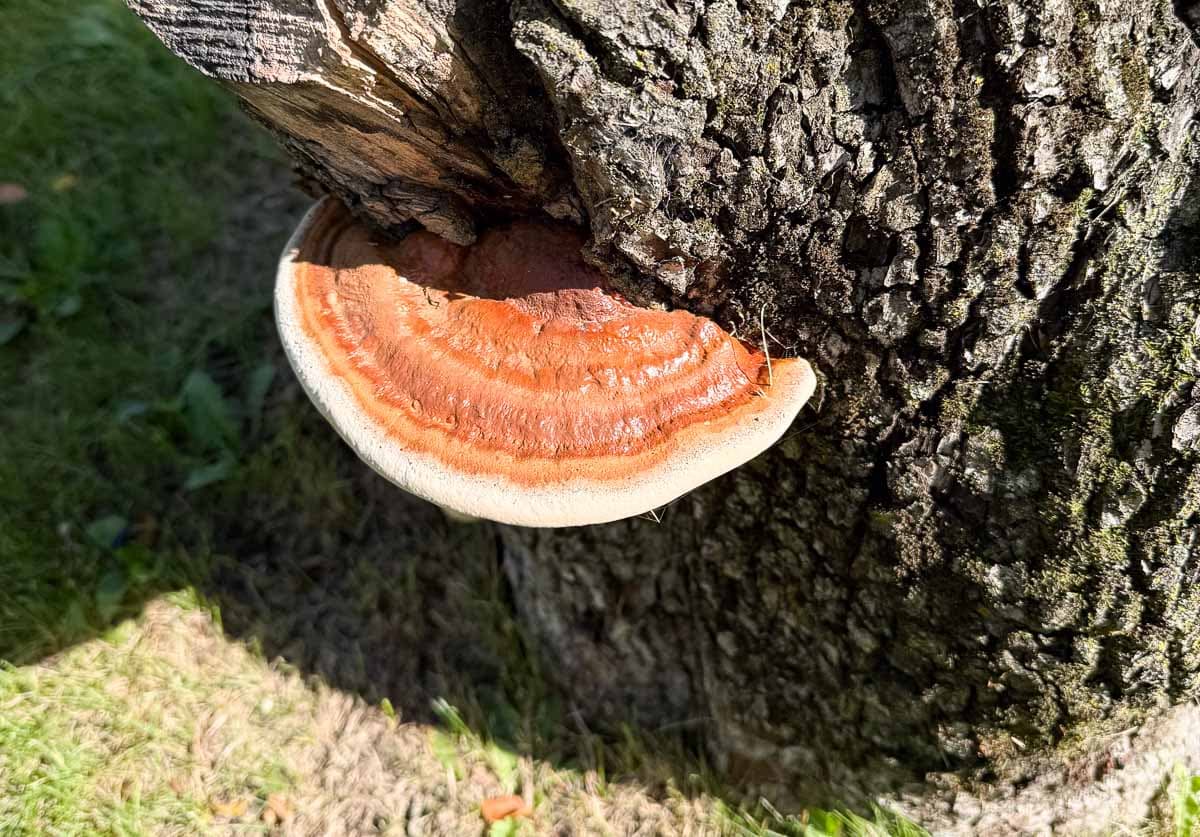
The red belted polypore (Fomitopsis pinicola) is a hard, shelf-like mushroom commonly found on dead or dying conifer trees. It gets its name from the distinctive reddish-orange band ("belt") that often appears along the edge of the cap. The band is initially white, then gradually deepens to a reddish tone as it ages. A new pale layer forms with each season's growth.
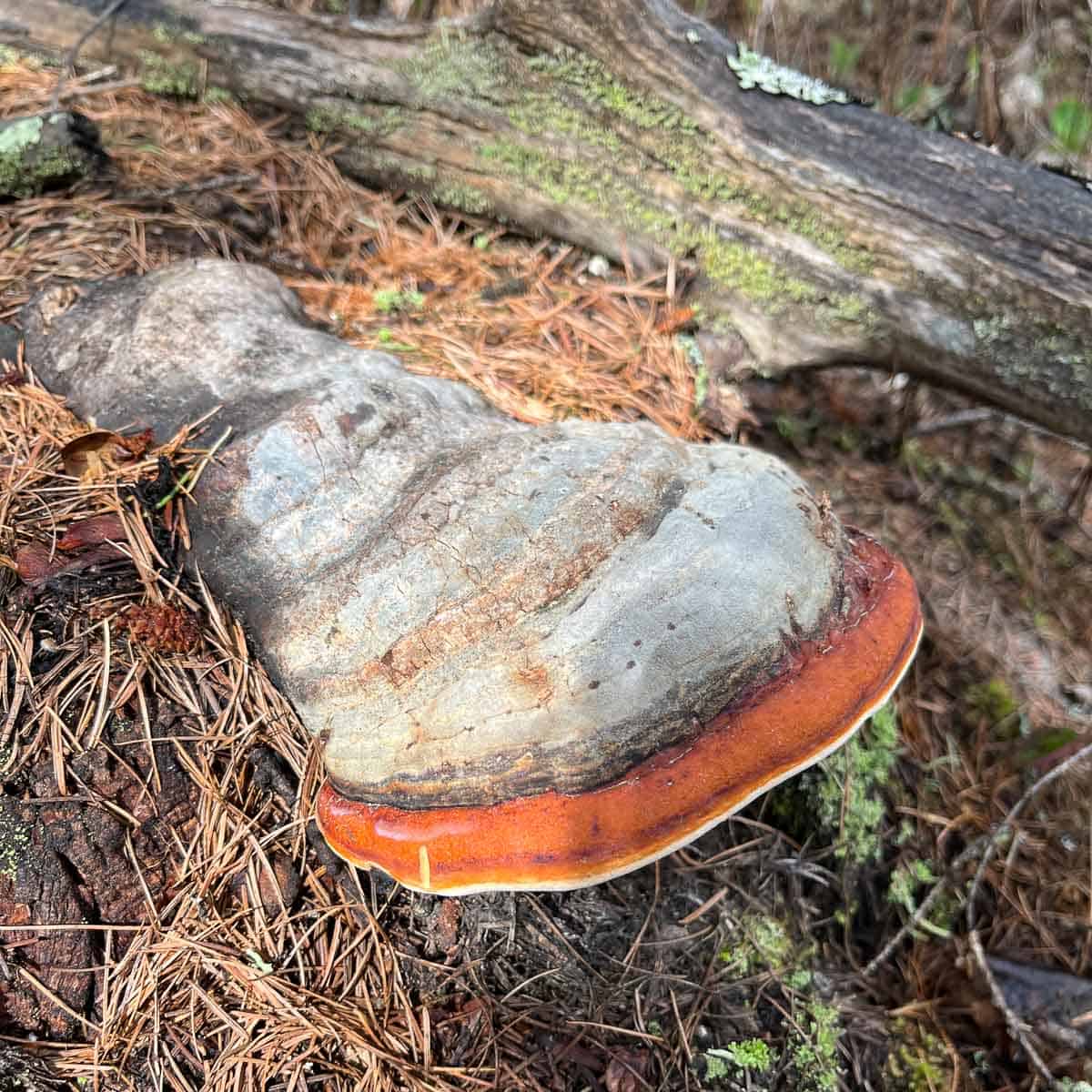
Young specimens start out smoother and more vibrant in color, while older ones can become darker and heavily weathered. The cap is typically hard, hoof-shaped (then eventually flattens out), and has multi-colored bands of white, gray, tan, and that signature rust-red belt.
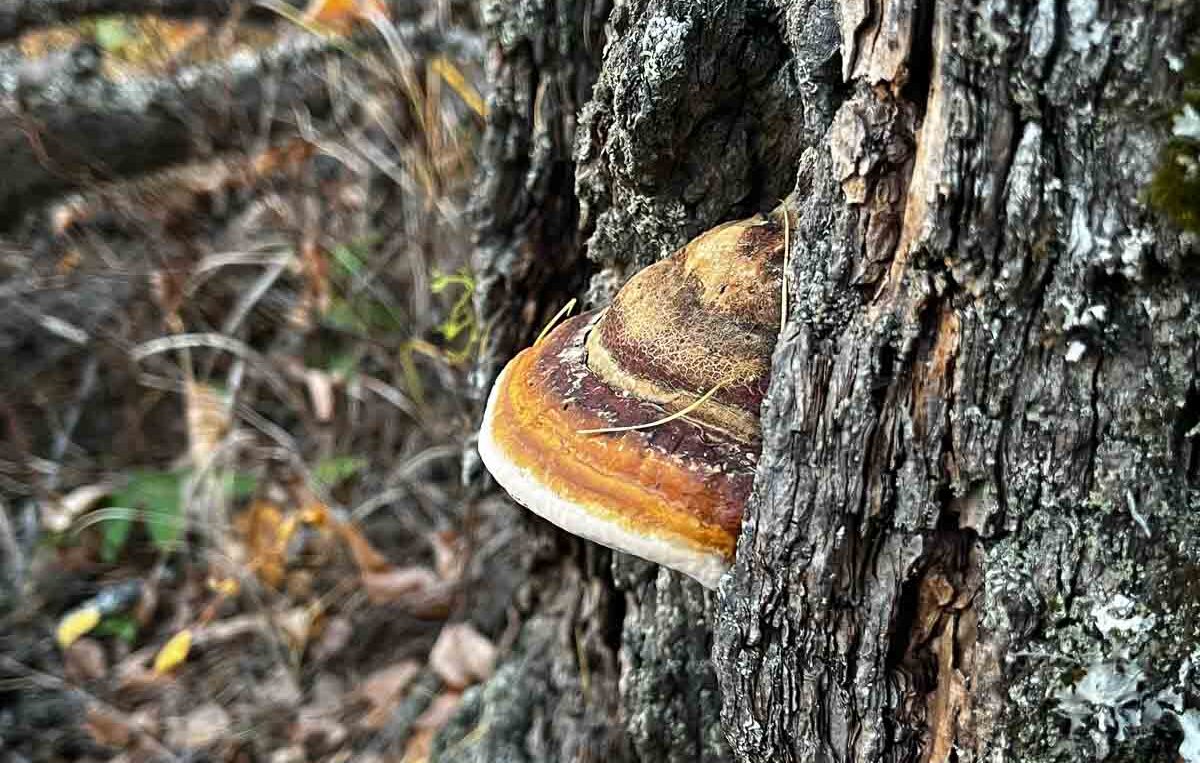
Unlike many mushrooms, red belted polypore has tiny pores on its underside instead of gills. The name "polypore" literally means "many pores." Their pores are typically white when fresh and turn slightly yellow with age. You'll sometimes find tiny droplets of moisture or "dew" forming on the underside, especially in humid conditions.
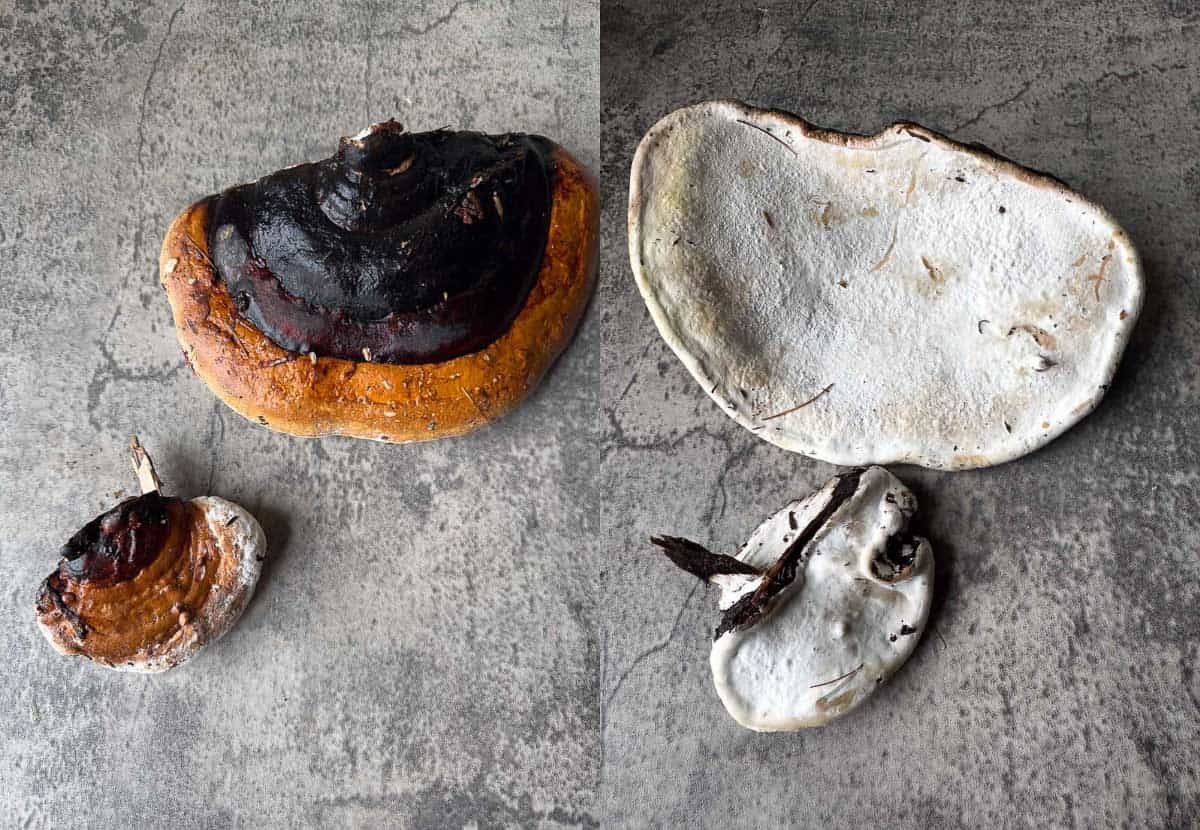
This fungus commonly grows on spruce, fir, pine, and other conifers, and occasionally shows up on hardwoods. It can appear in tiered clusters or individually and is usually about 4 to 12 inches across.
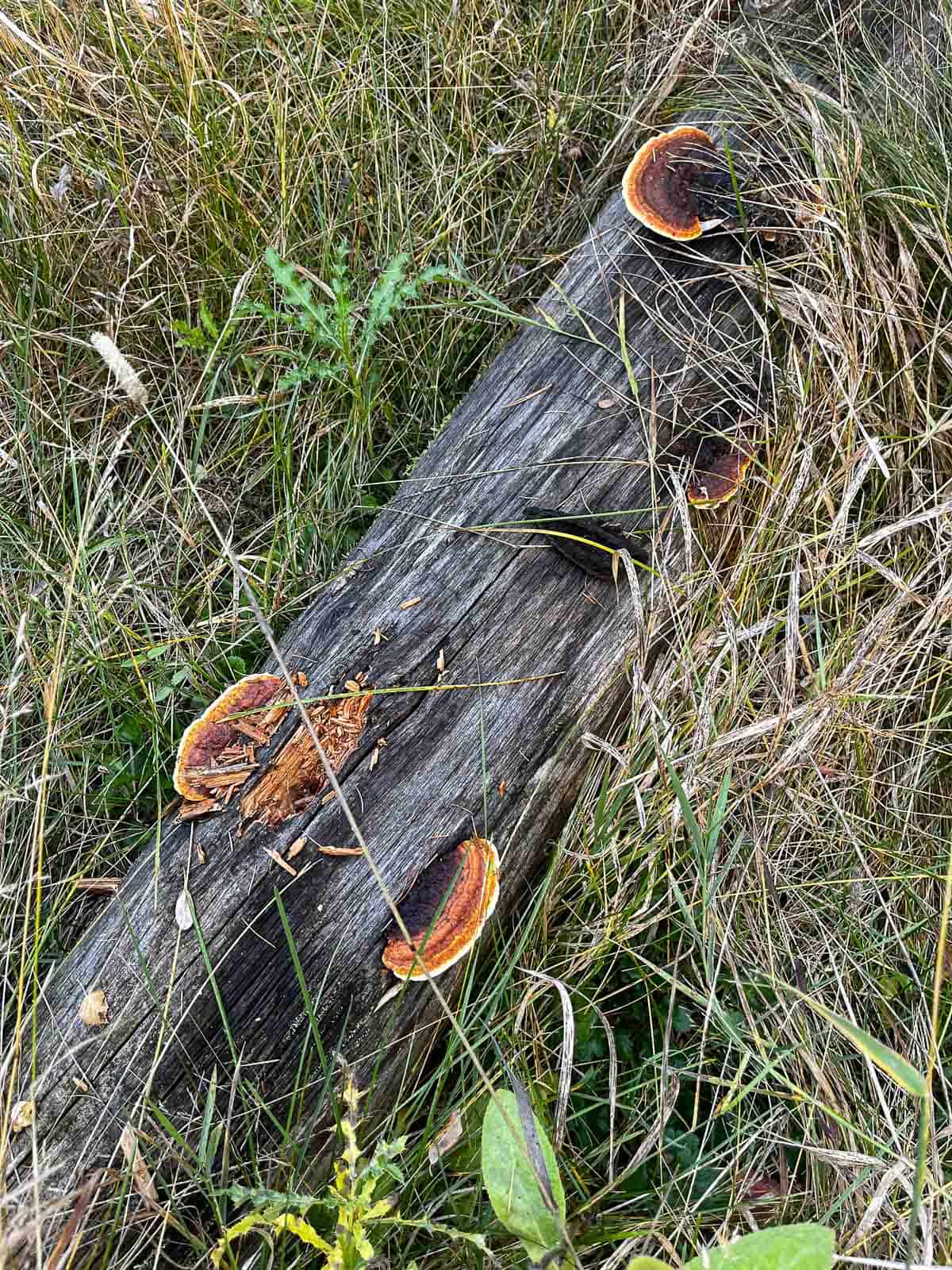
To identify it in the wild, look for a woody, hard conk that you can't easily dent or cut with a fingernail, with layered concentric rings and a reddish orange band. To harvest, press down on it firmly to dislodge it from the tree or trunk it's growing on. You can also remove the outer layer, leaving the rest to continue to grow and form new layers.
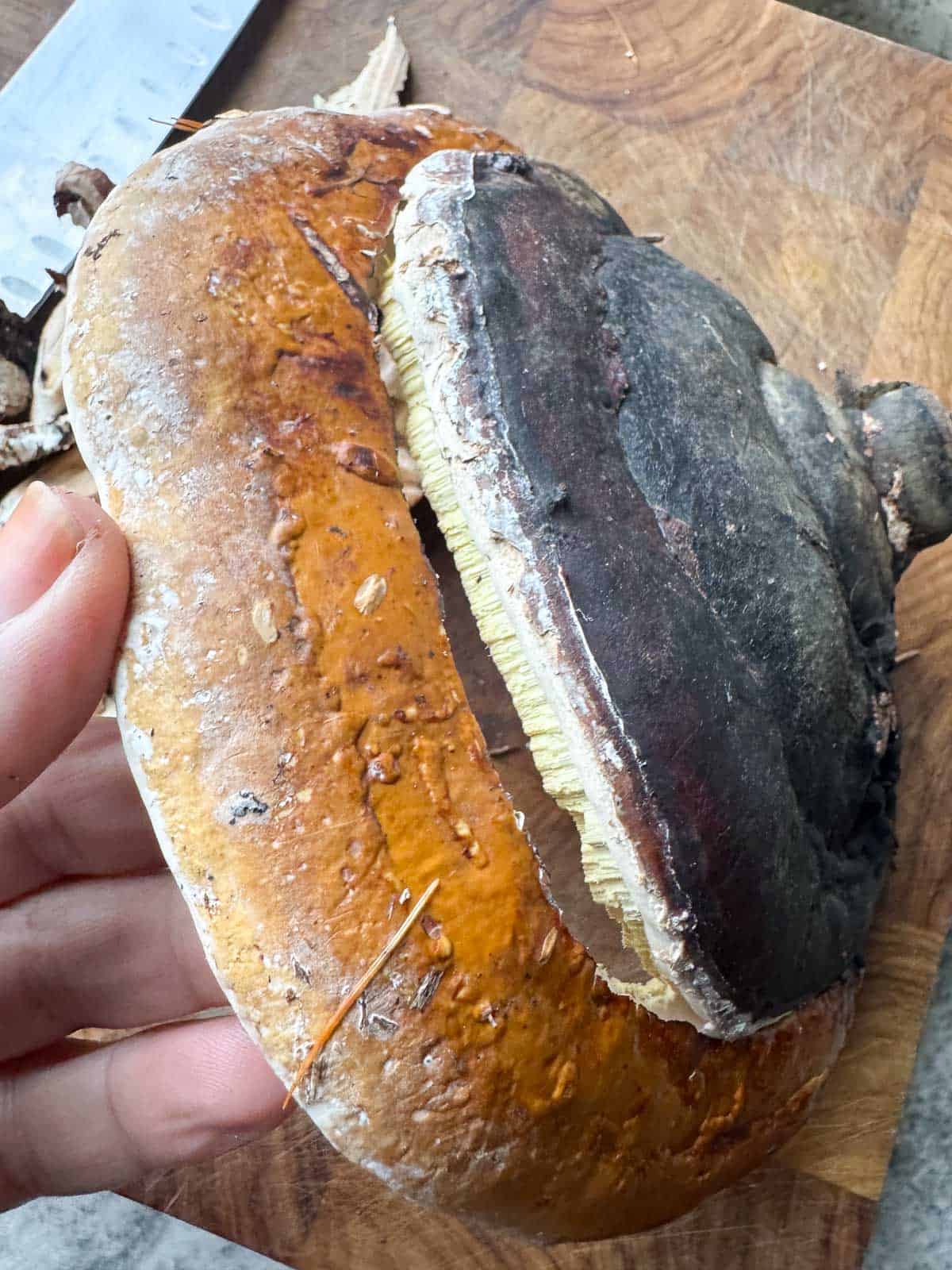
If you slice it (no easy task), you'll find multiple internal layers ranging from tan to yellow-brown, and it often has a slightly medicinal or woody scent. It is extremely tough and requires heavy-duty tools or a saw when fully mature.
Red Belted Conk Benefits
Immun-Supporting Properties
This mushroom contains polysaccharides and beta-glucans, which are known to help support the immune system. Regular use is believed to help the body respond more effectively to environmental stressors.
Anti-Bacterial & Anti-Fungal
Studies have shown that red-belted conk contains compounds with antimicrobial properties, making it useful for helping the body fight off certain bacteria and fungi. While it shouldn't replace prescribed treatment, it has been valued as a supportive remedy.
Potential Anti-Tumor Activity
Similar to other medicinal mushrooms, such as turkey tail and chaga, red-belted polypore exhibits promising anti-cancer potential in early research. It's often used as a complementary wellness remedy, but not as a treatment or cure. (PubMed)
Anti-Inflammatory and Recovery Support
Many foragers use this mushroom to support joint health and reduce inflammation. Its endurance-boosting reputation also makes it popular among those looking to improve energy and stamina naturally. (PubMed)
A recent mouse study found that an extract of red-beleted conk helped reduce symptoms of ulcerative colitis by lowering inflammation and protecting against colon issues. Since Crohn's and UC are both inflammatory bowel diseases, these results are promising. But no human trials exist yet, so more research is needed before applying this to Crohn's specifically. (study)
Disclaimer
Red-belted conks don't have any known poisonous look-alikes, but proper identification is still essential when foraging for any wild mushroom. If you're unsure, double-check with a local expert or trusted field guide. As with any herbal tea or tincture, individual reactions can vary. These preparations are not intended for children or anyone who is pregnant, nursing, or taking medications. When dealing with medical conditions, you should check with a healthcare professional before use.
How to Prepare Red Belted Polypore Tea by the Cup
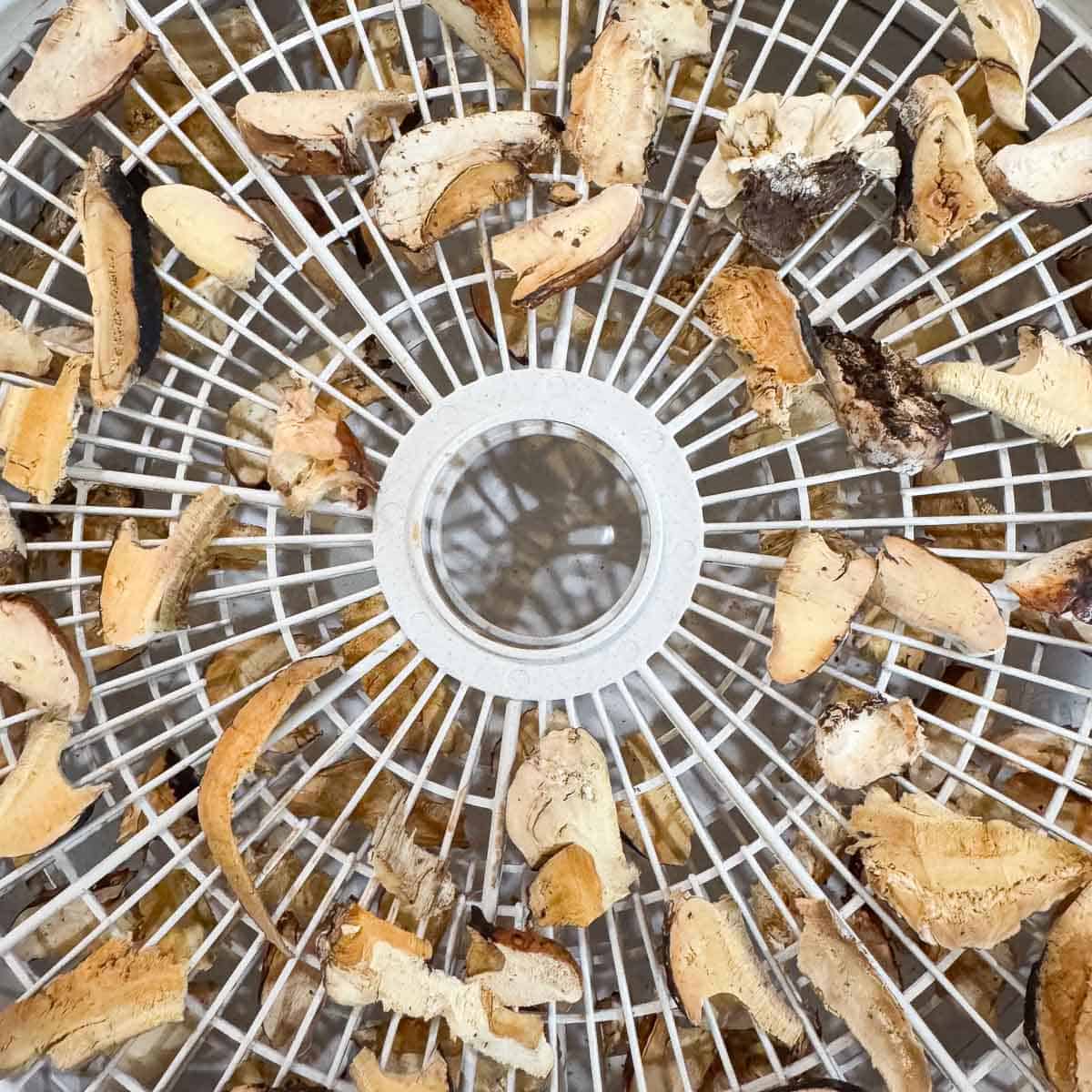
Step 1: Select fresh or dried/dehydrated mushrooms, and if necessary, grind them with a coffee grinder. This tough mushroom won't extract much unless it's broken down.

Step 2: Add chopped mushrooms and water to a small saucepan and cover. Bring to a gentle simmer for 1 hour (don't boil). Strain and enjoy. Start with ½ cup to see how you tolerate it.
How to Make a Large Batch of Red Belted Conk Tea
Step 1: Add approximately 2 cups of mushroom chunks and 6 cups of water to a crockpot. Cover and simmer for 4 to 6 hours on the lowest heat setting. Add additional water as it evaporates. Strain through a fine mesh sieve.
Tea Dosage Guide
Drink hot or refrigerate for up to 5 days. Start with ¼ cup to see how you tolerate it, then increase to ½ cup, then 1 cup. Since it's simmered longer than the tea-by-the-cup recipe, it will be a stronger batch.
*If using medicinally, especially for underlying health concerns, talk to a qualified healthcare provider first.
How to Make Red Belted Polypore Tincture (Double Extracted)
Making a tincture from red belted conk is the best way to extract both the water-soluble and alcohol-soluble medicinal compounds it contains. Some herbalists take the process a step further by using the spagyric method, which incorporates purified mineral salts back into the finished extract. I prefer the traditional dual-extraction method described below.
Because this mushroom is very tough and woody, double extraction is strongly recommended; otherwise, you're leaving some of the good stuff behind. Here's how to do it:
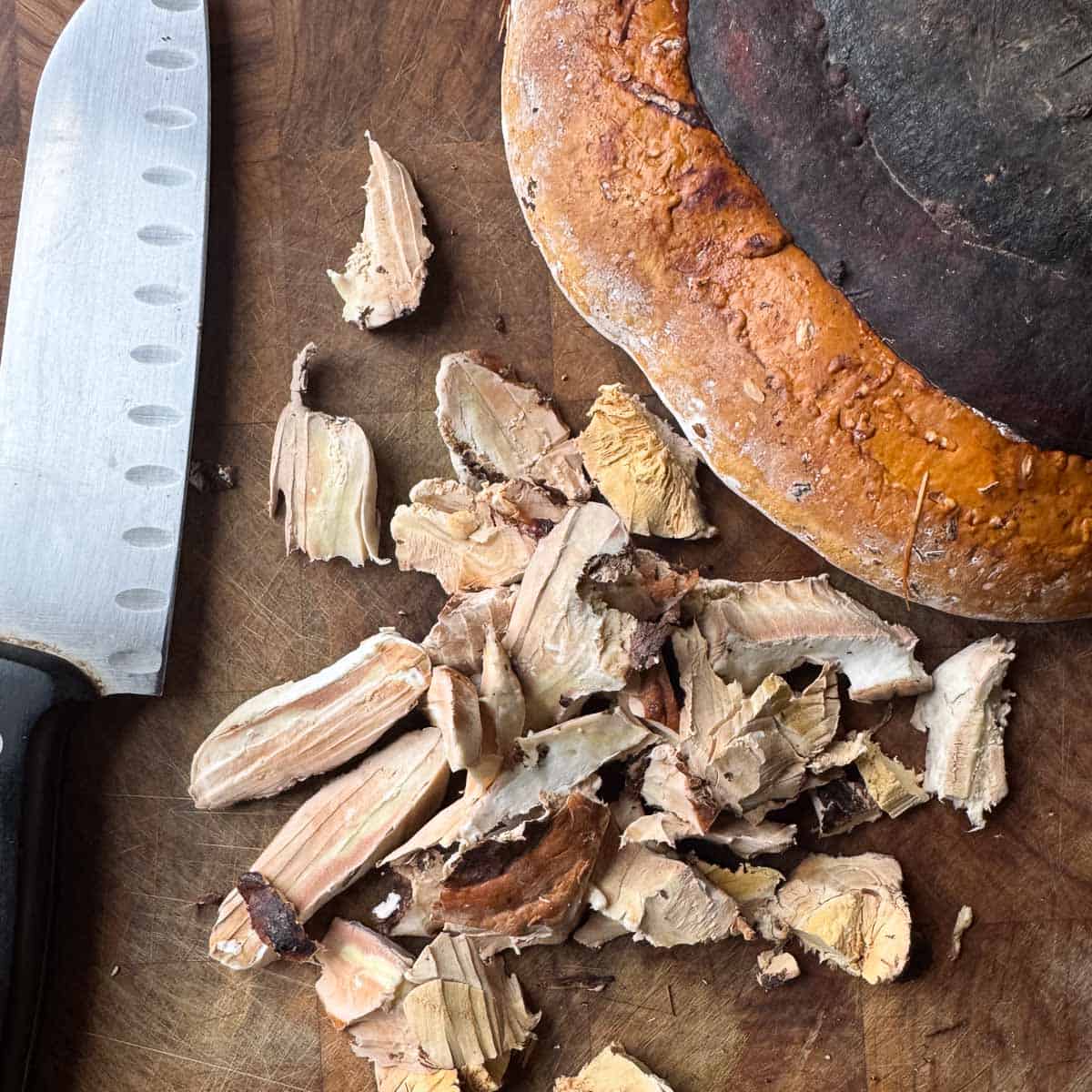
- Prep Mushroom: Wash off debris, then slice into strips while fresh. If dried, break into small chunks.

- Alcohol Extraction: Steep 1 cup fresh mushroom chunks in 1 cup alcohol for 4 to 8 weeks. Date, label, and shake the bottle when you remember.
Pro Tip: I recommend infusing the mushrooms in a jar, not in a bottle, as I did. 🫠 They'll be much easier to access when it comes time to remove them to make a decoction.
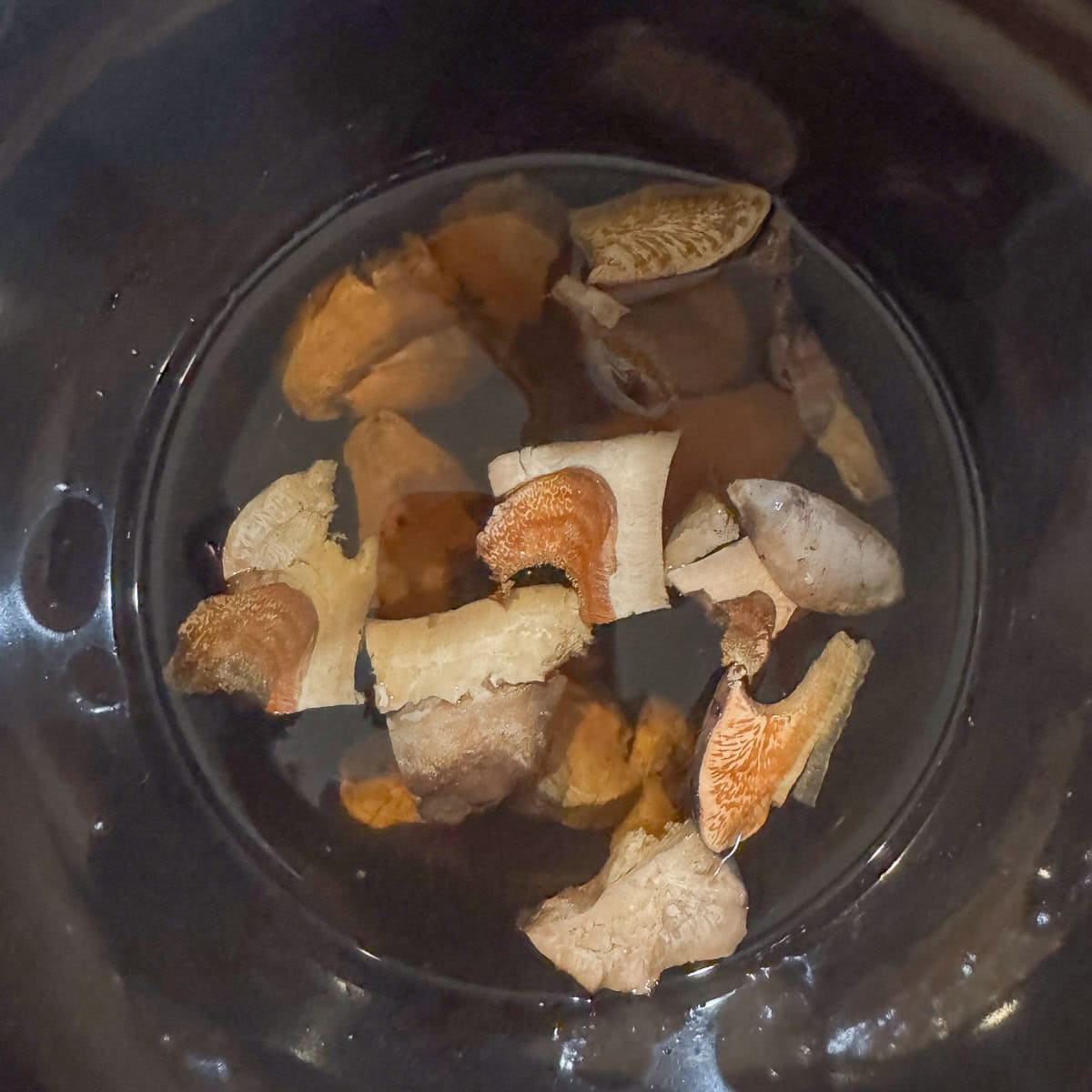
- Water Extraction/Decoction: Strain mushrooms from alcohol and add them to a saucepan or small crockpot. Cover with 3 cups of water. Simmer, covered, over low heat for 4 hours.

- Combine Both Extracts: Once the decoction is cool, strain and mix with alcohol extraction. To avoid spoilage, make sure final mixture stays at 30+% alcohol. Add more alcohol, if needed. See chart below.
Pro Tip: If you combine water and alcohol extracts in equal parts, the alcohol percentage decreases by half. Mixing 80-proof alcohol (which is 40% alcohol) with an equal amount of water extraction (0% alcohol) results in a final alcohol content of 20%. To safely preserve the tincture, add a little extra alcohol at the end so it maintains at least 30% alcohol by volume.
- Bottle Extract: Transfer finished extract into amber bottles and label them with the mushroom name, alcohol proof, and date.


How to Take
Typical use is 10 to 20 drops up to 3 times daily. Some people find it harsh or slightly nauseating, so start small and preferably diluted in water or coffee. Or do what I do and add it to your mushroom coffee. I don't detect any bitterness, only a slightly more mushroomy taste, which I actually like!
If you have concerns, check with a healthcare provider before use!
Best Alcohol to Use For Making Tinctures
When making a tincture from tough medicinal mushrooms like these, the type of alcohol used matters more than most people realize. You want something strong enough to properly extract the medicinal compounds and preserve the final product for long-term use.
| Alcohol Type | Proof | Final Alcohol % After 50/50 Mix | Good Choice? |
|---|---|---|---|
| Everclear | 151–190 | ~37–47% | ✔ Excellent |
| Vodka/Brandy | 100 | ~25% | ✔ Good |
| Vodka/Brandy | 80 | ~20% | ➖ Only if extra alcohol added |
| Below 80 | <80 | <20% | ❌ Not recommended |
Best Overall Option: 151-190-Proof Everclear
High-proof alcohol (75.5%-95% alcohol) gives the most efficient extraction. When you combine alcohol extraction with water extraction at a ratio of 50/50, the final tincture lands above 35-45% alcohol, which is plenty for preservation. No extra alcohol needed. Note: It will be extremely strong, so always dilute it in water or tea before taking it.
Next Best: 100-Proof Vodka or Brandy (50% alcohol)
Using 100-proof vodka gives you a good balance of extraction and palatability. A 50/50 water/alcohol blend results in about 25% alcohol, which is just high enough to safely preserve the tincture without needing to add more alcohol. If you want to play it safe, add a small splash to bump it up to 30%.
Minimum Recommended: 80-Proof Vodka or Brandy (40% alcohol)
This works but requires extra steps. When blended 50/50 with the water decoction, the final tincture drops to 20% alcohol, which is not enough to prevent spoilage. If you use 80-proof, you must add additional alcohol at the end until you hit at least 25-30% alcohol by volume.
Alcohols to Avoid
- Flavored or sweetened alcohol
- Wine or beer (alcohol% too low)
- Rubbing alcohol or isopropyl alcohol (not safe for ingestion-yes, people ask).
Red Belted Conk vs Other Common Conks
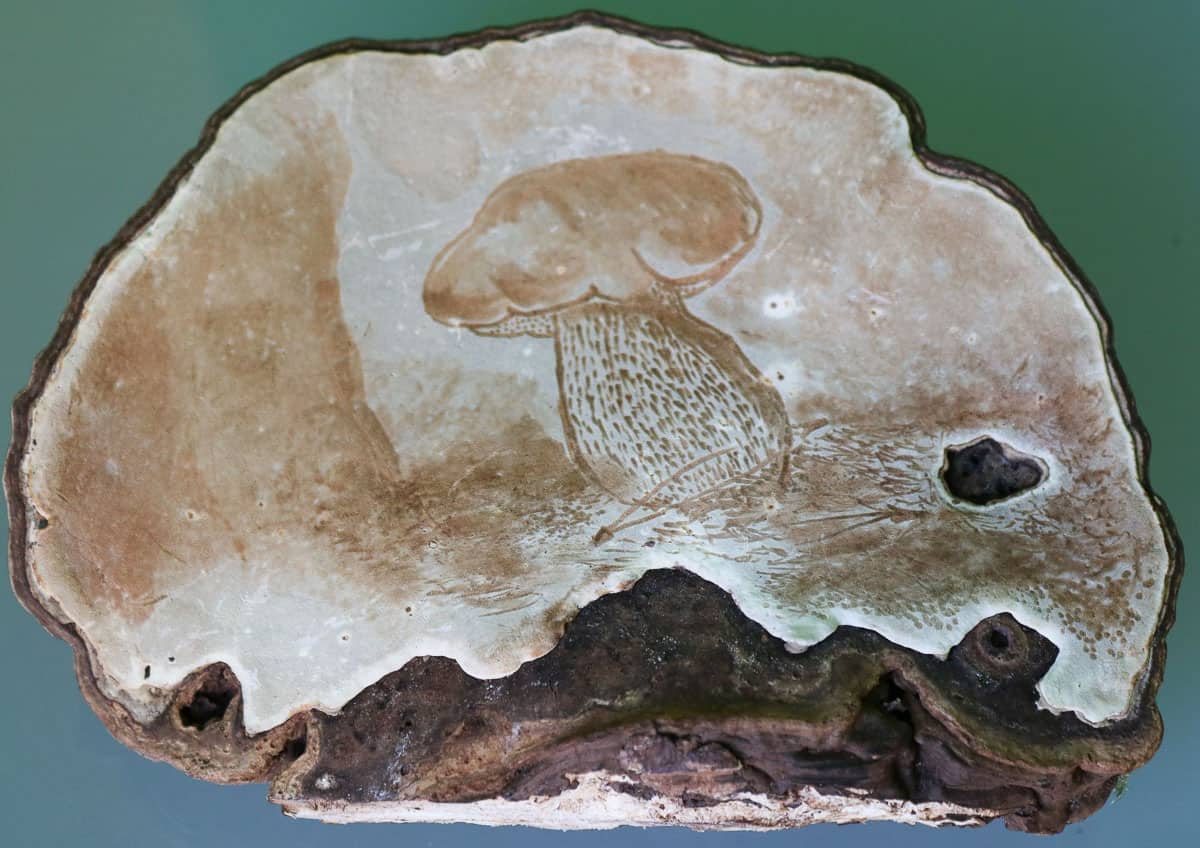
Artist's Bracket (Ganoderma applanatum)
Artist's bracket or artist's conk has a smooth white underside that bruises brown when scratched. While it's also used medicinally (typically dried and brewed into tea), its most popular use is artistic.
Foragers often use it to draw or engrave designs, hence the name. It tends to be thicker and lighter in color than red belted polypore and lacks the signature reddish-orange band. It's not edible and is most commonly used for creative projects or for its medicinal properties. It's also an excellent fire starter and can carry an ember for transporting fire.
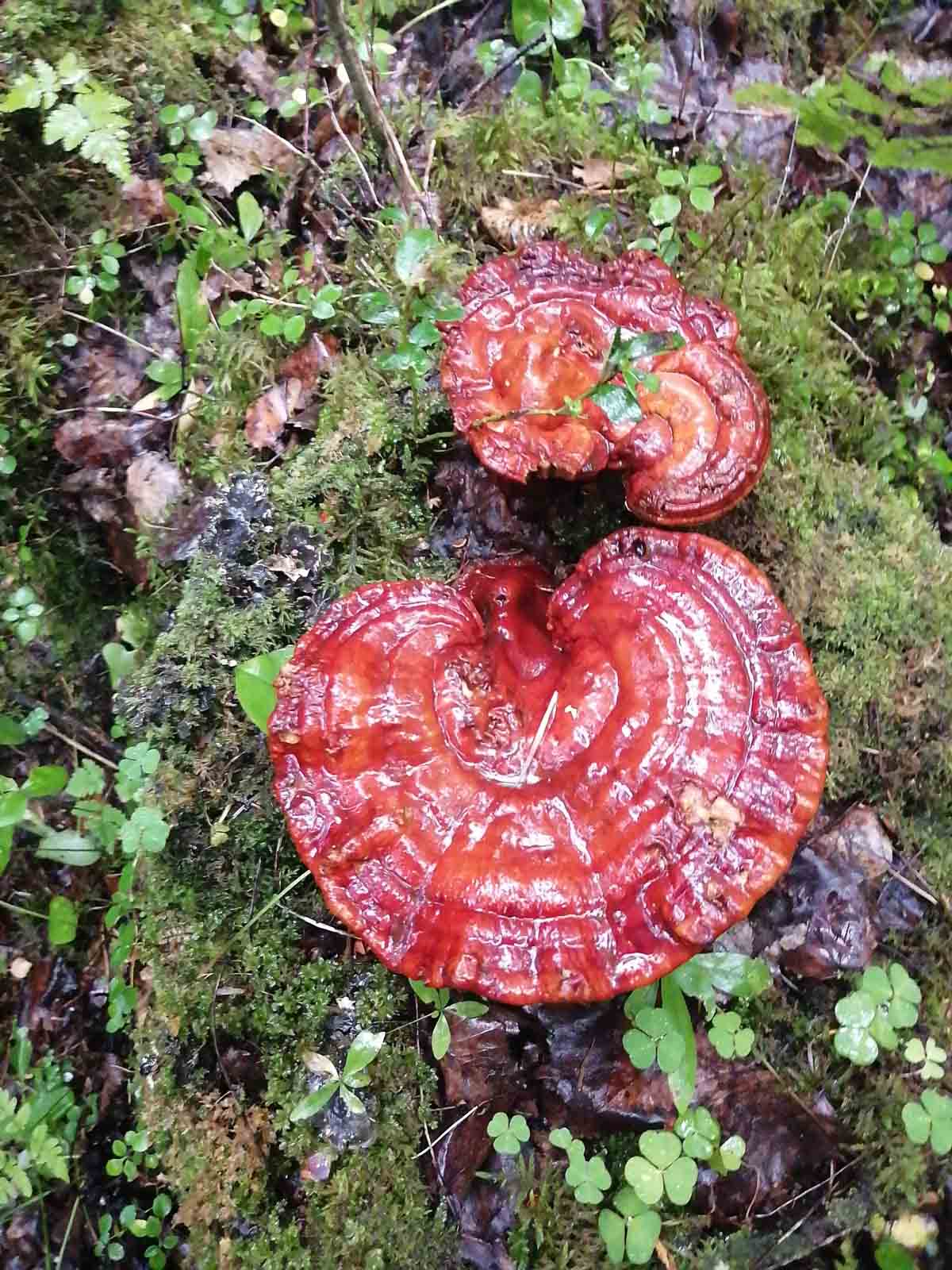
Reishi (Ganoderma lucidum or tsugae)
Reishi is the celebrity of medicinal mushrooms. Unlike the red belted polypore, it typically has a shiny, varnished surface ranging from red to brown. Reishi is prized for its adaptogenic and immune-supporting properties. While red belted polypore shares many medicinal benefits, reishi is typically more palatable and has been studied more extensively.
Birch Polypore
Birch polypore grows exclusively on birch trees and has a smooth, tan to off-white top without any zoned coloring or red band. It's known for its antimicrobial properties and was historically used to treat wounds by slicing a strip from the bottom and using it as a bandaid. Because of its hard surface, it was historically used by barbers to strop or sharpen their razors.
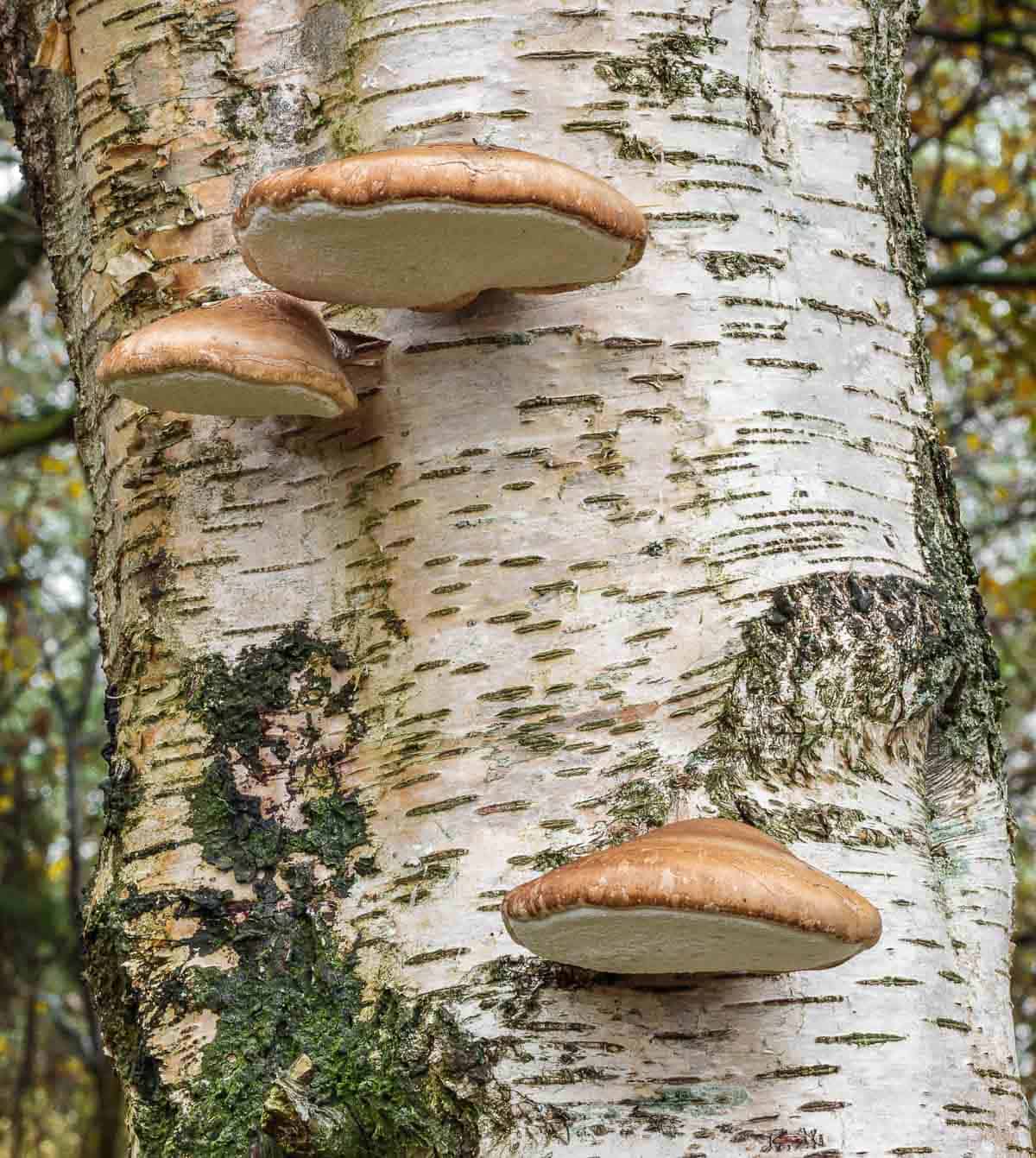
Like other polypores, it's not edible due to its woody texture. However, birch polypore can be simmered in water to make a bitter medicinal tea. It is also a good choice for topical remedies and poultices. A thin strip can be used as a Band-Aid for covering minor wounds.
Where Does Red Belted Conk Fit In?
Red belted conk is arguably the most versatile of the bunch. While not as glamorous as reishi or as artistic as artist's conk, it's abundant, relatively easy to identify (thanks to that bold red band), and highly useful. Whether you're making tea, a dual-extraction tincture, or stocking up on emergency fire starters, this conk is a reliable forager's friend!

Equipment Required For Making Tinctures
To make red belted polypore tincture, you'll need a mason jar to steep the mushrooms in alcohol and a fine mesh sieve to strain it. A crock-pot comes in handy for slow, steady extraction and for simmering the tea. Finally, you need amber glass bottles to store the tincture and a funnel to fill the bottles.
Storage
Store mushroom tincture in amber glass bottles in a dark, cool place such as a cupboard or a pantry. No need to refrigerate. It has a shelf-life of 3-5 years.
Red belted polypore tea should be refrigerated for up to a week. Or freeze in ice cube trays, then add to tea, other hot drinks, or soups.
FAQ
Yes, "red belted conk" is just the common name. The correct scientific name is "Fomitopsis pinicola." The word "polypore" refers to mushrooms that release spores through tiny pores rather than gills.
No, red belted polypores are not edible. They have a tough, woody texture. It's best used as a medicinal mushroom for making tinctures and teas.
Although you can use it fresh, slicing and drying it makes it easier to store and use long-term.
It's sometimes mistaken for reishi (which has a shiny varnished surface) or artist's conk (which is lighter in color and has a white underside that bruises brown when scratched). Look for the red or orange belt, which is the defining feature that gives this conk away.
Pro Tips
- The sooner you slice the mushroom after foraging it, the better. This polypore gets super tough and almost impossible to slice as it ages.
- If you find the bitter flavor of the tea hard to swallow, you can enhance the flavor with ginger, cinnamon, citrus peel, cardamom, or star anise, and sweeten it with honey.
- For a stronger brew, do a second extraction using fresh water and the same mushroom pieces, then combine both liquids.
- I ended up with 1 cup of infused Everclear (190 proof). I added 2 cups of infused tea, giving my polypore tincture an alchohol percentage of 31.6%.

If you enjoy functional, wellness-focused teas like polypore mushroom tea, you might also love my elderberry tea recipe. And for an easy, ready-made option, I also offer a handcrafted elderberry tea blend packed with antioxidant-rich berries and warming spices.
More Mushroom Posts
Looking for other recipes like this? Try these:


_(d.j.b.)_02.jpg)
Recipe

Red Belted Polypore Tea
Equipment
Ingredients
- ½ cup fresh mushrooms (¼ cup dried)
- 2 cups water
Optional Ingredients
- honey
- lemon
- ginger
Instructions
- Select fresh or dried/dehydrated mushrooms. If necessary, grind them with a coffee grinder. This tough mushroom won't extract much unless it's broken down.
- Add chopped mushrooms and water to a small saucepan and cover. Bring to a gentle simmer for 1 hour (don't boil). Strain and enjoy. Start with ½ cup to see how you tolerate it.
Notes
- If using medicinally, especially for underlying health concerns, talk to a qualified healthcare provider first.
- The sooner you slice the mushroom after foraging it, the better. This polypore gets super tough and almost impossible to slice as it ages.
- If you find the bitter flavor of the tea hard to swallow, you can enhance the flavor with ginger, cinnamon, citrus peel, cardamom, or star anise, and sweeten it with honey.
Hilda Sterner says
I hope you found the information in this post helpful!
Rich says
If you ensure the first extraction remains below 160°F and stays covered, it will gently extract more of the heat-sensitive compounds such as volatile oils and triterpenes
Hilda Sterner says
Thanks for sharing, Rich. You are right, lower-temperature, covered extractions can help preserve some heat-sensitive compounds, which is why I state in step 3 to cover the pot and simmer gently. There are a few different methods depending on goals, sometimes the mushrooms are actually boiled because they're so tough and woody and hard to extract. Always fun to compare notes, take care!
Heather says
These mushrooms are all over the forest next to my home, beautiful mushrooms. If I was confident with myself I would make the tea, but not at this time, great article, thank you.
Hilda Sterner says
Hi Heather, It's always better to be safe than sorry, but you're right. They are very common. They're all over our property too. I even have one in my garden growing on a stump. Thanks for taking the time to leave a comment!🥰