
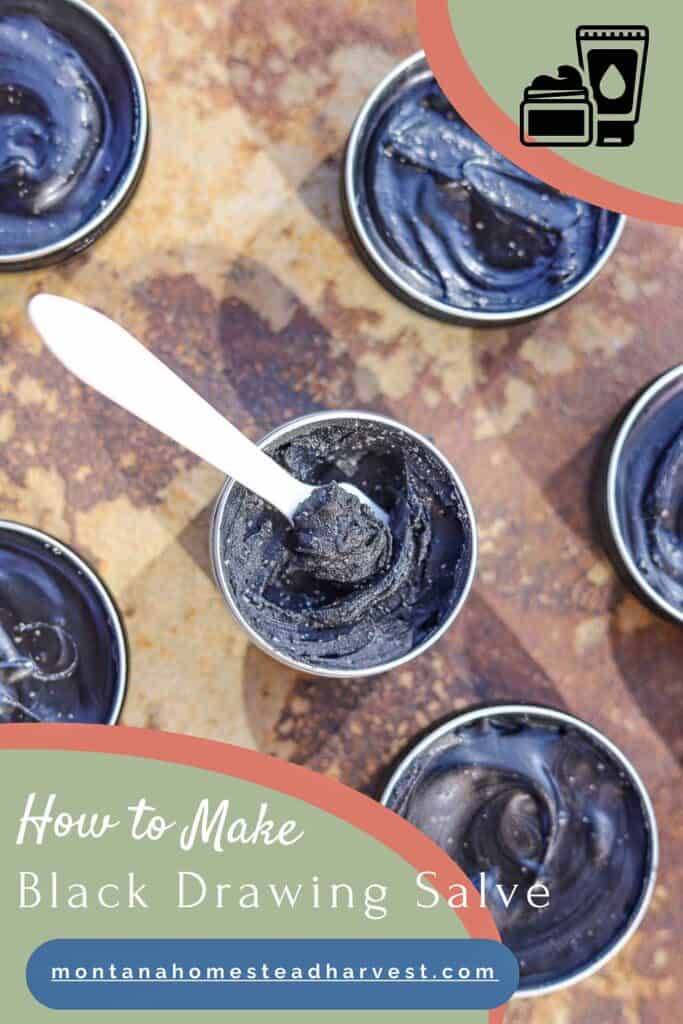
If you've ever spent any time in homesteading circles, you've probably heard someone sing the praises of drawing salve. That mysterious dark paste that supposedly pulls everything from splinters to bee stingers right out of your skin. You've probably stumbled across some truly alarming warnings about different kinds of black salve. This is a safer option, prepared with skin-friendly ingredients including healing Balm of Gilead oil.
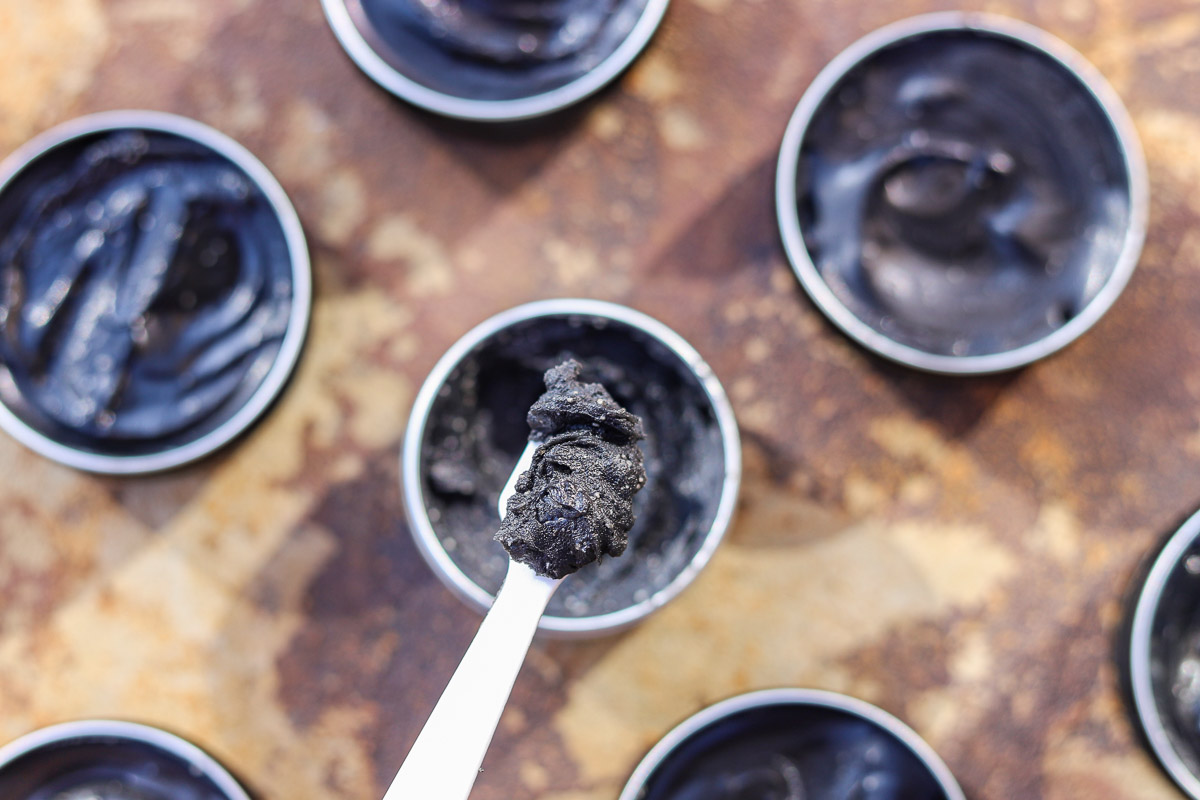
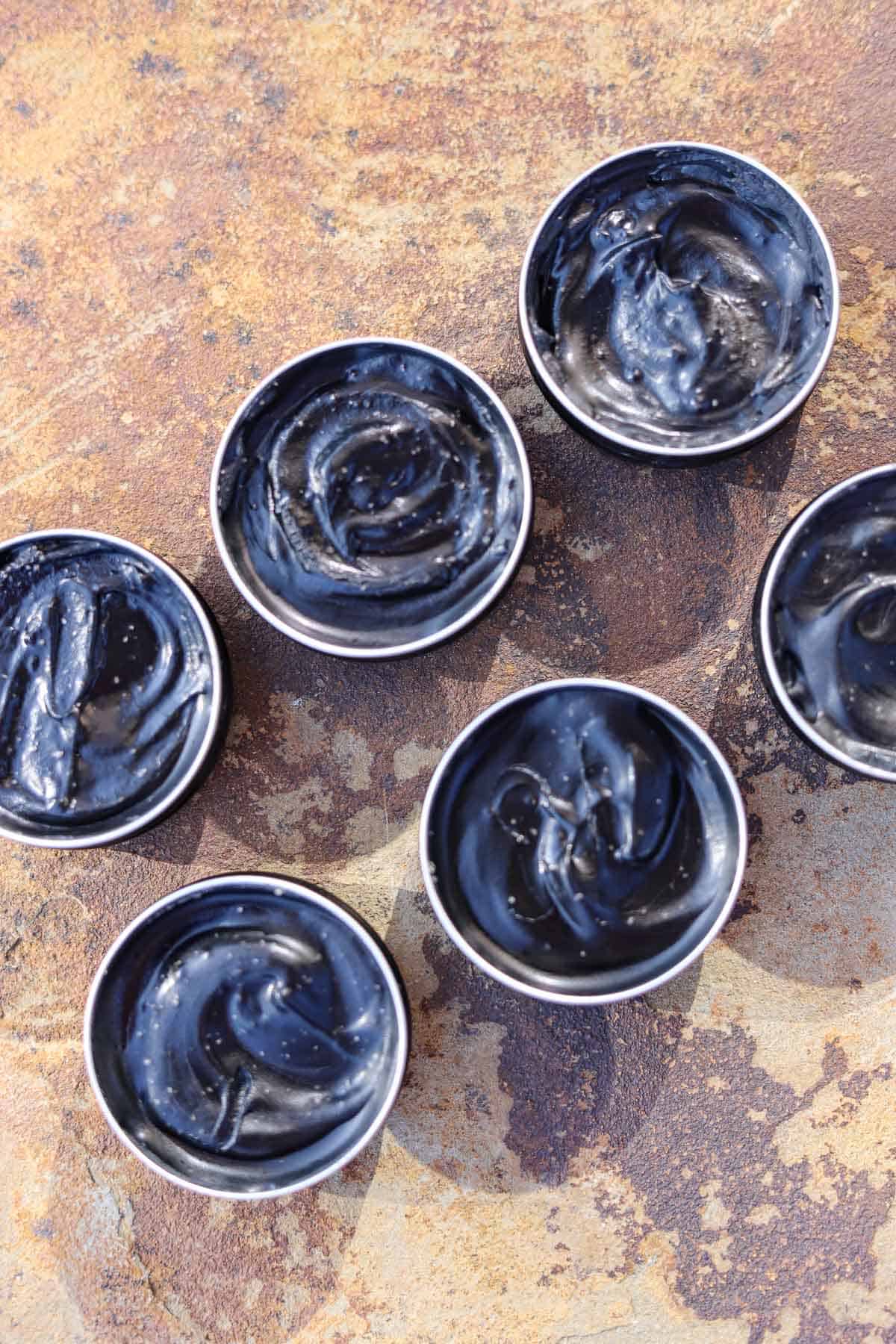
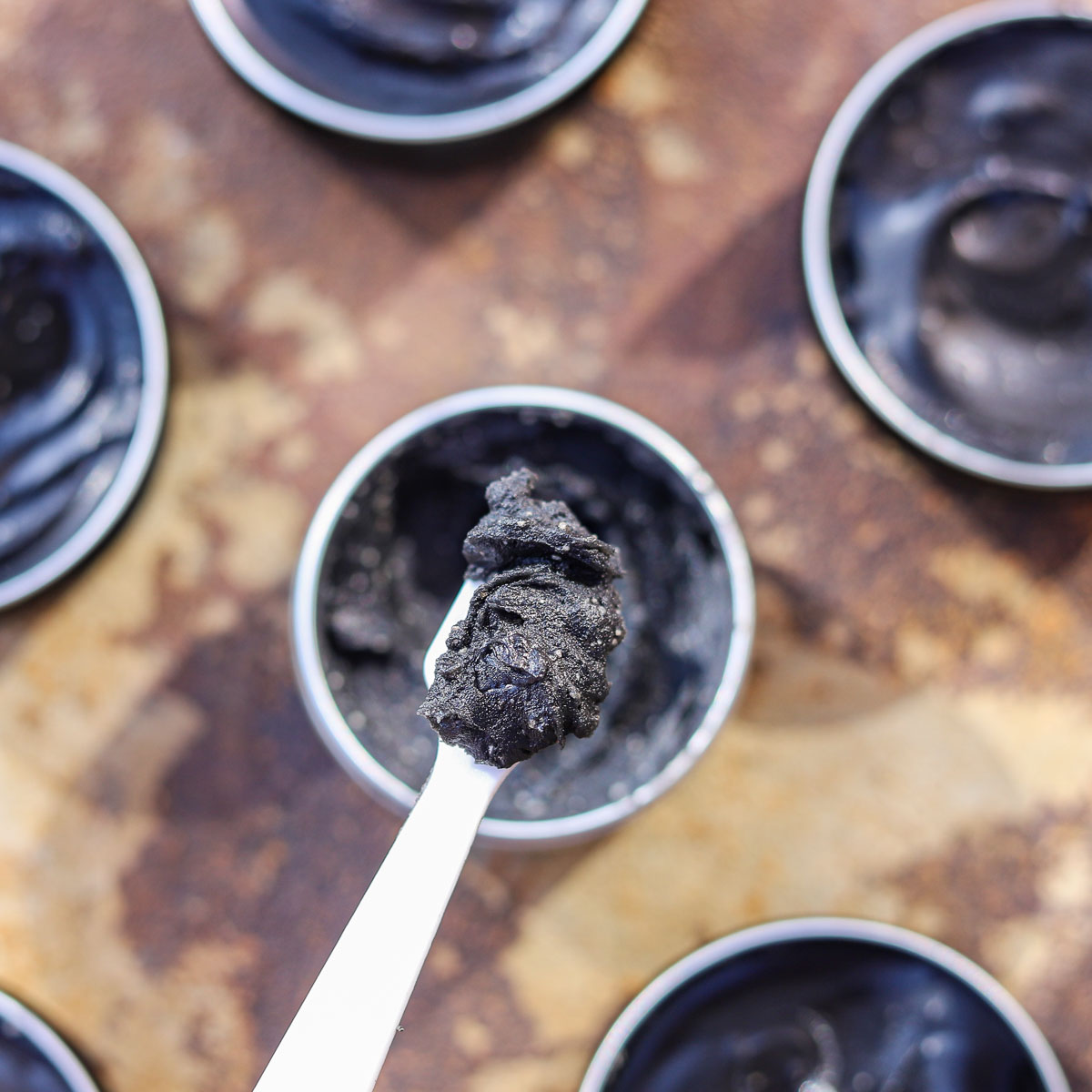
Black drawing salve can have some negative connotations; however, we're referring to the wholesome, time-honored, grandmother-approved version. This black drawing salve is prepared with activated charcoal, clay, beeswax, and a good fat base and makes an excellent addition to your first aid kit. Think of it as the sensible cousin who shows up with a casserole and actually fixes things.
Activated charcoal and bentonite clay are sometimes used together as "binders" in internal detox or parasite cleanse protocols because of their ability to adsorb and bind certain substances in the digestive tract. Activated charcoal has a highly porous structure that can trap toxins and gases, while bentonite clay carries a natural charge that allows it to bind with particles and help move them through the body.
While these properties are often cited in internal cleansing practices, their role in a topical drawing salve is different, where they are used externally to help absorb impurities and support the skin's natural healing process.
Jump to:
A Brief History: Drawing Salves Through the Ages
The concept of a "drawing" preparation, something that pulls impurities out of the skin, is ancient. Folk healers across cultures have used poultices of clay, herbs, and fats for centuries to treat infected wounds, insect stings, and embedded foreign objects. The idea isn't magic; it's physics. Certain materials have powerful absorptive properties, meaning they attract and bind to other substances on a molecular level.
By the 19th and early 20th centuries, drawing salves were a fixture in the American farmhouse medicine cabinet. Ichthammol (ammonium bituminosulfonate, derived from shale oil) became mainstream commercial versions: That dark, distinctly pungent stuff your grandpa swore by for everything. It's still sold today and still works.
The modern charcoal-and-clay version is something of a renaissance blend, drawing on the same folk tradition but formulated with ingredients that feel right at home in a well-stocked homestead pantry. No petroleum byproducts required. Just dirt (the good kind), charcoal, beeswax, and infused oil. While not a cure-all, these types of preparations have been used for generations as supportive, topical remedies.
What's In It and Why It Matters
Each ingredient in this salve is pulling its weight, literally. Here's the breakdown:
Activated Charcoal
The star of the show. Activated charcoal is regular charcoal that's been treated with oxygen to open up millions of tiny pores, dramatically increasing its surface area. Topically, that same absorptive power works to bind to debris, bacteria, and impurities and help bring them closer to the surface. Use food-grade or cosmetic-grade activated charcoal, not the stuff from your grill.
Bentonite Clay
Clay has been used medicinally since humans figured out that smearing mud on things sometimes helped. Bentonite clay carries a negative electrical charge when hydrated, which attracts positively charged toxins and impurities. Kaolin is gentler and a classic in herbal preparations. Either works beautifully here. Bentonite is the more aggressive drawer; kaolin is better for sensitive skin.
Beeswax
Beeswax solidifies the salve, creates a protective barrier on the skin, and helps hold everything in place over the affected area. It's also naturally antimicrobial. The more beeswax, the firmer your salve. You can adjust the ratio based on your preference and your climate (summer heat will soften it, so for a warmer-climate batch, you may want a little more wax).
Infused Oil or Tallow
This is where you can really make the salve your own. Your two main options:
- Tallow (rendered beef fat): This is the traditional homesteader choice, and for good reason. Tallow has a fatty acid profile remarkably similar to human skin, making it exceptionally nourishing and easily absorbed. It's shelf-stable, deeply moisturizing, and has mild antimicrobial properties. If you are raising your own animals, this is the zero-waste, farm-to-medicine-cabinet option. I'm using cosmetic-grade tallow (tallow for skincare).
- Infused Oil (olive oil, grapeseed oil, or sunflower): Infusing your carrier oil with herbs like plantain leaf, calendula, cottonwood buds (used to make balm of Gilead), or comfrey adds an extra layer of skin-supporting properties. Plantain, in particular, has a long folk history as a drawing herb all on its own. Combining it with activated charcoal and clay is like assembling a dream team.
Black Salve Ingredients
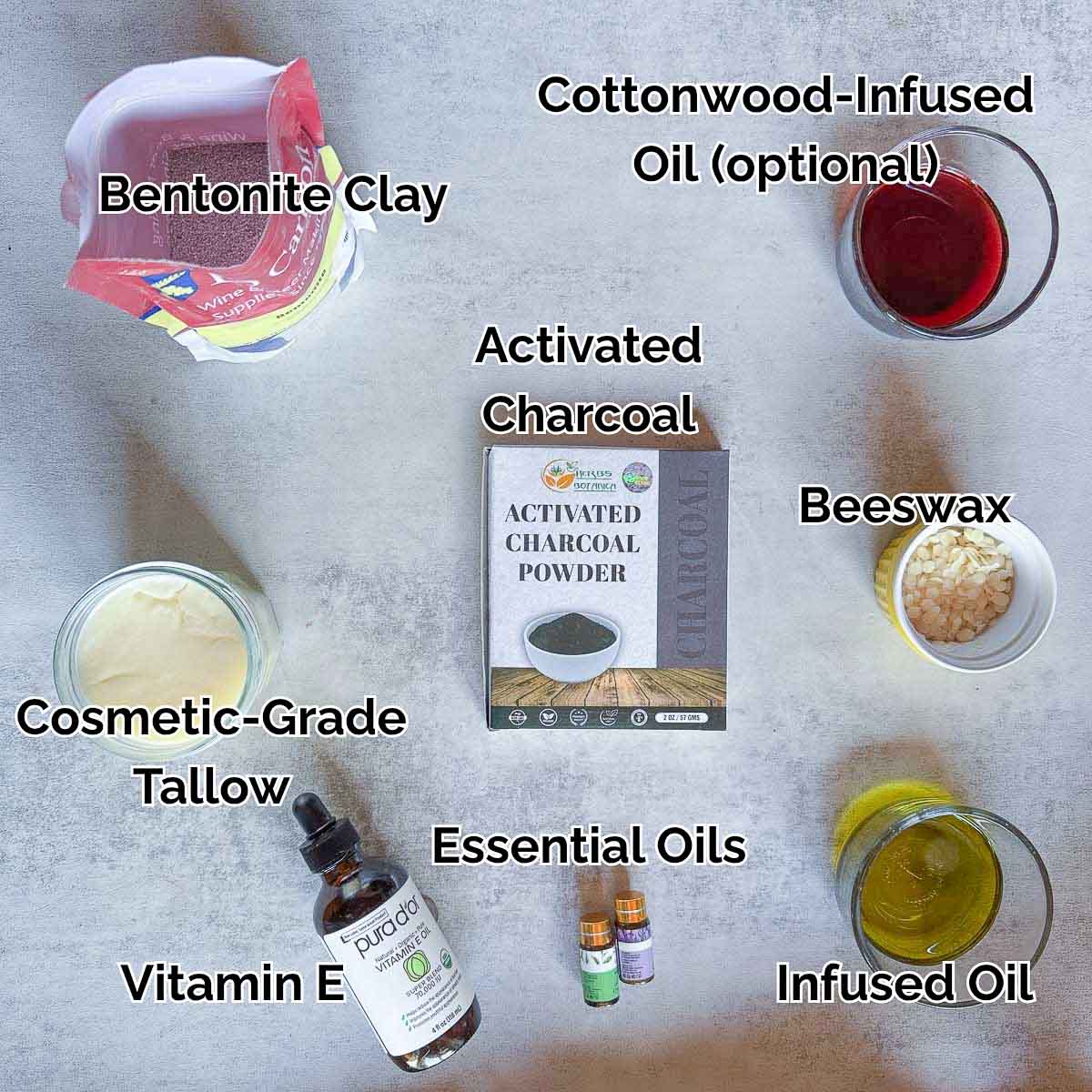
- Infused Oil or Tallow: Or a combination of both. I use ½ cup of tallow and ½ cup of infused oil.
- Activated Charcoal: 2 tablespoons of food-grade/cosmetic-grade activated charcoal.
- Bentonite or Kaolin Clay: 2 tablespoons of bentonite or kaolin clay.
- Beeswax: 1 tablespoon
- Optional Ingredients: ½ teaspoon Vitamin E, and 10 drops Essential Oils (lavender or tea tree are great options).
See recipe card for quantities.
How to Make Black Drawing Salve
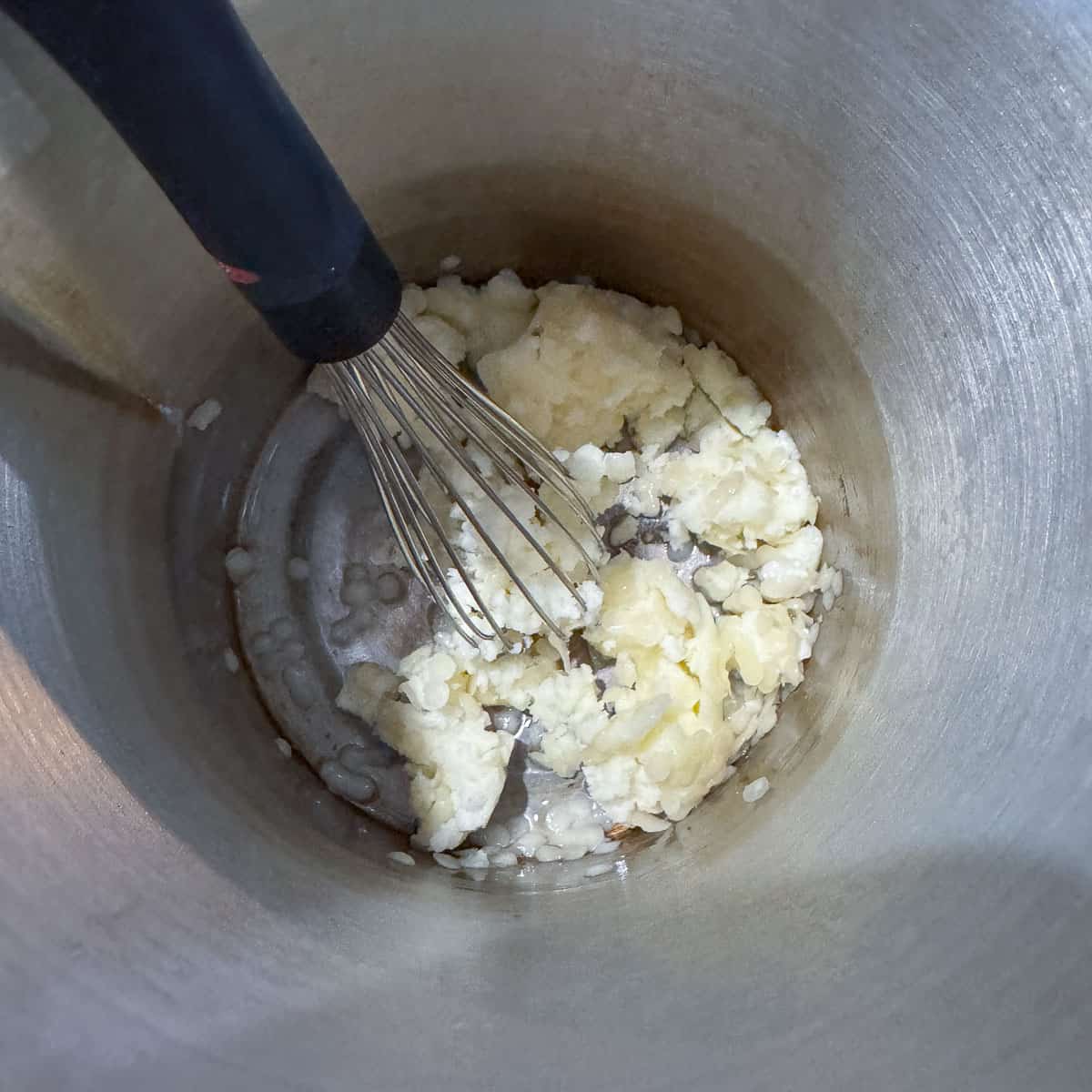
- Melt beeswax and tallow over a low flame or in a crockpot on a low setting. Stir until fully combined, then add infused oil.
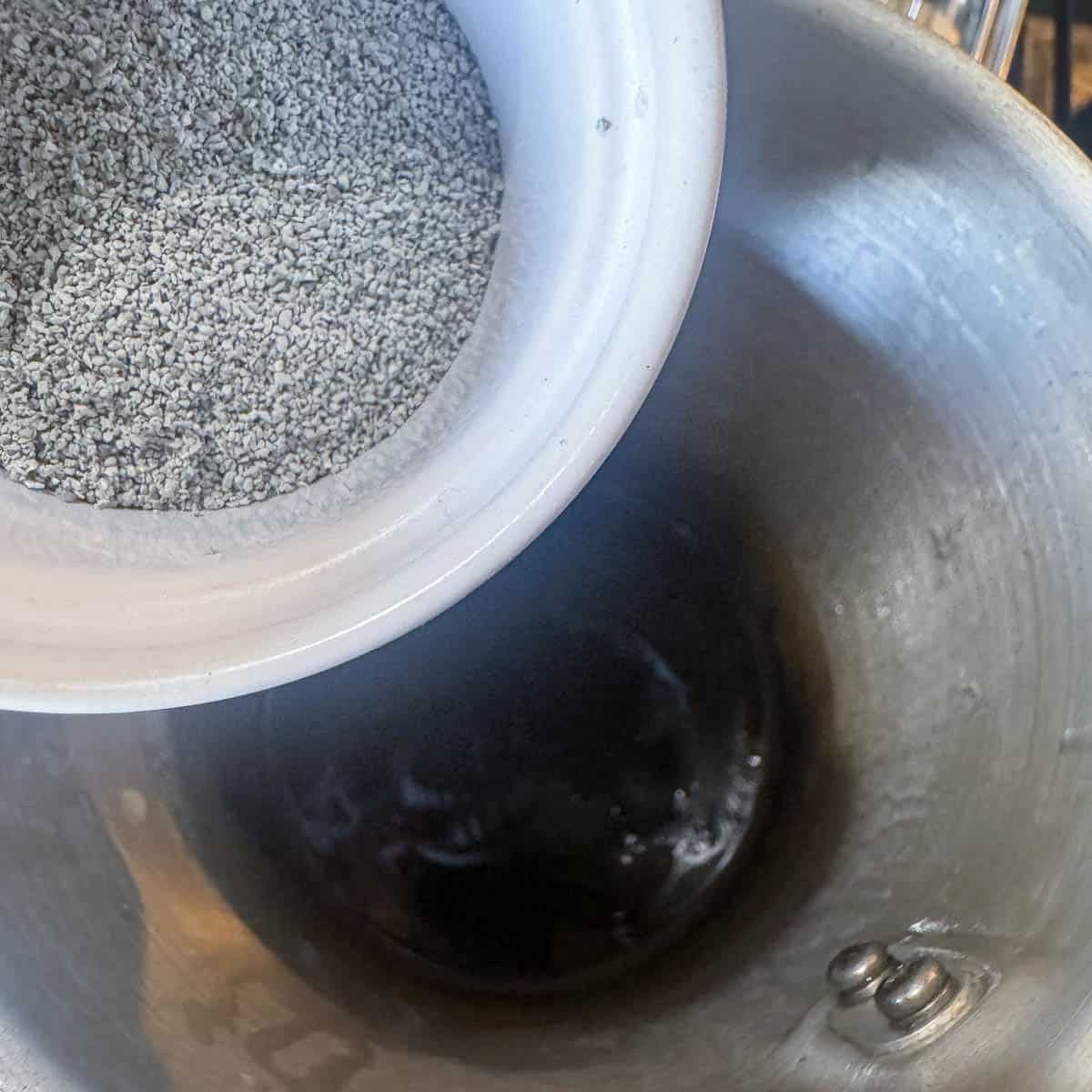
- Remove from the heat and let it cool slightly. Add activated charcoal and clay, stir to combine.
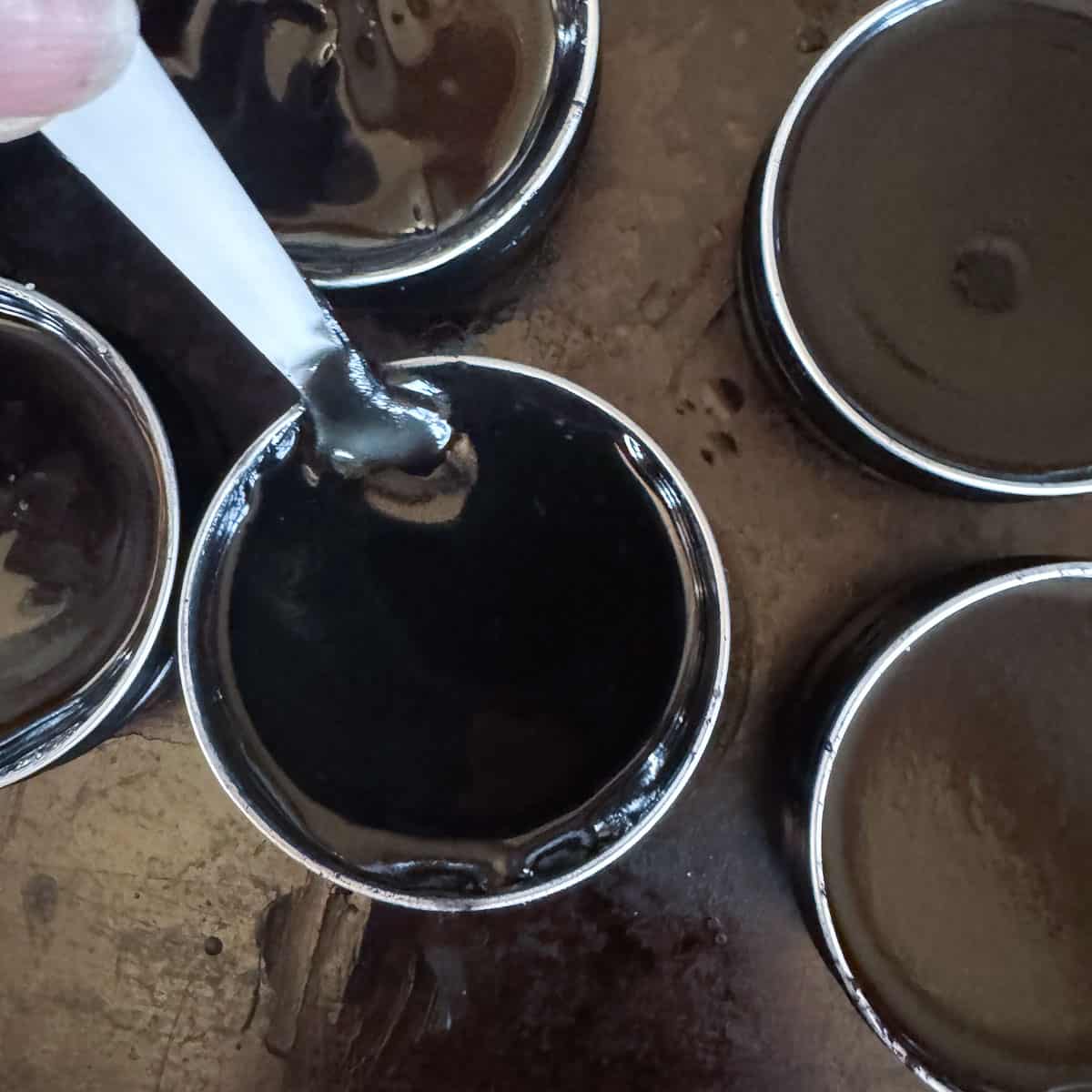
- Stir in vitamin E and essential oils, if using. Pour quickly into your prepared tins, while stirring to keep the clay from settling.
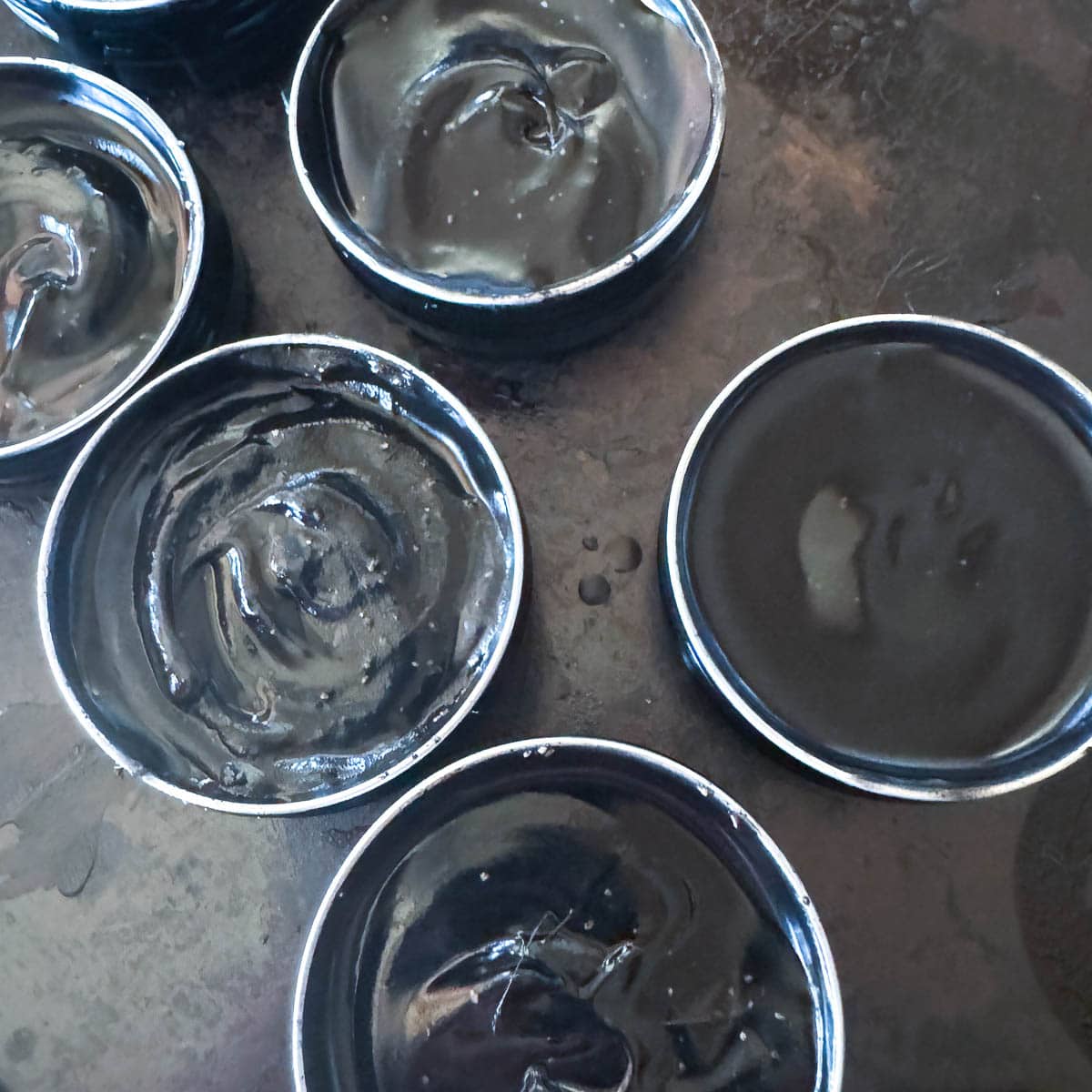
- Cool completely, then label with date and contents.
Pro Tip: As the black drawing salve begins to set in the canisters, stir a few times to keep the bentonite from settling to the bottom.
How to Use it
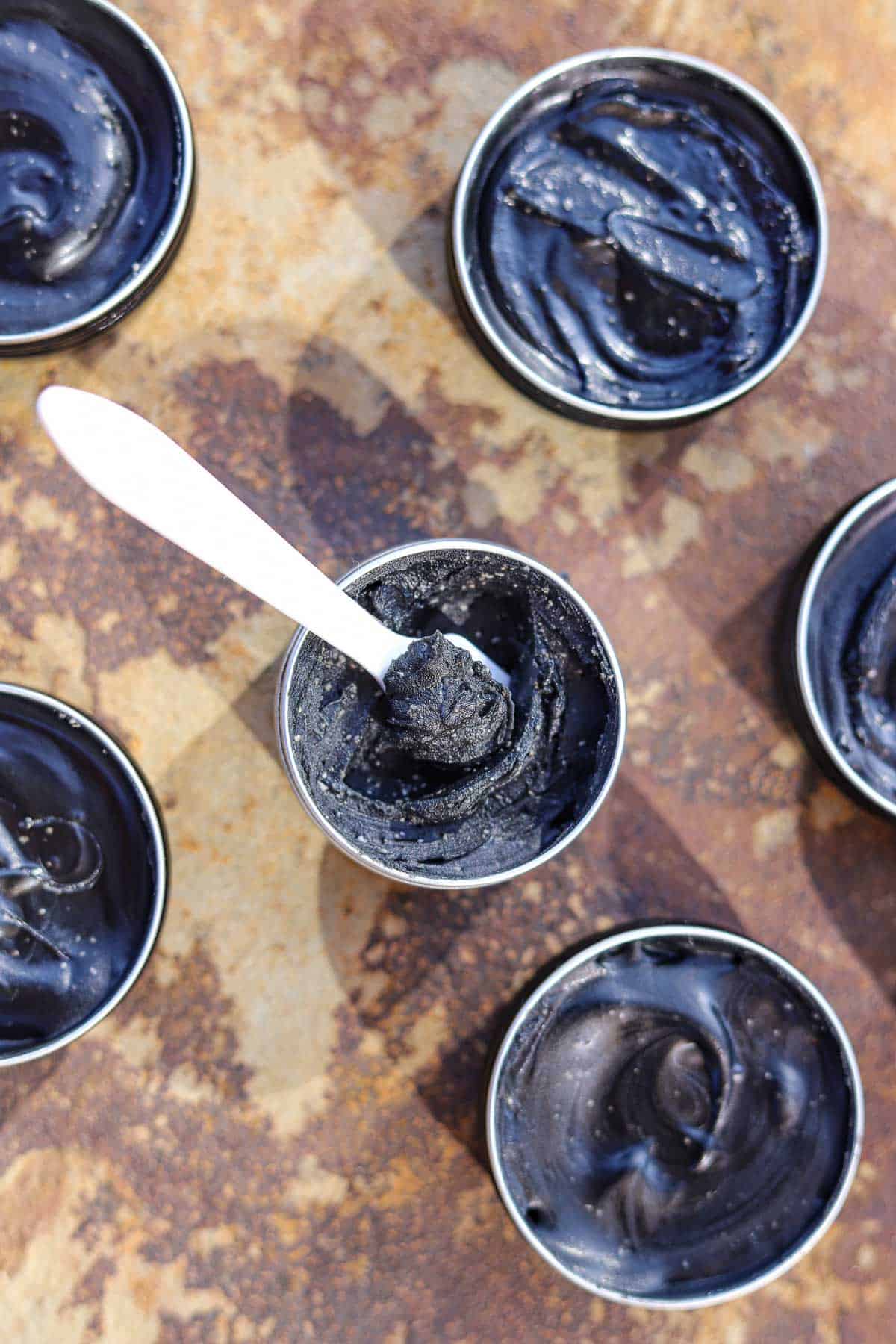
Apply to the affected area and cover with a bandage or piece of cloth, keeping it from staining your clothes. Leave it on for several hours or overnight.
Good Uses Include:
- Splinters, thorns, and other embedded foreign bodies.
- Insect bites and bee stings (can help with swelling and drawing out venom).
- Minor skin infections, ingrown hairs, or irritated pores
- Boils or cystic spots in the early stages
Safety & When to See A Doctor
Drawing salve is a wonderful first-line tool, but it's not a replacement for medical care. Know when to use it and when to put the tin down and call someone with a medical degree.
Do NOT Use Drawing Salve If:
- The wound is deep, gaping, or has signs of serious infection (spreading redness, red streaks, fever, significant pus). These need professional treatment.
- You suspect a puncture wound that may need a tetanus shot.
- You have a known allergy to any of the ingredients.
- The person is a diabetic (skin infections can escalate quickly and require medical oversight).
A Note About Black Salve Confusion
The term "black salve" is unfortunately also used for corrosive escharotic preparations, typically containing bloodroot or zinc chloride, that are promoted as a DIY cancer treatment. These are genuinely dangerous and can cause severe, permanent tissue destruction. They are not the same thing as the drawing salve described here. If anyone tries to sell you black salve as a cancer cure, run!
Equipment
Here are the products I recommend for making black drawing salve:
A wax melting pot with a spout for easy and precise pouring.
You will also need tins to store the salve. I prefer 1-ounce tins; however, you can also use 2-ounce tins.
Or check out my salve-making product recommendation page!
Pro Tips
- Wash the area with warm water and mild soap before applying. This helps the salve stick better and keeps bacteria from getting trapped under it.
- This stuff is messy, no way around it. Covering it with a bandage keeps it from staining clothes and helps it stay where you need it.
- You don't need to glob it on. A thin layer is usually enough to do the job.
- Applying a warm compress before or after the salve can help soften the skin and encourage whatever's underneath to come to the surface faster.
- For stubborn splinters or ingrown hairs, you may need to reapply every 12 hours until you see results.
- This salve is great for minor issues, but anything painful, spreading, or severe should be looked at by a professional.
- Activated charcoal will stain fabrics, towels, and sometimes even skin temporarily, so use old bandages or dark cloth if needed.
FAQ
Black drawing salve is traditionally used to help draw out foreign objects and impurities from the skin. It's commonly applied to splinters, bug bites, minor skin irritations, and small boils to help bring them to the surface and support healing.
Drawing salve may help bring a boil closer to the surface and encourage it to drain naturally. However, it's best used on small, mild boils. Larger or painful boils may require medical attention.
Black drawing salve is typically left on for 6 to 12 hours, often covered with a bandage. You can reapply as needed until the issue improves. Always clean the area before reapplying
Drawing salve can sometimes help bring an ingrown hair closer to the surface, making it easier to remove. It works best when combined with warm compresses to soften the skin.
Black drawing salve isn't the best option for blackheads. While the charcoal and clay can help absorb oil and impurities, blackheads are caused by clogged pores that are better treated with gentle exfoliation or clay masks. Drawing salve is more effective for things under the skin, like splinters or minor issues.
Homemade black drawing salve typically lasts 1-2 years when stored properly. Keep it in a cool, dark location away from direct sunlight and heat, which can cause the oils to go rancid. Adding vitamin E oil helps extend the shelf life. If your salve develops an off smell, changes color significantly, or the texture becomes grainy or separated, it's time to make a fresh batch. Always label your tins with the date so you know when you made it.
This is a common question, and the answer requires some caution. The base ingredients - beeswax, tallow, activated charcoal, and bentonite clay - are generally considered non-toxic to dogs. However, the essential oils commonly added to drawing salve, such as tea tree oil, can be toxic to dogs and cats even in small amounts. If you want to use drawing salve on a pet, make a separate batch without any essential oils, and always check with your veterinarian first. Also, keep in mind that animals will instinctively lick at anything applied to their skin, so you'll need to cover the area and monitor them closely.
Final Thoughts
There's something deeply satisfying about having a tin of homemade drawing salve in your medicine cabinet. The kind you made yourself, with ingredients you understand, for the exact kinds of everyday farm and homestead ailments that life will inevitably throw at you. It's practical, traditional, and it genuinely works! Happy salve making, and may your splinters always surface!
More Salve Recipes
Looking for other recipes like this? Try these:


Black Drawing Salve (Activated Charcoal & Bentonite Clay)
Equipment
Ingredients
- 1 cup infused oil (or combo of tallow & infused oil)
- 2 tablespoon activated charcoal
- 2 tablespoon bentonite clay
- 1 tablespoon beeswax pellets
- ½ teaspoon Vitamin E
- 10 drops essential oils
Instructions
- Melt beeswax and tallow over a low flame or in a crockpot on a low setting. Stir until fully combined, then add infused oil.
- Remove from the heat and let it cool slightly. Add activated charcoal and clay, stir to combine.
- Stir in vitamin E and essential oils, if using. Pour quickly into your prepared tins, while stirring to keep the clay from settling.
- Cool completely, then label with date and contents.
Notes
- As the black drawing salve begins to set in the canisters, stir a few times to keep the bentonite from settling to the bottom.
- Wash the area with warm water and mild soap before applying. This helps the salve stick better and keeps bacteria from getting trapped under it.
- This stuff is messy, no way around it. Covering it with a bandage keeps it from staining clothes and helps it stay where you need it.
- You don't need to glob it on. A thin layer is usually enough to do the job.
- Applying a warm compress before or after the salve can help soften the skin and encourage whatever's underneath to come to the surface faster.
- For stubborn splinters or ingrown hairs, you may need to reapply every 12 hours until you see results.
- This salve is great for minor issues, but anything painful, spreading, or severe should be looked at by a professional.
- Activated charcoal will stain fabrics, towels, and sometimes even skin temporarily, so use old bandages or dark cloth if needed.
Hilda Sterner says
I hope you try making your own drawing salve, and if not, you can find it in my shop!
Carol L says
Probably should note not to use metal utensils or containers for bentonite clay as it “de-activates” the beneficial qualities of it.
Do you sell the Balm of Gilead infused oil?
Thank you!
Hilda Sterner says
Hi Carol, Thanks for sharing your perspective! I've seen that recommendation before, although there doesn't seem to be a clear consensus on whether metal actually deactivates bentonite clay. Many bentonite clay products, including drawing salves, are packaged in metal containers without issue.
Karen says
Can I use this for warts?
Hilda Sterner says
That's a great question. Drawing salve is traditionally used to help draw out splinters, thorns, and other foreign objects from the skin. Since warts are caused by a virus rather than a foreign object, I can't say whether drawing salve would be effective for treating them because I've never tried it on warts. If you decide to try it, I'd love to hear about your experience.