
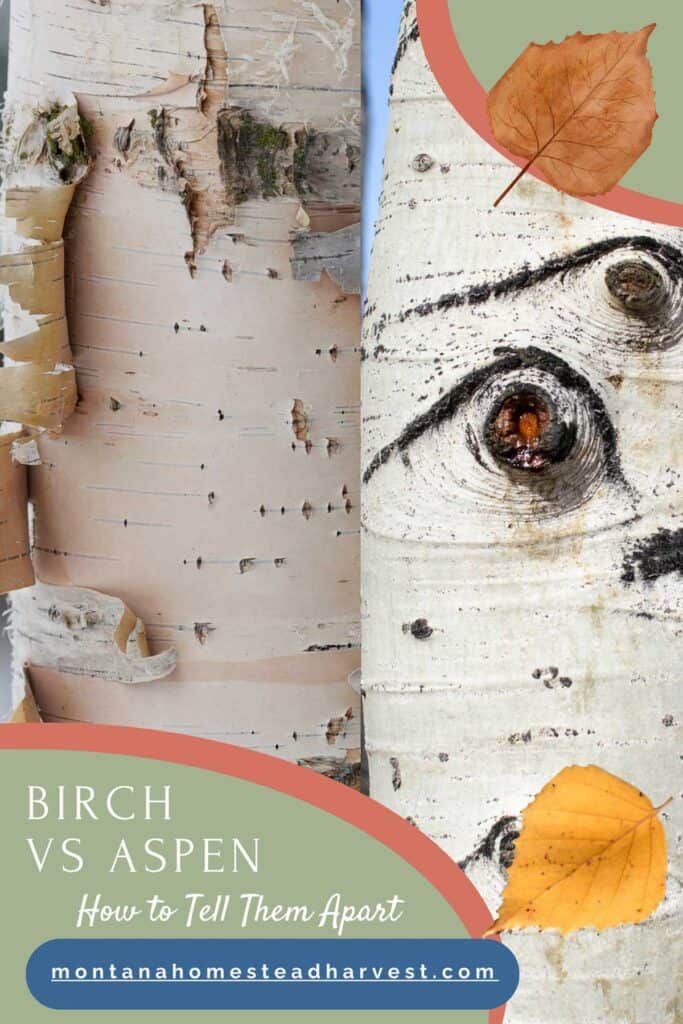
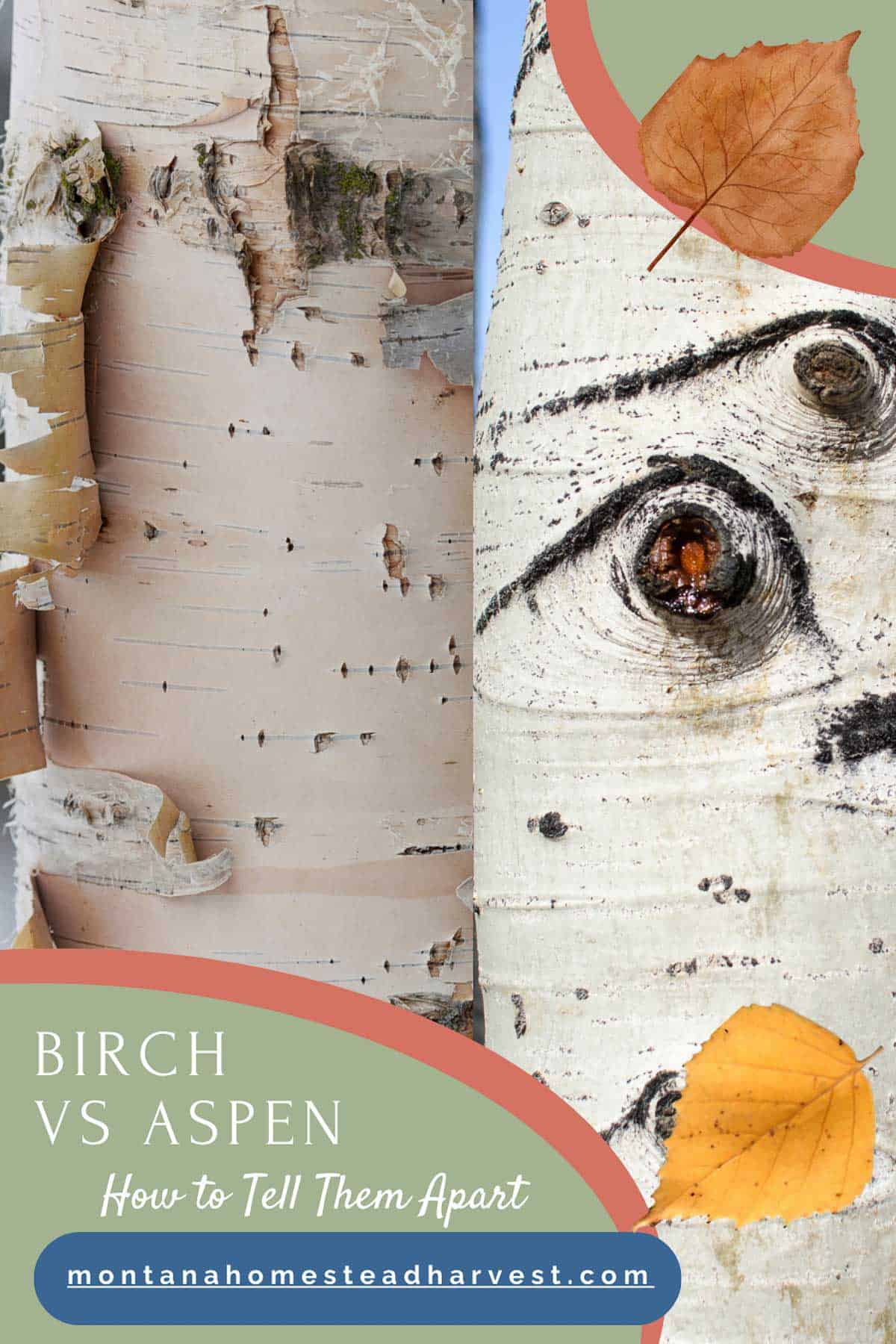
Birch vs Aspen, do you know the difference? They are often confused thanks to their light-colored bark and similar growing environments. If you've ever wondered which one you're looking at while walking through the woods, you're not alone! Although they look alike, they have a few key differences that make them easy to distinguish once you know what to look for. Then learn how to identify Mullein vs Lamb's Ear.
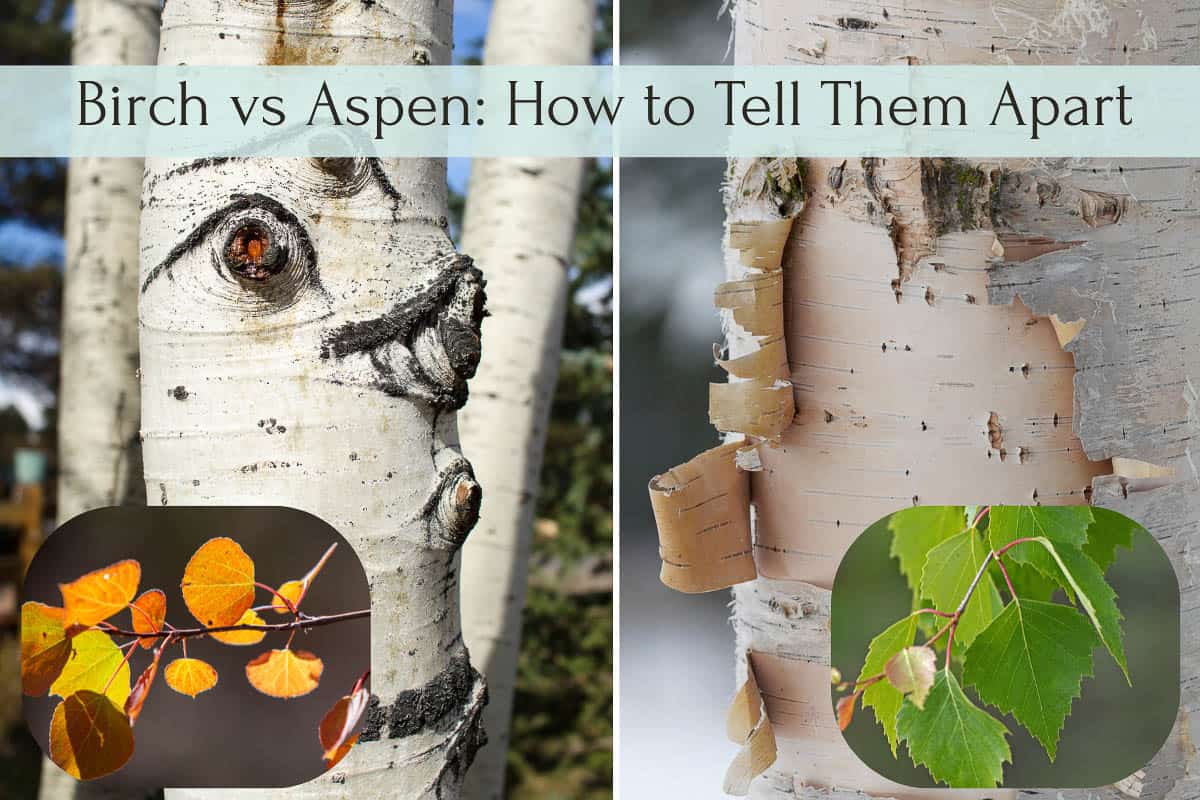
In this guide, I'll walk you through simple, real-world ways to identify birch vs aspen, no botany degree required. I'll also include an easy-to-use comparison chart because I know my friend, Jenny, isn't the only one who's struggled to tell these two species apart.
Jump to:
Why Birch and Aspen Are Often Confused
Birch and aspen are often confused because they not only look alike at first glance, but they also grow in similar habitats. Both are common in northern climates (hello, Montana).
However, upon closer inspection, you'll notice quite a few differences, including these key features:
- Bark
- Leaves
- Tree movement
- Growth pattern
- Scent
Birch vs Aspen Comparison Table
| Feature | Birch | Aspen |
|---|---|---|
| Bark | Papery, peels in curls or strips | Smooth, chalky, does not peel |
| Bark Color | White to silvery with dark markings | Pale white to greenish-gray |
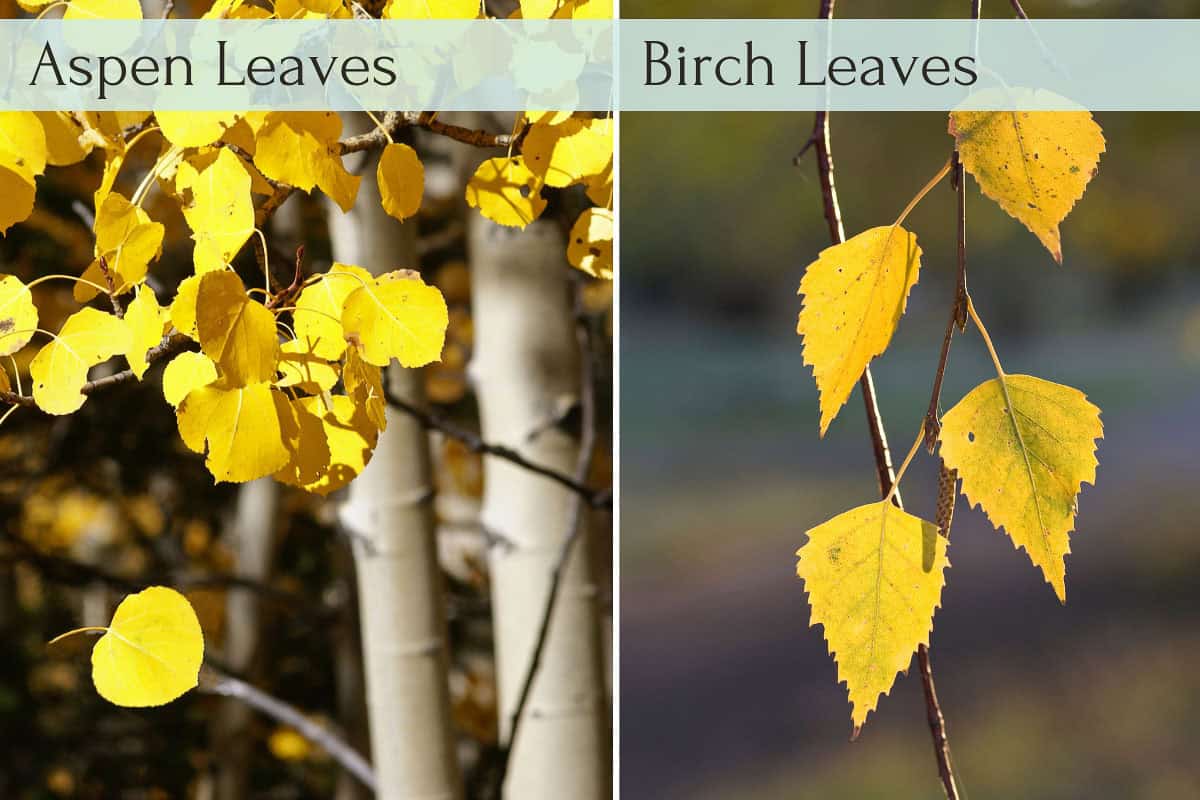
| Leaves | Oval or triangular, sharply serrated | Rounder, heart-shaped, smoother edges |
| Leaf Movement | Moves normally in wind | Trembles or “quakes” easily |
| Growth Pattern | Individual trees or mixed stands | Grows in clonal groves |
| Scent | Wintergreen smell when bark is scratched | Little to no scent |
Which One Grows in Montana?
Both birch and aspen grow in Montana, but quaking aspen is far more common and often forms large groves at higher elevations. Aspen trees are famous for growing in large groves, but what looks like a forest of individual trees is often one connected organism.
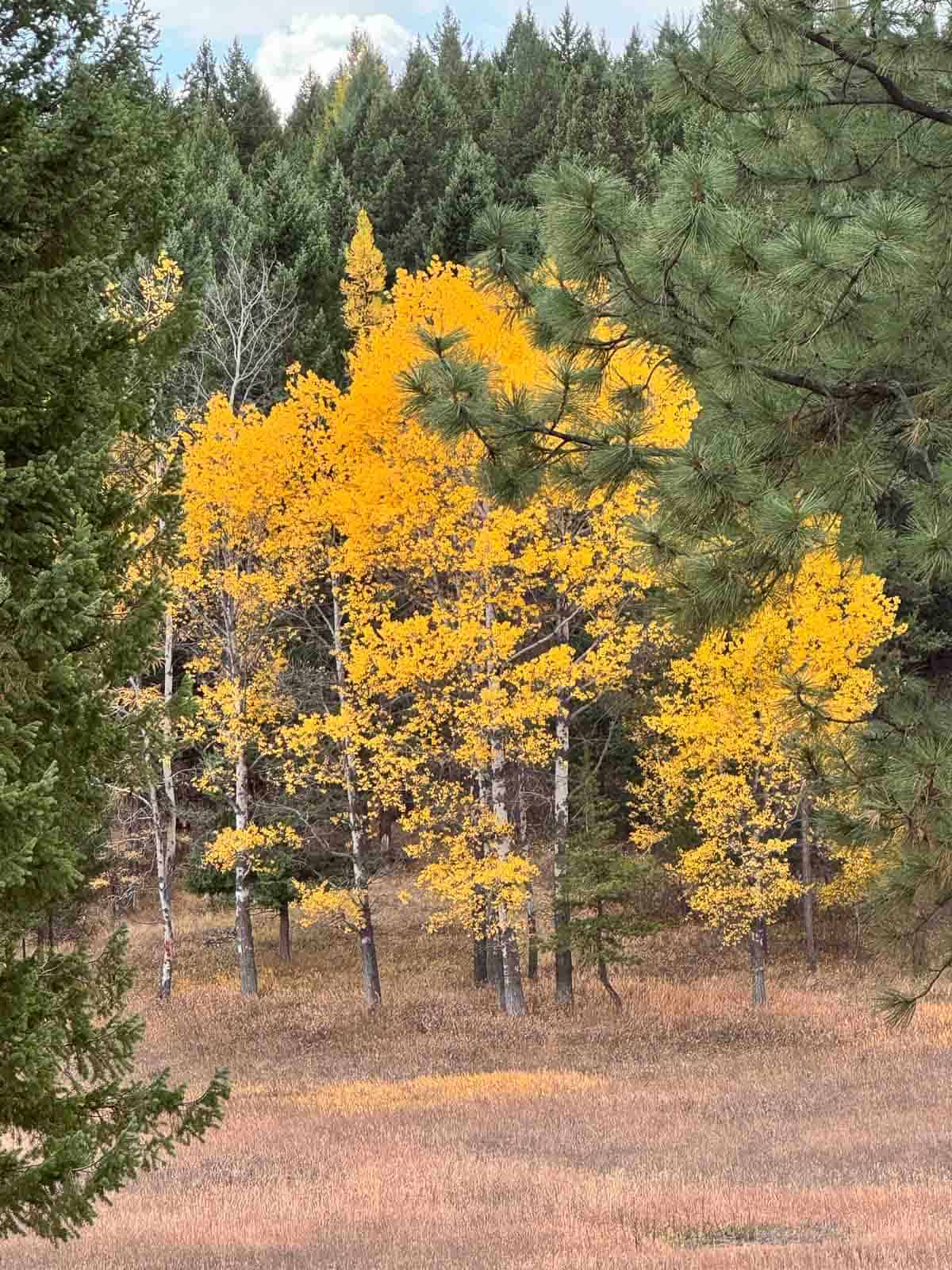
Aspen spreads through an underground root system, sending up new trunks called "suckers," which means an entire grove can share the same roots. Through this shared network, aspens can pass water, nutrients, and chemical signals that help the grove respond to stress, disease, or damage. In a very real sense, aspens don't just grow together; they communicate and survive together.
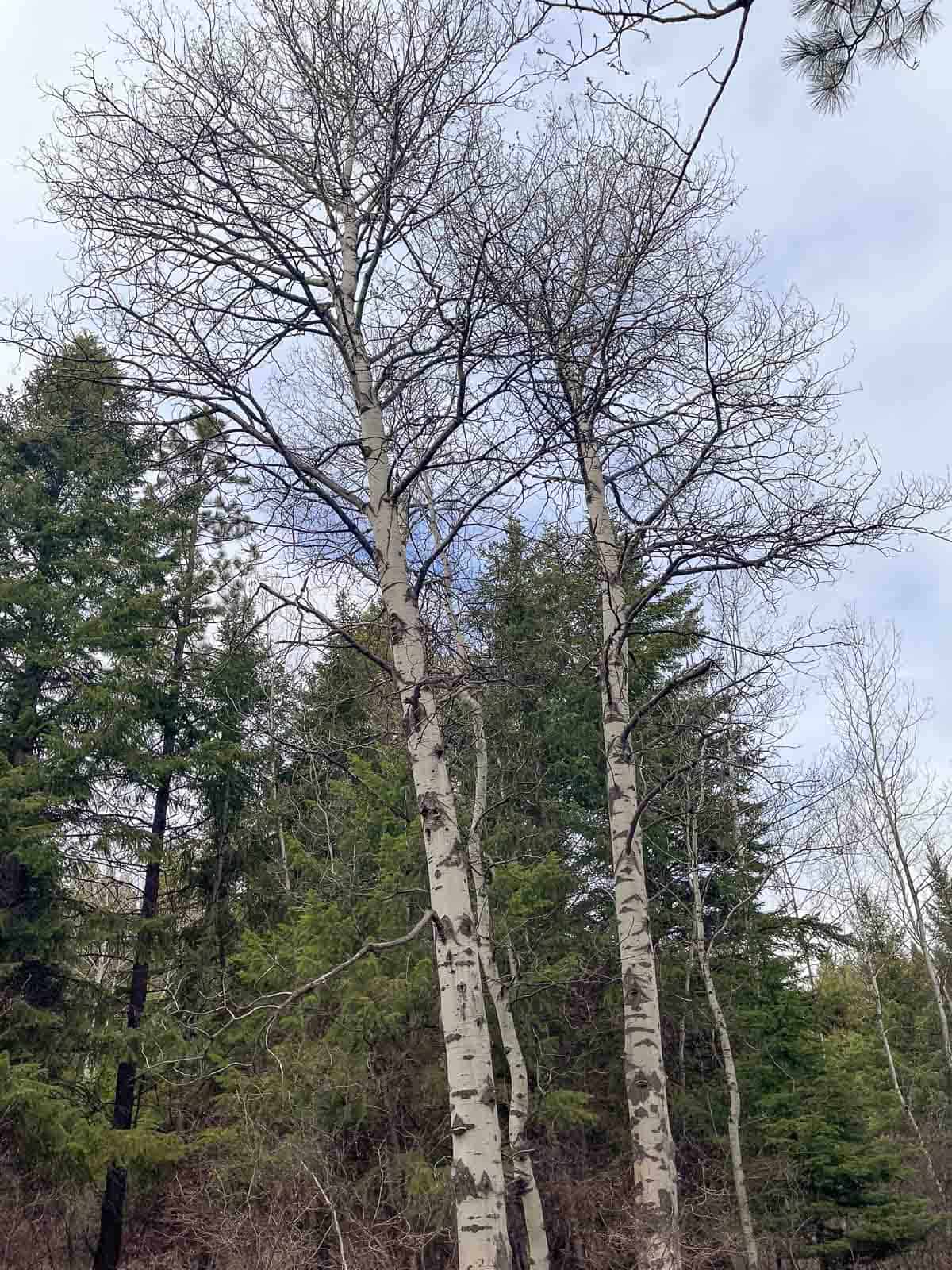
Birch trees are more selective about moisture and location and are usually found near waterways or in specific forest types. Their bark is naturally waterproof and contains compounds that have been used for centuries in traditional medicine, for starting fires, and for shelter. Birch bark also releases a wintergreen scent when scratched, making it a helpful identification clue. Unlike aspen groves, birch trees grow as individual trees.
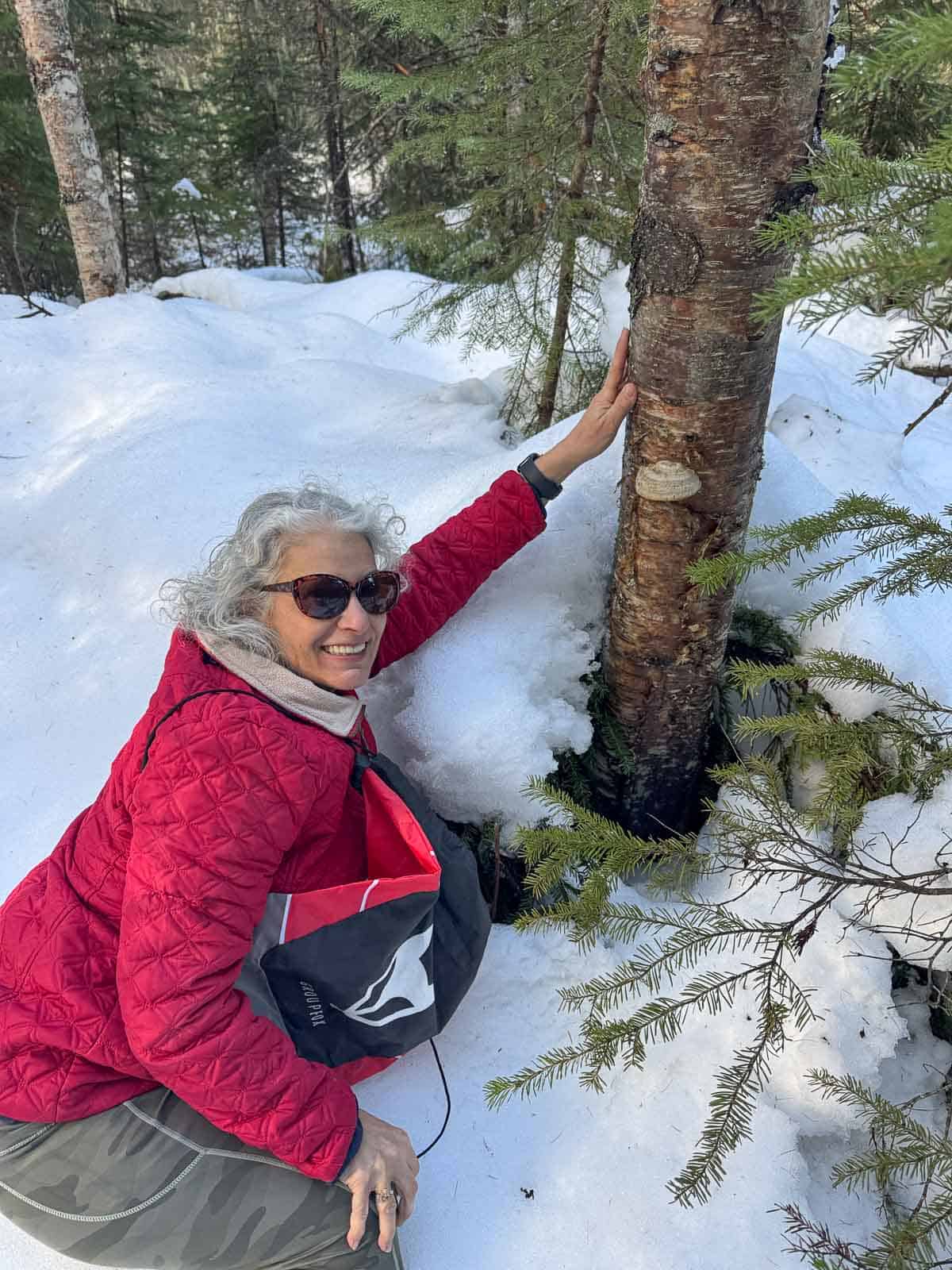
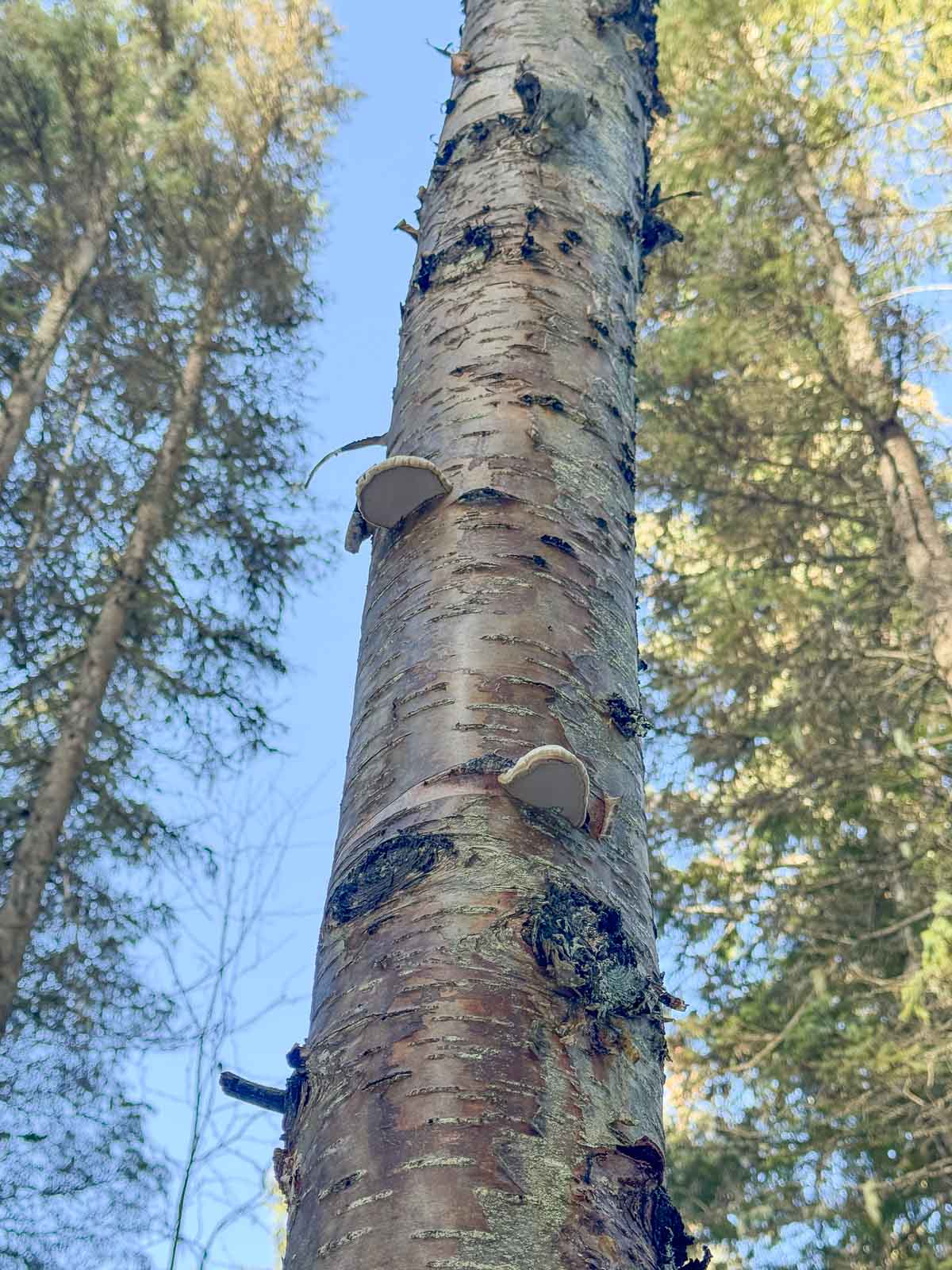
Many birch species can be tapped for sap, adding to their long history of practical and medicinal use. Birch trees are also well known in the foraging world as host trees for chaga mushrooms and birch polypore, both of which have a long history of traditional use and are commonly harvested from living birch trees. To learn more, check out this informative red belted polypore article.
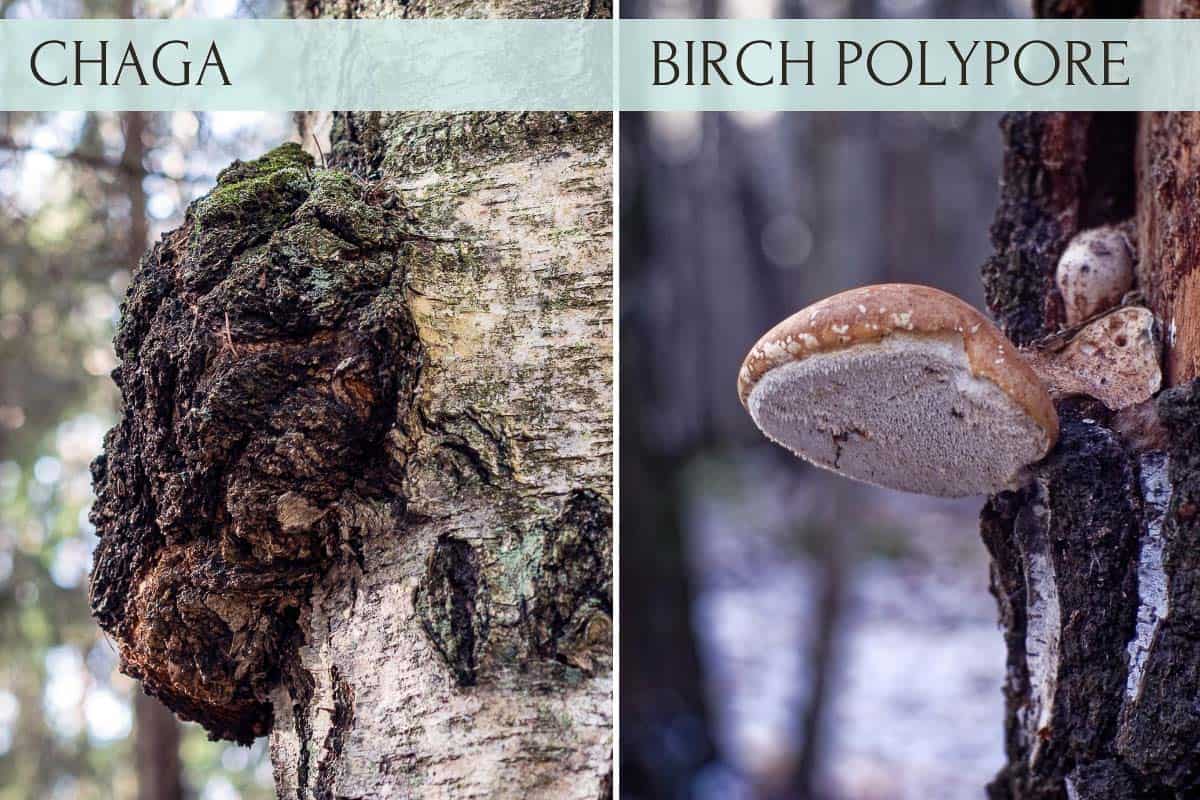
Although aspen can have similar black growths, they're likely to be corky bark fungus.
Foraging Disclaimer
Always positively identify a tree before harvesting any part of it. Never remove bark all the way around a living tree, as this can kill it. When foraging, harvest responsibly and only where it's legal to do so.
Related Posts
Looking for other recipes like this? Try these:


Kelly Methey says
This is a great post! I have trees on our property that I have never known which they were. Now I will go out and compare with your post. Thank you for all of the great info you pass on to your followers! I have learned so much from you!
Hilda Sterner says
Thanks, Kelly, always here to educate the masses. 😀
Marta says
Such a helpful post regarding these beautiful trees. I learned tons. Thank you!
Hilda Sterner says
Thank you, Marta. I love sharing what I learn with others!