

If you've ever spotted a soft, fuzzy plant and wondered whether it was mullein vs lambs' ear, you're not alone. These two gray-green plants are commonly confused by gardeners and foragers alike, much like other often-misidentified plants such as lamb's quarters. Yet they differ greatly in how they grow, where they're found, and how they're traditionally used.
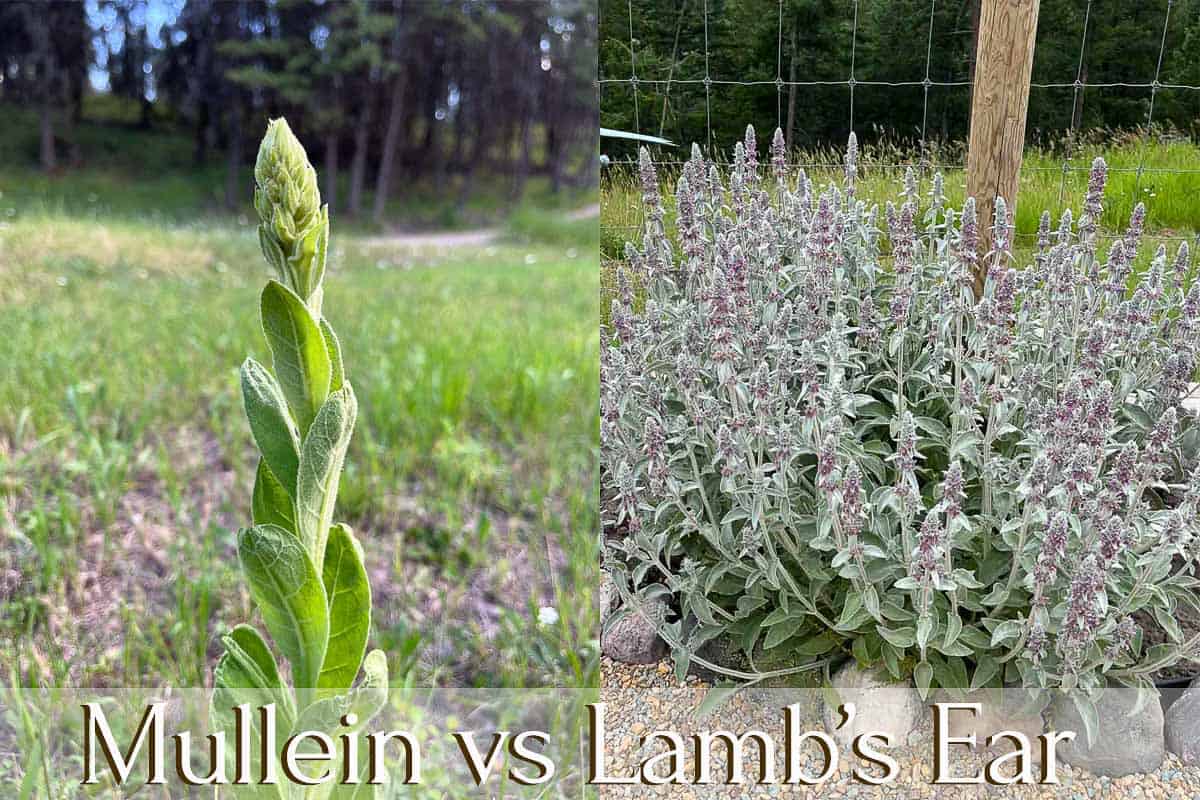
I sometimes find it hard to believe that these two plants are commonly confused with one another. Once you're familiar with both, the differences feel pretty obvious. But for those with less experience, the fuzzy leaves alone can be enough to cause confusion.
Similar to St John's wort, mullein thrives on our property. You can literally find it everywhere! And the first thing I learned about it is that it's often referred to as "cowboy toilet paper," ahem. 🤠 🧻 The second was that American Indians used the large, fuzzy leaves as insoles in their moccasins.
I learned about lamb's ear accidentally. I went to a local nursery planning to buy sage for my friend Kelly, but came home with lamb's ear instead. 😬 Probably didn't have my glasses on... Since Kelly didn't want lamb's ear, I naturally planted it in my own Montana garden. Once it bloomed, I was delighted by how many bees it attracted.
Eventually, though, I pulled it out because it spread far more than I expected-popping up in garden beds, along the sitting area, and just about anywhere it managed to take hold!
Lamb's Ear vs Mullein: Understanding the Differences
Understanding the difference between mullein and lamb's ear (Woolly Hedge Nettle) is especially important if you're considering harvesting either plant for culinary or herbal purposes.
While they may look similar at first glance, these two plants are very different in how they grow, where they're found, and how they're used.
One is a well-known medicinal herb found growing wild. The other is mostly an ornamental garden plant with limited traditional use. What do you say we clear up the confusion once and for all?
Jump to:
Why Mullein and Lamb's Ear Are Often Confused
Both plants have soft, fuzzy leaves that appear grayish-green or silver. Both feel velvety to the touch. And both plants get labeled as "medicinal" on social media (sometimes incorrectly 😬). However, looks alone aren't enough when it comes to plant identification, especially if you're planning to use them internally.
What is Mullein?
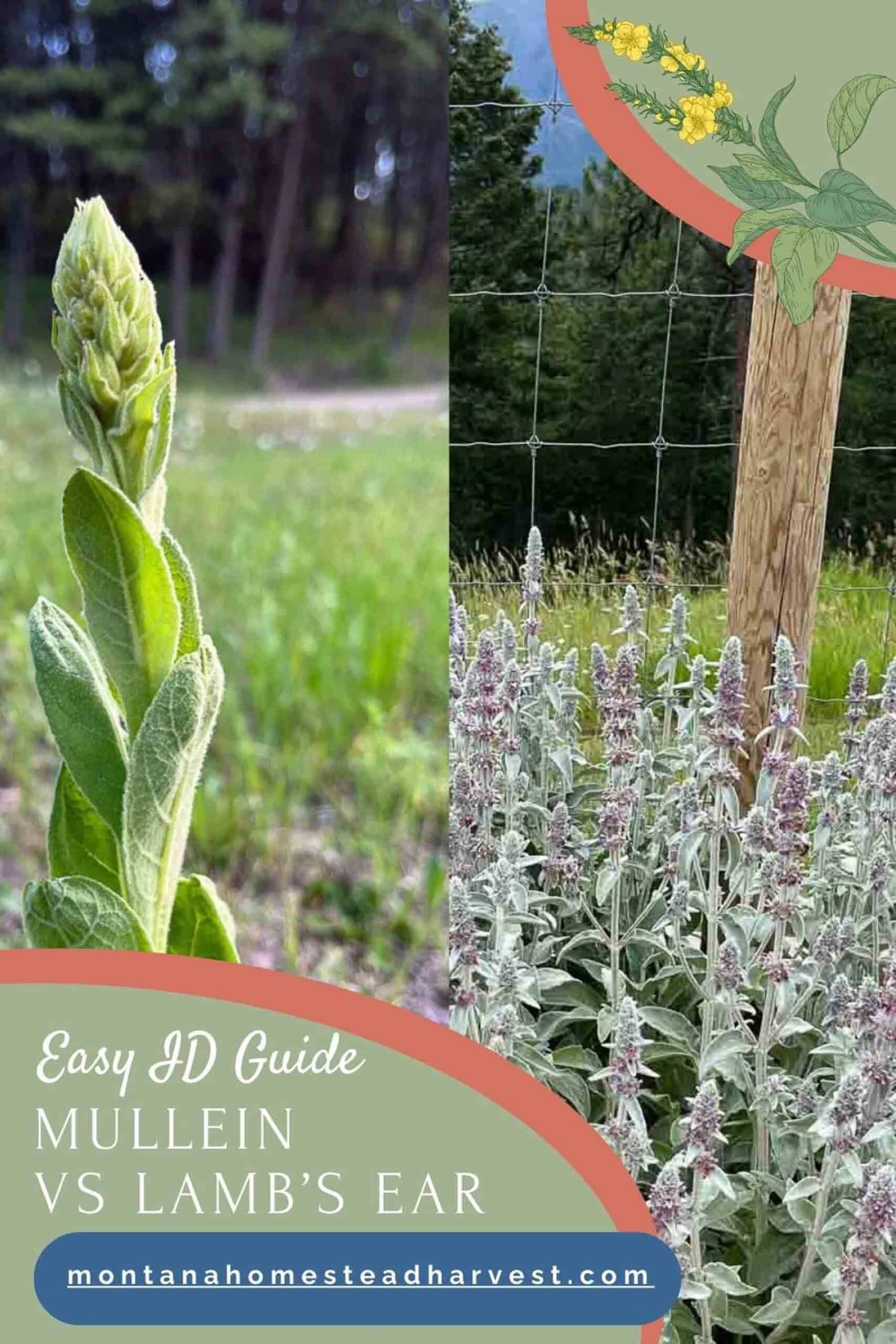
Mullein is a biennial plant native to Europe and Asia, but can be found in temperate regions worldwide. It is commonly found growing wild along roadsides, fields, and disturbed soil. Key mullein traits include large, elongated leaves (often 12-18 inches long). Mullein leaves form a rosette in the first year and can be dried and used to make mullein tea.
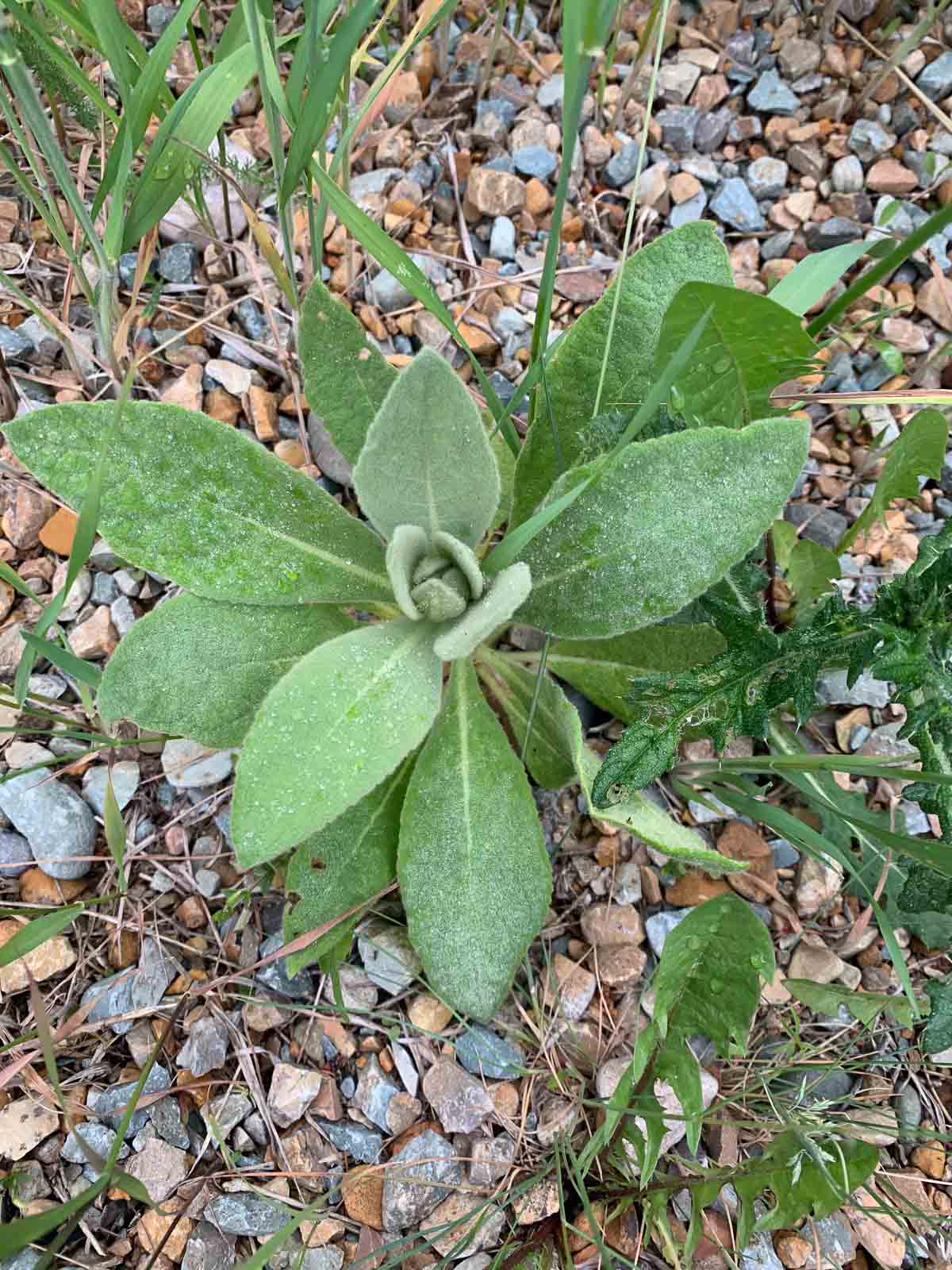
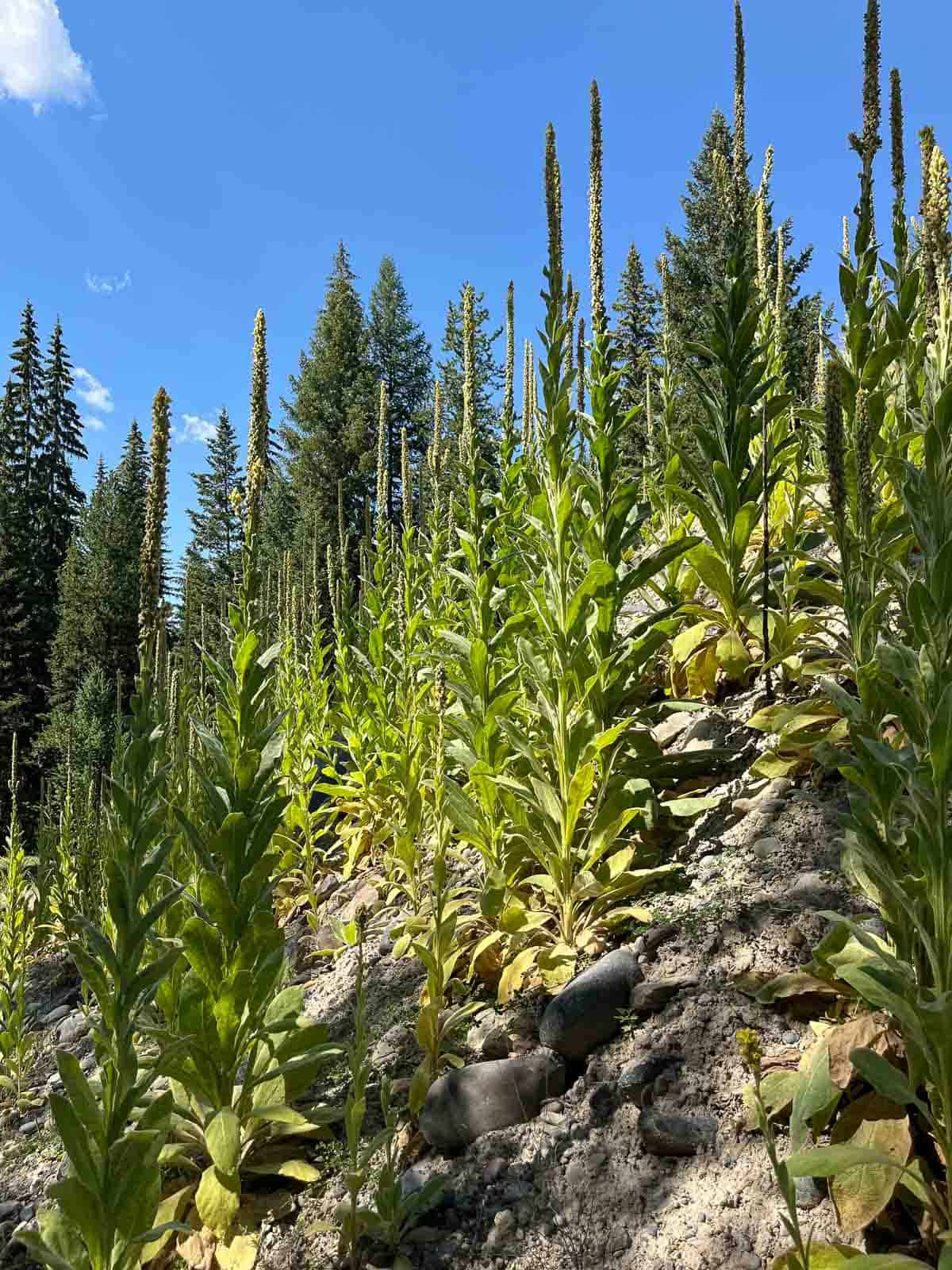
The second year produces a tall flowering stalk (often 4 to 6 feet tall). Bright yellow flowers grow along the stalk. The flowers can be dried and added to mullein tea or used to make mullein garlic oil, which is often used for mild earaches. Mullein grows in the wild and is not usually intentionally planted.
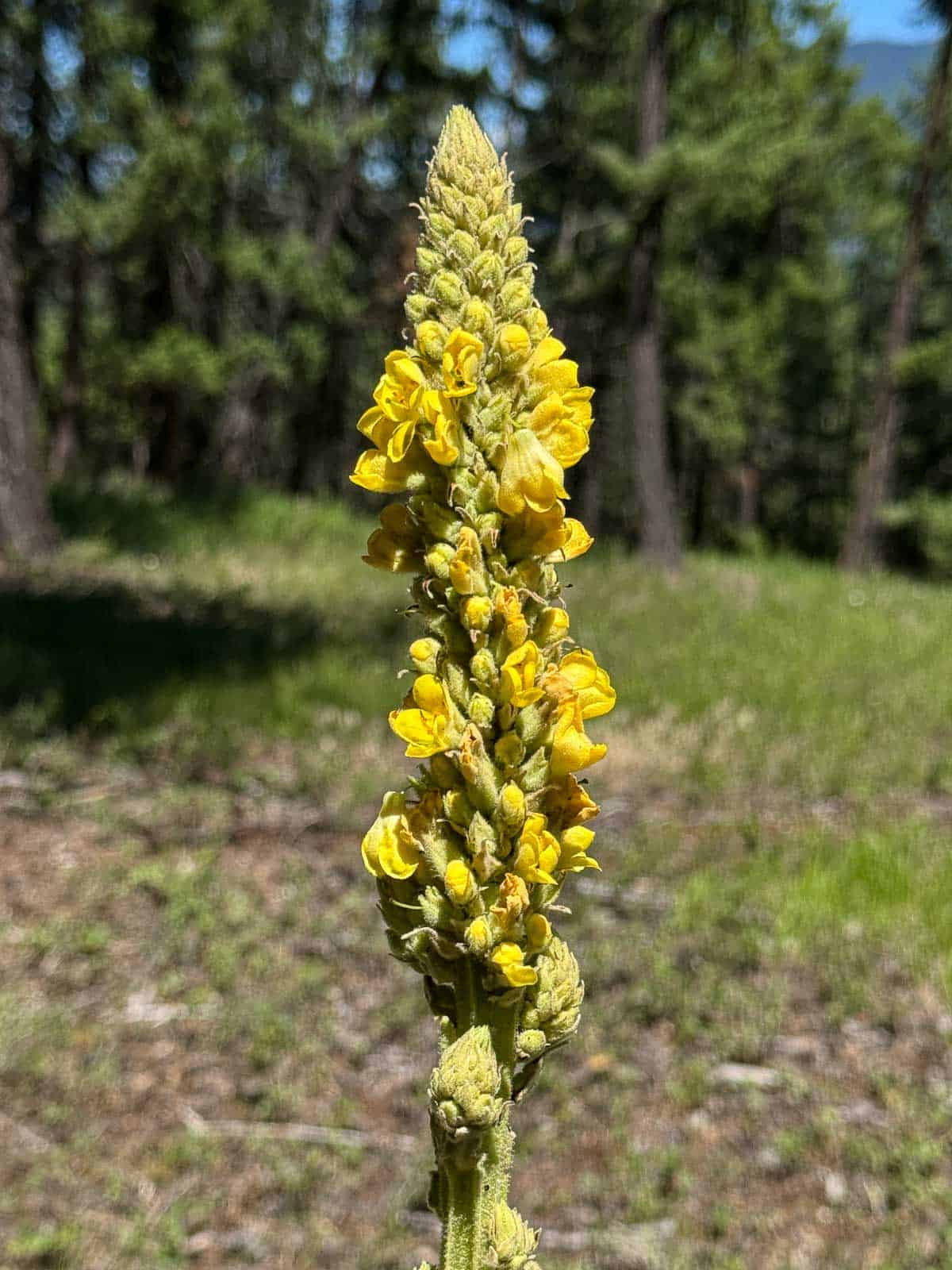
One distinctive feature of mullein is its tall, sturdy flower stalk, which historically served more than one purpose. In the past, the dried stalks were often dipped in tallow or resin and used as makeshift torches, earning mullein nicknames like "torch plant" or "candlewick plant." This is something lamb's ear does not produce, making the tall flowering stalk another easy way to tell the two plants apart.

Traditional Uses for Mullein
- Mullein leaf tea (prepared with leaves and flowers for respiratory support)
- Mullein oil (prepared with mullein flowers and garlic) is used for ear infections
- The leaves can be dried and smoked for lung issues
- Poultices and infused oils are also prepared with the leaves
Mullein has a long history of herbal use, especially for clearing the lungs, coughs, and reducing inflammation.
What Is Lamb's Ear?
Lamb's ear (Stachys byzantina) is a perennial ornamental plant native to the Middle East. It is most often found in gardens, not growing wild. Lamb's ear has small to medium, rounded leaves, which are very soft, thick, and have a felt-like texture. It has flower spikes with pink blossoms. Lamb's ear can grow up to 18" tall. It's hardy in zones 3 through 8 and thrives in poor soil, making it an excellent garden choice here in Montana. Lamb's ear is sometimes used in landscaping.

Lamb's Ear Traditional Uses
Historically, lamb's ear was often used as a natural bandage due to its soft, absorbent leaves. Some folk traditions also reference internal use for various conditions, including:
- Joint or muscle pain
- Menstrual cramps
- Digestive discomfort
- Respiratory complaints
- Kidney and bladder issues
However, it's important to note that these uses are largely anecdotal and based on traditional knowledge rather than modern clinical research.
Is Lamb's Ear Edible?
Yes, young lamb's ear leaves have been eaten in limited traditional and modern foraging contexts. They are sometimes lightly cooked or battered and fried. They are also used sparingly in salads and brewed into mild tea in folk traditions.
That said, lamb's ear leaves are very fuzzy, and the dense hairs can be irritating to the throat and digestive system for some people. Flavor descriptions vary widely, and raw consumption is not universally enjoyed or recommended.

Anyone considering internal use should proceed cautiously and consult a qualified healthcare professional or clinical herbalist, especially if pregnant, nursing, or managing a medical condition.
Lamb's Ear vs Mullein: Side-by-Side Comparison
| Feature | Mullein | Lamb’s Ear |
|---|---|---|
| Leaf size | Large, long, floppy | Smaller, rounded |
| Growth habit | Upright, tall in year two | Low, spreading ground cover |
| Flowers | Tall spike with yellow blooms | Short stalk, purple-pink blooms |
| Found growing | Wild | Garden ornamental |
| Common use | Medicinal (tea, oil, & salve) | Decorative, limited folk use |
| Internal use | Yes (traditionally) | Generally not recommended |

Can You Use Lamb's Ear Like Mullein?
While lamb's ear has been used historically in folk medicine, it does not have the same properties, safety profile, or herbal tradition as mullein. It's also not commonly prepared as tea or oil in modern herbal medicine.
If you're looking for respiratory support, infused oils, or salves, mullein is the plant you want. Lamb's ear, while charming and soft enough to pet, is better left in the garden where it belongs.

Foraging Safety Tips
Never rely on "fuzzy leaves" alone to identify a plant. Always confirm:
- Leaf shape
- Growth pattern
- Flower type
- Location (wild vs landscape)
- Season and maturity
If you didn't plant it and can't identify it with confidence, don't use it!
FAQ
No, they are entirely different plants with different uses and growth habits.
Mullein has no common poisonous look-alikes, but beginners should still confirm identification, especially before the flowering stalk appears.
Lamb's ear has traditional folk uses, mainly for external applications, but it is not widely used or well-studied as a medicinal herb today.
Pro Tips
- Wait for the flower stalk when trying to identify mullein. The tall, sturdy spice with yellow flowers is one of mullein's most reliable identifiers.
- Remember that mullein typically grows in wild fields, roadsides, disturbed soils, and mountains, while lamb's ear is almost always found in gardens or landscaped areas.
- Mullein leaves are much larger and more elongated than lamb's ear, especially in mature plants.
- Harvest mullein at the right stage. First-year rosettes are best for leaf harvest; second-year plants are ideal for flowers and stalks.
- Lamb's ear spreads enthusiastically. If planted in the garden, expect it to creep and self-seed. Great for pollinators, not so great for tidy beds.
Related Posts
If you enjoyed this lamb's ear vs mullein post, you may also like this birch vs aspen identification post.

Comments
No Comments