
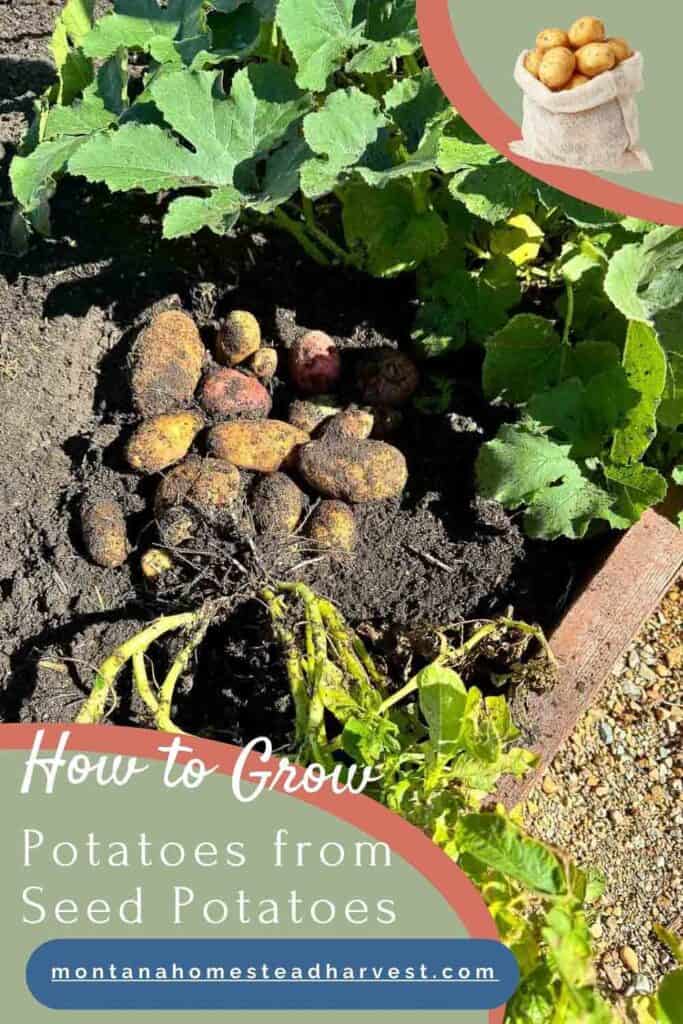
If you've ever thought about growing your own potatoes, seed potatoes are where it all begins! These aren't just any potatoes; they're specially grown tubers designed to produce healthy, productive plants. With a little prep and the right timing, you'll be digging up your own homegrown potatoes in just a few months! But did you know potatoes can also produce true seeds? Learn what potato berries are and how to grow potato seeds!
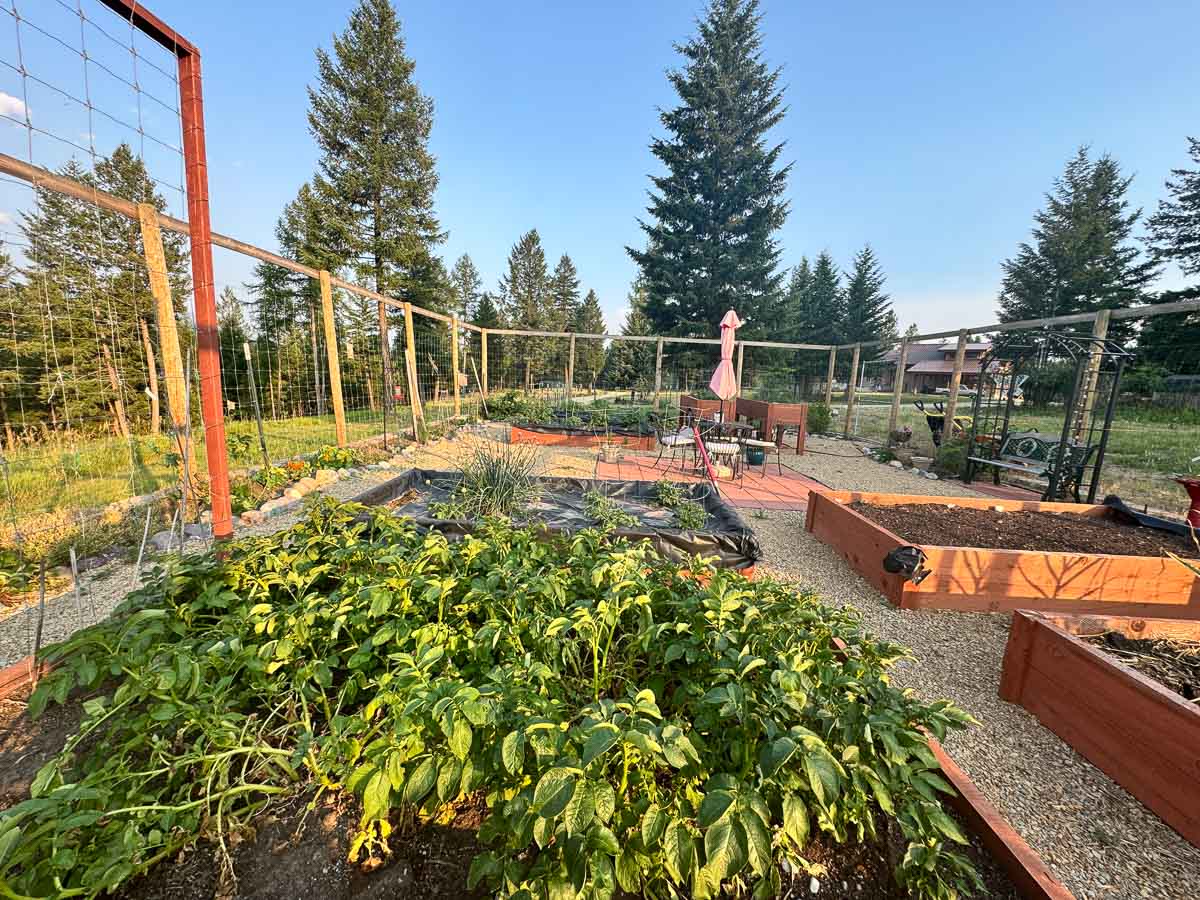
Growing seed potatoes is surprisingly easy, even if you're new to gardening or homesteading. This guide should answer all the questions you may have about growing a bounty of potatoes using seed potatoes.
Jump to:
- Tools You'll Need to Plant Seed Potatoes
- What Are Seed Potatoes?
- Why Not Use Grocery Store Potatoes?
- What Is Chitting Potatoes (And Should You Do It?)
- Best Time to Plant Seed Potatoes
- How to Prepare Seed Potatoes
- How to Plant Seed Potatoes
- How Often to Water Potatoes
- How Long Do Potatoes Take to Grow?
- How to Harvest Potatoes
- What to Do After Harvesting Potatoes
- Do Potatoes Need to Be Cured?
- FAQs
- Pro Tips
- More Gardening Posts
- Comments
Tools You'll Need to Plant Seed Potatoes
Growing seed potatoes doesn't require much equipment. A few basic gardening tools are all you need to get started.
- Shovel or garden spade
- Garden hoe (for weeding and cultivating soil)
- Sharp knife (for slicing larger potatoes)
- Measuring tape or ruler (for spacing)
- Watering hose or watering can
- Garden fork (for harvesting)
Optional tools include grow bags, wheelbarrow, garden gloves, and buckets for collecting your harvest.
What Are Seed Potatoes?
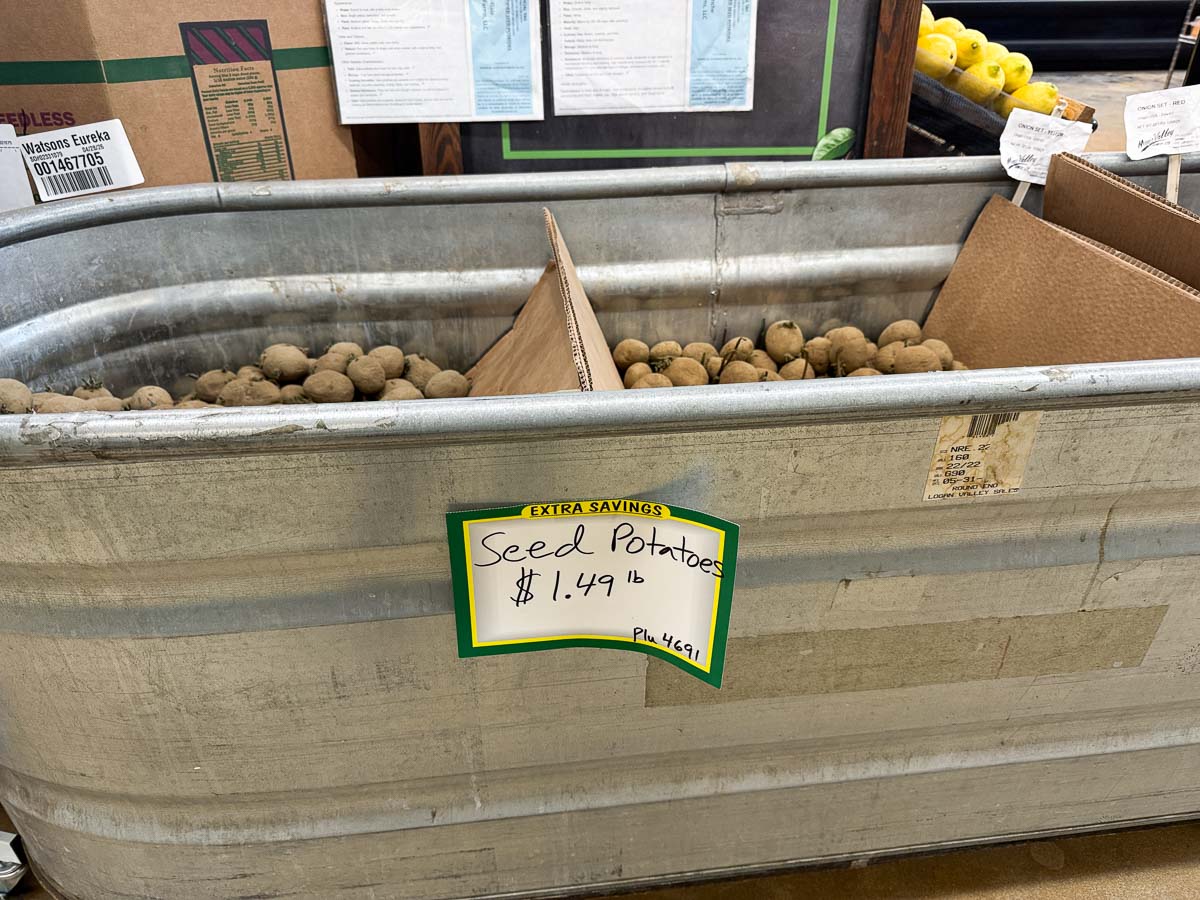
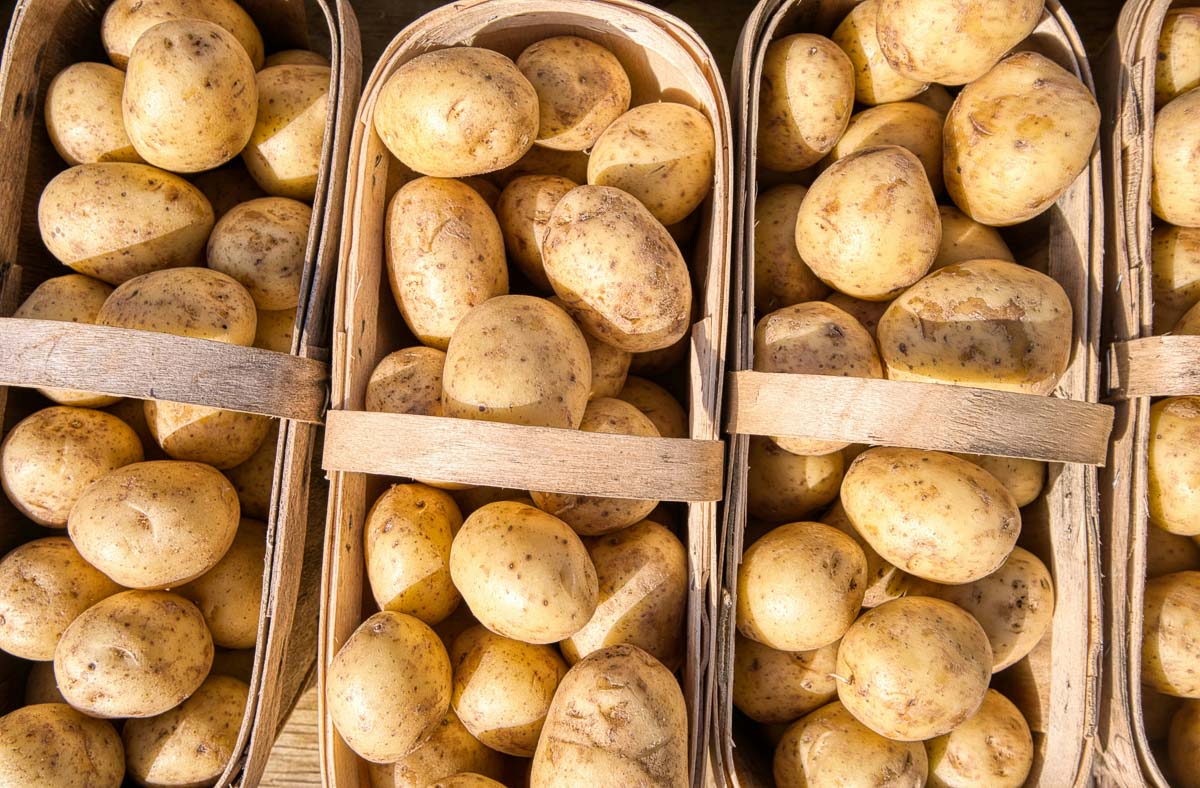
Seed potatoes are small potatoes, or pieces of potatoes, that are planted to grow new potato plants. Each piece contains at least one "eye," which is the little sprout that develops into a stem. Unlike normal grocery store potatoes, seed potatoes are:
- Certified disease-free
- Untreated with sprout inhibitors
- Specifically grown for planting.
Best Varieties of Seed Potatoes
Some popular options include:
- Russet: Great for baking
- Yokon Gold: Creamy and versatile
- New Potatoes: Perfect for roasting and salads
Why Not Use Grocery Store Potatoes?
You can, but it's a bit of a gamble.
Most store-bought potatoes are treated to prevent sprouting, and they may carry diseases that can spread in your soil. Seed potatoes give you a much better shot at a healthy, productive crop.
What Is Chitting Potatoes (And Should You Do It?)
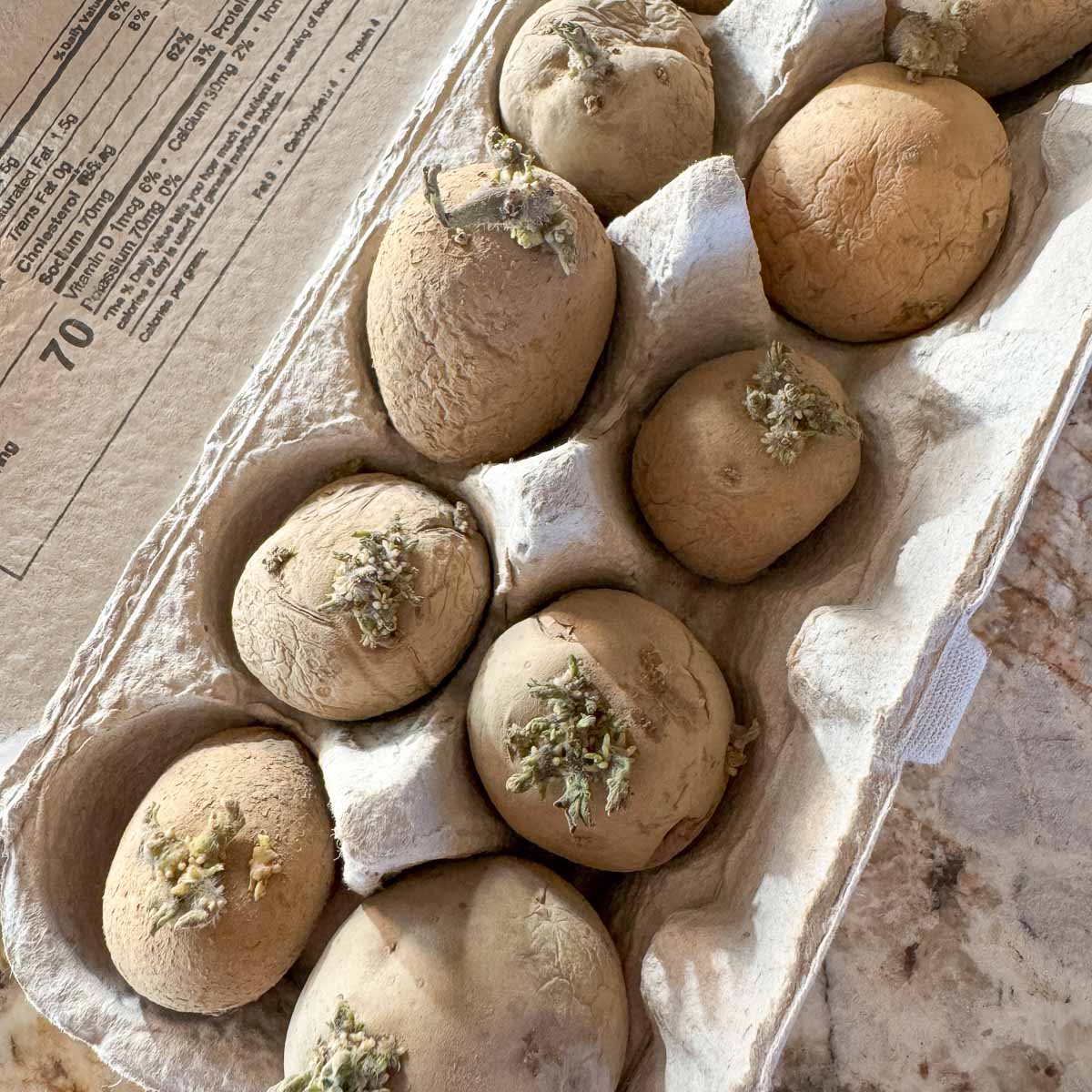
Chitting is the process of pre-sprouting seed potatoes before planting them. It gives the potatoes a head start and can lead to faster growth and earlier harvests.
Do You Have to Chit Potatoes?
No, you don't have to chit potatoes. Potatoes will grow without chitting, but chitting can speed up sprouting and improve yields in shorter growing seasons. It also gives you stronger, more vigorous plants. In places like Montana, where the growing season can feel a bit rushed, it's definitely worth doing.
How to Chit Potatoes
- Place seed potatoes in a single layer in egg cartons with eyes facing up.
- Set them in a cool, bright location, but not in direct sunlight.
- Leave them for 2 to 4 weeks, or until they develop short, sturdy green sprouts. The potatoes are ready to plant when the sprouts are ½" to 1" long.
Best Time to Plant Seed Potatoes
Potatoes are a cool-season crop, so timing matters. Plant 2 to 4 weeks before your last expected frost. A good friend who was born and raised in Montana once told me that the old saying is to plant potatoes on Good Friday.
This traditional guideline has been passed down for generations and works surprisingly well in many northern climates. Good Friday usually falls in early to mid-spring, right around the time the soil begins to warm and can be worked. Since potatoes are a cool-season crop, they benefit from being planted as soon as the ground is no longer frozen and the soil temperature reaches about 45°F.
Gardeners have long relied on memorable sayings like this to guide their planting. Another well-known example is the old adage that corn should be "knee high by the Fourth of July." These bits of folk wisdom were passed down through generations and helped gardeners time their crops long before weather apps and soil thermometers existed.
Of course, Montana weather likes to keep gardeners humble, so use this saying as a general rule rather than a hard deadline. If the ground is still frozen or saturated with snowmelt, it's best to wait a little longer. Potatoes are patient, and they'll perform much better in workable soil than in a cold, muddy trench.
I love these old gardening traditions because they connect us to generations of gardeners who learned to work with the seasons and trust the rhythms of nature. Sometimes the best gardening advice is simple: plant your potatoes on Good Friday and hope your corn is knee high by the Fourth of July.
How to Prepare Seed Potatoes
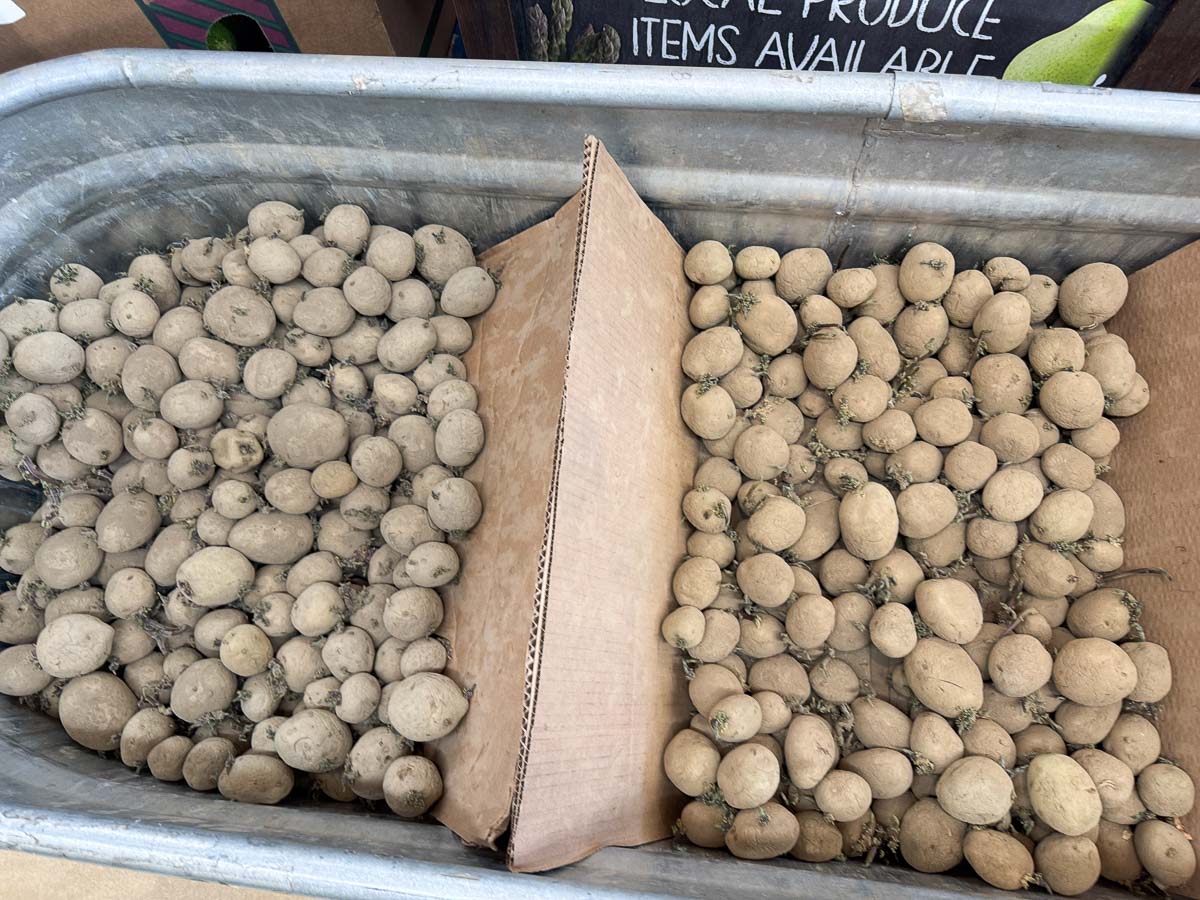
If your seed potatoes are small, you can plant them whole. Larger ones should be cut into chunks.
- If you have a lot of seed potatoes, you can keep them whole. Whole seed potatoes will usually yield bigger plants and more potatoes.
- If you have a smaller amount of seed potatoes, they can be cut into 2" pieces, making sure each piece has an eye.
- Once cut, let them dry for a couple of days. This drying time process is called curing and helps to prevent rot after planting.
How to Plant Seed Potatoes
Choose the Right Spot
The spot you choose for planting your potatoes should have full sun (at least 6 to 8 hours daily). Use well-draining soil, meaning loose, fluffy soil. Potatoes can't thrive in compacted soil.
Plant Potatoes
If using the square foot gardening method, plant 1 seed potato per square foot. For smaller potatoes such as new potatoes, you can plant up to 4 seed potatoes per square foot. If using cut potatoes, plant the pieces cut-side down.
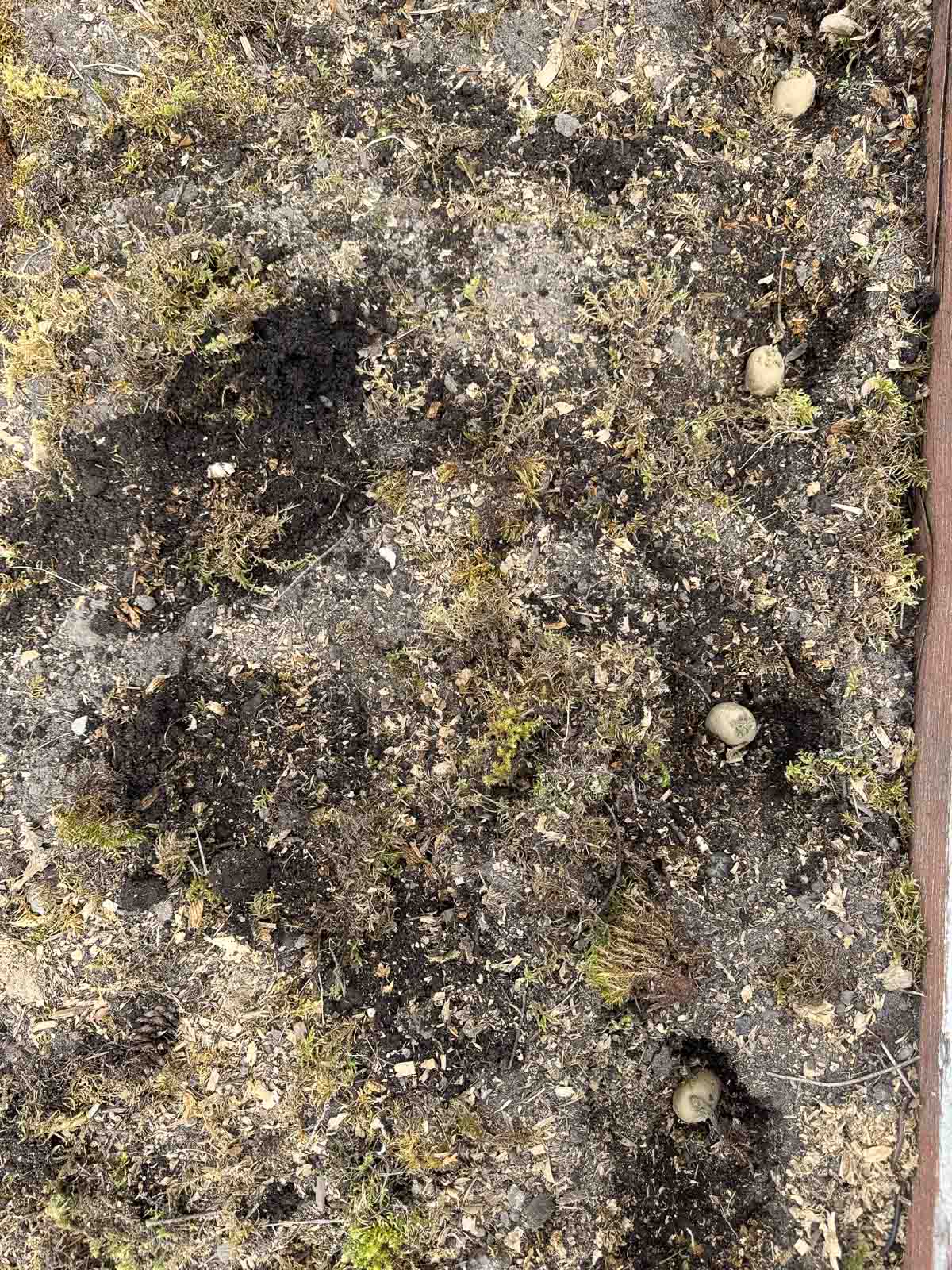
You can also plant them in trenches. The trenches should be approximately 8" deep. The rows should be spaced approximately 2 feet apart.
Cover with Soil
Cover potatoes with soil, then add more soil as the plant grows. This is called "hilling." Hilling prevents potatoes from turning green and encourages more tubers. It also keeps weeds under control.
How Often to Water Potatoes
Potatoes like consistent moisture but not soggy soil, so water deeply about 3 times a week. Aim for about 1" to 2" of water. Overwatering can lead to rot. Not enough watering will yield sad, tiny potatoes. Reduce watering when plants start to die back.
How Long Do Potatoes Take to Grow?
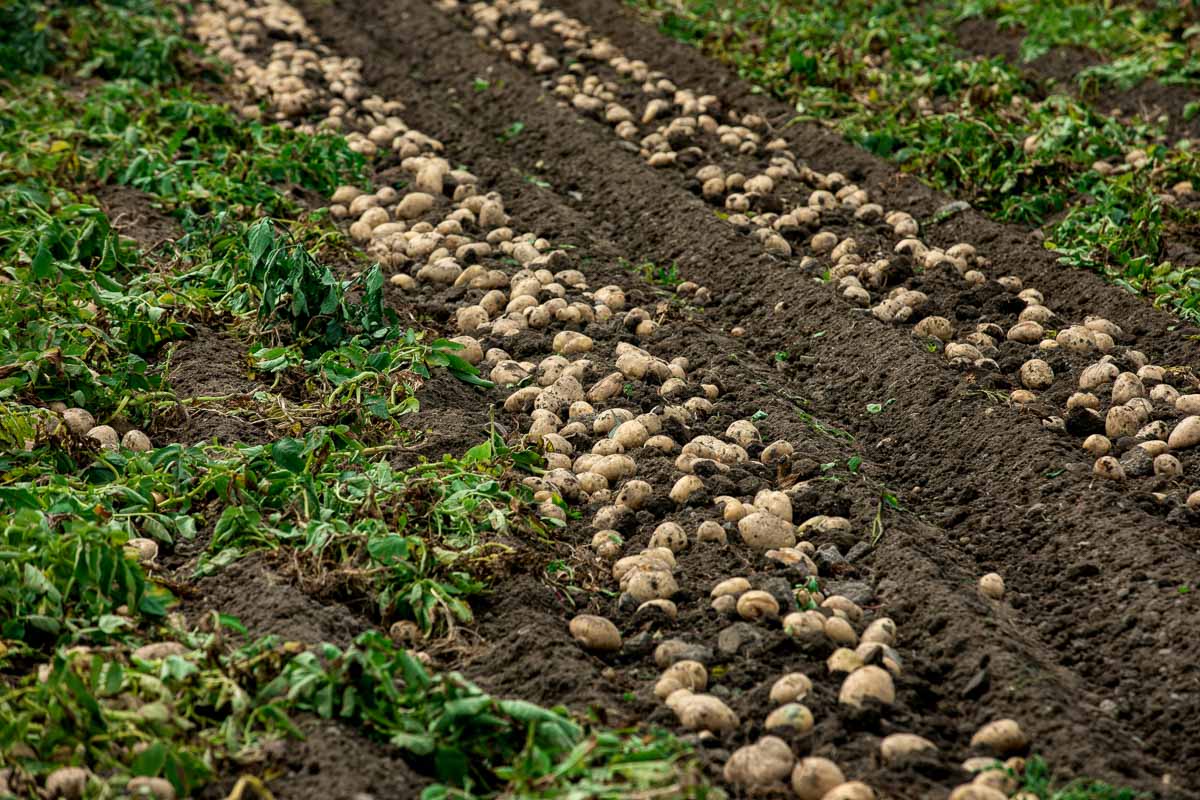
Most potatoes are ready in 70 to 100 days. You can harvest new potatoes early when they're small and tender, when the plant begins to flower. Harvest full-sized potatoes after plants die back.
How to Harvest Potatoes
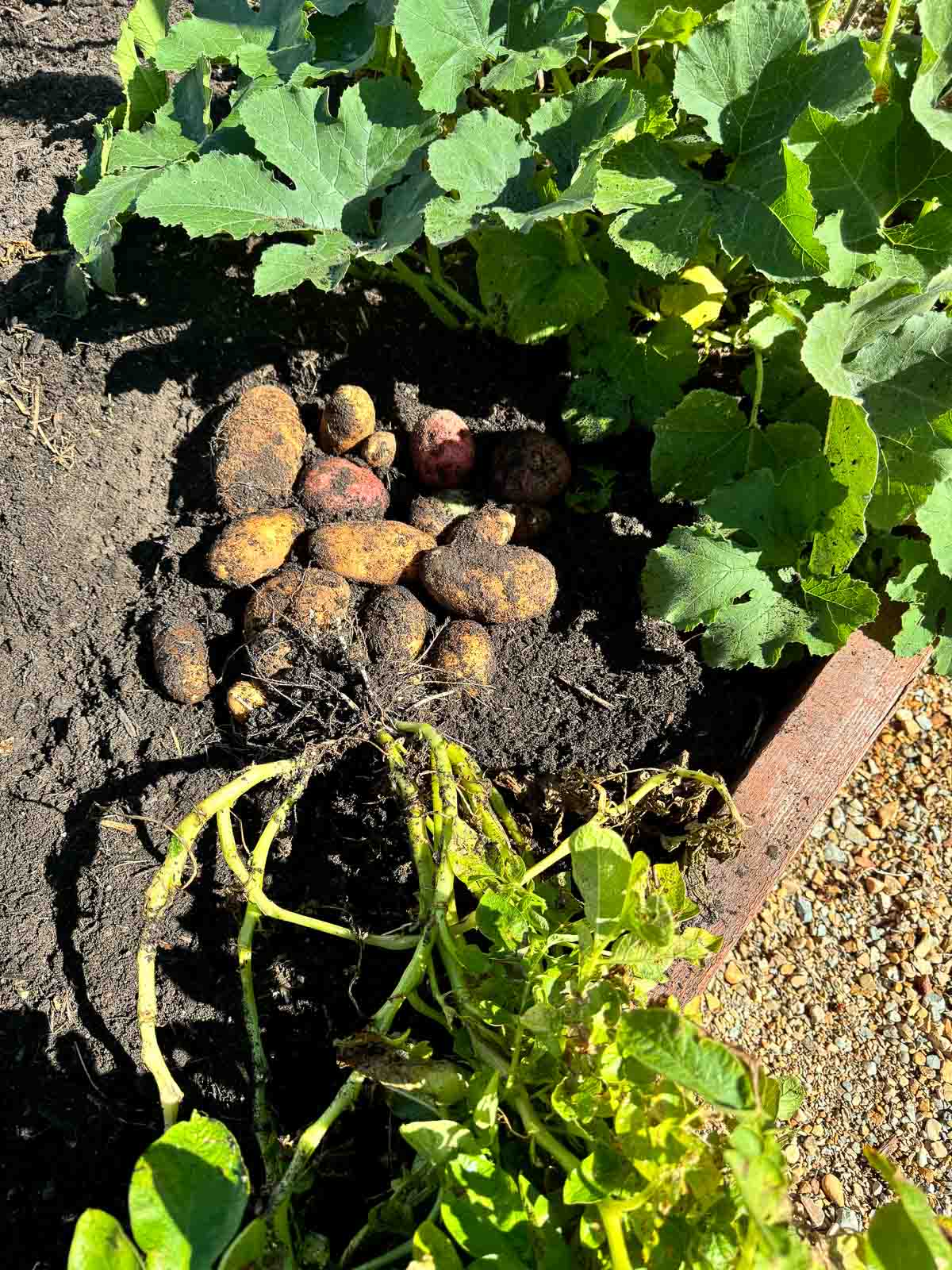
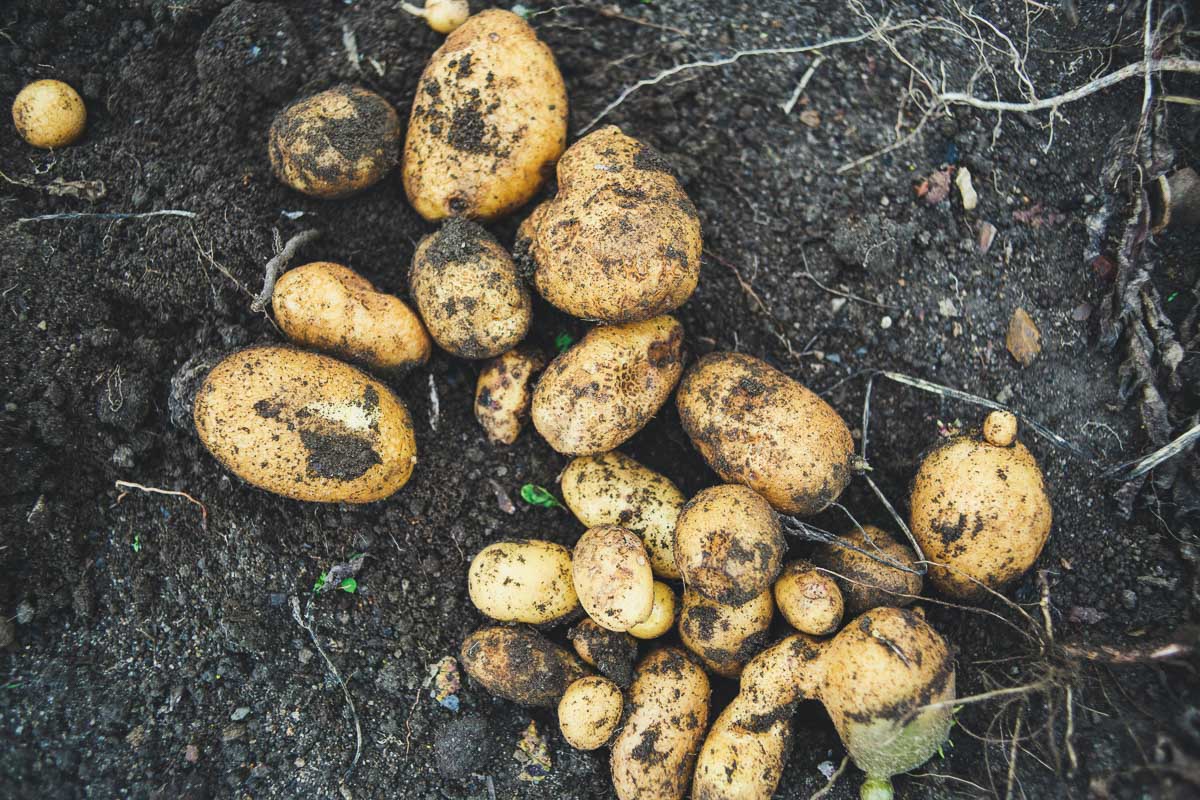
Once the plants turn yellow and die back, stop watering for a bout a week. Pull the potato plants out of the soil, then use a garden fork to gently dig up the potatoes, being careful not to nick them.
What to Do After Harvesting Potatoes
You've dug up your potatoes, now what? Don't rush them straight into the kitchen just yet! They need a little post-harvest care to store well and taste their best.
Do Potatoes Need to Be Cured?
Yes, especially if you plan to store them long-term. Curing toughens the skin and helps heal small cuts or bruises, which prevents rot during storage.
How to Cure Potatoes
Gently brush off excess dirt (don't wash them just yet). Lay potatoes in a single layer in a dark, well-ventilated space. Keep them at around 50-60°F. Let them cure for 1 to 2 weeks. A basement, garage, or shed usually works well, as long as it's not damp.
After Curing
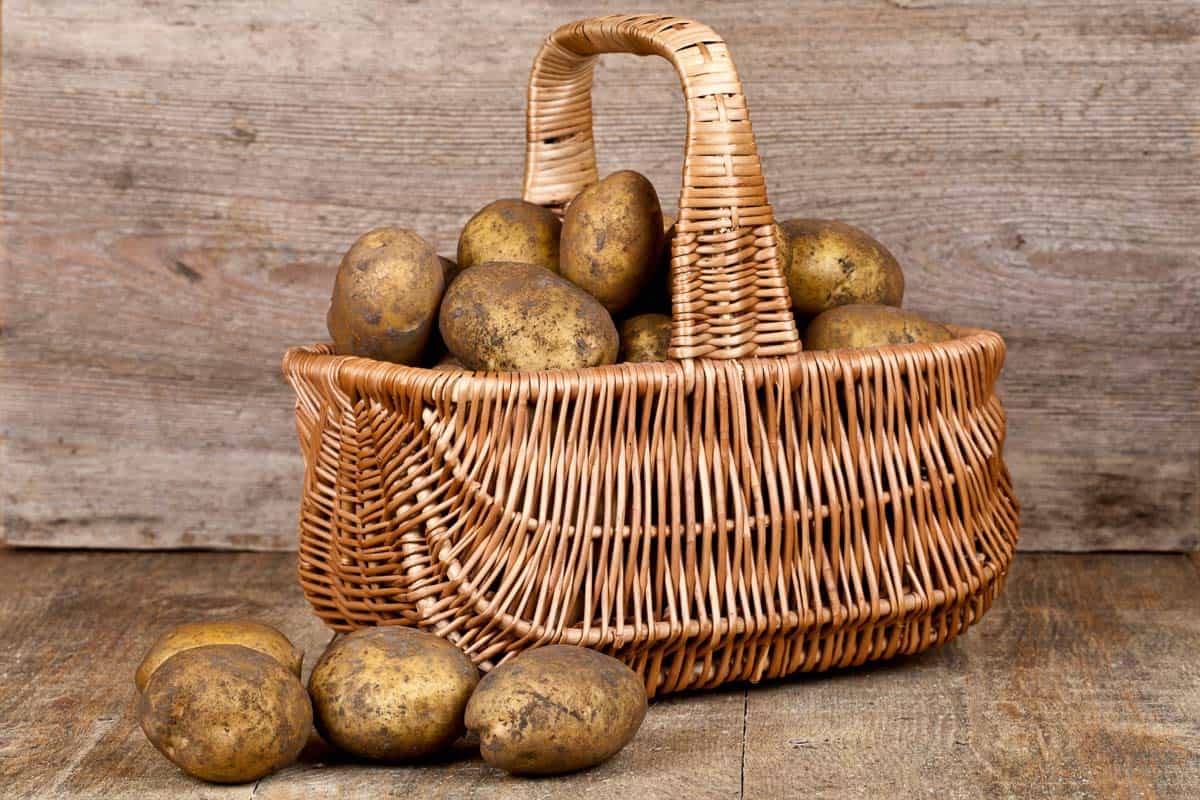
After curing, store in the same cool environment in breathable containers like baskets, paper bags, or crates.
Don't store potatoes with onions because they make bad roommates. Onions and potatoes release gases that can cause each other to spoil faster.
FAQs
Yes! Use a large container or grow bag with good drainage. Just keep adding soil as they grow.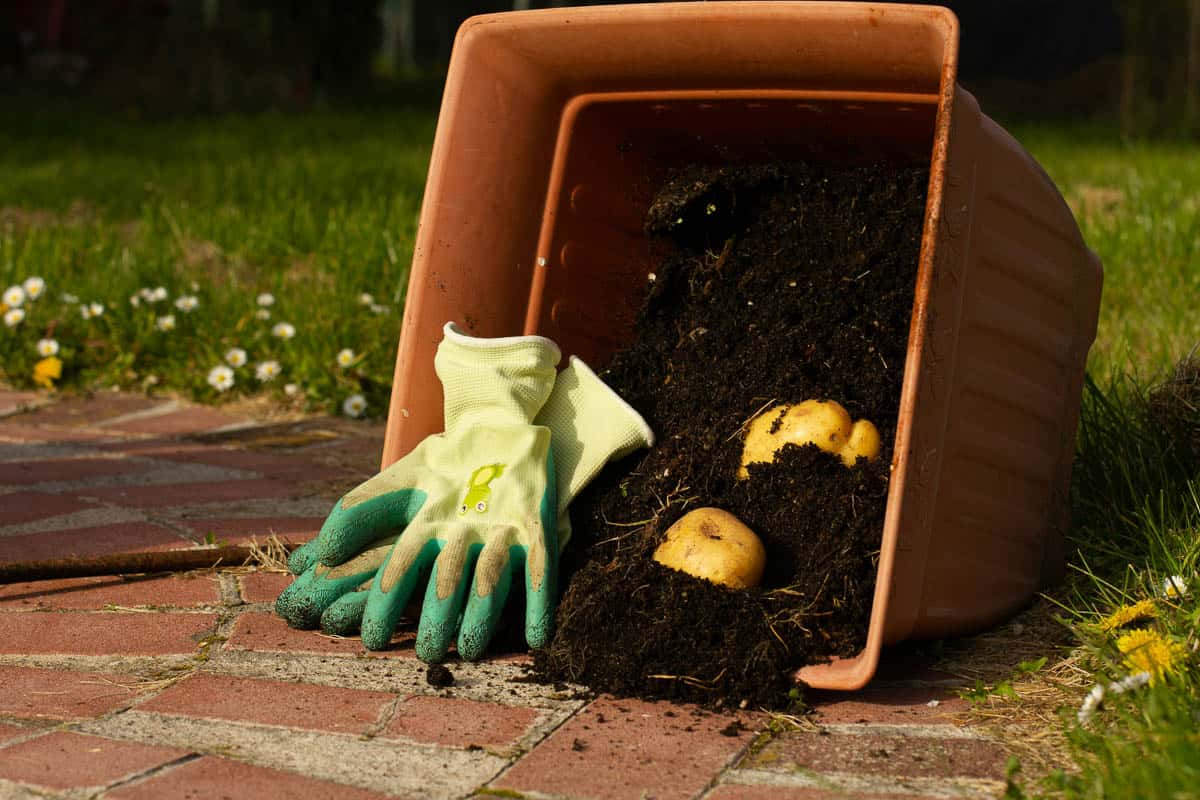
On average, you can expect 5 to 10 potatoes per plant, depending on variety and growing conditions.
Yes, but don't overdo it. Too much nitrogen = lots of leaves, fewer potatoes.
Pro Tips
- Rotate crops every year to prevent disease.
- Avoid planting in the same spot as tomatoes and peppers. Since they are in the same nightshade family, planting them together can increase the chances of early blight, late blight (responsible for the Irish potato famine), Verticillium Wilt (a soil-borne fungal disease), and Colorado potato beetle.
- Add compost before planting for better yield.
- Mulch with straw to retain moisture and prevent weeds.
- Don't wash potatoes before curing them.
Growing seed potatoes is one of the most rewarding crops you can plant. They're low-maintenance, productive, and there's nothing like digging up your own homegrown potatoes. Once you try it, you'll never look at store-bought potatoes the same way again!
More Gardening Posts
Looking for other recipes like this? Try these:

How to Grow Seed Potatoes (Beginner-Friendly Guide)
Ingredients
- seed potatoes
Instructions
- Cut large seed potatoes into chunks with at least one eye each. Allow cut pieces to dry for 1 to 2 days.
- Prepare loose, well-drained soil in a sunny location. Plant seed potatoes 6 to 8 inches deep and 10 to 12 inches apart. Cover with a few inches of soil.
- Water consistently throughout the season. Hill soil around plants as they grow.
- Harvest when the foliage turns yellow and dies back. Cure potatoes for 1 to 2 weeks before storing.
Notes
- Rotate crops every year to prevent disease.
- Avoid planting in the same spot as tomatoes and peppers. Since they are in the same nightshade family, planting them together can increase the chances of early blight, late blight (responsible for the Irish potato famine), Verticillium Wilt (a soil-borne fungal disease), and Colorado potato beetle.
- Add compost before planting for better yield.
- Mulch with straw to retain moisture and prevent weeds.
- Don't wash potatoes before curing them.
Hilda Sterner says
Did you find this post helpful? If so, please consider leaving a comment, a star rating, or both!