

Echinacea tea has been a go-to herbal remedy for generations. It's floral, soothing, and perfect for supporting overall wellness. The best part? You can grow echinacea right in your own garden, even here in Montana! Coneflowers not only add beauty to your garden, but they can be used to make a delicious, immune-supporting tea, just like my lavender tea blend!

This echinacea tea recipe can be made using either the dried aerial parts of the plant or the root, depending on what you have on hand. The method is slightly different for each, and I'll walk you through both so you can brew it properly.
And if you enjoy wellness-focused herbal teas, you might love my elderberry tea blend. It's a vibrant mix of dried elderberries, hibiscus flowers, rose hips, citrus peel, cinnamon, and cloves. Bold, warming, and perfect during cold and flu season.
What is Echinacea Tea?
Echinacea tea is an herbal tea made from the flowers, leaves, or roots of the echinacea plant. It has been used traditionally for generations, especially during cold and flu season. The tea can be prepared by steeping the aerial parts of the plant or by simmering the root into a stronger decoction, depending on which part is used.
Native American tribes used it both internally and topically to treat snake bites. Plains Indians had other uses for echinacea, using it to treat pain, toothaches, and infections, much like mullein tea.
Jump to:
- What is Echinacea Tea?
- Benefits of Echinacea Tea
- Ingredients & Substitutions
- How to Make Echinacea Tea (two methods)
- What the Research Says About Echinacea
- Herbal Pairings
- Equipment
- How to Grow Echinacea in Your Garden
- What Type of Echinacea to Grow
- Where to Plant Echinacea
- When & How to Plant
- Caring for Echinacea
- Harvesting Echinacea for Tea
- Drying and Storing Echinacea
- Why Grow Your Own Echinacea?
- Pro Tips
- FAQ
- Final Thoughts
- More Gardening Posts
- More Tea Recipes
- Recipe
- Comments
Benefits of Echinacea Tea
Echinacea is a perennial and part of the Asteraceae family, along with sunflowers and perhaps less-known arrowleaf balsamroot. It's very popular for seasonal wellness and loved for its earthy, floral flavor. Coneflowers (used to make echinacea tea) are also really easy to grow.
Ingredients & Substitutions

- 1 tablespoon echinacea (flowers and leaves or dried roots)
- 1 cup water
- Sweetener of choice (cardamom syrup, honey, sugar, elderberry syrup)
See recipe card for quantities.
How to Make Echinacea Tea (two methods)
For Echinacea Flowers & Leaves (Infusion)
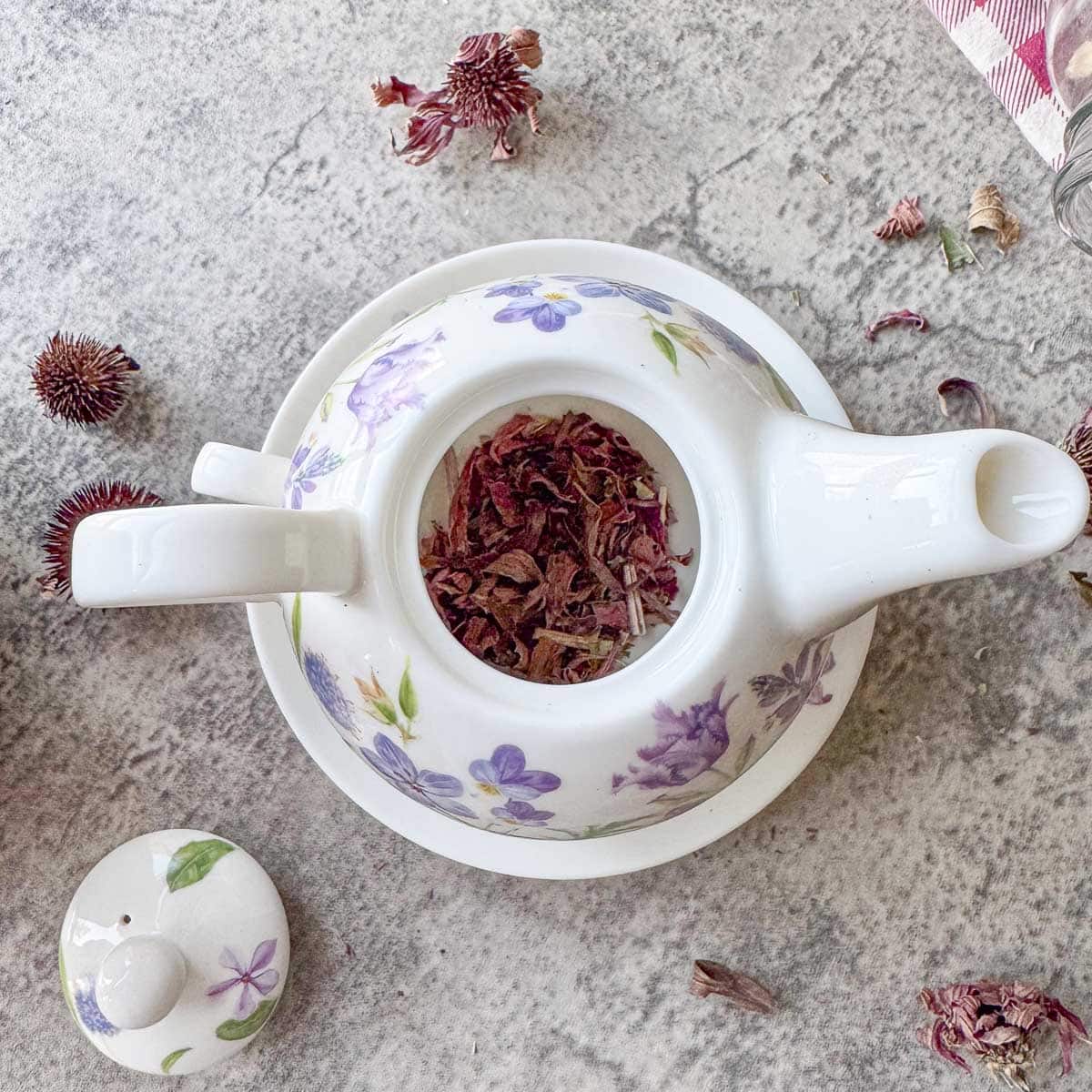
- Add 1 tablespoon dried and crushed echinacea to a teapot and cover with boiling water. Steep for 10 minutes.

- Strain tea through a fine mesh strainer into your favorite cup, then sweeten, if desired.
For Echinacea Root (Decoction)
- Add 1 tablespoon dried echinacea root to a teapot and cover with 1 cup of water. Simmer for 15-20 minutes.
- Strain tea through a fine mesh strainer, then sweeten, if desired.

What the Research Says About Echinacea
Modern research supports many of the traditional uses of echinacea. A 2014 meta-analysis published in The Lancet Infectious Diseases found that echinacea supplementation was associated with a reduced risk of recurring respiratory infections.
Additional studies have explored its anti-inflammatory potential, including research published in Phytomedicine (2010), which demonstrated significant anti-inflammatory effects in human bronchial cells. Clinical trials reported in Evidence-Based Complementary and Alternative Medicine (2012) also found that echinacea may help reduce the duration and severity of common cold symptoms.
While echinacea tea isn't a cure, these findings help explain why it has long been used as a supportive herb during cold and flu season.
Safety Note
Echinacea tea is traditionally used as a short-term herbal beverage. Avoid prolonged daily use, and do not use it if you are allergic to plants in the daisy family (Asteraceae). This information is for educational purposes only and is not intended as medical advice.
Herbal Pairings
Echinacea is often paired with elderberry in traditional herbal preparations. Elderberry is well known for its antioxidant properties and has long been used to support the body during cold and flu season. When combined, elderberry's supportive antiviral properties complement echinacea's immune-stimulating effects, making the two a popular pairing for supporting upper respiratory health.
This combination is commonly used as a supportive blend rather than a treatment, especially at the first sign of seasonal illness.
I often sweeten echinacea tea with elderberry syrup instead of honey or sugar. It adds a rich, berry flavor and pairs beautifully with echinacea's earthy notes.
Equipment
All you need to make this echinacea tea recipe is a teapot, a fine mesh strainer, and a tea cup!
How to Grow Echinacea in Your Garden
Echinacea is one of the easiest medicinal herbs to grow, which makes it a favorite for home gardens and homesteads. Once established, it's draught-tolerant, cold-hardy, and happily comes back year after year with very little fuss. If you're looking for a plant that's both beautiful and useful, echinacea checks all the boxes. It will even thrive in a Montana garden!

What Type of Echinacea to Grow
For home gardeners, Echinacea Purpurea is the most reliable and widely used variety. Other echinacea species exist, but purpurea is the best place to start for beginners.
- Easy to grow
- Perennial and cold-hardy
- Great for teas and other traditional herbal preparations
- Attracts bees and pollinators
Where to Plant Echinacea
- Sun: Full sun to partial shade
- Soil: Well-drained soil is essential
- Water: Moderate watering until established, then minimal
Echinacea does not like wet feet. If your soil holds water, consider raised beds or improving drainage before planting.
When & How to Plant
- When to Plant:
- Spring after the last frost
- Or fall for established plants
- From Seed:
- It can be slow and may not bloom the first year
- From Nursery Starts:
- Faster results and blooms sooner, or leave seedheads for birds or self-seeding.
Space plants 12-18 inches apart

Caring for Echinacea
- Water regularly during the first growing season
- Mulch lightly to retain moisture and suppress weeds
- Avoid heavy fertilizing; echinacea thrives in average soil
- Deadhead dried flowers to encourage more blooms
This is a plant that prefers a little neglect. Overwatering and overfeeding are the fastest ways to make it unhappy.
Harvesting Echinacea for Tea
Flowers and Leaves
- Harvest petals and leaves during peak bloom
- Snip flowers and leaves with clean scissors
- Can be used fresh or dried to make tea


Harvesting Echinacea Roots
- Wait 2 to 3 years before harvesting roots
- Harvest in the fall after the plant has died back
- Dig carefully, rinse well, and chop before drying
Roots are the most potent part of the plant and should always be prepared as a decoction, not a simple steep. If you're into using roots in herbal drinks, roasted dandelion root coffee is another great one to try.
Drying and Storing Echinacea
- Air-dry in a well-ventilated space or use a dehydrator on low heat
- Store in an airtight jar away from light and moisture
- Label with the plant part and harvest year (future-you will thank you)

Properly dried echinacea will keep its quality for about 1 year.
Why Grow Your Own Echinacea?
For starters, a single echenacia plant lasts for years. You control how it's grown and harvested, and it earns its place in the garden by being both ornamental and practical. Fresh, home-grown herbs beat store-bought any day.
Pro Tips
- Roots should always be simmered, not steeped, to extract their beneficial properties.
- You can blend echinacea with other herbs, such as mint, lemon balm, or elderflower, to mellow the flavor.
- The spiky part of the coneflower (seedhead) is not generally used to make echinacea tea.
- Echinacea tea is typically used short-term, not as a daily, long-term beverage.
FAQ
Echinacea tea has an earthy, slightly bitter flavor with a mild numbing sensation on the tongue, particularly when made with the root. It's not a "sip-for-fun" kind of tea, but a little honey or lemon goes a long way in making it more enjoyable.
Yes, you can use fresh echinacea for tea, but the flavor will be milder than that of dried echinacea. Fresh flowers and leaves can be steeped just like dried herbs, while fresh roots should still be simmered as a decoction. If using fresh herbs, you'll generally need about double the amount compared to dried.
Echinacea tea is traditionally used for short-term, not as an everyday, long-term tea. Many people drink it for a few days at a time during seasoning challenges, then take a break. It's best used occasionally rather than continuously.
Echinacea is commonly used in small amounts, but children may be more sensitive to herbs. Always check with a qualified healthcare provider before giving herbal teas to children, especially those with allergies.
Yes! Echinacea is a perennial, meaning it comes back year after year once established. In fact, healthy plants often grow larger and produce more flowers with each season, making them a long-term addition to the garden.
Absolutely. Echinacea is cold-hardy and grows well in many northern climates, including areas with harsh winters. Once established, it tolerates cold, heat, and drought surprisingly well.
Final Thoughts
Growing echinacea at home is one of those small garden choices that pays off year after year. It's easy to grow, beautiful in the garden, and useful when you want to make a simple cup of echinacea tea from herbs you harvested yourself.
Whether you're brewing the flowers, leaves, or simmering the roots into a decoction, echinacea is a practical plant that truly earns its place on the homestead.

More Gardening Posts
If you enjoyed this post, you may also enjoy learning the differences between mullein vs lamb's ear and birch vs aspen! For more gardening-specific posts, check out my Montana garden planning guide, how to plant onion sets, and a complete guide to planting seed potatoes.
More Tea Recipes
Looking for other recipes like this? Try these:


Recipe

How to Make Echinacea Tea (And Grow It in Your Garden)
Equipment
Ingredients
- 1 tablespoon dried echinacea flowers and leaves
- 1 cup water
Instructions
- Add 1 tablespoon dried and crushed echinacea to a teapot and cover with boiling water. Steep for 10 minutes.
- Strain tea through a fine mesh strainer into your favorite cup, then sweeten, if desired.
Echinacea Tea Decoction
- Add 1 tablespoon dried echinacea root to a teapot and cover with 1 cup of water. Simmer for 15-20 minutes.
- Strain tea through a fine mesh strainer, then sweeten, if desired.
Notes
- Roots should always be simmered, not steeped, to extract their beneficial properties.
- You can blend echinacea with other herbs, such as mint, lemon balm, or elderflower, to mellow the flavor.
- The spiky part of the coneflower (seedhead) is not generally used to make echinacea tea.
- Echinacea tea is typically used short-term, not as a daily, long-term beverage.
Hilda Sterner says
I hope you enjoy growing coneflowers and making echinacea tea!