
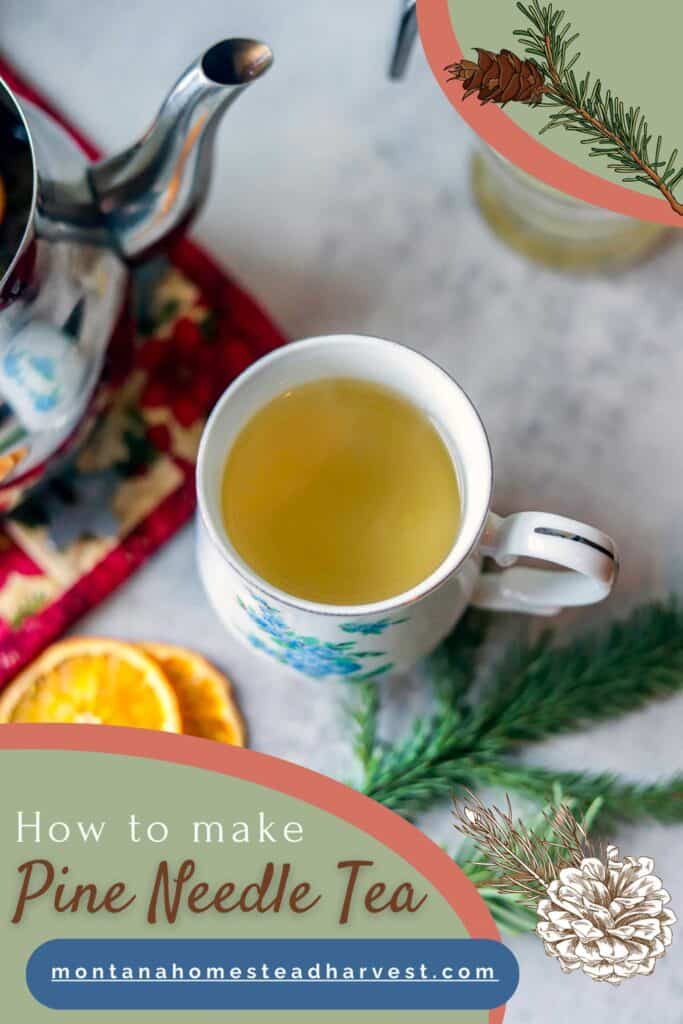
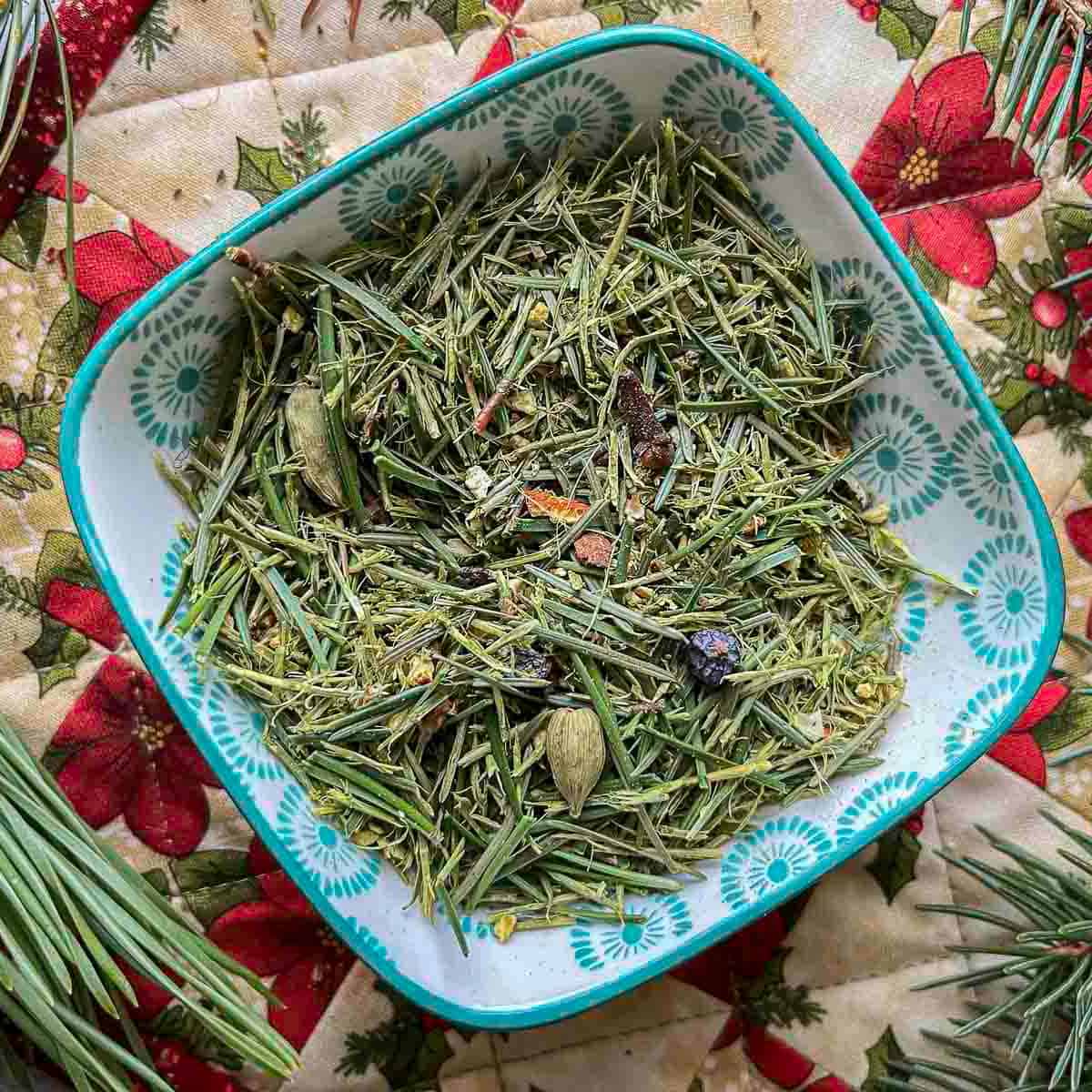
Pine needle tea is a refreshing and citrusy tea with many health benefits. I like to steep pine needles with cinnamon, juniper berries, cloves, cardamom, and dehydrated orange slices for a warm, aromatic blend that enhances the natural citrusy flavor of the pine. And if this sounds like your cup of tea, you should also try pine needle soda!

If you know me at all, you know one of my favorite pastimes in Montana is foraging! The good Lord has given us (and the animals) so many berries, plants, and mushrooms to harvest (elderberries, chokecherries, and huckleberries, to name a few). Although foraging options are limited in the winter, there are always the evergreens!
So before winter is gone, snuggle up next to a warm fire and sip on a hot cup of pine needle tea. Or have Christmas in a cup, any time of year. Not only is it delicious, but it also offers a variety of health benefits!
And if you're curious about other ways to use pine, check out my pine resin salve post.
Jump to:
What Is Pine Needle Tea?
Pine needle tea is a simple herbal tea made by steeping fresh pine needles in hot water. This traditional tea has been enjoyed for centuries in many parts of the world and is valued for its refreshing flavor and natural vitamin content.
The tea has a bright, slightly citrusy taste with subtle evergreen notes, making it surprisingly pleasant and invigorating. Because pine trees grow abundantly in many forests, this tea is also one of the easiest wild teas to forage.
While several pine species can be used to make tea, it's important to properly identify the tree before harvesting, since some evergreens are toxic and should never be consumed.
Health Benefits of Pine Needle Tea
Here in Northwestern Montana, we have lots of spruce, Douglas fir, lodgepole, and ponderosa pines. We also have the gorgeous larch, a deciduous tree that turns a beautiful gold color in the fall and sheds its needles in the winter.
Because there are studies that show ponderosa pine is toxic, especially to pregnant women, I recommend steeping needles from spruce or fir, especially if you don't have access to white pine, which is considered the best tea option.
Pine needle tea benefits are numerous! Here are just some of them:
- It can give your immune system a boost, especially during the cold and flu season.
- It has an insane amount of vitamin C (4-5 times as much as a glass of orange juice). This may explain why pine tea was once used to stave off scurvy!
- This yummy tea is also rich in vitamin A, which is beneficial to your eyesight. I don't know about you, but I can sure use some of that!
- It can help alleviate chest congestion and soothe sore throats. Because it's an expectorant, it can ease other respiratory issues as well!
- It also contains antioxidants, which reduce harmful free radicals.
- In a 2017 study, essential oils made with pine needles, cones, and twigs were found to have antiproliferative effects on cancer cells. This means it prevents cells from multiplying too quickly.
- It also helps to reduce inflammation, blood pressure, and more!
Tea Ingredients
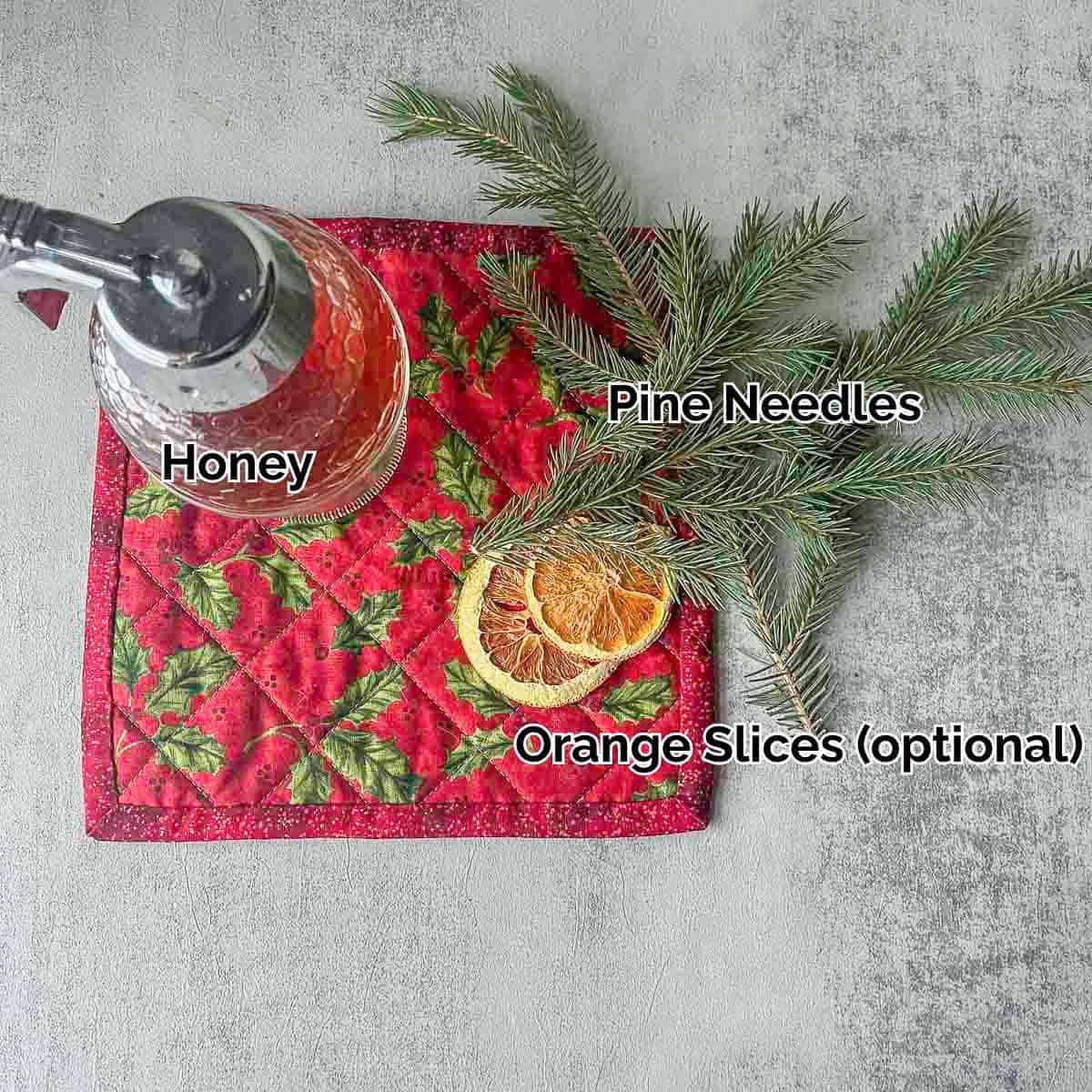
- Pine Needles: Many types of pine needles can be used to make tea. I have tried lodgepole, Douglas fir, and spruce. If you don't live in the middle of the forest like some of us, you can purchase pine needles online.
- Sweetener: Honey is a great sweetening option. It's natural and has many health benefits. Honey syrup, rose hip syrup, or cardamom syrup are even better.
- Spices & Other Flavoring: I recommend trying pine needle tea plain first, then adding any of the following to enhance the flavor: Citrus slices, cardamom pods, rosehips, whole cloves, cinnamon sticks, and ginger.
See recipe card for quantities.
How to Make Pine Needle Tea
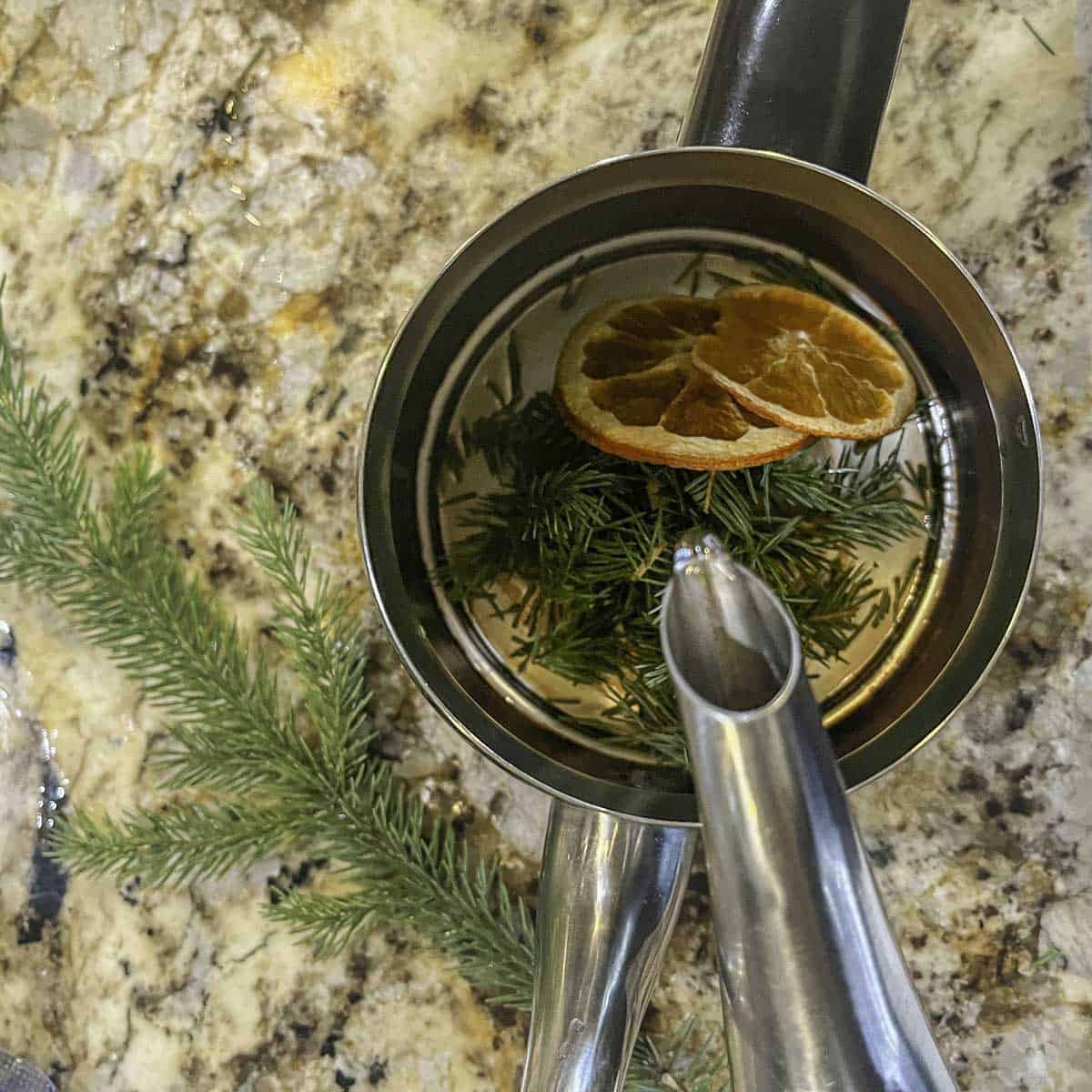
- Wash and then chop spruce branches (or other edible pine needles) to measure ½ cup. Add the needles and a few orange slices to a teapot. Pour two cups of boiling water into the teapot.
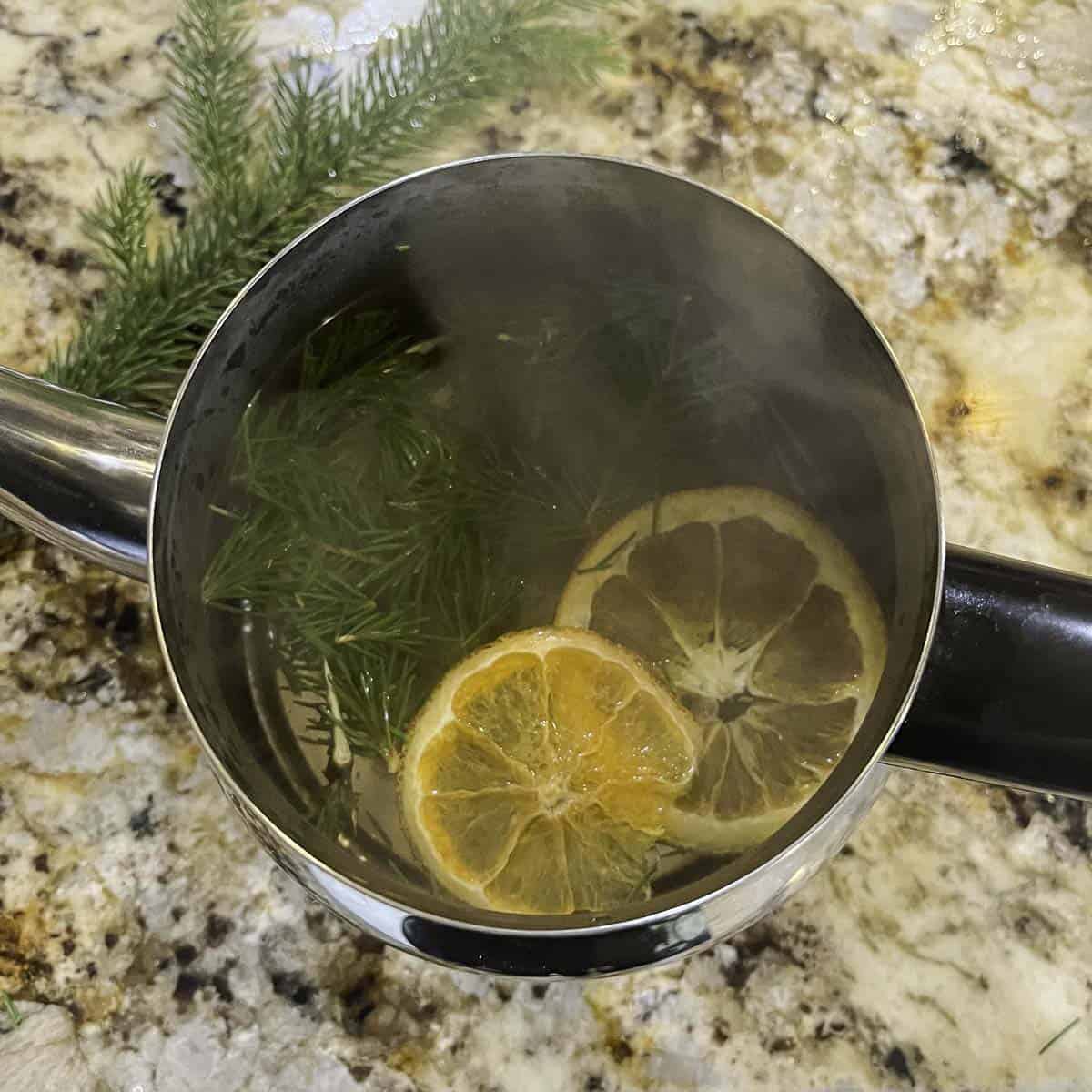
- Cover and steep the tea for 10-15 minutes to extract the flavor and beneficial properties of the pine branches.
Pro Tip: Don't include twigs or thicker branches. Instead, strip or cut the needles off the branch using kitchen shears.
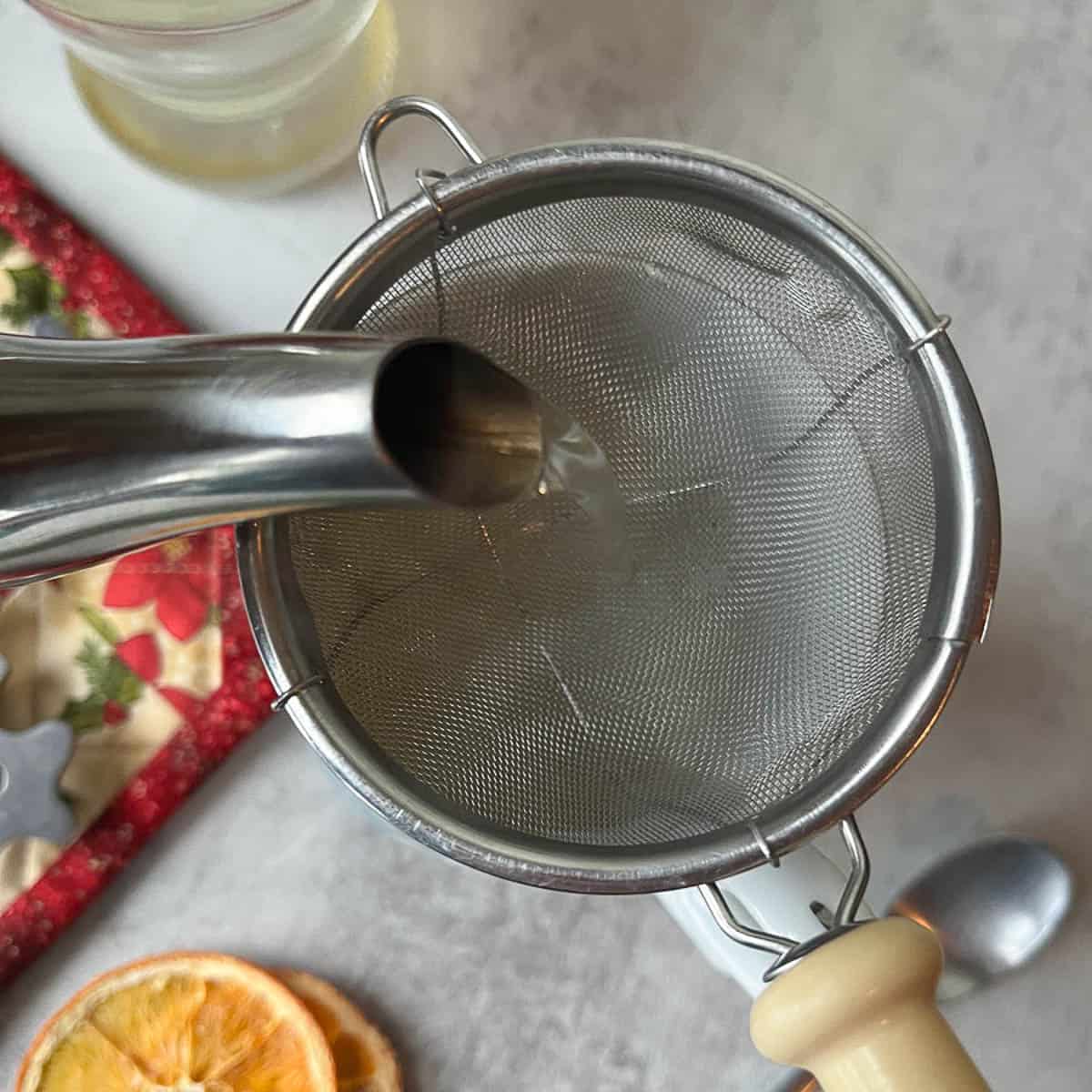
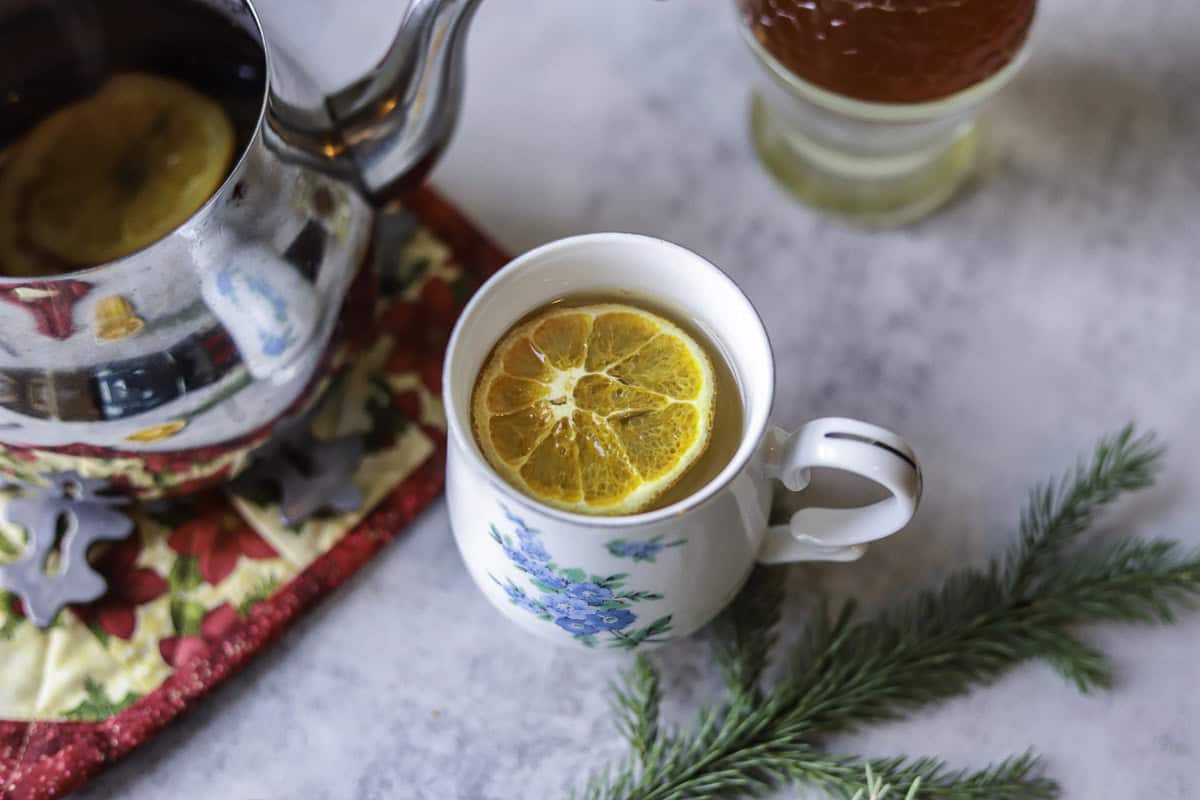
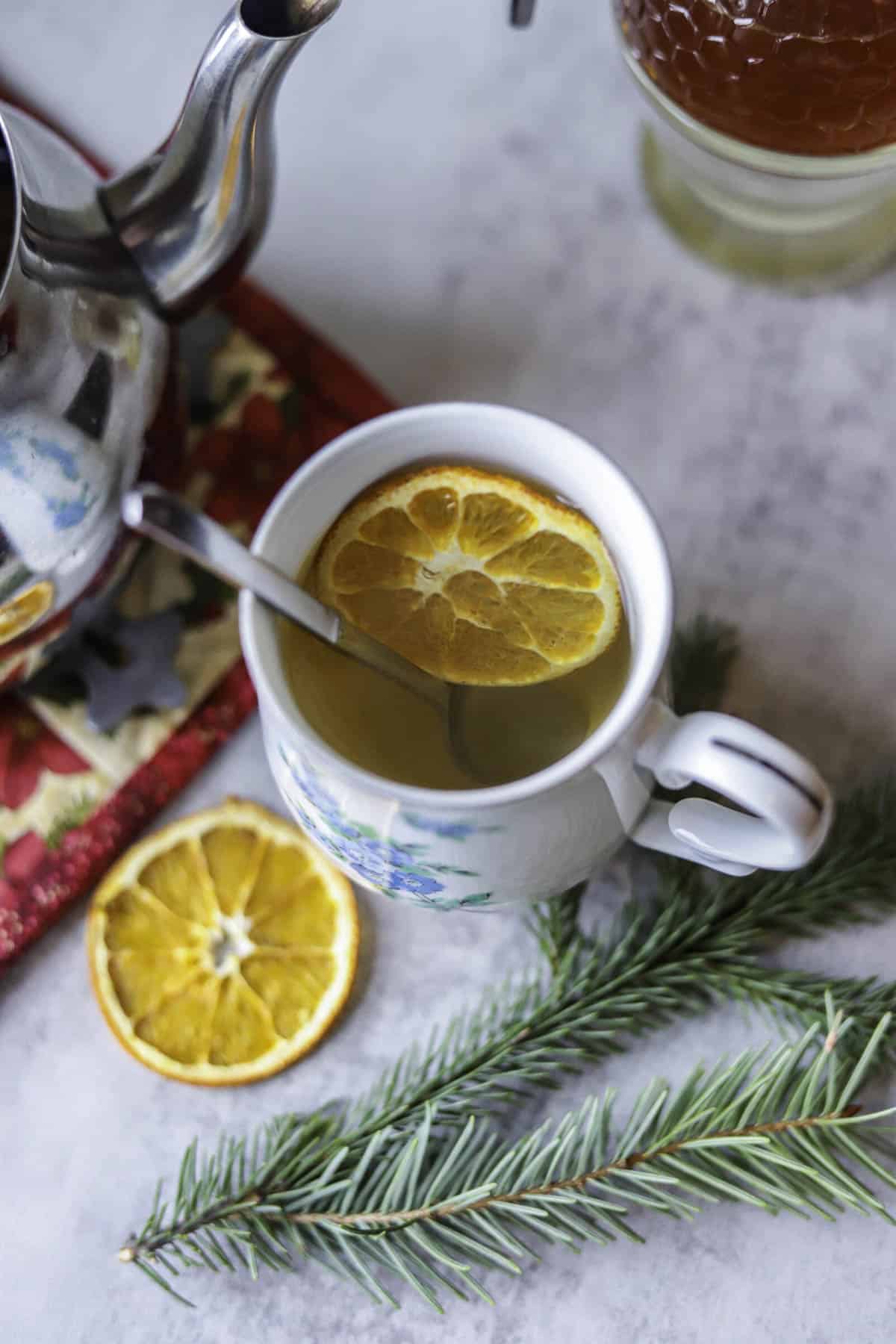
- Strain the tea into a teacup and sweeten it with honey, brown sugar, or the sweetener of your choice. Enjoy!
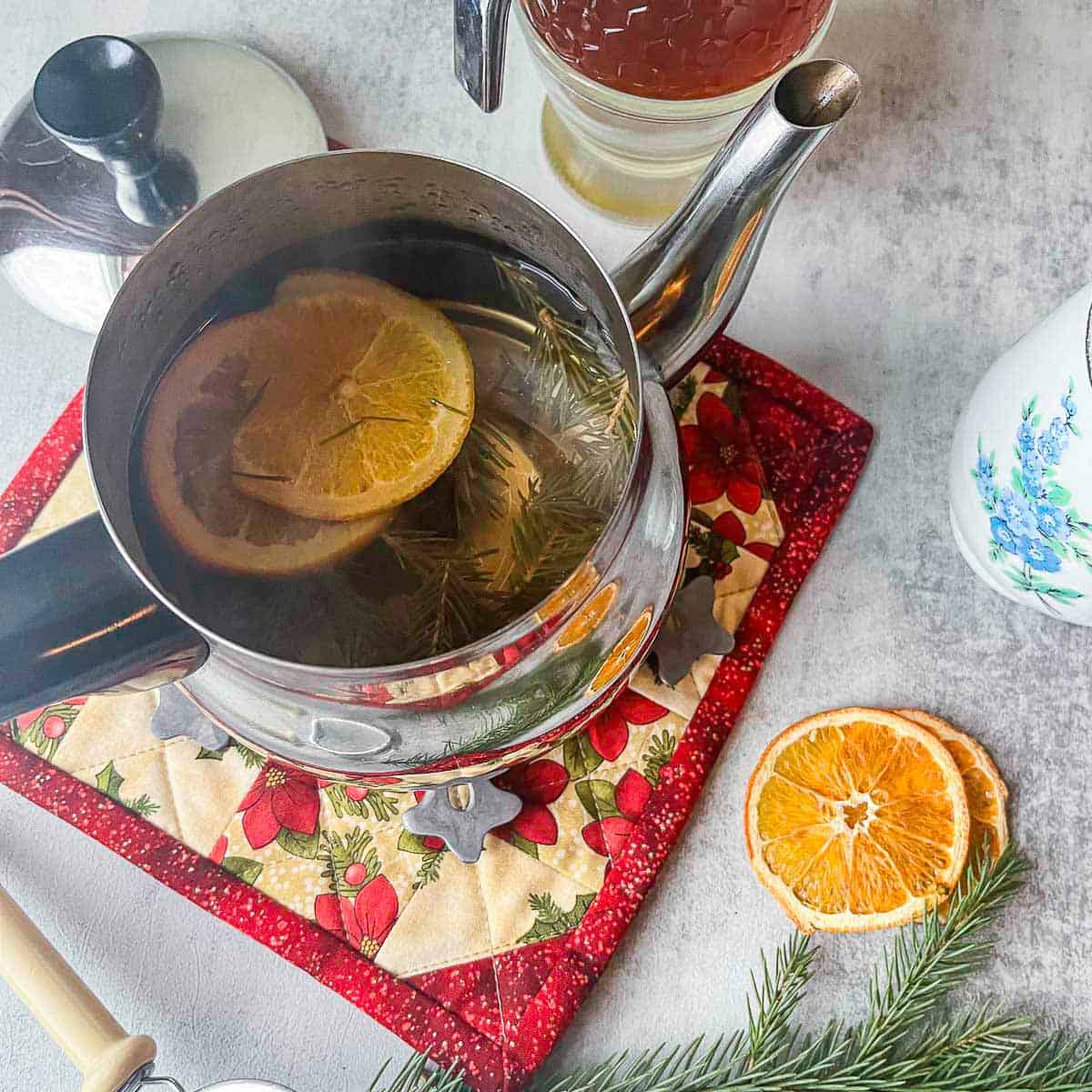
- Optional Step: Try adding mulling spices or your favorite spices to the teapot for an even more delicious cup of pine tea!
Foraging Pine Needles in Montana
Montana forests are full of pine, spruce, and fir trees, making pine needle tea one of the easiest wild teas to forage. Look for healthy trees growing away from roadsides or areas that may have been sprayed. Young green needles usually have the best flavor and the highest concentration of nutrients.
You only need a small handful of needles to make a cup of tea, so harvest lightly and respectfully.
What Does Pine Needle Tea Taste Like?
Pine tea has a surprisingly pleasant flavor. It's bright, slightly citrusy, and lightly resinous with a fresh evergreen aroma. Many people compare the taste to a mild lemon tea with subtle forest notes.
Pro Tip: If your tea tastes overly bitter or harsh, it may have steeped too long.
Best Time to Harvest Pine Needles
Pine needles can be harvested year-round, but the best flavor usually comes from fresh young needles in spring. These tender needles are softer, brighter in color, and contain the highest concentration of vitamin C. Older needles can still be used, but may produce a stronger, more resinous flavor.
Pine Needle Tea Dangers
If you live in the mountains, you probably have access to pine needles. However, you need to know which conifers are edible and which ones are poisonous.
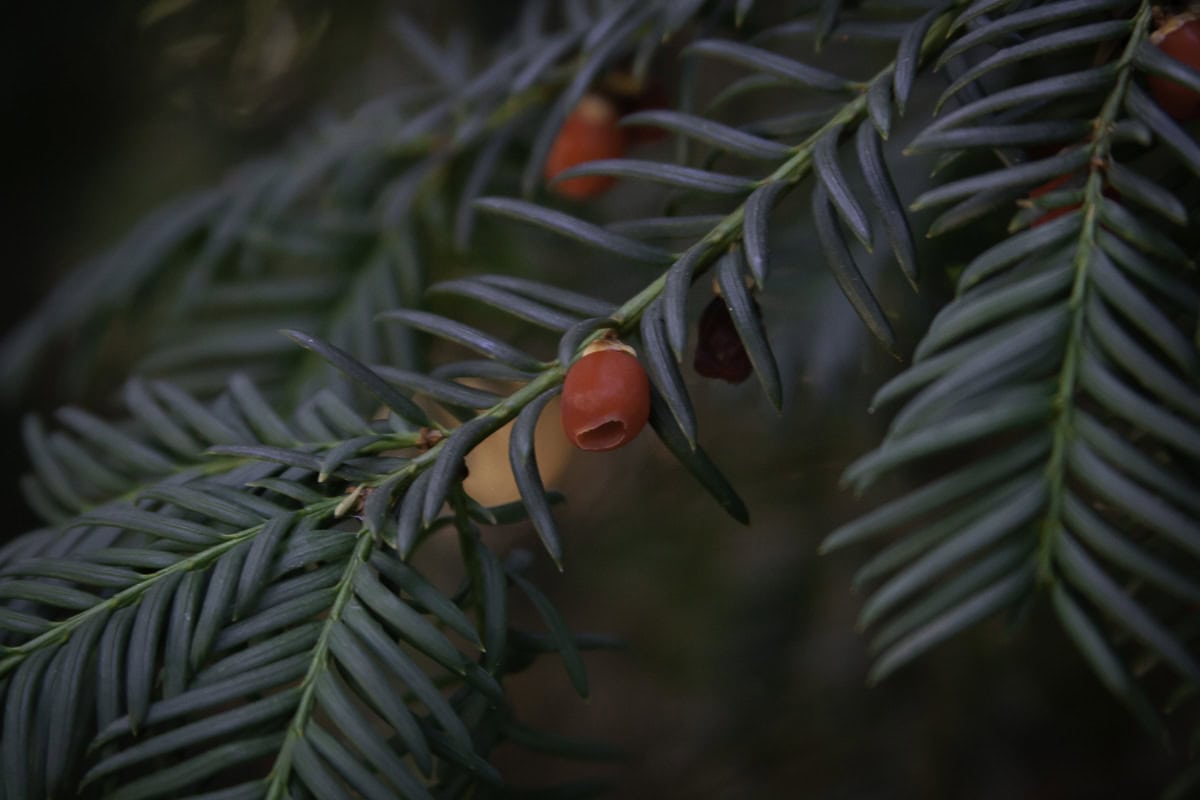
There are so many species of pine... eastern white pine, Norfolk Island pine, and Australian pine, to name a few. Then there's the common juniper, cypress, and yew.
Some of these pines, especially the common yew, are toxic and should not be used to make pine needle tea. While some may cause stomach upset, others can damage your kidneys or even cause death. For this reason, I suggest that you stick with the ones that are safe, like spruce and fir.
Ponderosa Pine & Lodgepole Pine
There is mixed information online about the safety of drinking tea made from ponderosa pine, especially during pregnancy. In one study, pregnant cattle in their 3rd trimester, who ate large amounts of ponderosa pine needles (4 to 6 pounds), aborted their babies.
Although I have had tea made with lodgepole needles without any issues, you should proceed with caution and avoid tea made with these two types of pines, especially if you're pregnant or nursing.
Needle Identification
Lodgepole needles are 1-3" long and grow in bundles of 2, while Ponderosa pines are longer than lodgepole needles. They are 5-10" long and grow in bundles of 3.
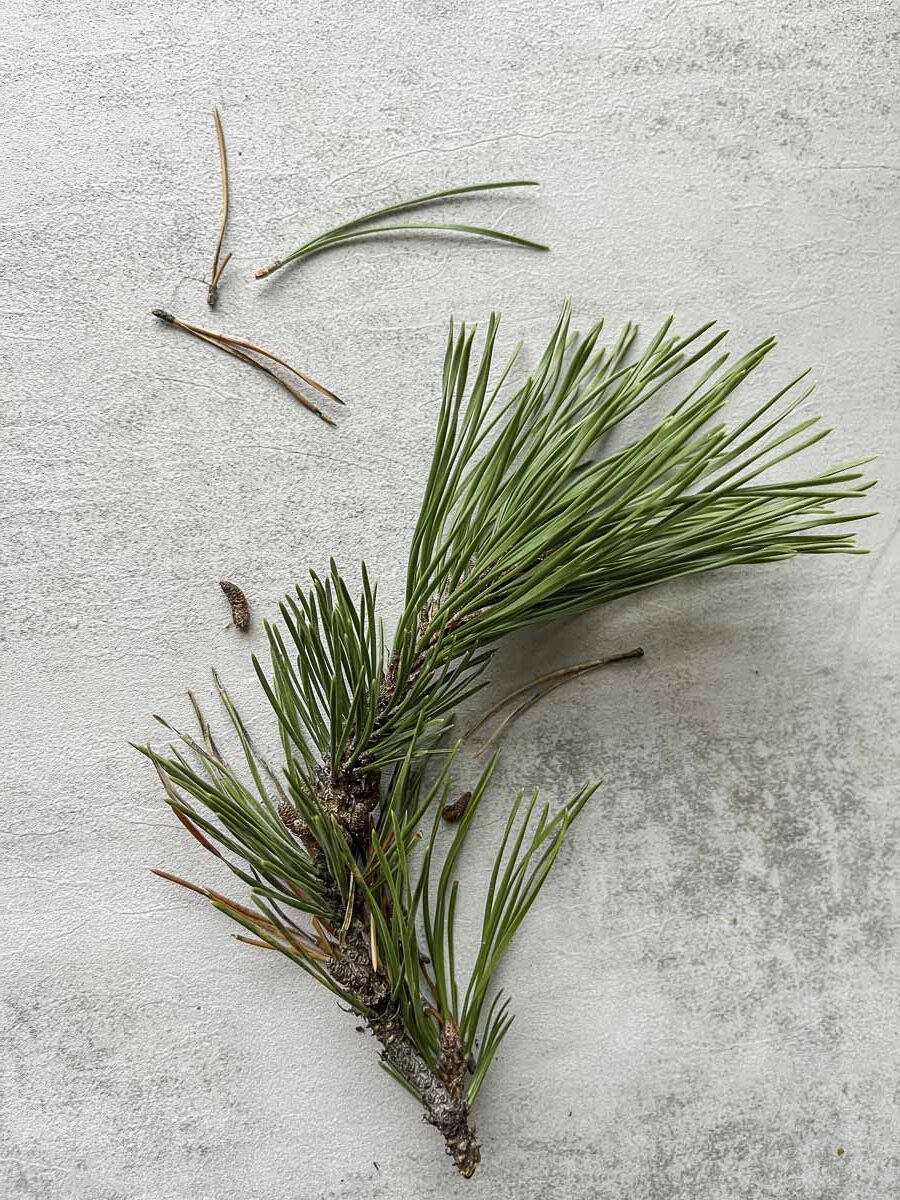
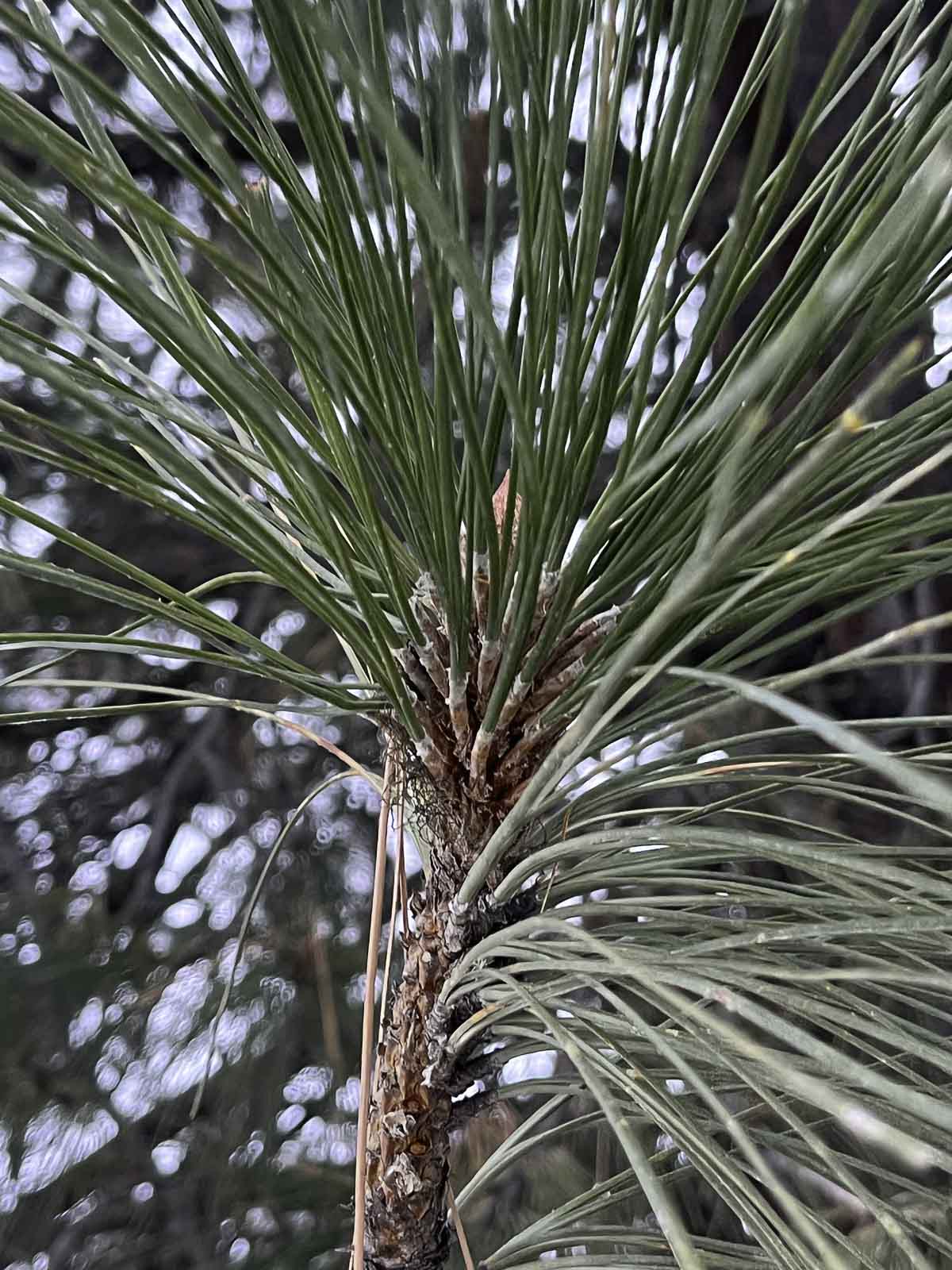
Fun Fact: An interesting fact about lodgepole pinecones is that they stay closed until the heat from a forest fire causes the pinecones to open and release their seeds. This process helps to start new growth after a forest fire.
Edible Pine Trees
There are many species of pine. In this post, I will be referring to the ones that grow where I live in Montana. I encourage you to do your homework and discover what species of pines grow where you live before you go foraging!
Pine trees are usually identified by their size, needles, bark, and cones. In this post, I'll mostly focus on their needles, which are relatively easy to distinguish from one another.
Spruce
Spruce trees (genus Picea) are an excellent option for making a fragrant wild tea. Their short, stiff needles produce a bright, slightly citrusy infusion with a mild evergreen flavor. Like pine and fir, spruce needles contain vitamin C and have traditionally been used to make nourishing herbal teas, especially during colder months when fresh plants are scarce.
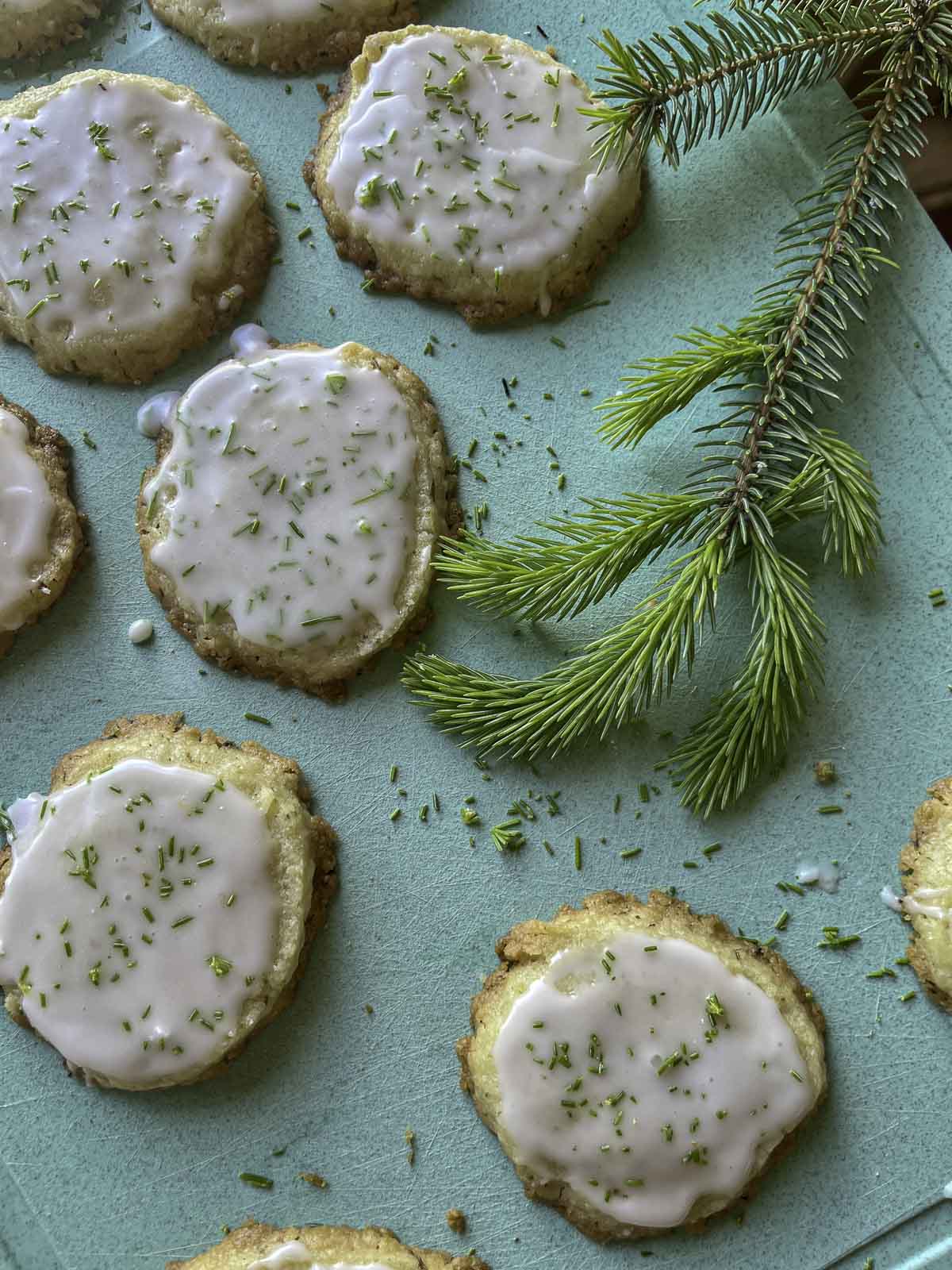
In the spring, the tender new spruce tips are particularly prized for their vibrant flavor and are often used not only for tea but also for syrups, jellies, spruce tip shortbread cookies, and even spruce tip pesto. I've also used spruce tips to make spruce wine and mead (wine made with honey instead of sugar), and spruce shrub.
Needle Identification
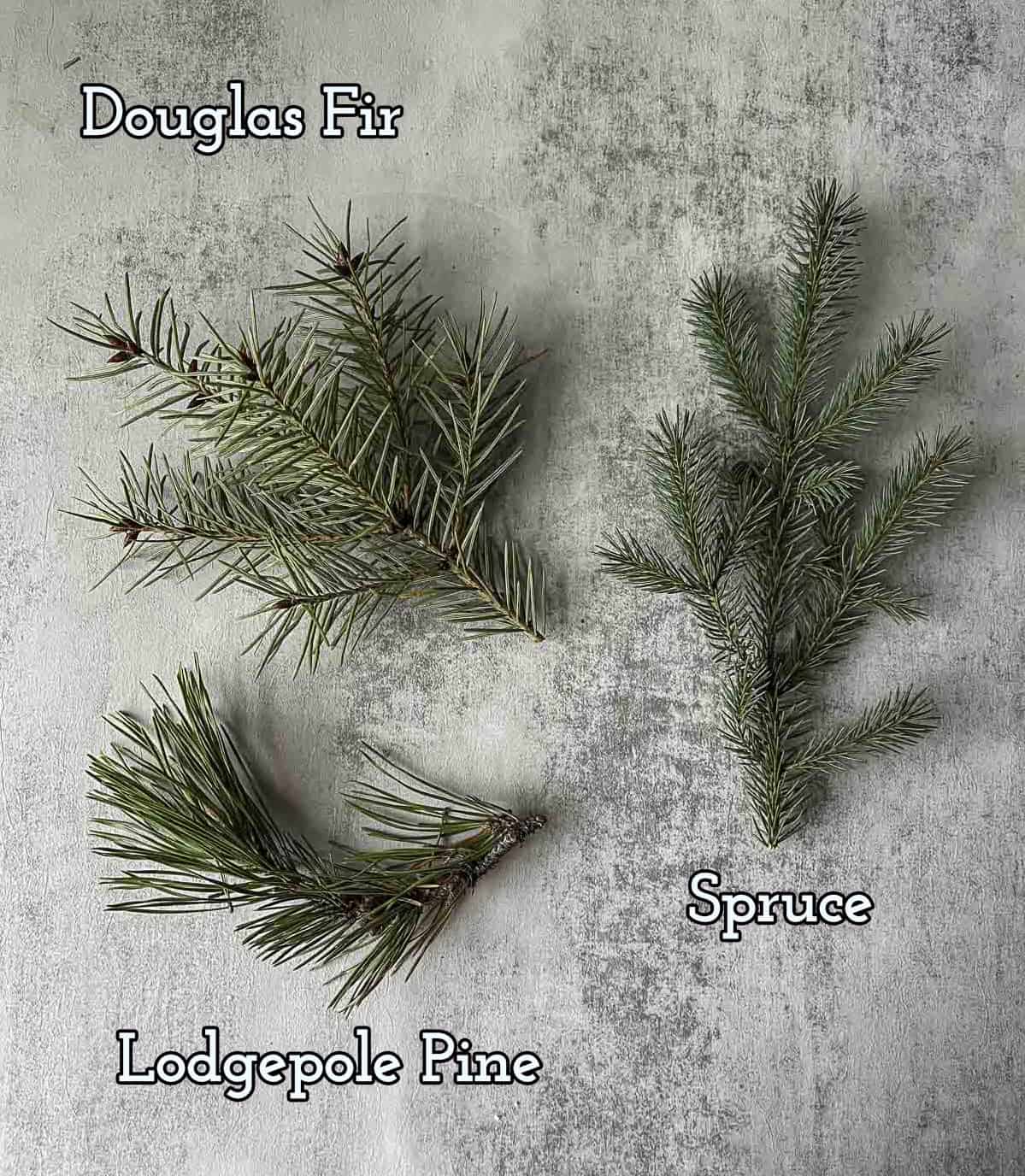
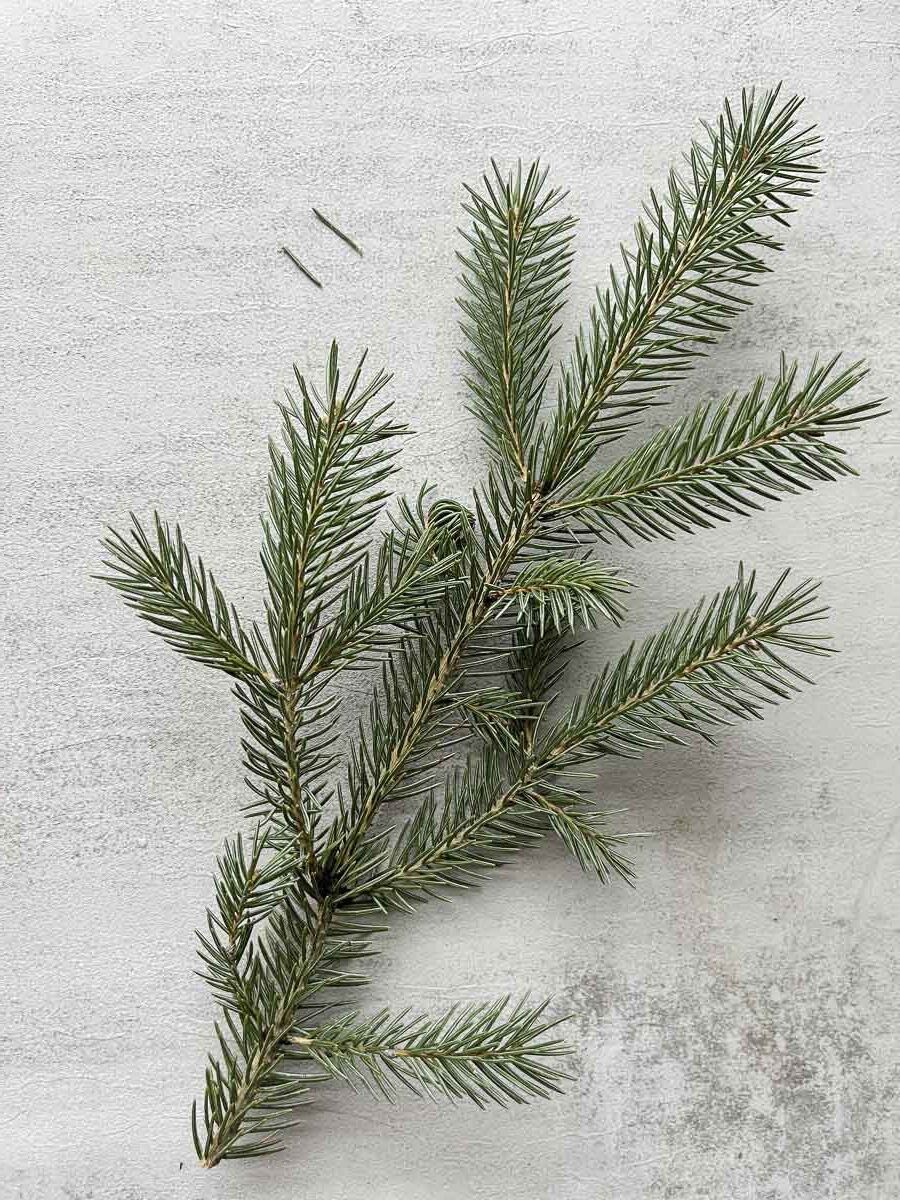
Spruce needles are ⅝ to 1" long. They are very pointy and sharp, and you can roll the needles between your fingers. In other words, they're not flat. If foraging for the needles is a painful experience, there's a good chance you've got yourself a spruce!

Douglas Fir
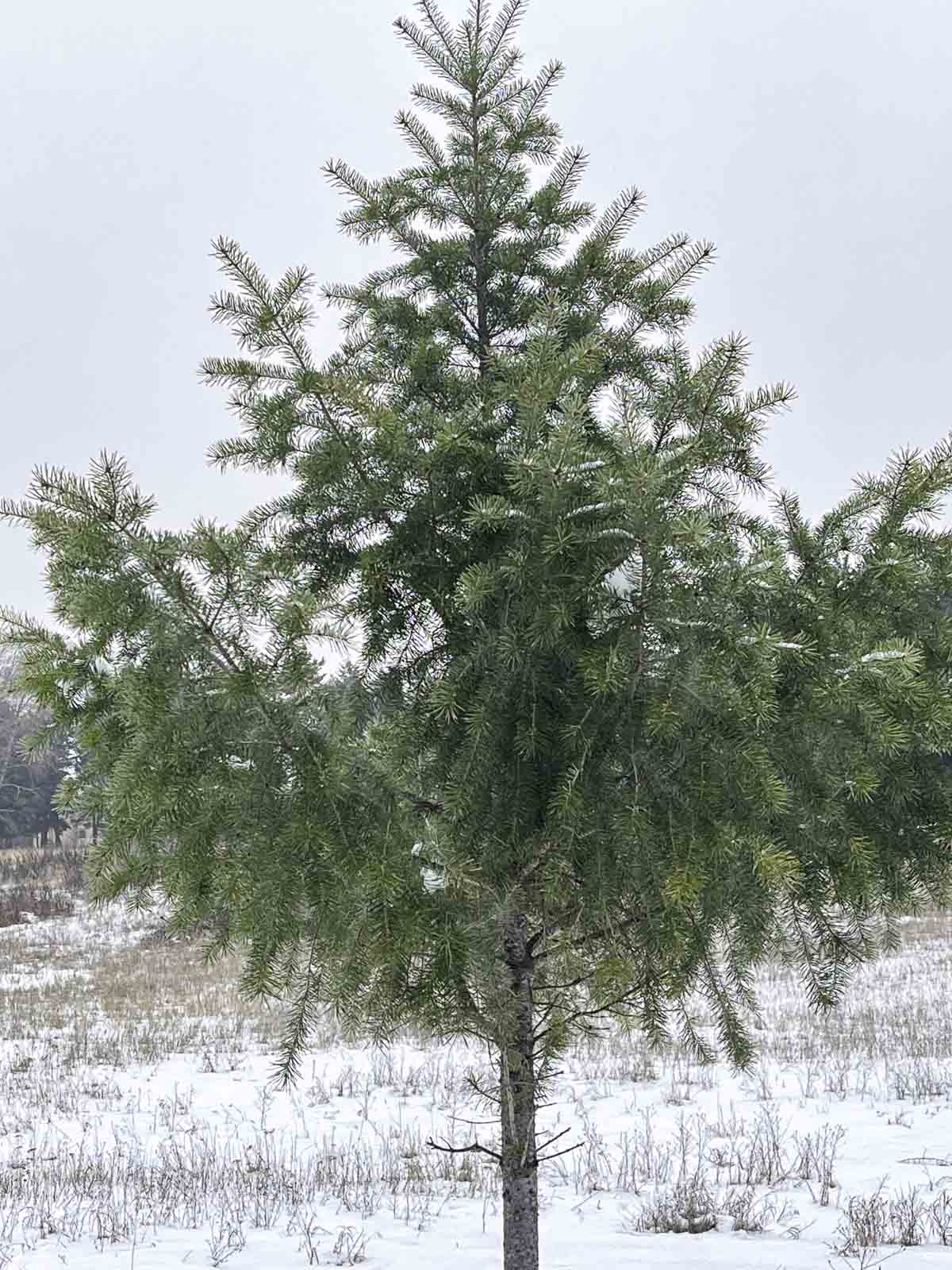
Douglas fir (Pseudotsuga menziesii) is another evergreen that can be used to make a flavorful herbal tea. Despite its name, Douglas fir is not a true fir but a unique conifer native to western North America. Its soft, flat needles have a bright citrusy aroma and produce a mild, refreshing tea with subtle lemon and pine notes.
Douglas fir tips are especially prized in the spring when the new growth is tender and vibrant green, making them a popular ingredient in wild teas, syrups, and infused honey. As with any wild plant, proper identification is essential before harvesting.
Needle Identification
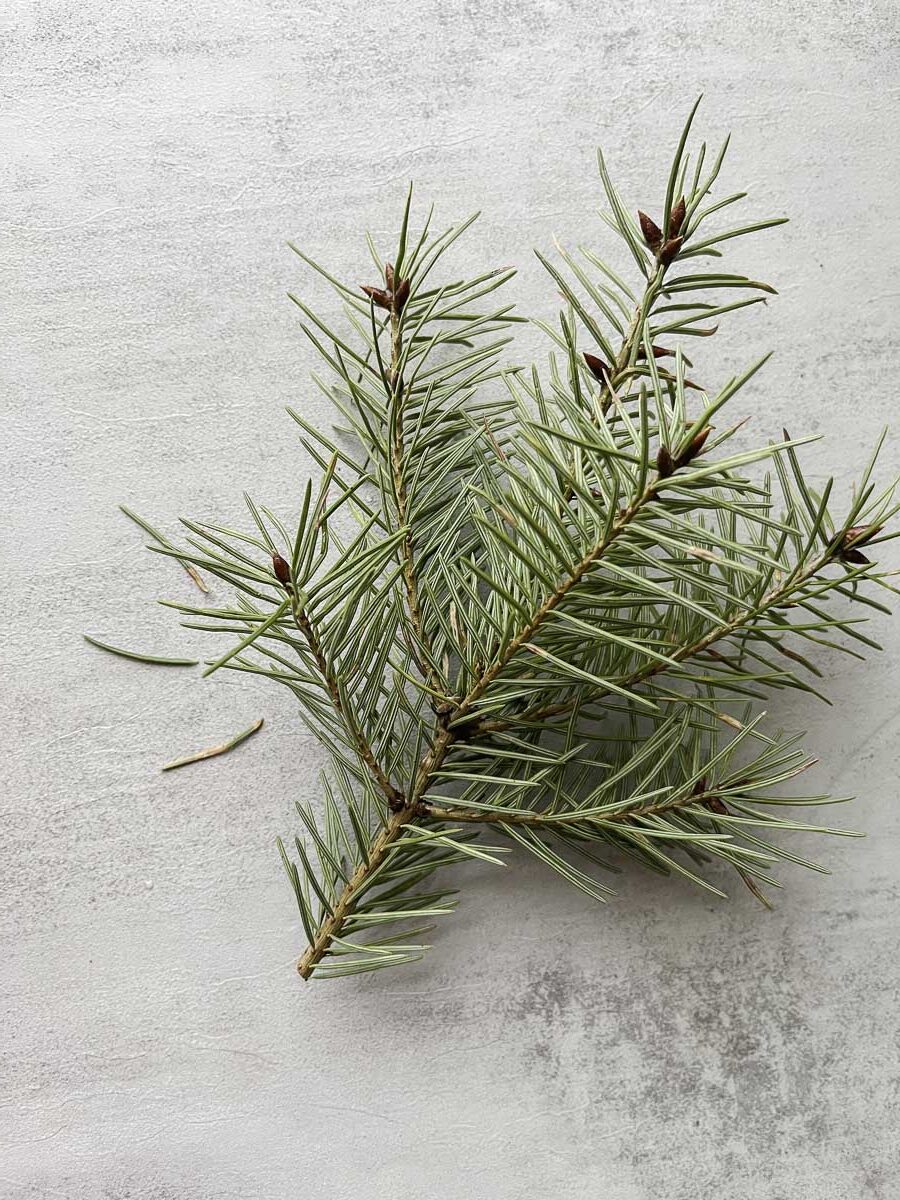
The needles on a Douglas Fir are soft to the touch, flat, and ¾ to 1 ¼" long. It's an evergreen conifer in the pine family, Pinaceae. This means Douglas Fir needles can also be used to make tea, so drink up!
How to Store Pine Needles
Fresh pine needles can be stored in the refrigerator for several days. For longer storage, they can also be air-dried and stored in an airtight container. Dried needles will keep for several months but may produce a milder tea than fresh ones.
FAQs
Yes, you can, but proper identification is critical. Yew, for example, looks like pine but is in fact a toxic evergreen shrub.
Steeping is recommended over boiling. Otherwise, you may destroy the beneficial compounds in the pine needles.
Anyone who suspects that they might have an allergy to pine or pollen (since pine trees are often covered in pollen dust) should not consume it.
Another group that should avoid it is pregnant ladies, especially tea made with ponderosa pine. There have been documented cases of cows aborting their babies after consuming a large amount of ponderosa pine needles.
Pro Tips
- Chop the needles to release their flavor.
- Avoid boiling the needles; doing so can destroy vitamin C.
- Use fresh needles for the brightest flavor.
More Tea Recipes
Looking for other recipes like this? Try mullein tea and roasted dandelion root coffee next!


Recipe
Foraged Pine Needle Tea: Benefits, Safety, and How to Make It
Equipment
Ingredients
- ½ cup Spruce or Douglas Fir needles (chopped)
- 2 cups water
- 2 slices citrus
- honey, or sweetener of choice (optional)
Optional Add-Ins
- 3 cardamom pods
- 3 whole cloves
- ¼ inch cinnamon stick
- 3 juniper berries
- 1 slice ginger
Instructions
- Wash and then chop spruce branches (or other edible pine needles) to measure ½ cup. Add the needles and a few orange slices to a teapot. Pour two cups of boiling water into the teapot.
- Cover and steep the tea for 10-15 minutes to extract the flavor and beneficial properties of the pine branches.
- Strain the tea into a teacup and sweeten it with honey, brown sugar, or the sweetener of your choice. Enjoy!
- Optional Step: Try adding mulling spices or your favorite spices to the teapot for an even more delicious cup of pine tea!
Notes
- Don't include twigs or thicker branches. Instead, strip or cut the needles off the branch using kitchen shears.
- Chop the needles to release their flavor.
- Avoid boiling the needles; doing so can destroy vitamin C.
- Use fresh needles for the brightest flavor.
- If your tea tastes overly bitter or harsh, it may have steeped too long.
Hilda Sterner says
I hope you give this recipe a try soon!
Sarah says
This is all such great info. Thanks for sharing!
Hilda Sterner says
Thank you, Sarah! I love sharing information, maybe I should have been a teacher?
Brevak says
Thanks. Have an abundance of pine trees in our yard and pastures in northern Wisconsin! Excited to try this, however, l'm not an tea drinker.
Hilda Sterner says
Thanks, Brevak, I appreciate your comment. Even if you're not a tea drinker you can make it for someone who does like tea, right? 🙂
Alex says
Very informative, thank you!
Hilda Sterner says
Thanks, Alex, I appreciate your comment!