

Rose hips are rich in vitamin C and offer numerous benefits. They have a sweet and mild flavor and can be used in a variety of ways. My favorite thing to make with them is rose hip syrup. Enjoy this sweet syrup as a cordial, in mixed drinks, or poured over waffles, pancakes, or ice cream. In spring, collect the rose petals to make a hydrating rose hydrosol!

Rose hips or rosehips (both spellings are correct) are known for their medicinal benefits. They are naturally sweet and perfect for making rosehip syrup. Long after the delicate and fragrant pink wild roses have faded, the red and orange rosehips make their appearance.
Whether you may find them in your own backyard or along your favorite hiking trail, these overlooked jewels are ready to be enjoyed by wildlife and foragers alike! Besides being very good for you, rose hips have a sweet and pleasantly mild flavor.
I like to snack on rose hips in the fall when I take my dogs for a walk around our property. The key is to eat the rose hips' outer flesh. Avoid the seeds and the irritating hairs in the center of the pod. Interestingly enough, the hairs are used to make itching powder.
If you have extra rose hips, use them to make this delicious crabapple jam with rosehips, or dry them to make rosehip tea! I love to add them to my handcrafted elderberry tea blend. It's packed with antioxidant-rich berries and warming spices.
Jump to:
Ingredients & Substitutions

- Rose Hips: Rose hips come in different sizes and colors. If possible, choose rosehips that are darker in color. Larger rosehips are preferred because they're fleshier, and you won't need to pick as many to obtain the desired amount. Shriveled/dried rose hips can also be used because they will rehydrate while cooking, as long as they don't have worm damage.
- Sugar: This recipe calls for plain white sugar. However, you can use honey if you'd like.
- Orange Slices: Fresh or dehydrated orange slices add a nice hint of citrus flavor to the syrup.
- Rose Water: The rose water is optional, but it intensifies the rose flavor. All you need is ½ to 1 teaspoon.
*See recipe card for a full list of ingredients & quantities.
Equipment
To make rosehip syrup, you'll need a medium saucepan, a fine mesh strainer, large soup bags or cheesecloth, a funnel, and 16-ounce flip-top bottles.
How to Make Rosehip Syrup
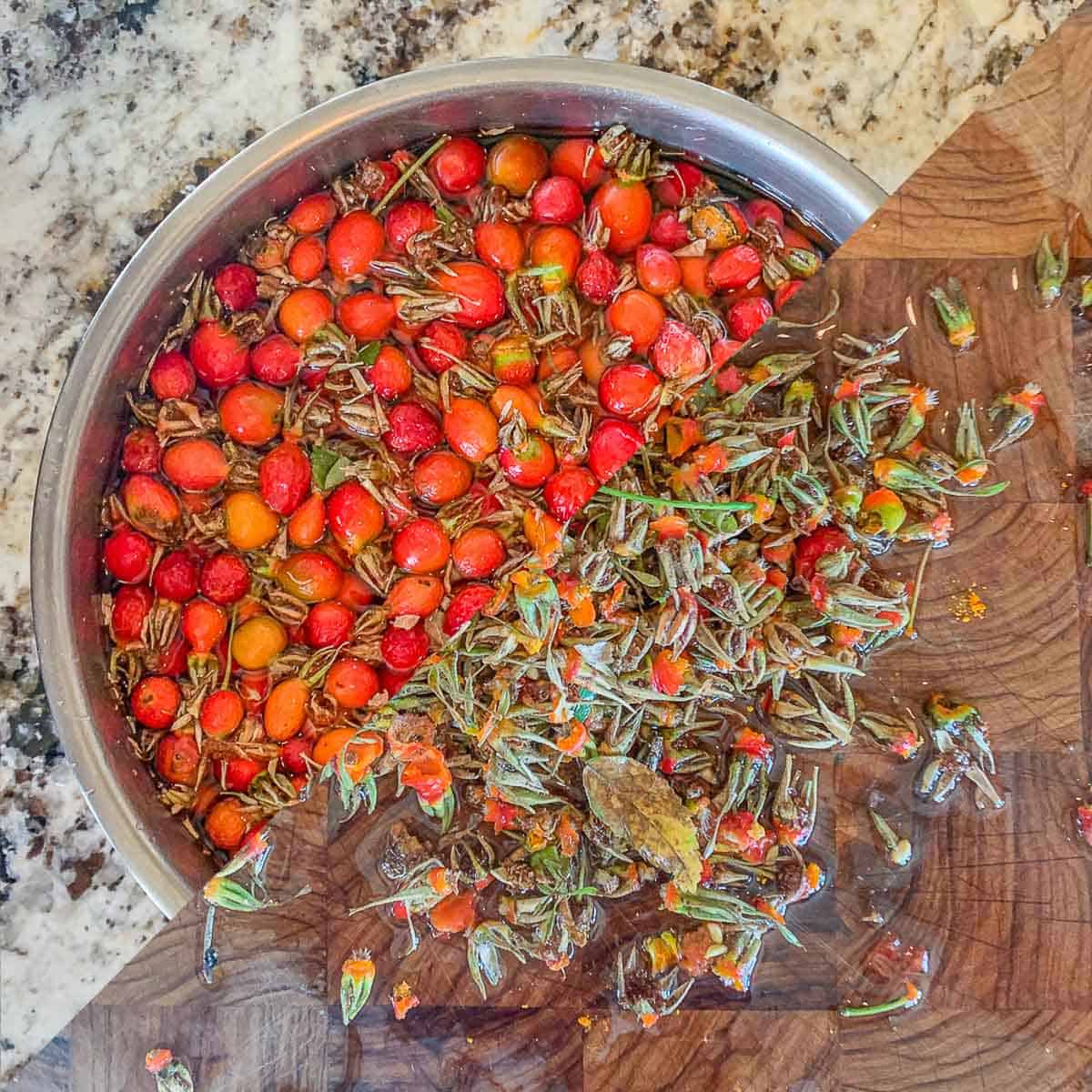
- Wash rose hips and remove stems and the dried part on top.

- Measure 5 cups of rose hips, then add them to a clean saucepan. Add orange slices and cover with 4 cups of water. Simmer for 15 minutes.

- Mash rose hips during the last 5 minutes of cooking to extract their juices. Strain pulp through a strainer, set over a large measuring cup. Reserve rosehips.

- Pour strained liquid through a soup bag to clarify it even further.
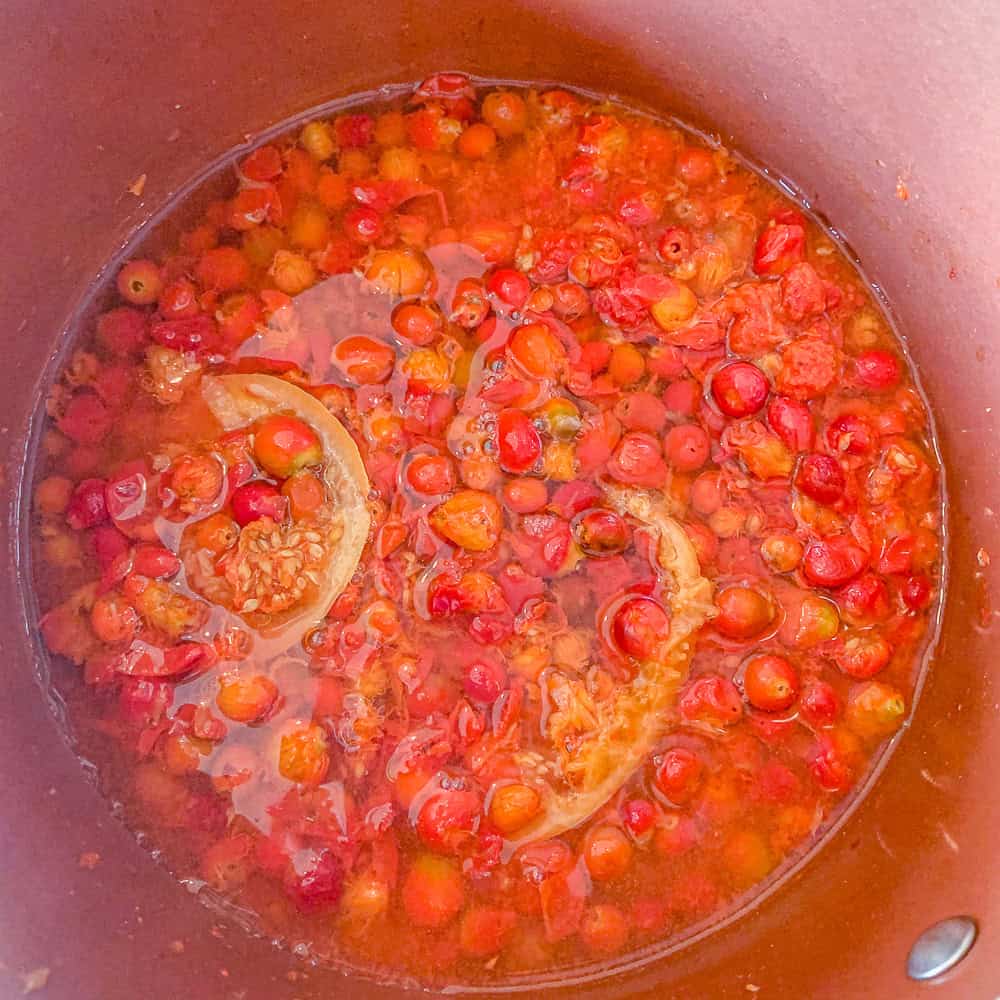
- While rosehip juice is straining, add reserved rosehips back into the same pot and cover with 2 cups of cold water. Simmer for 15 more minutes.

- Repeat the straining process, first through a strainer, then through a soup bag, until you have clear juice.

- Add rosehip juice, sugar, and rose water to a clean pot. Stir over medium heat until sugar dissolves. Simmer for 5 minutes or until thickened to your preference.

- Skim foam if necessary. Cool rose hip syrup before pouring it into a 16-ounce bottle through a funnel.
Pro Tip: If using less rosehips, use the following ratio: For every 1 cup of juice, add ½ cup of sugar. If you don't mind adding more sugar, you can use a 1:1 ratio to make a simple syrup, or up to 2 cups of sugar for every cup of juice, which will yield a rich syrup that will be shelf-stable.
Storage
Store the rose hip syrup bottle in the refrigerator and consume it within 6 months. The syrup can also be waterbath canned. Simply pour the syrup into sterilized jars, leaving a ¼" headspace, then add to a water bath canner, making sure the water level is at least a few inches above the jars. Bring to a boil for 10 minutes, and adjust for altitude:
- 0-1,000 ft: 10 minutes
- 1,001-3,000 ft: 15 minutes
- 3,001-6,000 ft: 20 minutes
- Above 6,000 ft: 25 minutes
Cool: Remove jars and check seals before storing. If some of the jars are unsealed, store them in the refrigerator.
How to Use Rosehip Syrup
A tablespoon of rose hip syrup can be taken daily to build the immune system and as a preventative against the common cold and flu. The syrup can also be mixed with water, unflavored carbonated drinks, and used in cocktails.
Rose hip syrup can also be added to your favorite tea, including fireweed tea and yarrow tea, or poured over ice cream, pancakes, or used to flavor frosting. The possibilities are endless!
When Do Rosehips Ripen in Montana?
Rosehips are ready to harvest in the fall, usually in October. However, waiting until you've had a few hard frosts ensures the rose hips will be sweeter.

Where to Find Rose Hips in Montana
In Montana, wild rose bushes are easy to spot once you know what you're looking for. They grow along sunny hillsides, around lakes, forest edges, riverbanks, and open meadows. Common species like Woods' rose (Rosa woodsii) and Nootka rose (Rosa nutkana) produce bright red hips that cling to the branches well into the winter, even after the leaves have fallen.

You'll find them at lower elevations in late summer, and up in the foothills and mountain valleys once fall sets in. Wild roses grow all over our homestead, which is where I usually forage them. They even popped up in my Montana garden.

How to Identify and Forage Rosehips
Wild rosehips are small, round to oval fruits that turn a deep orange-red as they ripen. They grow on thorny wild rose bushes, one hip per flower stem. You'll often see the dried brown sepal "crown" still attached at the tip; that's a dead giveaway you've got a rosehip, not some look-alike.
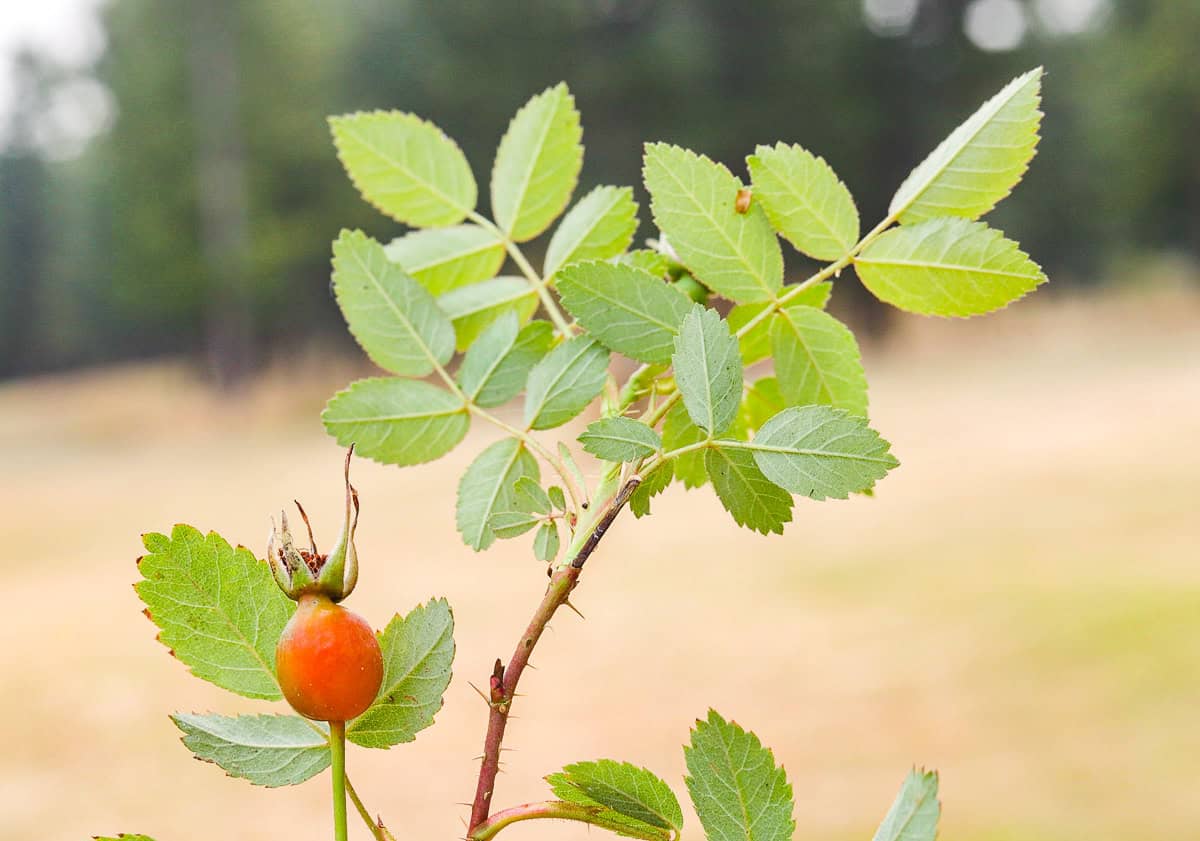
When harvesting, choose hips that are firm but slightly soft to the touch, especially after a light frost, which helps bring out their natural sweetness. Avoid any that look moldy or blackened by frost. A pair of garden gloves is handy since the branches can be a bit grabby. Snip the hips with small pruning shears.
You can collect them in gallon-sized ziplock bags or a foraging bag. If you're collecting along roadsides or trails, make sure the area hasn't been sprayed with herbicides, and only take what you plan on using. Wildlife rely on rosehips through winter too!
FAQ
The rosehip is the round, seed-filled bulb that is left on the stem of rose bushes long after the roses fade. Rose hips are normally found underneath the rose petals and get larger as the seeds grow inside the bulb. The nutrient-packed outer flesh is used to make vitamins and various recipes.
Rose hips can be steeped in hot water to make rose hip tea. They can also be dried and ground into a powder or used to flavor soups. Rose hips can also be used to make delicious marmalades and jellies. You can even use rose hips to make wine or add them to fire cider.
According to Healthline.com, rose hips may lower signs of aging, aid in weight loss, reduce arthritis pain, lower cholesterol levels, and reduce high blood pressure.
Rose hips are naturally loaded with high levels of vitamin C. The pigments that give rosehips their orange-red color contain Beta Carotene and can promote both skin and eye health.
Pro Tips
- If you don't have soup bags, you can also use cheesecloth, muslin, or a fine sieve to strain the syrup.
- Rose water is used throughout the Middle East in various sweets, including baklawa. However, a little goes a long way, so use it sparingly.
- Some recipes call for removing the seeds and tiny hairs from the center of the rosehips before boiling them. However, it's not necessary for this recipe, since we will be double-straining the rosehips and liquid before making the syrup.
- To can this syrup, fill sterilized jars with the hot syrup, leaving ¼-inch headspace. Wipe the rims and tighten the lids/rings. Process in the canner for 10 to 20 minutes, depending on your elevation.

Another plant that you can harvest in the fall is saffron. To learn more, check out my new growing saffron in cold climates post.
More Foraging Recipes
If you enjoy this rosehip syrup recipe, check out these other related posts!

Recipe
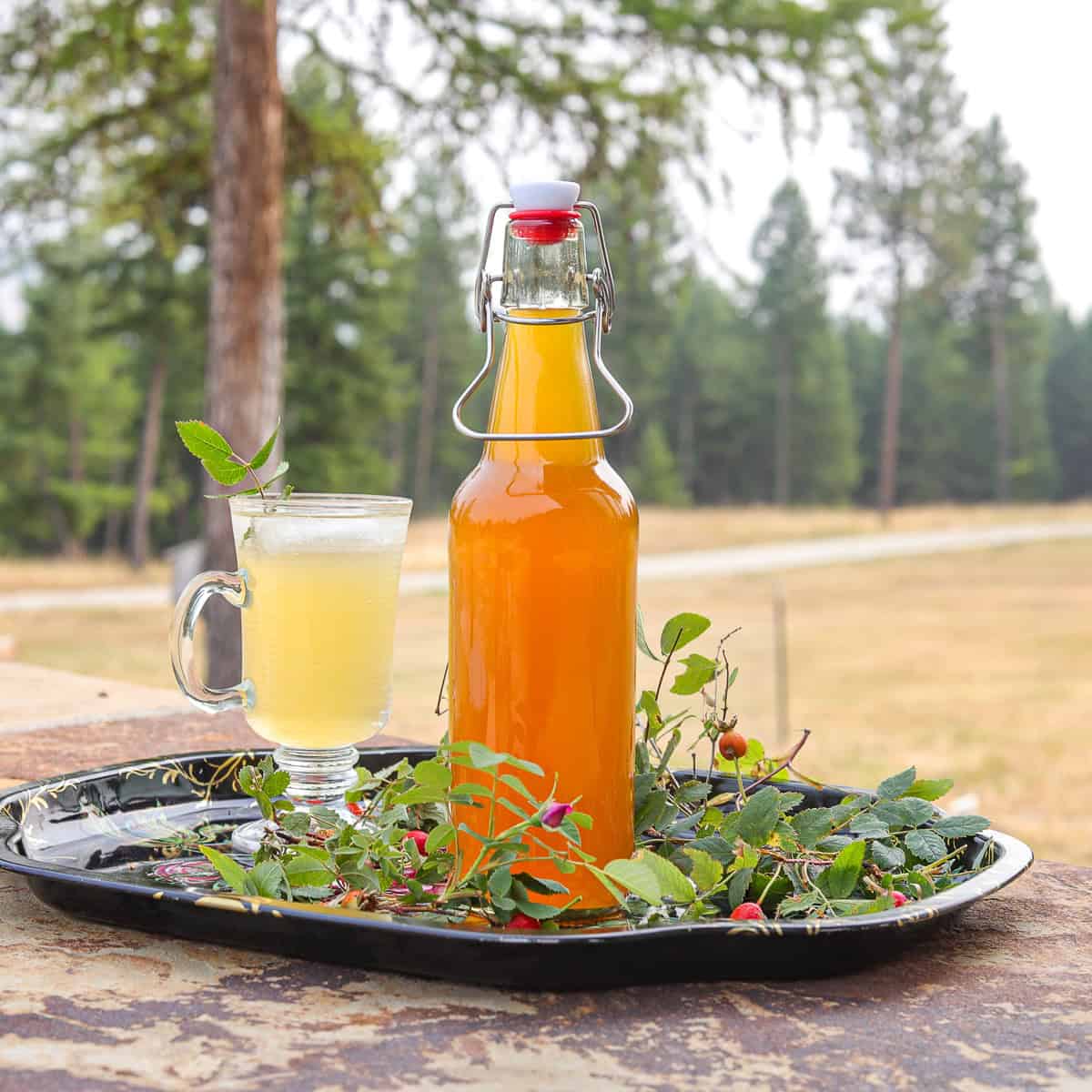
Wild Foraged Rose Hip Syrup
Equipment
Ingredients
- 5 cups fresh rosehips
- 1½ cup granulated sugar
- 2 slices fresh or dehydrated oranges
- ½ teaspoon rose water
Instructions
- Wash the rose hips and remove the stems and the dried part on top.
- Measure 5 cups of rose hips, then add them to a clean saucepan. Add orange slices and cover with 4 cups of water. Simmer for 15 minutes.
- Mash rose hips during the last 5 minutes of cooking to extract their juices. Strain pulp through a strainer, set over a large measuring cup. Reserve rosehips.
- Pour strained liquid through a soup bag to clarify it even further.
- While the rosehip juice is straining, add reserved rosehips back into the same pot and cover with 2 cups of cold water. Simmer for 15 more minutes.
- Repeat the straining process, first through a strainer, then through a soup bag, until you have clear juice.
- Add rosehip juice, sugar, and rose water to a clean pot. Stir over medium heat until the sugar dissolves. Simmer for 5 minutes or until thickened to your preference.
- Skim foam if necessary. Cool the rose hip syrup before pouring it into a 16-ounce bottle using a funnel.
Notes
- If using less rosehips, use the following ratio: For every 1 cup of juice, add ½ cup of sugar. I had 3 cups of juice, so I used 1½ cups of sugar. If you don't mind adding more sugar, you can use a 1:1 ratio to make a simple syrup, or up to 2 cups of sugar for every cup of juice, which will yield a rich, shelf-stable syrup.
- If you don't have soup bags, you can also use cheesecloth, muslin, or a fine sieve to strain the syrup.
- Rose Water is used throughout the Middle East in various sweets, including baklawa. However, a little goes a long way, so use it sparingly.
- Some recipes call for removing the seeds and tiny hairs from the center of the rosehips before boiling them. However, it's not necessary for this recipe, since we will be double-straining the rosehips and liquid before making the syrup.
- To can this syrup, fill sterilized jars with the hot syrup, leaving ¼-inch headspace. Wipe the rims and tighten the lids/rings. Process in the canner for 10 to 20 minutes, depending on your elevation.
Hilda Sterner says
Hope you try rosehip syrup soon!
Lanny Kaufer says
Great recipe with lots of useful and important info. Thanks for sharing.
Hilda Sterner says
Thanks, Lanny, I appreciate the support!
Faith Foust says
I just found some more rosehips but don't have time to do anything with them before our trip. Can I safely freeze them and cook them later?
Hilda Sterner says
Hi Faith, yes, you sure can, I'm doing the same!
Nancy says
This worked exactly as written, thanks!
Hilda Sterner says
Thanks, Nancy!