

Chaga is a wild mushroom, found clinging to birch trees in cold northern forests. For centuries, it has been brewed into smooth, vanilla-tinged chaga tea and a deep, earthy chaga coffee. I especially enjoy mine sweetened with mugolio and a splash of half-and-half.

Most of my readers know that I've been an avid forager since moving to Montana in 2017, with mushrooms being one of my favorite things to forage.
I've already written about foraging morel mushrooms, making tea and tincture with red belted polypores, and foraging for fried chicken mushrooms. I've even made waffles with shaggy manes. But there are two specific elusive mushrooms I've had a hard time finding: reishi and chaga.
A recent mushroom foraging class changed that. The moment we arrived at the meeting spot and my friend parked the car, I spotted a cluster of birch trees just a few feet away. Of course, I had to investigate. I always scan birch trunks for chaga, it's practically a reflex at this point. At first, nothing. But then I circled around and there it was, just out of reach, a small chunk of chaga hiding a few feet above me.
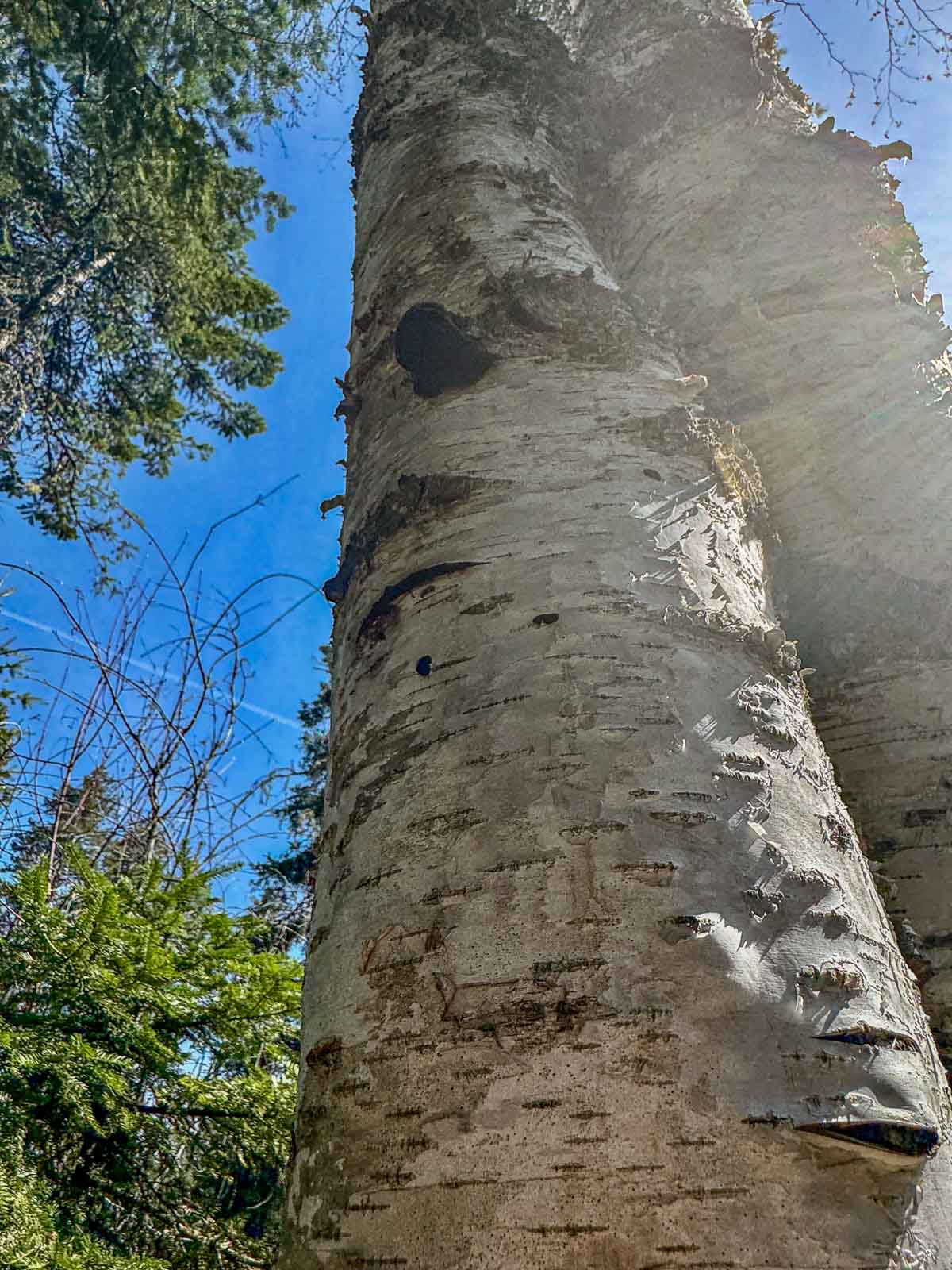
Not quite believing my eyes, I grabbed a broken branch and used it to knock the chaga loose, only to have it bounce off my shoulder and disappear into the brush. After searching and pleading with God for about 20 minutes, I finally gave up and settled for a smaller chunk within reach. The largest piece, still clinging high up on the tree, lived to see another day!
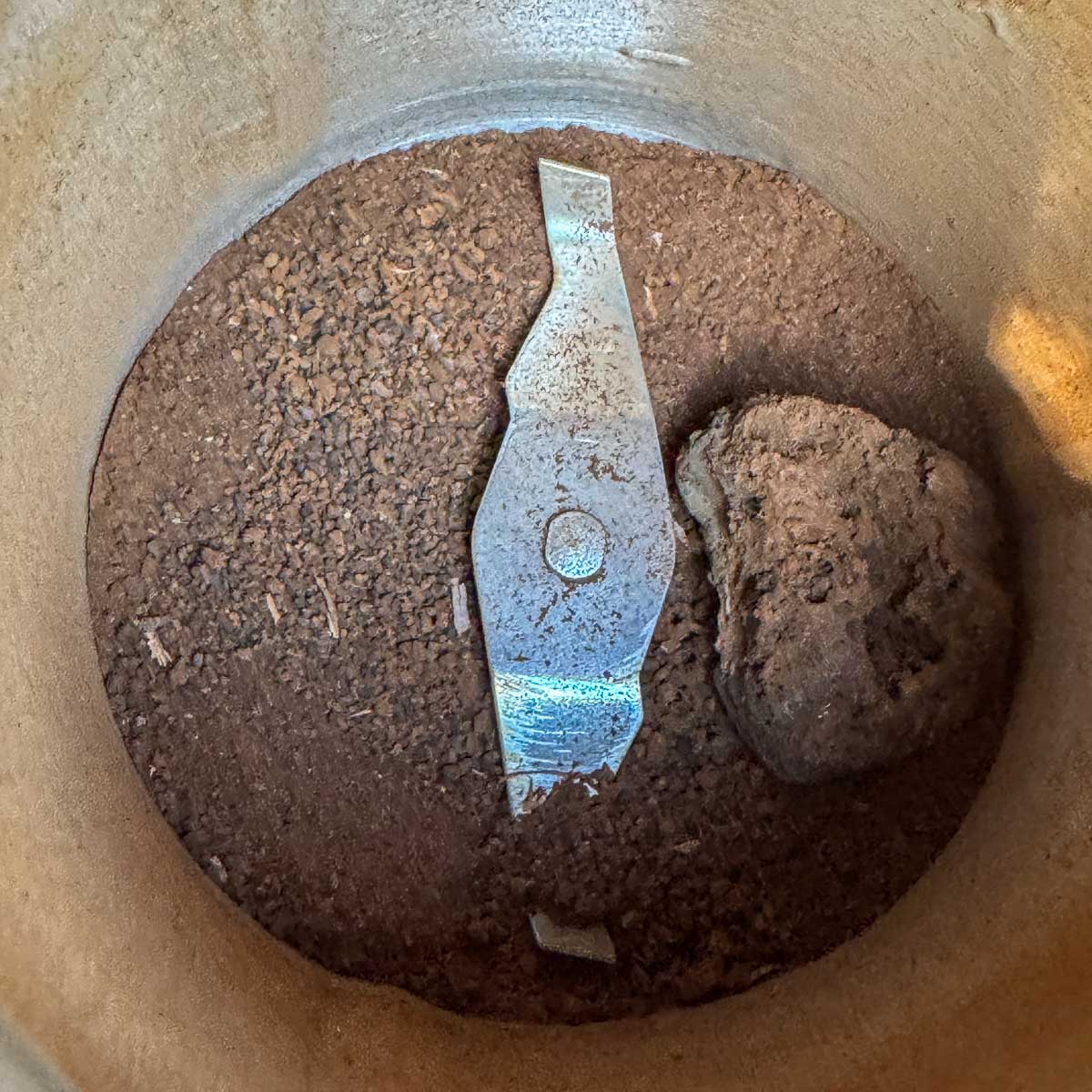
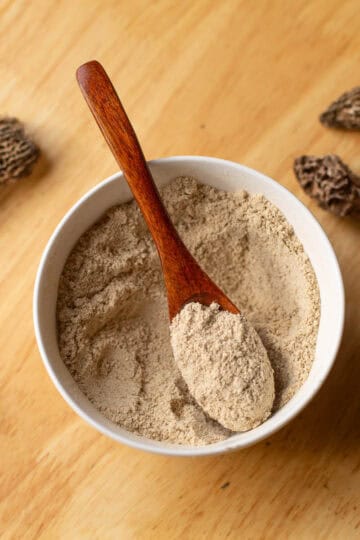
I blended the smaller chunks in a coffee grinder to make a fine powder and saved a larger piece for chaga tea. I quickly learned that stirring the powder directly into coffee wasn't a great idea. Unlike instant coffee, chaga powder doesn't dissolve; it just settles into a gritty layer at the bottom of the cup.
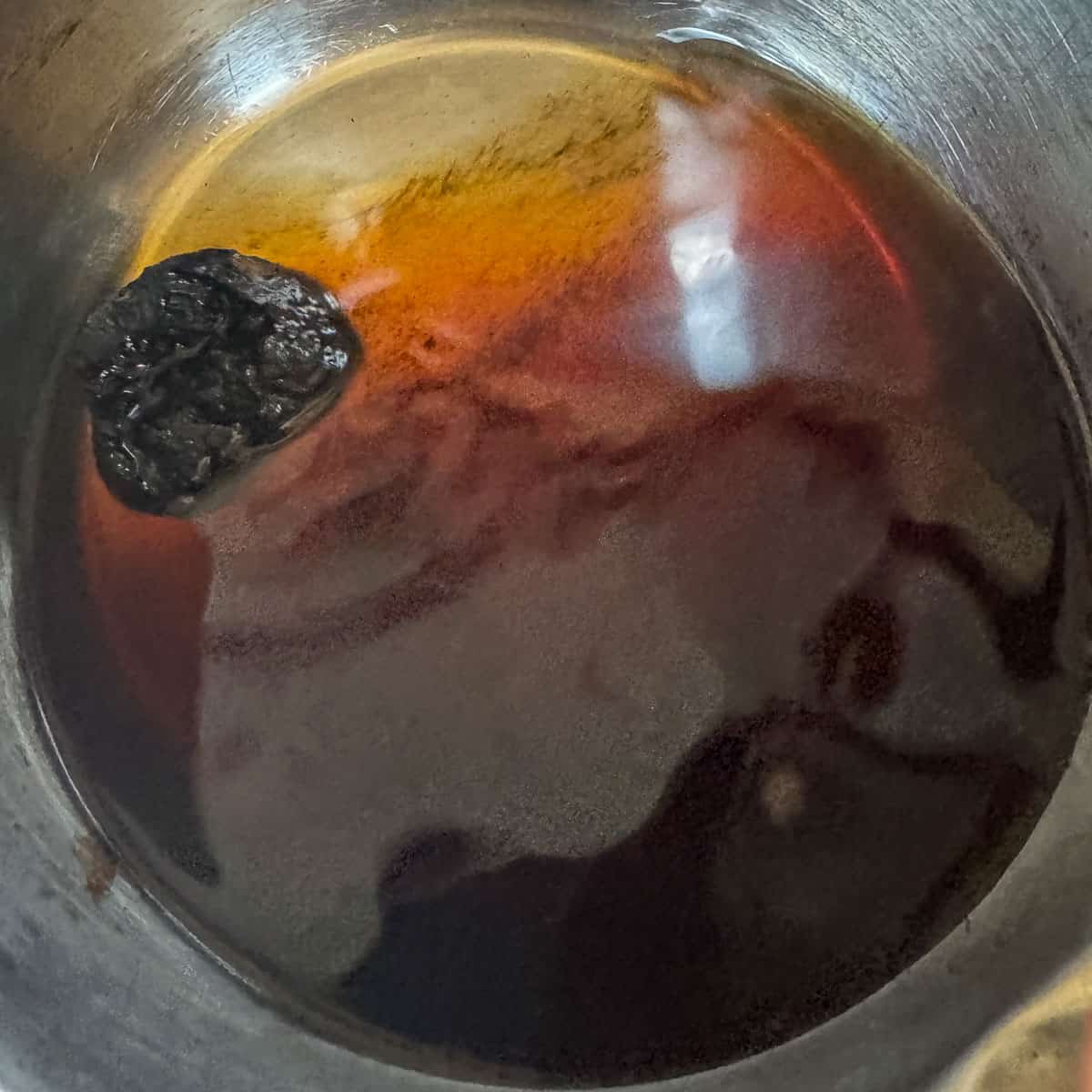
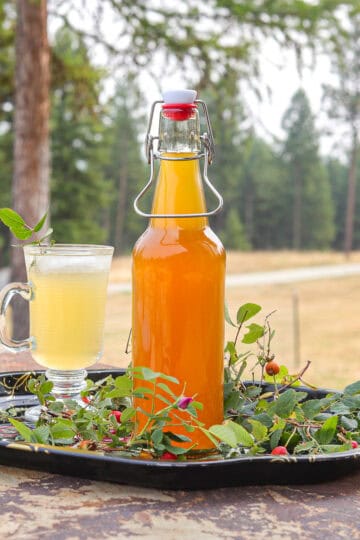
Instead, I simmered both the powder and the chunk in a small pot of water to make tea, then let it steep longer for a darker, stronger, coffee-like beverage.
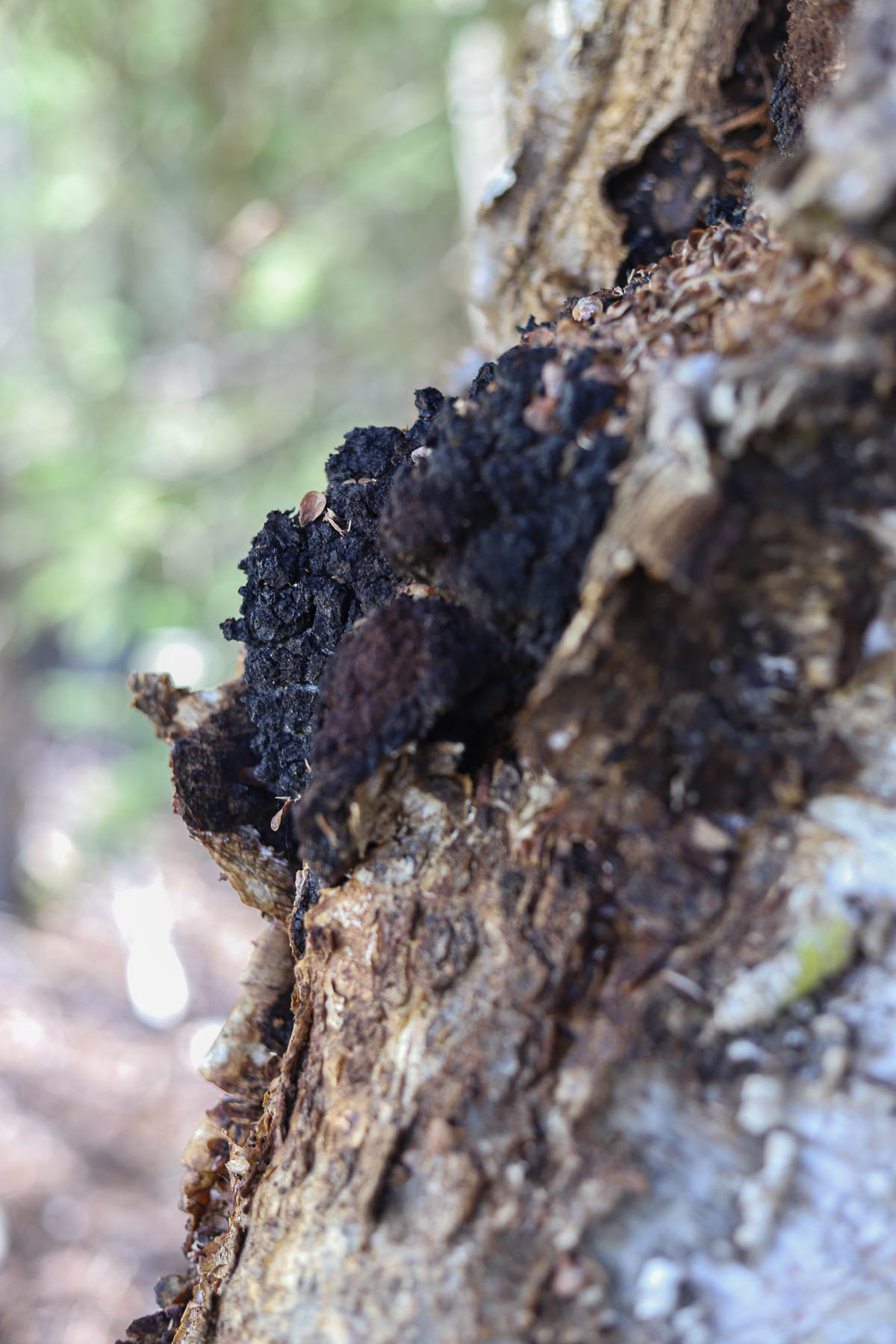
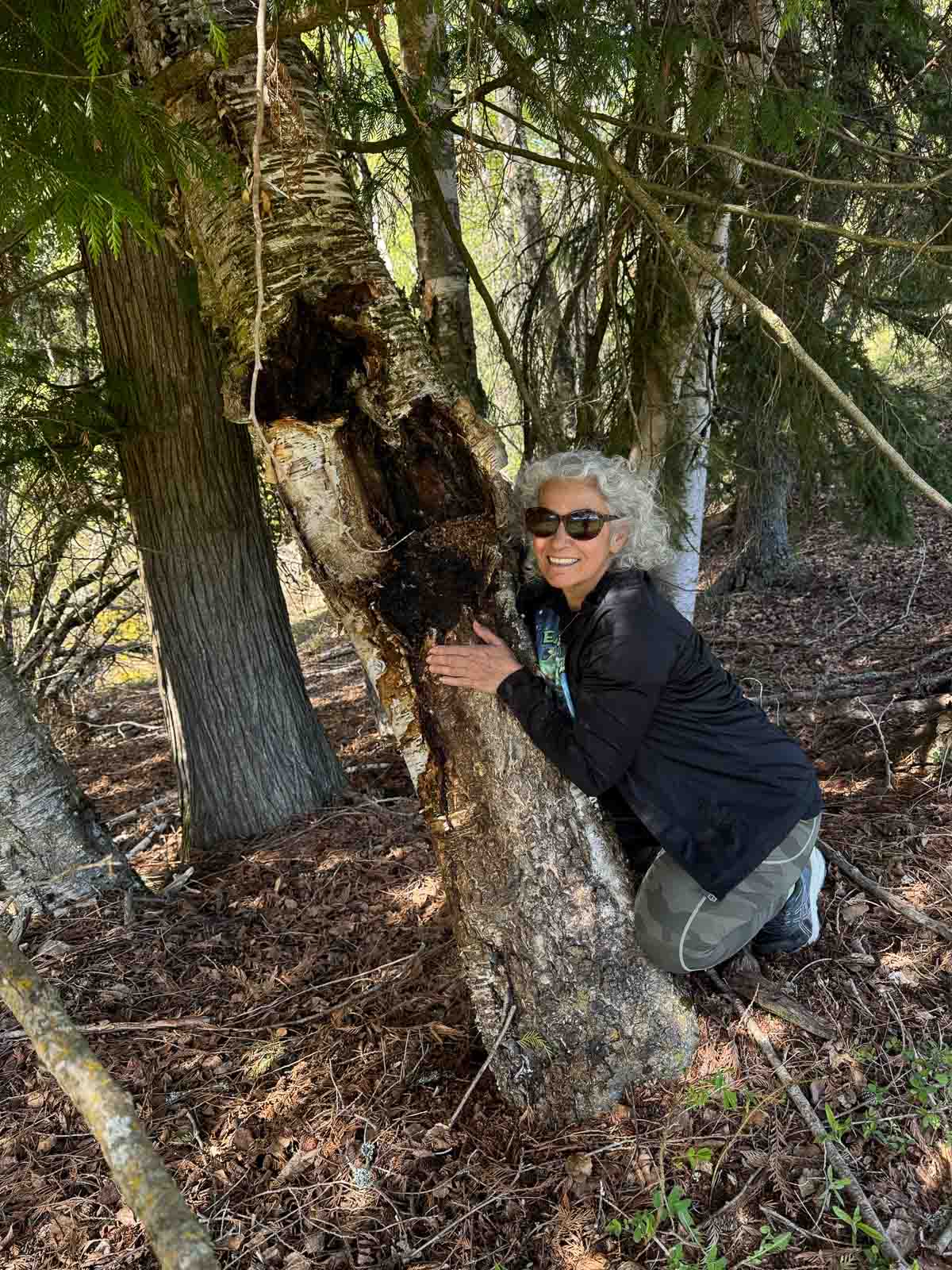
A week later, I was invited to a friend's house to look for chaga because their property is teeming with birch trees. Her observant husband, Jack, had noticed a black mass growing on one of their birch trees, so we decided to investigate. Once he pointed us in the right direction, we found the tree with chaga growing low enough for even me to reach, all 5'1 ¾" of me!
If you're not lucky enough to live in an area where you can go foraging for chaga, you can purchase it on Etsy or on Amazon!
Jump to:
What is Chaga?
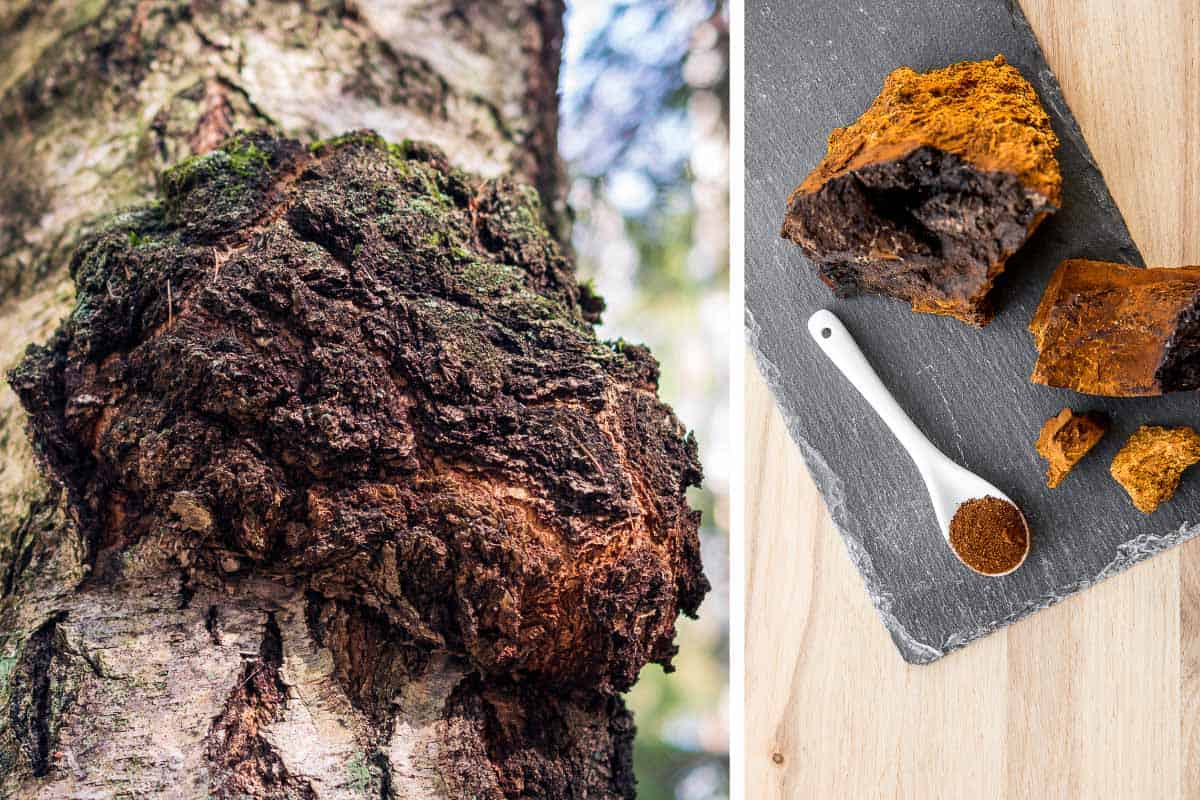
Chaga is a type of wild fungus that grows primarily on birch trees in cold climates such as Alaska, Canada, Russia, and parts of the northern United States.
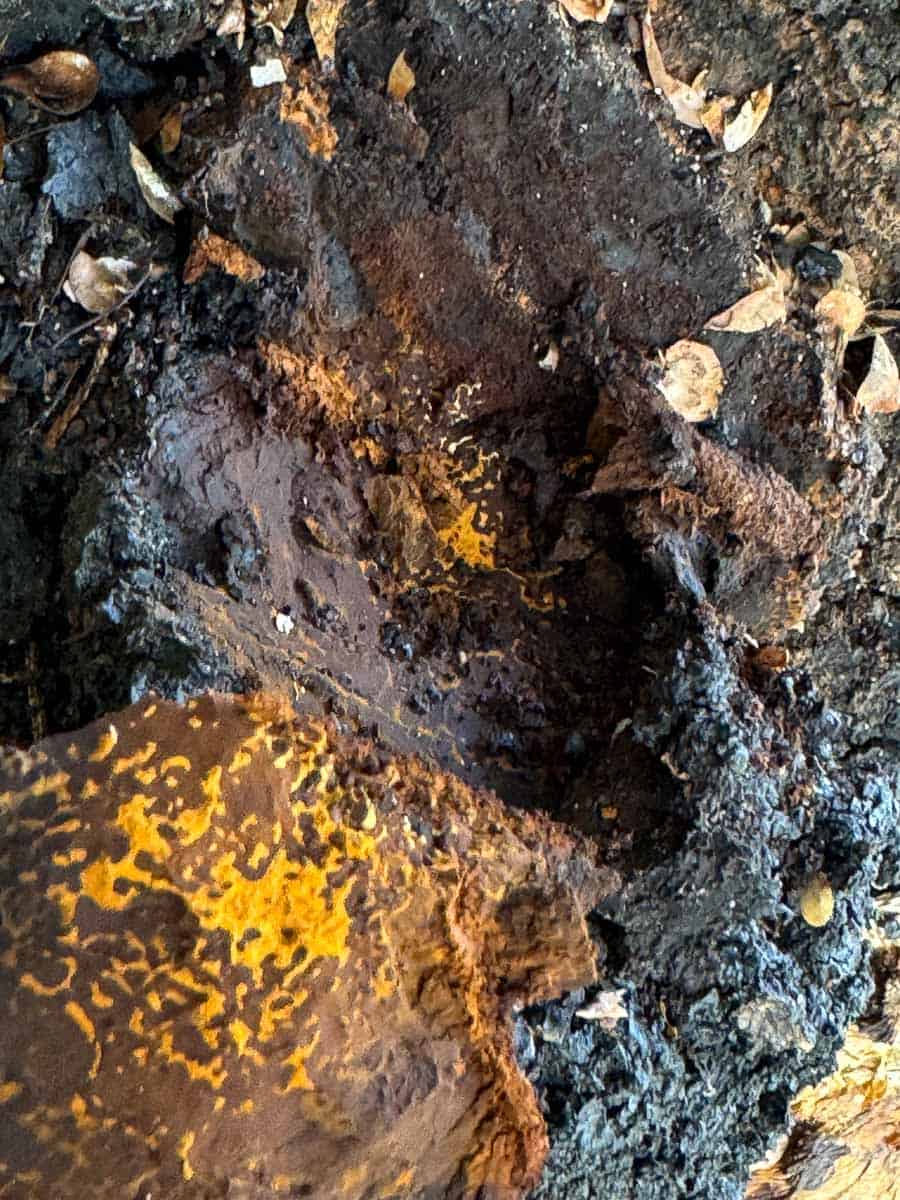
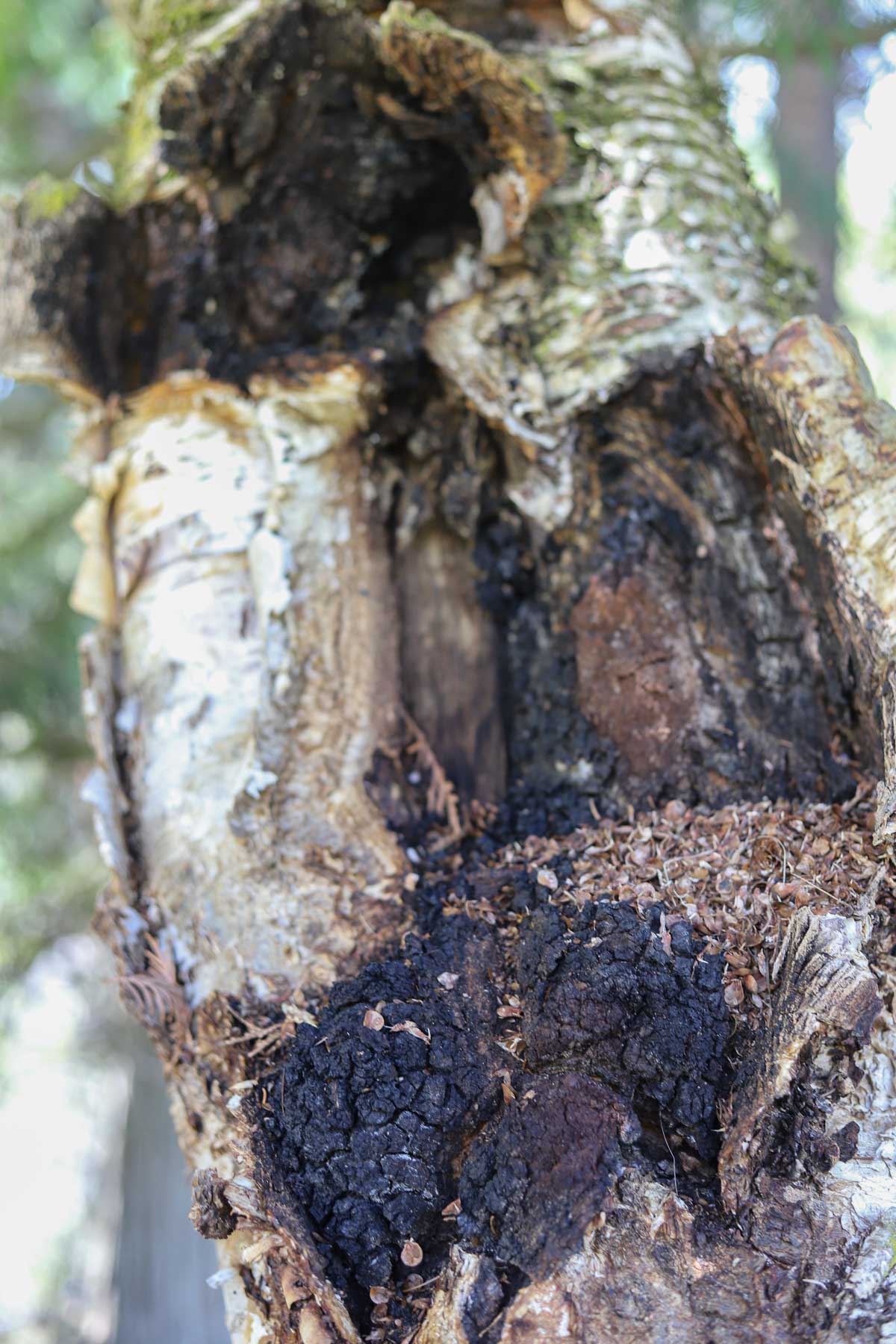
At first glance, chaga doesn't look anything like a mushroom. It looks more like a burnt, cracked lump of charcoal stuck to the tree. But beneath that rough black exterior is a rust-colored core traditionally harvested, dried, and simmered into chaga tea.
Unlike typical mushrooms, chaga tea has a surprisingly smooth flavor with subtle woody notes and hints of vanilla. It's earthy, slightly bitter, and honestly difficult to describe because it's so unique and unexpectedly delicious.
People are drawn to chaga because it's naturally caffeine-free and has been used in traditional folk practices for centuries. Today, it's popular in the wellness world as both a soothing tea and a coffee alternative.
You'll usually find it sold in chunks, powder, or pre-packaged tea blends, but the most traditional method is still the simplest: simmer raw chaga anywhere from 30 minutes to 2 hours, depending on how strong you like it. If you prefer tea, go with a shorter simmering time. Coffee lovers may prefer a longer simmer for a richer, darker, more robust brew.
Some herbalists recommend taking occasional breaks from chaga tea or extracts, especially if consuming it daily for extended periods. A common approach is to use chaga for several weeks, then take a short break before resuming. While research on cycling chaga is limited, many people follow this practice as part of a balanced wellness routine.
Chaga is also one of the most popular functional mushrooms included in many of today's best mushroom coffees. It's often blended with other mushrooms like lion's mane, reishi, cordyceps, and turkey tail to create a beverage that's marketed as a gentler alternative to traditional coffee.
Ingredients & Substitutions
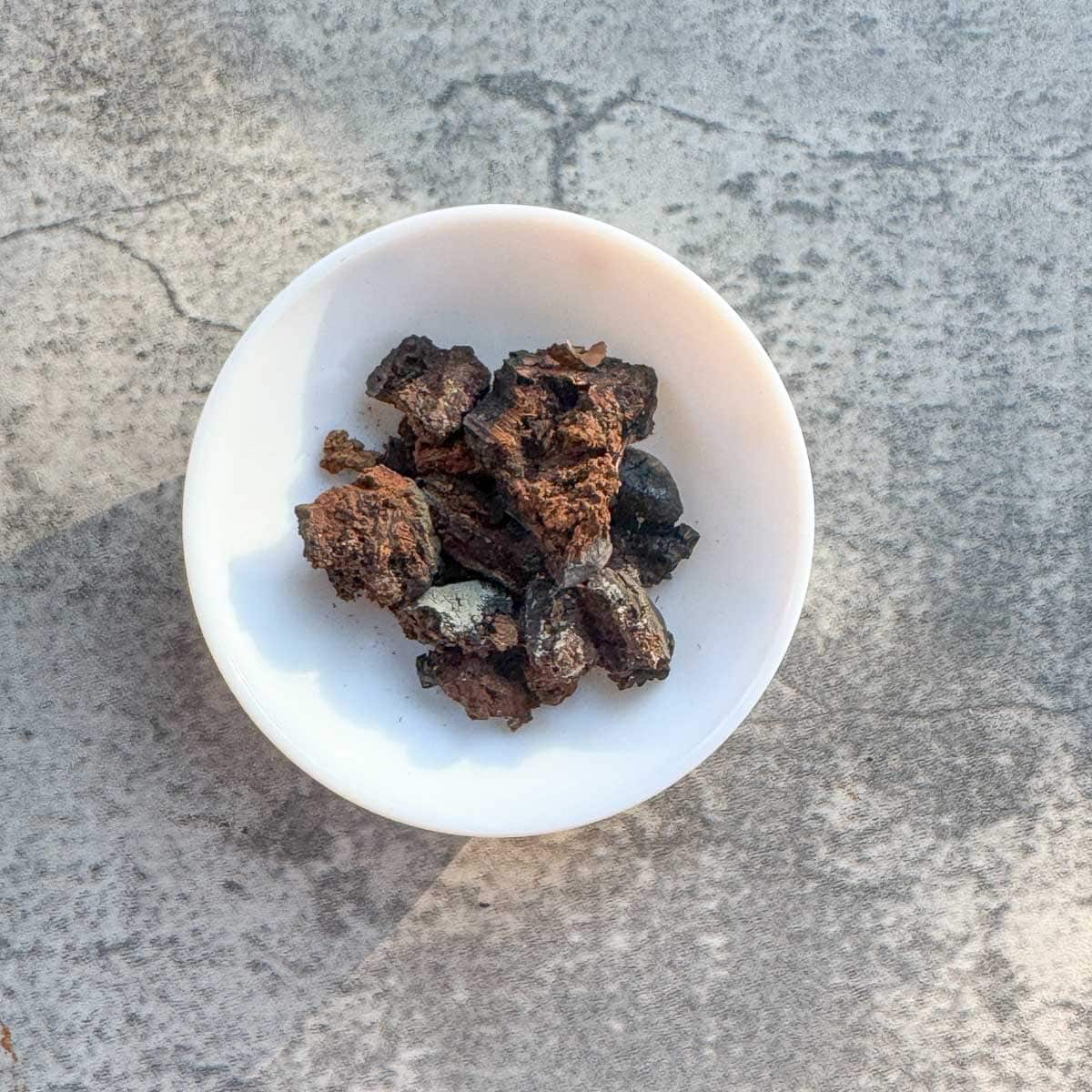
- Chaga: Foraged chaga, or you can buy it on Etsy!
- Sweetener: Raw honey, cardamom syrup, or sweetener of choice
- Water: Purified water
- Cream: Half-and-half, cream, or a splash of milk.
- Spices: I like to add a pinch of cinnamon or cardamom to enhance the flavor even further.
See recipe card for quantities.
How to Make Chaga Tea
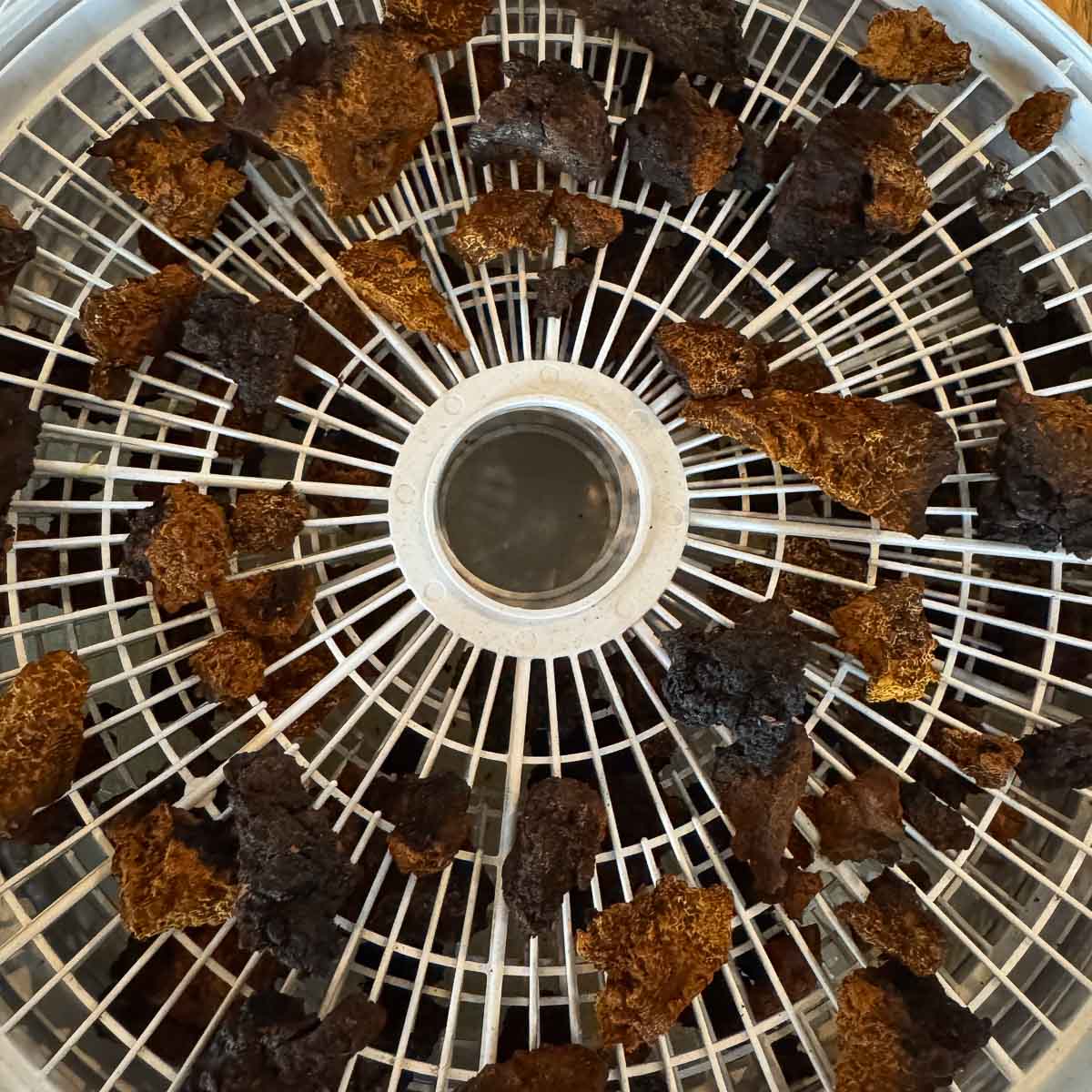
- Step 1: If your chaga is in large pieces, break it into smaller chunks, about 1 inch or smaller. Dry overnight on the lowest dehydrator setting.
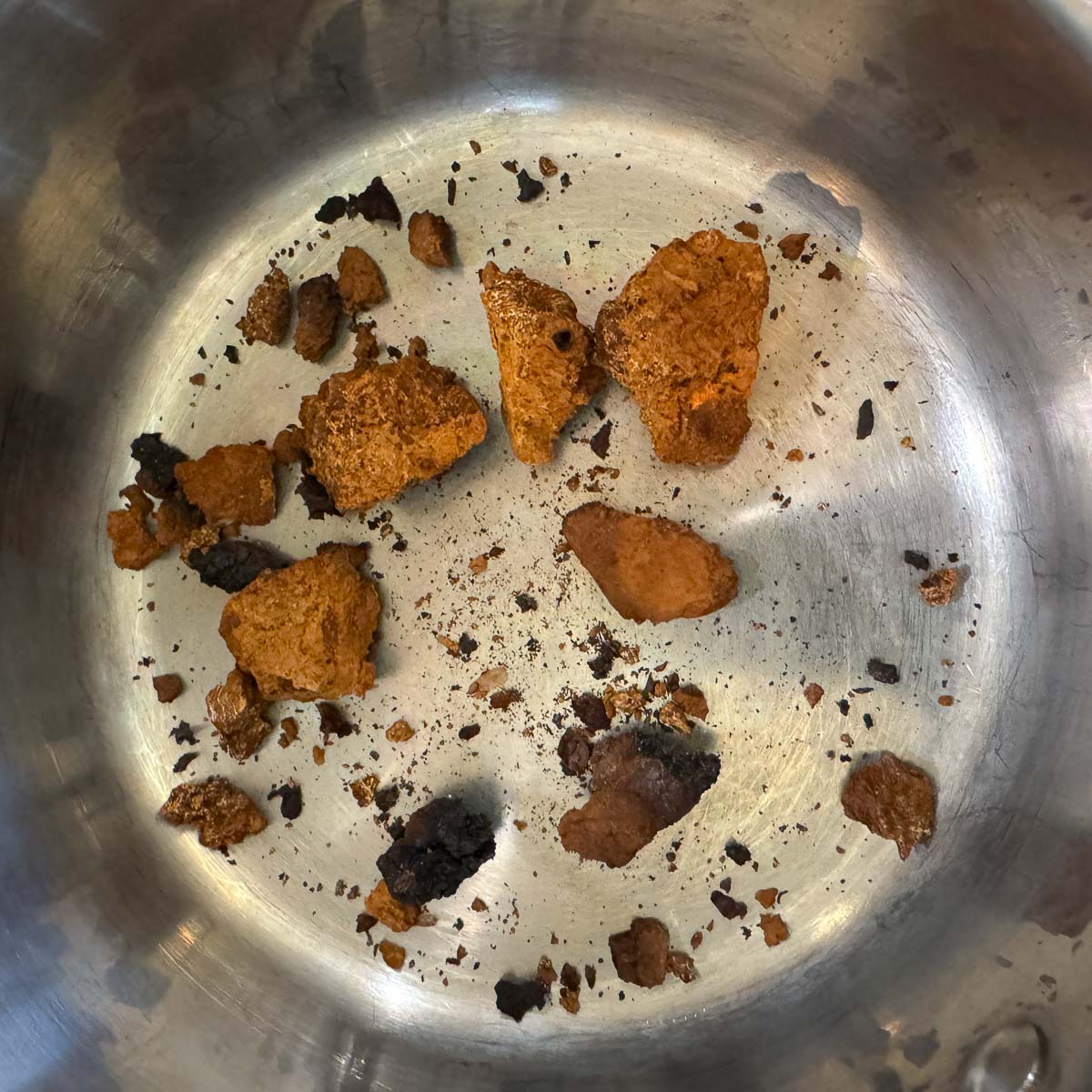
- Step 2: Add about 6 grams of chaga to a pot with 2 cups of water. Partially cover with a lid and simmer over low heat for 45 minutes, or up to 2 hours for a stronger brew.
Pro Tip: The longer you simmer it, the stronger it will be. At first, the water will turn a deep amber, like a cross between tea and coffee, and will get darker from there.
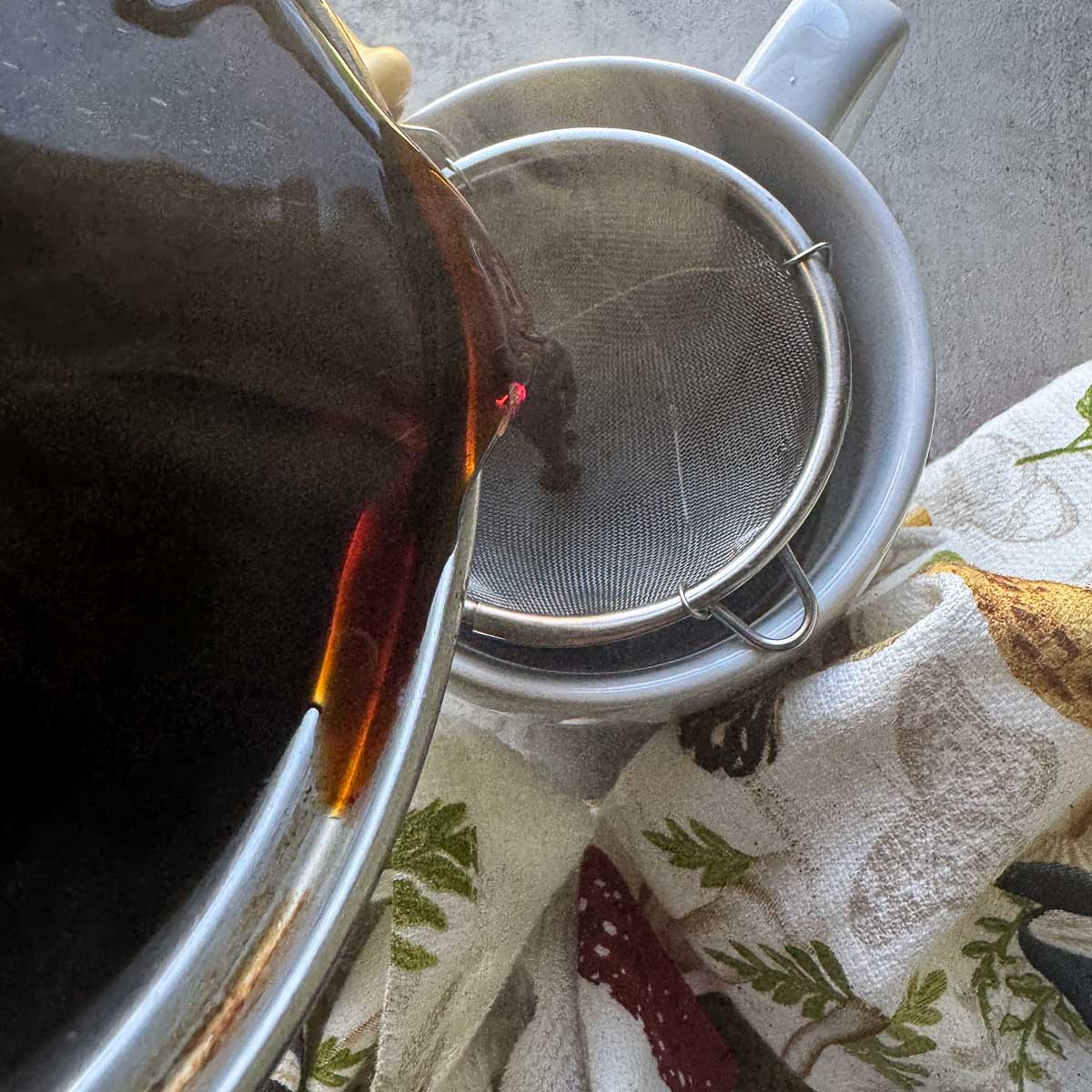
- Step 3: Strain the tea into a tea cup, but don't toss the chaga chunks. They can be reused several times.
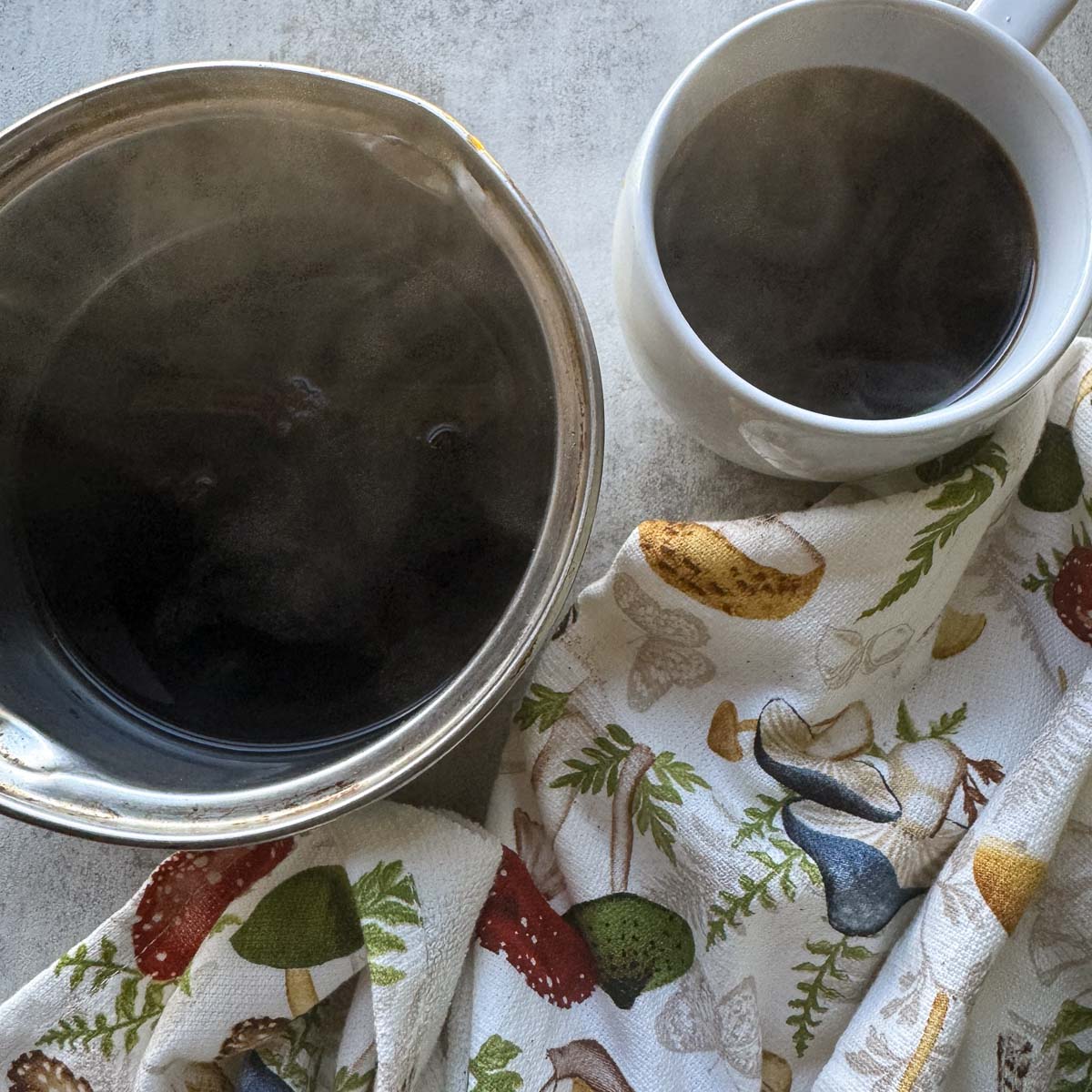
- Step 4: Drink as-is or add honey for sweetness, cream for a smoother finish, or cinnamon and vanilla for a delicious flavor.
Pro Tip: Store leftover tea in the fridge. Reuse the chaga chunks until they no longer produce color.
Make A Larger Batch
Chaga tea stores beautifully, so feel free to double or triple the recipe and keep it on hand. It reheats beautifully and saves you from starting from scratch every time.
How to Make Chaga Coffee
To make chaga coffee, follow the same steps as making chaga tea, but brew it for a longer time, until it is rich and dark.
Another option is to mix some brewed chaga with your coffee. It adds a smooth, earthy depth without overpowering your brew. However, don't boil chaga with coffee grounds. Brew them separately, because chaga needs a long simmer time.
Pro Tip: Don't mix powdered chaga with your coffee either; it will not dissolve and will leave a gritty sediment at the bottom of your cup.
One of my favorite ways to enjoy chaga coffee is by adding approximately ¼ to ½ cup of chaga coffee to my Everyday Dose mushroom coffee, along with a dropperful of red beleted polypore tincture. It makes a rich, earthy drink that I've really come to enjoy.
Chaga Tea Benefits
Chaga has been used in traditional medicine for centuries, particularly in Russia and Northern Europe, and modern research is beginning to catch up with what folk healers have long believed. Here are some of the most talked-about potential benefits:
- Rich in antioxidants: Chaga is considered one of the most antioxidant-dense foods on the planet. Antioxidants help protect your cells from oxidative stress, which is linked to aging and chronic disease.
- May support immune function: Chaga contains beta-glucans, a type of polysaccharide known to help modulate the immune system, potentially helping it respond more effectively without overreacting.
- Anti-inflammatory properties: Chronic inflammation is at the root of many modern health issues. Some studies suggest chaga may help reduce inflammation markers in the body.
- May support healthy blood sugar levels: Early research, mostly on animals, has shown chaga may help regulate blood sugar, which could be relevant for those managing or trying to prevent diabetes.
- Gut-friendly: As a functional mushroom, chaga may support a healthy gut environment, which can affect immunity, mood, and energy.
- Promising Cancer Research: Some early studies suggest chaga shows promise in cancer research due to its antioxidant and bioactive compounds, although more human studies are needed. See this PubMed study for more info.
How to Harvest Chaga (Step-by-Step)
1. Identify the Right Tree
Wild-harvested chaga (Inonotus obliquus) from birch trees is widely considered the gold standard. Chaga grown on other trees is less potent and worth avoiding. Look for:
- Black, crusty growth that looks like burnt charcoal
- Irregular shape (not a neat mushroom cap)
- Orange-brown interior (if broken open)
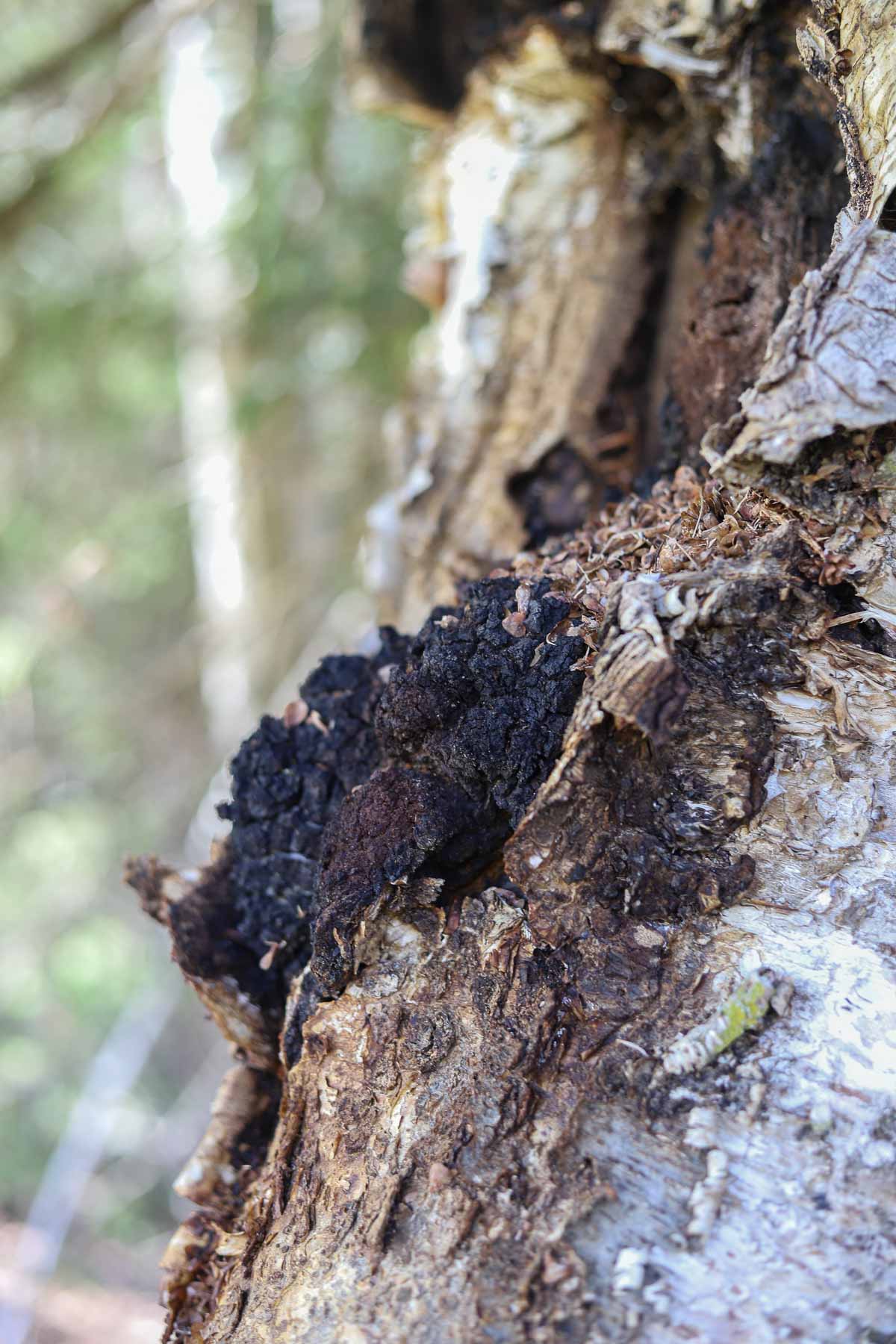
👉 If it's on anything other than birch, walk away, it's not the good stuff.
2. Best Time to Harvest Chaga
You can harvest chaga year-round, but the best time may be late fall through early spring when:
- Sap levels are lower
- Bug activity is minimal
- Chaga is easier to spot once the birch trees lose their leaves
Many foragers prefer harvesting in winter since the dark chaga stands out clearly against the pale bark and snowy landscape. There doesn't appear to be conclusive evidence that its beneficial compounds peak during a specific season. Most seasonal recommendations are based on easier harvesting conditions rather than potency.
3. Use the Right Tools
You will need:
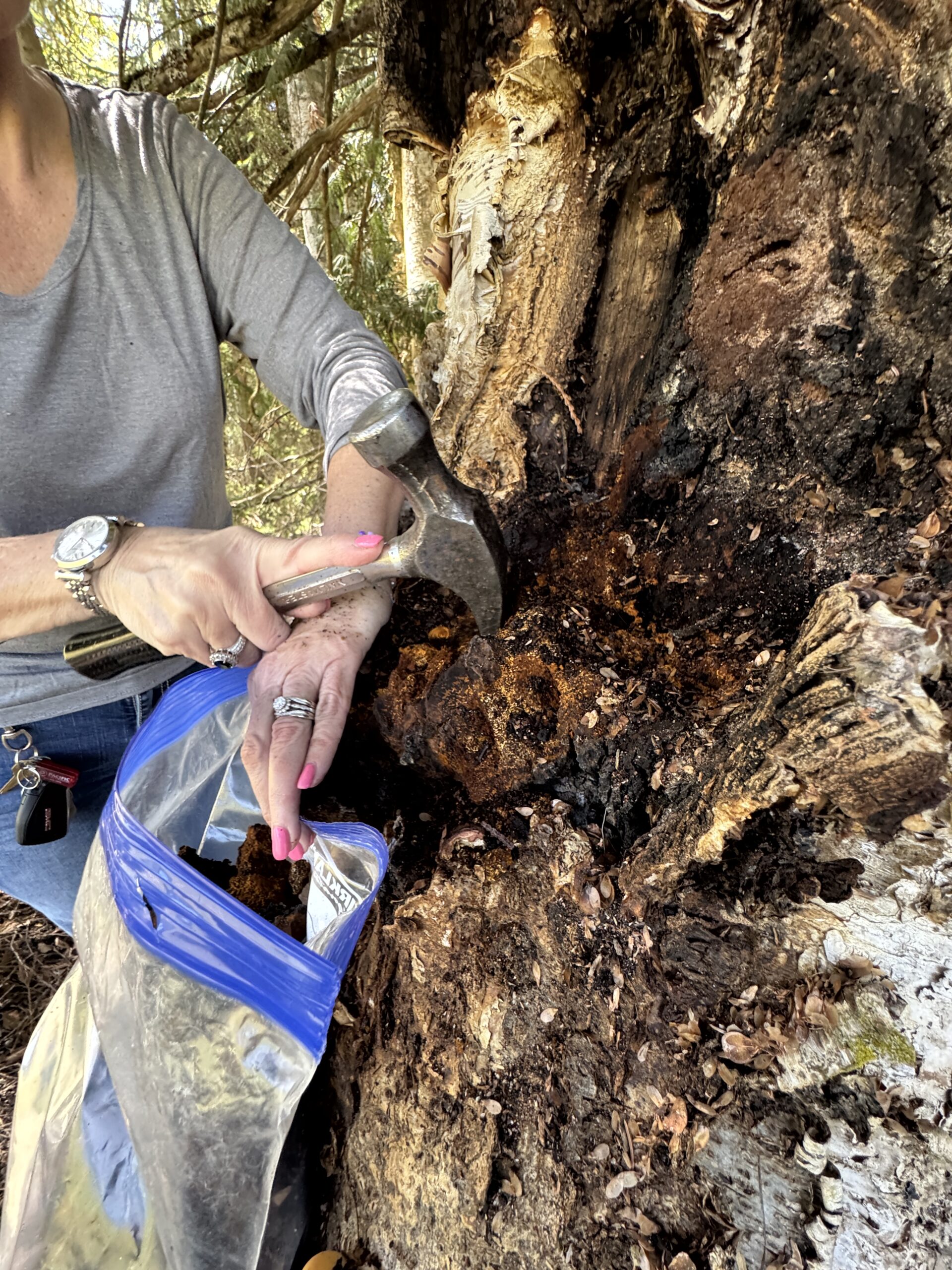
- A sturdy knife, hatchet, small axe, or a chisel and a hammer (chaga can be very hard)
- Gloves may come in handy, too!
4. Remove Only Part of the Conk
This is where a lot of people mess up.
- Harvest only 25-50% of the chaga growth
- Leave the rest behind so it can continue growing
- Avoid damaging the tree more than necessary
👉 If you take the whole thing, you're basically ending that chaga's life cycle.
5. Dry Chaga Before Use
The inner part of chaga can be damp and needs to be dried before being stored, so it doesn't grow mold:
- Break chaga into 1 to 2" chunks and arrange on dehydrator trays.
- Set to the lowest setting (95°F) and dry until brittle. The time can vary based on how damp the chaga is; mine dried completely overnight.
Pro Tips
- Simmer, don't boil the chaga. High heat can degrade some of chaga's beneficial compounds. Keep your water around 140°F-160°F for the best brew.
- Chaga chunks or powder can be simmered low and slow for hours - the longer you brew, the deeper and richer the flavor.
- Dried chaga chunks can be reused multiple times before they lose their potency. Don't toss them after one brew!
- Use a stronger chaga brew when mixing with coffee. A weak brew will disappear once you add coffee.
- Pair with warm spices like cinnamon, cardamom, nutmeg, or vanilla.
- Try blending with roasted dandelion coffee for double the benefits!
- Store dried chaga in a cool, dry place. I like to store it in mason jars and use a vacuum sealer to seal the jars. It has a long shelf life when kept properly.
FAQ
Chaga tea is generally considered safe for most people, but it's always a good idea to check with your doctor, especially if you're on blood thinners or have kidney issues, as chaga is high in oxalates. Pregnant or nursing women should check with their health providers.
No, chaga is not a psychedelic. It contains none of the compounds, like psilocybine, that give "magic mushrooms" their hallucinogenic effects. Chaga is a functional mushroom; it works to support the body over time rather than producing any mind-altering experience.
For most healthy people, drinking chaga tea daily is perfectly fine. In fact, that's how traditional cultures consumed it. The main cautions are for people prone to kidney stones, those on blood thinners, or those on diabetes medication. If you fall into one of those categories, check with your doctor first.
More Foraging Posts
Looking for more posts like this? Try these:


How to Make Chaga Tea and Chaga Coffee
Instructions
- If your chaga is in large pieces, break it into smaller chunks, about 1 inch or smaller. Dry overnight on the lowest dehydrator setting.
- Add about 6 grams of chaga to a pot with 2 cups of water. Partially cover with a lid and simmer over low heat for 45 minutes, or up to 2 hours for a stronger brew.
- Strain the tea into a tea cup, but don't toss the chaga chunks. They can be reused several times.
- Drink as-is or add honey for sweetness, cream for a smoother finish, or cinnamon and vanilla for a delicious flavor.
Notes
- Simmer, don't boil. High heat can degrade some of chaga's beneficial compounds. Keep your water around 140-160°F for the best brew.
- Chaga chunks or powder can be simmered low and slow for hours - the longer you brew, the deeper and richer the flavor.
- Dried chaga chunks can be reused multiple times before they lose their potency. Don't toss them after one brew!
- Use a stronger chaga brew when mixing with coffee. A weak brew will disappear once you add coffee.
- Pair with warm spices like cinnamon, cardamom, nutmeg, or vanilla.
- Try blending with roasted dandelion coffee for double the benefits!
- Store dried chaga in a cool, dry place. I like to store it in mason jars and use a vacuum sealer to seal the jars. It has a long shelf life when kept properly.
Hilda Sterner says
Hope you can get your hands on some chaga so you can try chaga tea!
Hungry4Hucks says
Hilda, thank you for this post. This is incredibly informative. It never ceases to amaze me how God has provided everything we need in nature's pharmacy.
Hilda Sterner says
Thank you, and yes, I totally agree with you! 😘