
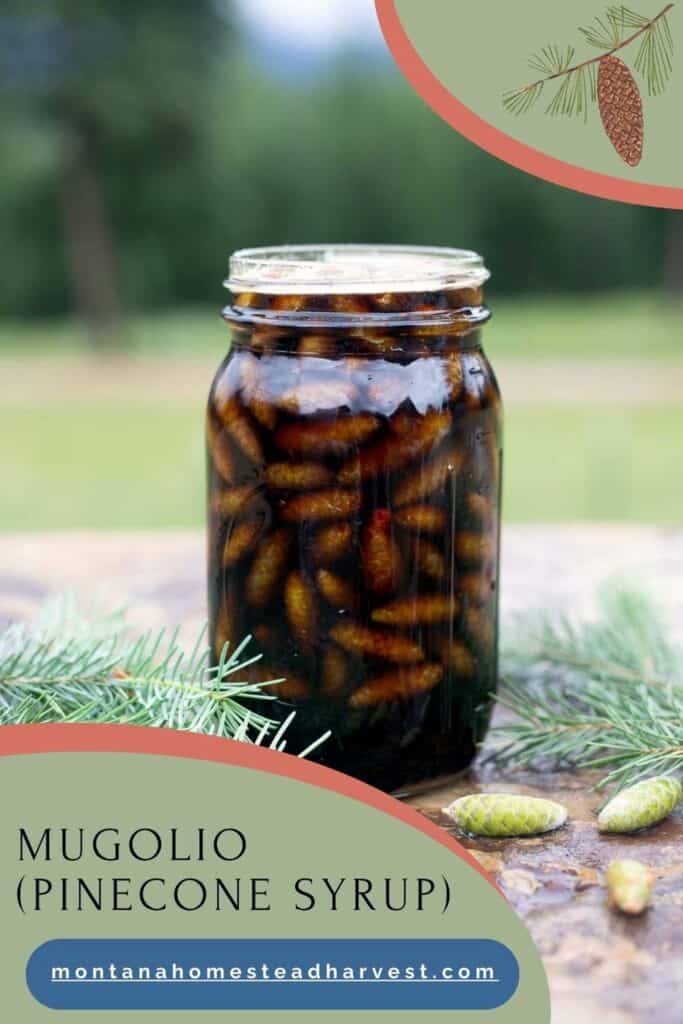
Mugolio is more than just syrup. It's a taste of the forest in liquid form. Whether you're a chef, a forager, or a curious foodie, this pinecone syrup is a unique pantry addition that elevates everyday dishes into something extraordinary. You may also want to try making pine needle soda and spruce gum!
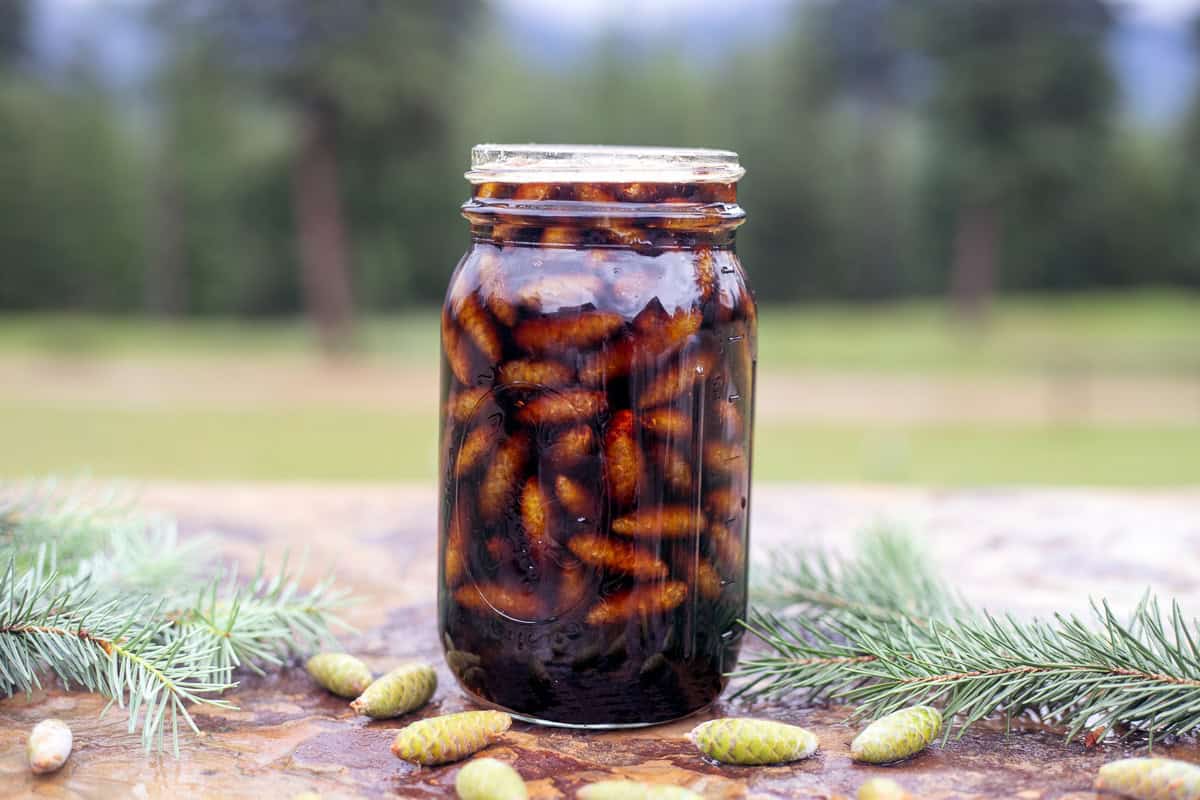
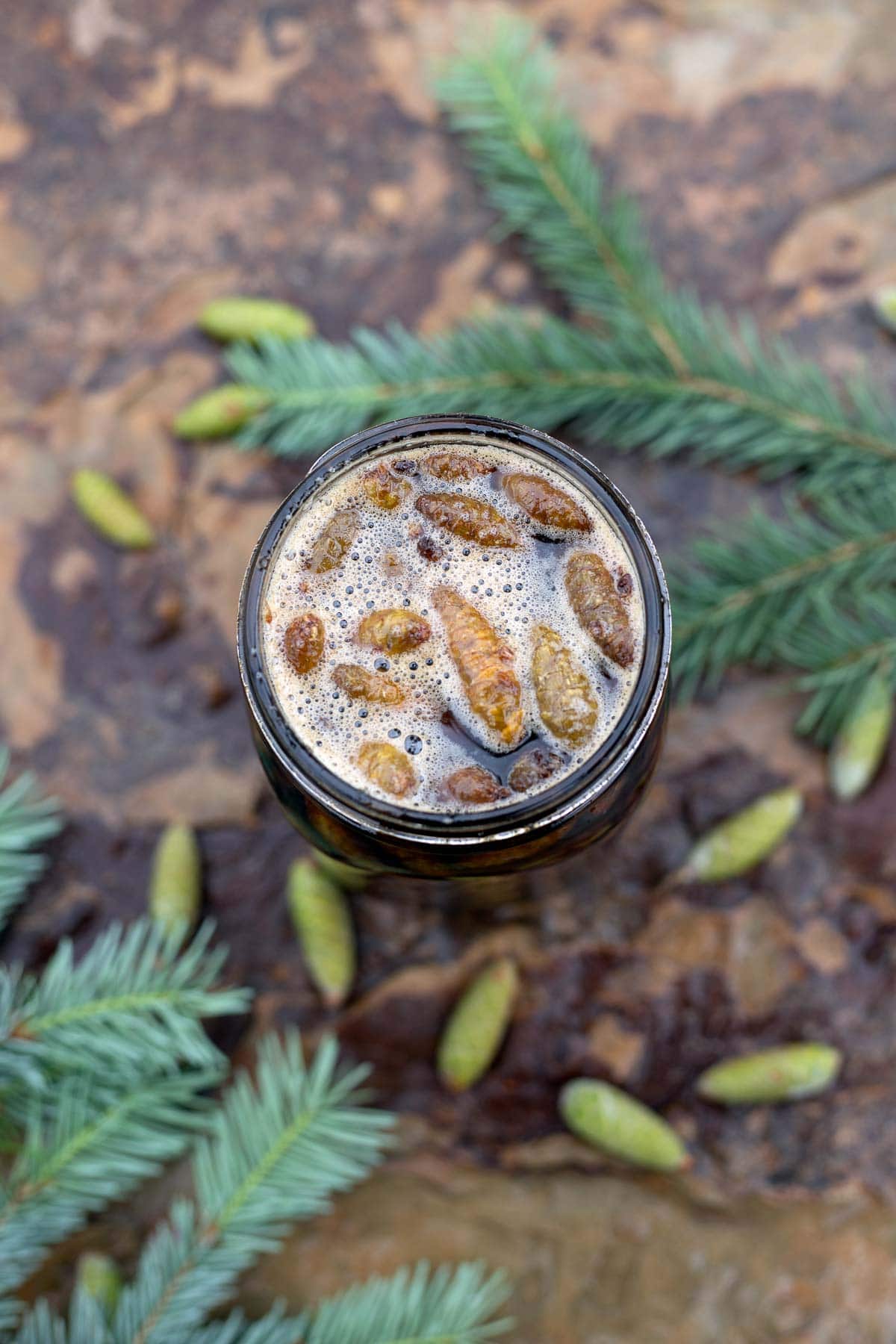
I recently had a friend offer me some baby pinecones that she had foraged from a fallen spruce tree. It was perfect timing because I had been interested in making pinecone syrup, and I finally had some time to tackle it!
When making pinecone syrup, the pinecones need to be infused in the syrup for at least one month, and up to 6 months (if you are more patient than I am). Some regions in Italy even bury the jar for a year before straining it!
Mugolio can then be enjoyed in cocktails, or drizzled over pancakes, waffles, ice cream, or used as a glaze. It even makes an amazing cough syrup! Then try my easy elderberry gummies recipe!
Jump to:
What Is Mugolio?
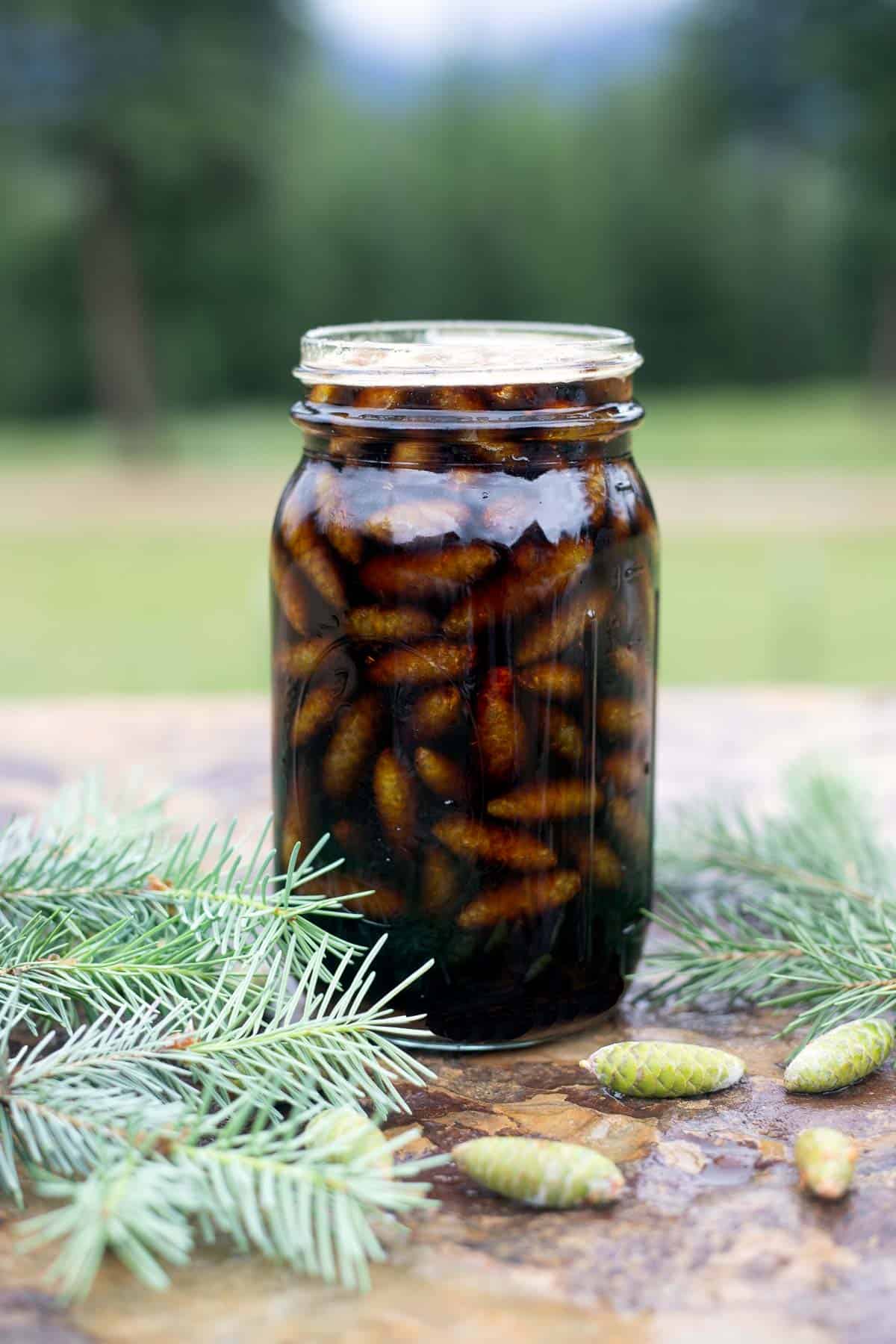
Mugolio is an artisanal syrup made from young, green pinecones, typically harvested from the Mugo pine (Pinus mugo) in the Italian Alps. This rare and fragrant syrup has a deep amber color, a thick, molasses-like texture, and a flavor profile that combines herbal, resinous, and caramelized notes with a touch of forest earthiness.
Originally developed by Italian wildcrafter Eleonora Cunaccia, it has since become a favorite among chefs and food enthusiasts worldwide. Since I didn't have access to Mugo pines, I prepared mine with foraged young spruce pinecones, but young pinecones from other conifers can also be used. Just make sure you do your homework and confirm that they are considered edible.
If you're a fan of cooking with spruce, be sure to try my spruce tip shortbread cookies, another delicious way to enjoy this flavorful conifer.
How Is Mugolio Made?
The traditional process of making Mugolio is both slow and sustainable:
- Harvesting: In spring and early summer, young, green pine cones are foraged by hand.
- Maceration: The cones are crushed and left to macerate with sugar in glass jars under the sun for about a month.
- Reduction: The resulting syrup is strained and then slowly reduced over heat to concentrate the flavors.
The end result is a complex, botanical syrup that captures the essence of the forest in a bottle.
Ingredients & Substitutions
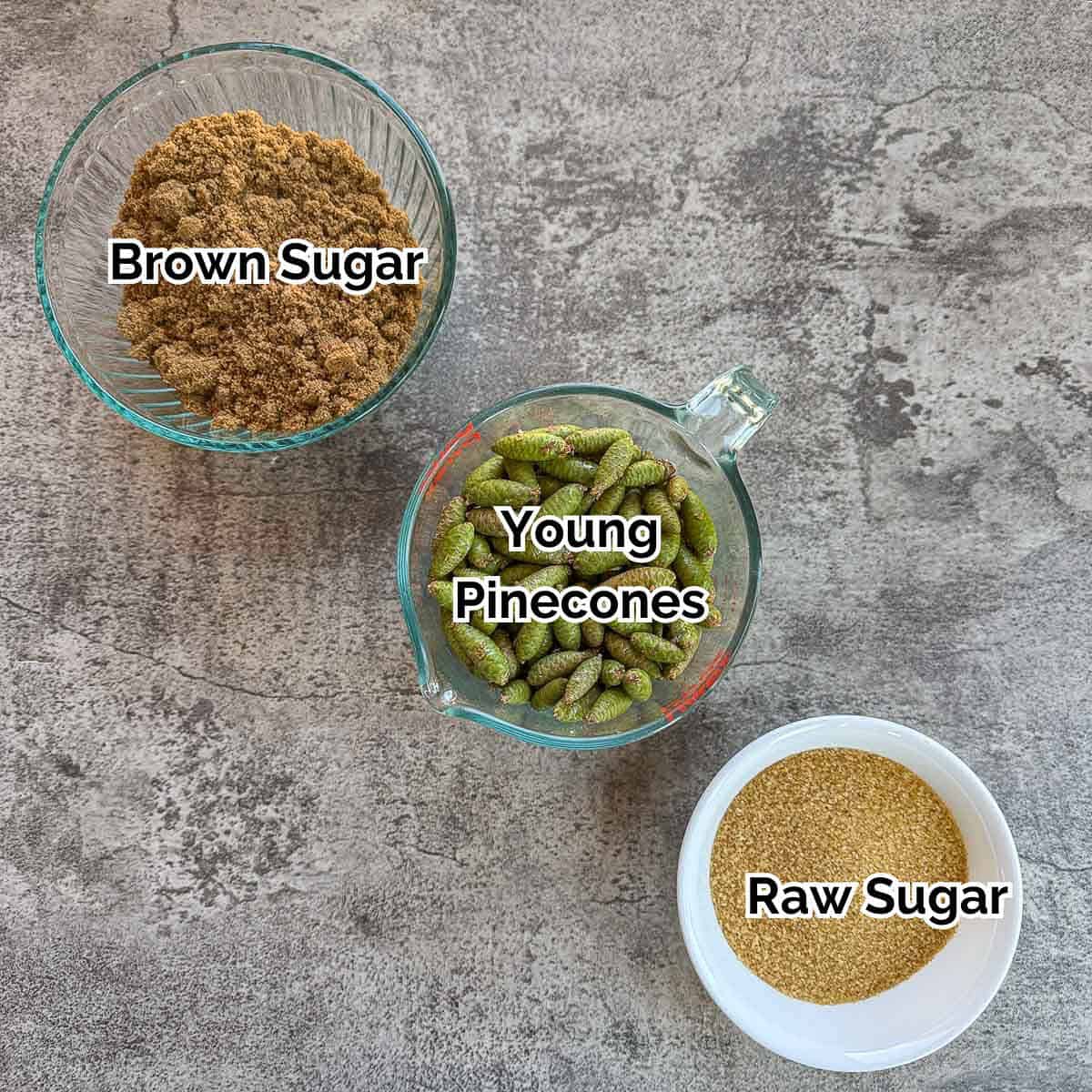
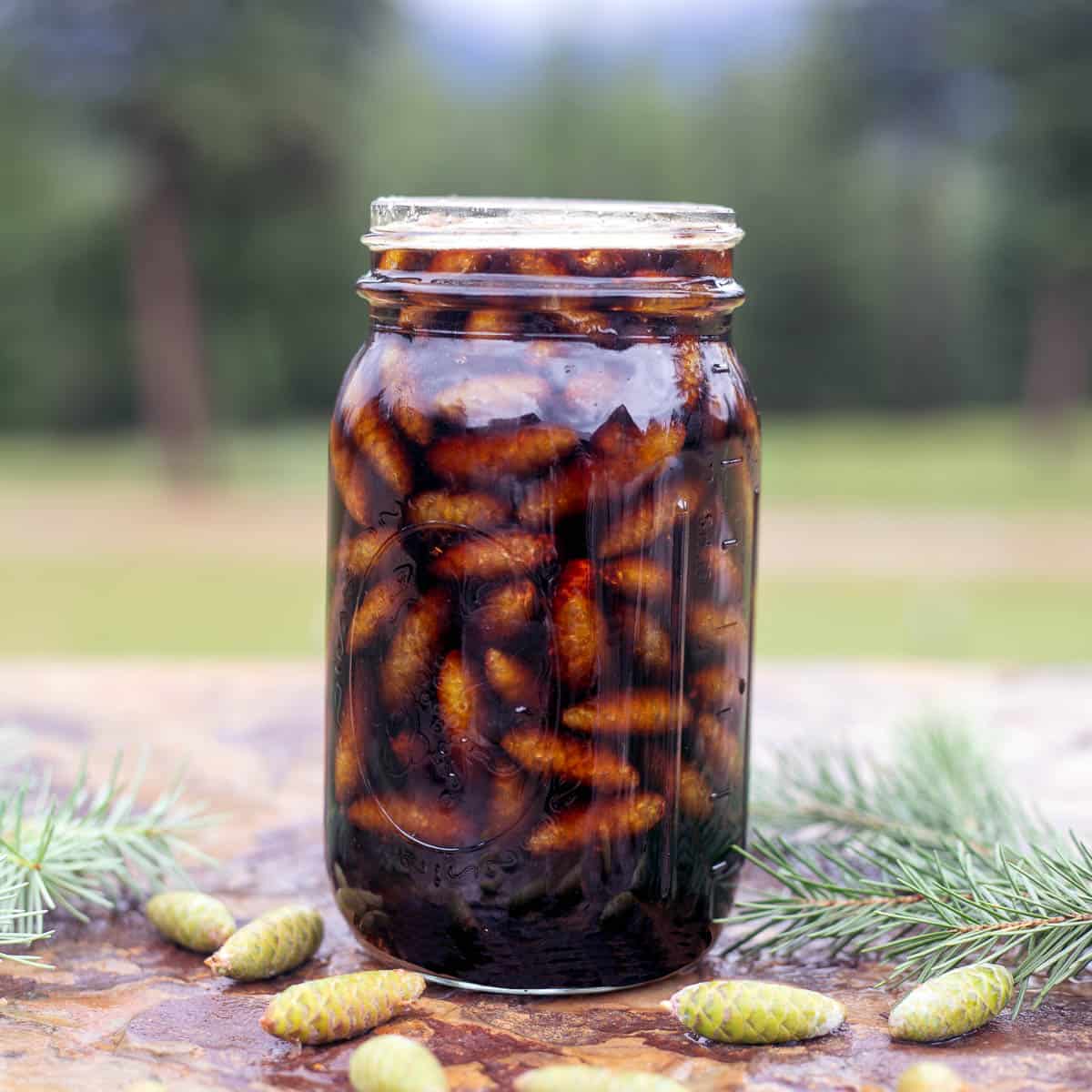
- Pinecones: To make Mugolio (pinecone syrup), you should use young, green (immature) pinecones harvested in spring or early summer, while they are still soft and resinous. They should be soft enough to slice with a knife.
- Sugar: Raw sugar, brown sugar, or do what I did, and use a combination of the two. Another option is to use honey.
*See the recipe card for quantities.
Recipe Instructions
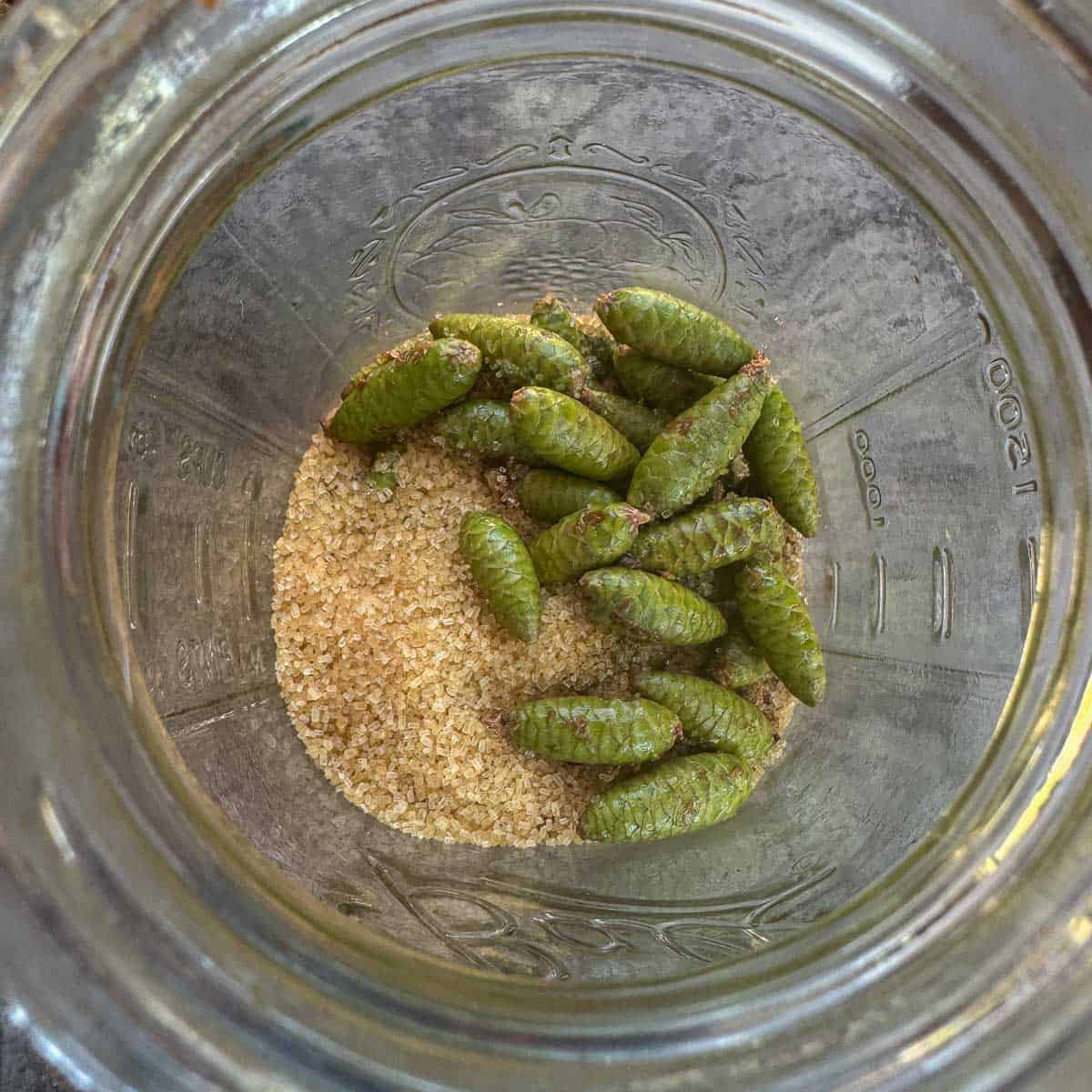
- Crush or slice pinecones, then layer in a sterilized mason jar with brown sugar, raw sugar, or a combination of both. Or use honey.
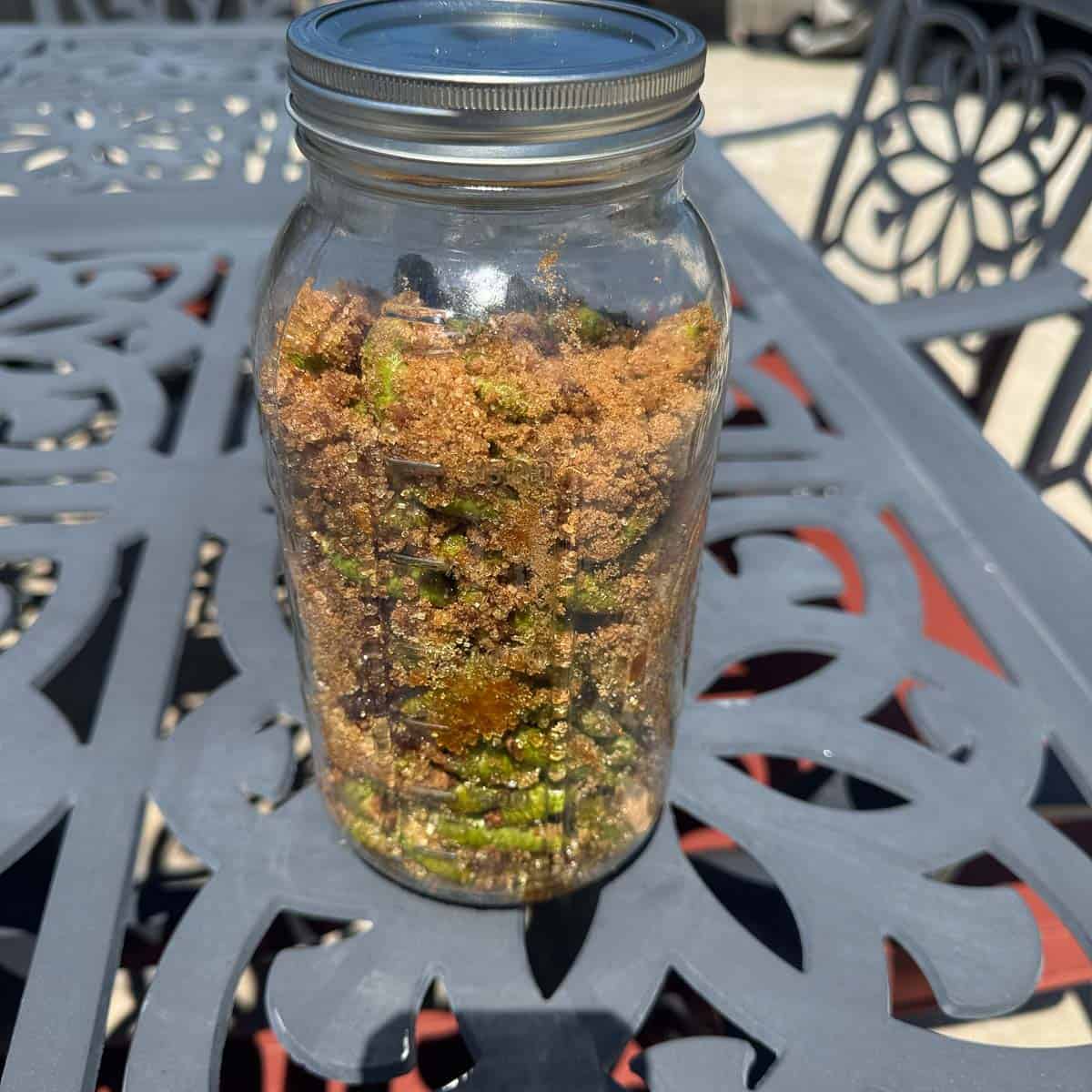
- Place in a sunny location with the cap slightly loose to allow fermentation for one month or longer, if you're patient enough.
Pro Tip: Keep pinecones submerged in the syrup. If needed, top with more sugar. To keep the syrup shelf-stable, do not add water!
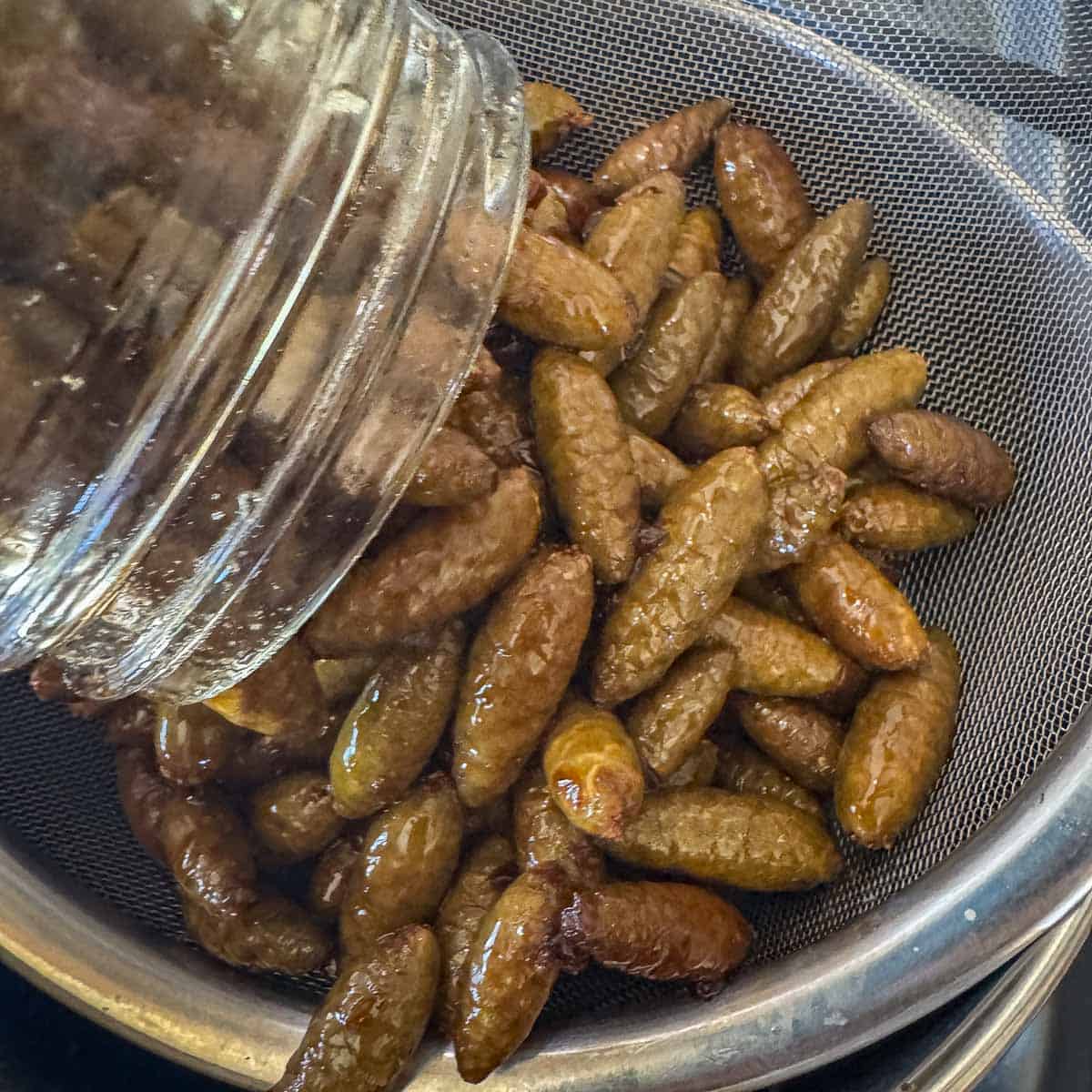
- Strain the pinecone syrup into a saucepan and simmer over low heat until all the sugar has dissolved and the syrup's flavor has concentrated.
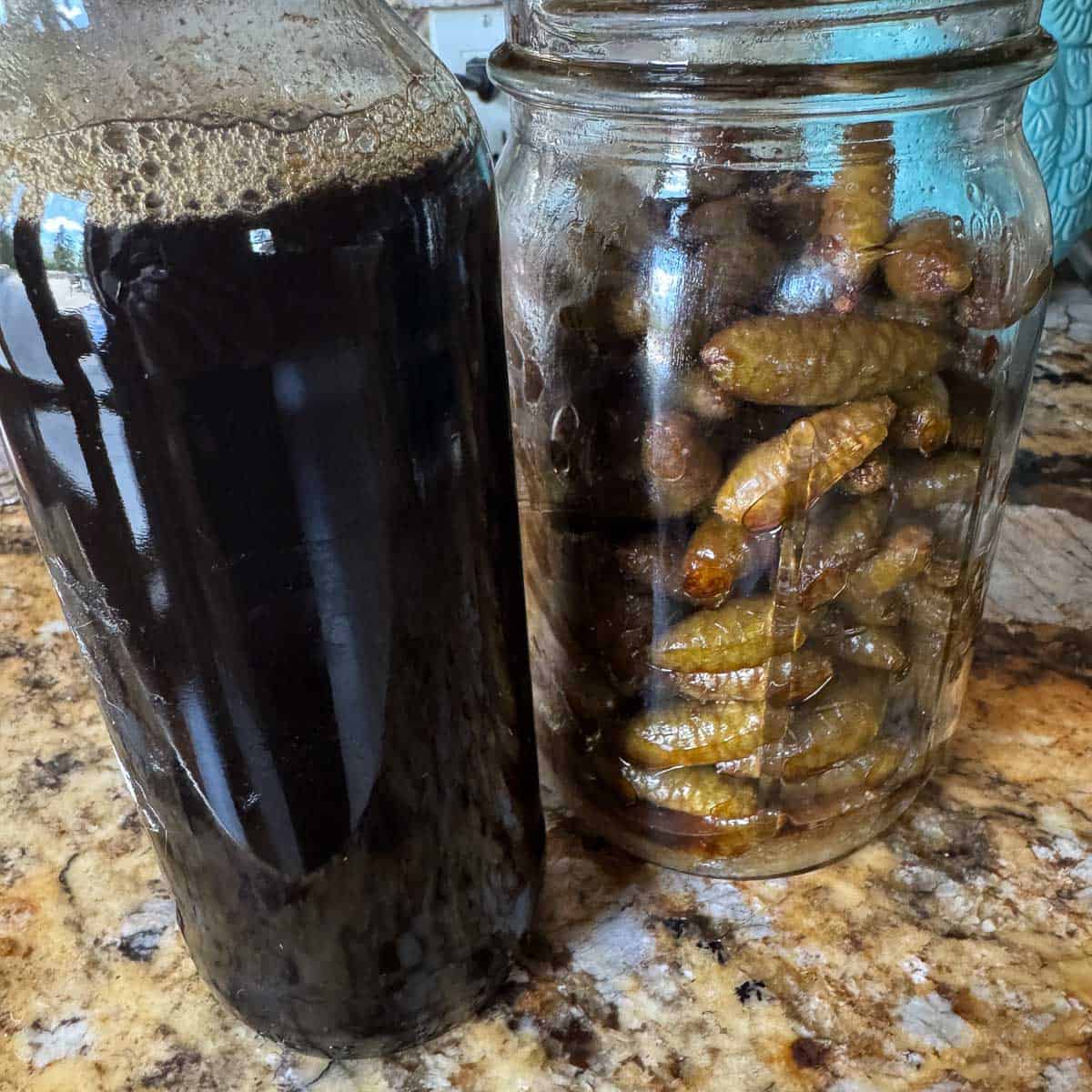
- Pour pinecone syrup into a bottle and store in a cool, dark location. Once opened, store in the fridge.
Pro Tip: Be sure to use very low heat so that your mugolio retains its beneficial compounds, such as vitamin C.
Can You Water Bath Mugolio?
Mugolio can be water bathed once it's poured into sterilized jars. However, in many European countries, the filled hot jars are simply flipped over and allowed to seal naturally.
What Does Mugolio Taste Like?
If you've never tried pinecone syrup, imagine a flavor that blends the sweetness of maple syrup with the complexity of balsamic vinegar. It carries subtle herbal and woody undertones, finishing with a slightly resinous note. It's sweet, but not cloying, perfect for both savory and sweet applications.
How to Use Mugolio in the Kitchen
Mugolio is incredibly versatile. Here are some popular ways to use it:
- Add to marinades or vinaigrettes for depth or drizzle it over cheese (especially aged goat cheese or Parmigiano-Reggiano).
- Pair with ice cream, panna cotta, or Greek yogurt.
- It also makes a wonderful glaze for meats like duck, pork, or lamb.
- Finally, mix it into cocktails or mocktails for a wild twist.
Where to Buy Mugolio
Since it's a niche product, mugolio isn't available at most supermarkets. You can usually find it:
- At specialty food stores and gourmet markets
- Online through retailers like Amazon
- Directly from Italian importers or artisanal producers
Expect to pay between $25-$40 for a small bottle. A little goes a long way, so it's worth the splurge.
Storage
Stored in a cool, dark place, an unopened bottle of pinecone syrup can last for years. Once opened, use within 6-12 months.
FAQ
Pine syrup is a broader category; Mugolio is a specific artisanal version made from Mugo pine cones in Italy.
Yes, but subtly. It has resinous notes balanced by sweetness and caramelization.
Yes. It typically contains only pinecones and sugar.
Stored in a cool, dark place, an unopened bottle can last for years. Once opened, use within 6-12 months.
Pro Tips
- A few drops go a long way. Think of it like a finishing oil or aged balsamic.
- Keep the sealed bottle in a pantry or cupboard away from heat and light.
- Store the unsealed jar in the refrigerator to prevent fermentation or spoilage.
Other Plants to Forage
There are so many plants waiting to be discovered. Here are just a few posts to get you started...
More Foraging Recipes
Looking for other recipes like this? Try these:

Recipe
Mugolio (Pinecone Syrup): What It Is and How to Use It
Equipment
- 1 funnel
Ingredients
- 4 cups young, unopened pinecones
- 3 cups brown sugar
- 1 cup raw sugar
Instructions
- Crush or slice pinecones, then layer in a sterilized mason jar with brown sugar, raw sugar, or a combination of both. Or use honey.
- Place in a sunny location with the cap slightly loose to allow fermentation for one month or longer, if you're patient enough.
- Strain the pinecone syrup into a saucepan and simmer over low heat until all the sugar has dissolved and the syrup's flavor has concentrated.
- Pour pinecone syrup into a bottle and store in a cool, dark location. Once opened, store in the fridge.
Notes
- Keep pinecones submerged in the syrup. If needed, top with more sugar. To keep the mugolio shelf-stable, do not add water!
- Be sure to use very low heat so that your mugolio retains the beneficial compounds, such as vitamin C.
- A few drops go a long way. Think of it like a finishing oil or aged balsamic.
- Keep the sealed bottle in a pantry or cupboard away from heat and light.
- Store the unsealed jar in the refrigerator to prevent fermentation or spoilage.
Hilda Sterner says
I hope you give this recipe a try and come back and let me know what you think!
Lori says
This had an excellent flavor and reminded me of Carmel:)
Hilda Sterner says
Thanks, Lori! I appreciate the review!
Karen says
I love this syrup! Yum!!! It's not expensive to make, either.
Hilda Sterner says
Thanks, Karen. I'm right there with you!