
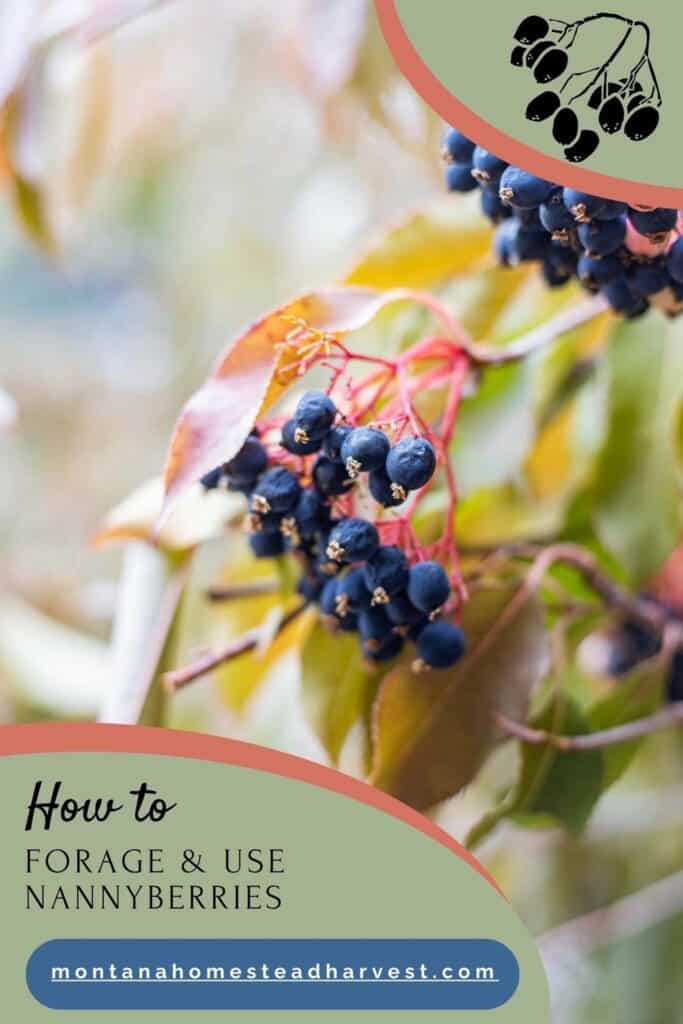
While most foragers are busy chasing chokecherries, elderberries, and rosehips in the fall, there's one wild fruit that quietly ripens in the background. You've probably walked past nannyberries without realizing these shriveled, blue-black berries are not only edible, but delicious, especially after a few frosts. Then try growing saffron!

When we bought our property in Montana, I was disappointed that there were no fruit trees on our property, especially since I had to leave my fig tree, grape vine, and lemon tree behind in San Diego.
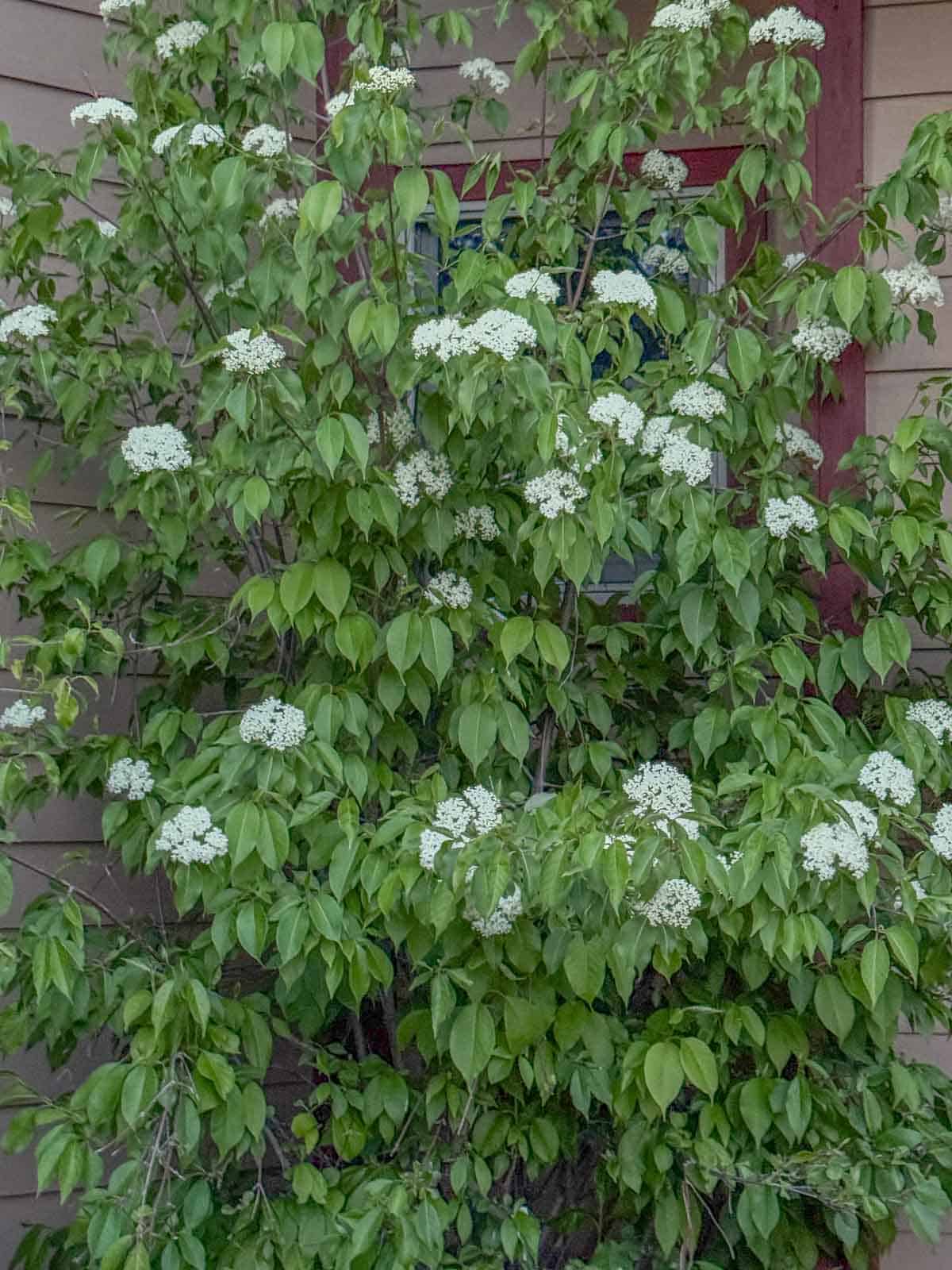
I eventually learned that we had hundreds of serviceberry bushes (also known as saskatoons or Juneberries) and wild Oregon grapes blanketing the ground. We also had two nannyberry trees planted in front of the house.
Once I properly identified the clusters of dark berries hanging from the nannyberry tree branches, you know I had to pop a couple in my mouth to taste them. What forager wouldn't?
I was surprised by how sweet they were, "a cross between a banana and a prune," that's how they're usually described. Others say they taste similar to raisins or dates. I know what you're thinking: the description of the taste is all over the place. You really have to try them for yourself to see what you think.
In this post, I'll show you how to identify nannyberries, where to find them, and a few ways to turn these overlooked fruits into something wonderful!
Jump to:
What Are Nannyberries?
Nannyberries (Viburnum Lentago) are also known as wild raisins and sheepberries (some suggest that when the berries become overripe, they smell like sheep wool). I personally haven't found that to be true. They are native shrubs/small trees that grow throughout much of North America, especially in the Northwestern U.S. and Canada.
Nannyberries are part of the viburnum family, but unlike elderberries, they can be eaten raw, right off the bush. These hardy shrubs can grow up to 18 feet tall and produce clusters of creamy-white flowers that attract pollinators like bees and butterflies.
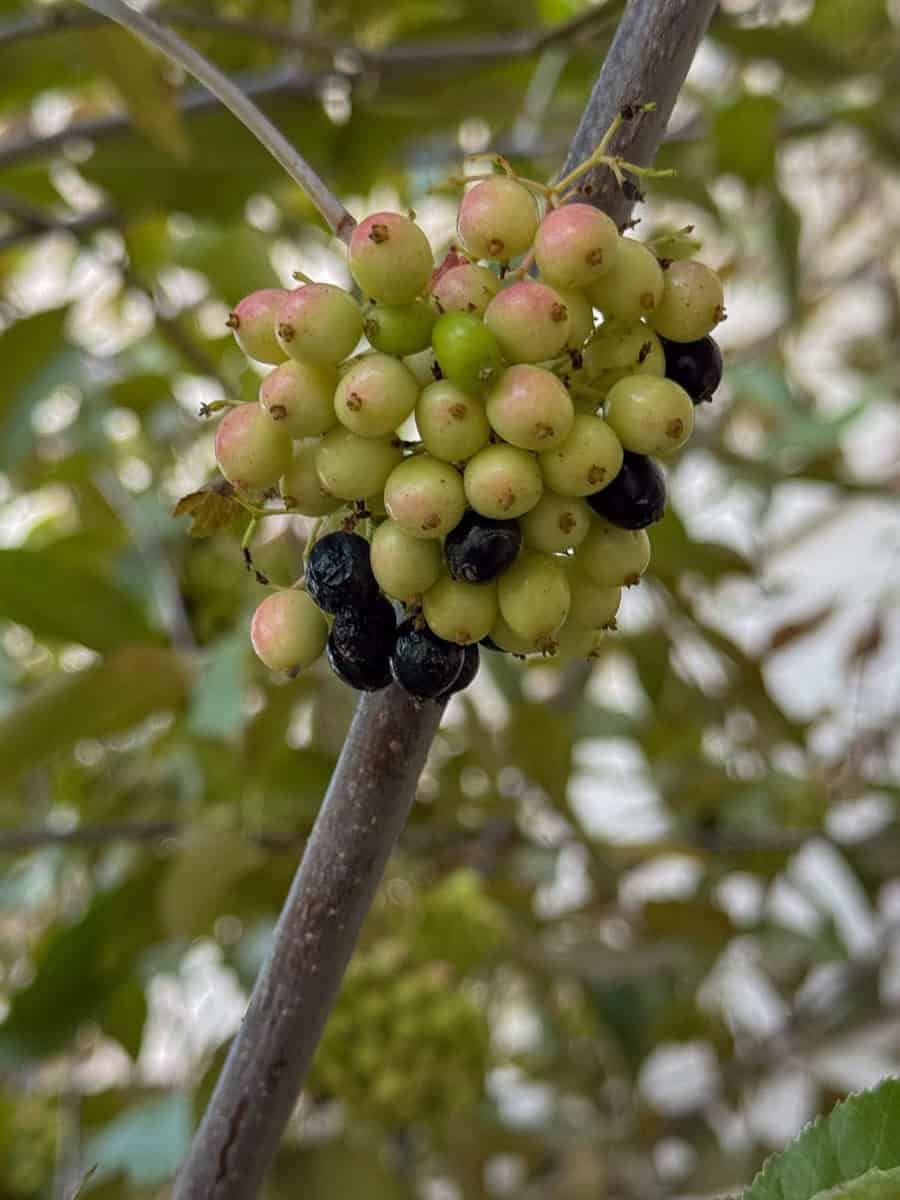
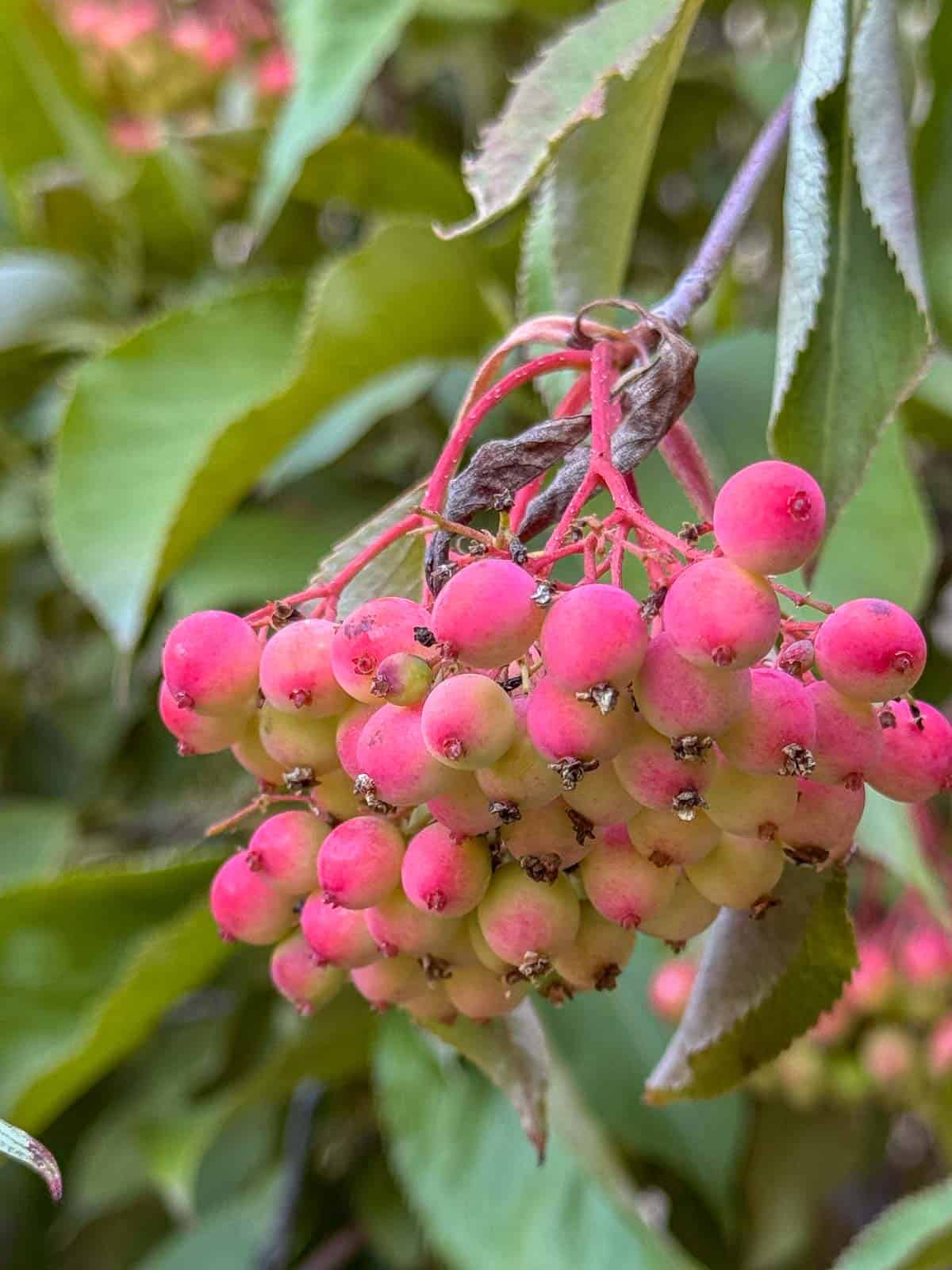
By summer, the flowers transform into green berries that eventually change color from pink to red to blue-black. The berries wrinkle as they ripen later in the season. Once they've been hit with a good frost, nannyberries develop a sweet, date-like flavor that makes them one of fall's best-kept foraging secrets!
How to Identify Nannyberries
If you want to forage nannyberries with confidence, you need to know what you're looking for. Luckily, nannyberries have some telltale traits that make them fairly easy to identify once you've seen them in person.
Leaves
Nannyberry leaves are oval and finely serrated, with a pointed tip and distinct red leaf stems (petioles) that stand out beautifully in fall. The leaves grow in opposite pairs and have a terminal bud that's shaped like a bird's beak, a key trait to remember when comparing to look-alikes.

Flowers
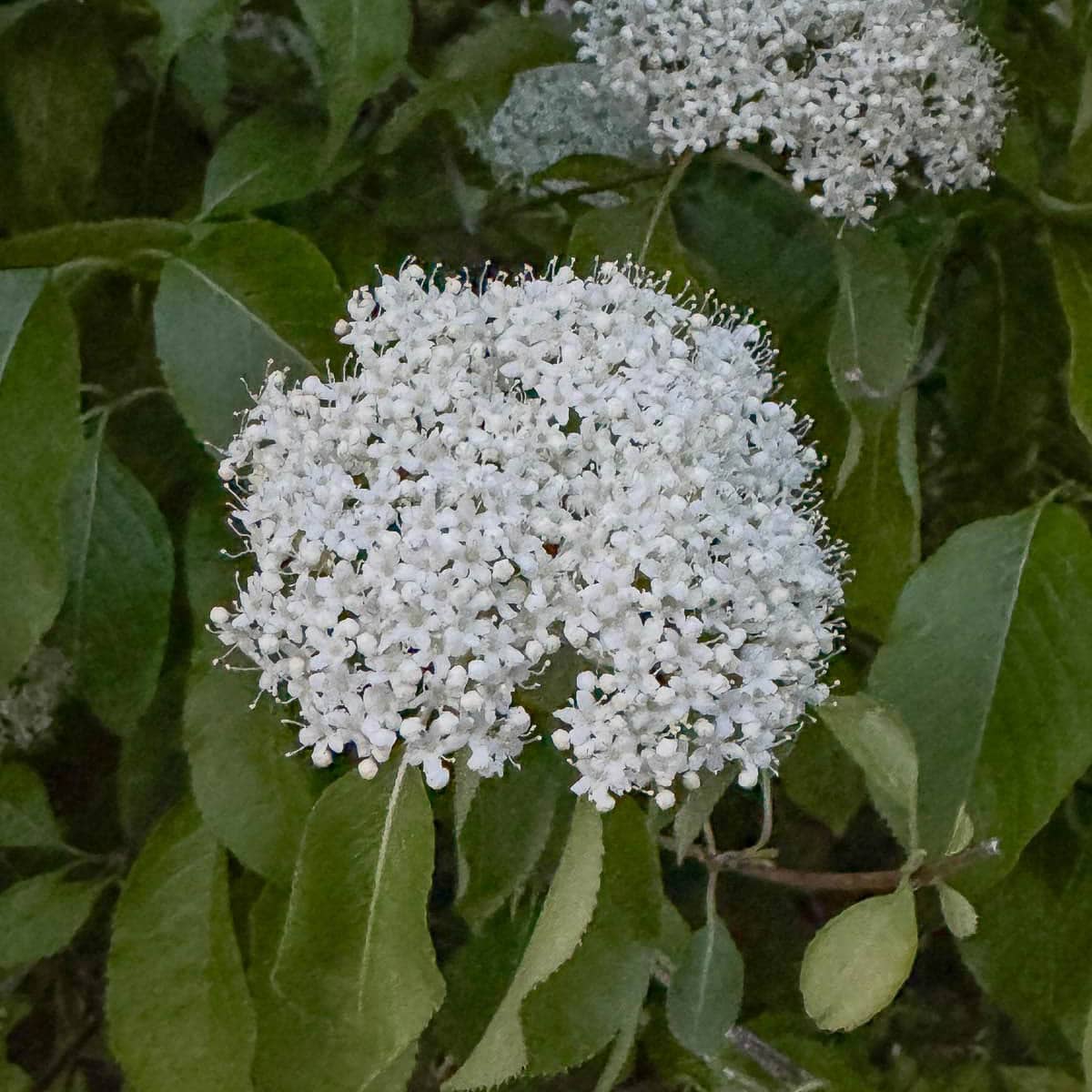
In late spring (around May in Lincoln County, where I live), the shrub produces flat-topped clusters of creamy-wite, delicate flowers called "corymbs." They're showy and fragrant, often buzzing with bees. I think they look quite similar to elderflowers.
Fruit
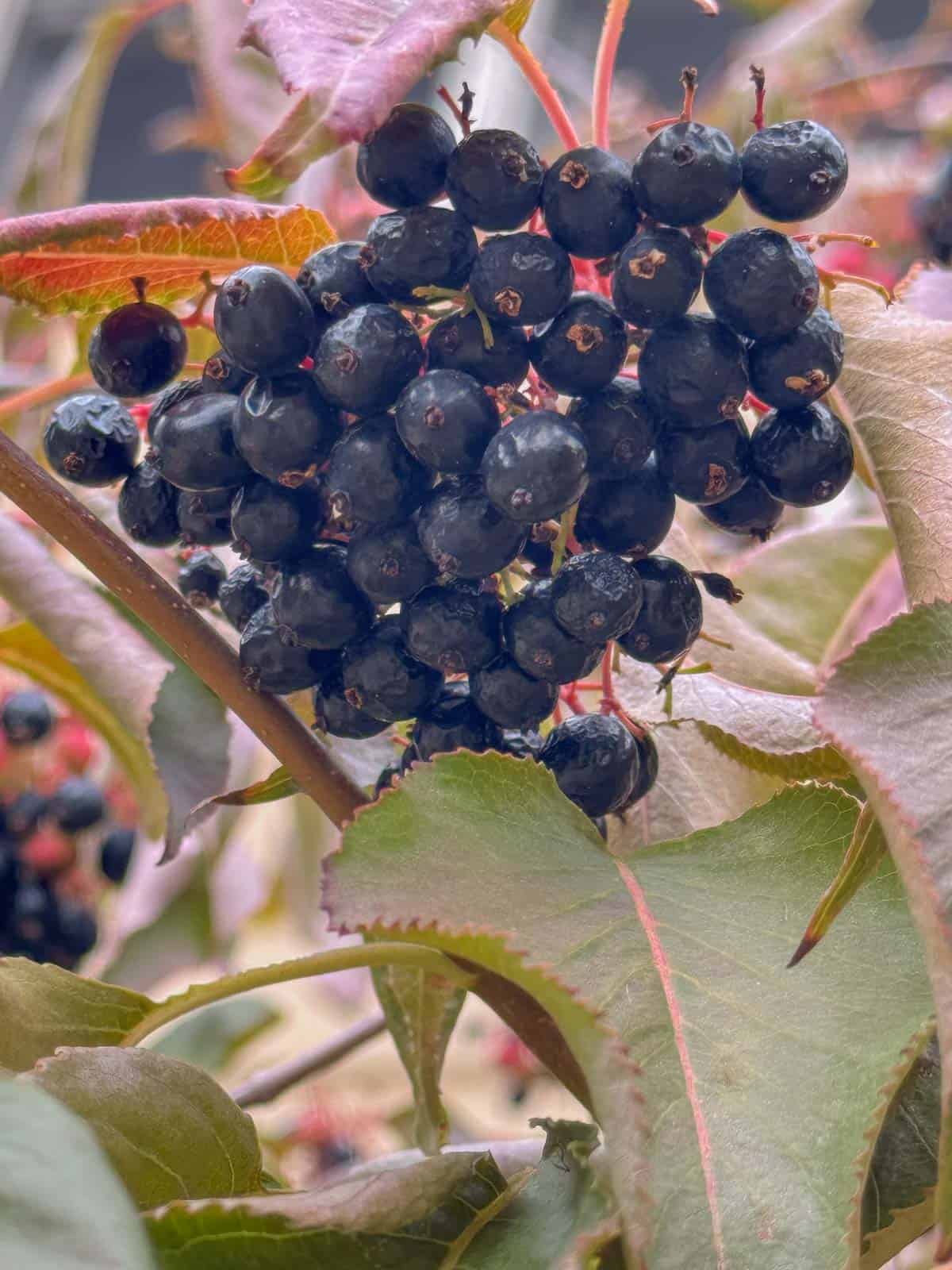
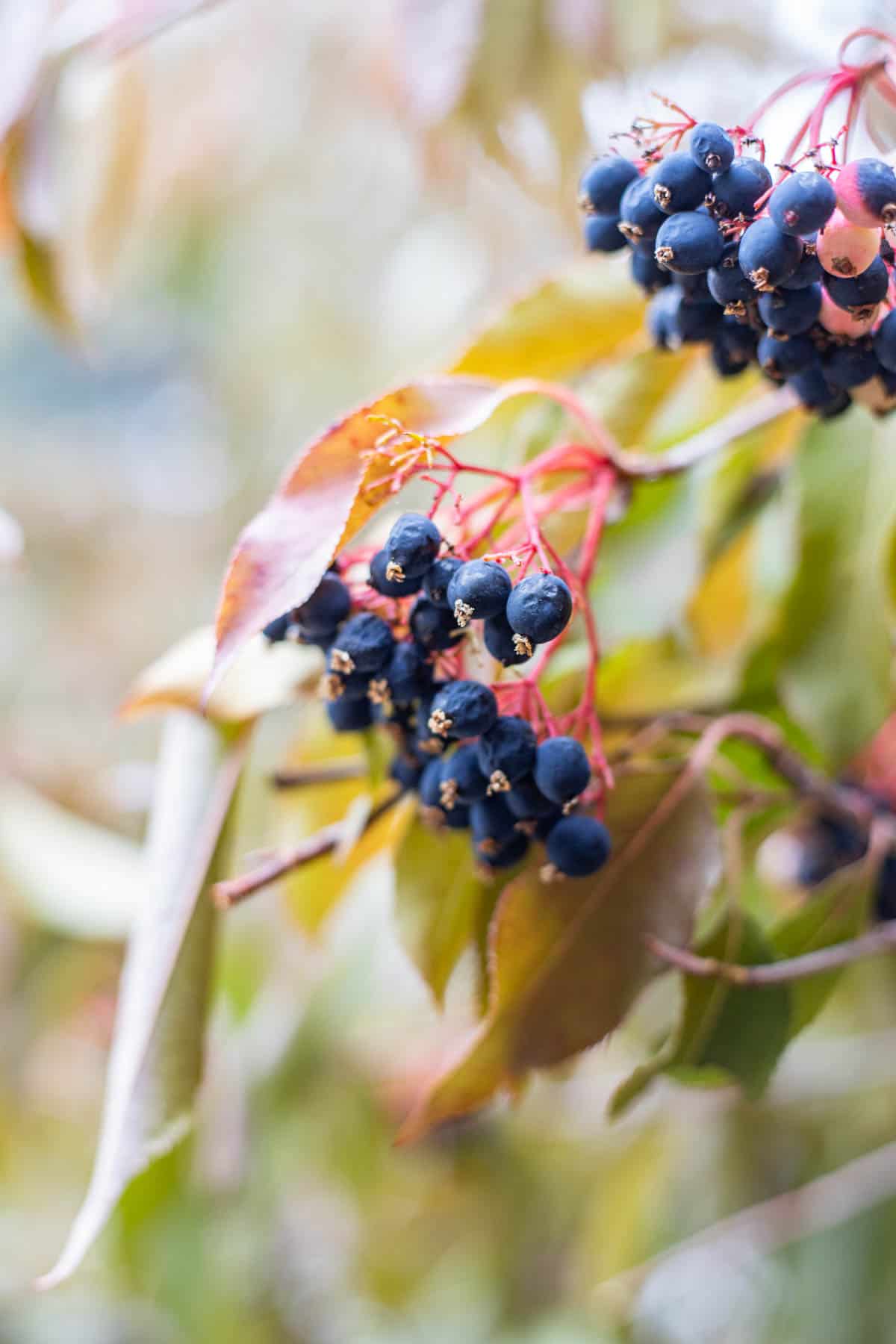
By early fall (October in Montana), the berries turn dark blue-black, wrinkling as they ripen. This explains why nannyberries are sometimes referred to as wild raisins.



Seeds
One of the easiest ways to confirm you've found nannyberries is by looking at the seed inside the fruit. Each berry contains one large, flat seed, the same size as the berry itself.
When you separate the pulp from the seed, you'll notice that the seed has a slight ridge running down the center on one side. The seed is hard, smooth, and dark.


Bark & Twigs
Young branches are smooth and reddish-brown, while older bark becomes grayish and slightly warty. Robins seem to love our nannyberry trees and come back every year to make their nests in the center of the tree.

Habitat
You'll find nannyberries growing along wooded trails, creeks, and damp forest edges. Around old homesteads or fence lines, they often spread into small thickets. They do well in zones 3a-7a. I'm in zone 4 here in Trego, Montana.
Nannyberries are often used as ornamental shrubs in landscaping, thanks to their fragrant spring blooms and gorgeous fall color. The ones on our property, however, were planted a tad too close to the house, so they spend most of the day in the shade, probably wishing for a little more sun and a drink of water. Still, they are shade-tolerant and hang in there, year after year, producing clusters of fruit that demonstrate how resilient they really are!

Look-Alikes
- Black Viburnum (V. prunifolium): Also known as black haw, they are very similar, but tend to grow farther south.
- Wild Raisin (V. cassinoides): Smaller berries and leaves, and prefers wetter habitats.
- Elderberries (Sambucus): Superficially similar fruit clusters, but elderberries grow on compound-leaved shrubs (a leaf consisting of several leaflets joined to a single stem).
When to Forage Nannyberries
Timing is everything when it comes to nannyberries. They ripen in late September through November, depending on your region and the weather that year. Here in Montana, I usually start spotting ripe clusters in early October, right about when the first frosts hit and the leaves start turning fiery red and golden.
What Do Nannyberries Taste Like?
If you've never tried nannyberries before, imagine a raisin crossed with a prune, with subtle notes of banana. Their flavor is surprisingly sweet once fully ripe.
Before frost, nannieberries can be a bit disappointing, starchy, and a little dry. But once the cold works its magic, the fruit softens and develops a deep, date-like sweetness. The texture, on the other hand, can take people by surprise. It's soft and pulpy, almost custard-like, wrapped around that big flat seed.
They're not what you'd call a "grab a handful and snack on them all day" kind of berry, but they shine when used in recipes (think jams, jellies, fruit butters, or fruit leathers).
How to Use Nannyberries
Once you've brought your haul home, the real fun begins. After you remove the seeds (which, let's be honest, is the only annoying part), there's so much you can do with them...
Make Nannyberry Jam or Fruit Butter
Cook the berries down with a bit of water until soft, then press through a fine sieve or food mill to remove seeds. Add sugar or honey, or don't, then simmer until thickened, and you've got a rich, raisin-like jam that's incredible on toast, biscuits, or pancakes. Here's a nannyberry butter recipe you can try.
Nannyberry Syrup or Sauce
If you prefer a smooth or pourable consistency, strain the cooked pulp and make a simple syrup or nannyberry sauce. It's fantastic drizzled over pancakes, homemade yogurt, or vanilla ice cream.
Baked Goods
Before using nannyberries in baking, make sure to remove the seeds first. Once you have a smooth pulp, add it to muffins, quick breads, or scones. Some people use the pulp in place of bananas to make nannybread, instead of banana bread. Their flavor pairs beautifully with cinnamon, orange, zest, and nuts.
Fermented & Boozy Options
Feeling adventurous? Try making nannyberry wine, liqueur, or wild vinegar. Their sweetness makes them perfect for all kinds of fermentation projects. The first thing I made with nannyberries was nannyberry wine. It was average at first, but it definitely improved with age. I plan on making another batch, and promise to link the recipe when I do.
Nannyberry Nutrition and Benefits
Nannyberries aren't just tasty, they're also surprisingly nutritious. Like many wild fruits, they're rich in vitamins A and C, which help support the immune system, skin, and vision. They also contain antioxidants, which help fight inflammation and protect your body from free radical damage.
Traditionally, nannyberries were valued not just as food by as medicine. Indigenous peoples across North America used the fruit for both nourishment and healing. They ate them fresh, dried them for winter, and brewed them into teas to help soothe sore throats and coughs.
The fruit's natural sweetness and fiber make it a great choice for gentle digestion support, and its mild, fruity flavor pairs beautifully with other wild berries in syrups, oxymels, and tonics.
Pro Tips
- If you're unsure whether you've found a nannyberry or a different viburnum, split open one of the berries. That flat seed is the dead giveaway!
- If you don't like them raw, cook them down with a little water and sugar to release their natural flavor. The aroma alone will win you over.
- Avoid shrubs growing near busy roads and sprayed areas.
- Nannyberries are an important late-season source for birds, deer, and bears. Take what you'll use and leave the rest for wildlife!
FAQ
You can, but it takes patience. The seed can take up to two years to germinate. Most people start with nursery-grown plants instead.
Nannyberries ripen in early fall, often after the first frost, which helps to develop their sweetness.
Nannyberries grow in damp, wooded areas and along rivers. Sometimes they are ornamental shrubs used in landscaping.
Disclaimer
The information provided in this blog post is for educational and informational purposes only. Foraging for wild plants, including nannyberries, carries inherent risks. Always ensure proper identification before consuming any wild plant, as some species may be toxic or easily confused with harmful lookalikes. If you are uncertain, consult a local expert or field guide. The author is not responsible for any adverse effects resulting from the use or misuse of information provided here.
Closing Thoughts
It's interesting how these berries fly under the radar while other fruits like elderberries and chokecherries steal the spotlight. But, once you taste these sweet, raisin-like gems, you'll understand why they deserve a spot on every forager's radar.
So, the next time you're out foraging in the fall, keep an eye out for these blue-black berry clusters; you just might discover your new favorite wild snack!
Have you foraged or cooked nannyberries before? Drop a comment below, I'd love to hear what you made! And if you post your foraged finds, tag me on Facebook or Instagram!
More Foraging Recipes
Looking for other foraging posts? Try these:
Comments
No Comments