
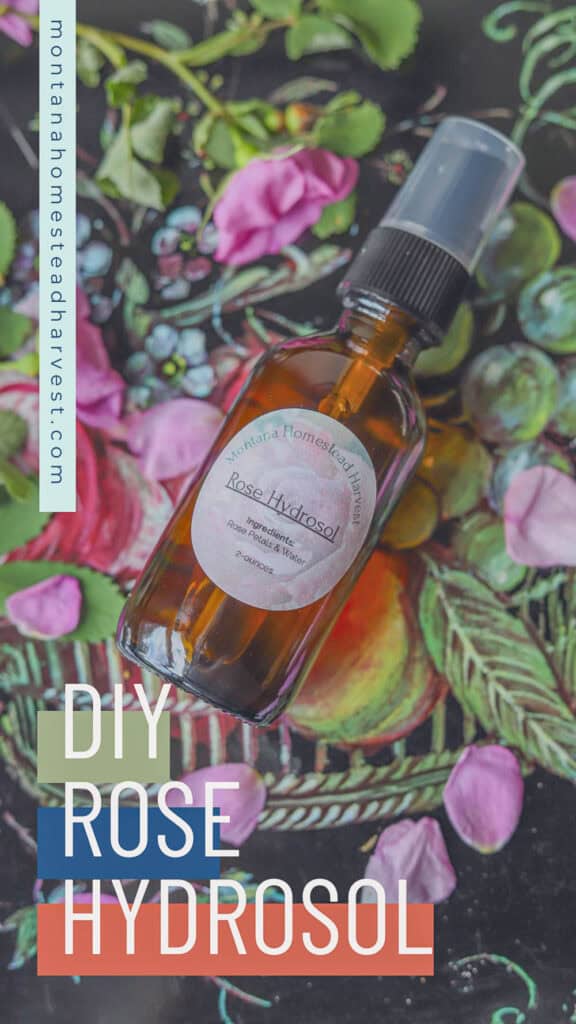
Making rose hydrosol at home is surprisingly easy and requires only a few basic supplies. Preparing a rose water hydrosol is a wonderful way to preserve the fragrance of wild or garden roses when you have an abundance of petals to harvest. Foraging elderflowers and making a batch of elderflower cordial are other great ways to capture the flavors and aromas of spring!
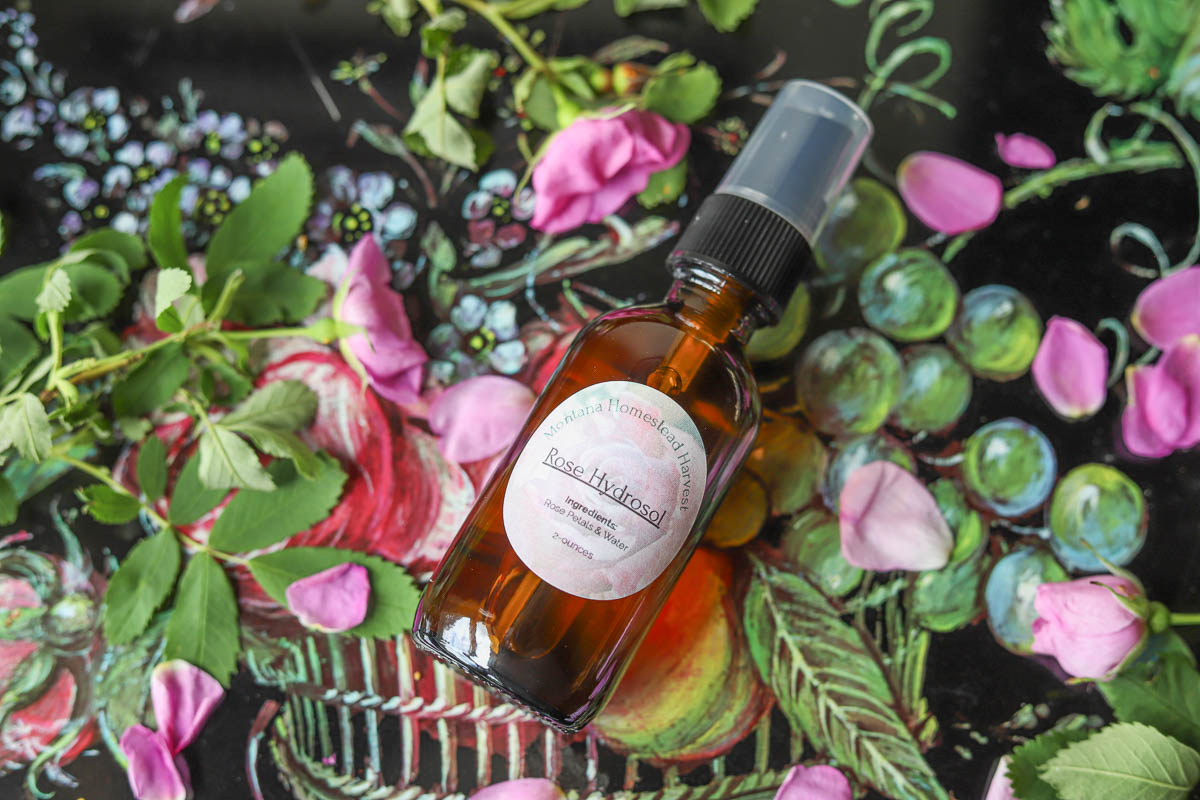
If you've ever wished you could capture the fragrance of a blooming rose garden, rose hydrosol is about as close as it gets. Every spring, I look forward to the wild roses that bloom around our property and throughout the local areas where I enjoy walking and foraging.
Over the years, I've gathered roses to make mead and to add to wild flower bouquets. Come fall, I forage rose hips, which I use to make rosehip tea, rose hip syrup, and rose hip wine.
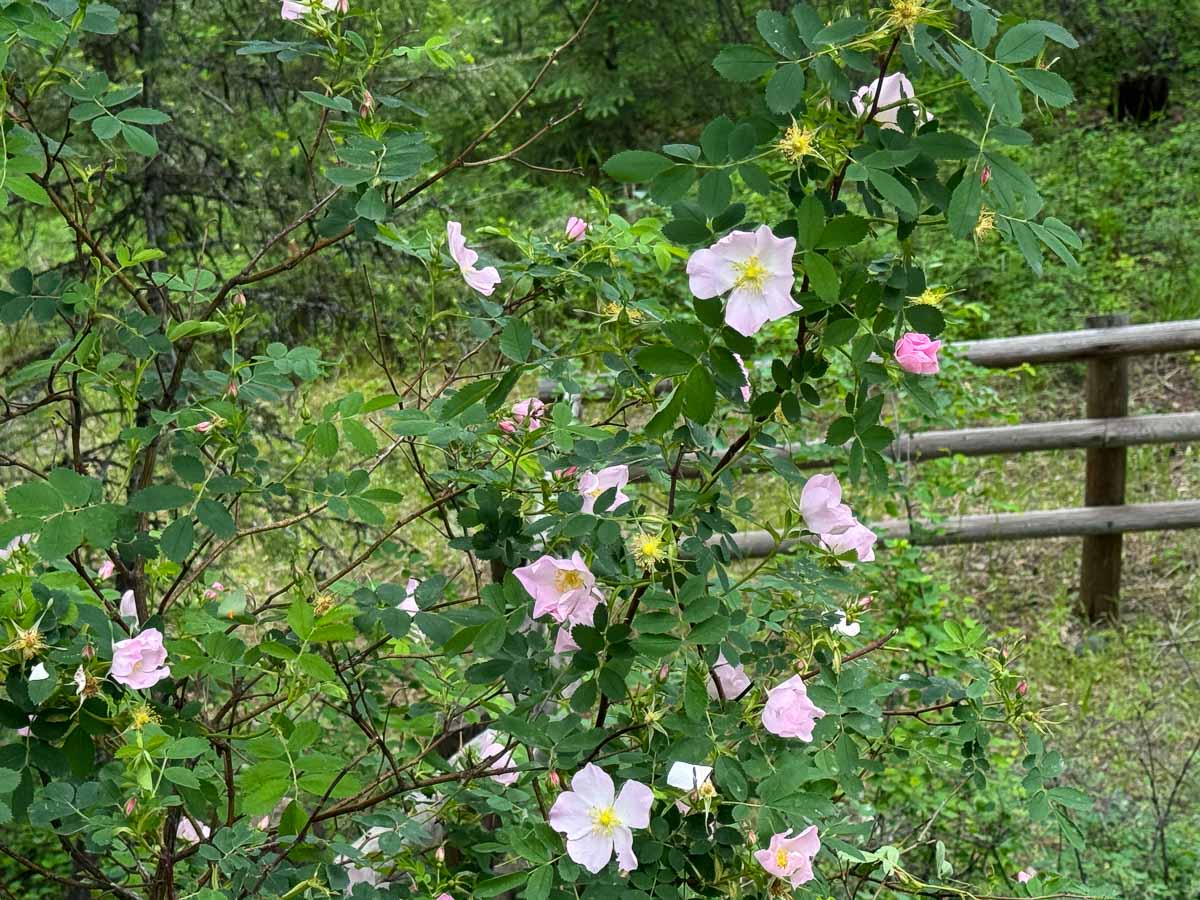
This year, I decided to do something completely different! Instead of creating culinary treats with wild roses, I used the fragrant petals to make a homemade rose hydrosol. This simple DIY project captures the delicate scent of fresh roses and can be used in a variety of homemade beauty and personal care products that call for rose hydrosol.
Jump to:
What is Rose Hydrosol?
Rose hydrosol is a delicate floral water, created through a simple distillation process that extracts the water-soluble compounds and aromatic essence of fresh rose petals. The result is a beautifully scented hydrosol that can be used in homemade skincare products, linen sprays, bath preparations, and more!
What You Need to Make Rose Hydrosol
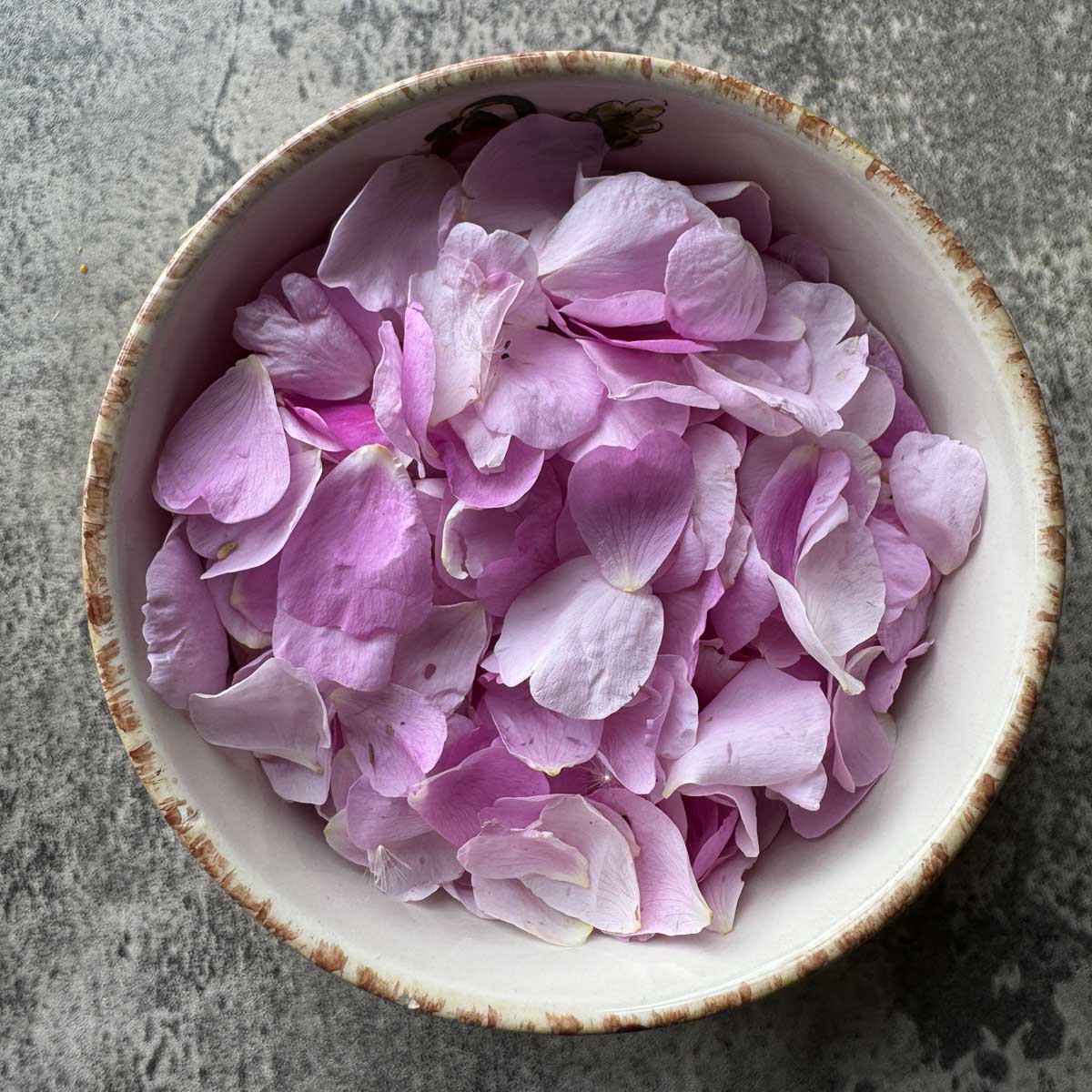
- Rose Petals: Fragrant roses
- Water: Distilled water
See recipe card for quantities.
How to Make Rose Hydrosol
Before you begin, have plenty of ice on hand. It will melt pretty quickly and will need to be replenished continually. Also, you'll need a tall pot so that there is enough space between the inverted lid and the bowl of rose water; you don't want them touching. The lid should not have a ventilation hole; you don't want steam to escape or melted ice dripping into the pot.
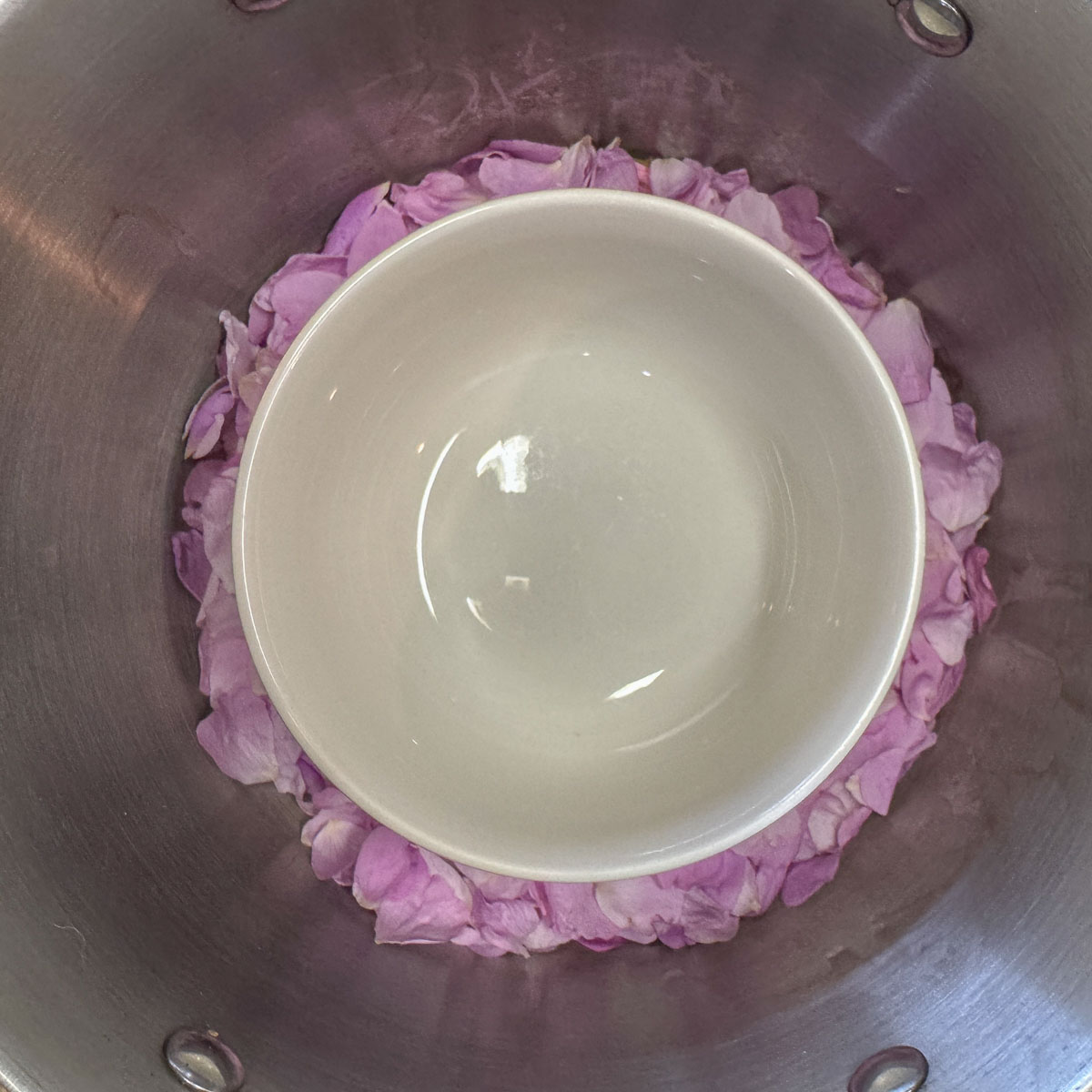
- Place a bowl in the center of a large pot, over a folded dishcloth. Scatter freshly harvested rose petals around the bowl.
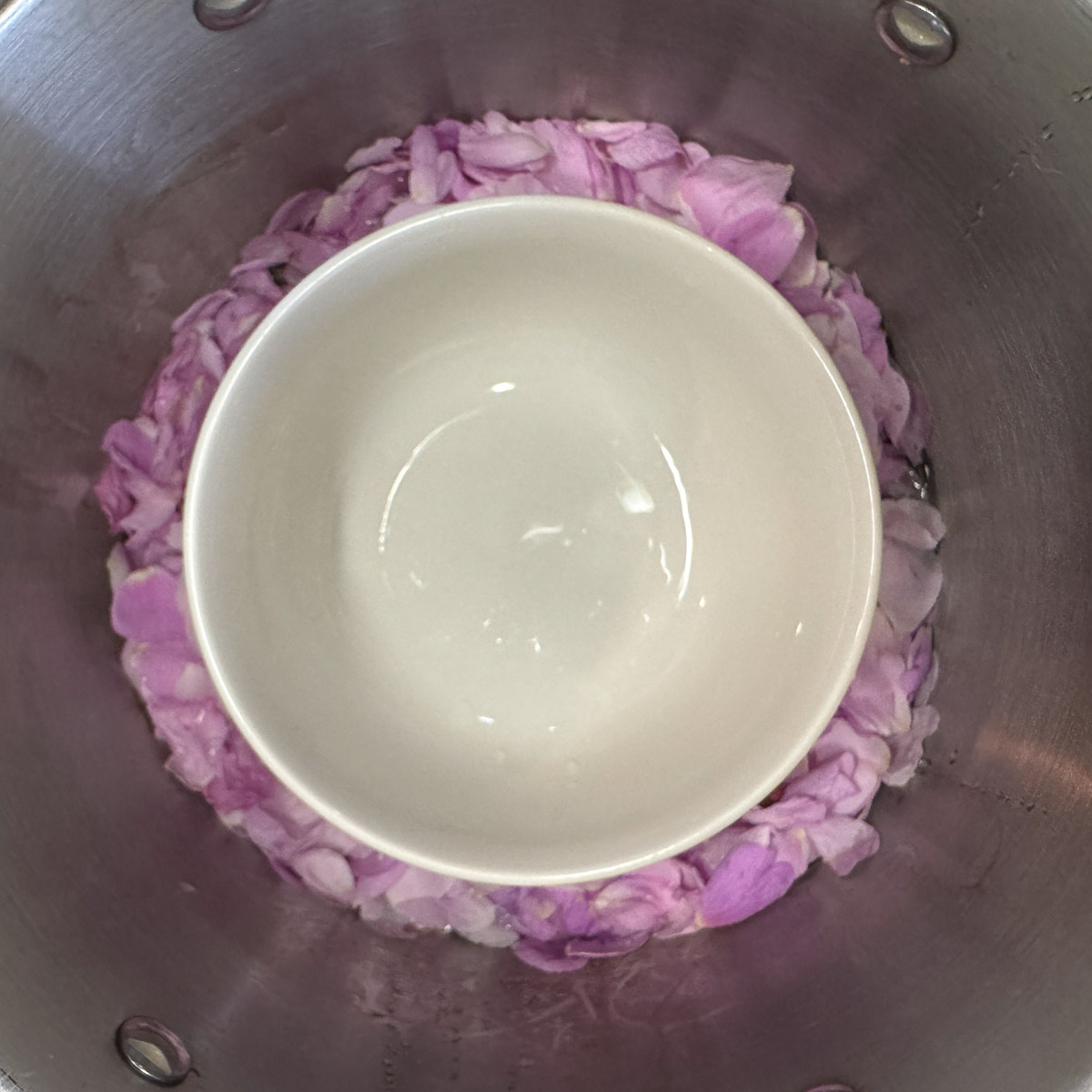
- Carefully pour distilled water around the bowl, over the rose petals. If using dried roses, add 1 additional cup of water.
Pro Tip: The folded dish towel helps to keep the bowl in place.
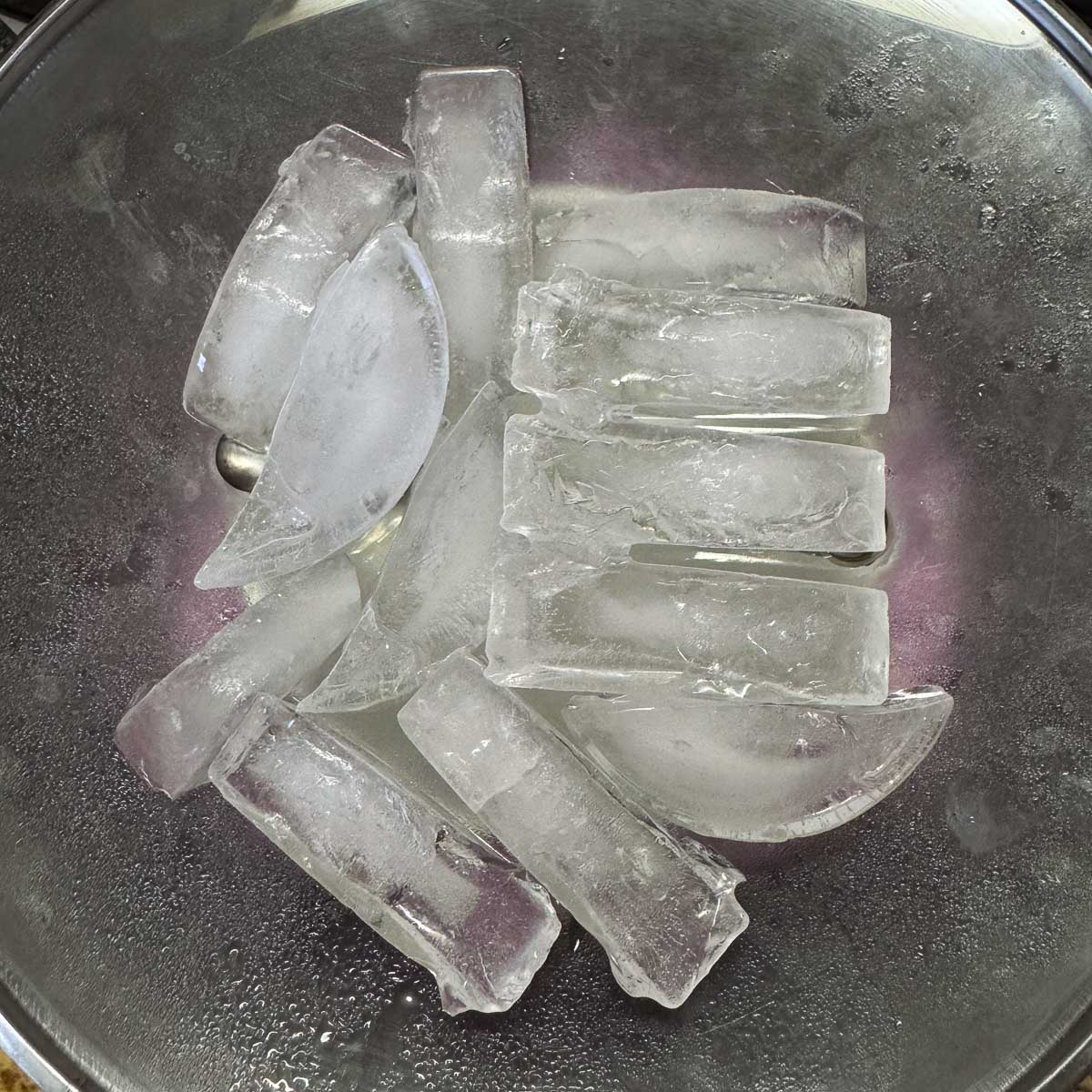
- Cover the pot with an inverted lid. Place ice on top of the lid, then simmer on low. As the steam rises, it will condense on the cold lid and drip into the collection bowl.
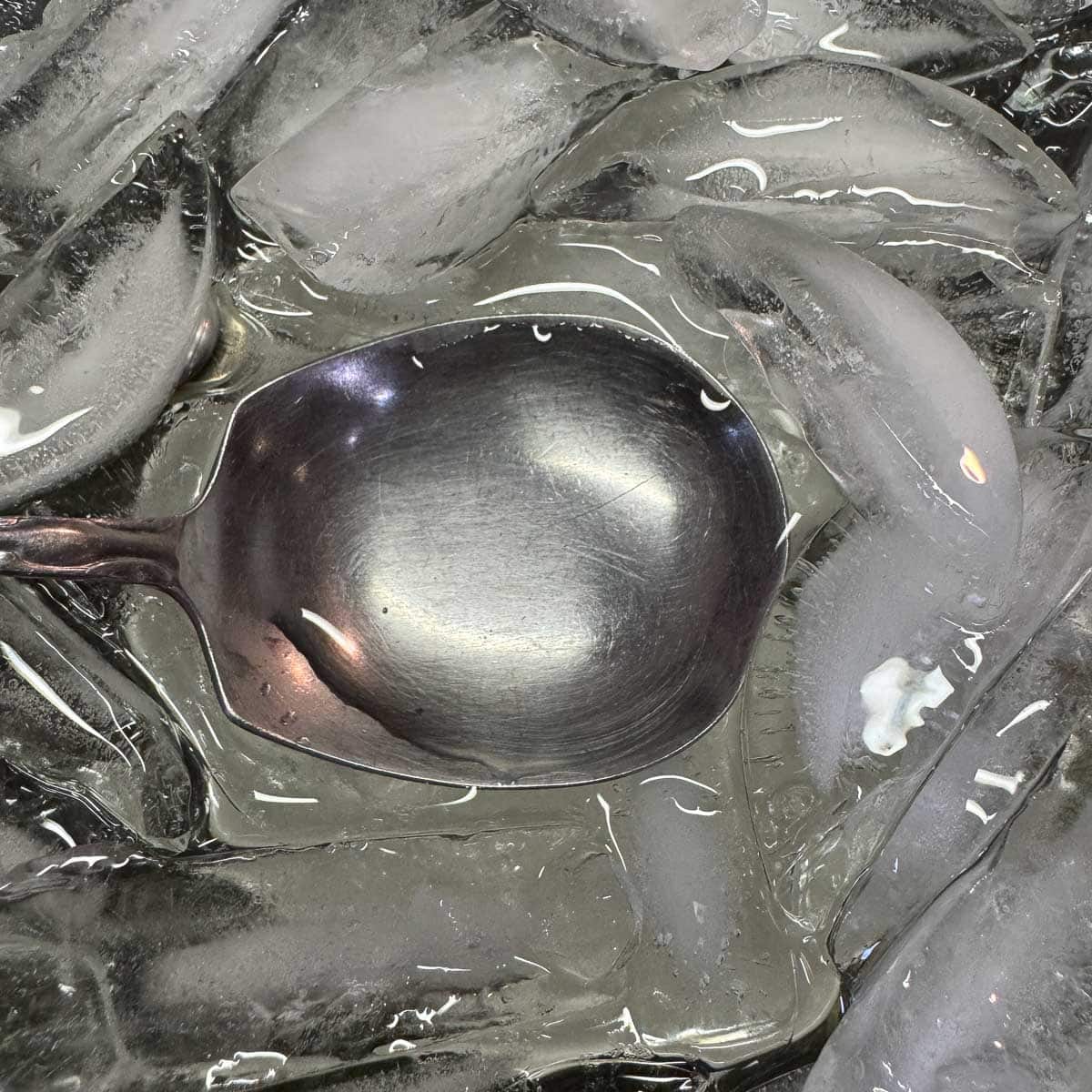
- As the ice melts, spoon off water and add fresh ice. Continue with these steps for 30 to 45 minutes or until you have collected enough rose hydrosol in the bowl.
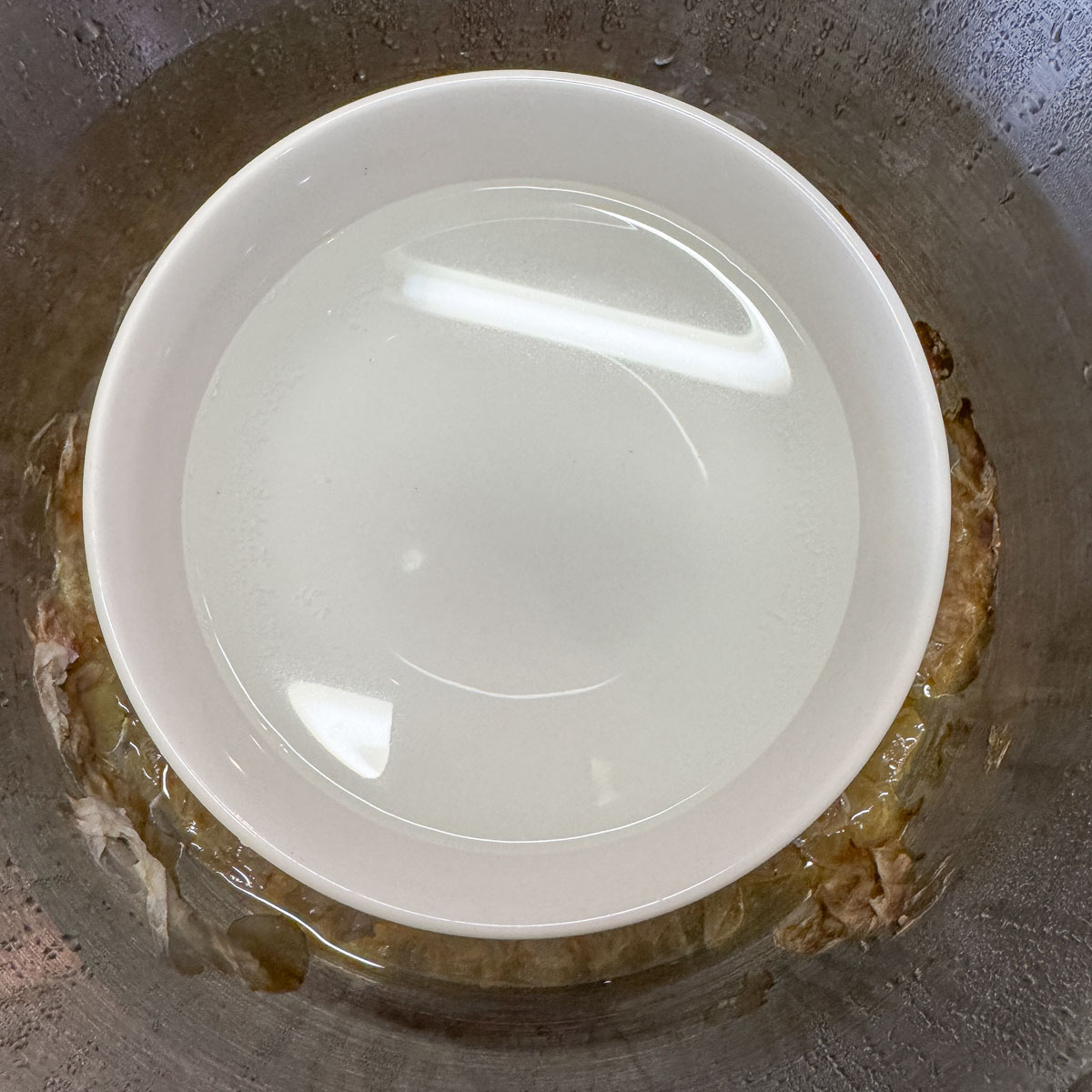
- Cool the rose water, then carefully remove the bowl. Discard spent rose petals and liquid.
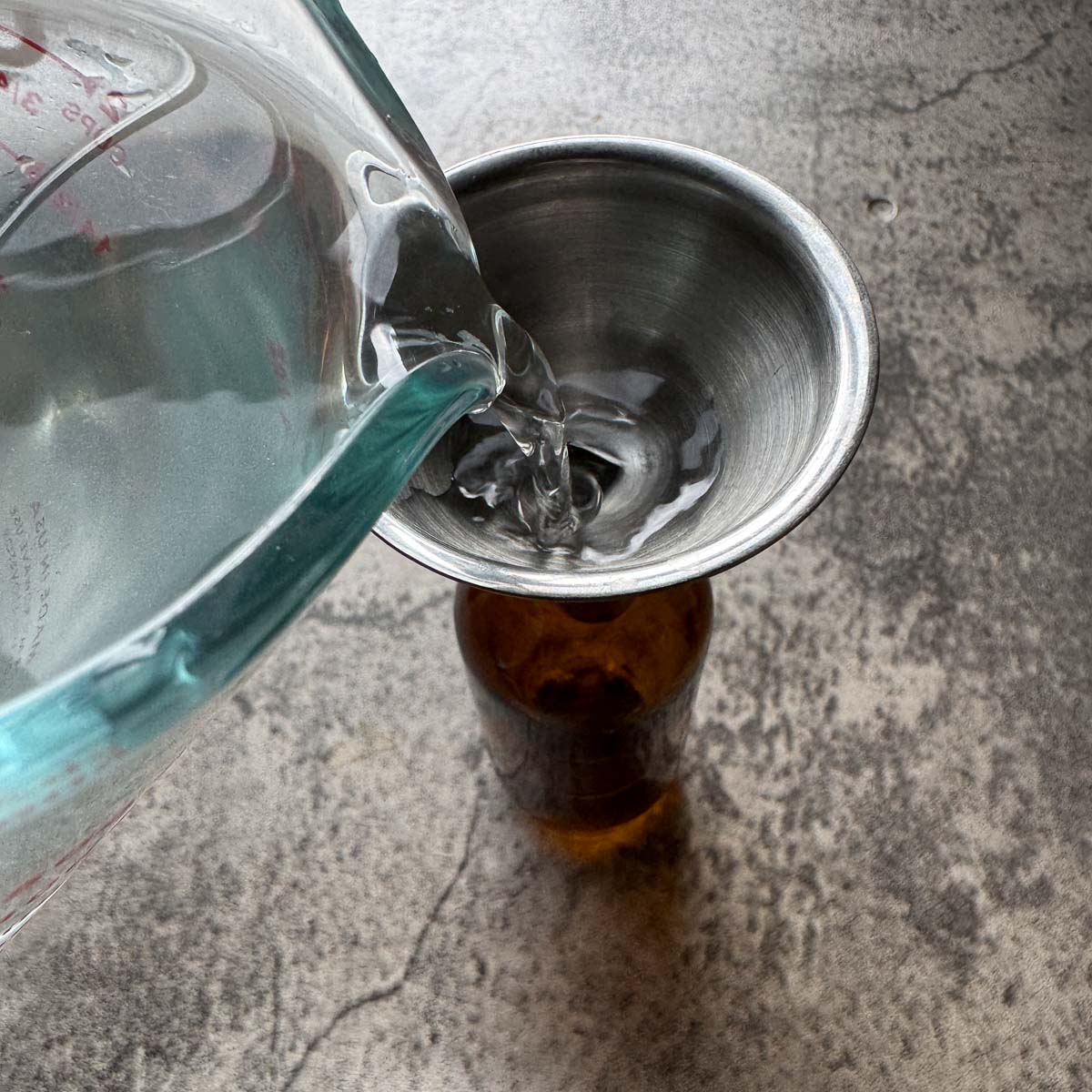
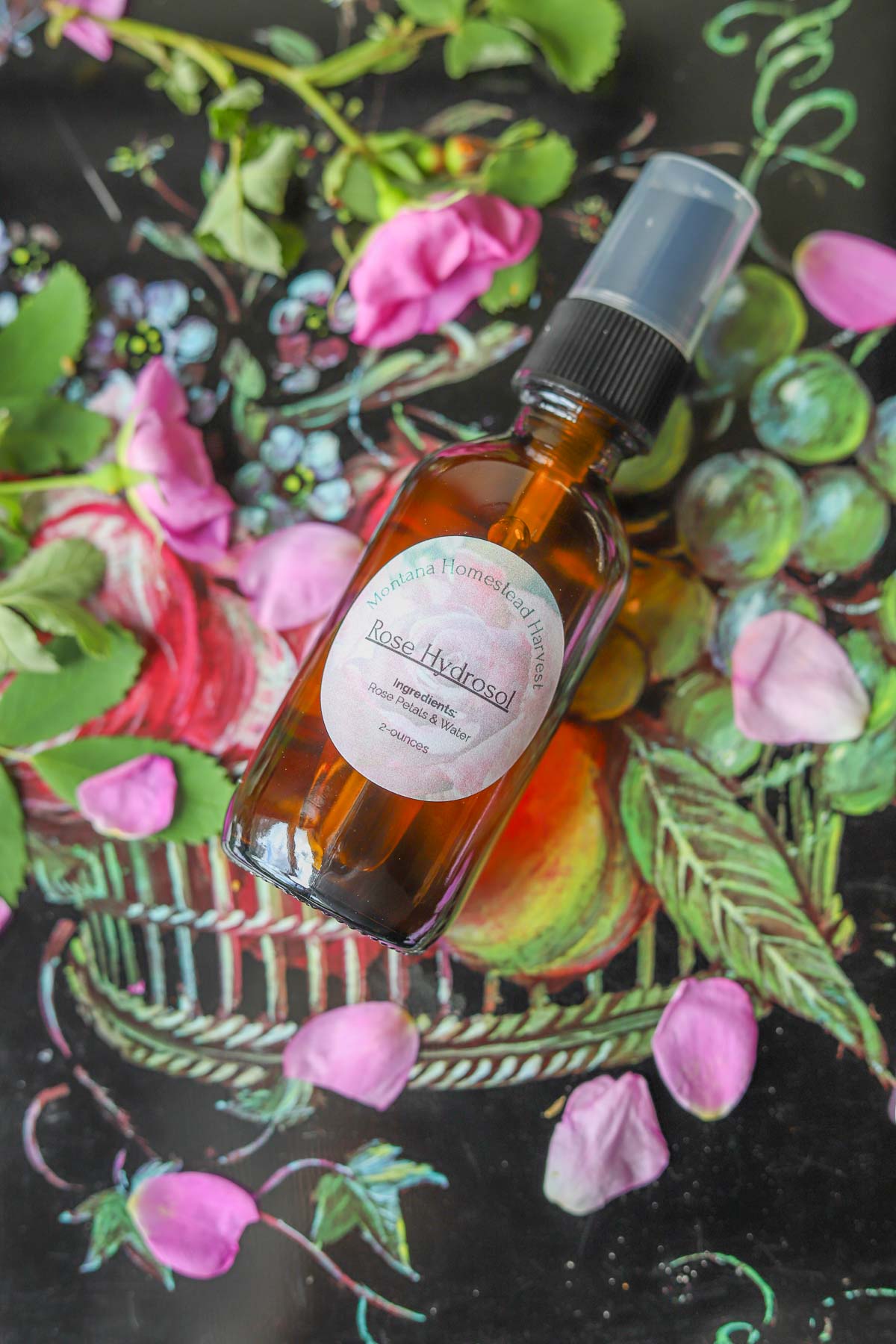
- Cool rose water, then pour through a funnel into the amber spray bottles.
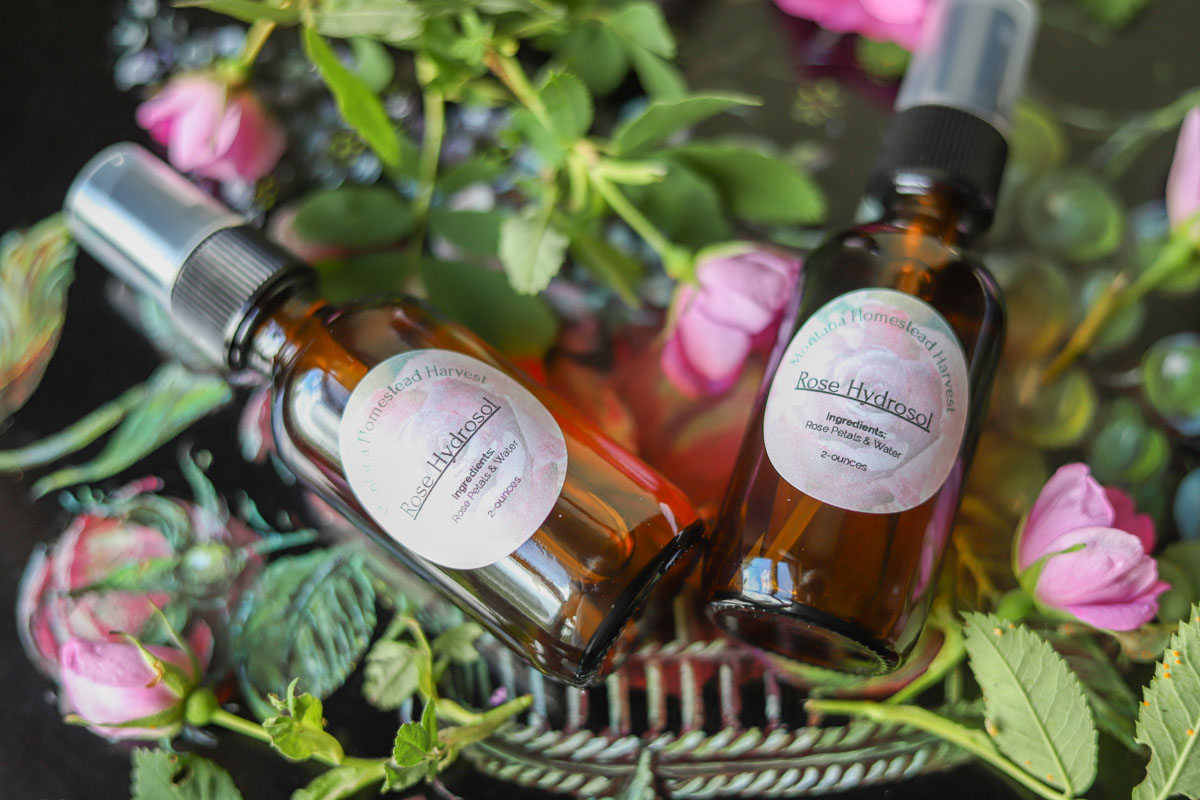
Equipment
To make rose hydrosol, you'll need a pot with a lid. The lid should not have a ventilation hole, or it will leak water into the bowl once the ice begins to melt.
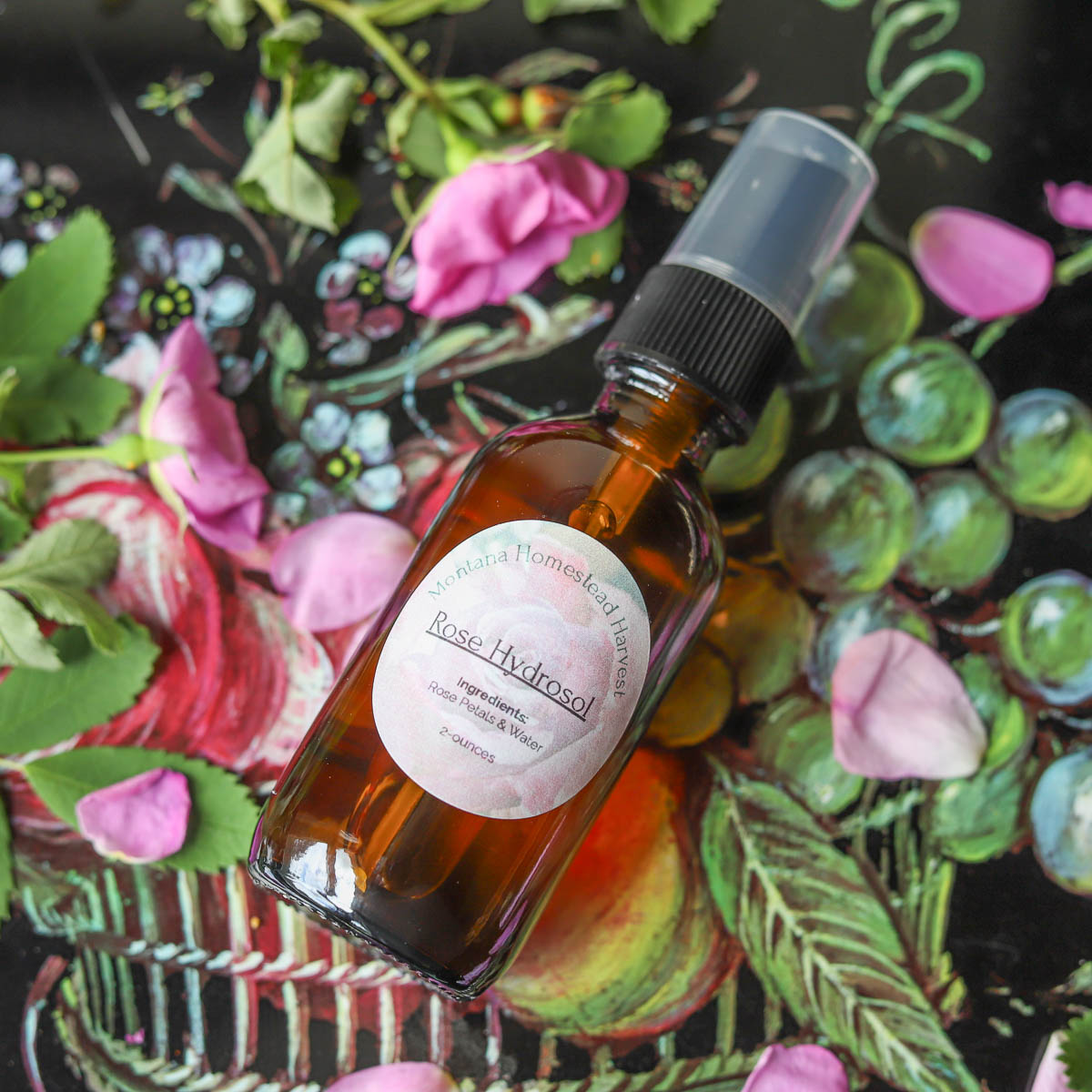
You will also need 2-ounce amber bottles to store the rose hydrosol in and 1.5" round Avery labels for the bottles. If you're not into designing the labels, here are the labels that I designed for my rose hydrosol bottles.
Storage
Store rose hydrosol in a sterilized glass bottle, preferably one made of dark-colored glass to protect it from light. For the longest shelf life, keep it refrigerated and use it within 3 to 6 months. If you notice any changes in color, clarity, or aroma, discard the hydrosol and make a fresh batch.
FAQs
How to Pick Rose Petals
The best way I've found to pick rose petals is to gently pinch the petals together with your fingers and pull them away from the flower. While you can remove the entire blossom by hand or with garden shears, I prefer not to. Leaving the base of the flower intact allows the rose hip to develop, which means I can return later in the season and harvest the rose hips as well!
Can I use store-bought roses to make rose hydrosol?
Yes, as long as the roses have not been treated with pesticides, fungicides, or other chemicals. Organic or homegrown roses are the safest choice.
What's the difference between rose hydrosol and rose water?
Rose hydrosol is produced through steam distillation and contains water-soluble plant compounds along with trace amounts of aromatic oils. Rose water is often made by steeping petals in water or by mixing water with rose essential oil.
Can I make hydrosol with other flowers?
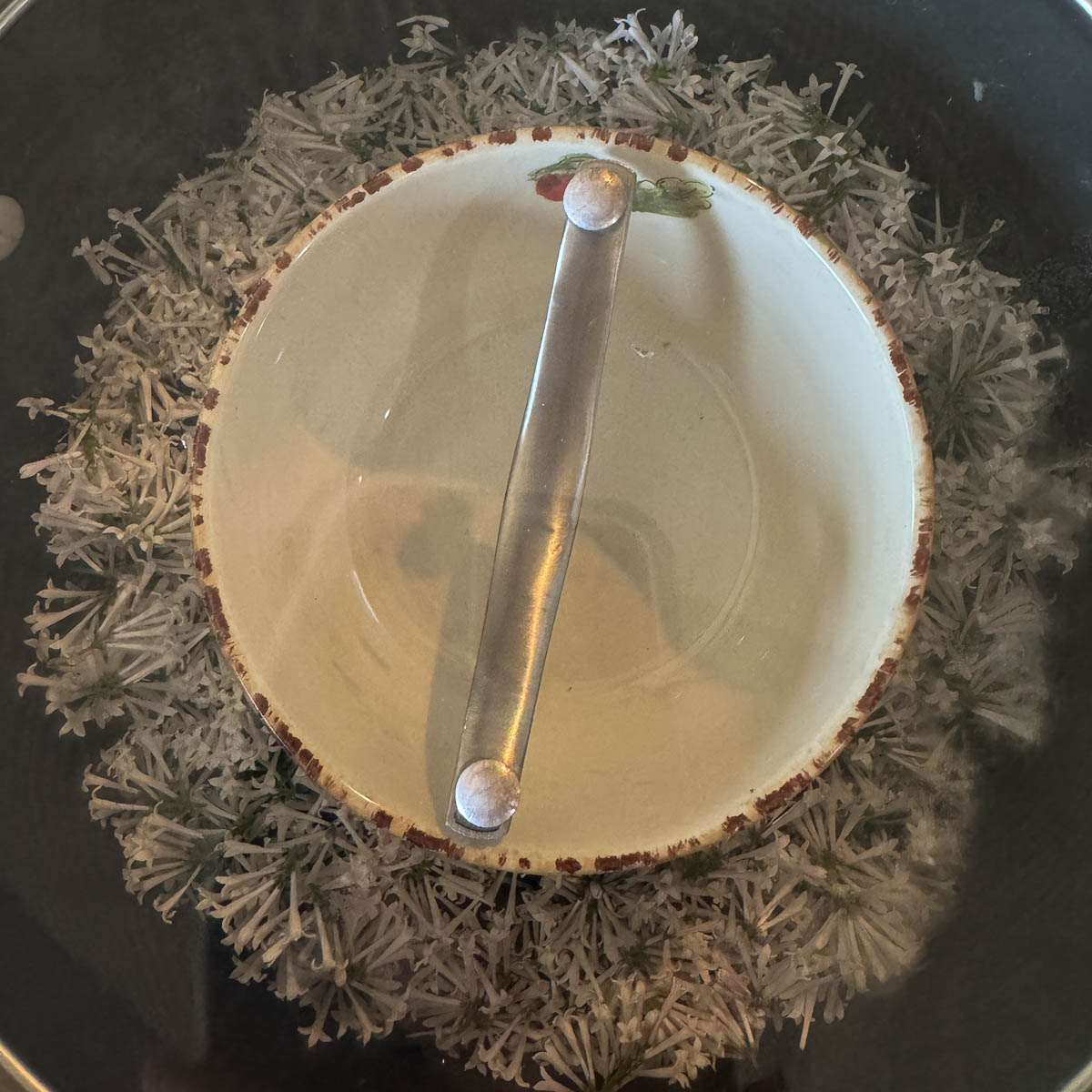
Yes! Many flowers and herbs can be distilled into hydrosols, including lavender, lilac, chamomile, calendula, and lemon balm.
Can I freeze rose hydrosol?
Yes. Freezing hydrosol in ice cube trays is a great way to extend its shelf life. Once frozen, transfer the cubes to a freezer-safe container and thaw as needed.
What roses make the best hydrosol?
Highly fragrant roses generally produce the most aromatic hydrosol. Wild roses, heirloom roses, and old garden roses are often better choices than modern hybrid roses bred primarily for appearance.
Can I make rose hydrosol with dried rose petals?
Yes, you can make rose hydrosol with dried rose petals, but the fragrance may not be as strong as hydrosol made with fresh petals. For the best results, use recently dried petals that still retain their color and aroma. Avoid old, faded petals that have lost their scent, as they will produce a less aromatic hydrosol.
Pro Tips
- Use only unsprayed roses that have not been treated with pesticides or other chemicals.
- Harvest rose petals in the morning after the dew has dried but before the heat of the day causes the fragrance to dissipate.
- If using dried rose petals, add an additional cup of water since the petals will absorb some of the liquid during the distillation process.
- Avoid boiling the water vigorously. A gentle simmer produces better results and helps preserve the delicate aroma of the roses.
- Store your finished hydrosol in dark glass bottles to protect it from light and help extend its shelf life.
- Label each bottle with the preparation date so you can keep track of freshness.
Related Posts
Looking for other recipes like this? Try these:

How to Make Rose Hydrosol at Home
Equipment
- 1 pot
- 1 bowl
Ingredients
- 3-4 cups rose petals
- 3-4 cups distilled water
Instructions
- Note: Before you begin, have plenty of ice on hand. It will melt pretty quickly and will need to be replenished continually. Also, you'll need a tall pot so that there is enough space between the inverted lid and the bowl of rose water; you don't want them touching. The lid should not have a ventilation hole; you don't want steam to escape or melted ice dripping into the pot.
- Place a bowl in the center of a large pot, over a folded dishcloth. Scatter freshly harvested rose petals around the bowl. The folded dish towel keeps the bowl in place.
- Carefully pour distilled water around the bowl, over the rose petals. If using dried roses, add 1 additional cup of water.
- Cover the pot with an inverted lid. Place ice on top of the lid, then simmer on low. As the steam rises, it will condense on the cold lid and drip into the collection bowl.
- As the ice melts, spoon off water and add fresh ice. Continue with these steps for 30 to 45 minutes or until you have collected enough rose hydrosol in the bowl.
- Cool the collected rose water, then carefully remove the bowl. Discard spent rose petals and liquid.
- Cool rose water, then pour through a funnel into the amber spray bottles.
Notes
- Use only unsprayed roses that have not been treated with pesticides or other chemicals.
- Harvest rose petals in the morning after the dew has dried but before the heat of the day causes the fragrance to dissipate.
- If using dried rose petals, add an additional cup of water since the petals will absorb some of the liquid during the distillation process.
- Avoid boiling the water vigorously. A gentle simmer produces better results and helps preserve the delicate aroma of the roses.
- Store your finished hydrosol in dark glass bottles to protect it from light and help extend its shelf life.
- Label each bottle with the preparation date so you can keep track of freshness.
Kim says
I tried the rose hydrosol on my face this morning and it was so refreshing. The aroma of the roses is just wonderful. Thanks Hilda. I can actually see myself making this.
Hilda Sterner says
You're welcome, Kim, enjoy! 🌹
Hilda Sterner says
I hope you give this a try, then come back and let me know your thoughts!