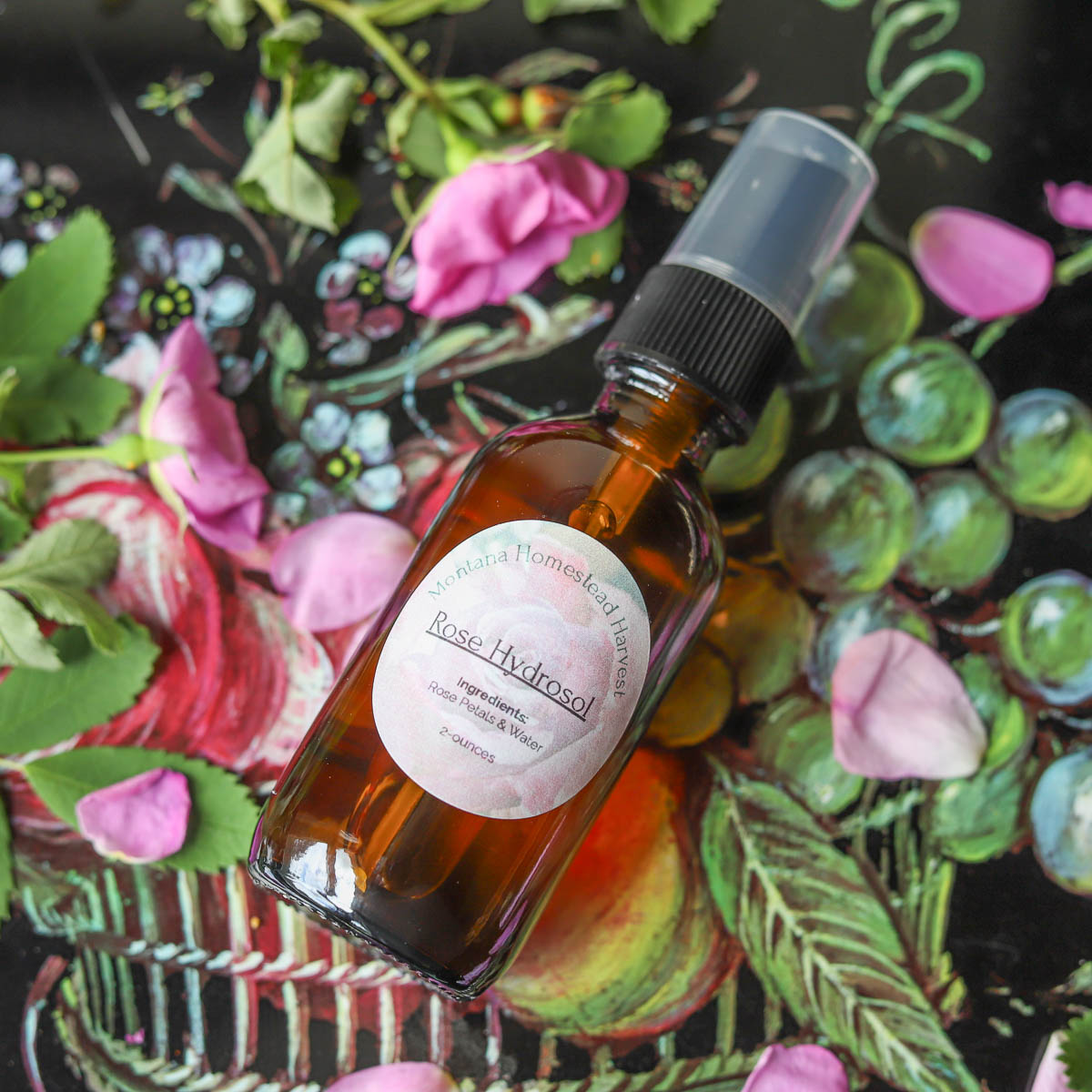
How to Make Rose Hydrosol at Home
Learn how to make rose hydrosol at home using fresh rose petals and simple kitchen equipment. This easy DIY tutorial includes storage tips and uses.
Print
Pin
Servings: 6 2 ounce bottles
Equipment
- 1 pot
- 1 bowl
Ingredients
- 3-4 cups rose petals
- 3-4 cups distilled water
Instructions
- Note: Before you begin, have plenty of ice on hand. It will melt pretty quickly and will need to be replenished continually. Also, you'll need a tall pot so that there is enough space between the inverted lid and the bowl of rose water; you don't want them touching. The lid should not have a ventilation hole; you don't want steam to escape or melted ice dripping into the pot.
- Place a bowl in the center of a large pot, over a folded dishcloth. Scatter freshly harvested rose petals around the bowl. The folded dish towel keeps the bowl in place.
- Carefully pour distilled water around the bowl, over the rose petals. If using dried roses, add 1 additional cup of water.
- Cover the pot with an inverted lid. Place ice on top of the lid, then simmer on low. As the steam rises, it will condense on the cold lid and drip into the collection bowl.
- As the ice melts, spoon off water and add fresh ice. Continue with these steps for 30 to 45 minutes or until you have collected enough rose hydrosol in the bowl.
- Cool the collected rose water, then carefully remove the bowl. Discard spent rose petals and liquid.
- Cool rose water, then pour through a funnel into the amber spray bottles.
Notes
- Use only unsprayed roses that have not been treated with pesticides or other chemicals.
- Harvest rose petals in the morning after the dew has dried but before the heat of the day causes the fragrance to dissipate.
- If using dried rose petals, add an additional cup of water since the petals will absorb some of the liquid during the distillation process.
- Avoid boiling the water vigorously. A gentle simmer produces better results and helps preserve the delicate aroma of the roses.
- Store your finished hydrosol in dark glass bottles to protect it from light and help extend its shelf life.
- Label each bottle with the preparation date so you can keep track of freshness.
Did you try this recipe? Please leave a review and a star rating!
