
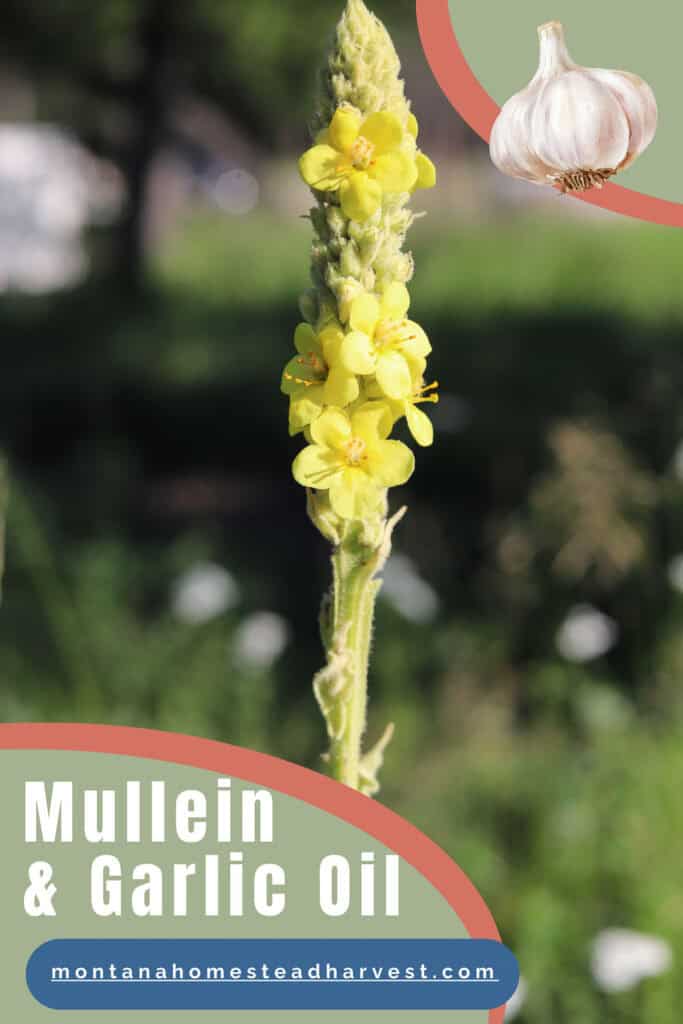
Mullein oil has been used in traditional folk medicine for generations for occasional ear discomfort. A popular variation is mullein garlic oil, which combines mullein flowers and garlic cloves in the infusion. The entire mullein plant is medicinal, including the leaves, which are often steeped to make mullein tea.
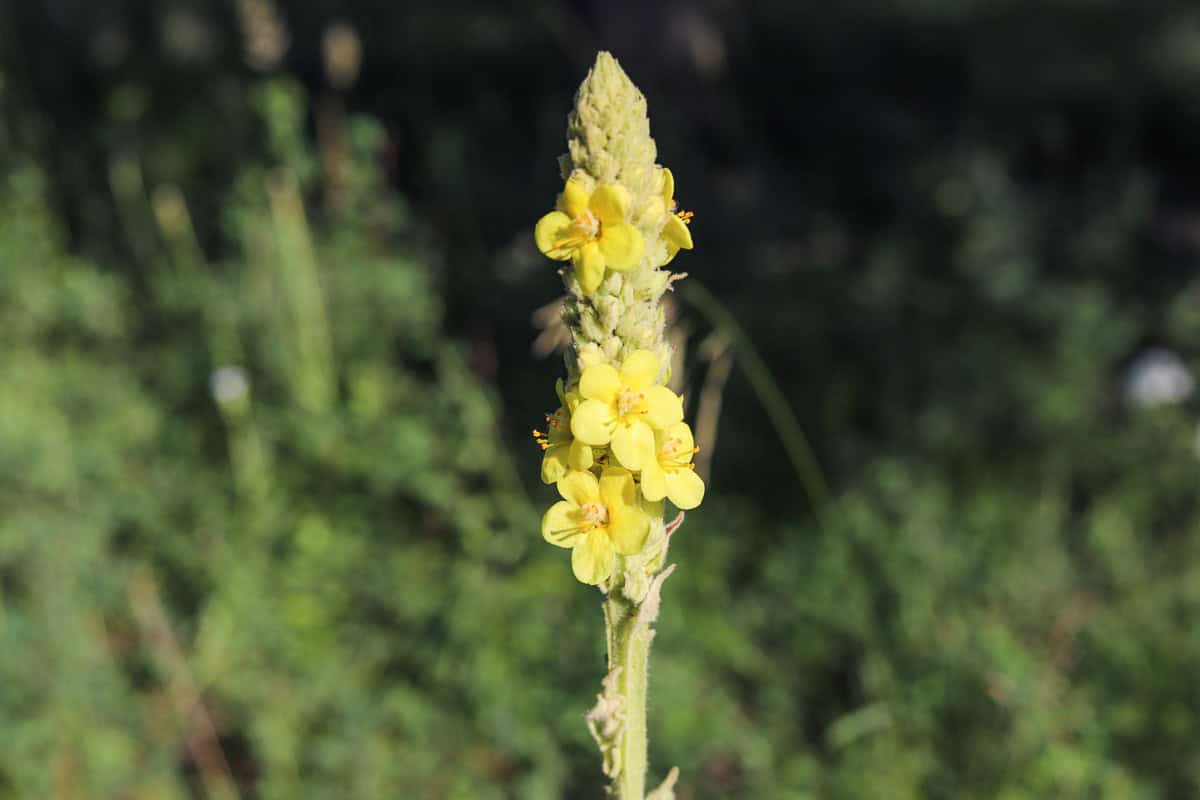
For years, I've thought about collecting mullein flowers for mullein tea. But since it's one of the busiest times of year in the garden, I never seem to get around to it.
This year, however, we have mullein growing much closer to the house, and many of them are currently in bloom. I've been picking a handful every time I walk by, and I finally have enough to add to my mullein tea blend and make mullein oil as well. I love it when a plan comes together!
Jump to:
What is Mullein?
Mullein (Verbascum thapsus) is a biennial plant known for its soft, fuzzy leaves and tall flower stalks covered in bright yellow flowers. Native to Europe, Asia, and North Africa, mullein has naturalized throughout much of North America and can often be found growing in fields, along roadsides, and in disturbed soil.
Mullein has a long history of use in traditional herbalism. Various parts of the plant, including the leaves, flowers, and roots, have been used to prepare mullein leaf tea, tinctures, and infused oils. Today, mullein remains popular among foragers and herbal enthusiasts and is commonly grown or harvested for its many traditional uses.
Some herbalists also prepare mullein using the spagyric method, an alchemical preparation that goes beyond a traditional tincture by recovering mineral salts from the remaining plant material and recombining them with the extract. Learn more about the spagyric method and why I choose not to use it.
What is Mullein Oil?
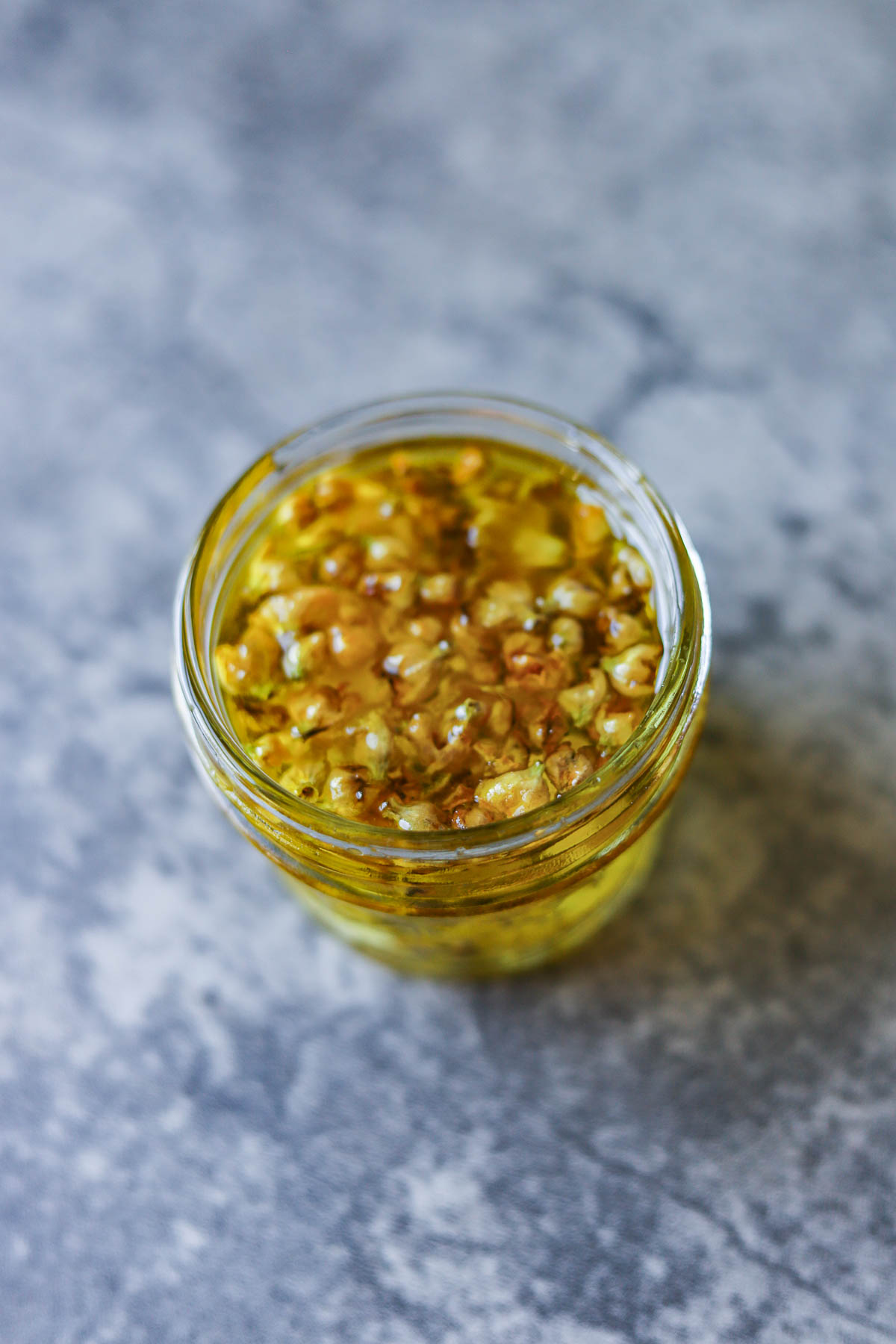
Mullein oil is an herbal-infused oil made by infusing mullein flowers in a carrier oil for several weeks. During the infusion process, compounds from the flowers are extracted into the oil, creating a versatile herbal preparation.
While olive oil is commonly used, other carrier oils such as sweet almond oil, avocado oil, and grapeseed oil can also be used. Once strained, the finished oil is typically stored in amber bottles to protect it from light and extend its shelf life.
Mullein oil is often used on its own, but some herbalists also add garlic to create mullein garlic oil, which is used for mild ear discomfort.
Ingredients & Substitutions
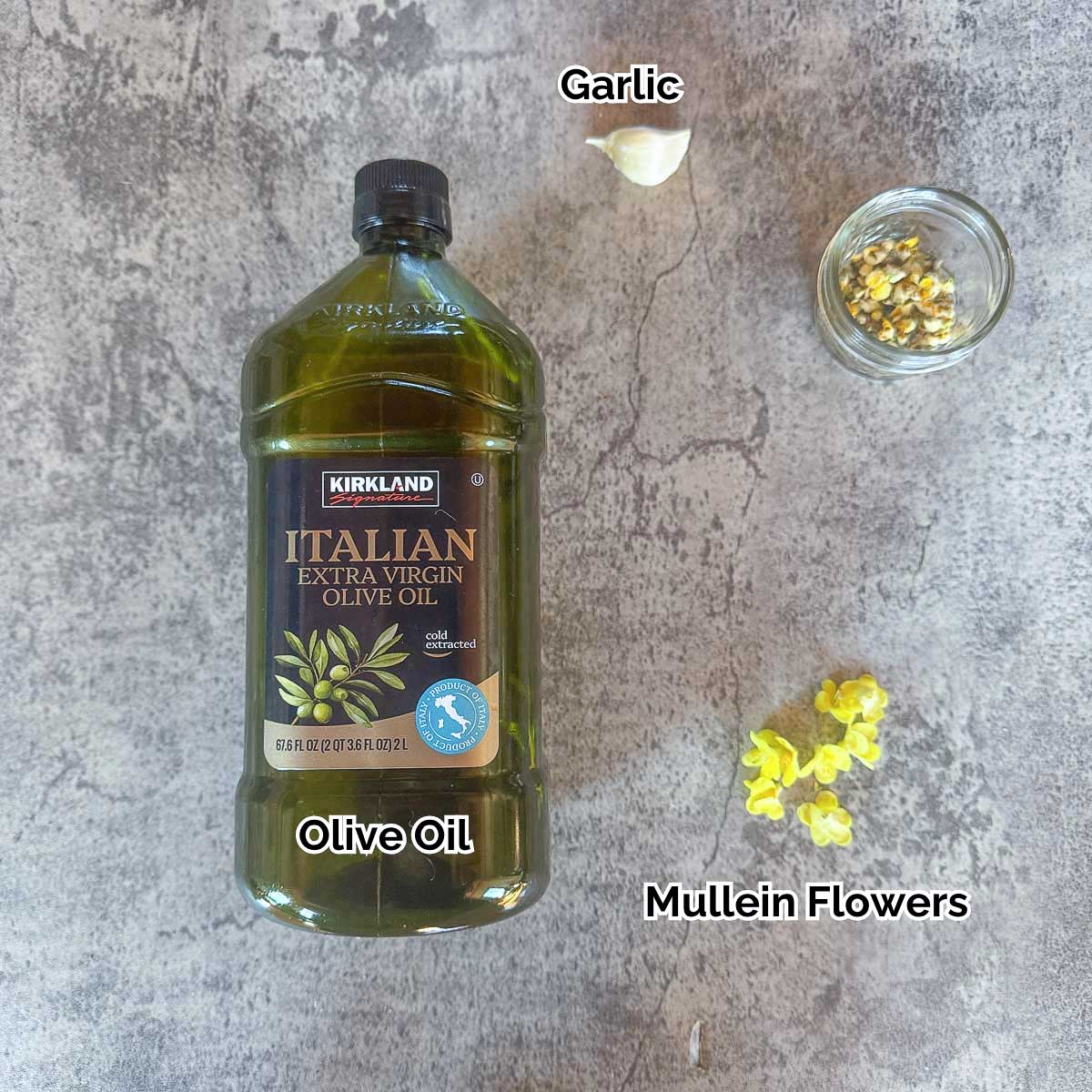
- Mullein: Mullein oil is usually prepared with mullein blossoms; however, some people use mullein leaves or a combination of the two. In this recipe, we are using mullein flowers. Mullein has anti-inflammatory and antibacterial properties.
- Oil: Choose from olive oil, avocado oil, grapeseed oil, or sweet almond oil.
- Optional: ¼ teaspoon of vitamin E can be added to extend the shelf life of the mullein oil.
- Garlic: As mentioned above, fresh crushed garlic is often added for its microbial properties.
See recipe card for quantities.
How to Make Mullein Oil
Cold Infusion Method
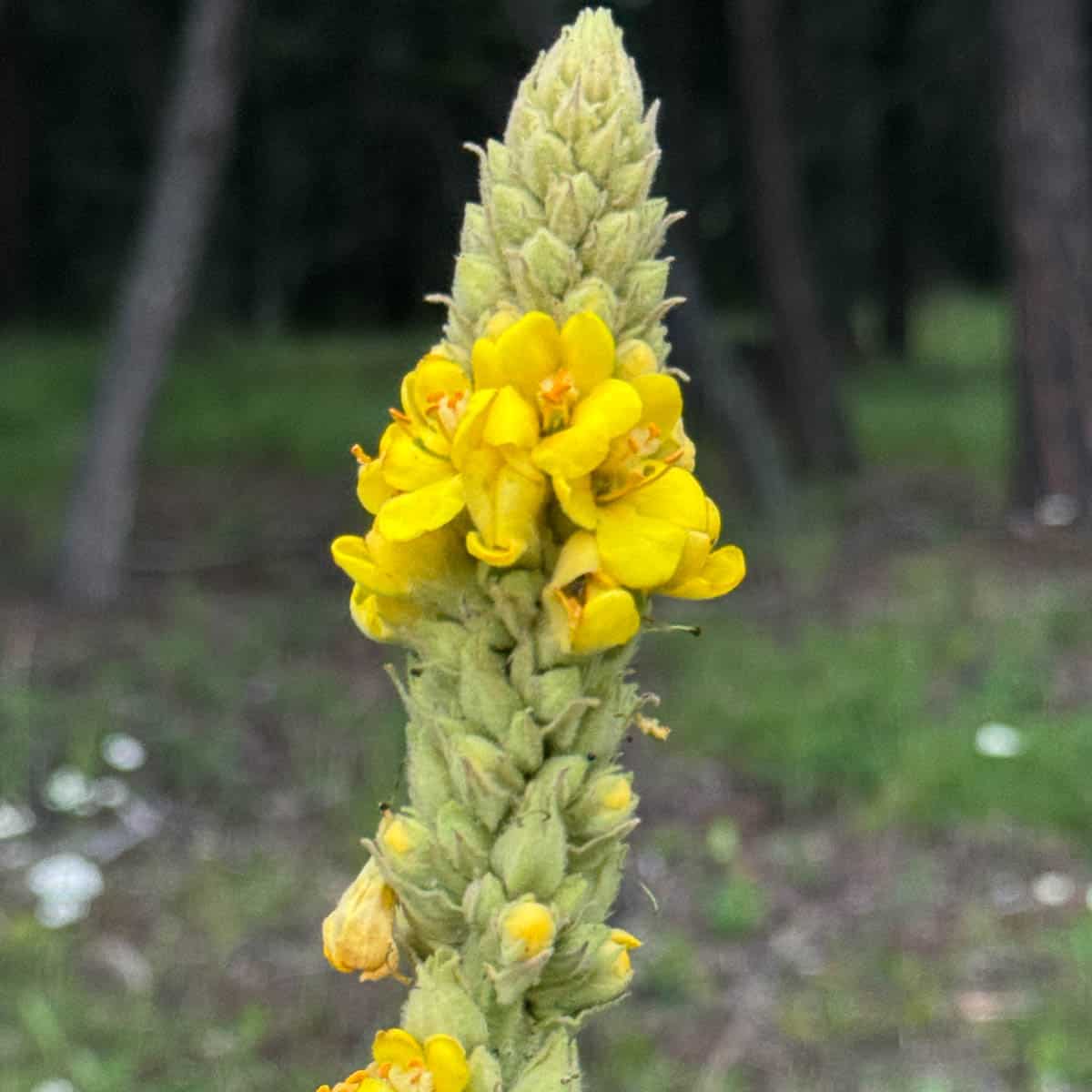
- Harvest mullein flowers and allow them to wilt slightly to reduce moisture and allow bugs to escape.
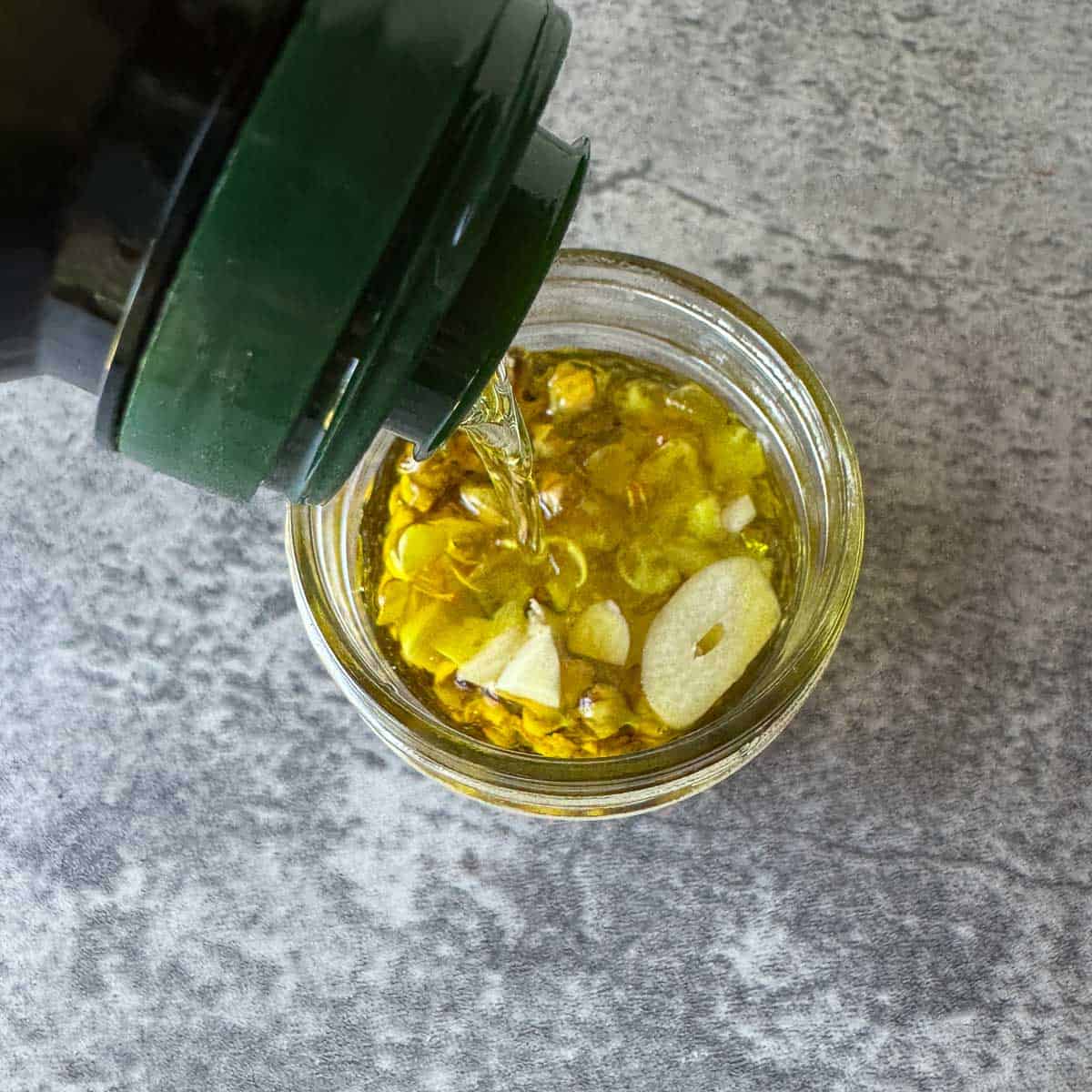
- Add flowers (and chopped garlic, if using) to a small mason jar and cover with carrier oil of choice.
Pro Tip: When garlic cloves are cut, crushed, or minced, an enzyme called alliinase converts alliin into allicin, which is one of garlic's most studied beneficial compounds. This reaction doesn't happen instantly, so it's generally recommended to let the garlic sit for 10-15 minutes after chopping or crushing before heating or processing it.
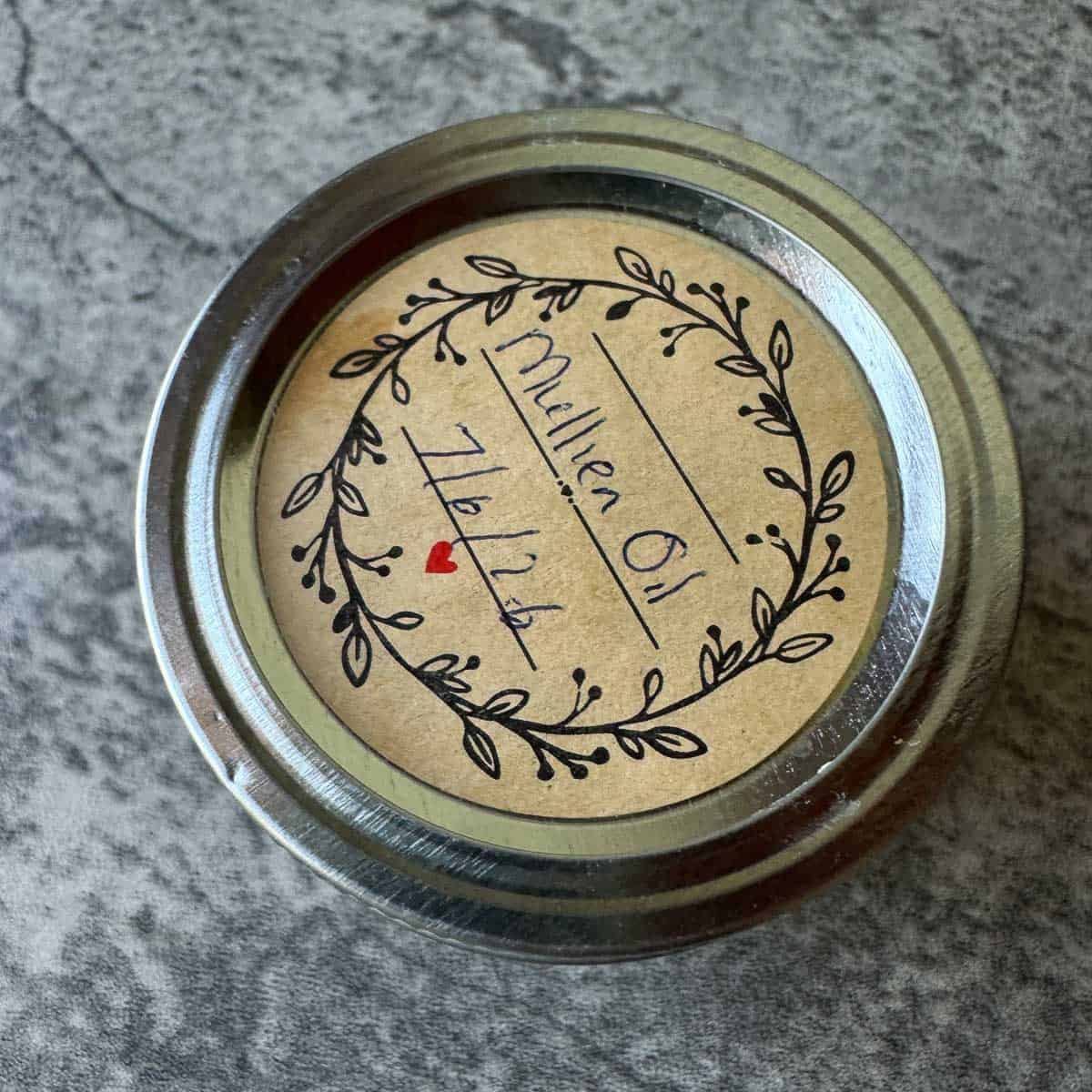
- Mark with the contents and date. Place in a cool, dark location (like a pantry) and infuse for 4-6 weeks.
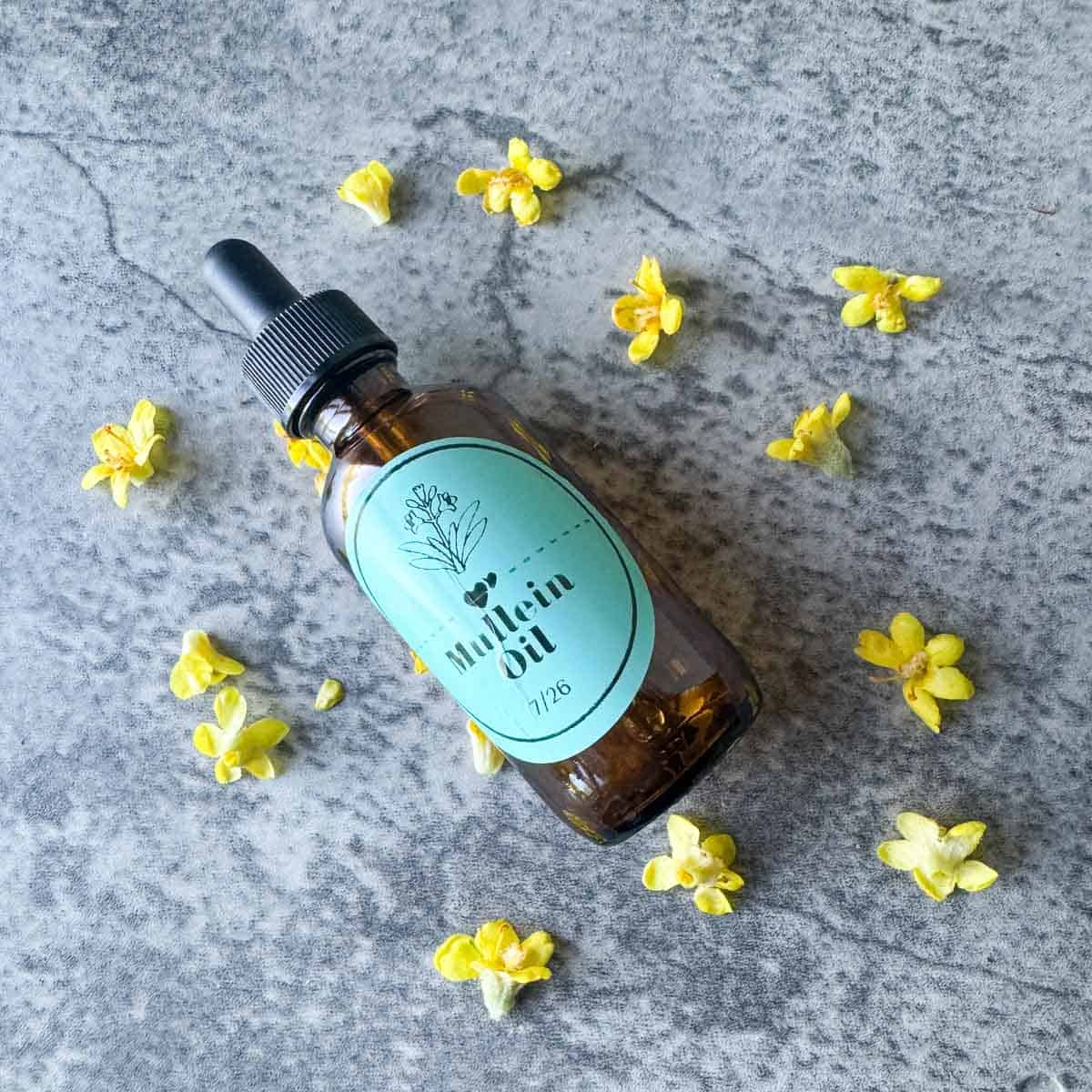
- Strain through a soup bag. Transfer to an amber dropper bottle and label with "Mulllein Oil" and the date. Store in the medicine cabinet.
Warm Infusion Method
Step 1: Add the mullein flowers (and garlic, if using) to a heat-safe glass jar or directly to a small saucepan. Add carrier oil, making sure flowers and garlic are completely submerged.
Step 2: Place the jar in a saucepan filled with a few inches of water, or heat the oil directly in a saucepan over very low heat. Maintain the oil temperature between 95°F and 120°F for 2 to 4 hours.
Step 3: Stir occasionally and add more water to the saucepan as needed. Remove the oil from the heat and allow it to cool completely.
Step 4: Strain the oil through cheesecloth, a coffee filter, or a fine-mesh strainer to remove the flowers and any sediment. Transfer the strained oil to an amber glass dropper bottle or jar and label it with the date.
Traditional Uses for Mullein Oil
Many herbalists use mullein flower oil as part of natural ear care routines and keep it on hand for occasional ear discomfort. It is also commonly used as a massage oil and added to homemade salves and skin care preparations.
According to the book Herbal Synergies by Lily Quinn, mullein's anti-inflammatory properties and garlic's antimicrobial compounds: "create a comprehensive ear infection formula that addresses both infection and pain while supporting local immune response."
In the book Forgotten Home Apothecary by Nicole Apelian, P.H.D., it is recommended to use a clean dropper to place 2 to 3 drops of mullein oil in the affected ear up to 2 to 3 times a day. Do not use oil if there's discharge from your ear or if you have a perforated eardrum.
Disclaimer
This recipe is intended for educational purposes and demonstrates how to prepare a traditional herbal-infused oil. It is not intended to diagnose, treat, cure, or prevent any disease.
Equipment You'll Need
Cold Infusion
To make mullein flower oil (or mullein garlic oil), you need a small mason jar for infusing the oil for up to 6 weeks. You then need a way to strain the flowers and garlic out of the oil. I prefer using soup bags. Finally, you will need a small funnel and an amber glass dropper bottle.
Warm Infusion
If you prefer the warm infusion method, you'll also need a small saucepan.
Storage
Store mullein flower oil in a cool, dark place away from direct sunlight and heat. Properly prepared and stored mullein oil can last up to a year. Discard the oil if it develops an off odor, mold, cloudiness, or any signs of spoilage.
Pro Tips
- Harvest flowers on a dry day. Avoid picking mullein flowers after rain or heavy dew, as excess moisture can increase the risk of spoilage.
- Oftentimes bugs burrow into the mullein flowers, so make sure to remove them before adding them to the oil.
- Keep the flowers and garlic fully submerged. Any plant material exposed to air can mold during the infusion process.
- Strain the oil carefully. Mullein flowers contain tiny hairs that can end up in the finished oil. For the clearest oil, strain through a soup bag, cheesecloth, a coffee filter, or a fine-mesh strainer lined with cheesecloth.
- Don't overheat the oil. If using the warm infusion method. Keep the temperature between 95°F and 120°F (35°C to 49°C) to avoid damaging the delicate compounds in the flowers.
FAQ
Yes. Dried mullein flowers are often preferred because they contain less moisture, which can help extend the shelf life of the finished oil.
Yes. Although mullein flowers are traditionally preferred for oil infusions, mullein leaves can also be used when flowers are unavailable.
Garlic is often combined with mullein flowers in traditional herbal preparations. Many herbalists consider the two herbs a complementary pairing because the garlic contains antimicrobial properties, while the mullein flowers are anti-inflammatory.
Olive oil is a popular choice because of its availability and long shelf life. Other options include sweet almond oil, grapeseed oil, and avocado oil.
A cold infusion steeps the flowers in oil for several weeks at room temperature, while a warm infusion uses gentle heat to speed up the extraction process.
More Foraging Posts
If you enjoyed this mullein infused oil recipe, you may find these other posts helpful, too!

Comments
No Comments