
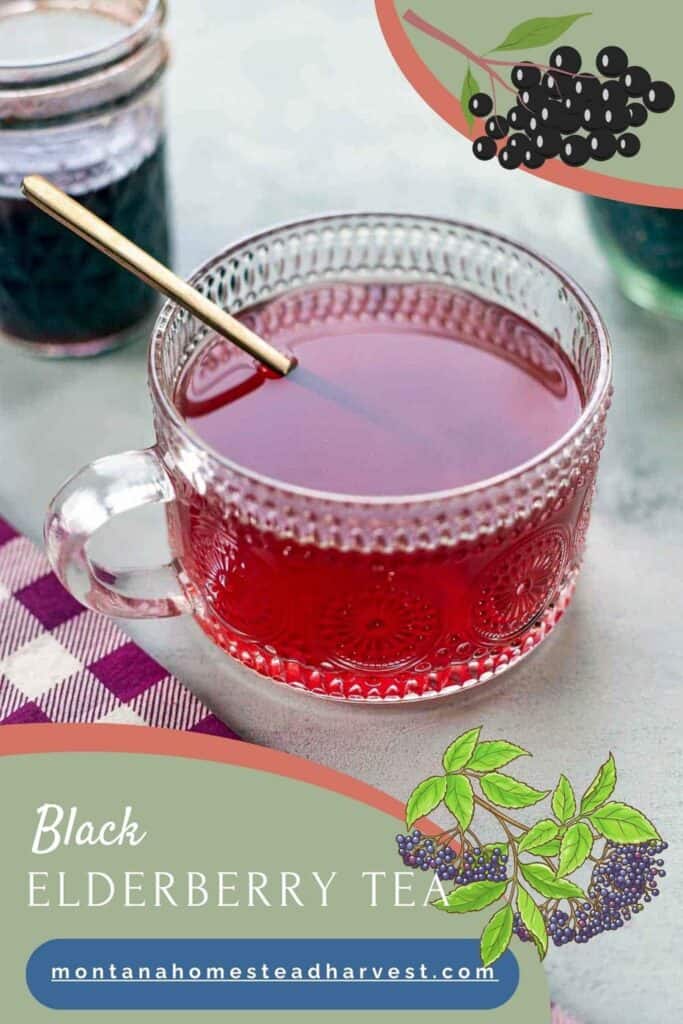
Elderberries have been part of traditional home remedies for generations, and once you start foraging or growing them yourself, it's easy to see why! On our Montana homestead, black elderberry tea is one of those simple, comforting drinks we reach for during cold and flu season, right up there with elderberry tincture.
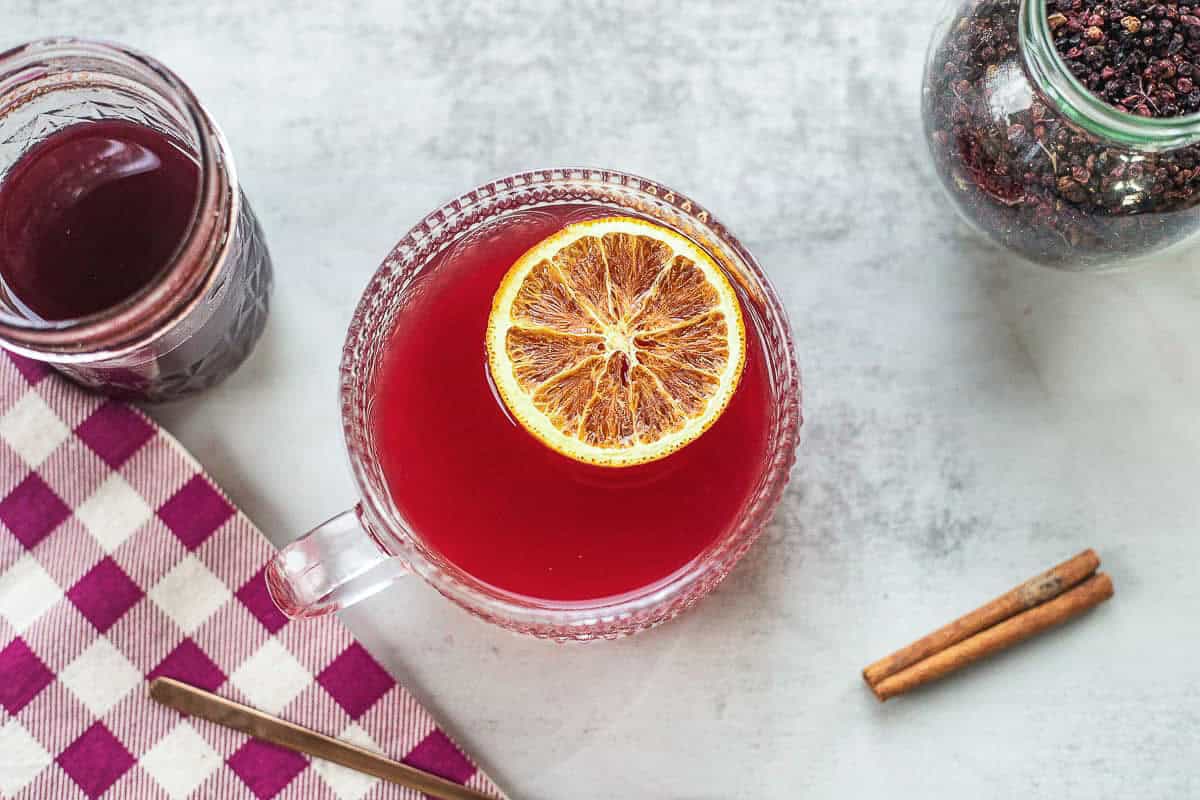
This black elderberry tea recipe can be brewed by the cup or by the pot. Whether you forage your berries, grow your own bushes, or buy dried elderberries, this tea is a great way to put them to use all winter long!
When I have an abundance of elderberries, I also make elderberry shrub, elderberry gummies, and elderberry wine! I also make my own elderberry tea blend that I sip on when everyone around me is coughing. 🤧
Jump to:
What is Black Elderberry Tea?
Black elderberry tea is made by simmering dried or fresh black elderberries (Sambucus nigra) in water, often with optional spices or citrus. Cooking the berries is important because raw elderberries and stems contain compounds that can cause stomach upset if consumed. The result is a deep purple tea with a mildly sweet, slightly tart flavor that pairs well with honey, ginger, cinnamon, and orange peel. Try it sweetened with cardamom syrup!
Ingredients & Substitutions
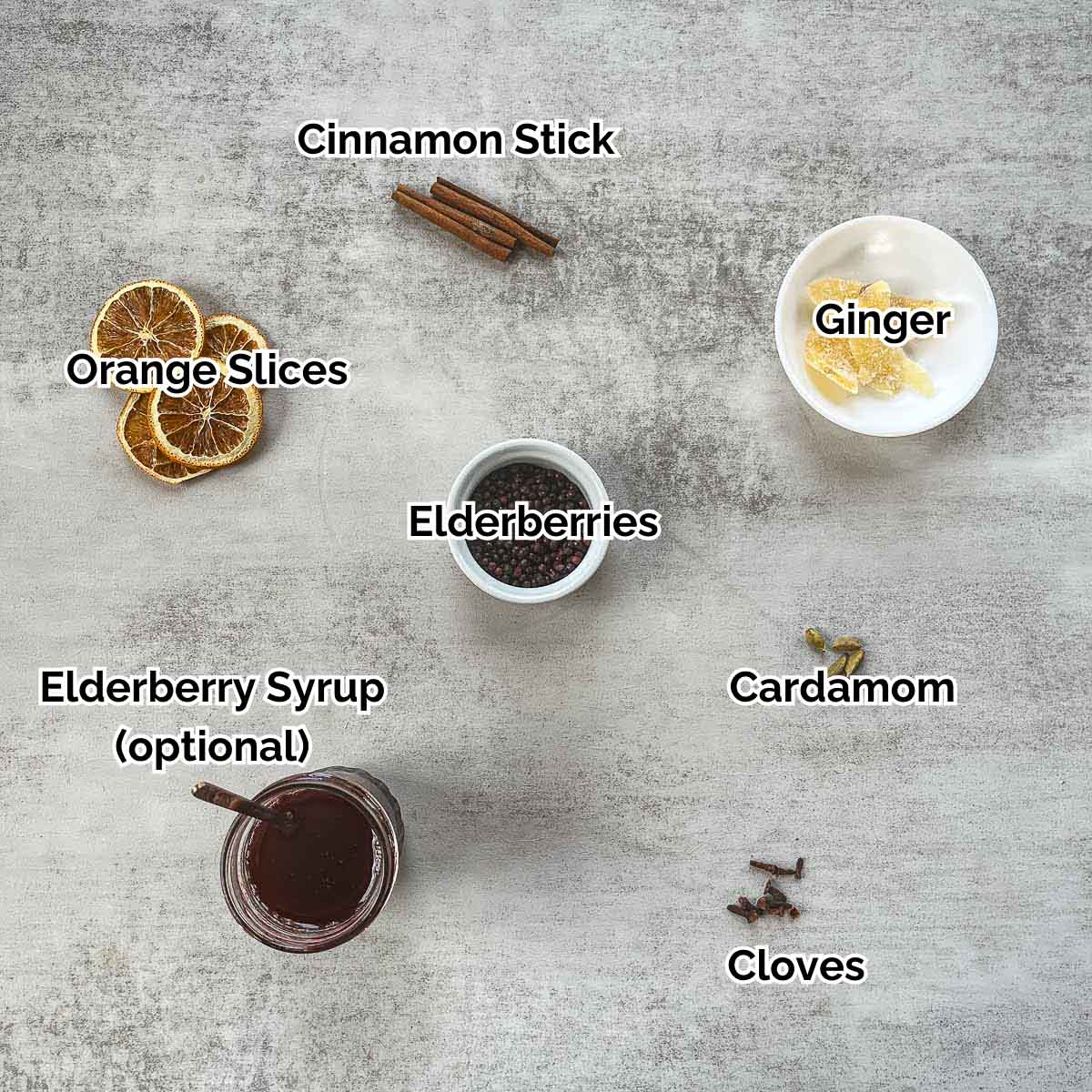
- Elderberries: Use dried, dehydrated, or freeze-dried elderberries. If you can't forage elderberries where you live, you can buy dried elderberries on Amazon or Etsy. If making tea by the pot, you can use ¼ cup fresh elderberries or 2 tablespoons dried for 2 cups of fresh water. You'll want to simmer the tea for at least 15 minutes to neutralize natural occurring compounds.
- Water: If your water doesn't taste great as-is, it won't make a good cup of tea either. If necessary, use bottled water.
- Sweetener: Raw honey, sugar, elderflower syrup, elderberry syrup, jasmine simple syrup, whipped honey, or sweetener of choice.
Quick ratio: Use 1 tablespoon dried elderberries per 1 cup of water and steep for 7 minutes. To make a pot, add 2 tablespoons dried elderberries or ¼ cup fresh elderberries per 2 cups of water and simmer for 15-20 minutes.
When making elderberry tea by the cup, boiling water is poured over dried or freeze-dried elderberries. Fresh (raw) elderberries must be simmered and are best used when brewing a full pot of tea or larger batches.
Optional Ingredients
- cinnamon stick
- cloves
- cardamom pods
- candied or fresh ginger
- fresh, freeze-dried, or dehydrated orange slices
*See recipe card for quantities.
How to Make Black Elderberry Tea
For best results, simmer berries gently rather than boiling aggressively. This preserves the flavor and benefits and keeps the tea from tasting bitter.
- Add dried or freeze-dried elderberries to a disposable tea bag or basket.
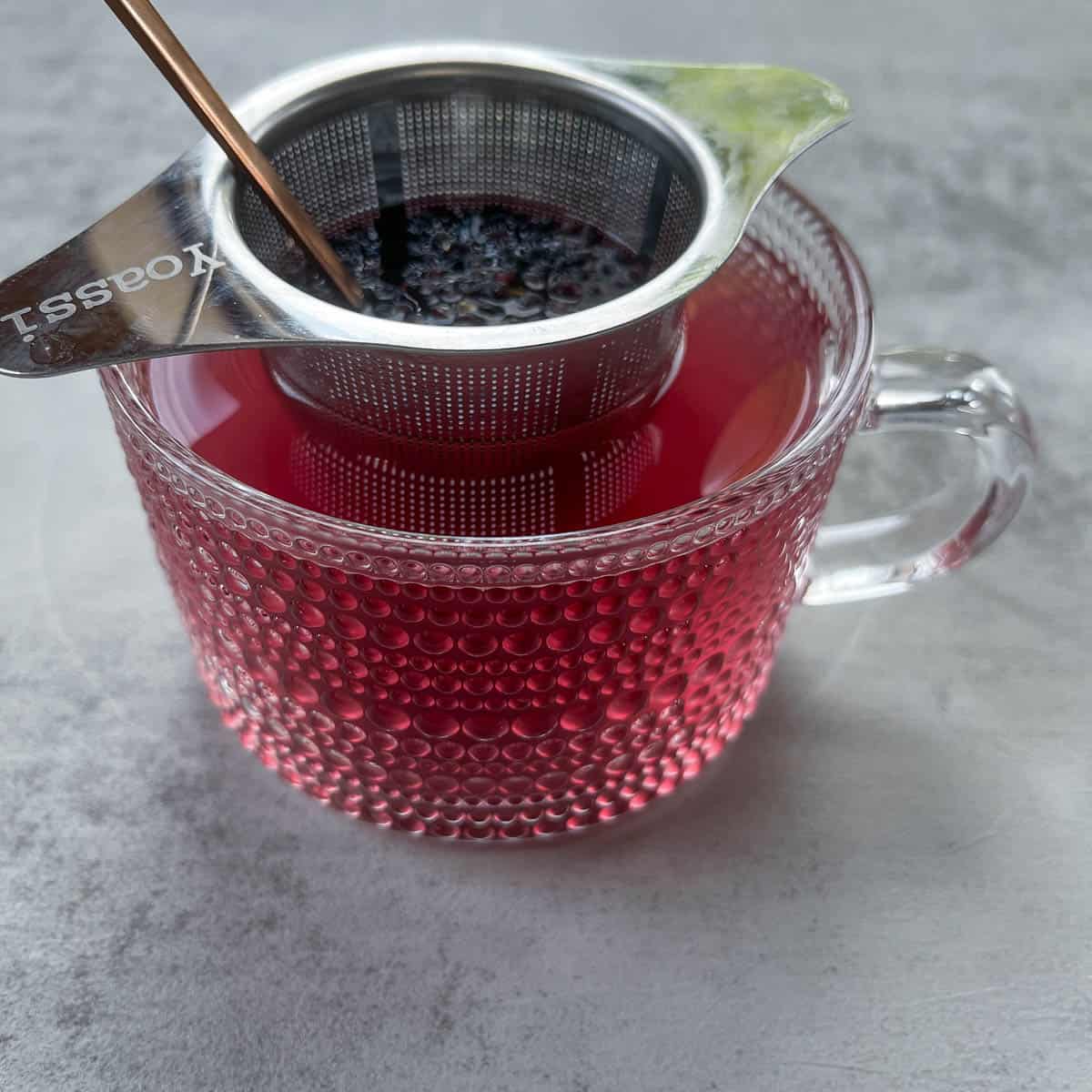
- Pour boiling water over the elderberries and steep for 7 minutes.
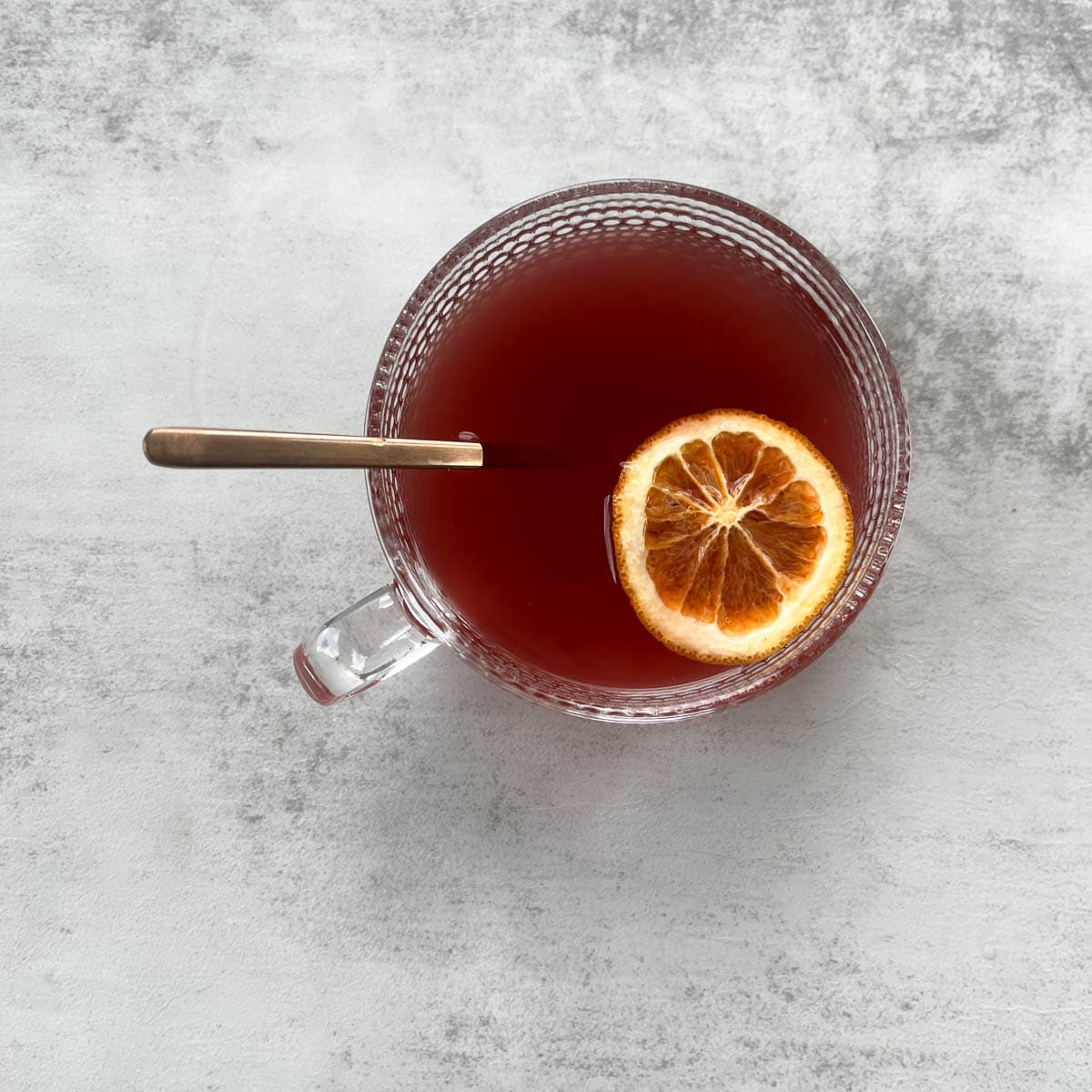
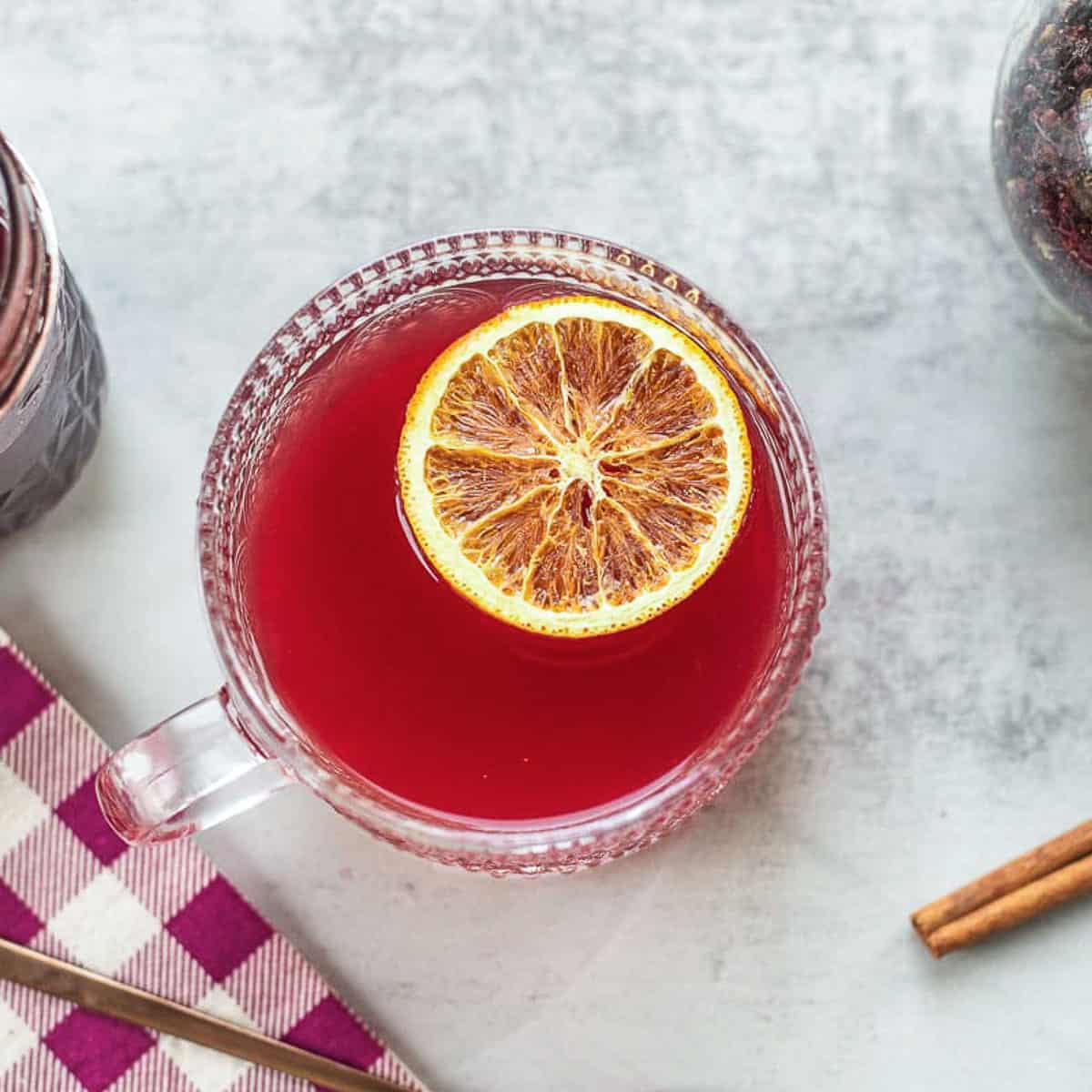
- Add a dehydrated orange slice, cinnamon stick, or your favorite fall spices if you'd like.
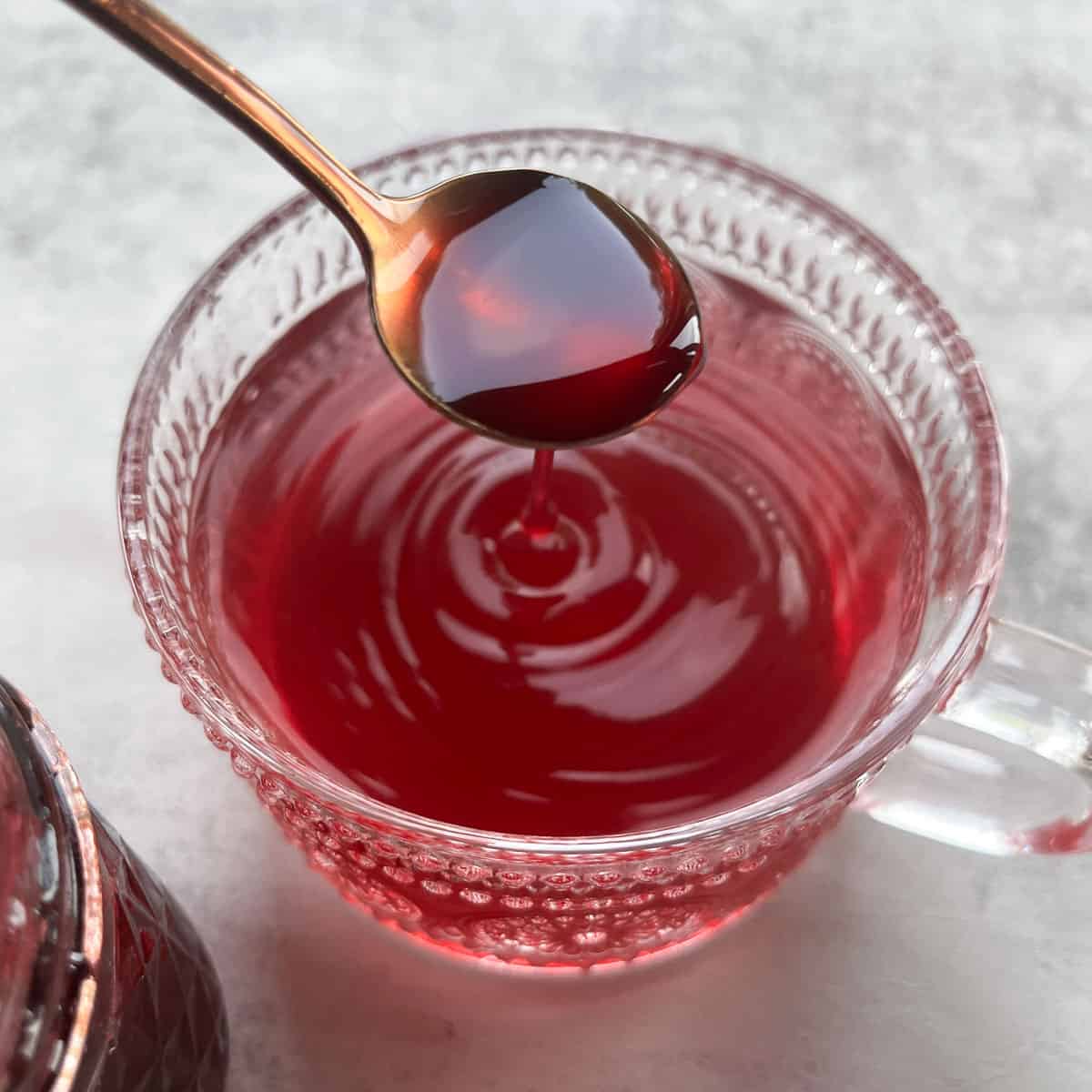
- Sweeten elderberry tea with your favorite sweetener, or enjoy it as is if you prefer your tea tart!
If you prefer a stronger tea, you'll want to make a pot of tea and simmer it over low heat for 15 minutes. Just follow these simple steps...
How to Brew A Pot of Elderberry Tea
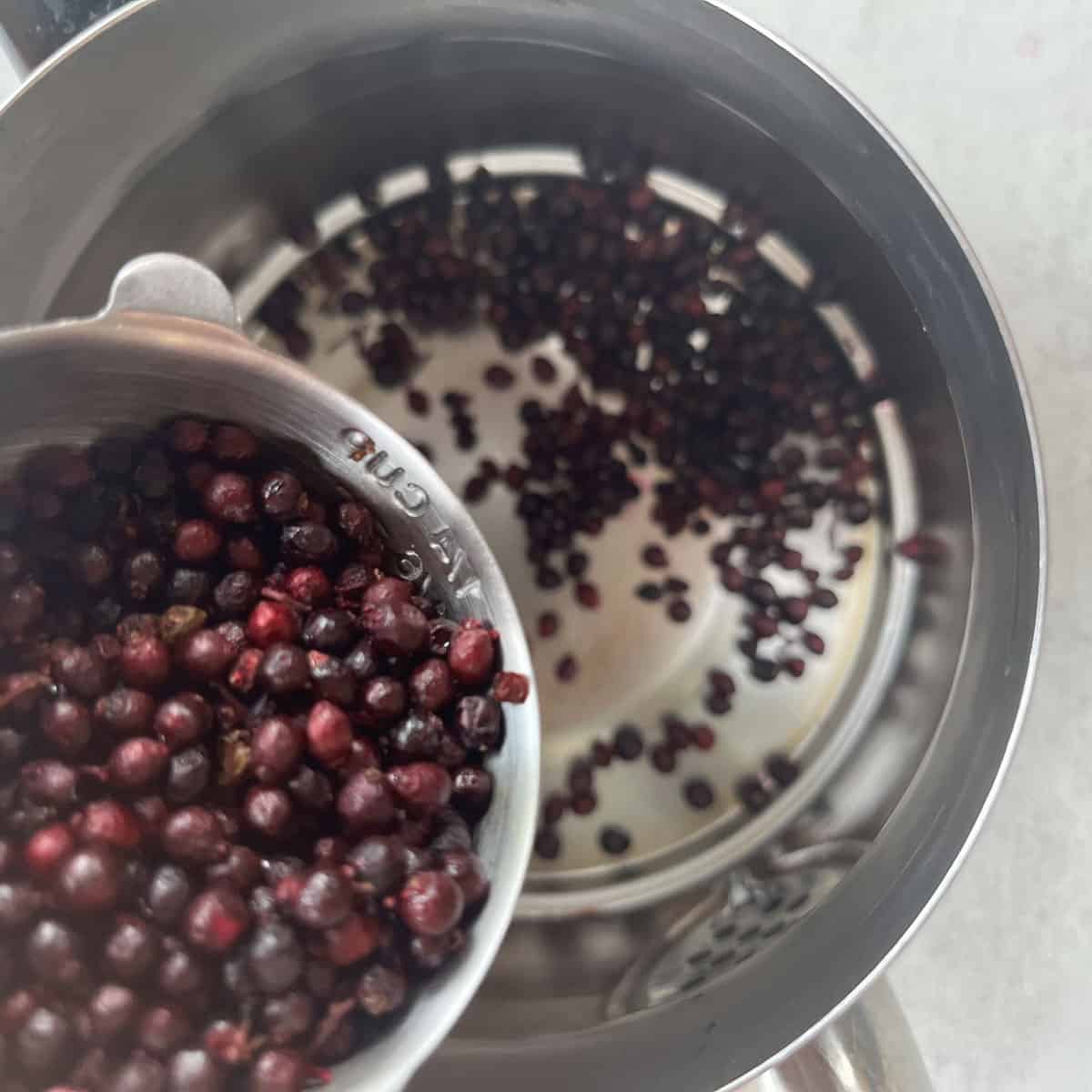
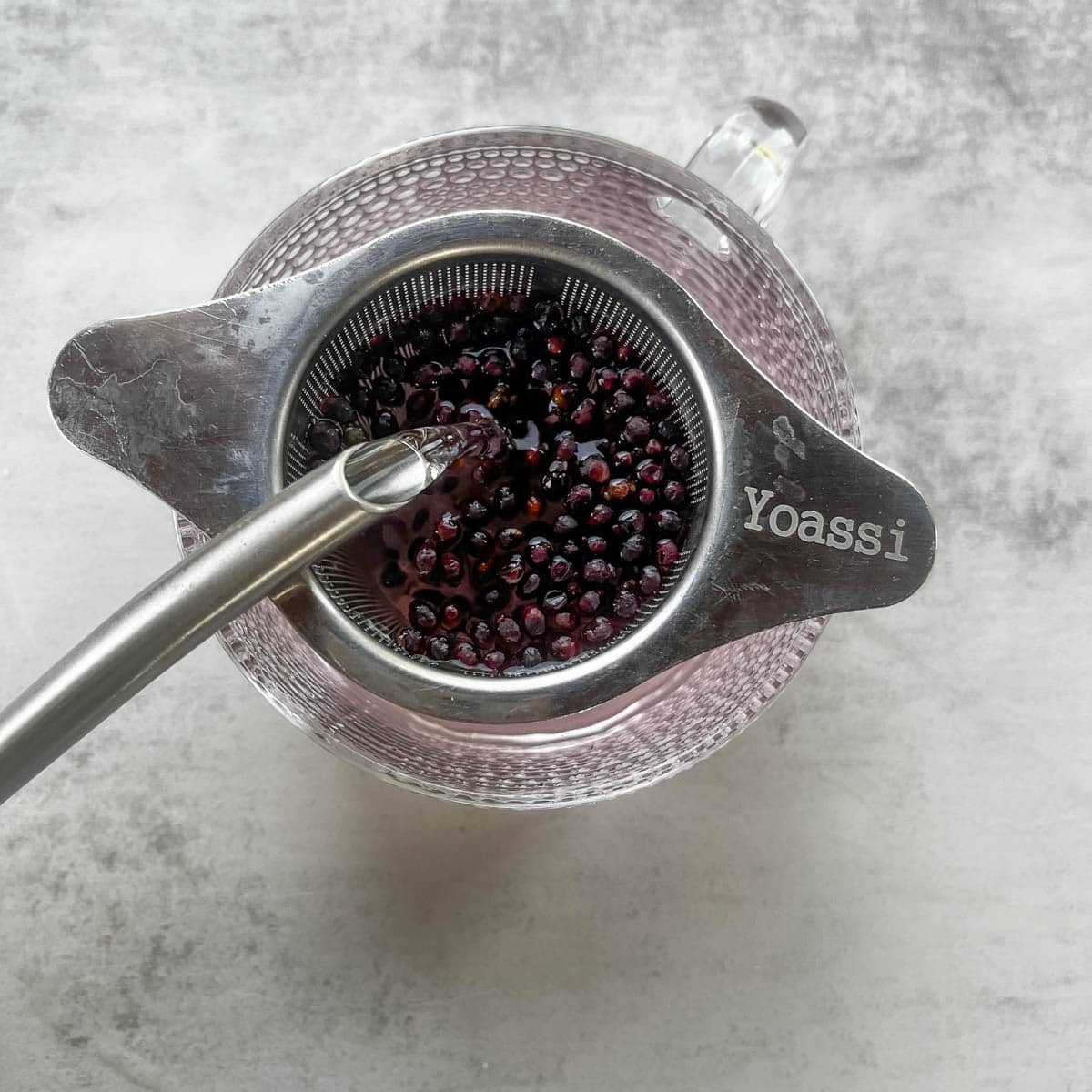
- Add ¼ cup fresh elderberries or 2 tablespoons of dehydrated or freeze-dried elderberries to a teapot.
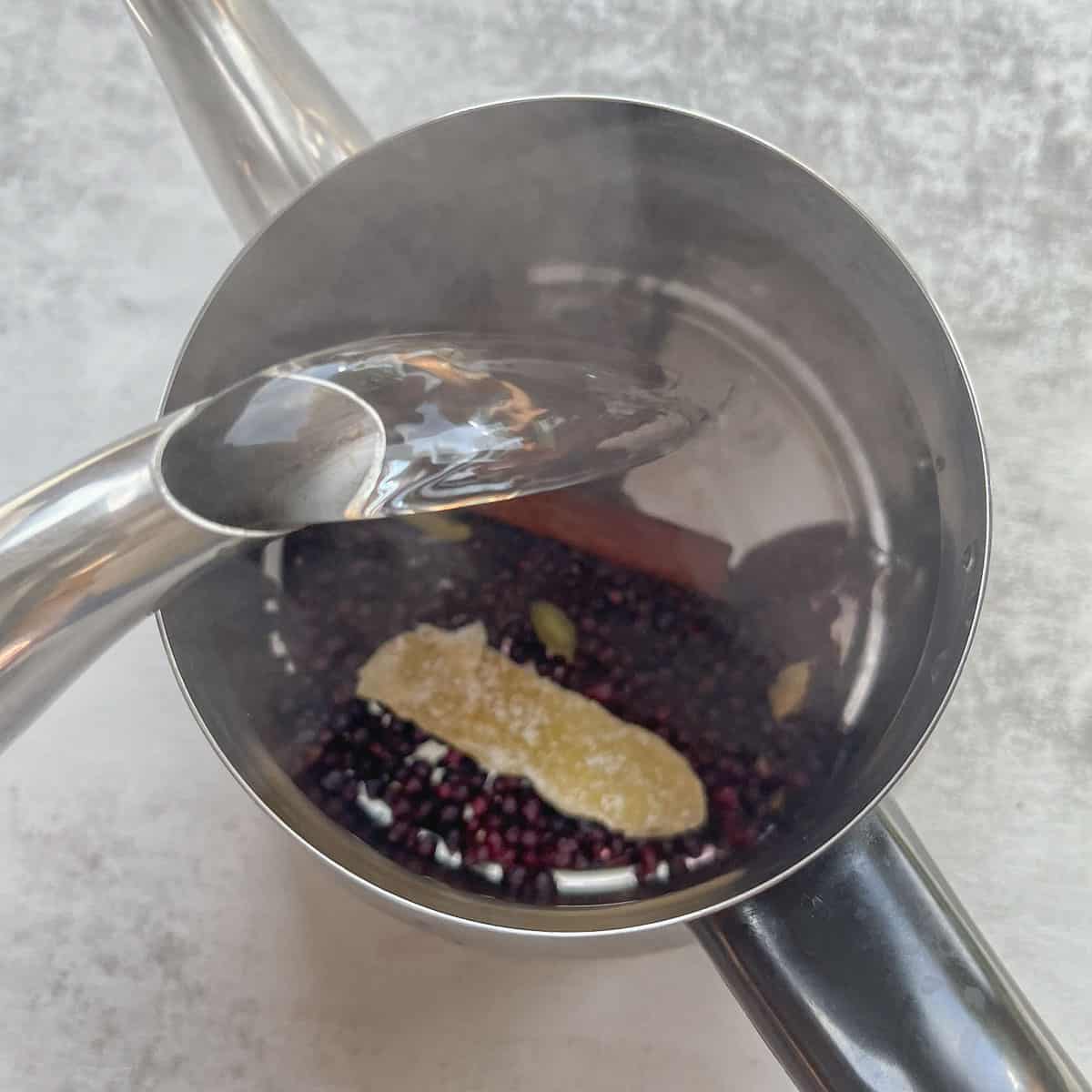
- You can also add cinnamon, cloves, cardamom pods, ginger, etc. Pour 2 cups of boiling water over them, then simmer for 15 minutes.
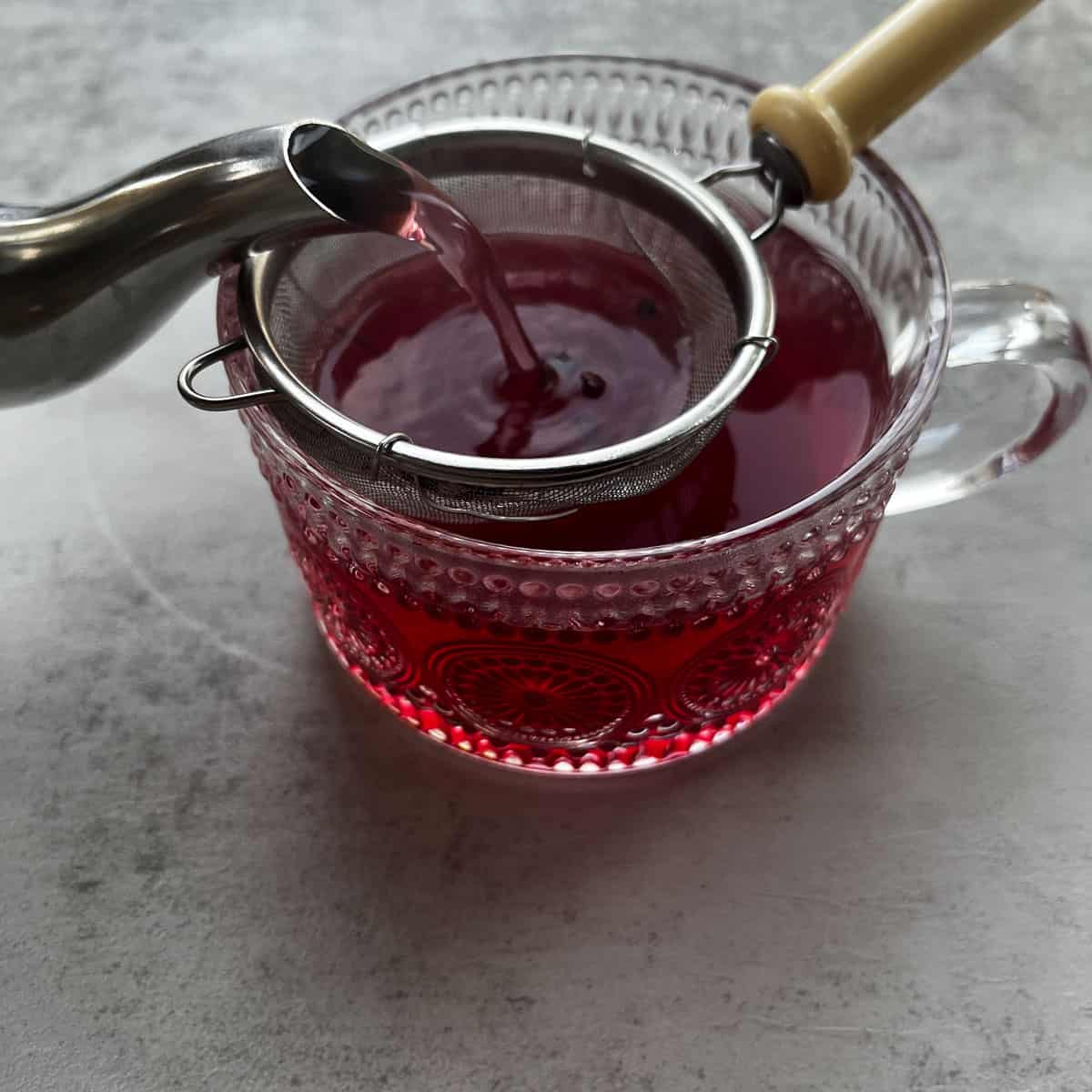
- Strain elderberry tea into your cup.
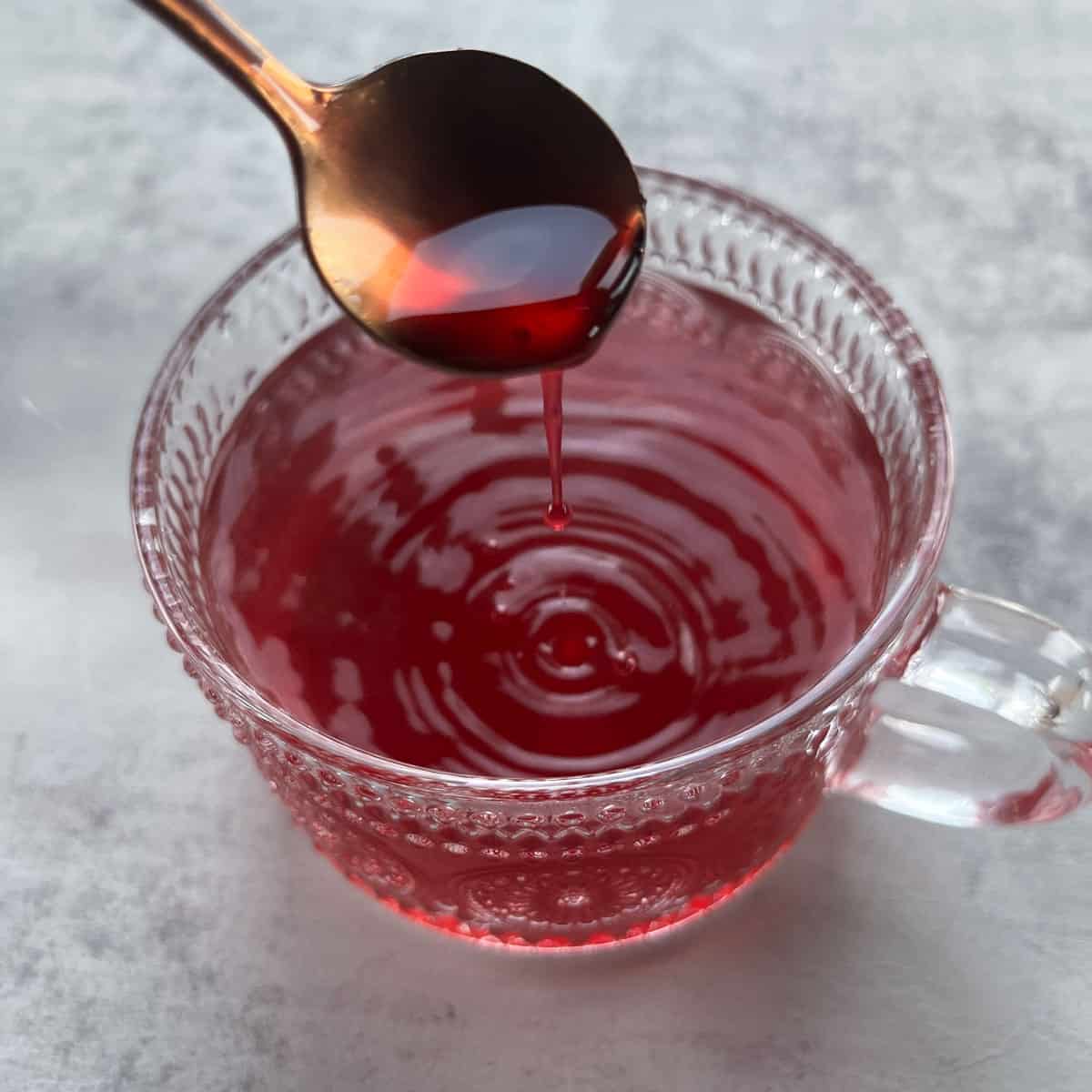
- Stir elderberry syrup or a low-calorie sweetener into your tea and enjoy!
Foraging Elderberries Safely
Elderberries grow wild in many parts of the U.S., including Montana, but proper identification is critical. Here are some foraging tips to follow:
- Only harvest ripe, dark purple or black berries
- Avoid red elderberries and ornamental varieties
- Remove all stems before drying or cooking
- Never consume elderberries raw
- If you're new to foraging, harvest with an experienced forager or rely on a trusted field guide before gathering wild berries.

Disclaimer
This information is for educational purposes only and is not intended as medical advice. Always properly identify and cook elderberries before consuming. Consult a healthcare professional before using herbal remedies, especially for children, during pregnancy, or if you have underlying health conditions.
Why Elderberries Must Be Cooked
Raw elderberries, seeds, and stems contain naturally occurring compounds that are neutralized through cooking. Simmering the berries for tea makes them safe to consume and improves the flavor. This is why elderberries are traditionally used in syrups, tea, and tinctures, rather than eaten fresh.
Elderberry Tea Benefits
Elderberries have long been used in traditional herbal practices, especially during cold and flu season. They're commonly valued for their antioxidant content and are often included in homemade wellness preparations. While many people enjoy black elderberry tea as part of a seasonal wellness routine, it's not a substitute for medical treatment. Think of it as a comforting, time-tested homestead beverage, not a miracle cure.
Black elderberries have been traditionally used to support immune health, though large-scale clinical studies are limited.
According to PubMed, black elderberries may serve as "an alternative to antibiotic misuse for upper respiratory symptoms due to viral infections, and a potentially safer alternative to prescription drugs for routine cases of the common cold and influenza."
How to Dry and Store Elderberries for Tea
To keep elderberries on hand year-round:
- Strip berries from stems. This can be done with a fork.
- Dry in a dehydrator on low heat until fully dry. You can also use a Harvest Right freeze dryer to freeze them for longer storage.
- Store dehydrated elderberries in airtight mason jars away from direct light and heat. If freeze-dried, store in mylar bags and oxygen absorbers.
- Properly dried elderberries can last up to a year, making them perfect for winter tea and syrup making. If freeze-dried, they can be stored for up to 20 years!
Equipment
FAQ
Many people enjoy elderberry tea regularly during cold season. As with any herbal tea, moderation is key.
Because elderberries must be properly cooked and the dosage varies, consult a healthcare professional before serving to children.
Yes, but they must be fully ripe, de-stemmed, and cooked thoroughly.
It's mildly sweet, slightly tart, and pairs well with warming spices and citrus.
Pro Tips
- When foraging elderberries, be sure to pick only ripe elderberries and avoid any green or unripe berries, which contain a higher amount of alkaloids and glycosides.
- Make sure you remove any elderberry stems or leaves that may have been dried with the berries before steeping. The elderberry stems and leaves actually contain higher concentrations of alkaloids and glycosides than the berries do.
- I really recommend trying this as a refreshing iced tea, too!
- For an even more flavorful brew, try steeping elderberries alongside elderflower, chamomile, peppermint, or any other herbs or herbal tea you like.
- The more berries you add and the longer you steep elderberry tea, the darker the tea will be!

Don't forget to set some elderberries aside to make elderberry gummies!
Related Recipes
If you enjoy this elderberry tea recipe, check out these other great teas!


Recipe
Black Elderberry Tea (From Dried or Foraged Berries)
Ingredients
- 1 tbs dried elderberries (2 tablespoon fresh elderberries)
- 1 cup hot water
- sweetener of choice
Optional Ingredients
- 1 dehydrated orange slice
- 2 cardamom pods
- 2 cloves
- ¼ cinnamon stick
- 1 piece crystalized ginger (or fresh)
Instructions
Elderberry Tea by the Cup
- Add dried or freeze-dried elderberries to a disposable tea bag or basket.
- Pour boiling water over the elderberries and steep for 7 minutes.
- Optional: Add a dehydrated orange slice, cinnamon stick, or your favorite fall spices.
- Sweeten elderberry tea with your favorite sweetener, or enjoy it as is if you prefer your tea tart!
Elderberry Tea by the Pot
- Add ¼ cup fresh elderberries or 2 tablespoons of dehydrated or freeze-dried elderberries to a teapot. You can also add cinnamon, cloves, cardamom pods, ginger, etc.
- Pour 2 cups of boiling water over them, then simmer for 15 minutes.
- Strain elderberry tea into your cup. Stir elderberry syrup or a low-calorie sweetener into your tea and enjoy!
Notes
-
- When foraging elderberries, be sure to pick only ripe elderberries and avoid any green or unripe berries, which contain a higher amount of alkaloids and glycosides.
- Since we're using dried or frozen elderberries, the toxins have been eliminated in the drying process, so a shorter steeping time is just fine!
- Make sure you remove any elderberry stems or leaves that may have been dried with the berries before steeping. The elderberry stems and leaves actually contain higher concentrations of alkaloids and glycosides than the berries do.
- I recommend trying this as a refreshing iced tea, too!
- For an even more flavorful brew, try steeping elderberries alongside elderflower, chamomile, peppermint, or any other herbs or herbal tea you like.
- One of the benefits of sweetening the tea with elderberry syrup is that you may not need to add additional spices since most of them are already used in my elderberry syrup recipe.
- The more berries you add and the longer you steep the tea, the darker the tea will be!
Hilda Sterner says
Give this tea a try and let me know what you think!
Kelly Methey says
I love your tea recipes! I can’t wait to try this one.
Hilda Sterner says
Thank you, Kelly! I appreciate the review!
Helen says
My favorite tea, thank you so much for the detailed recipe!
Hilda Sterner says
You're welcome, Helen, enjoy!