

Elderberry tincture has been used for centuries to support immune health, especially during cold and flu season. While elderberry syrup is a popular go-to, tinctures offer a longer shelf life and are incredibly easy to make! Then try this easy elderberry gummies recipe and this elderberry shrub recipe!
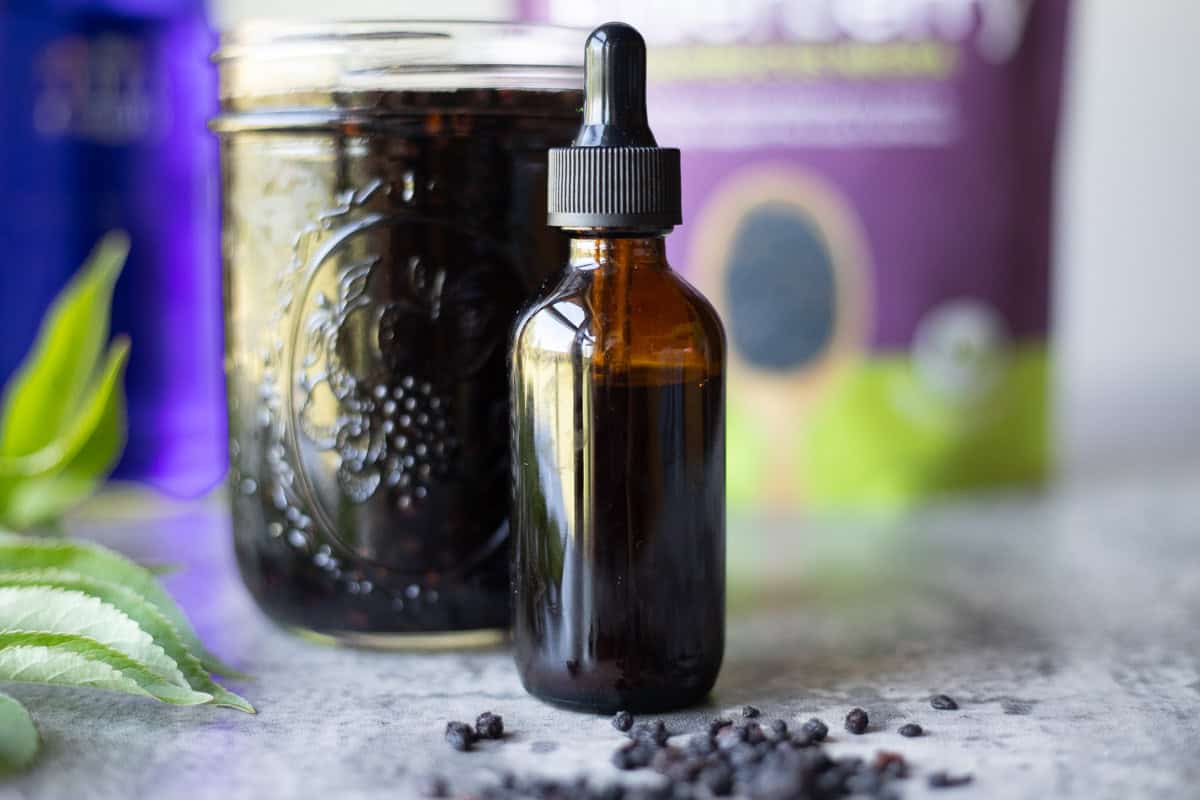
I love creating simple, natural remedies to keep my family healthy during cold and flu season. Whether it's elderberry tincture or fermented garlic and honey, I like knowing I have natural ways to fight off whatever bugs come our way!
In this blog post, I'll show you how to make an elderberry tincture at home, with just a few simple ingredients. Whether you're a seasoned herbalist or a curious beginner, this DIY guide is for you! Then try this switchel recipe!
Jump to:
What is an Elderberry Tincture?
A tincture is a concentrated herbal extract made by soaking plant material in alcohol. The alcohol pulls the beneficial compounds, in this case, the immunity-supportive properties of elderberries, and preserves them for long-term use. Elderberry tincture can last up to a few years if stored properly.
This tincture is commonly used to support immune function, especially during cold and flu season, similar to fire cider and this self-heal oxymel recipe. I love adding some of this tincture to my wellness tea made with my own small batch elderberry tea blend. If you're a fan of tart teas, you'll love it!
Ingredients & Substitutions
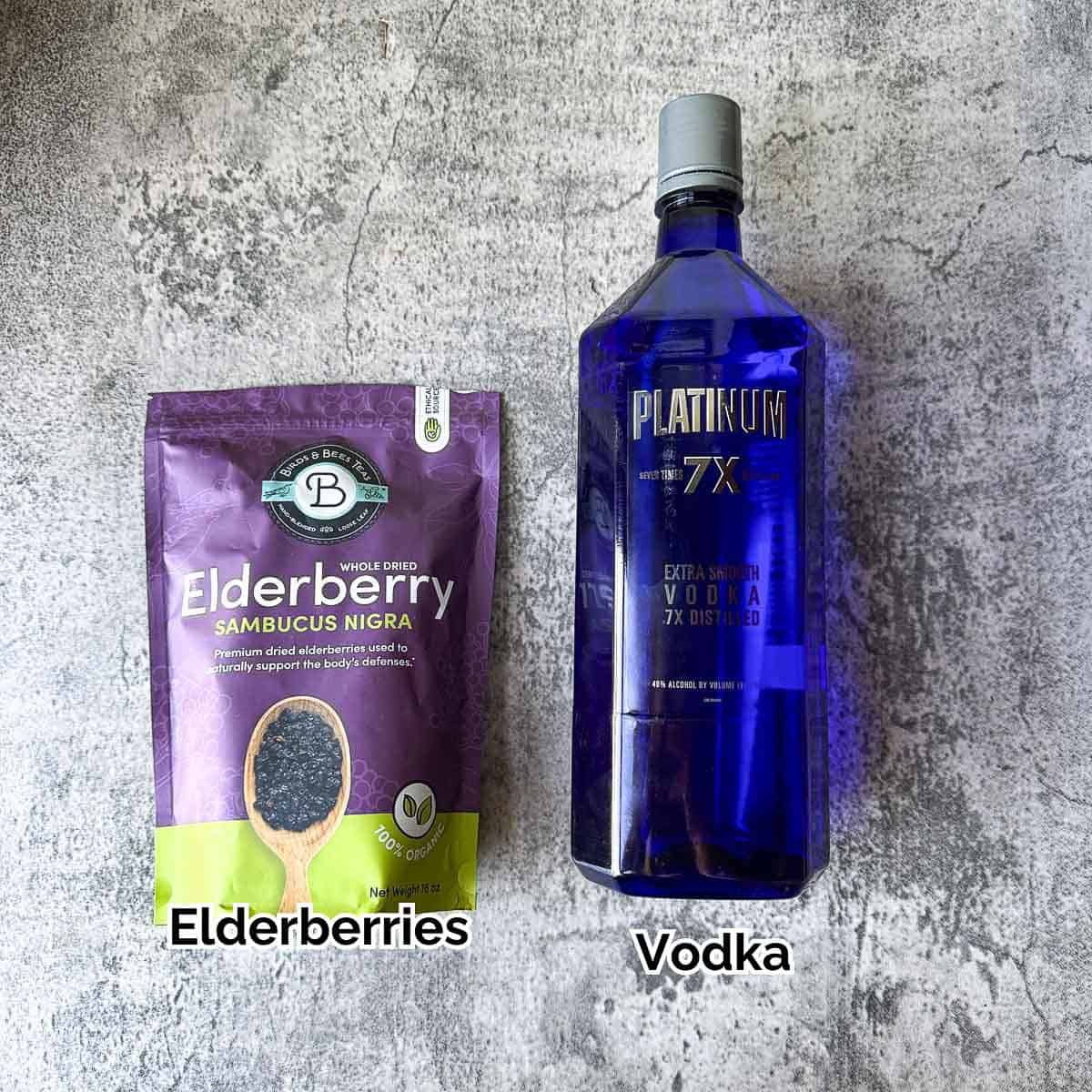
- Elderberries: 1 cup fresh or ½ cup dried elderberries.
- Alcohol: 80-100 proof vodka (or another high proof alcohol, for example, Everclear.
- Optional: Cinnamon stick, ginger, cloves, dehydrated orange slices, or orange peels.
See recipe card for quantities.
Equipment
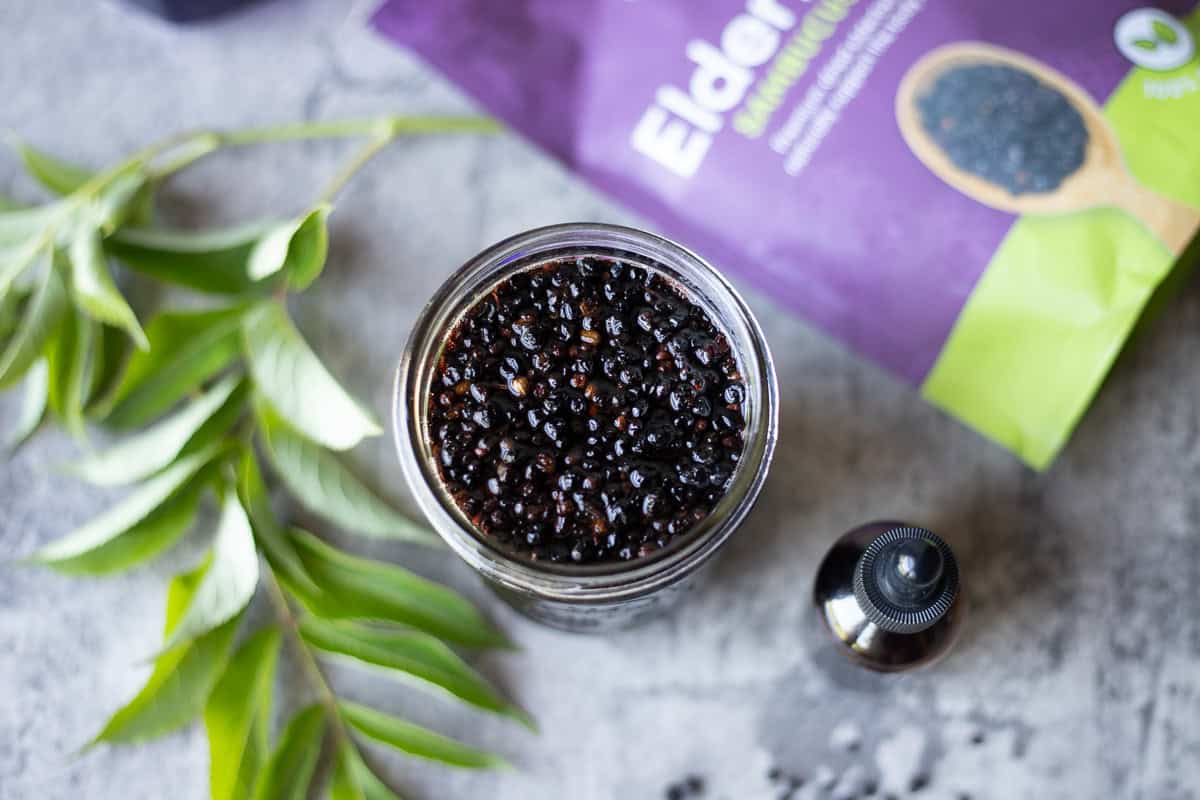
You'll need an 8-ounce mason jar, a fine mesh strainer, and a dark dropper bottle to store the finished tincture.
How to Make Elderberry Tincture
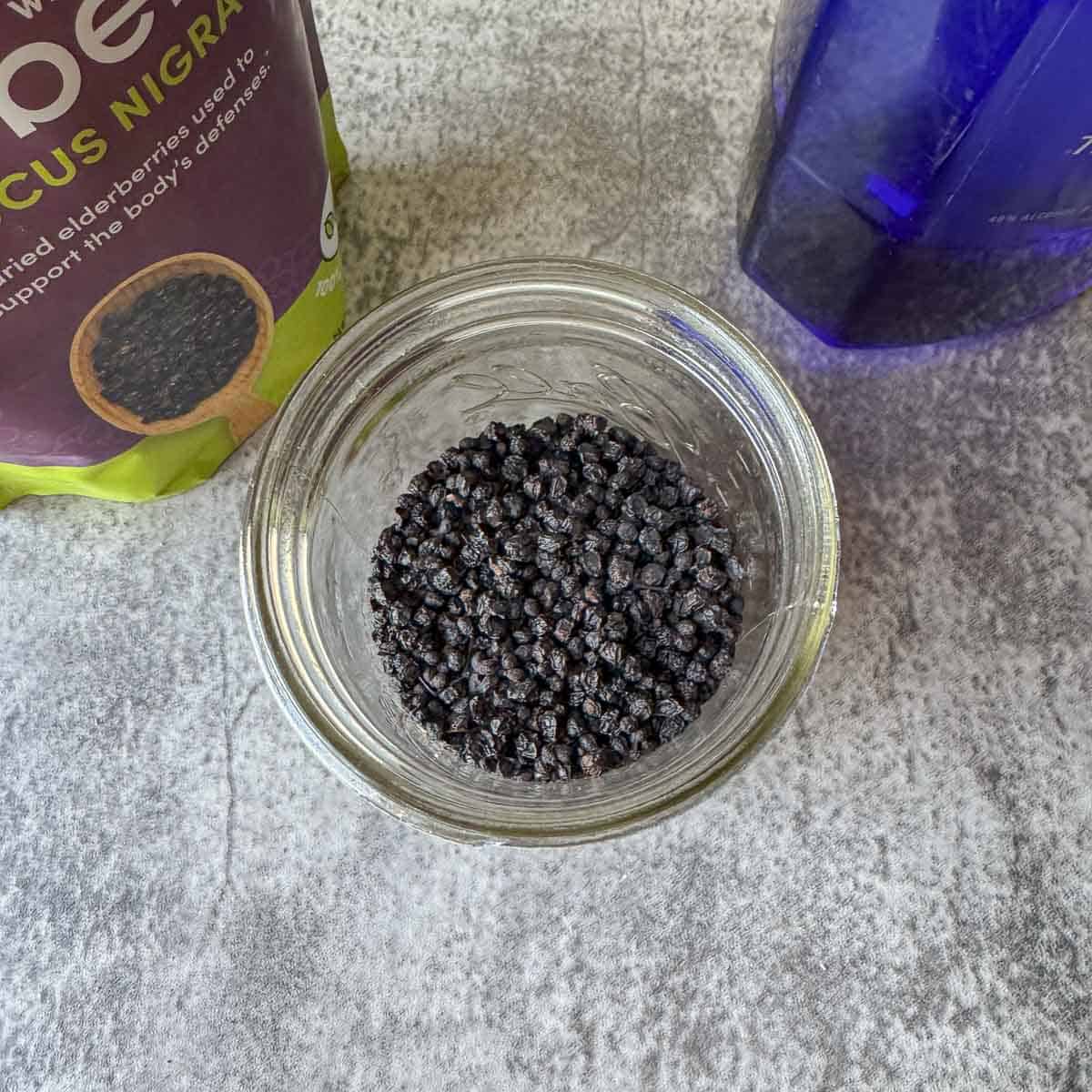
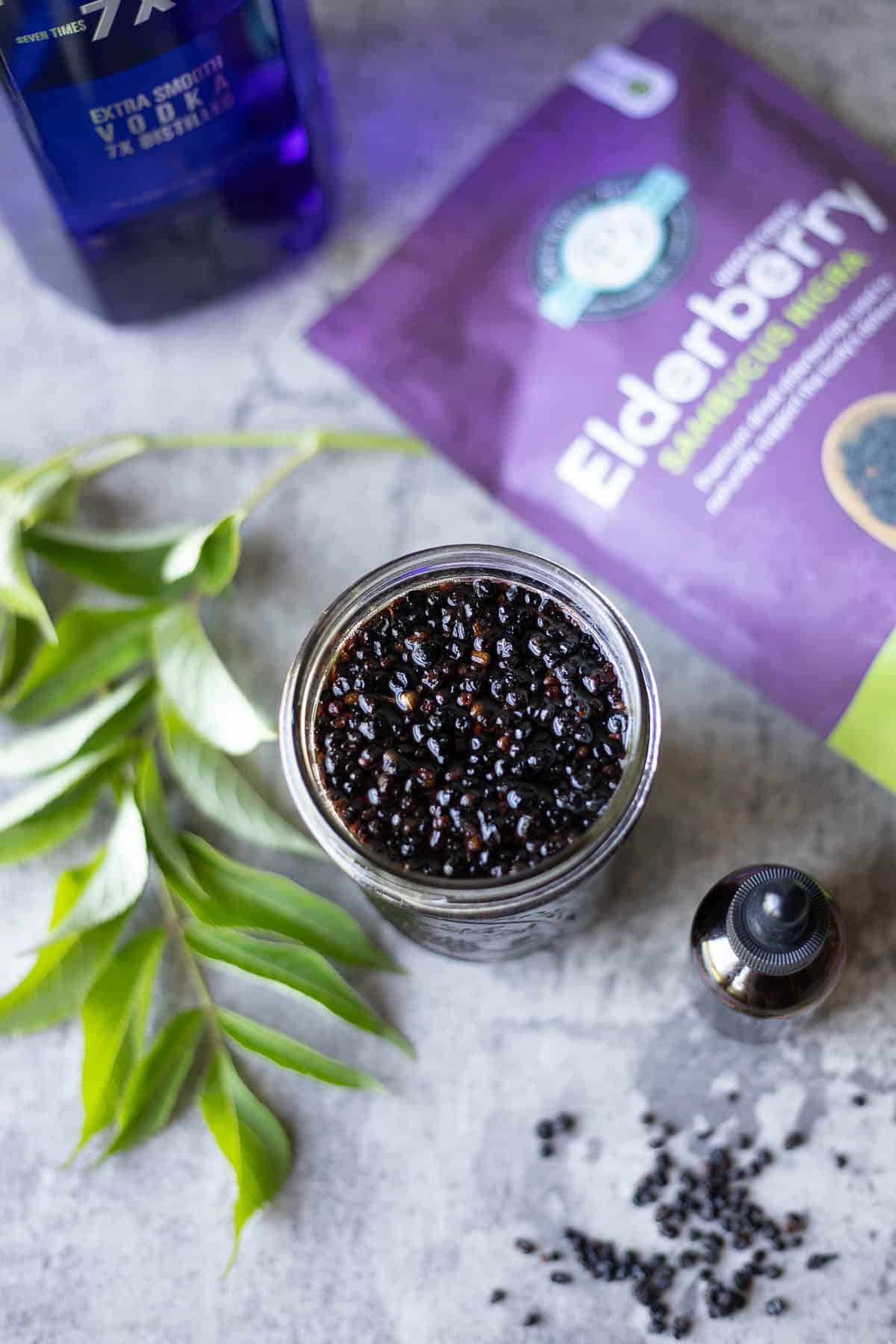
- Fill a 16-ounce mason jar half full with dried elderberries (or ¾ full of fresh elderberries).

- Top with 80 proof vodka until the jar is full. Seal the jar and write the date on the jar lid.
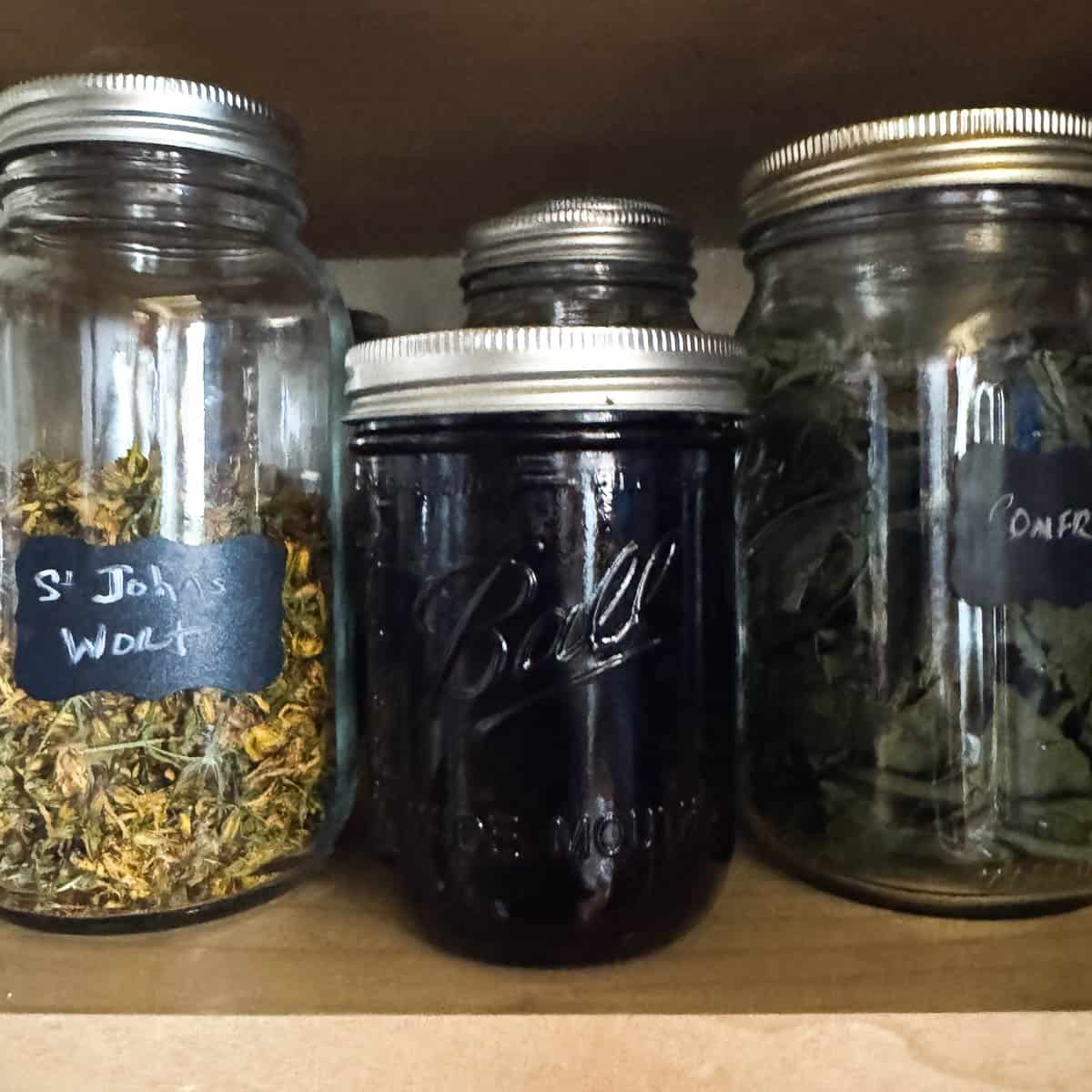
- Store the jar in a cool, dark location for 4 to 6 weeks. Shake every few days to help with extraction.

- Strain out the solids using cheesecloth or a fine mesh strainer. Pour into tincture bottle and label with date and contents.
General Dosing Guidelines
Adults:
- Daily immune support:
½ to 1 teaspoon once per day - At the onset of illness (cold or flu)
½ to 1 teaspoon up to 3 times a day
Children (2+ years):
- Daily immune support:
¼ to ½ teaspoon once per day - During Illness:
¼ to ½ teaspoon up to 3 times a day
Try mixing a dose with black elderberry tea!
Disclaimer
This content is for informational and educational purposes only and is not intended to diagnose, treat, cure, or prevent any disease. Always consult a qualified healthcare professional before starting any herbal regimen, especially if you are pregnant, nursing, taking medications, or have a medical condition.
Foraging wild plants carries inherent risks. Be sure to properly identify any plant before use, and seek guidance from a trained forager or herbalist. The author assumes no responsibility for any adverse effects resulting from the use or misuse of the information provided.
Storage
Store your tincture in dark or amber glass dropper bottles and keep it in a cool, dark location like a cupboard or a pantry.
Alcohol-based tinctures typically last 3-5 years when stored properly.
Pro Tips
- Always shake the bottle before use.
- Tinctures made with alcohol can be diluted for young children, or opt for a glycerin-based version instead.
- Avoid elderberry products for children under 2.
- If you are pregnant, breastfeeding, or on medication, consult your doctor first.
- Avoid adding stems or unripe berries to your infusion because they are toxic.
FAQ
Elderberry tincture is good for your immunity and is high in vitamin C and flavonoids. Studies show it may help the duration of cold and influenza by helping the body fight off viral infections.
Elderberry syrup is prepared with elderberries simmered with sugar and other spices like cinnamon, ginger, and cloves. Elderberry tincture is made with elderberries infused in alcohol. It's stronger than elderberry syrup, so you only need a small amount to boost your immunity.
Warning About Foraging Elderberries
Do not consume raw or unripe elderberries, stems, leaves, or roots, as they contain cyanogenic glycosides (compounds that can release cyanide and cause nausea, vomiting, diarrhea, or more serious illness).
When Foraging Elderberries:
- Positively identify the plant as Sambucus nigra (black elderberry), the safe and commonly used species.
- Only use the ripe, dark purple-black berries, never the green or red ones.
- Cook or properly process berries to destroy harmful compounds.
- When in doubt, consult an experienced herbalist or foraging guide.
More Foraging Recipes
Looking for other recipes like this? Try these:



Homemade Elderberry Tincture Recipe | Easy Herbal DIY Guide
Ingredients
- 1 cup dried elderberries (or 1¾ cup fresh)
- 1½ cups vodka (or everclear)
Instructions
- Fill a 16-ounce mason jar half full with dried elderberries (or ¾ full of fresh elderberries).
- Top with 80 proof vodka until the jar is full. Seal the jar and write the date on the jar lid.
- Store the jar in a cool, dark location for 4 to 6 weeks. Shake every few days to help with extraction.
- Strain out the solids using cheesecloth or a fine mesh strainer. Pour into tincture bottle and label with date and contents.
Notes
- Always shake the bottle before use.
- Tinctures made with alcohol can be diluted for young children, or opt for a glycerin-based version instead.
- Avoid elderberry products for children under 2.
- If you are pregnant, breastfeeding, or on medication, consult your doctor first.
- Avoid adding stems or unripe berries to your infusion because they are toxic.
Hilda Sterner says
I hope you try this tincture recipe and let me know what you think!
Linda Charlton says
I’m definitely going to do this. Thank you!
Hilda Sterner says
Thanks, Linda, I appreciate the feedback! 🙂
Wendy says
My elderberry bushes (if you can call 15 foot tall a bush) are loaded with berries the bush on the east fence are heavy with berries that are ripening now, mid July, but the ones closer to the house are still quite green. Is it possible to freeze the earlier ripening berries until the others are ripe or do you feel that would add too much moisture to the elixir? Second question: does the alcohol remove the cyanide?
I thank you for your input and will be trying your recipe.
Hilda Sterner says
Yes, you absolutely can use frozen elderberries for making tincture. The long maceration and not chewing the berries, reduces the comsumption of cyanide. Also, ripe berries have trace amounts compared to unripe berries, which should not be consumed. Finally, the amount consumed is very small!
Kelsey says
Hi! I made two jars of elderberry tincure and I just strained it. All my berries seemed ripe but in one jar (each jar had berries from a different bush) the berries turned sort of green. Is there any reason my tincture wouldn't be ok to consume?
Hilda Sterner says
Hi Kelsey! Elderberries can be sneaky, they often look fully ripe on the bush, but a few in the cluster can still be slightly underripe. Once you strain a tincture, those berries can lose their dark pigment and look lighter or even greenish, which makes them appear unripe after the fact. The good news is that slightly underripe berries don’t make a tincture unsafe, and the alcohol neutralizes the compounds people normally worry about. This kind of color change is actually pretty common. As long as the berries were fully covered in alcohol, and the tincture smells and tastes normal, you’re absolutely fine.
Kelsey says
Perfect. Thank you so much for the response!
Hilda Sterner says
You're welcome, Kelsey!
Janice says
Hello and thanks for sharing your recipe! I made my tincture today. How should I store it once I’ve strained it? Can I store the jars in my cabinet or should I refrigerate it?
Hilda Sterner says
Hi Janice, You don't need to refrigerate tinctures, a cabinet or pantry would be perfect. If exposed to light, you can lose some due to evaporation.