

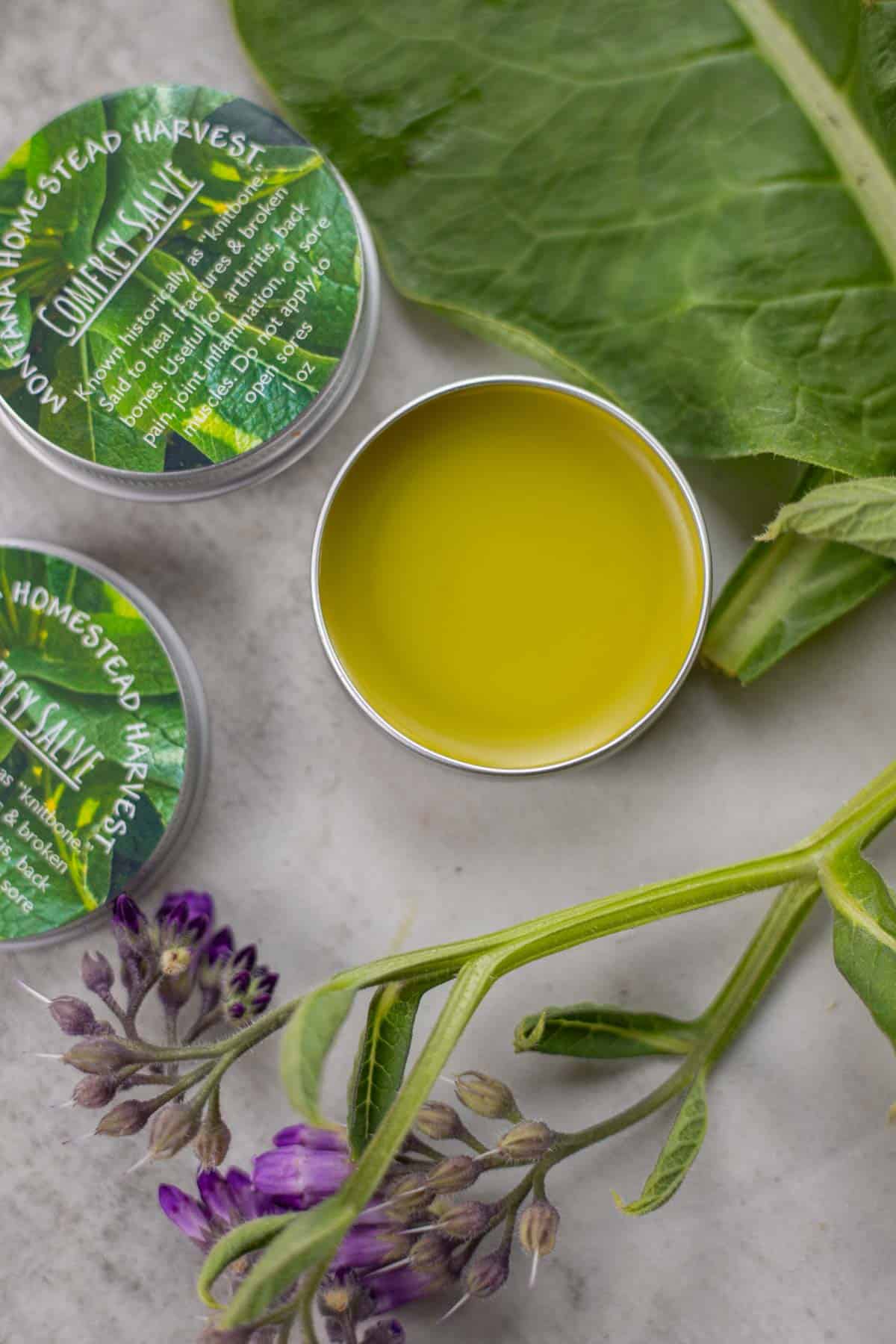
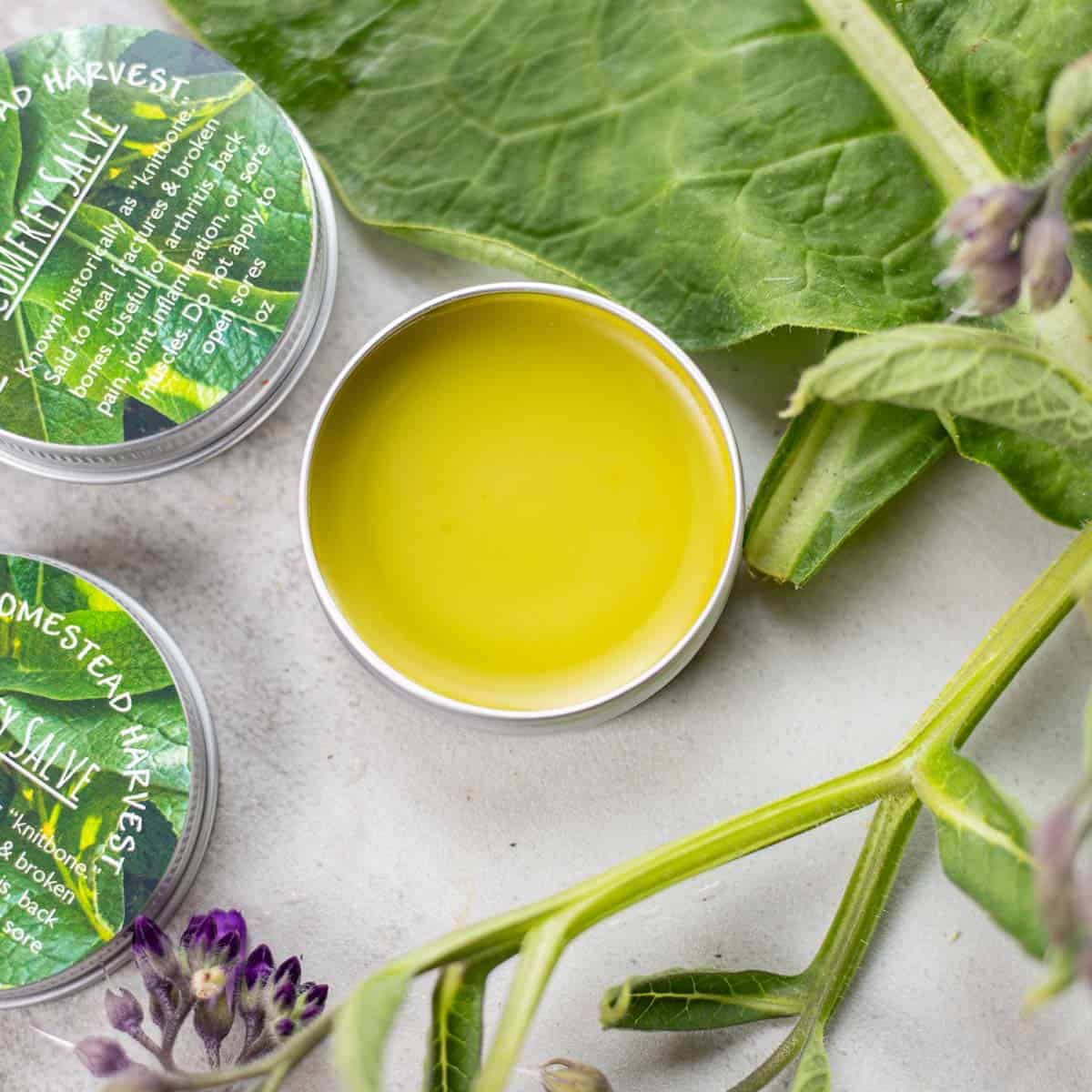
Making comfrey salve at home is a straightforward process and can be very effective for fractures, sprains, minor cuts, bruises, and joint pain. Comfrey contains allantoin, which promotes cell regeneration. You may also want to try making arnica salve and black drawing salve!
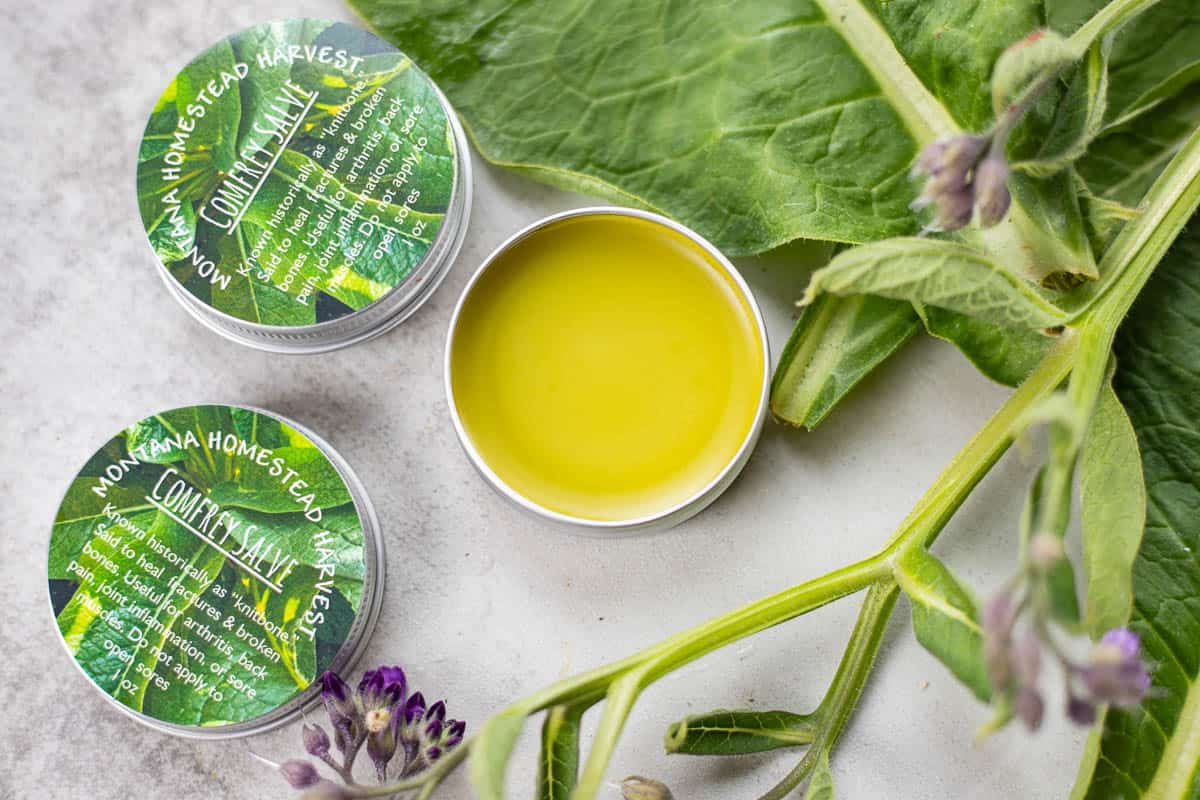
I've been growing comfrey in my Montana garden for several years and use it regularly in my herbal apothecary. As a cookbook author and longtime homesteader, I believe in making things from scratch, including the remedies we reach for first.
In this post, I'll show you everything you need to know to make this potent salve at home! The infused oil can also be added to tallow for skincare to make tallow balm.
For other skin concerns, you may also want to try making plantain salve!
🌿 Prefer a Printable Guide?
Want this in a clean, ad-free format you can keep in your homestead binder? 👉 Download the complete Comfrey Salve Guide here.
Jump to:
What is Comfrey?
Comfrey is an amazing plant that is easy to grow from seeds, which is how I grew mine. The plant has beautiful, purple flowers, but generally, the leaves and roots are the only parts used to make salves and oils.
It's known as "boneset" and "knitbone" because it has been used for at least 2000 years (according to verywellhealth.com) to set bone fractures.
It was once used internally for conditions like ulcers and gout, but as of 2001, the FDA banned the use of comfrey internally.
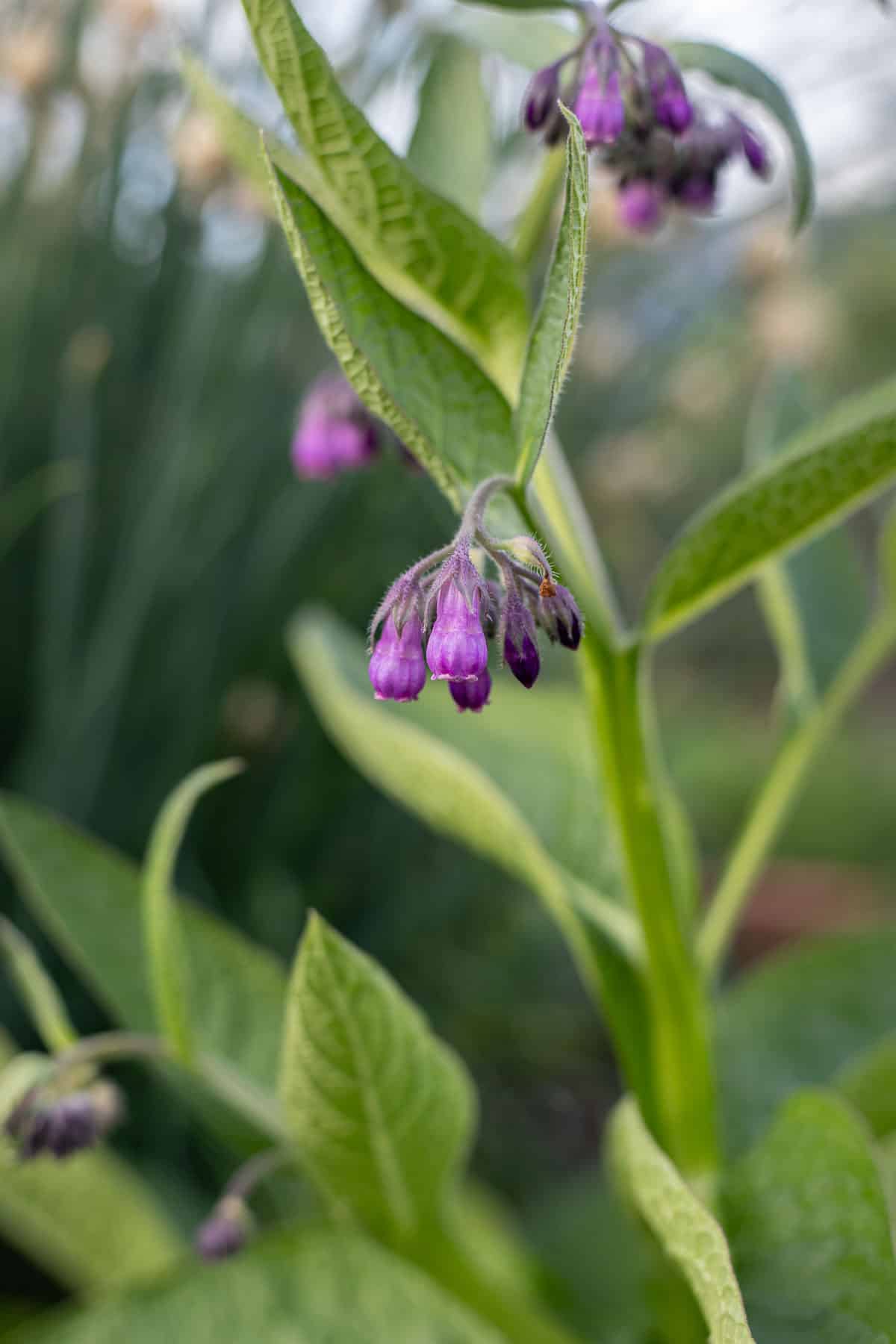
When to Harvest Comfrey for Salve
The best time to harvest comfrey leaves is in late spring through early summer, just before or as the plant begins to flower. At this stage, the leaves are tender and packed with allantoin and other healing compounds. You can continue harvesting throughout the growing season, just be sure to leave enough foliage so the plant can bounce back.
If you plan to use the roots in your salve, fall is the ideal time to dig them up, after the plant has finished flowering and the energy has returned to the root system. Comfrey roots are especially rich in beneficial compounds and can be used fresh or dried for later use.
For the best results, choose vibrant green leaves and firm, healthy roots. Wash off any dirt, pat dry, and either infuse fresh or dry them first before making your salve.
How Comfrey Works: The Science Behind It
Comfrey's healing reputation comes down to two key compounds. The first is allantoin, which stimulates cell proliferation - essentially speeding up the rate at which your skin generates new cells. This is why comfrey has been traditionally used on sprains, bruises, and bone injuries; it may help speed the repair of connective tissue and skin.
The second is rosmarinic acid, a polyphenol that has been studied for its potential anti-inflammatory and antioxidant properties. Together, these compounds make comfrey one of the more well-researched herbs in topical applications.
A 2012 review published in Phytotherapy Research found that comfrey root preparations were effective in treating ankle sprains, with participants experiencing significant reductions in pain and swelling. Another study found it comparable to diclofenac gel (a common OTC anti-inflammatory) for treating osteoarthritis of the knee.
Ingredients & Substitutions
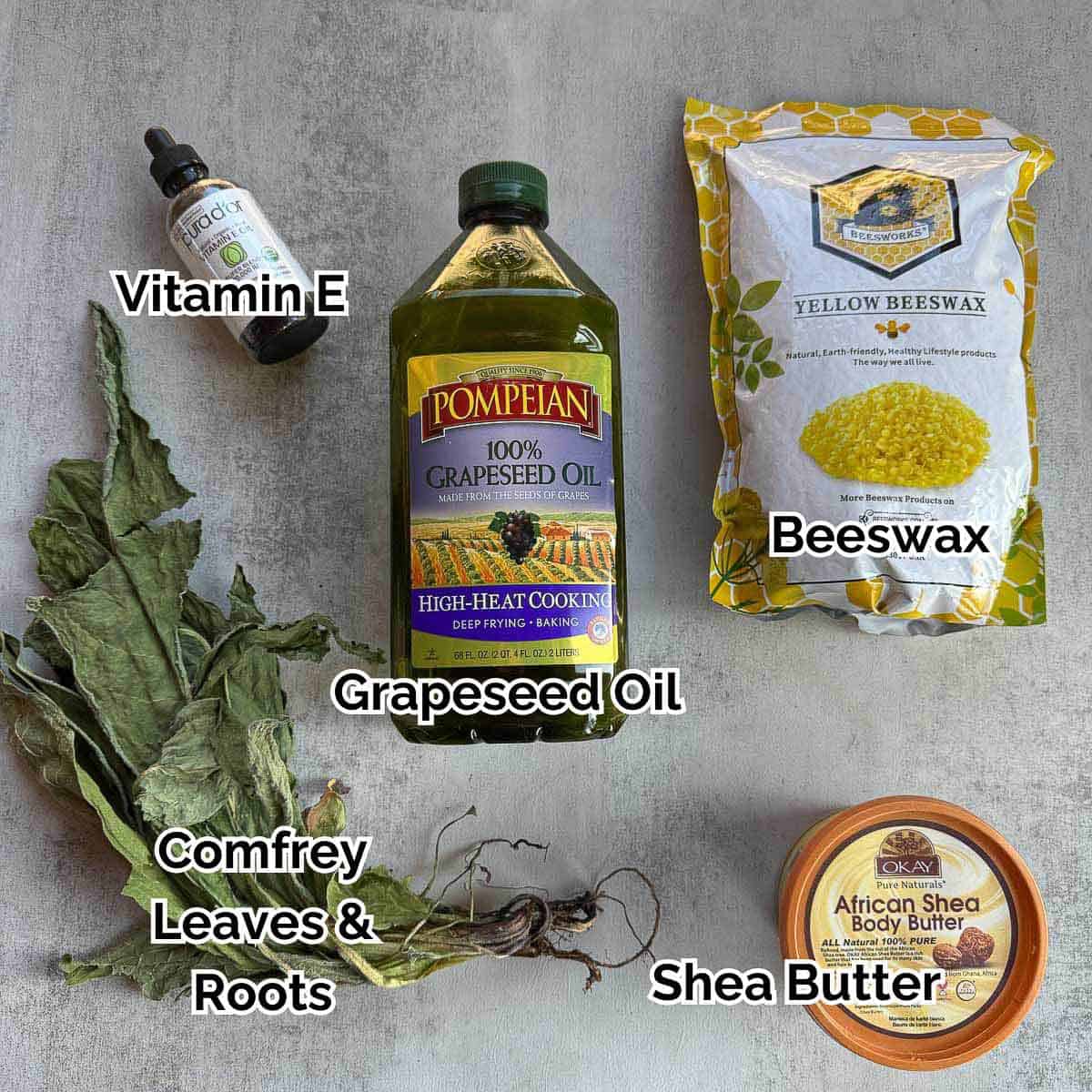
- Comfrey: Dried comfrey leaves and roots.
- Oil: Grapeseed oil, or any other oil low on the comedogenic scale.
- Wax: I prefer beeswax pellets to bars because they melt more easily, but either can be used.
- Shea Butter: To give the salve a luxurious texture.
- Vitamin E: Vitamin E nourishes the skin and also extends the shelf life of the salve.
- Essential Oils: Your favorite essential oil can be added. I added eucalyptus essential oils to mine.
See recipe card for quantities.
How to Make Comfrey Salve
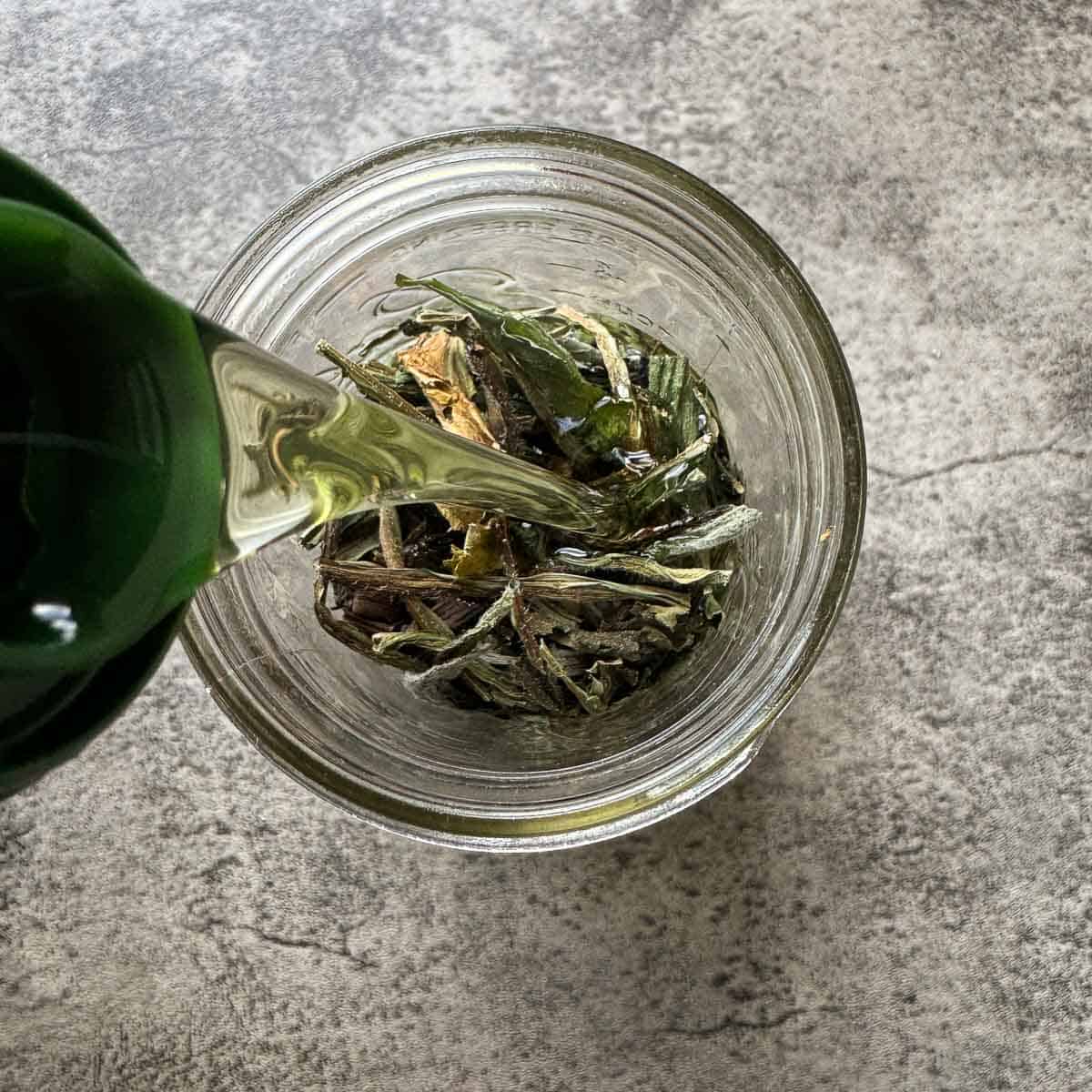
- Add dried leaves and roots to a jar and pour grapeseed oil over them.

- Label the jar and date, then store it in a cool, dark location. Shake daily (or when you remember) while the comfrey infuses in the oil for 4-6 weeks.
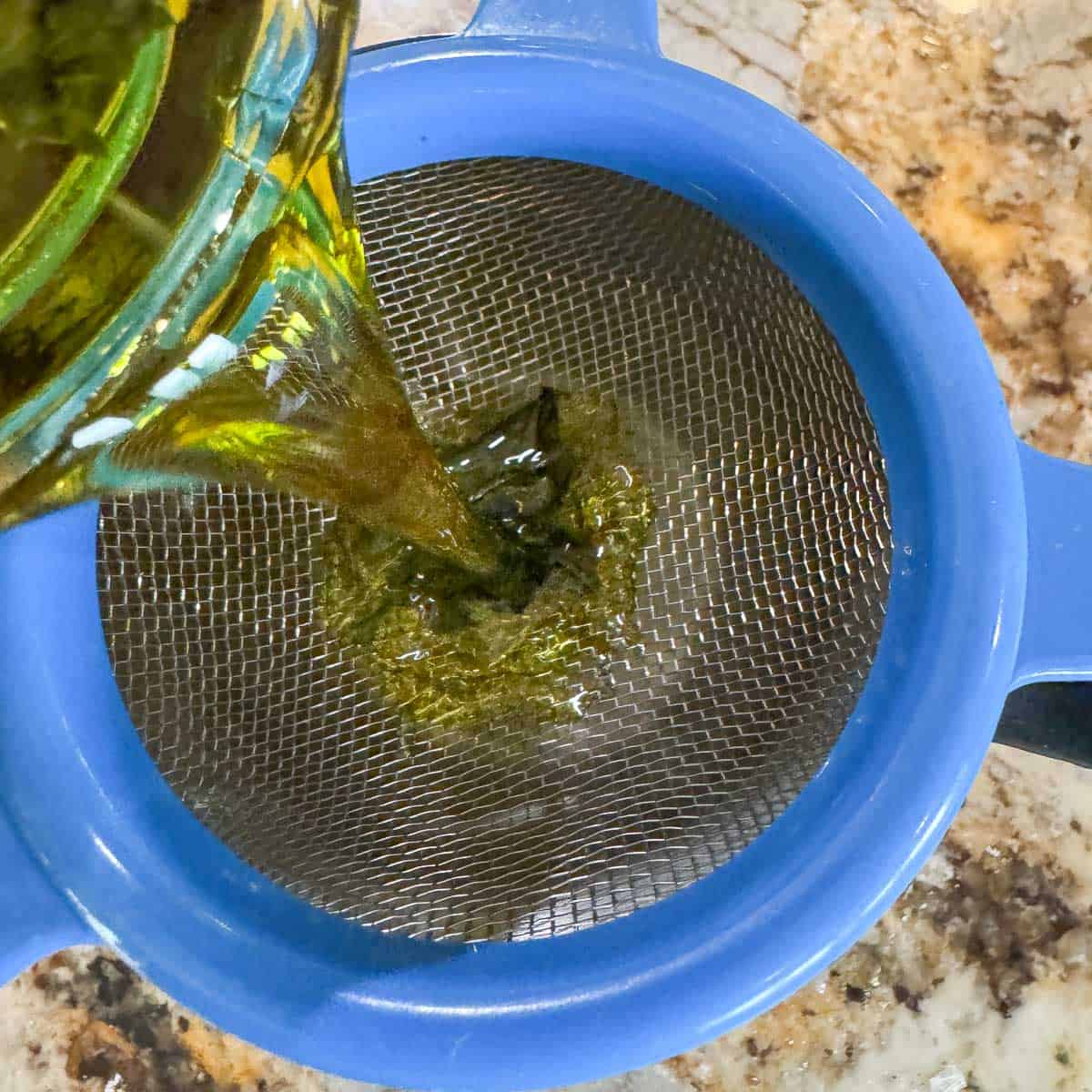
- Strain the infused oil through a fine-mesh sieve and into a candle melting pot. Add beeswax and shea butter and stir over very low heat until completely melted and combined.
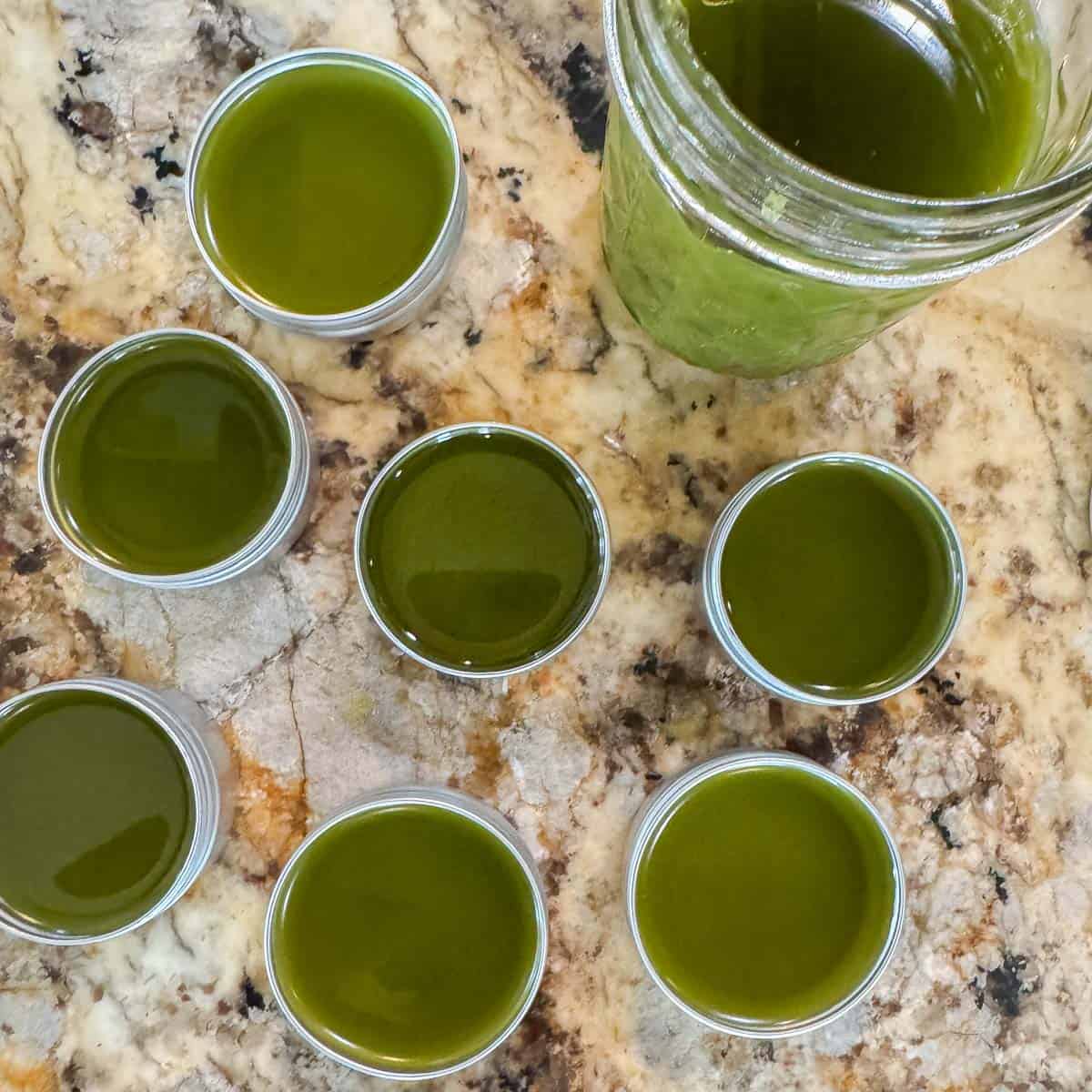
- Remove from heat and allow to cool slightly, then stir in vitamin E and essential oils (optional). Pour into tins and allow to harden before screwing on caps and labeling.
Pro Tip: I added ½ teaspoon of blended dried comfrey leaf powder, which gave my comfrey salve a beautiful green shade.
Disclaimer
This blog post is for informational purposes only and is not intended as medical advice. Always consult a qualified healthcare professional before using herbal remedies, especially if you're pregnant, nursing, taking medications, or have a medical condition. While comfrey salve is commonly used topically, it can be toxic if ingested. If you're foraging in the wild, be sure you've correctly identified the plant and are harvesting responsibly. Some species are protected, and overharvesting can harm local ecosystems. When in doubt, source from reputable suppliers.
Precautions
- Do not use comfrey salve on deep or puncture wounds: Comfrey can heal the skin too quickly, potentially trapping bacteria inside.
- Not for internal use: Comfrey contains pyrrolizidine alkaloids, which can be toxic to the liver if ingested or overused.
- Patch test first: Especially if you have sensitive skin.
Equipment
Here are the products I recommend for salve-making:
One 1-pint or quart-sized mason jar, a soup bag or fine mesh strainer for straining the oil, and a wax melting pot with a spout for easy and precise pouring.
A kitchen scale is also essential for weighing your ingredients. You will also need tins to store the salve. I prefer 1-ounce tins; however, you can also use 2-ounce tins.
If you plan on making labels for your salve, a label maker comes in handy. Just be sure to get the round labels instead of the rectangular ones!
Or check out my salve-making product recommendation page!
Storage
Store comfrey salve in a cool, dark place. Since heat and sunlight can break down herbal compounds, store your salves in amber jars or tins, away from heat, to preserve their potency.
FAQ
When making comfrey salve, you typically do not use the flowers. The part most commonly used is the leaf (and sometimes the root), because those contain the highest levels of allantoin, the compound that promotes cell regeneration and speeds healing.
Comfrey salve is used topically for treating wound healing, pain relief, arthritis, fractures, sprains, and varicose veins.
Do not apply comfrey salve to broken skin or deep wounds. It can be toxic when absorbed through your system. Do not use on children or if you are pregnant or nursing. Do not take internally.
Both fresh and dried leaves can be used to make comfrey salve. Avoid using wet leaves because the moisture will promote bacterial growth in the oil while the leaves are being infused.
When stored properly in a cool, dark place, comfrey salve can last 1-2 years. The vitamin E oil in this recipe acts as a natural preservative and helps extend shelf life. If your salve starts to smell rancid or "off," it's time to make a fresh batch. Using clean, dry hands (or a small spatula) to scoop the salve will also help prevent contamination.
Yes, and many herbalists consider comfrey root to be even more potent than the leaves, as it contains higher concentrations of allantoin. However, roots also contain higher levels of pyrrolizidine alkaloids, so use them sparingly and avoid applying to broken skin. For most topical uses, leaves are sufficient and are the safer choice for everyday use.
Comfrey salve can be used on the face for minor cuts, scrapes, or dry skin patches, but it's best to patch test first, especially if you have sensitive or acne-prone skin. Grapeseed oil (used in this recipe) is low on the comedogenic scale, meaning it's less likely to clog pores than heavier oils like olive or coconut oil.
Pro Tips
- Just a teaspoon of vitamin E oil not only nourishes skin but also helps extend the shelf life of your salve.
- When straining your infused oil, do it while it's still warm (but not hot) so it flows easily and leaves less mess behind in the cheesecloth or strainer.
- Try blending with other herbs like calendula, plantain, or chamomile for added skin-soothing power. Essential oils like lavender or tea tree add extra antimicrobial benefits.
- Don't forget to label your tins with the date and content.
Which Salve Should You Use?
| Salve | Best For |
| Comfrey | Bruises, sprains, joint pain, and bone healing |
| Arnica | Muscle soreness, post-workout recovery, swelling, bruising |
| Plantain | Bug bites, splinters, and minor skin irritations |
| Calendula | Dry or chapped skin, rashes, and general skin healing |
| St. John's Wort | Nerve pain, sunburn, and mild burns |
| Heal-All | Minor cuts, scrapes, skin irritations, and supporting wound healing |
More Salve Recipes
If you enjoy making comfrey salve, here are some other salves to try!


How to Make Comfrey Salve
Ingredients
- 1 cup dried crushed comfrey leaves and roots
- 1½ cups carrier oil (grapeseed oil)
- 1 ounce beeswax pellets
- ½ ounce sheabutter
- 1 teaspoon vitamin E oil
- 10 drops essential oils (optional)
Instructions
- Add dried leaves and roots to a jar and pour grapeseed oil over them.
- Label the jar and date, then store it in a cool, dark location. Shake daily (or when you remember) while the comfrey infuses in the oil for 4-6 weeks.
- Strain the infused oil through a fine-mesh sieve and into a candle melting pot. Add beeswax and shea butter and stir over very low heat until completely melted and combined.
- Remove from heat and allow to cool slightly, then stir in vitamin E and essential oils (optional). Pour into tins and allow to harden before adding caps and labeling.
Notes
- I added ½ teaspoon of blended dried comfrey leaf powder, which gave it the beautiful green color.
- Just a teaspoon of vitamin E oil not only nourishes skin but also helps extend the shelf life of your salve.
- When straining your infused oil, do it while it's still warm (but not hot) so it flows easily and leaves less mess behind in the cheesecloth or strainer.
- Try blending with other herbs like calendula, plantain, or chamomile for added skin-soothing power. Essential oils like lavender or tea tree add extra antimicrobial benefits.
- Don't forget to label your tins with the date and content.
Hilda Sterner says
I hope you give this salve recipe a try!
Kathy Birch says
I’m happy to find this recipe, as I have comfrey plants in my garden, but do not know how best to turn them into something useful other than fertilizer! One question: can I use any other type of oil instead of grape-seed for my infusion? I’d like to use up other oils I have in stock for soap-making. Suggestions?
Hilda Sterner says
Hi Kathy, you can use avocado oil or olive oil too, but the reason I use grape seed oil is that it's the least likely to clog your pores.