
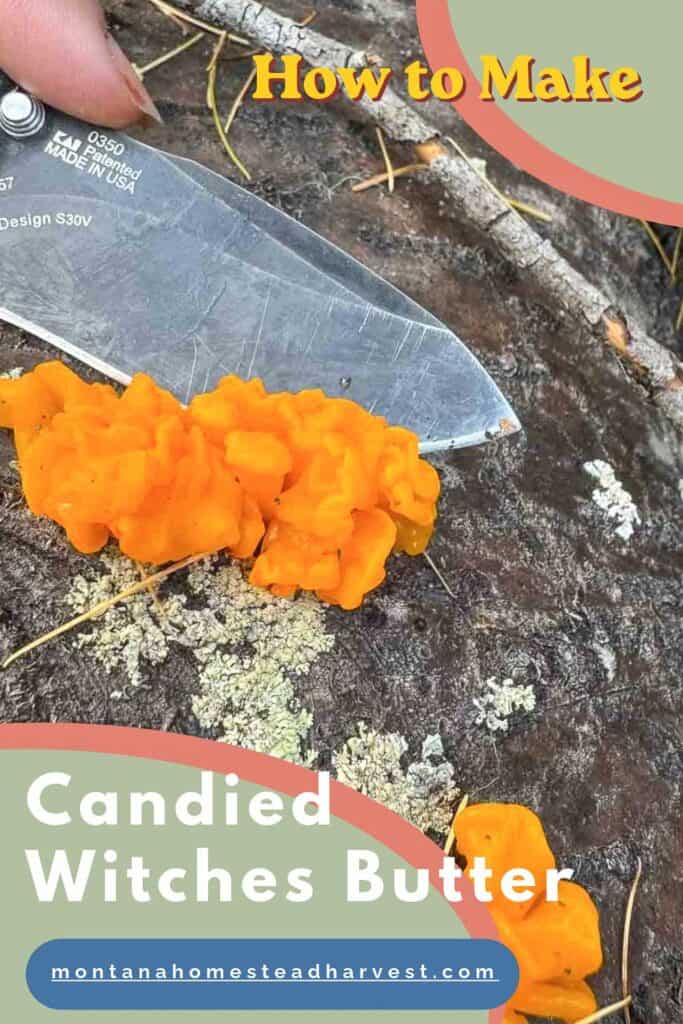
Have you ever spotted witches butter (also spelled witches' butter and orange jelly fungus) growing in the woods? This bright orange fungus looks like something straight out of a Halloween story! Although mild in flavor, this unusual fungus can be transformed into a sugar-coated candy with a texture similar to gummy bears! If you enjoy foraging wild mushrooms, check out my guide to foraging saffron milk cap mushrooms, too!
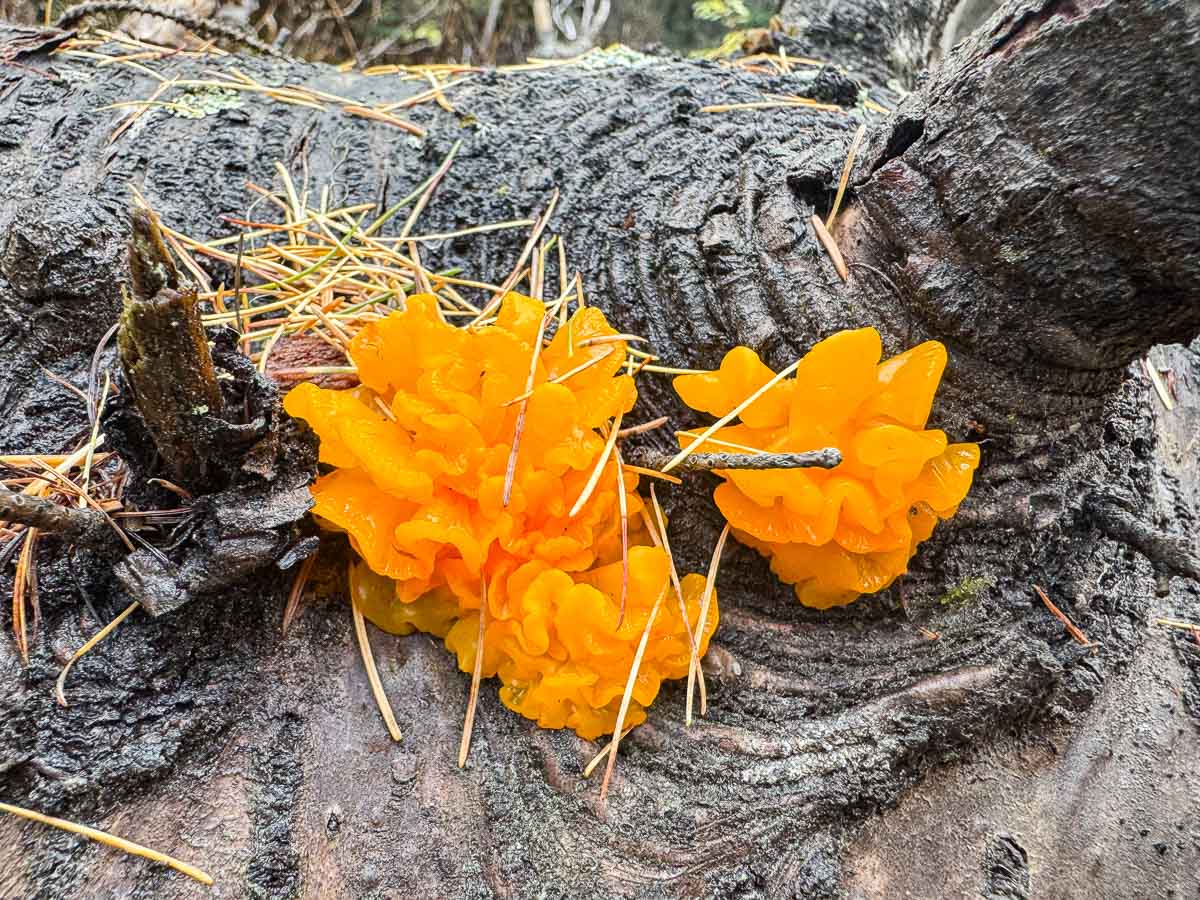
Fall is the most gorgeous time of year here in Montana, with the bright yellow-orange larches stealing the show. I wanted to go up to the mountains one last time before winter sets in and puts an end to my foraging fun.
I was hoping to find chaga, but came home with witches butter instead. I decided to make the best of my unexpected find by turning this nearly tasteless fungus into a sweet treat, which is a popular way to enjoy witches butter.

Jump to:
What is Witches Butter?
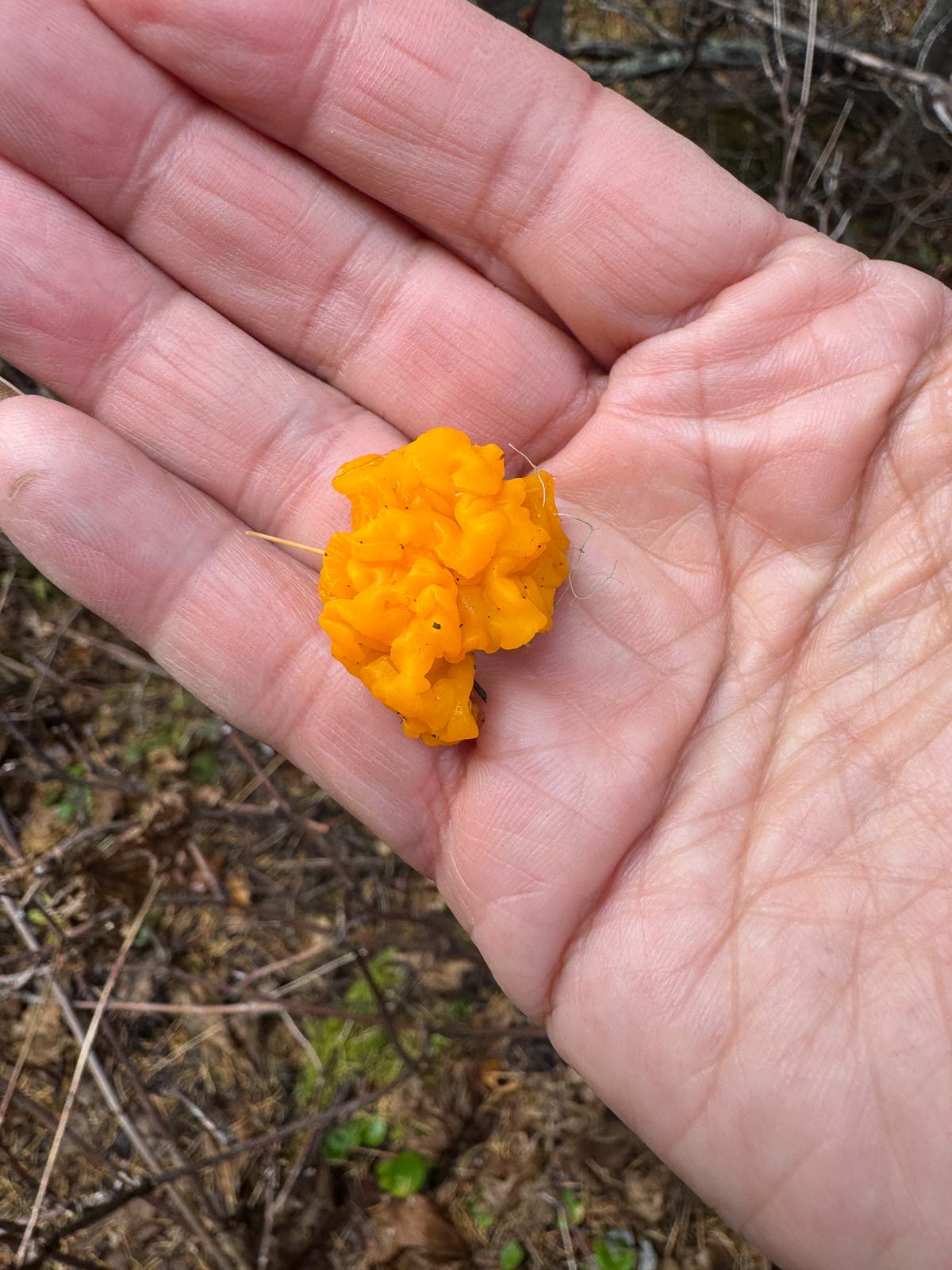
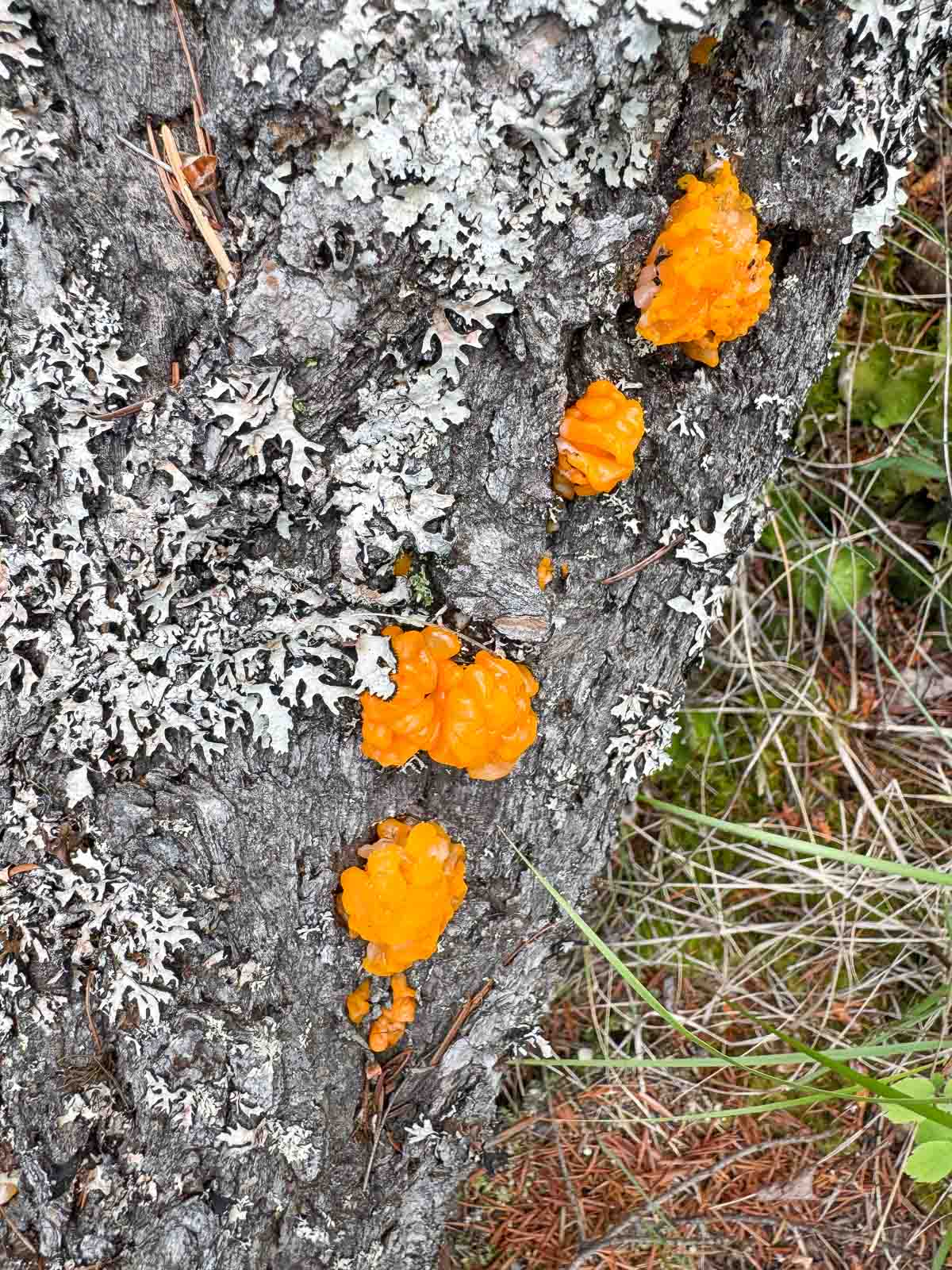
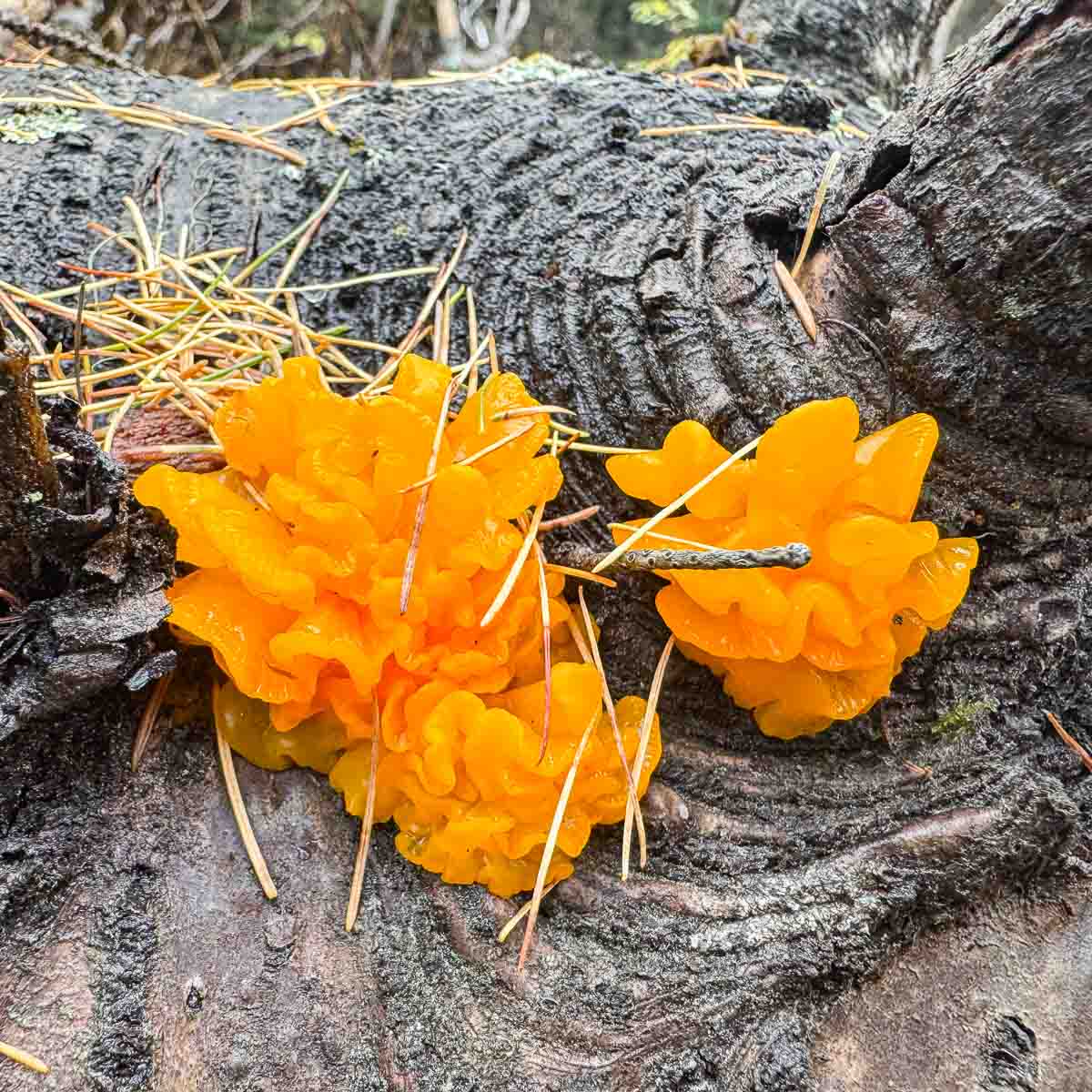
Witches butter is a common name used for several types of orange or yellow jelly fungi. Yellow witches' butter (Tremella mesenterica) is typically found on dead hardwood branches and logs, while orange jelly fungus (Dacrymyces chrysospermus), also called orange witches butter, grows on decaying conifer wood. Both have a soft, gelatinous texture and irregular, folded lobes that give them an unusual, brain-like appearance.
Unlike many mushrooms, yellow witches butter actually feeds on other fungi growing on decaying wood rather than directly on the wood itself. It has very little flavor, making it well suited to recipes where it can absorb the flavors of other ingredients.
For more details, see the Missouri Department of Conservation's guide to identification and habitat.
Subscribe to my YouTube channel!
Why is it Called Witches Butter?
You may be wondering why orange jelly fungus is called wiches butter. My daughter wondered the same thing when I showed her the pictures of the orange jelly. She said it looked more like witches cheese whiz! 😂
European folklore associated witches butter with witchcraft. People believed that when this bright orange fungus appeared on trees near their homes or on their doorsteps, it meant a witch had cast a spell on them. The name stuck, making it a fun find while foraging.
When is Orange Jelly Fungus in Season?
Orange jelly can appear throughout the year when conditions are damp, but it's often easiest to spot after rain, when the gelatinous growths swell and become more noticeable. In Montana, look for it during damp periods in fall and spring, especially on decaying wood.
How to Identify & Forage Witches Butter
This mushroom is easy to recognize by its bright yellow to orange color and soft, gelatinous texture. When fresh, it forms irregular, folded lobes that can resemble a tiny brain. Several jelly fungi share similar colors and shapes; luckily, none of the common look-alikes are known to be dangerous, but only eat what you can confidently identify.
To help with ID, pay attention to the wood it's growing on, too. Tremella mesenterica is commonly found on dead hardwoods, while Dacrymyces chrysospermus is associated with decaying conifer wood. Because these fungi can look alike, consider their growing habitat and other identifying features when making an identification.
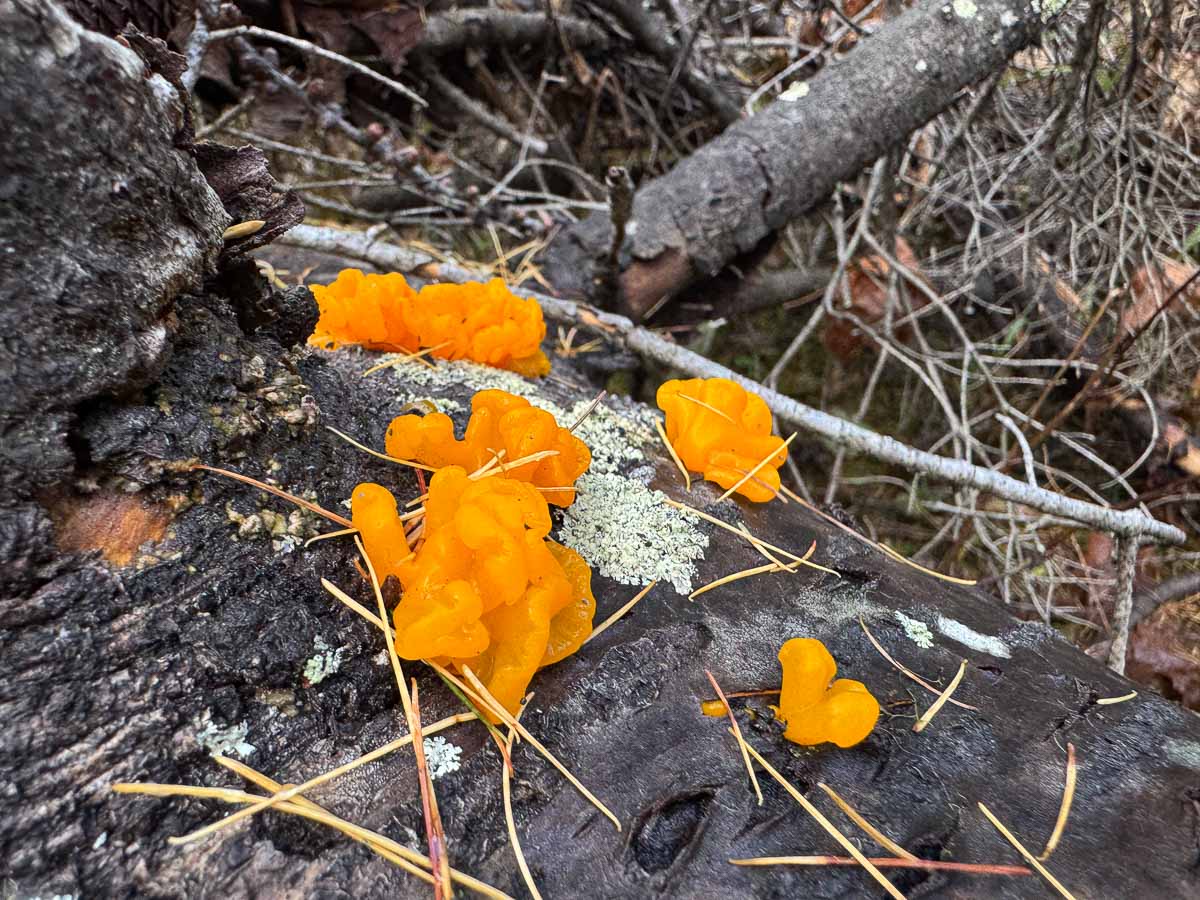
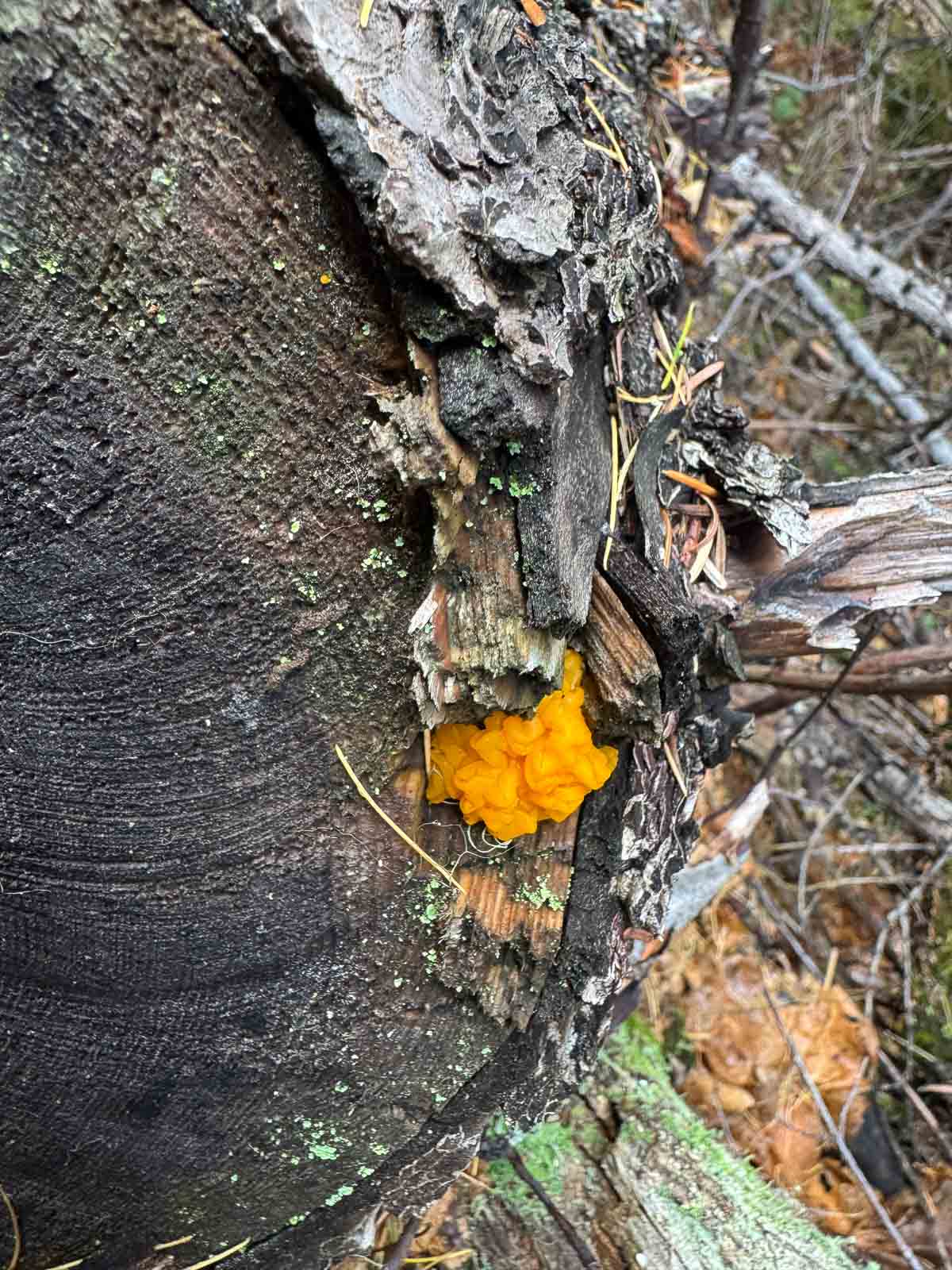
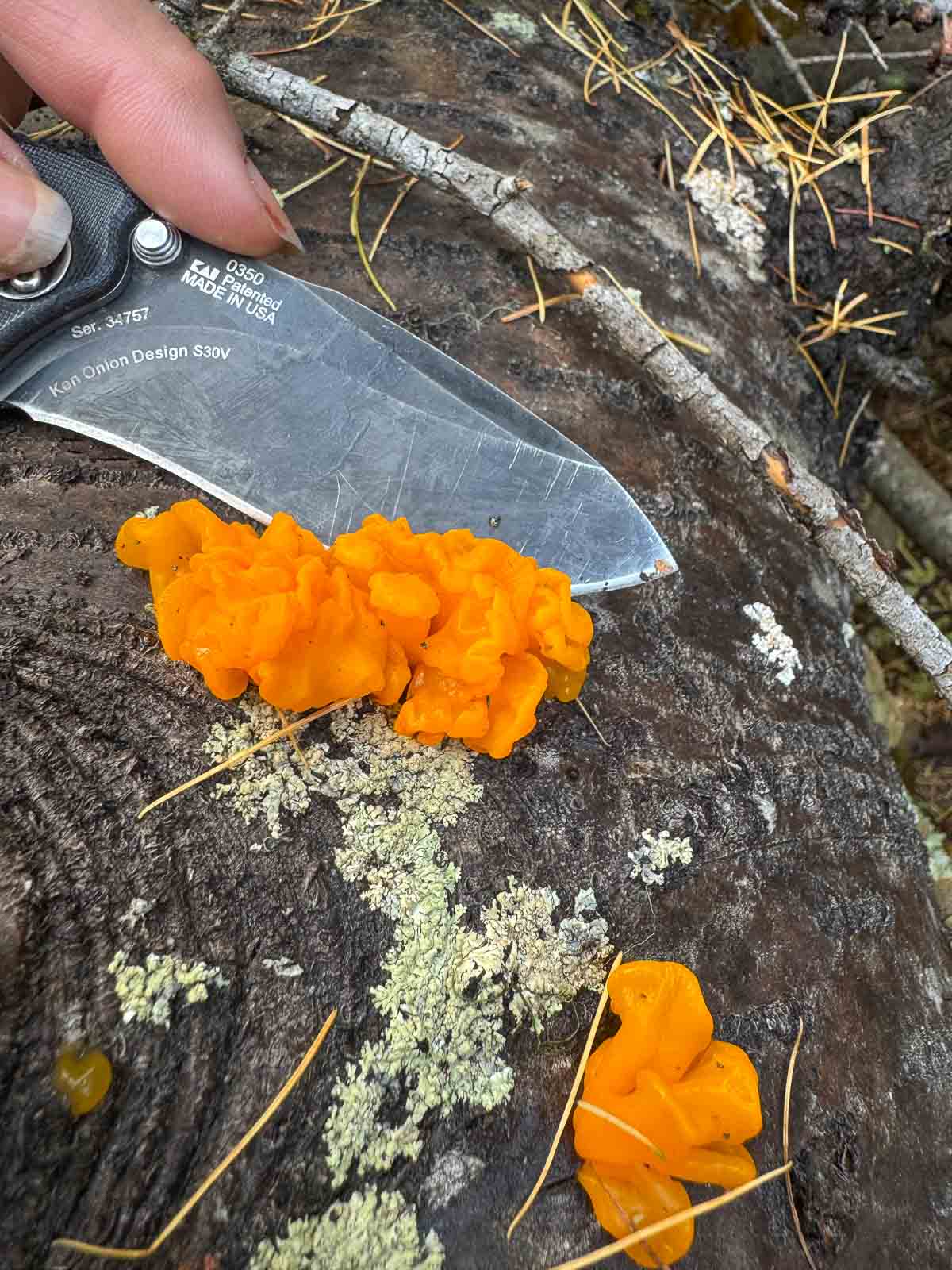
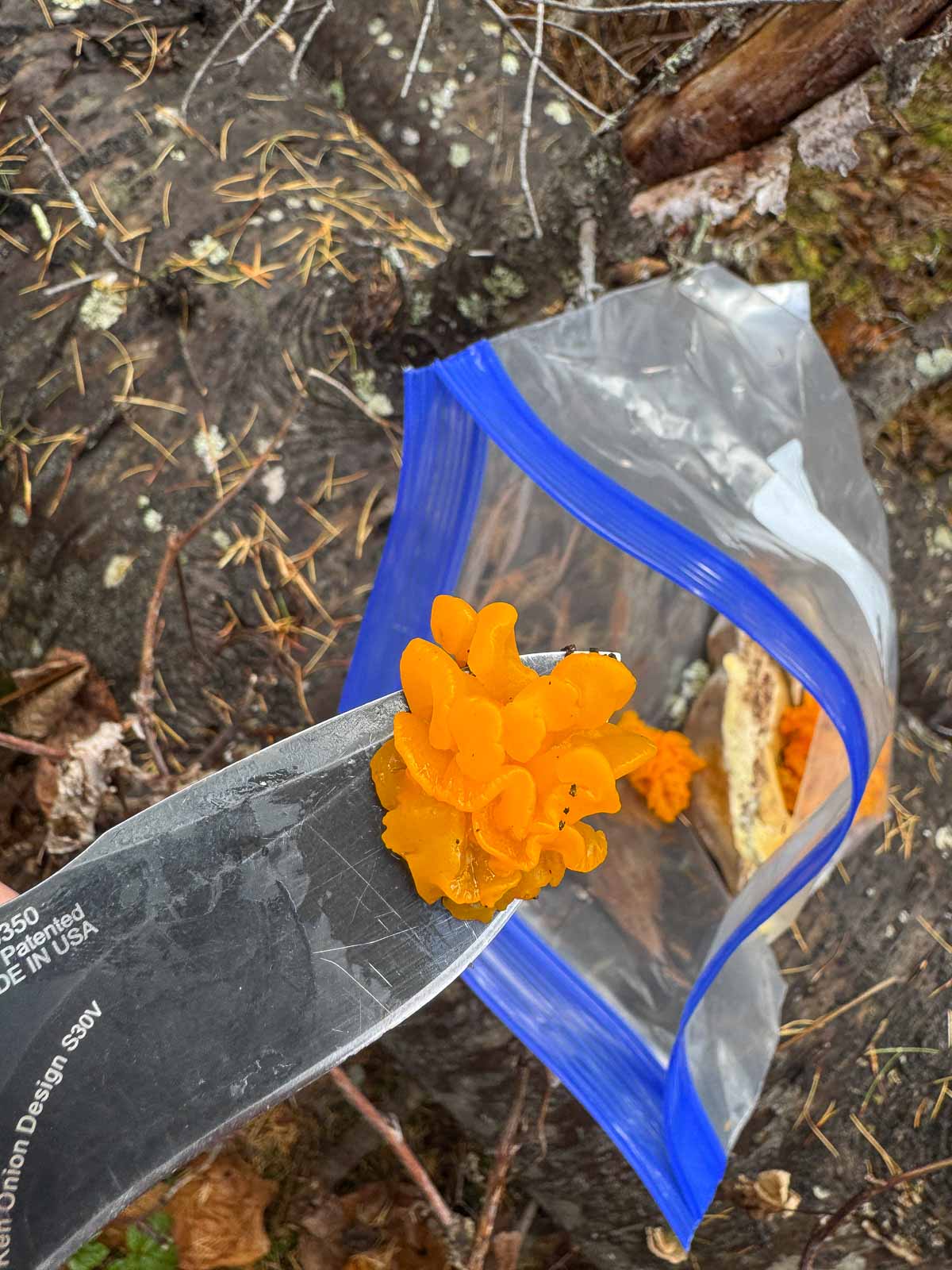
To collect witches butter, slice it off with a sharp knife, remove any pine needles and other debris, and add it to a Ziploc bag.
Ingredients & Substitutions
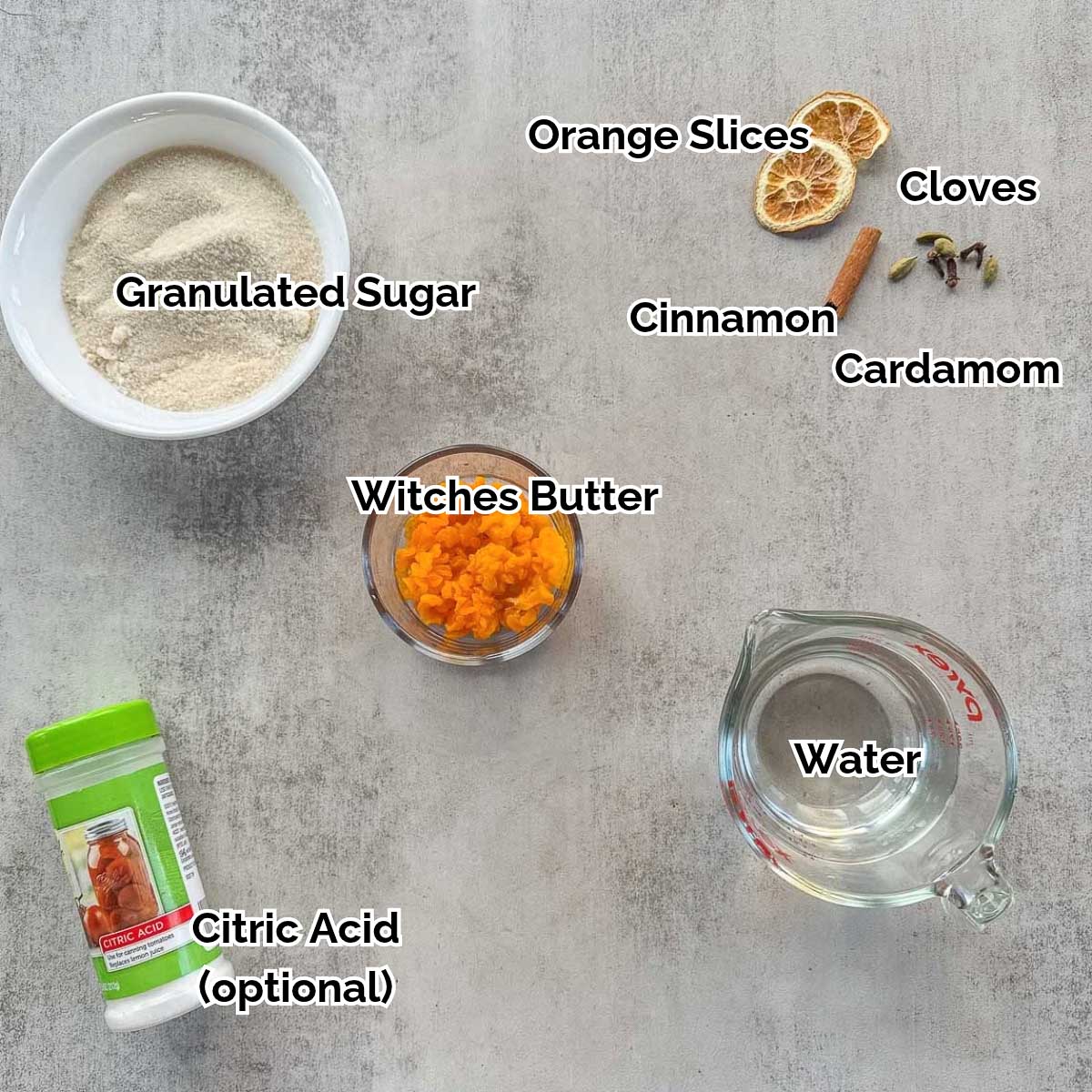
- Witches Butter: I had approximately ½ cup, but the syrup is enough for more. If you have a lot more, you can scale up the syrup recipe ingredients.
- Sugar/Water: I made a simple syrup using 1 cup water with 1 cup granulated sugar.
- Spices: Cardamom pods, whole cloves, cinnamon stick, a few dehydrated orange slices, or fresh citrus slices. I also added 1 tablespoon lemon juice, not pictured.
- Sugar/Citric Acid: Sugar and citric acid (optional) to coat the dehydrated witches butter. You can use plain sugar, or add citric acid for a sweet and sour flavor.
*See recipe card for quantities.
How to Make Witches Butter Candy
Rinse witches butter under running water to remove any dirt, pine needles, and debris before consuming.
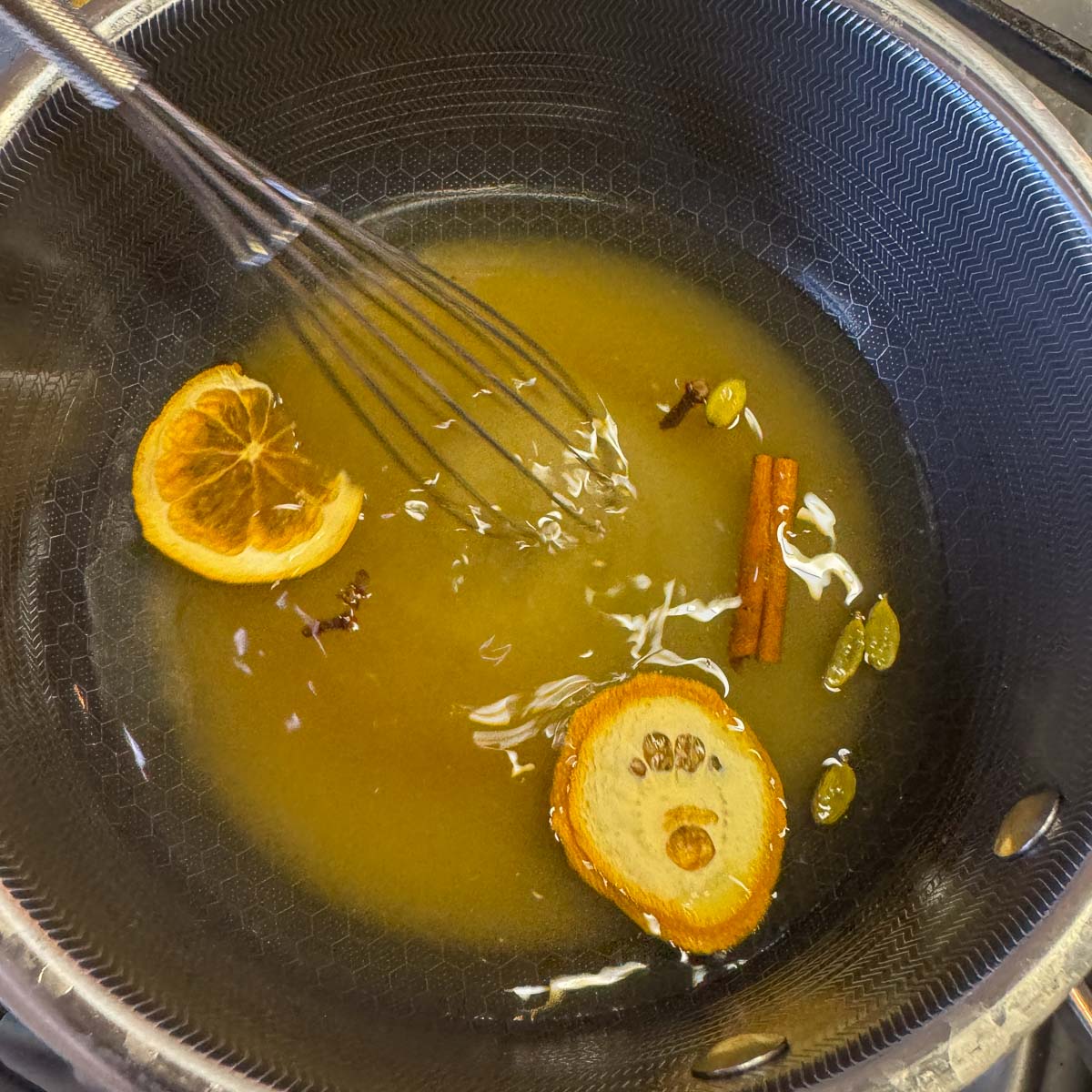
- Prepare simple syrup by mixing sugar, water, cinnamon stick, cardamom, cloves, citrus slices, and lemon juice in a small saucepan.
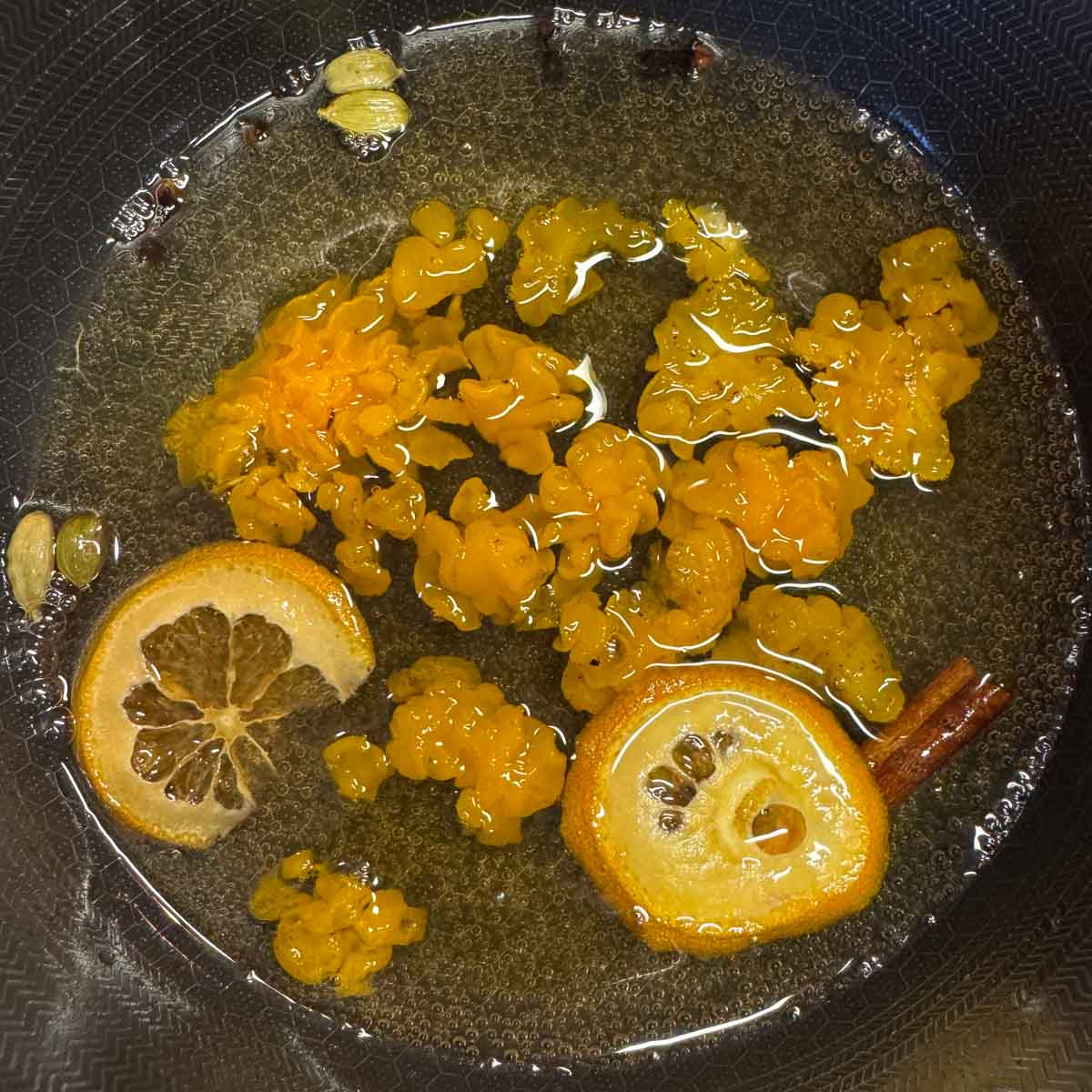
- Simmer syrup for 5 minutes, then add rinsed orange jelly. Simmer over low heat for 10 minutes, then leave in the syrup to soak for 1 hour.
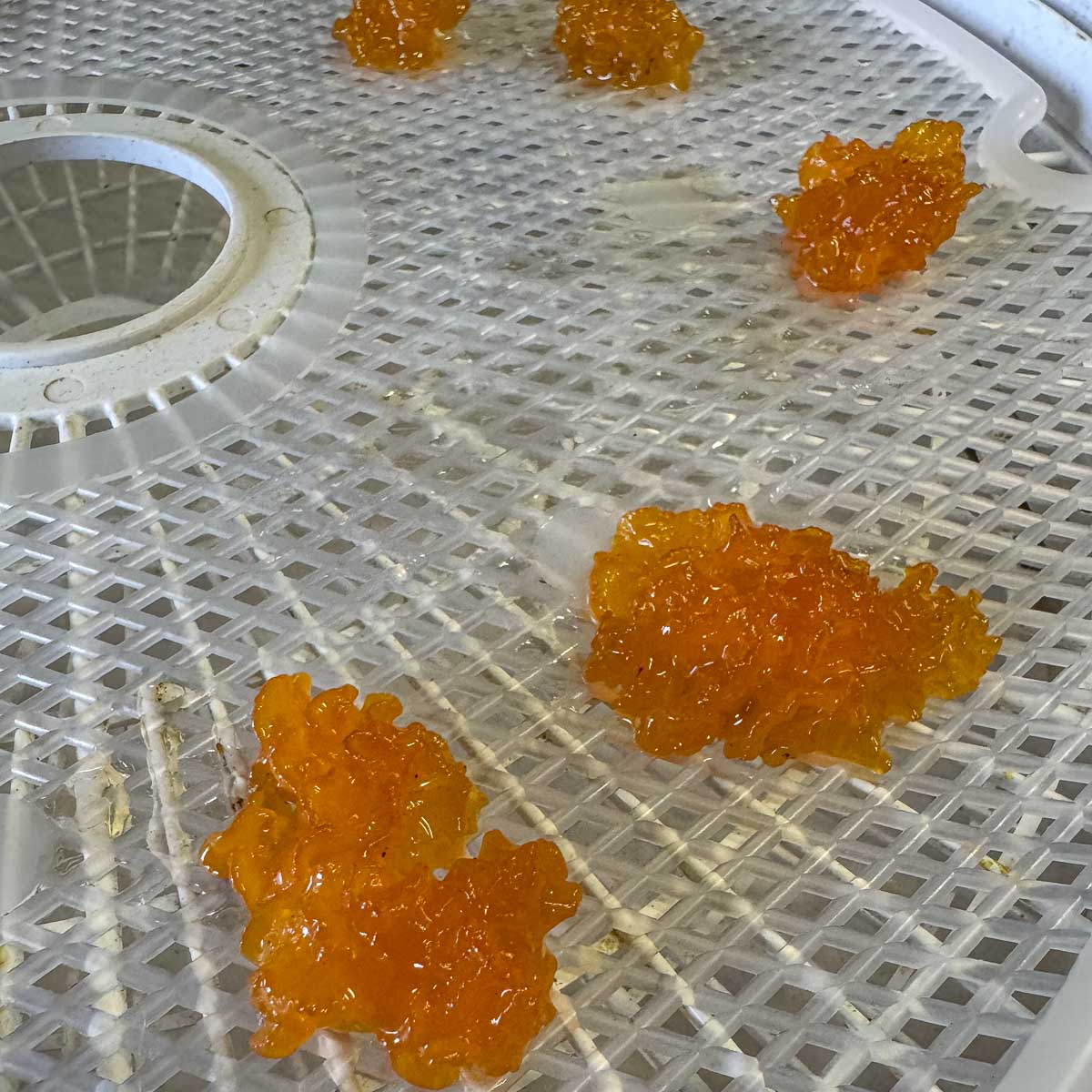
- Remove jelly pieces from the syrup with a slotted spoon, then arrange on lined dehydrator trays. Set the temperature to 135°F and set a timer for 3 hours; flip halfway through.
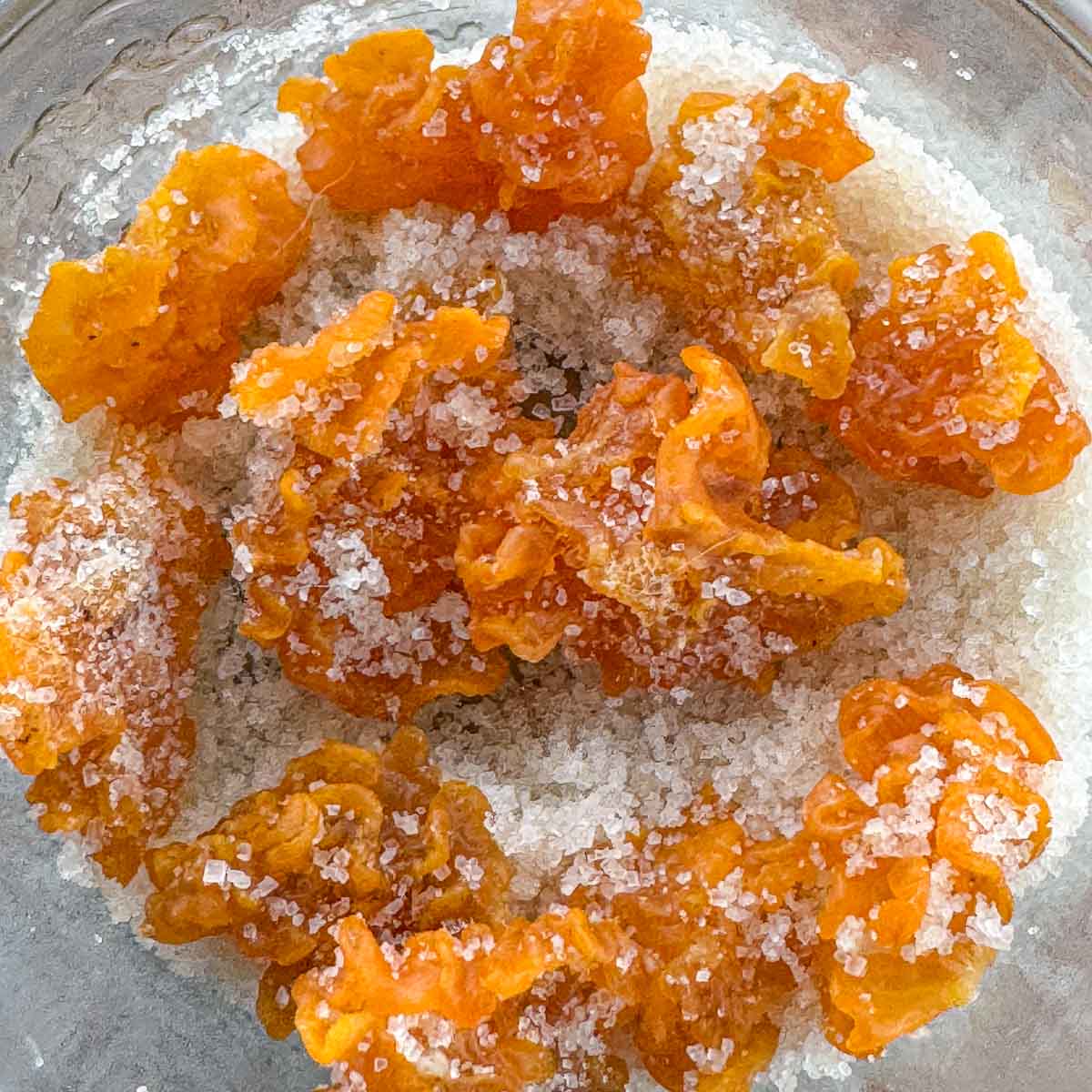
- Remove when chewy and gummy. They should still be pliable, not hard or brittle. Mine took 3 hours. Cool for 30 minutes, then toss in granulated sugar and citric acid (if using) until lightly coated.
How to Store Witches Butter
Store in an airtight container for up to 2 weeks or refrigerate for longer storage.
Pro Tips
- The nutrition information is an estimate based on the amount of sugar syrup absorbed by the jelly and the sugar coating.
- If the coating sugar dissolves, the candy may be too wet and need additional drying time.
- If the jelly ends up too dry after it's dehydrated, you can plump it back up by adding it back to the syrup.
- If you are a fan of sweet and sour flavors, add citric acid to 1 tablespoon of sugar before tossing with the dehydrated jelly.
- There isn't just one way to enjoy orange jelly. Some even eat it raw. If you don't have a dehydrator, you can just eat it soft and gooey right out of the syrup. Others store it in the sugar for up to 3 weeks, during which time it absorbs some of the sugar and gets plumper.
FAQ
Witches butter has very little flavor on its own, so it takes on the flavor of whatever you simmer it in, whether it's syrup or soup.
Yes, witches butter is edible raw, though it has very little flavor, so most people prefer simmering it in a flavorful syrup or adding it to soups and stews.
Some research has investigated the bioactive compounds in witches butter (Tremella mesenterica), including polysaccharides that have shown antioxidant and anti-inflammatory properties in experimental studies. However, research is still limited, and these potential properties have not been established as proven health benefits in humans. These findings also shouldn't be assumed to apply to other fungi known as witches butter, such as orange jelly (Dacrymyces chrysospermus).
More Mushroom Recipes
If you love foraging mushrooms, here are some other ways to enjoy them!



Recipe
Witches Butter (Orange Jelly Fungus)
Equipment
Ingredients
- ½ cup witches butter
Syrup Ingredients
- 1 cup granulated sugar
- 1 cup water
- 1" piece cinnamon stick
- 4 cardamom pods
- 4 whole cloves
- 2 dehydrated orange slices (or fresh citrus slices)
- 1 tablespoon lemon juice
Other Ingredients
- 1 tablespoon granulated sugar
- ¼ teaspoon citric acid (optional)
Instructions
- Rinse witches butter under running water to remove any dirt, pine needles, and debris before consuming.
- Prepare simple syrup by mixing sugar, water, cinnamon stick, cardamom, cloves, citrus slices, and lemon juice in a small saucepan.
- Simmer syrup for 5 minutes, then add rinsed orange jelly. Simmer over low heat for 10 minutes, then leave in the syrup to soak for 1 hour.
- Remove jelly pieces from the syrup with a slotted spoon, then arrange on lined dehydrator trays. Set the temperature to 135°F and set a timer for 3 hours; flip halfway through.
- Remove when chewy and gummy. They should still be pliable, not hard or brittle. Mine took 3 hours. Cool for 30 minutes, then toss in granulated sugar and citric acid (if using) until lightly coated.
- Store in an airtight container for up to 2 weeks or refrigerate for longer storage.
Notes
- The nutrition information is an estimate based on the amount of sugar syrup absorbed by the jelly and the sugar coating.
- If the coating sugar dissolves, the candy may be too wet and need additional drying time.
- If the jelly ends up too dry after it's dehydrated, you can plump it back up by adding it back to the syrup.
- If you are a fan of sweet and sour flavors, add citric acid to 1 tablespoon of sugar before tossing with the dehydrated jelly.
- There isn't just one way to enjoy orange jelly. Some even eat it raw. If you don't have a dehydrator, you can just eat it soft and gooey right out of the syrup. Others store it in the sugar for up to 3 weeks, during which time it absorbs some of the sugar and gets plumper.
Hilda Sterner says
I hope you go foraging for this unusual mushroom soon and try making your own candied witches butter!