
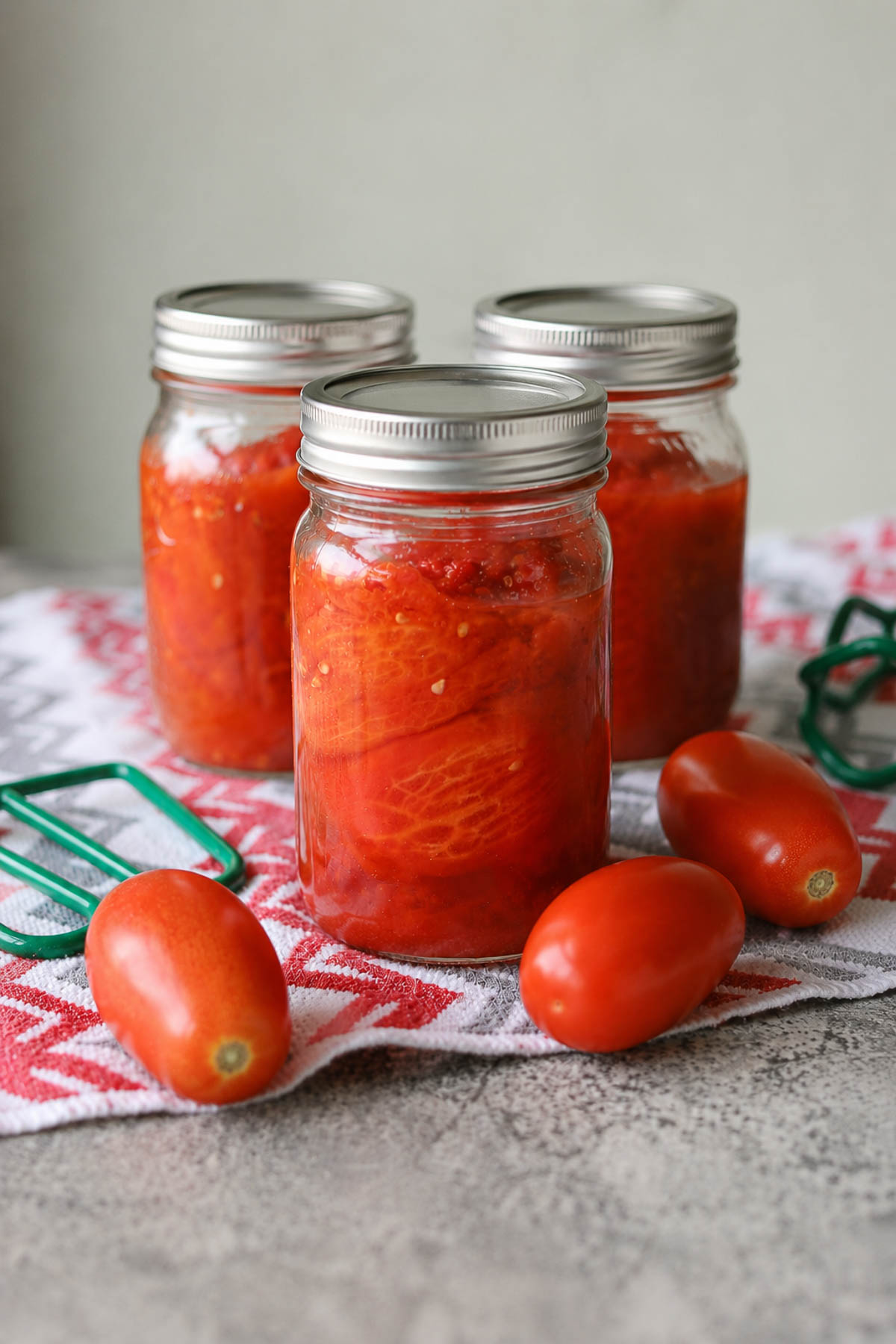
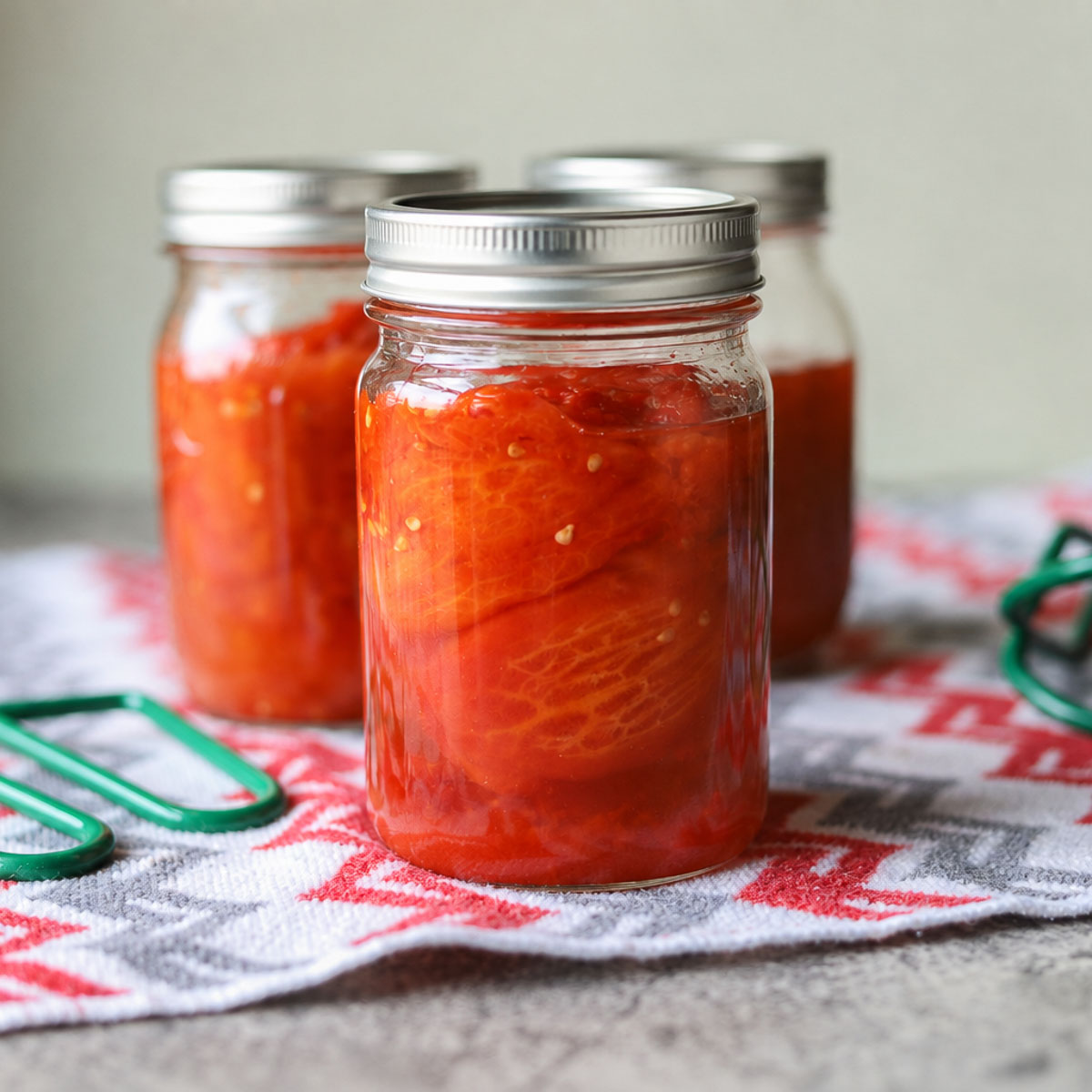
Tomatoes taking over your garden? Pressure canning tomatoes is a great way to preserve whole tomatoes for long-term storage. Even if you have a smaller crop, you can still pressure can your tomatoes. If you're new to pressure canning, check out my pressure canning bone broth guide!
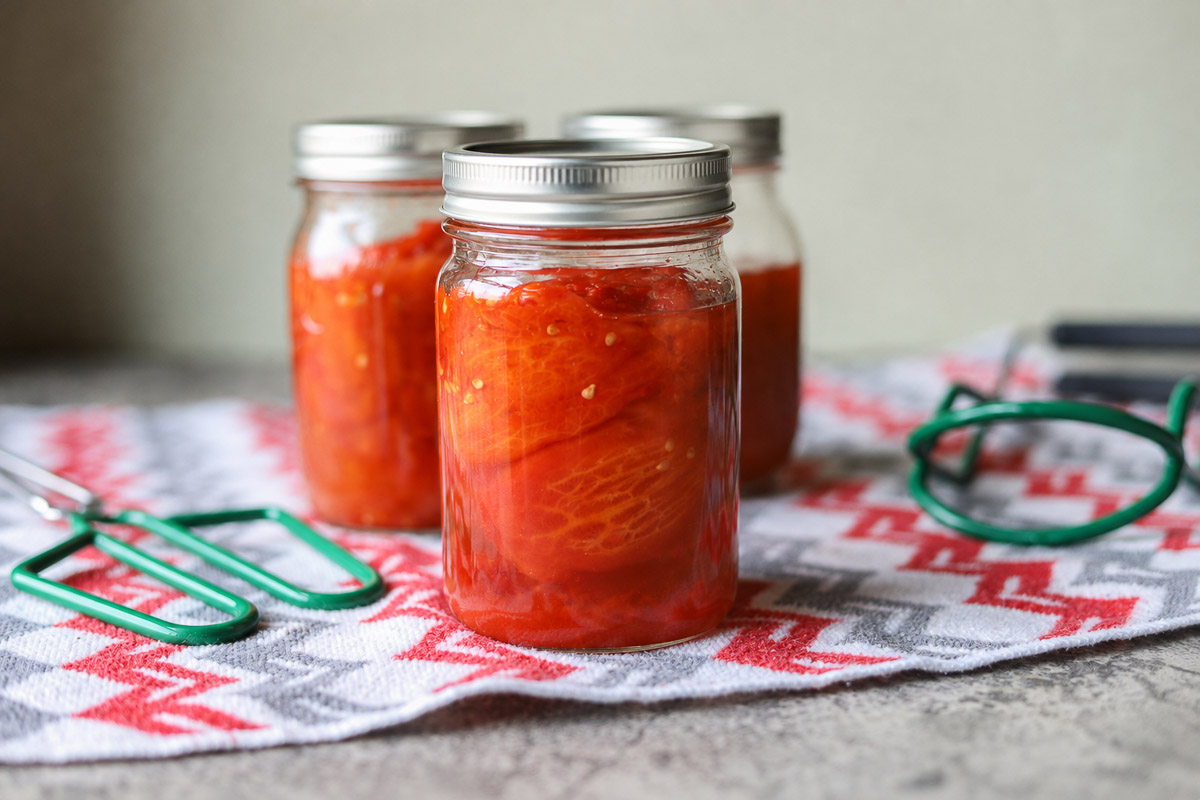
If I'm being honest, this year has been a rather disappointing gardening year. The combination of a mild winter followed by some late frosts did not help at all! Even though I started my vegetables indoors early, my plants have been rather underwhelming.
In previous years, I've been drowning in tomatoes. This year, however, I've been lucky to have a few tomatoes ripening every couple of days. I finally have enough to can 3 whole pints, woohoo!
In the past, I've water-bath canned my tomatoes, but now that I have a pressure canner, I decided to give pressure canning tomatoes a try!
Jump to:
Ingredients & Substitutions
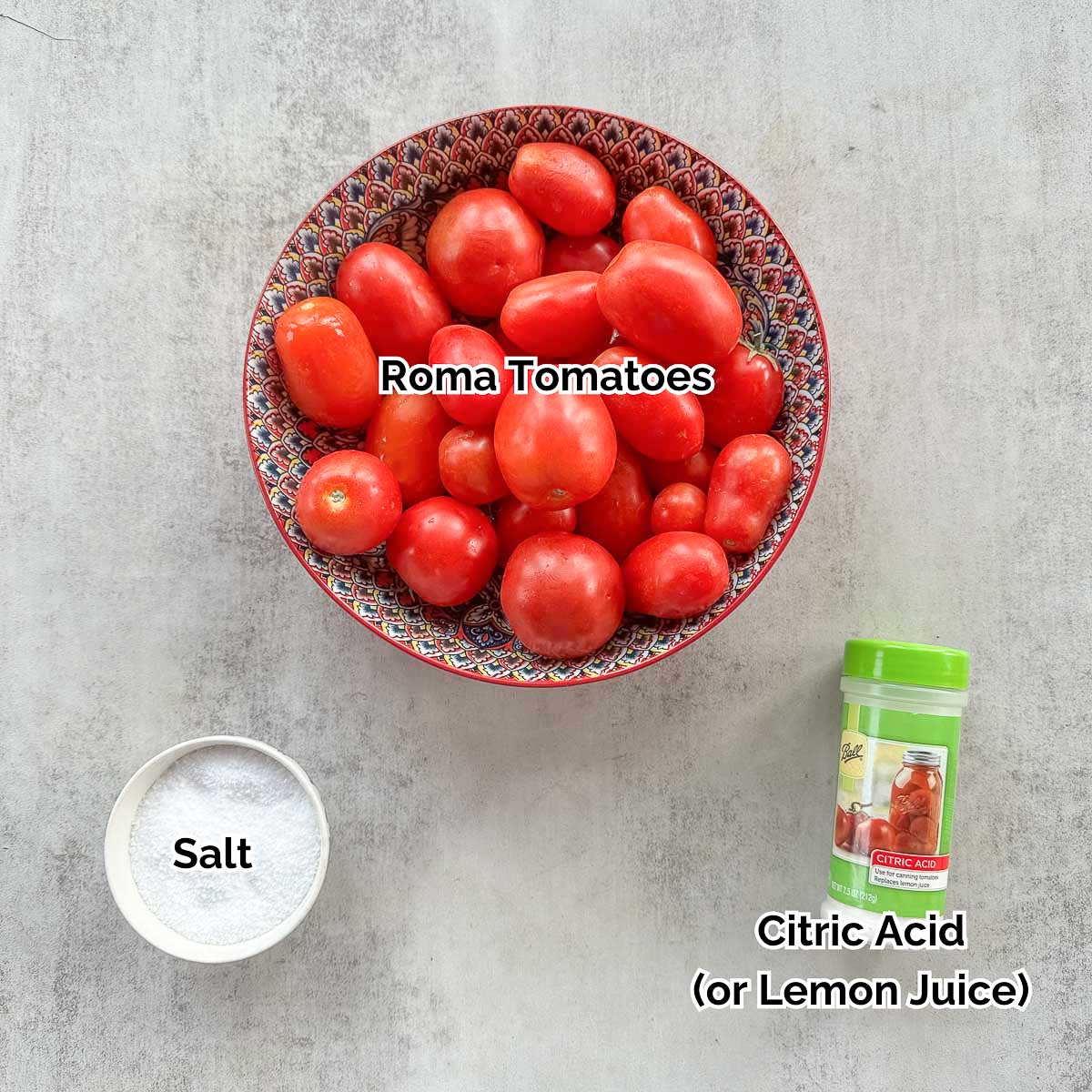
- Tomatoes: I had 31/2 lbs of ripe, firm, Roma tomatoes, which yielded 3 pints. If you have more tomatoes, you can easily scale up the recipe.
- Sea Salt: ½ teaspoon kosher salt per pint or 1 teaspoon per quart. Feel free to use sea salt or canning salt.
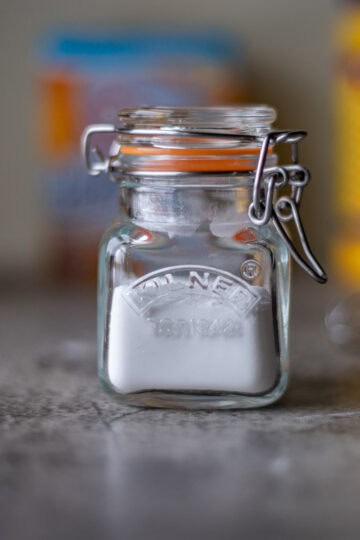
- Citric Acid: ¼ teaspoon per pint, or ½ teaspoon per quart. If you don't have citric acid, you may substitute lemon juice (1 tablespoon per pint or 2 tablespoon per quart).
- Not Pictured: You'll also need distilled white vinegar to pour into the pressure canner and to wipe the jar rims before sealing them.
*See recipe card for quantities.
Instructions for Pressure Canning Tomatoes
Before you begin, boil a pot of water and prepare a bowl of ice water for blanching the tomatoes. You'll also need to prepare your canning jars according to the manufacturer's instructions. Finally, add the recommended amount of water and vinegar to your pressure canner and begin heating it according to your canner's instructions.
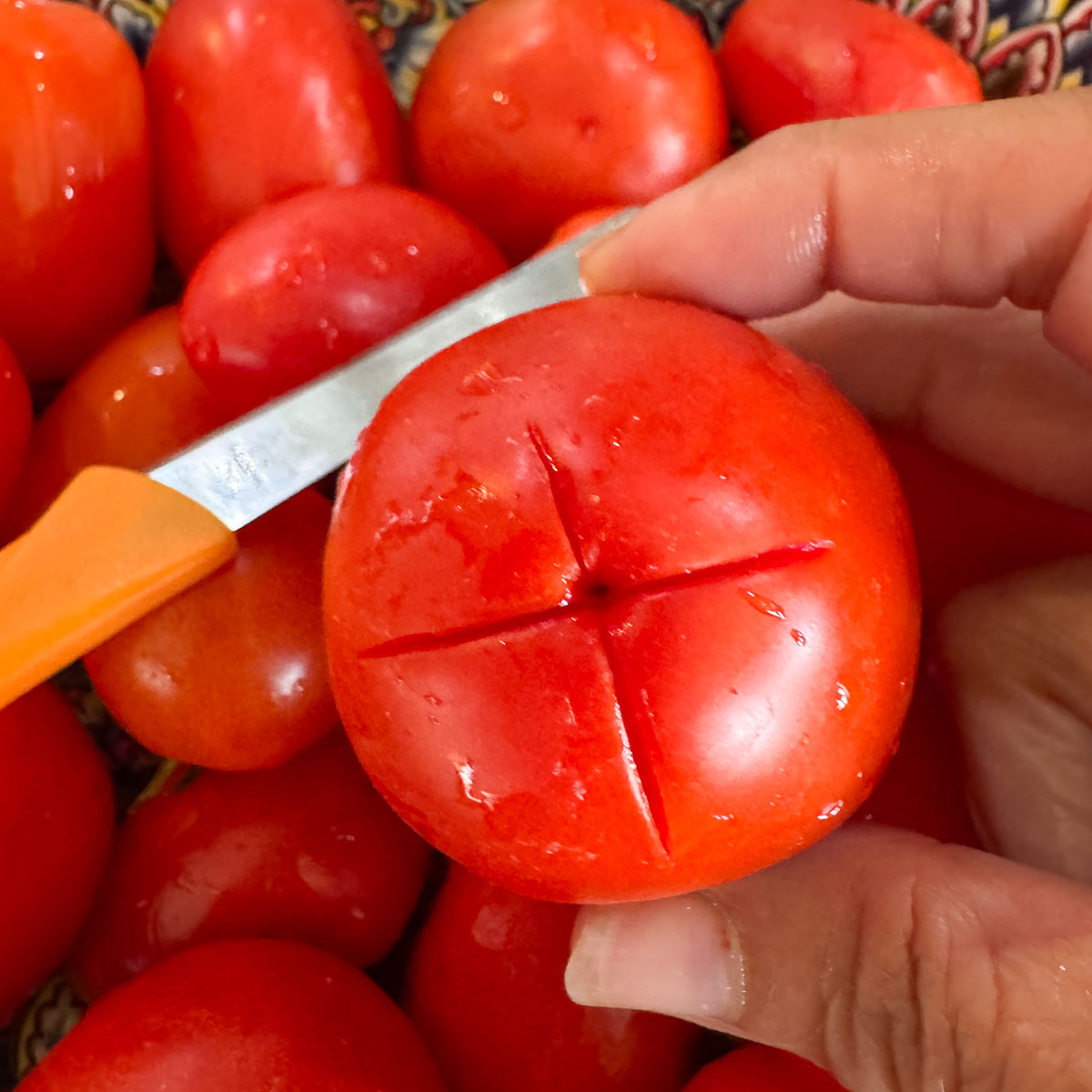
- Wash tomatoes, then use a paring knife to score the skin with an X on the top of each tomato.
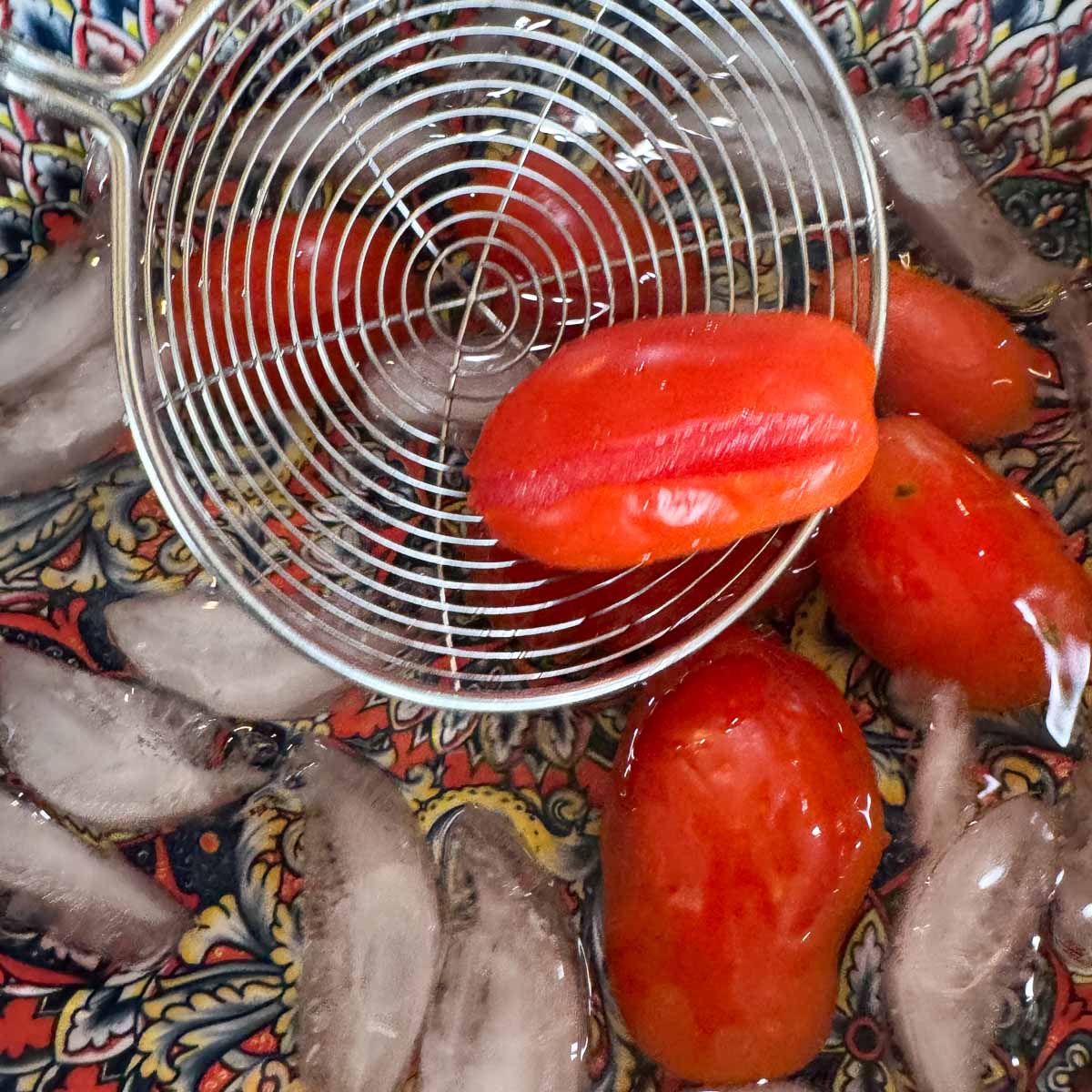
- Add tomatoes in batches to the boiling water for 30-60 seconds, then dunk in the bowl of ice water. Peel and remove the cores.
Pro Tip: Don't toss those skins! They can be dehydrated or freeze-dried, then ground into tomato powder, which can be added to many dishes including soups, stews, salsas, and more!
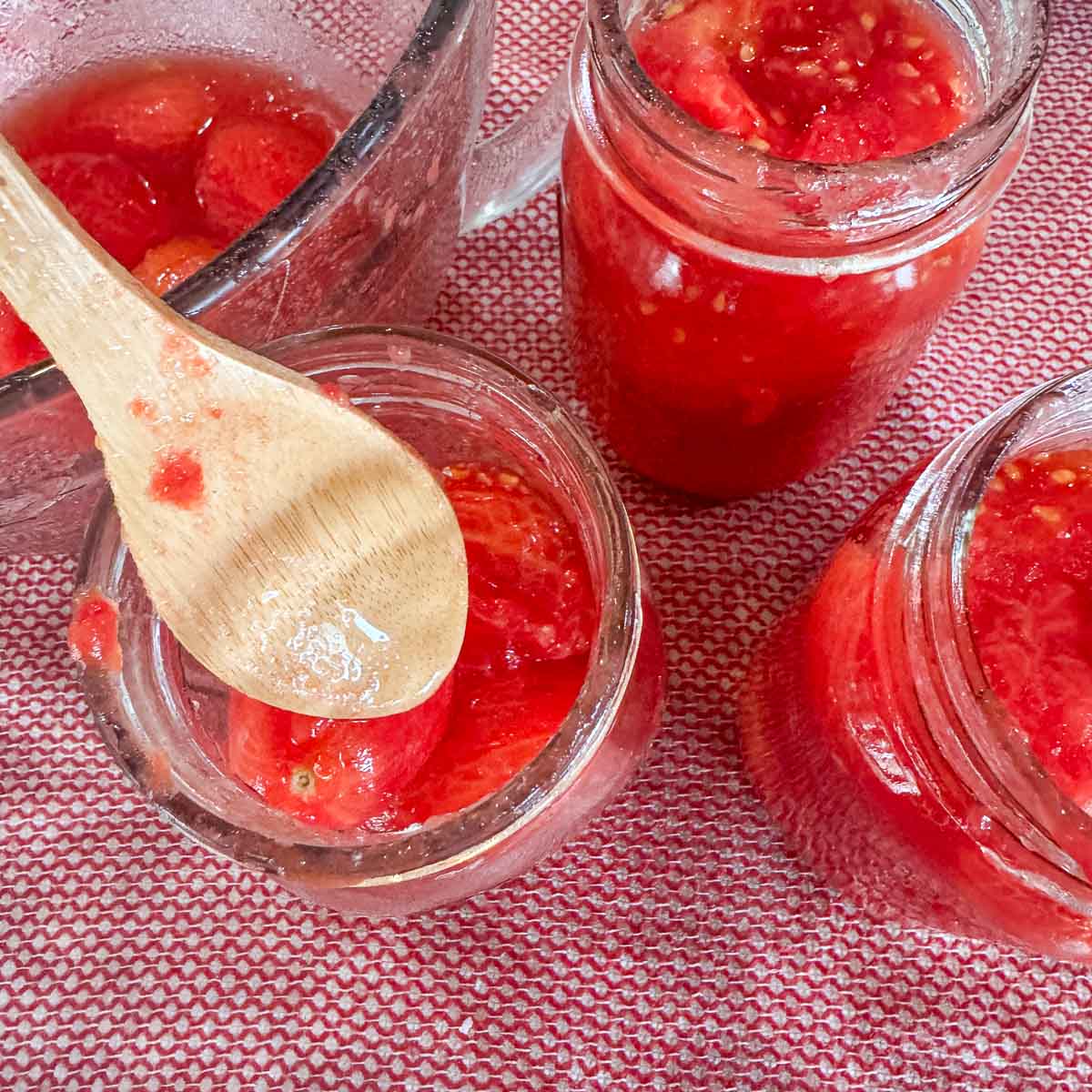
- Raw pack tomatoes: Add salt and citric acid (or lemon juice) to hot jars. Fill jars with peeled, whole tomatoes, pressing with a wooden spoon until the space between the tomatoes is filled with tomato juice.
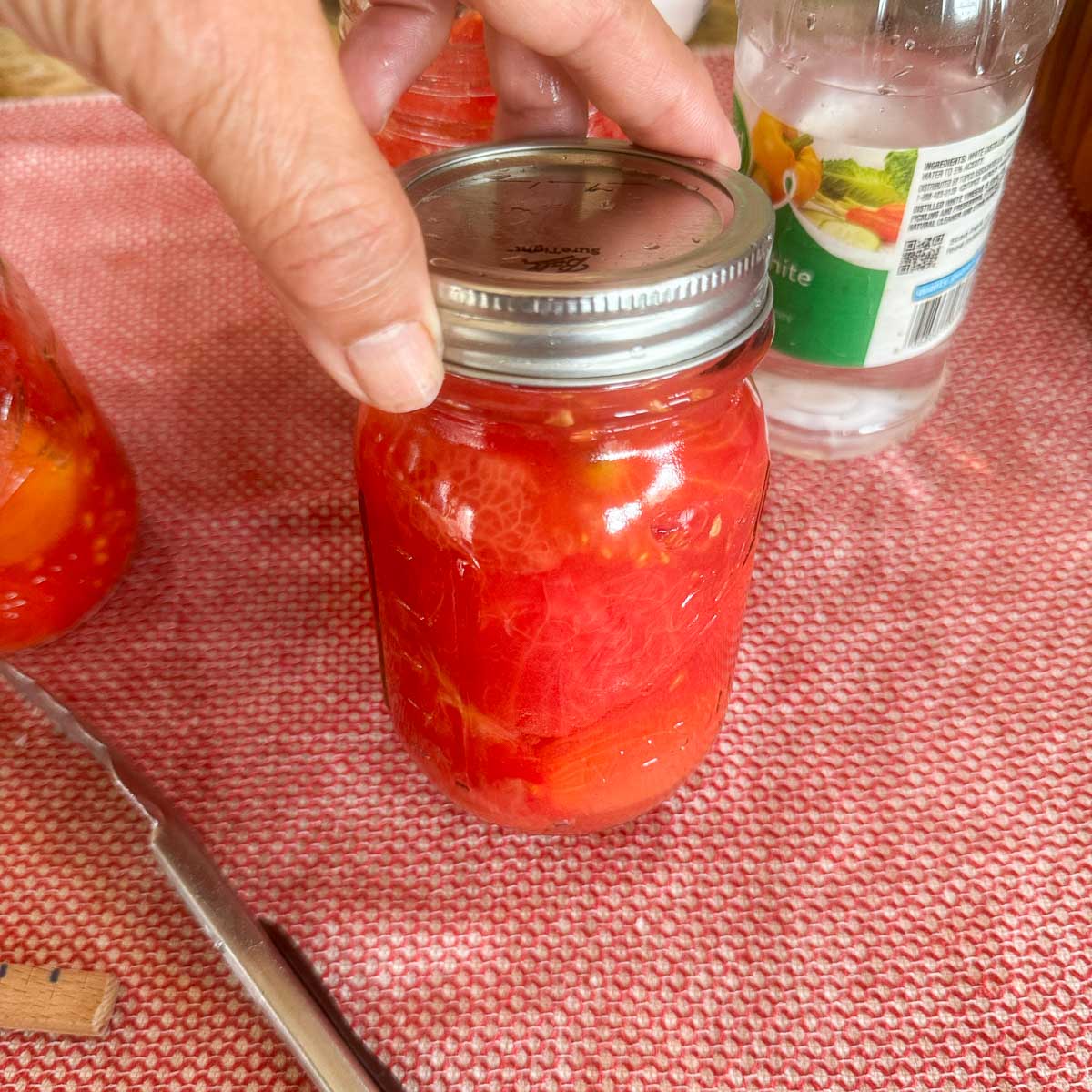
- Leave ½" headspace, remove air bubbles, then wipe jar rims with vinegar. Adjust lids by hand-tightening them on.
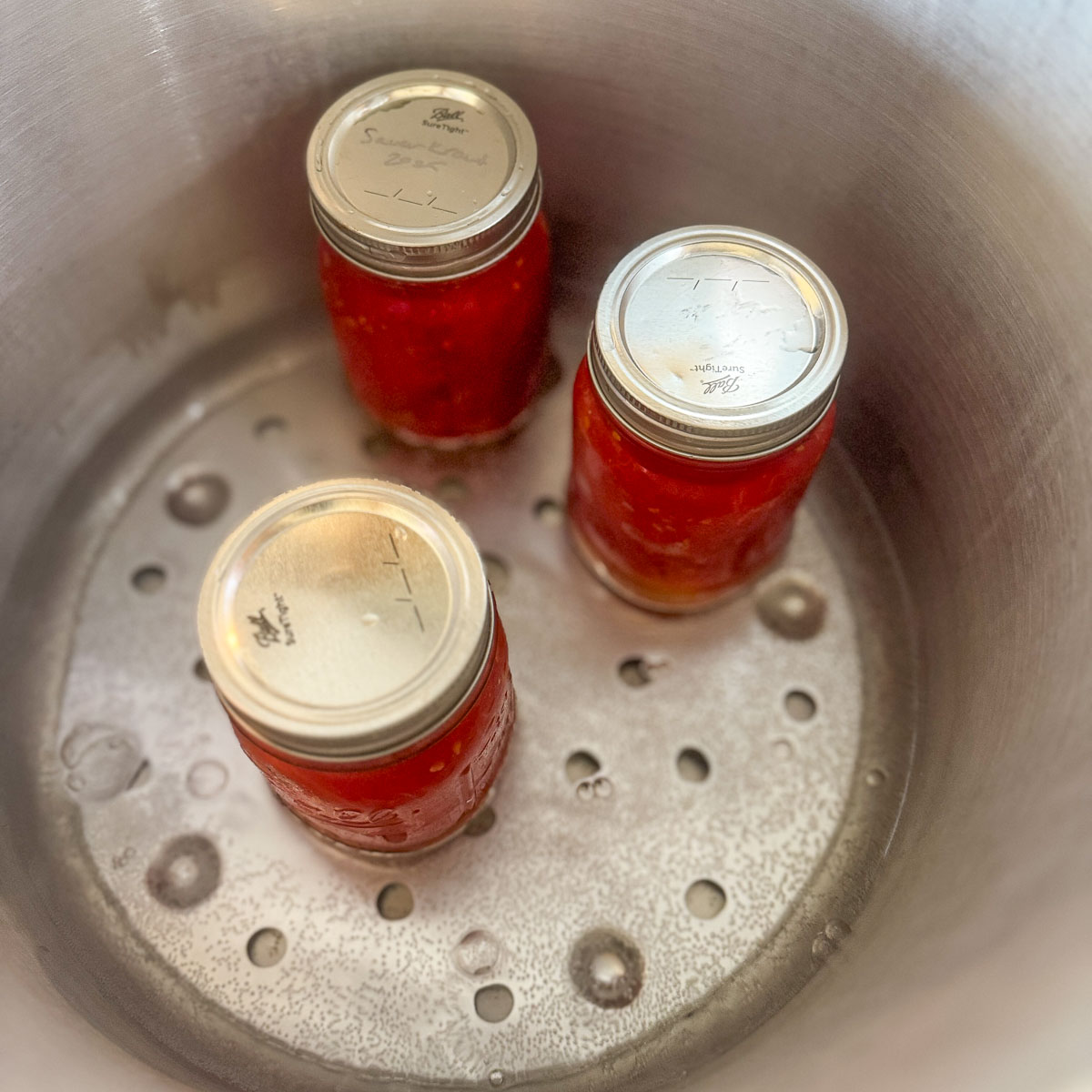
- Add filled jars to hot canner, then fasten the lid. Heat on high and allow to vent to steam for 10 minutes. Add pressure regulator and start timer when pressure reaches required PSI.
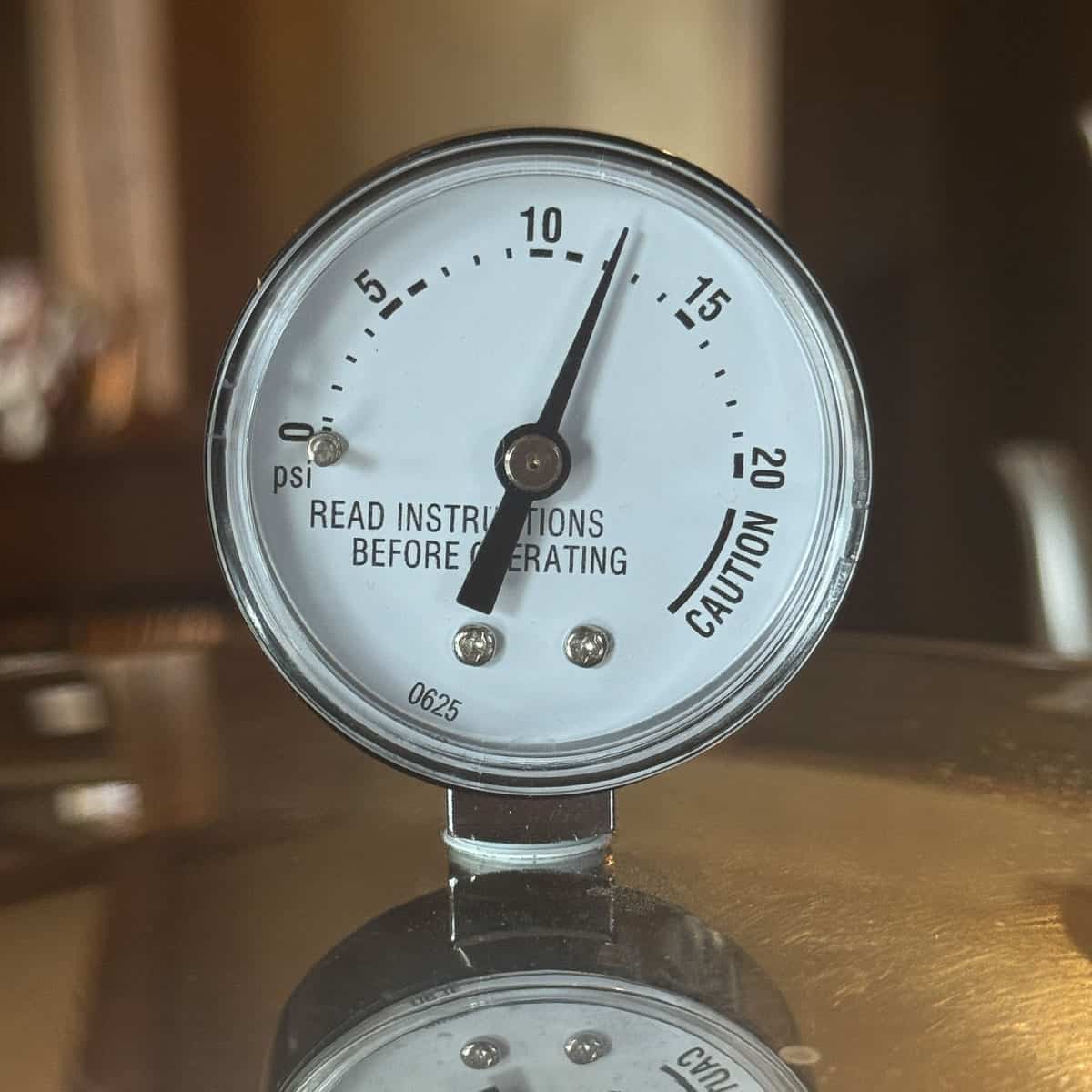
- Process at 11 PSI (pounds of pressure) for 25 minutes for both pints and quarts. For elevations above 1000', see chart below. Once the time is up, allow the pressure to release completely and the pin to drop.
Pro Tip: It's ok if your pressure creeps slightly above the recommended PSI during processing. Adjust your heat to bring it back down gradually. If the pressure drops below the required PSI at any point, you'll need to bring it back up to pressure and restart your processing time from the beginning to ensure canning safety.
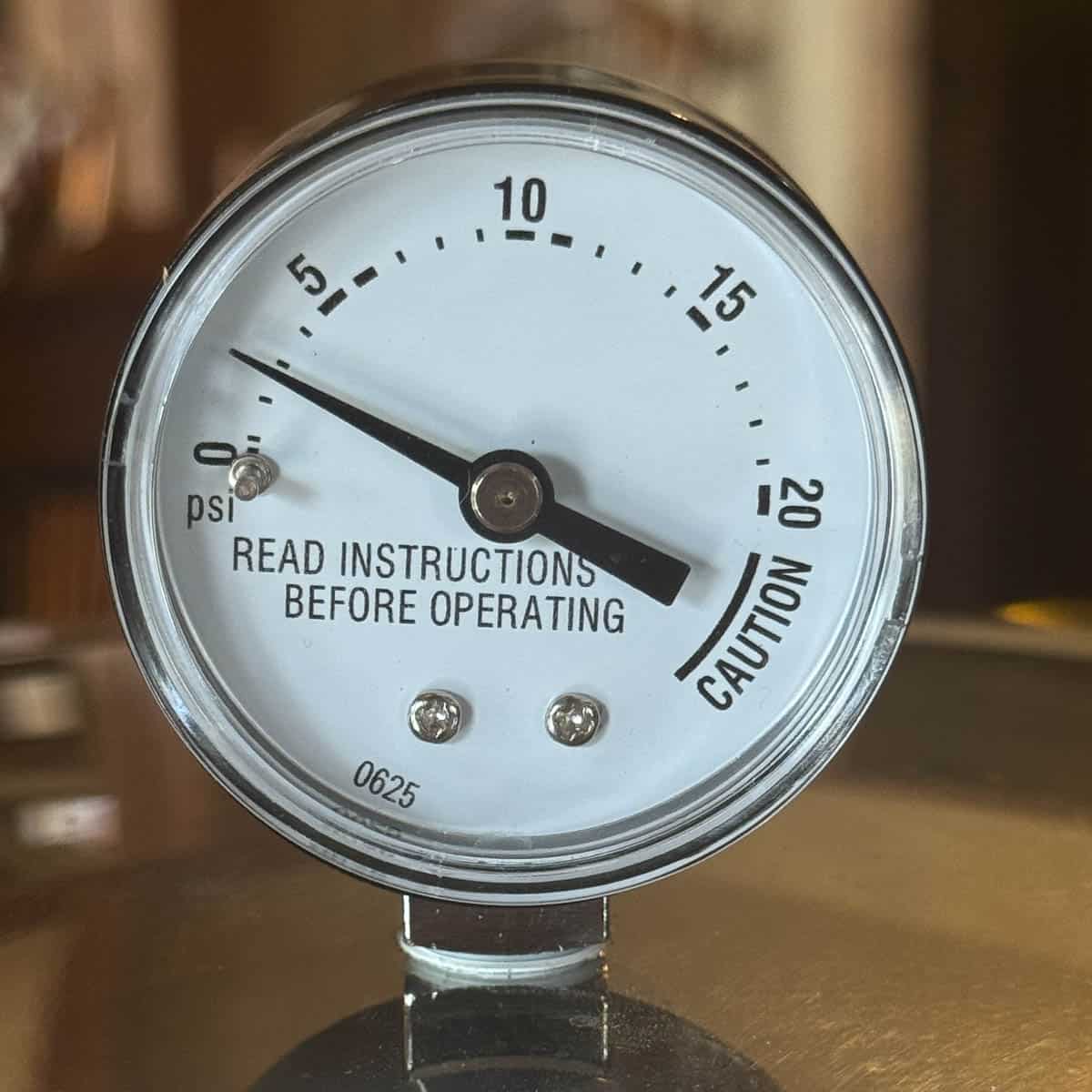
- Remove pressure regulator from the vent pipe and let canner cool for 10 more minutes.
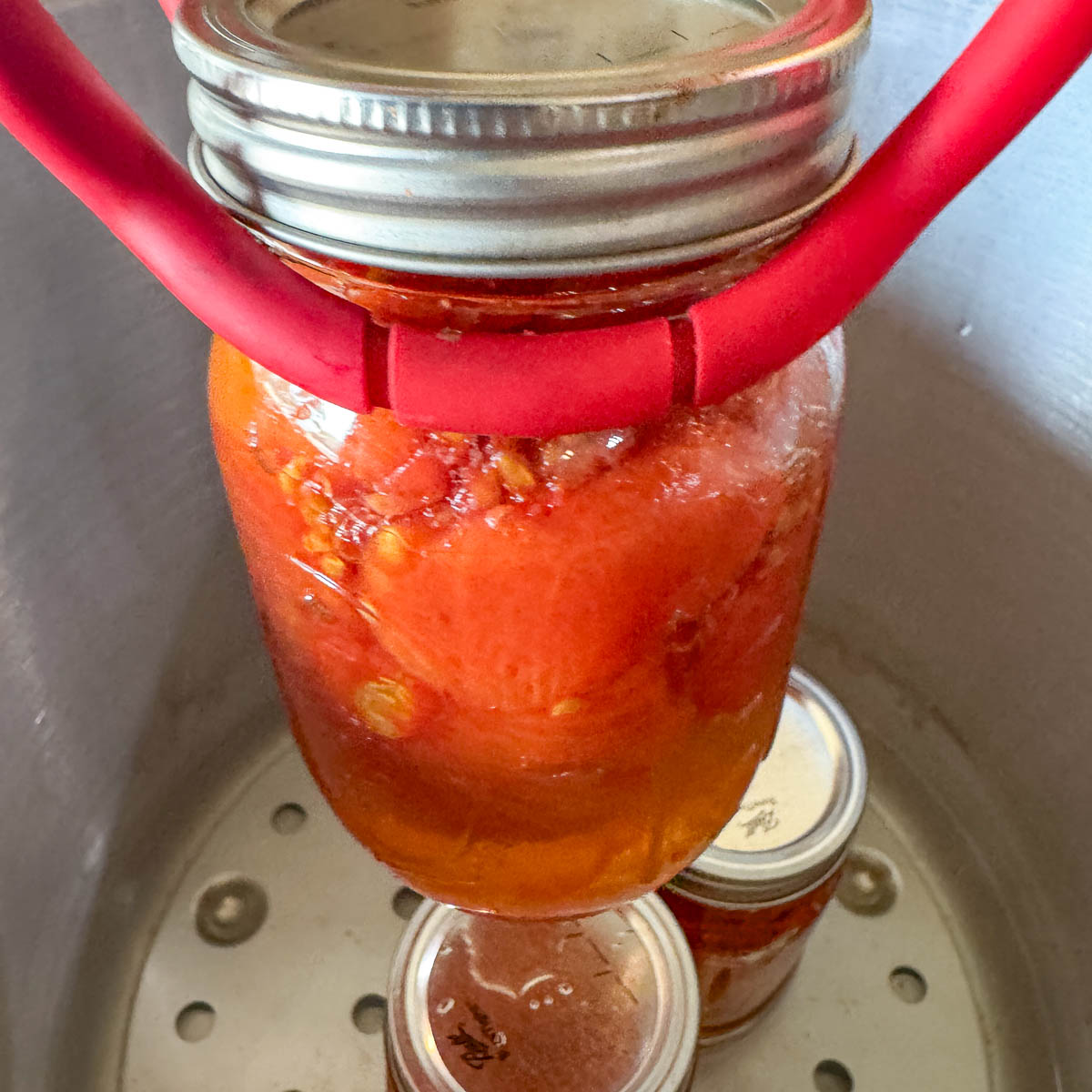
- Remove cover, and carefully lift jars and set on a dishtowel undisturbed for 12 hours. Test seals before storing jars.
For altitudes above 1000 feet, make the following adjustments:
| Altitude Range | Pressure for Weighted Gauge | Pressure for Dial Gauge |
|---|---|---|
| 0–1,000 ft | 10 PSI | 11 PSI |
| 1,001–2,000 ft | 15 PSI | 11 PSI |
| 2,001–4,000 ft | 15 PSI | 12 PSI |
| 4,001–6,000 ft | 15 PSI | 13 PSI |
| 6,001–8,000 ft | 15 PSI | 14 PSI |
Boiling Water Canning Altitude Adjustment Chart
| Altitude | Increase Processing Time |
|---|---|
| 0–1,000 ft. | No adjustment |
| 1,001–3,000 ft. | +5 minutes |
| 3,001–6,000 ft. | +10 minutes |
| 6,001–8,000 ft. | +15 minutes |
| 8,001–10,000 ft. | +20 minutes |
How to Make Tomato Powder with Tomato Skins
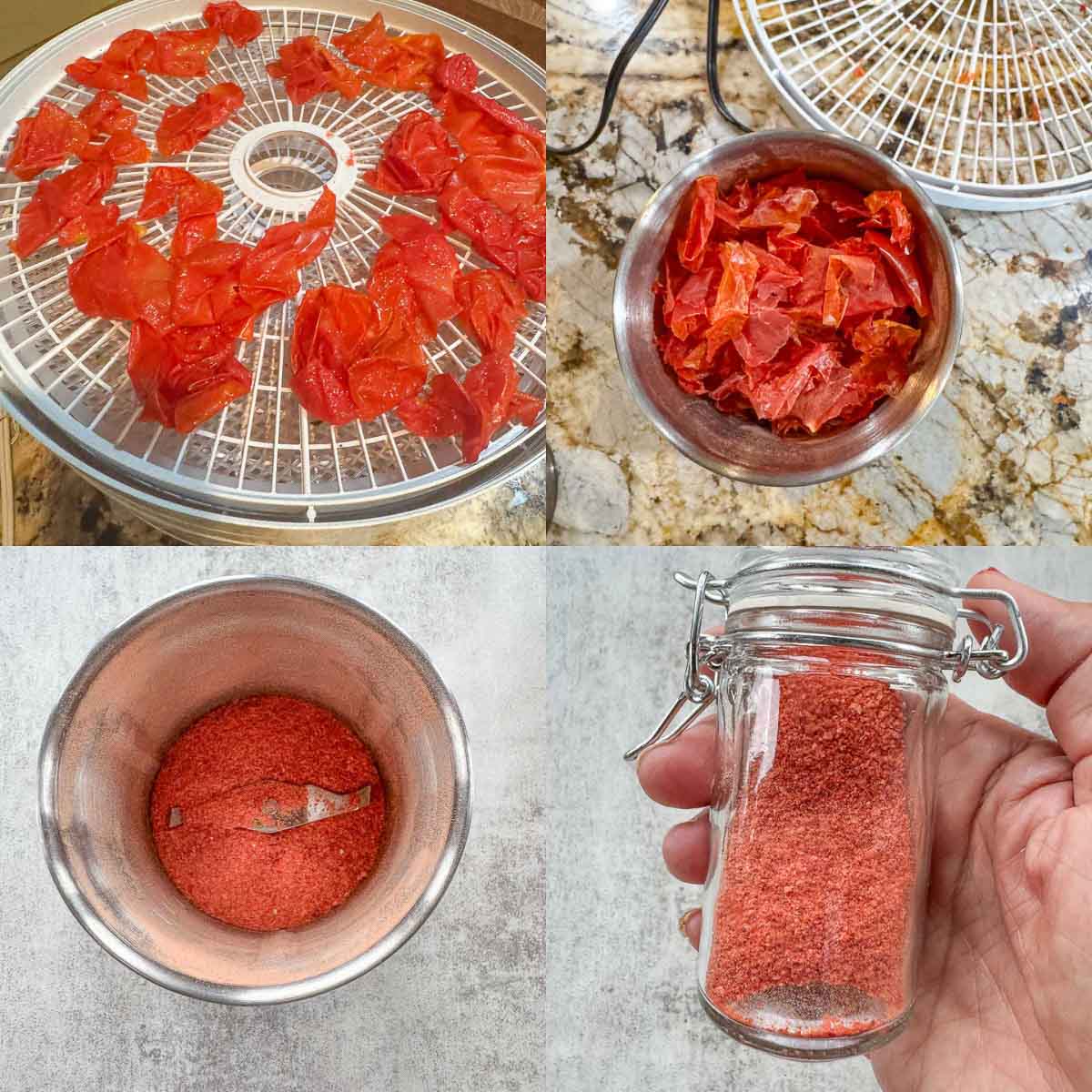
As I mentioned earlier, the tomato skins can be dehydrated to make tomato powder. To do so, dehydrate the tomato skins on the vegetable setting (135F). Flip after 2 hours to prevent sticking, and dehydrate for 2 to 3 more hours. Once cool, add the skins to a coffee grinder and grind them into a fine powder. Use the powder in chili, soup, rice, salsa, and more!
FAQs
Why did my tomatoes float at first, then sink after processing?
This is completely normal with raw-packed tomatoes. Tomatoes contain air in their tissues, which can cause them to float when initially packed. During processing, the trapped air is released, and the tomatoes soften and shrink, releasing their natural juices. As the jars cool, the tomatoes can settle considerably, and the liquid level may be much lower than it was when the jars were first filled.
As long as you followed the tested recipe, including the required acidification, headspace, processing time, and pressure for your altitude, a lower liquid level after processing does not automatically mean the tomatoes are unsafe.
What is hot packing?
Hot packing means the tomatoes are heated before they are added to hot jars. The tomatoes are simmered in water for 5 minutes, then transferred to the hot jars and covered with the hot cooking liquid, leaving ½ inch headspace.
Why do I need to add lemon juice or citric acid?
Tomatoes are generally considered an acidic food, but some varieties can have a pH above 4.6, which is too high for safe water-bath canning. For this reason, tomatoes should be acidified with bottled lemon juice or citric acid before canning. Adding acid ensures the tomatoes have a safe pH of 4.6 or lower.
Acidification is still required when pressure canning tomatoes. Pressure canning does not eliminate the need to add lemon juice or citric acid when following USDA-tested tomato canning procedures.
Should I remove the jar collars after canning?
Yes. After the jars have cooled completely and you've checked that the lids are properly sealed, remove the screw bands before storing the jars. Leaving the bands on can make it harder to notice if a seal fails during storage, but it is totally optional!
Pro Tips
- Adding salt is optional, but it does improve the flavor, so I recommend adding it.
- Don't add water to bring the liquid level in the jar up to the ½-inch headspace. Adding water dilutes the tomato juices and changes the formulation of the recipe.
- For safe canning, follow the tested recipe exactly, including the specified ingredients, acidification, headspace, processing time, and pressure.
- Stay close to the pressure canner while the tomatoes are being processed and adjust the heat as needed to maintain proper pressure.
- Some prefer to remove the collars before storing to be able to see if the jars are not properly sealed. This is optional.
Equipment Needed
To pressure can tomatoes, you'll need a pressure canner, mason jars, canning tools, a saucepan to blanch the tomatoes, a bowl for the ice water, and a paring knife for scoring the tomatoes.
How to Store Pressure Canned Tomatoes
Wipe the jars clean, label them with the contents and date, and store them in a cool, dark place.
More Homesteading Posts
If you enjoyed this pressure canning tomatoes guide, check out these other popular posts!



Recipe
Pressure Canning Tomatoes
Equipment
Ingredients
- 3½ lbs Roma tomatoes
- ½ teaspoon kosher salt (or sea salt, canning salt)
- ¼ teaspoon citric acid (or 1 tablespoon lemon juice)
Instructions
- Before you begin, bring a pot of water to a boil and prepare a bowl of ice water for blanching the tomatoes. You'll also need to prepare your canning jars according to the manufacturer's instructions. Finally, add the recommended amount of water and vinegar to your pressure canner and begin heating it according to your canner's instructions.
- Wash tomatoes, then use a paring knife to score the skin by making an X at the top of each tomato.
- Add tomatoes in batches to the boiling water for 30-60 seconds, then dunk in the bowl of ice water. Peel and remove the cores.
- Raw pack tomatoes: Add salt and citric acid (or lemon juice) to hot jars. Fill jars with peeled, whole tomatoes, pressing with a wooden spoon until the space between the tomatoes is filled with tomato juice.
- Leave ½" headspace, remove air bubbles, then wipe jar rims with vinegar. Adjust lids by hand-tightening them on.
- Add filled jars to hot canner, then fasten the lid. Heat on high and allow the vent to steam for 10 minutes. Add pressure regulator and start timer when pressure reaches the required PSI.
- Process at 11 PSI (pounds of pressure) for 25 minutes for both pints and quarts. For elevations above 1000', see the chart in the post. When the time is up, allow the pressure to release completely and the pin to drop.
- Remove the pressure regulator from the vent pipe and let the canner cool for 10 more minutes.
- Remove cover, and carefully lift jars and set on a dishtowel undisturbed for 12 hours. Test seals before storing jars.
Notes
- Don't toss those skins! They can be dehydrated or freeze-dried, then ground into tomato powder, which can be added to many dishes including soups, stews, salsas, and more!
- It's ok if your pressure creeps slightly above the recommended PSI during processing. Adjust your heat to bring it back down gradually. If the pressure drops below the required PSI at any point, you'll need to bring it back up to pressure and restart your processing time from the beginning to ensure canning safety.
- Adding salt is optional, but it does improve the flavor, so I recommend adding it.
- Don't add water to bring the liquid level in the jar up to the ½-inch headspace. Adding water dilutes the tomato juices and changes the formulation of the recipe.
- For safe canning, follow the tested recipe exactly, including the specified ingredients, acidification, headspace, processing time, and pressure.
- Stay close to the pressure canner while the tomatoes are being processed and adjust the heat as needed to maintain proper pressure.
- Some prefer to remove the collars before storing to be able to see if the jars are not properly sealed, but it's totally optional!
Hilda Sterner says
I hope you enjoyed learning about pressure canning tomatoes. I'd love to hear your feedback!