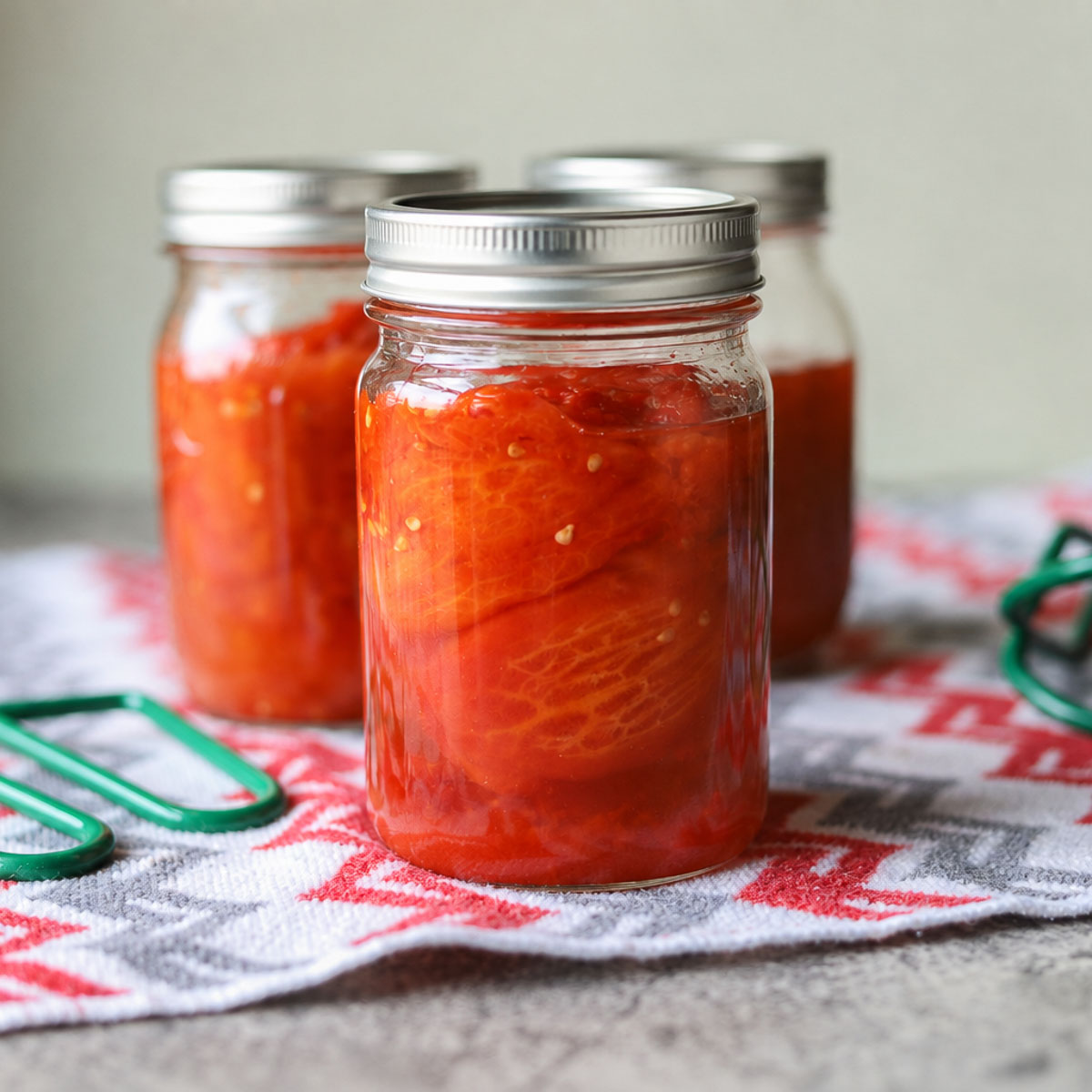
Pressure Canning Tomatoes
Learn how to pressure can tomatoes with this easy step-by-step guide, including acidification, packing methods, processing times, and altitude adjustments.
Print
Pin
Servings: 3 Pints
Calories: 97kcal
Equipment
Ingredients
- 3½ lbs Roma tomatoes
- ½ teaspoon kosher salt (or sea salt, canning salt)
- ¼ teaspoon citric acid (or 1 tablespoon lemon juice)
Instructions
- Before you begin, bring a pot of water to a boil and prepare a bowl of ice water for blanching the tomatoes. You'll also need to prepare your canning jars according to the manufacturer's instructions. Finally, add the recommended amount of water and vinegar to your pressure canner and begin heating it according to your canner's instructions.
- Wash tomatoes, then use a paring knife to score the skin by making an X at the top of each tomato.
- Add tomatoes in batches to the boiling water for 30-60 seconds, then dunk in the bowl of ice water. Peel and remove the cores.
- Raw pack tomatoes: Add salt and citric acid (or lemon juice) to hot jars. Fill jars with peeled, whole tomatoes, pressing with a wooden spoon until the space between the tomatoes is filled with tomato juice.
- Leave ½" headspace, remove air bubbles, then wipe jar rims with vinegar. Adjust lids by hand-tightening them on.
- Add filled jars to hot canner, then fasten the lid. Heat on high and allow the vent to steam for 10 minutes. Add pressure regulator and start timer when pressure reaches the required PSI.
- Process at 11 PSI (pounds of pressure) for 25 minutes for both pints and quarts. For elevations above 1000', see the chart in the post. When the time is up, allow the pressure to release completely and the pin to drop.
- Remove the pressure regulator from the vent pipe and let the canner cool for 10 more minutes.
- Remove cover, and carefully lift jars and set on a dishtowel undisturbed for 12 hours. Test seals before storing jars.
Notes
- Don't toss those skins! They can be dehydrated or freeze-dried, then ground into tomato powder, which can be added to many dishes including soups, stews, salsas, and more!
- It's ok if your pressure creeps slightly above the recommended PSI during processing. Adjust your heat to bring it back down gradually. If the pressure drops below the required PSI at any point, you'll need to bring it back up to pressure and restart your processing time from the beginning to ensure canning safety.
- Adding salt is optional, but it does improve the flavor, so I recommend adding it.
- Don't add water to bring the liquid level in the jar up to the ½-inch headspace. Adding water dilutes the tomato juices and changes the formulation of the recipe.
- For safe canning, follow the tested recipe exactly, including the specified ingredients, acidification, headspace, processing time, and pressure.
- Stay close to the pressure canner while the tomatoes are being processed and adjust the heat as needed to maintain proper pressure.
- Some prefer to remove the collars before storing to be able to see if the jars are not properly sealed, but it's totally optional!
Nutrition
Serving: 1Jar | Calories: 97kcal | Carbohydrates: 21g | Protein: 5g | Fat: 1g | Sodium: 414mg | Potassium: 1254mg | Fiber: 6g | Sugar: 14g
Did you try this recipe? Please leave a review and a star rating!
