
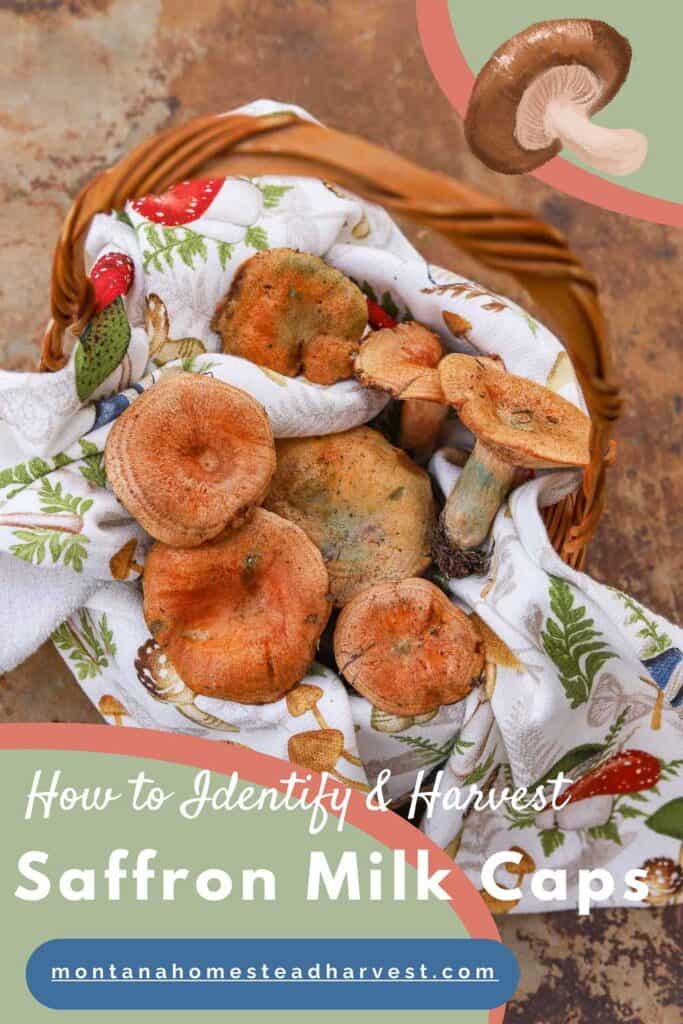
Saffron milk cap mushrooms (Lactarius deliciosus) are one of my favorite wild mushrooms to forage. In this post, I'll show you how to identify them, where and when to find them, plus an easy way to prepare them. If you enjoy foraging wild mushrooms, you may also want to check out my post on foraging morel mushrooms, another favorite!
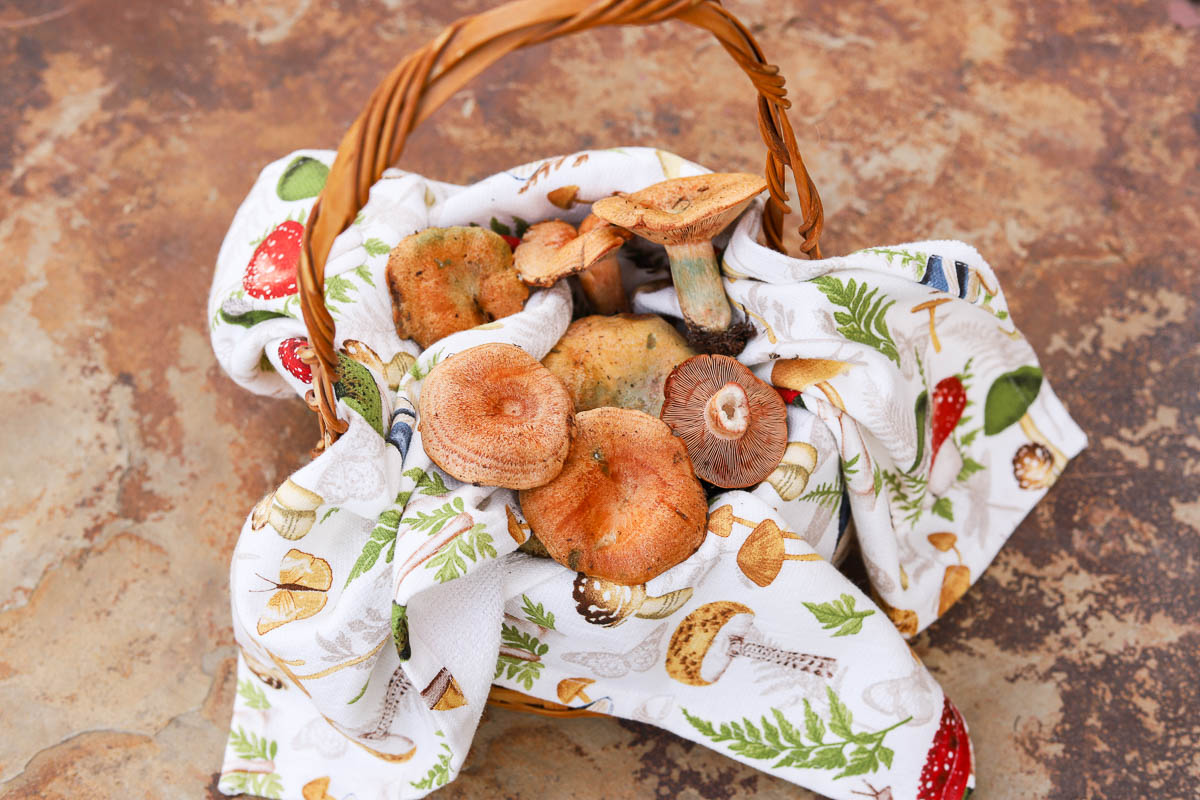
When it comes to wild mushrooms, I'm pretty conservative about what I bring home to eat. I generally stick with mushrooms I absolutely know: mushrooms like morels, giant puffballs, chicken of the woods, fried chicken mushrooms, hedgehogs, and shaggy manes.
That brings me to the time I thought I'd found giant saffron milk cap mushrooms in Chicago... I've been finding saffron milk cap mushrooms in Montana for years, so when I came across a patch of what looked like much larger milk caps in Chicago, I was pretty excited.
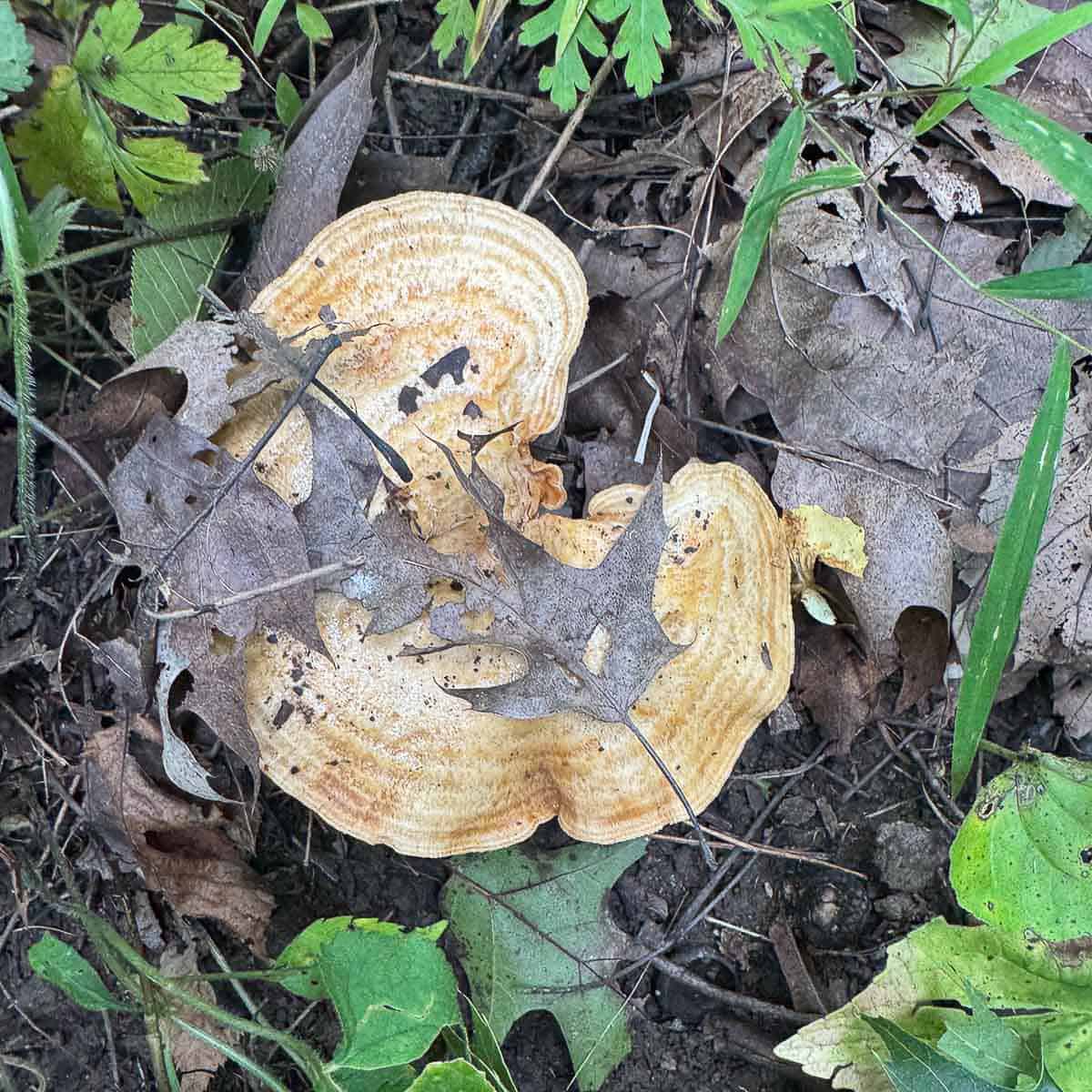
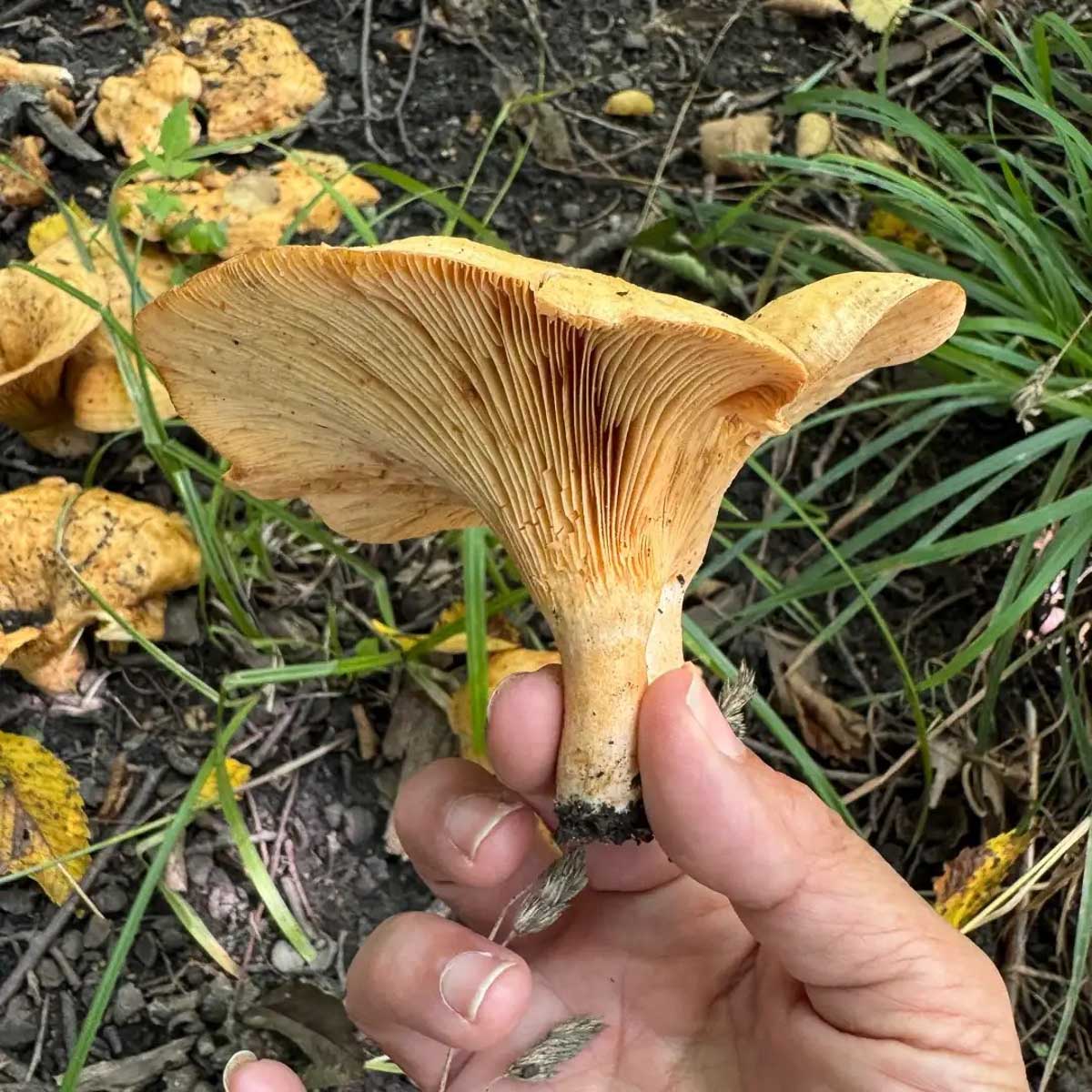
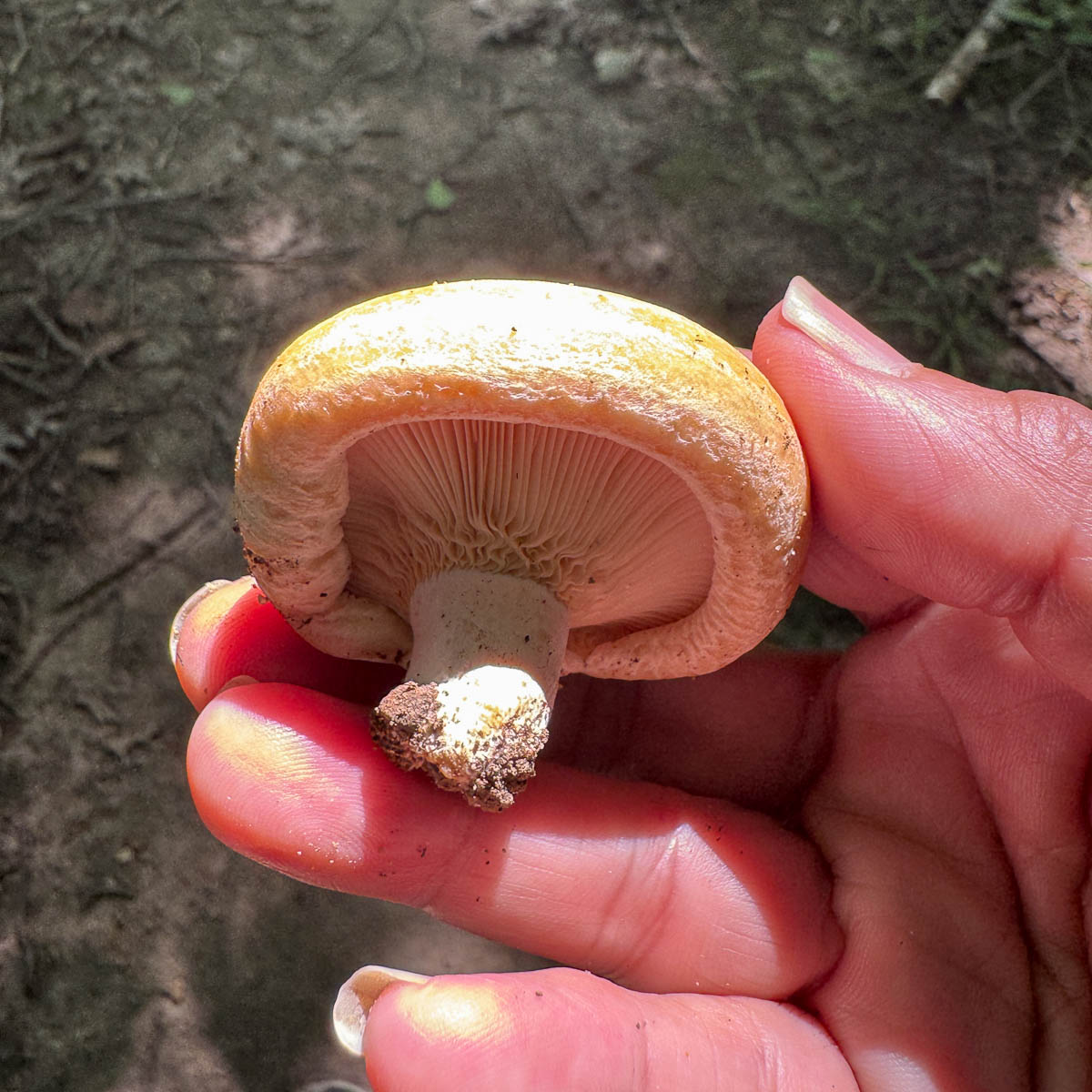
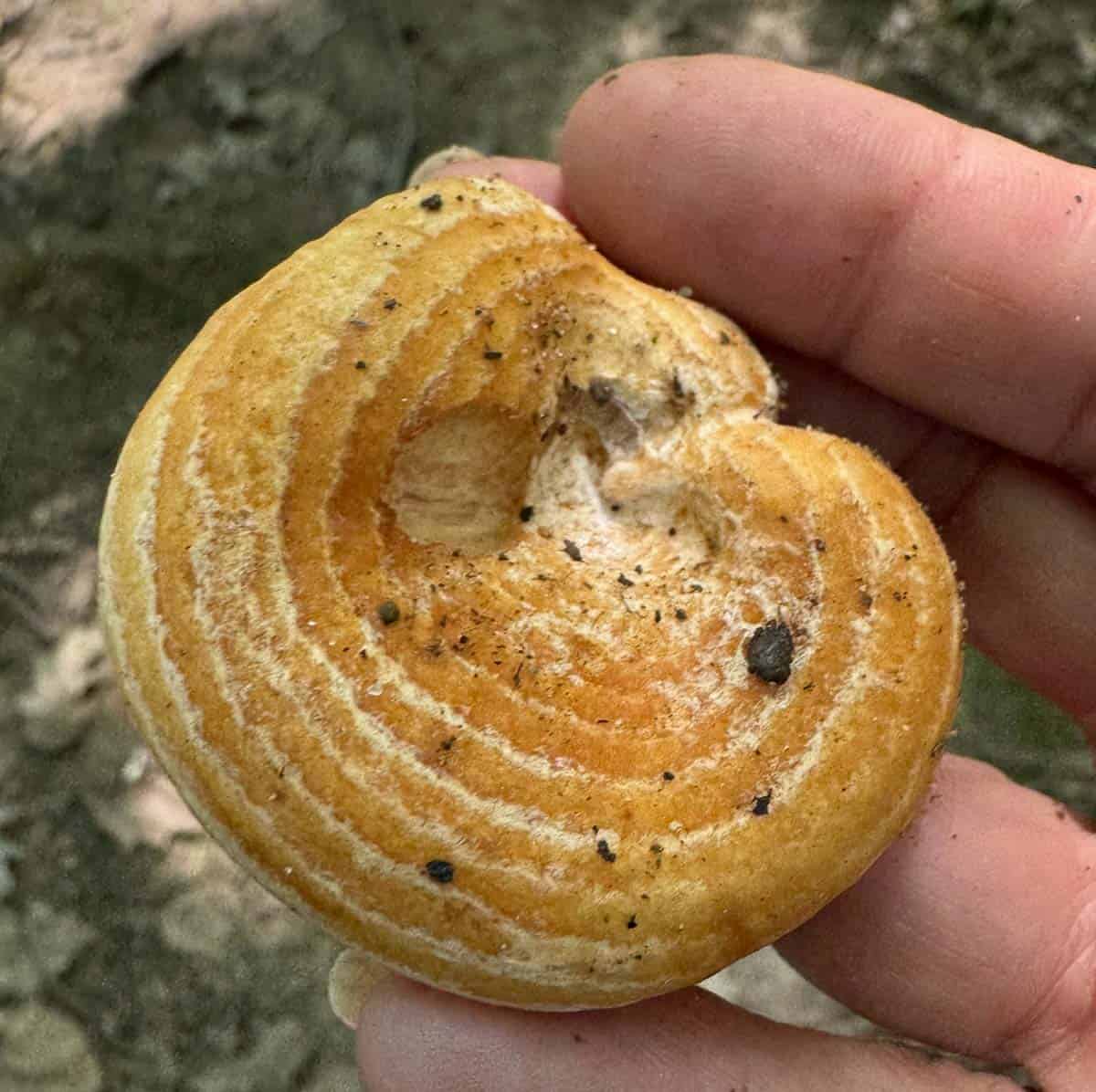
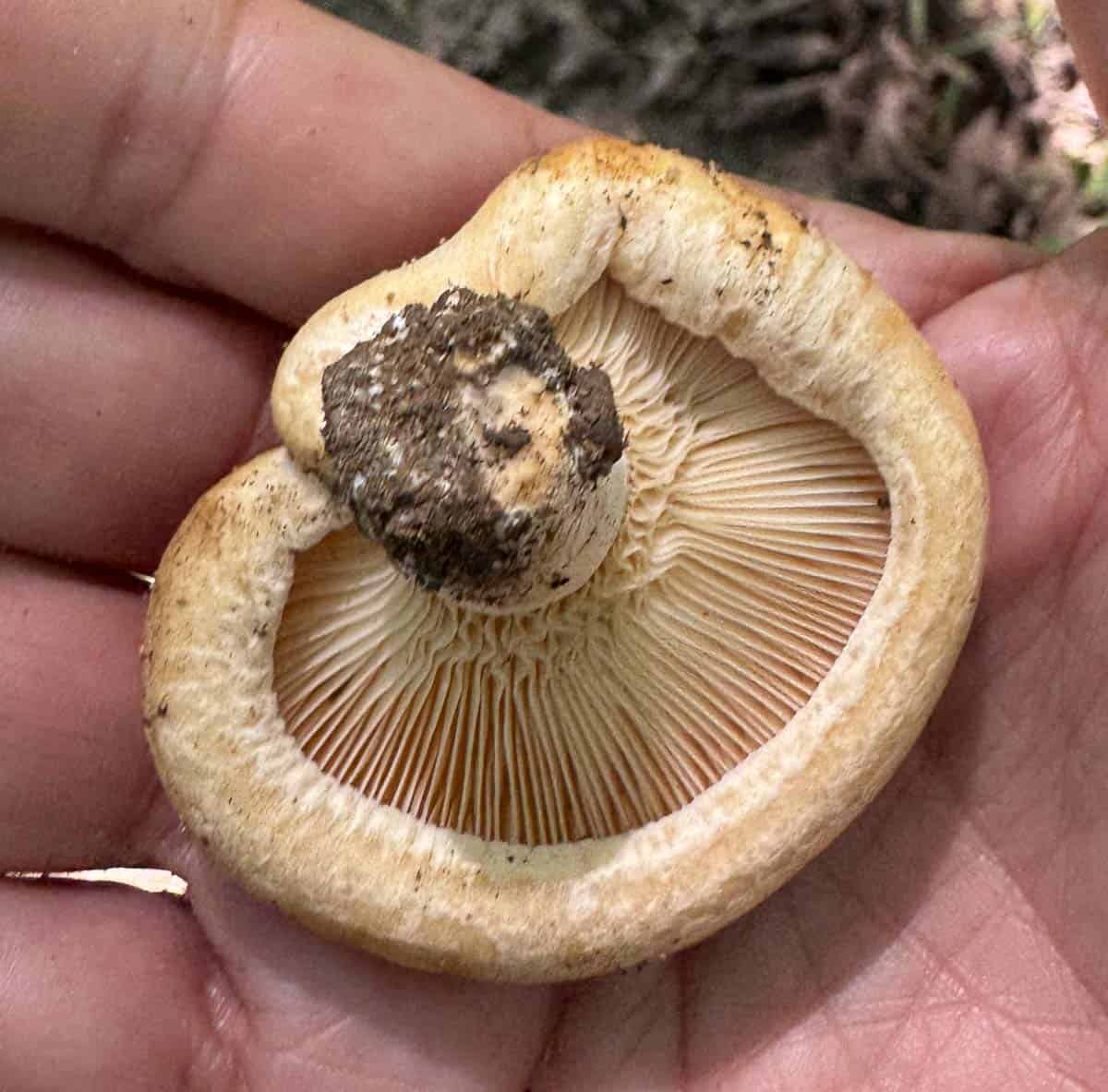
They were a little lighter in color, but had the same rings on the cap and the same general appearance; only some of these mushrooms were significantly larger than the ones I'm used to.
Thinking I'd found their giant Chicago cousins, I filled my foraging bag. Then I took a tiny nibble, just to be sure. For certain mushrooms, a taste test can be useful when you're trying to distinguish between species; the key is not to swallow it.
My tongue started burning almost immediately, and the sensation lingered for the rest of our walk. I spit it out immediately and knew these weren't saffron milk caps.
Afterward, I did some research and identified what I'd found as Lactarius psammicola, a milk cap known for its intensely acrid, peppery taste. They have a yellow spore print and can be found in oak forests, like the one I was in.
It was a good reminder that even when you've been foraging a particular mushroom for years, look-alike species can fool you. Especially when you get so excited, you throw caution to the wind and forget the basic identifying features. Guilty as charged!
Jump to:
What Are Saffron Milk Cap Mushrooms?
Saffron milk cap mushrooms are members of the milk-cap group of mushrooms in the family Russulaceae. These mushrooms produce a milky latex when the gills or flesh are damaged. The latex can be white or red, or a few colors in between, depending on the species.
The mushroom most commonly associated with the name saffron milk cap is Lactarius deliciosus, "deliciousus" meaning "delicious." However, the taxonomy of these orange milk caps is more complicated than the common name suggests, particularly in North America. Mushrooms historically identified as Lactarius deliciosus may actually represent several closely related species.
For that reason, I don't recommend identifying them based on color alone. Instead, look at the cap, gills, stem, spore print, latex, staining, habitat, and the trees growing nearby.
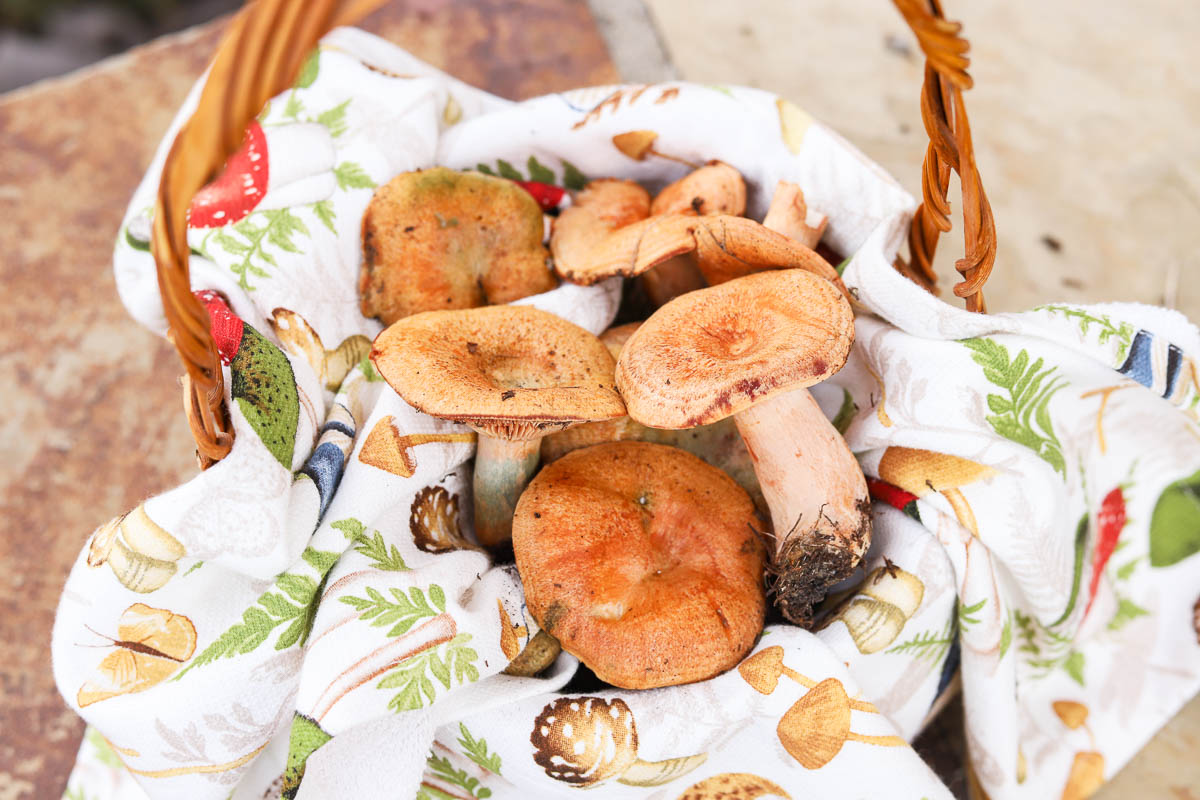
How to Identify Saffron Milk Cap Mushrooms
When I'm identifying a wild mushroom, I don't look at just one feature. I examine the entire mushroom, from the cap to the base of the stem, and pay attention to what is growing around it.
That's especially important with saffron milk caps because several orange milk caps can look remarkably similar. Here are the characteristics I look at.
Cap
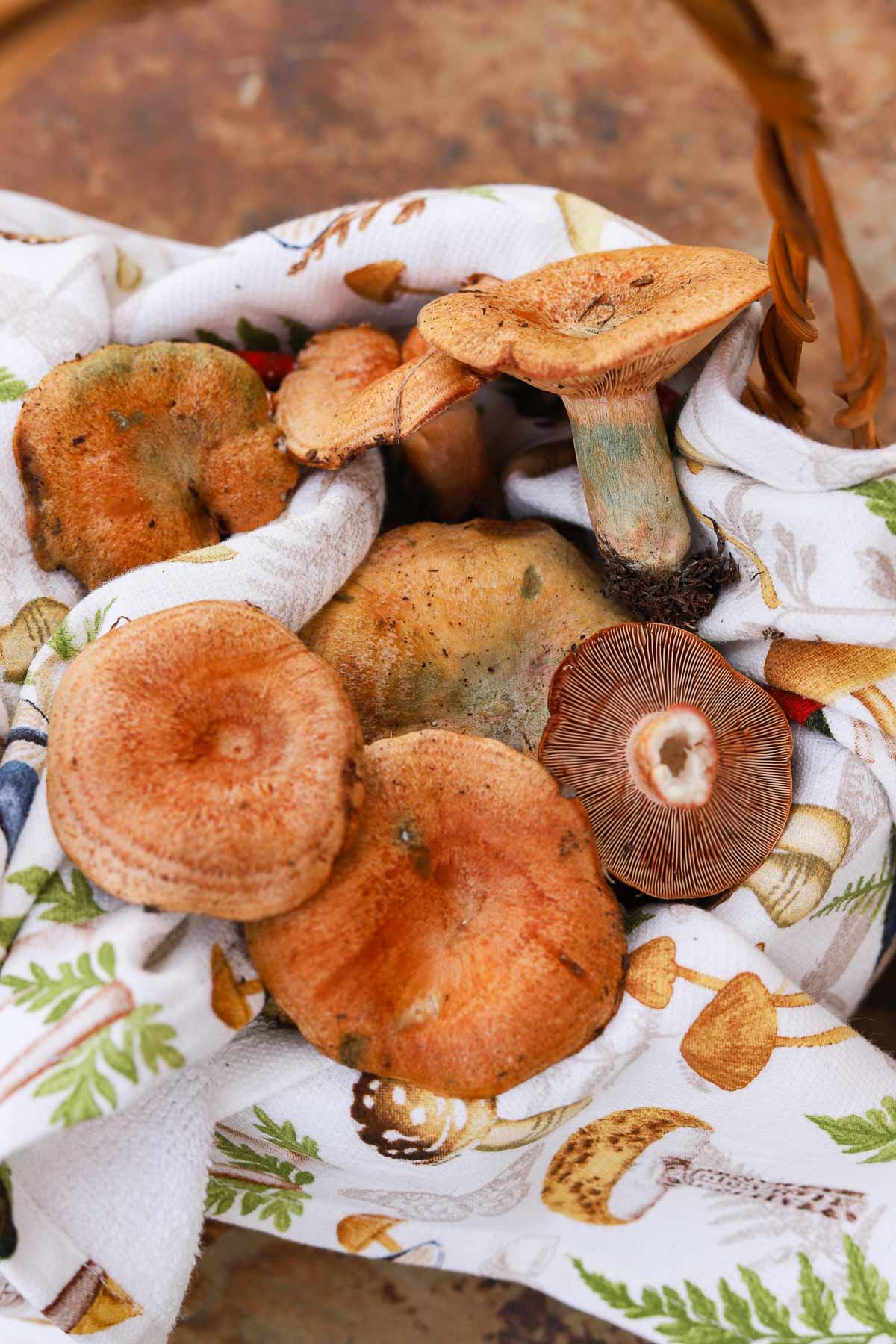
The cap is typically 4-14 cm across, orange to reddish-orange, and often with darker concentric bands or rings near the margin. Young mushrooms usually have a rounded or convex cap with an inrolled margin.
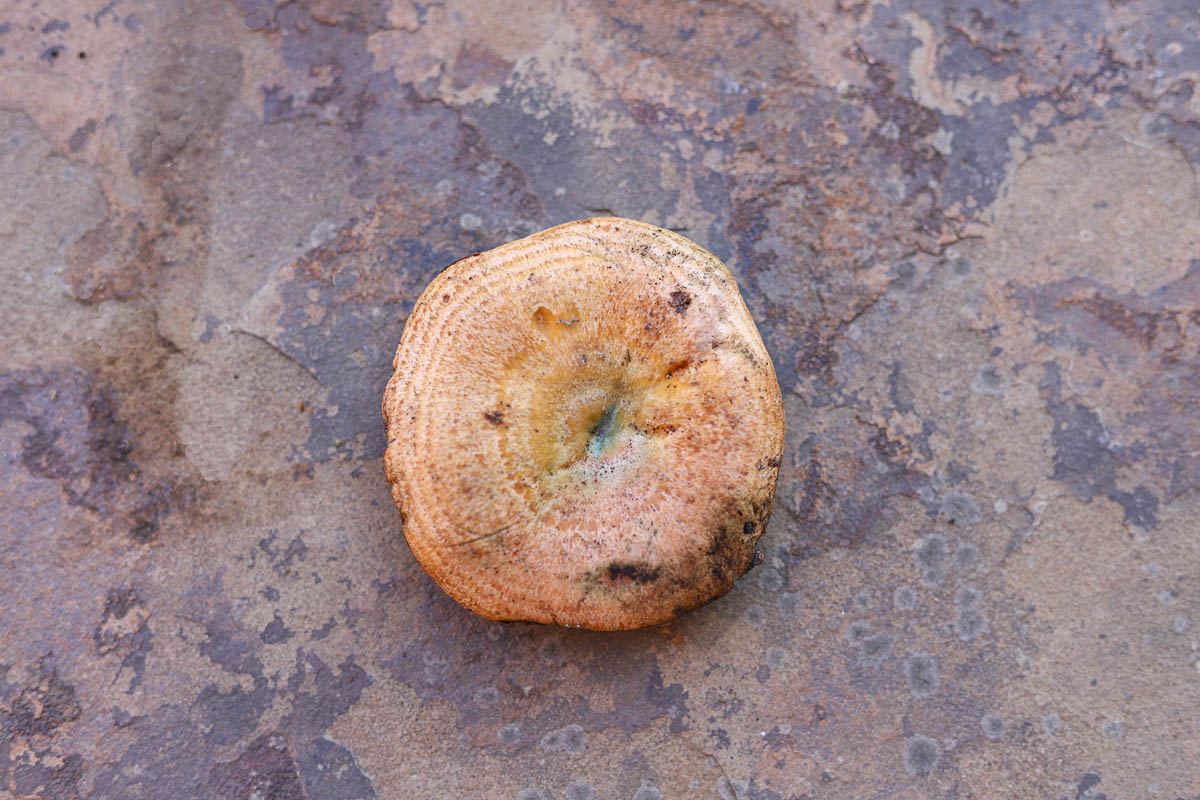
As they mature, the center becomes depressed, and the cap can eventually become somewhat funnel-shaped. The cap may develop greenish staining as the mushroom ages or is bruised. The surface can be fairly dry when conditions are dry, but may become somewhat sticky when wet.
Gills
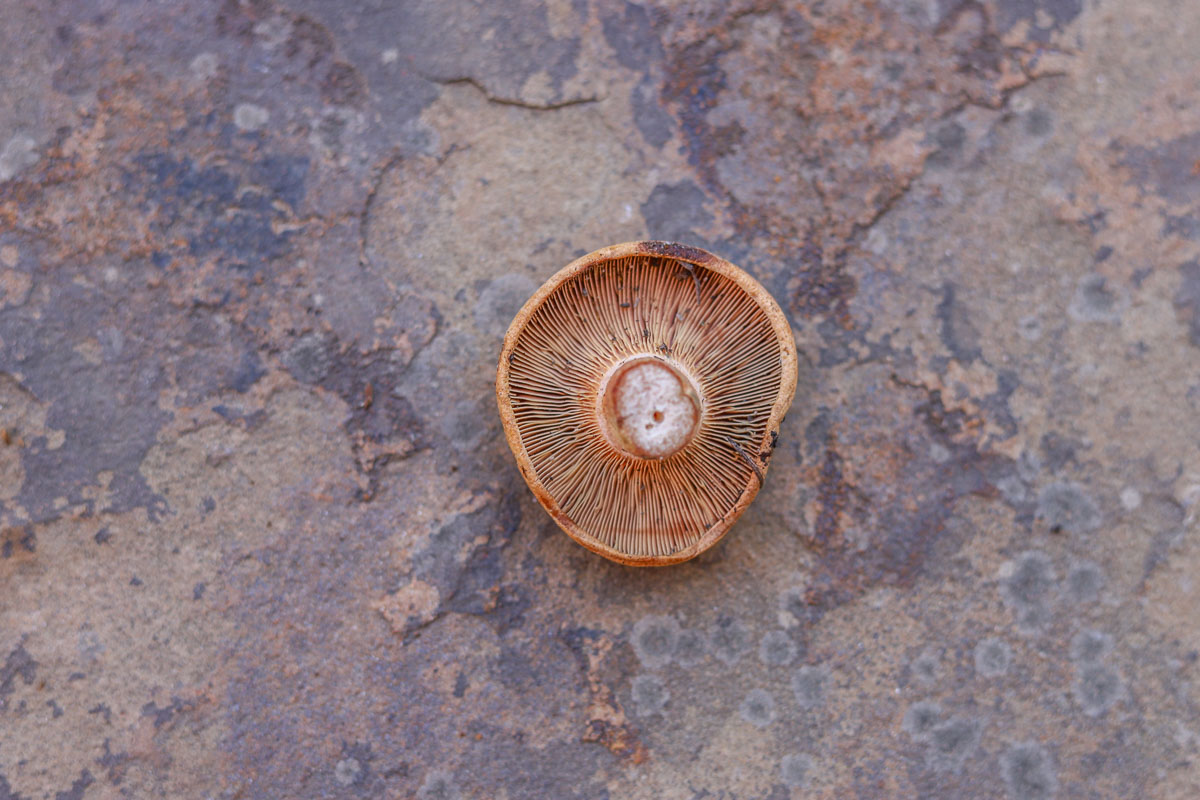
The gills are typically crowded and orange. They may run down the stem to some degree. When bruised or handled, the gills may develop greenish staining. This is also where you'll find one of the most important identifying features: the latex.
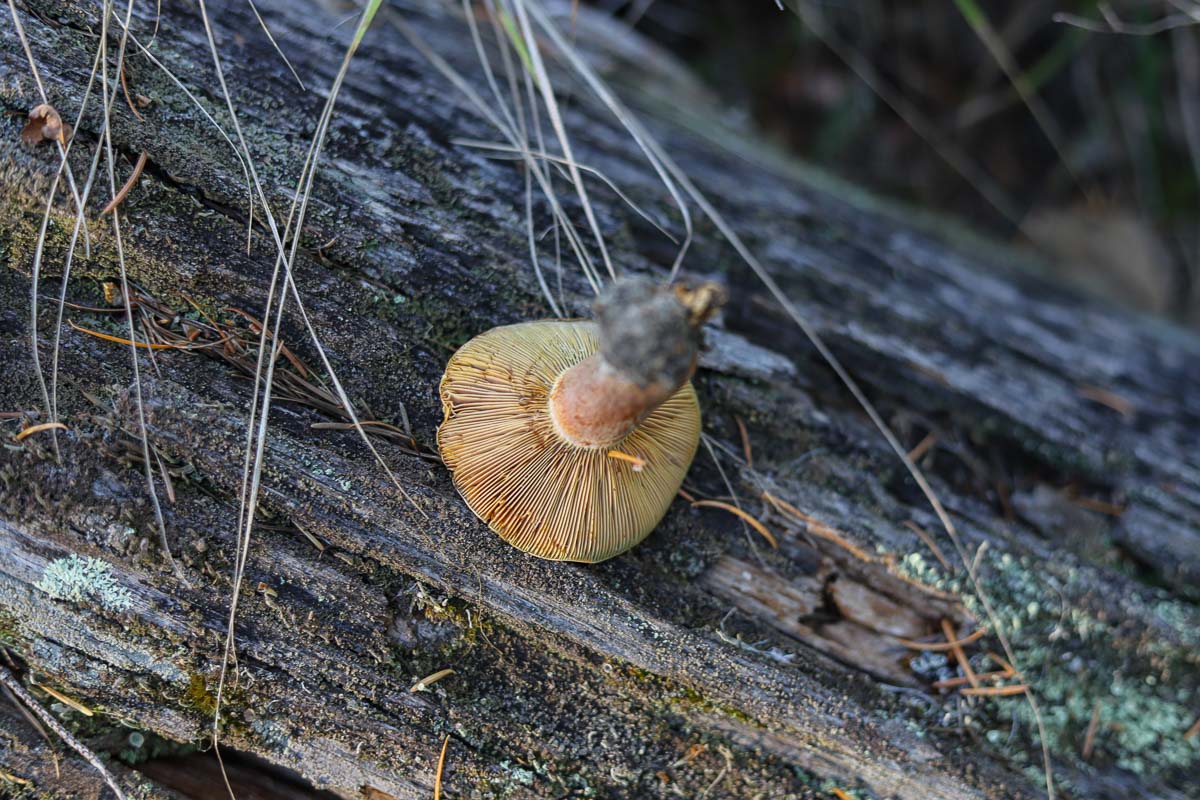
The name milk cap comes from the milky latex these mushrooms release when their gills or flesh are damaged. With saffron milk caps, the latex should be orange to carrot-orange. Cut or scratch the gills and watch what happens.
Latex or Milk
The color and behavior of the latex can be particularly useful when distinguishing between different milk cap species. Depending on the species, the latex can change color after exposure to air, sometimes becoming reddish before eventually developing greenish tones.
Don't just check whether a mushroom produces latex. Look at the latex color and how it changes. Saffron milk caps bleed dark orange/red.
Stem or Stipe
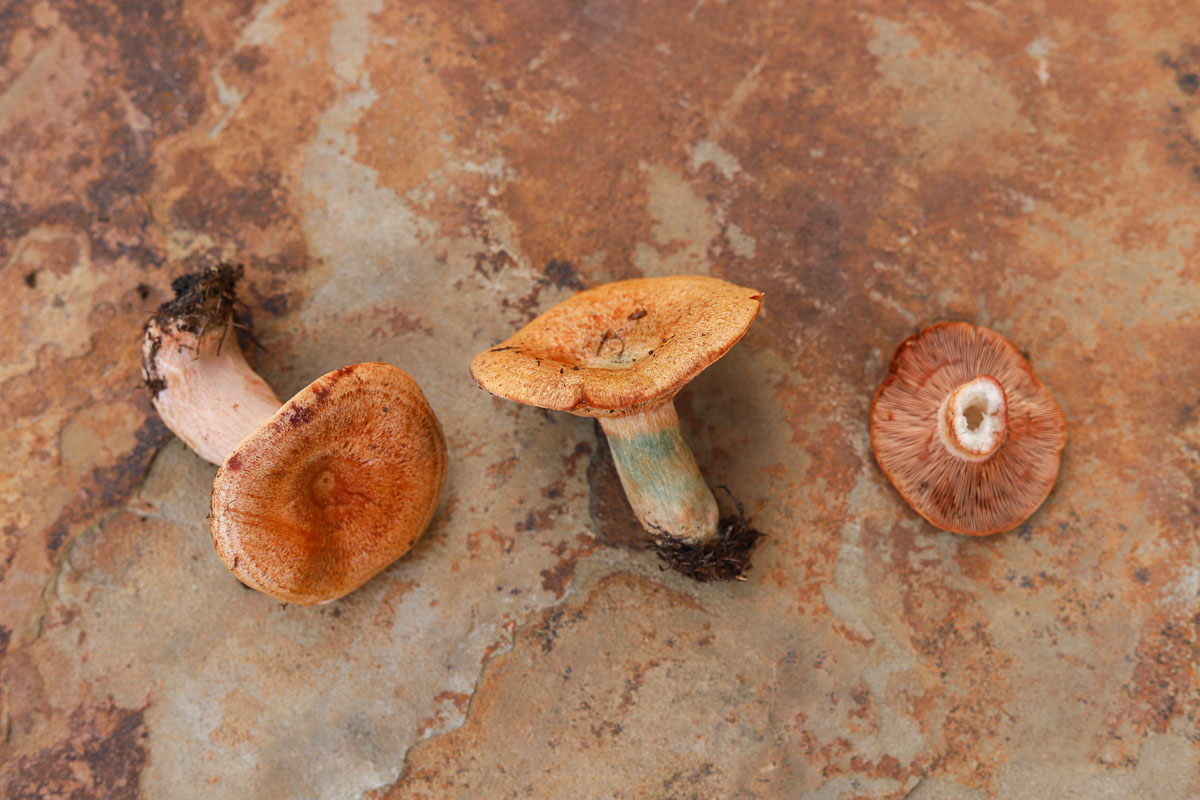
The stem is generally short and sturdy, around 3-8 cm long and 1-2 cm thick. It is similar in color to the cap but sometimes paler. Young stems may be firm and solid, while mature stems can become hollow.
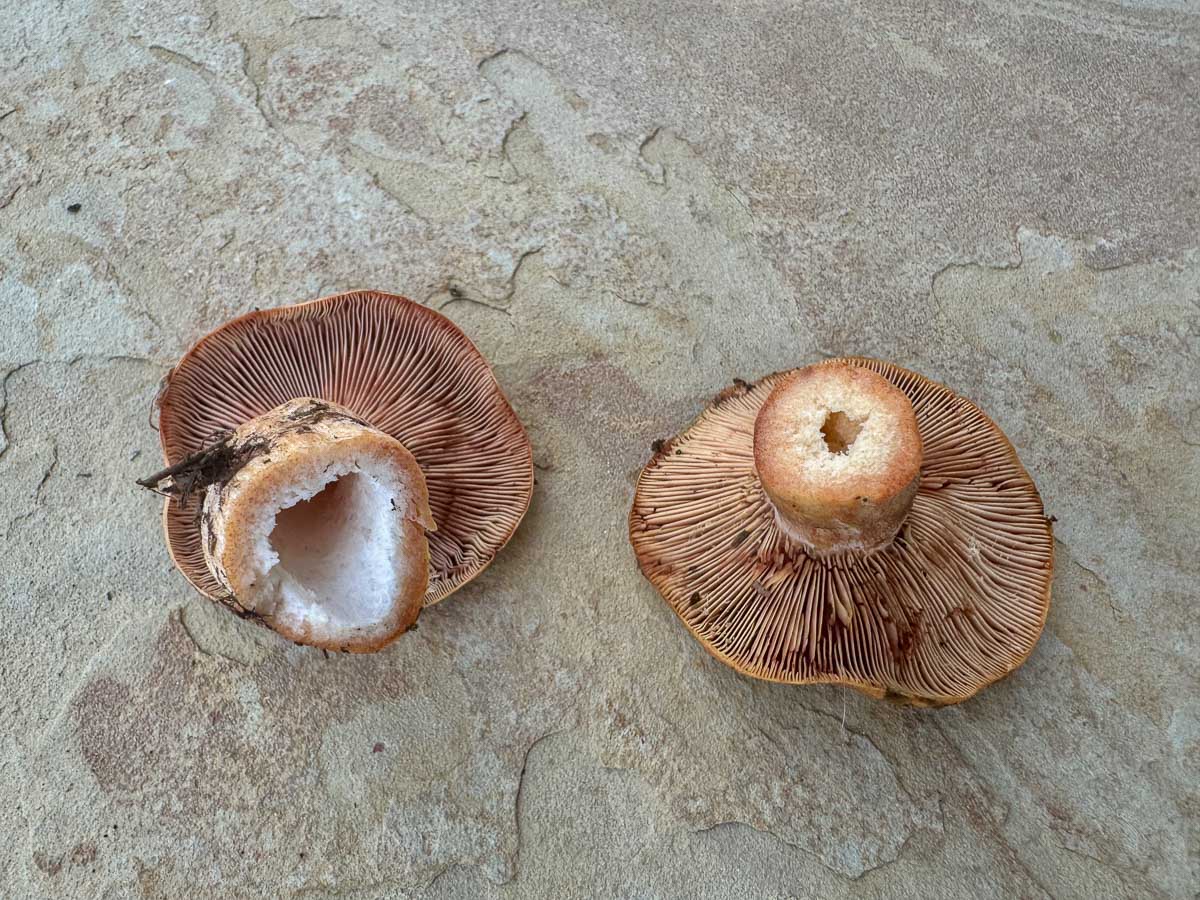
Look closely for small, shallow orange pits or depressions called scrobiculations. These can be a useful supporting characteristic. Ask yourself: Is the stem solid or hollow? Is it smooth or pitted? Is it the same color as the cap or noticeably paler? Does it bruise or
stain? Is the stem firm or brittle?
Stem Ring or Veil
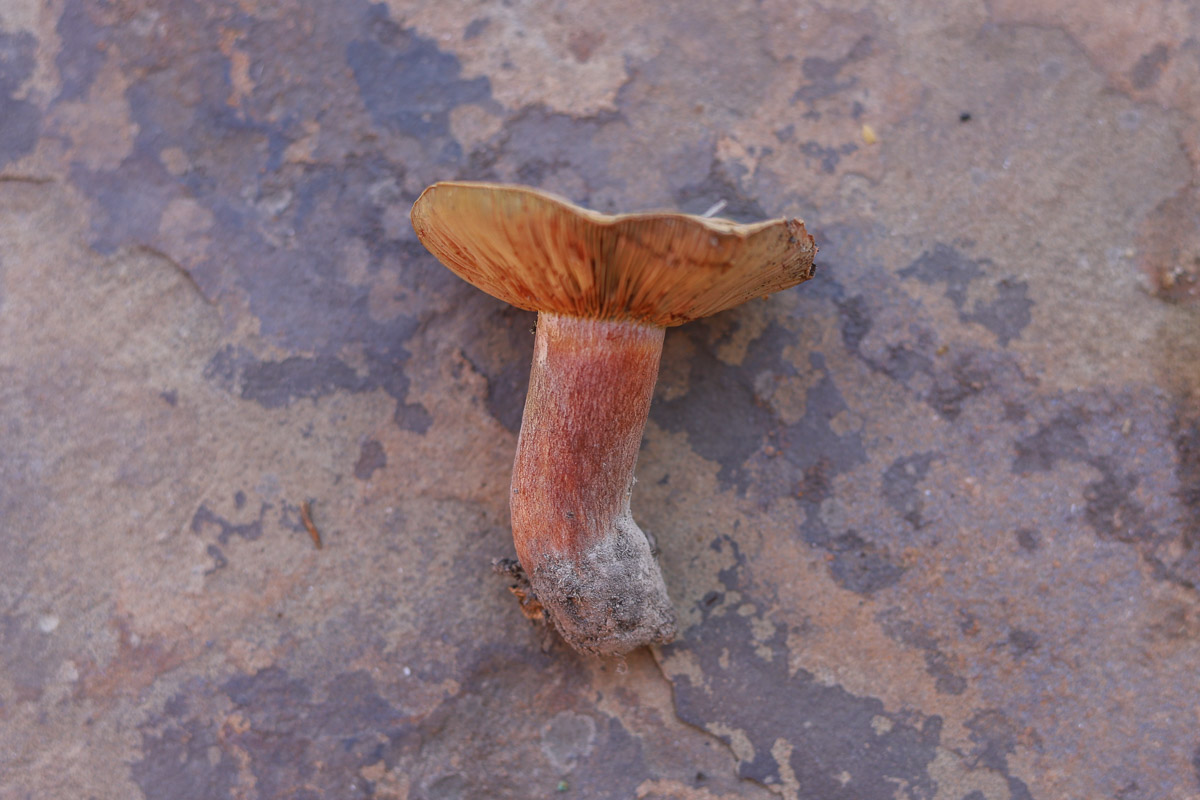
Saffron milk caps do not have a ring or annulus on the stem, and they do not have a volva or cup-like structure surrounding the base. If you find an orange mushroom with a distinct ring around the stem or a sac-like volva at the base, don't assume you've found a saffron milk cap.
Flesh
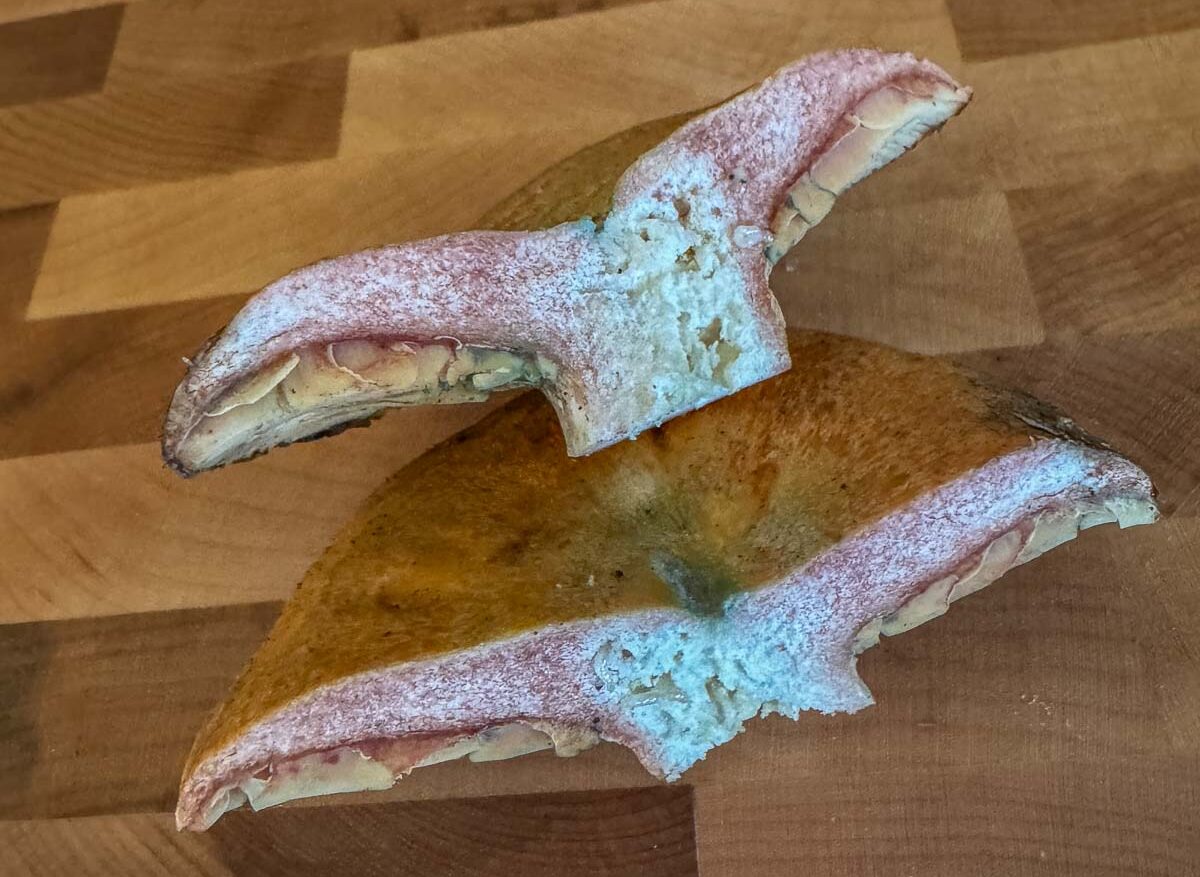
If you cut the mushroom in half, examine the flesh. The flesh is generally pale orange to whitish, with stronger orange coloration beneath the cap skin.
Spore Print
A spore print can provide another piece of the identification puzzle. Saffron milk cap descriptions generally place the spore print in the pale cream, buff, or pale ochre range. Taking a spore print isn't something I can check in the woods, but it can be useful for confirming an identification at home; not to mention, it's fun!
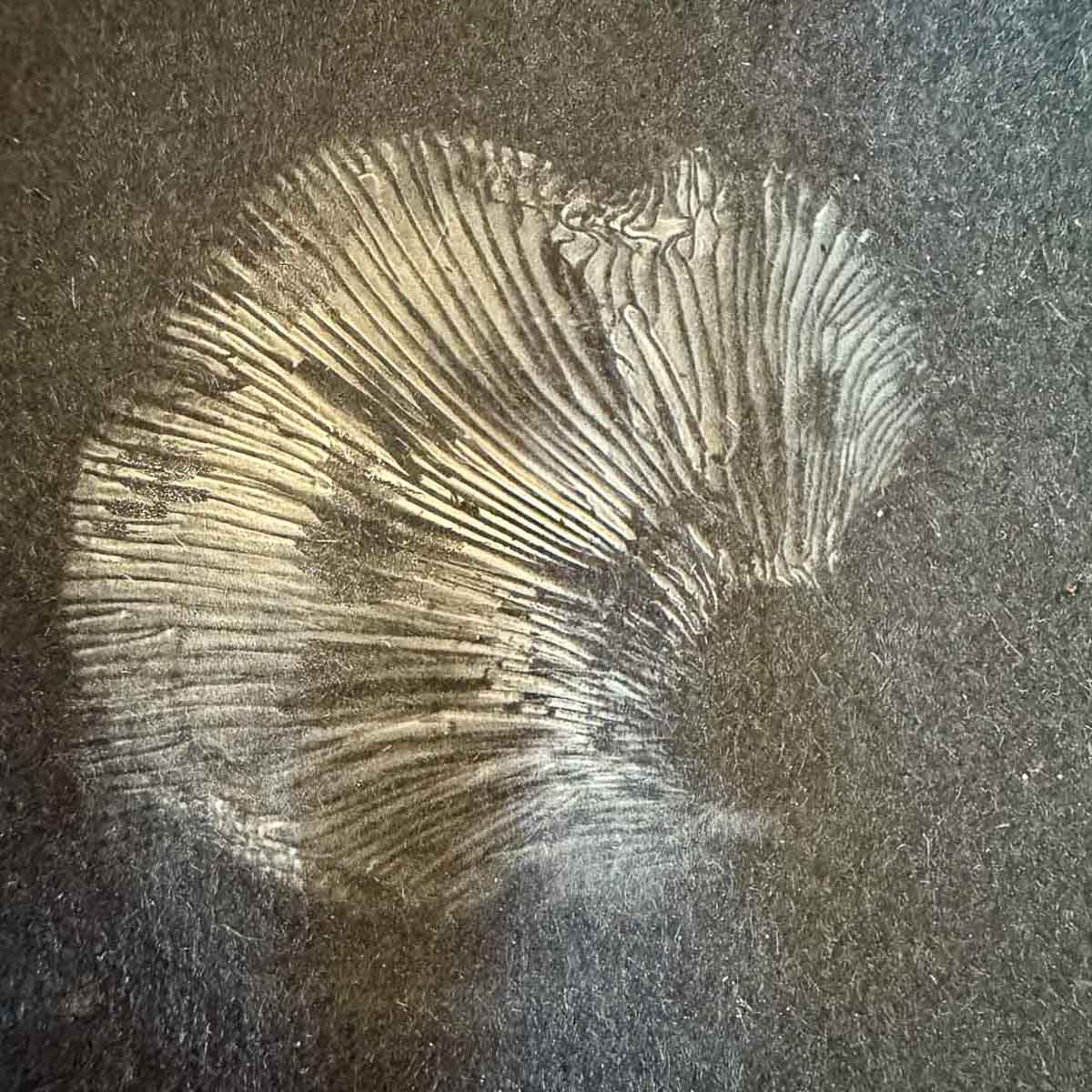
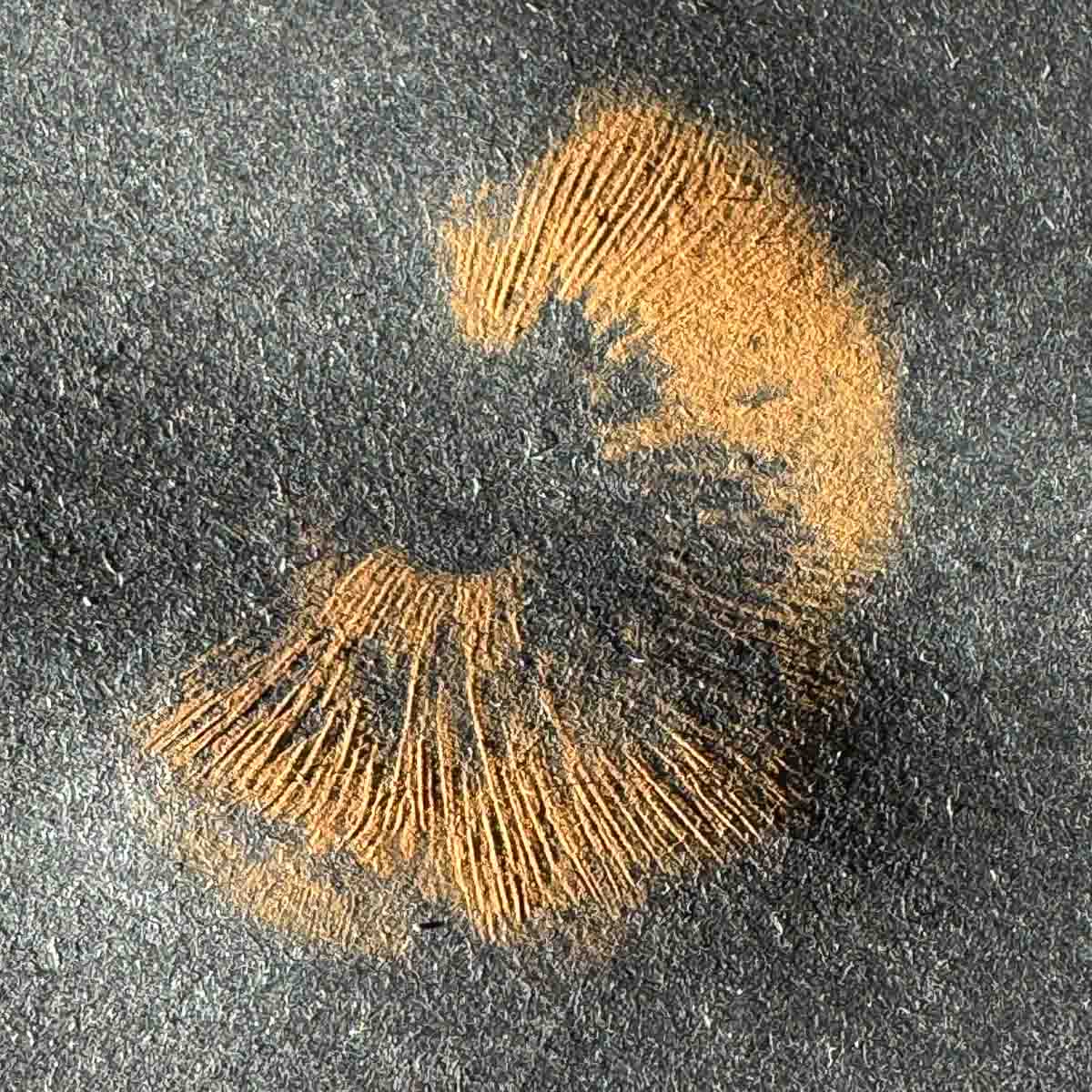
Saffron milk cap spore prints
How to Take a Spore Print
To take a spore print, remove the stem from a mature mushroom and place the cap gill-side down on a black sheet of cardboard or paper, or foil. Add a drop of water to the cap, then cover with a small bowl or glass. Leave it undisturbed for several hours, or overnight. When you lift the cap, you should see the spores deposited on the paper, revealing their color and pattern. For saffron milk caps, the spore print should be pale cream to pale ochre.
Smell and Taste
Smell can also be useful when identifying mushrooms, although it should never be the only characteristic you rely on. For experienced mushroom foragers who already know that a particular species can be evaluated this way, a tiny taste followed by spitting it out can sometimes provide useful information, particularly with milk caps, where acrid or peppery taste is an important characteristic.
I would never recommend tasting an unidentified mushroom as a general safety test. It is a specialized identification technique and isn't appropriate for every mushroom.
Put All the Clues Together
Don't identify a saffron milk cap based on its orange color alone. Instead, look at the combination of characteristics:
- Orange to reddish-orange, often zoned cap
- Depressed to funnel-shaped mature cap
- Crowded orange gills that may extend slightly down the stem.
- Orange or carrot-colored latex
- Latex behavior and color changes after exposure to air
- Orange to pale orange stem
- Stem that may become hollow with age
- Possible orange pits or scrobiculations on the stem
- No stem ring
- No basal volva
- Green staining with age or bruising
- Association with suitable conifer trees
- Appropriate season and habitat
Where do Saffron Milk Caps Grow?
Saffron milk caps grow in association with conifer trees, especially pine, where they form mycorrhizal relationships with the tree roots. In Montana, I look for them in areas with suitable pine habitat, particularly beneath or near mature trees, and in mossy areas.
They can grow in a variety of soils and forest conditions, but moisture is also important. I start checking my productive spots after a good soaking, especially when the weather begins to cool in late summer and fall.

When you're out foraging, don't just look at the ground; look around you. What trees are growing nearby? Is the mushroom growing beneath pine or another conifer? What is the soil like? Has the area recently received moisture? What other mushrooms are growing nearby?
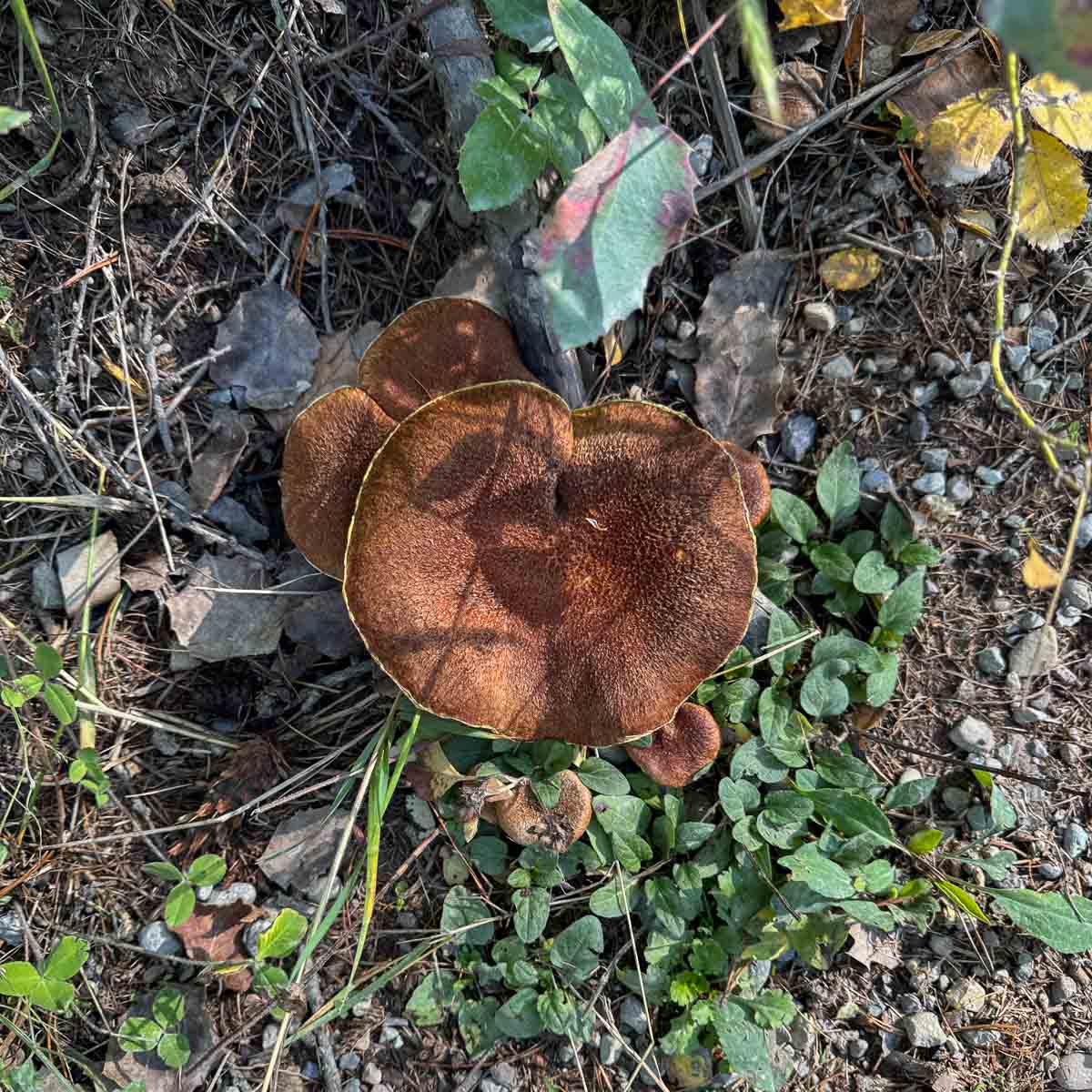
When I foraged mine, I found rufous milkcaps, meadow waxcaps, Matte Jacks, rosy gomphidius, crab brittlegills, and poison pie growing nearby. The poison pie was definitely a no thank you! 😂
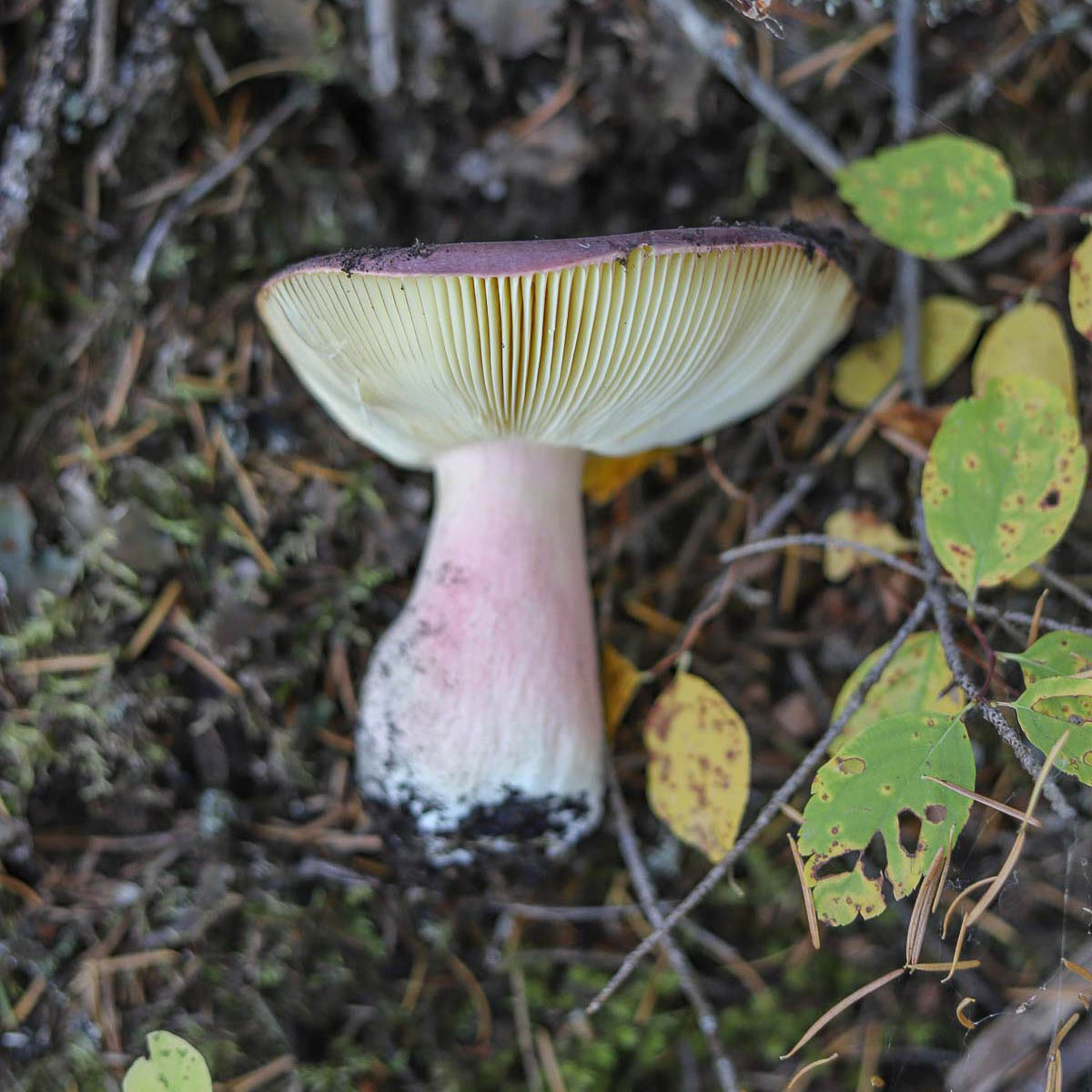
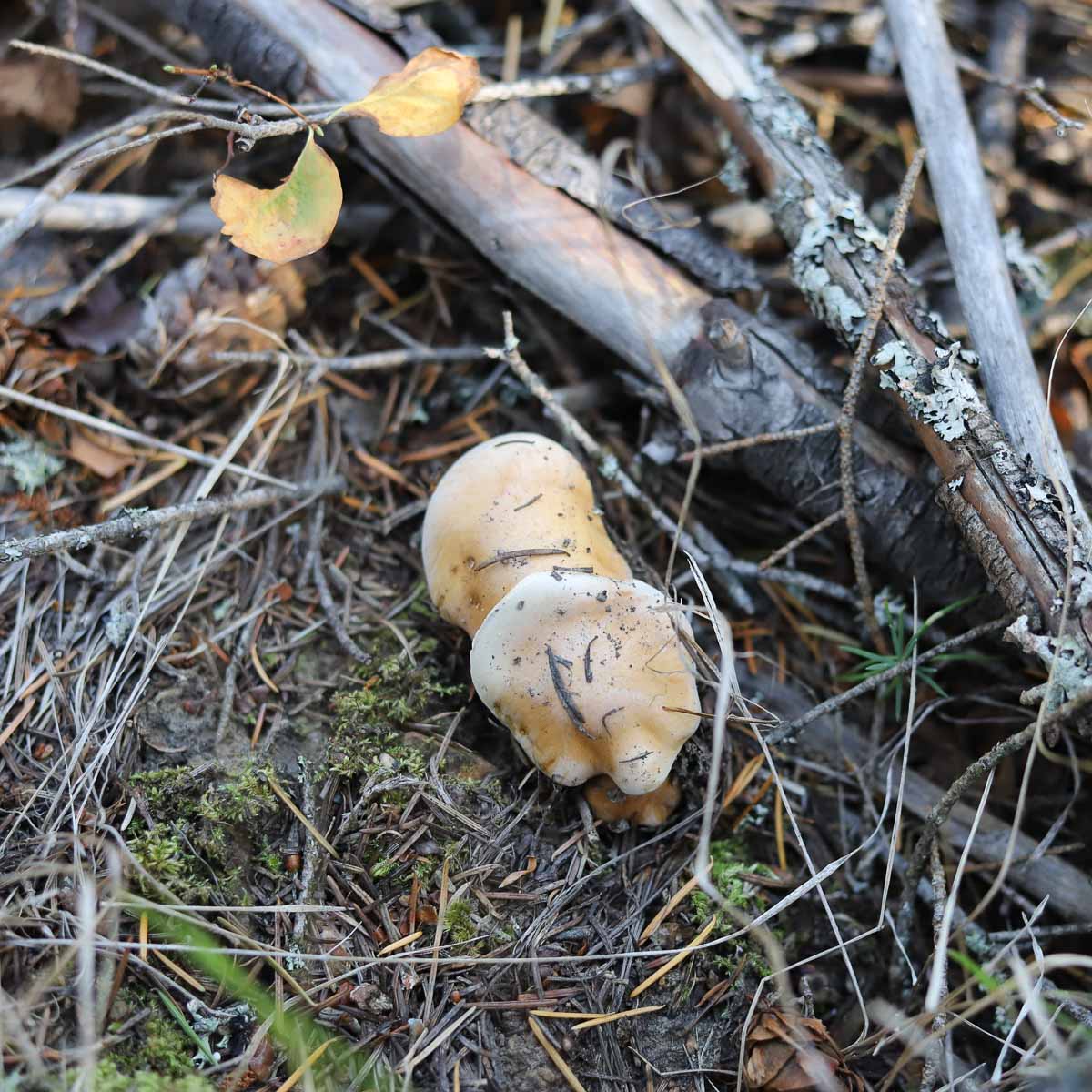
When to Look for Saffron Milk Caps
In Montana, saffron milk caps can be found from late summer through fall, but that also depends on elevation. Rainfall and temperature play a big role in mushroom production, so the timing can vary from year to year.
After a good stretch of moisture, start checking suitable conifer areas. And if you find a productive patch, remember where it is. Mushroom spots can be worth revisiting year after year.
How to Harvest Them
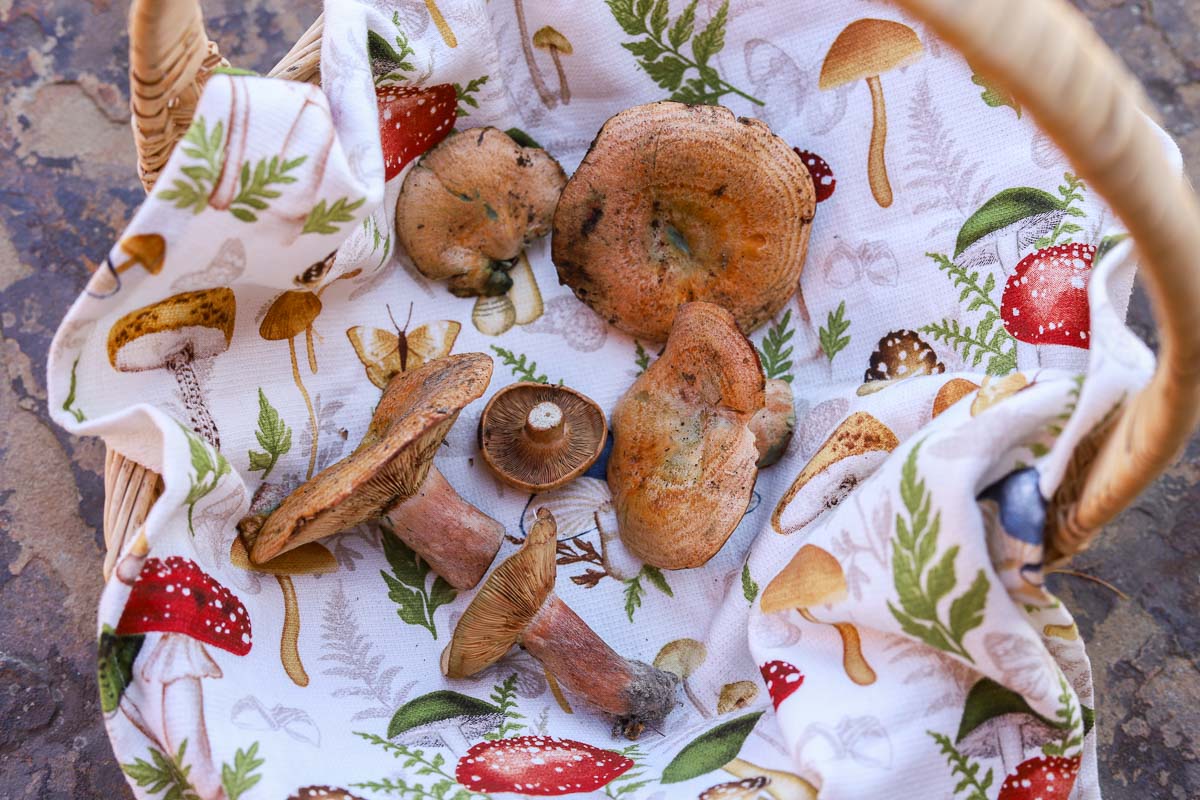
Once you've positively identified the mushrooms you're looking for, choose fresh, healthy specimens. Skip the ones that are old, deteriorating, insect-infested, or growing in areas that may be contaminated or near a busy road.
I recommend carrying mushrooms in a mushroom picking basket or breathable foraging bag rather than sealing them in a plastic bag.
Make sure you're allowed to forage wherever you're collecting. Regulations can vary depending on whether you're on private property, state land, national forest, or another type of public land.
How to Clean Them
Wild mushrooms have a way of bringing half the forest home with them. Brush away pine needles, dirt, moss, and other debris with a soft mushroom brush or paper towel.
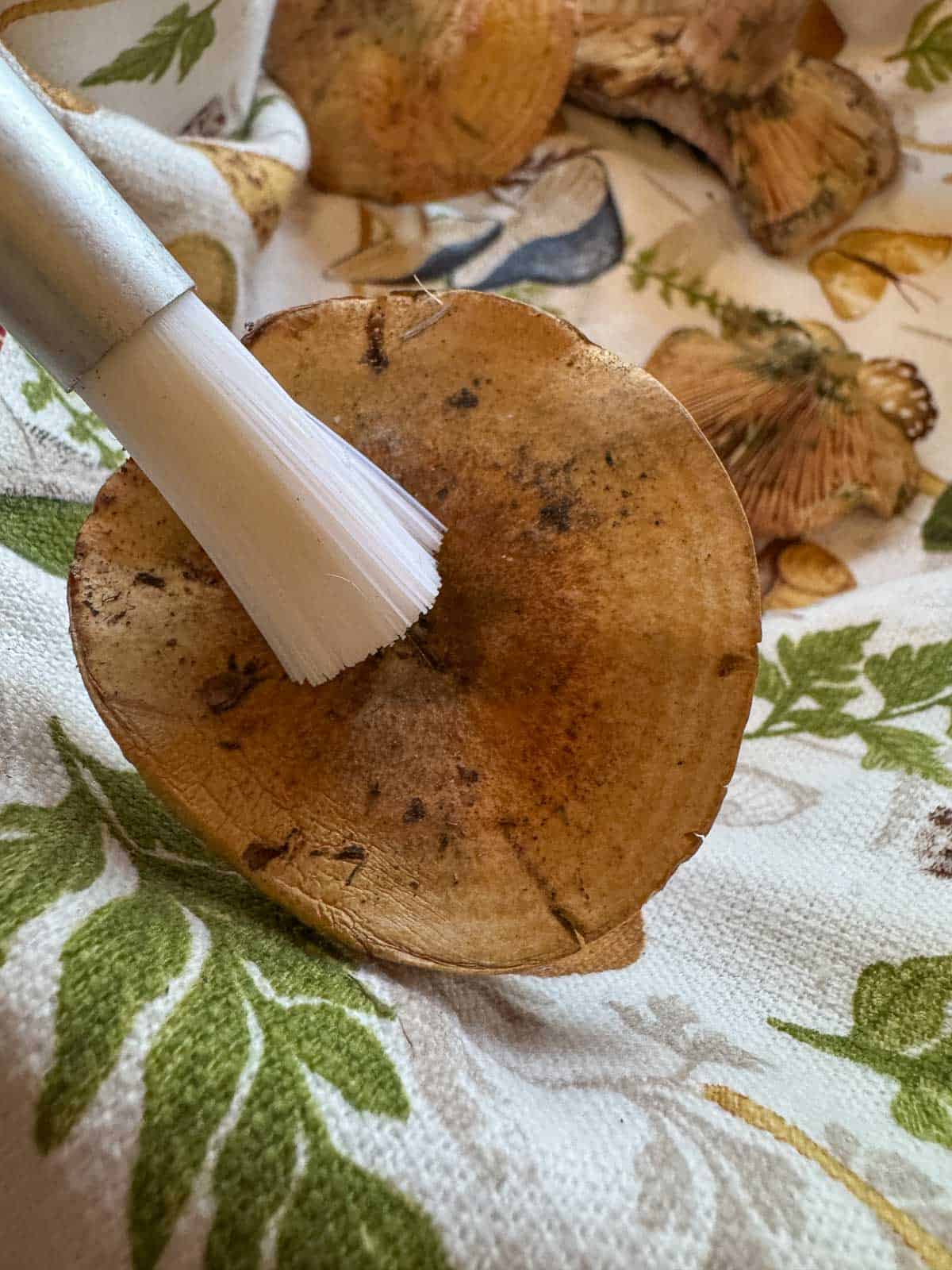
If they're particularly dirty, you can give them a quick rinse and dry them thoroughly. I don't recommend soaking them because mushrooms can absorb water and become difficult to brown. Trim away any damaged areas and inspect the mushrooms carefully before cooking.
What do Saffron Mushrooms Taste Like?
Properly identified saffron milk caps have a distinctive earthy mushroom flavor and a firm, meaty texture. They're particularly good when cooked over relatively high heat so that they develop some color.
How to Cook Saffron Milk Caps
Saffron milk caps are versatile mushrooms and can be prepared in several ways. I like to keep the seasoning simple: garlic, butter, olive oil, salt, and black pepper. However, parsley, thyme, parmesan cheese, and a little lemon also work beautifully. You can also use them in pasta, risotto, soups, omelets, or as a topping for grilled steak.
Here are a few ways to prepare them:
- Sautéed Saffron Milk Caps: One of the simplest ways to enjoy them is sautéed in butter or olive oil with garlic, salt, and black pepper. Cook them over medium heat, covered, with a little olive oil until they release their juices, about 3 minutes. Uncover, season with salt and pepper, and add the butter. Continue cooking until nicely browned on both sides. A little fresh parsley and lemon juice at the end adds a nice finishing touch.
- Pickled Saffron Milk Caps - an option if you've brought home more mushrooms than you can eat fresh.
- Saffron Milk Cap Risotto - a good choice for a richer, more substantial dish. Or use my morel risotto recipe, but substitute saffron milk cap mushrooms for the morels.
More Mushroom Articles
Looking for other recipes like this? Try these:

Comments
No Comments