
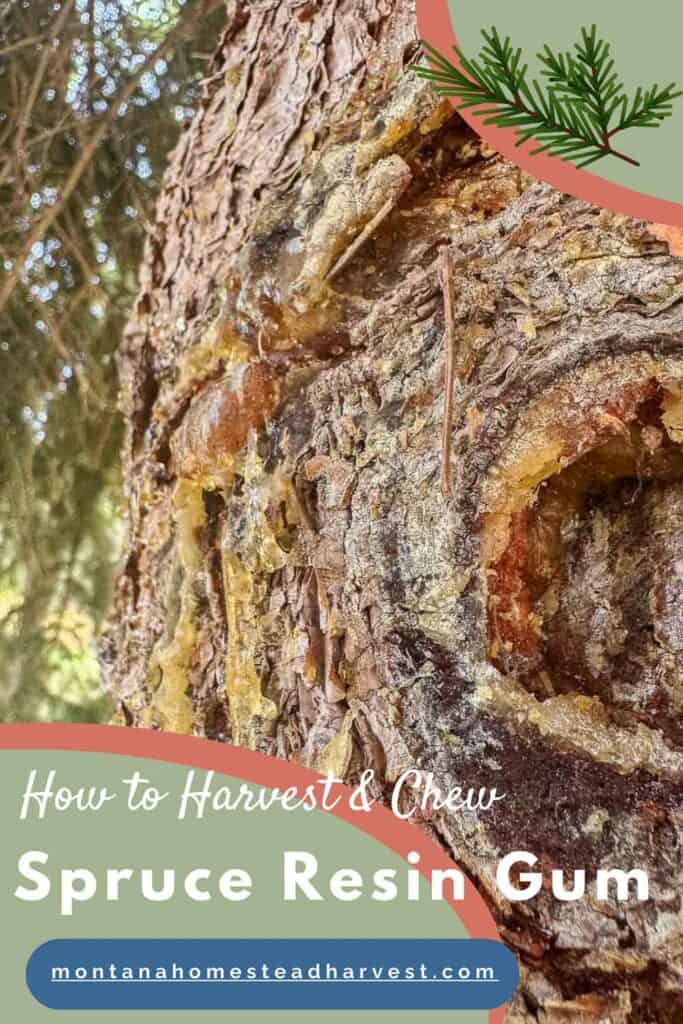
Did you know you can walk through the forest, find a piece of dried spruce or pine resin, pop it in your mouth, and chew it like gum? Spruce gum doesn't require melting, straining, or complicated preparations. If you enjoy spruce sap gum, try my pine needle tea next!
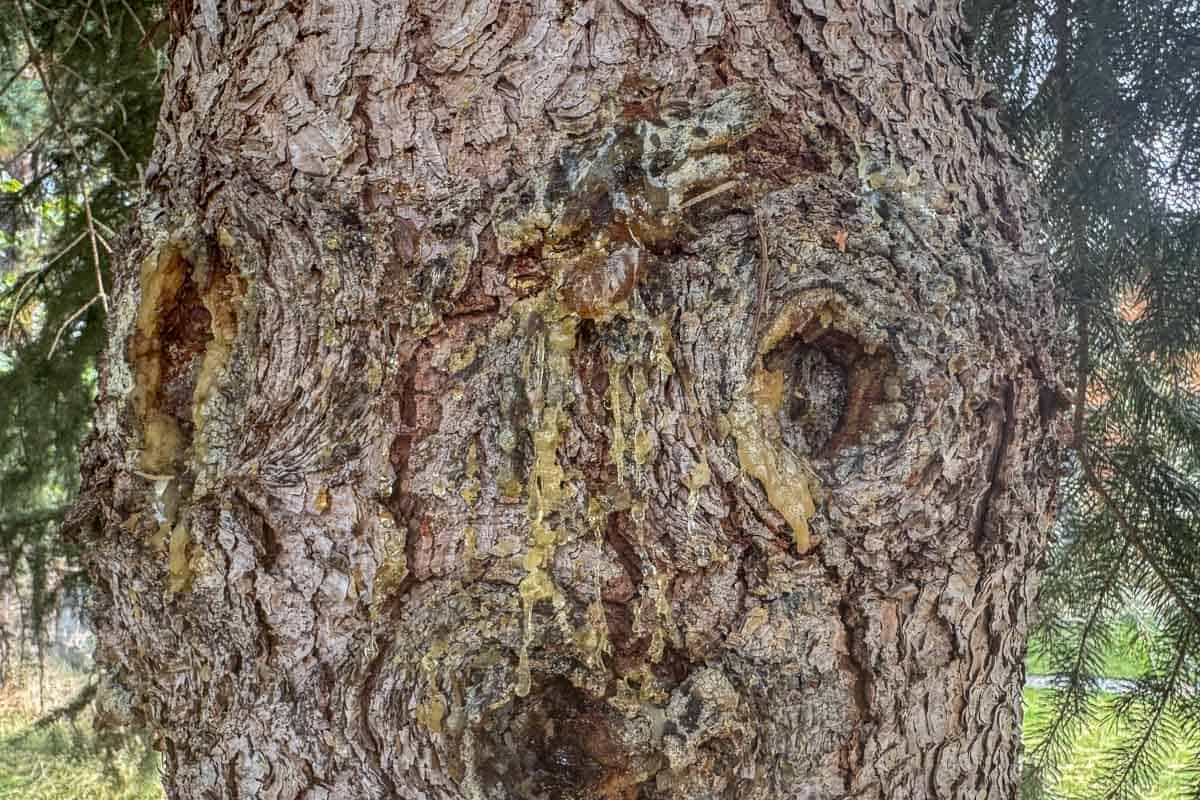
Sometimes, as a blogger, you run out of ideas for new blog posts, so you have to let your imagination run wild. And when you're stuck inside on a rainy day staring at thousands of pine trees all around you, an unexpected idea comes to mind: Spruce gum!
Earlier in the year, I foraged some pine resin to make pine resin salve. I still had some resin left, so I decided to make pine resin gum. Guess what? It ended in total failure. 😬 But then I discovered something much simpler: you can take a piece of naturally dried resin, pop it in your mouth, chew it for 30 seconds to a minute, and BOOM, you have pine or spruce gum!
Spruce gum reminds me of the natural gum I chewed as a child growing up in Iraq, both in texture and taste. Curious about the connection, I looked it up and discovered that traditional tree gum and resins, including gum arabic (acacia gum) and mastic gum, have been used in the Middle East for centuries.
While pine resin gum isn't necessarily the same gum I remember from my childhood, the familiar flavor immediately brought those memories flooding back. It made me wonder if that's where my fascination with chewing natural tree gums began.
Jump to:
- What is Spruce Gum?
- My Failed Attempt at Making Pine Resin Gum
- Where to Find Spruce Gum
- How to Forage It
- Evergreens to Avoid
- How to Clean Spruce Sap Gum
- How to Chew Pine Resin Gum
- My Conifer Resin Taste Test
- FAQs
- How long does spruce gum last?
- Is Pine Gum the Same as Spruce Gum
- Pro Tips
- More Foraging Recipes
- Comments
What is Spruce Gum?
Spruce gum is a natural chewing gum made from the hardened resin of spruce trees. The resin is produced by the tree as a natural defense after a wound, and when it dries and hardens, it can be collected, cleaned, and chewed.
Unlike modern chewing gum, spruce gum doesn't stay soft indefinitely. As you chew it, the warmth and moisture in your mouth soften the resin. When you stop chewing it, it gradually firms up again. This means you may need to chew it continuously to keep it pliable.
My Failed Attempt at Making Pine Resin Gum
I initially thought I needed to melt the resin and strain it to make it chewable. I followed a YouTube video that recommended melting the resin in a can in a 300°F oven for 75 minutes. But after 45 minutes, it began bubbling out of the container... fun, not!
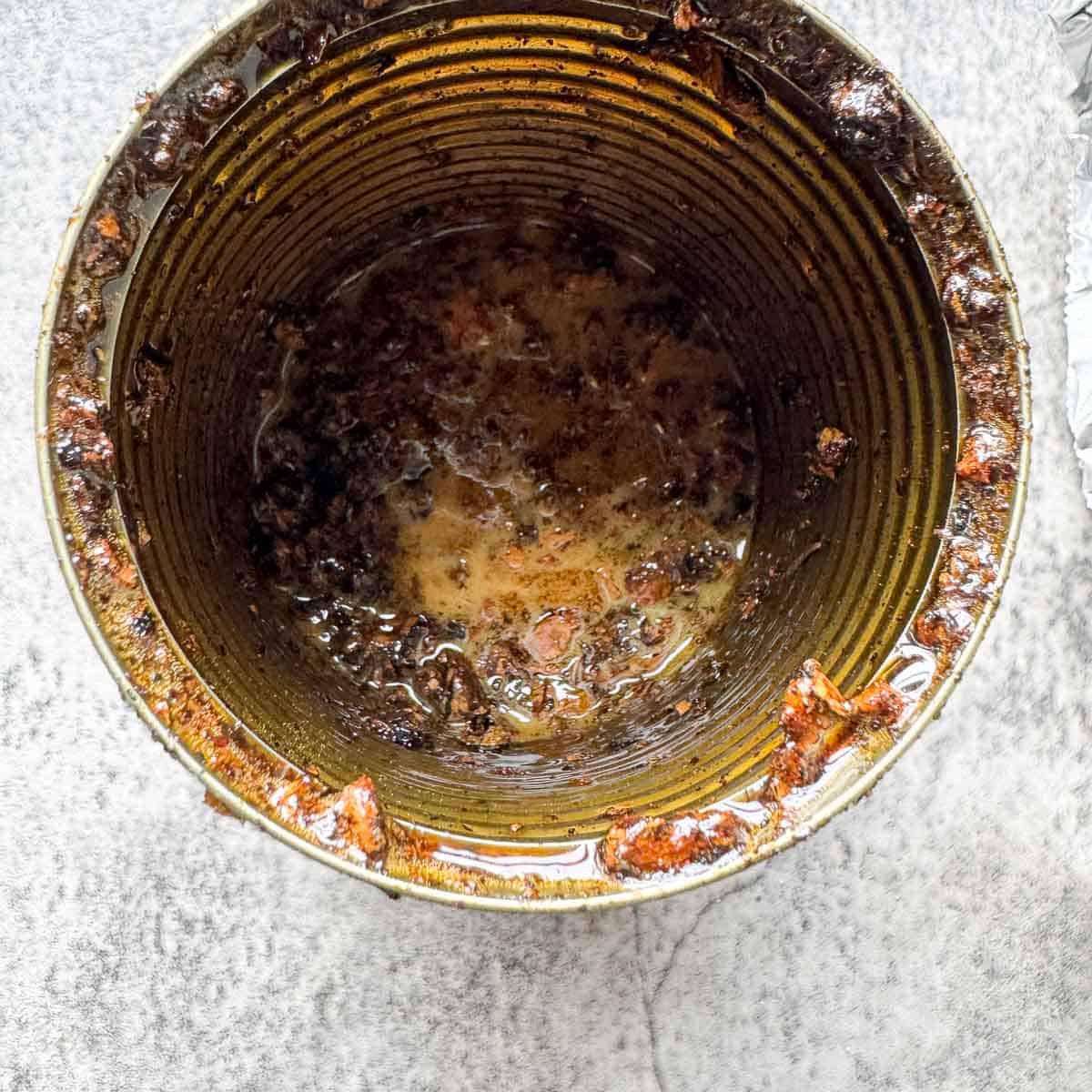
After straining it through a small, fine-mesh strainer and ruining said strainer in the process, I allowed the resin to harden. Next, the taste test. I put a small piece in my mouth, and it disintegrated into sand and would not come together. I would call that a fail! 😂
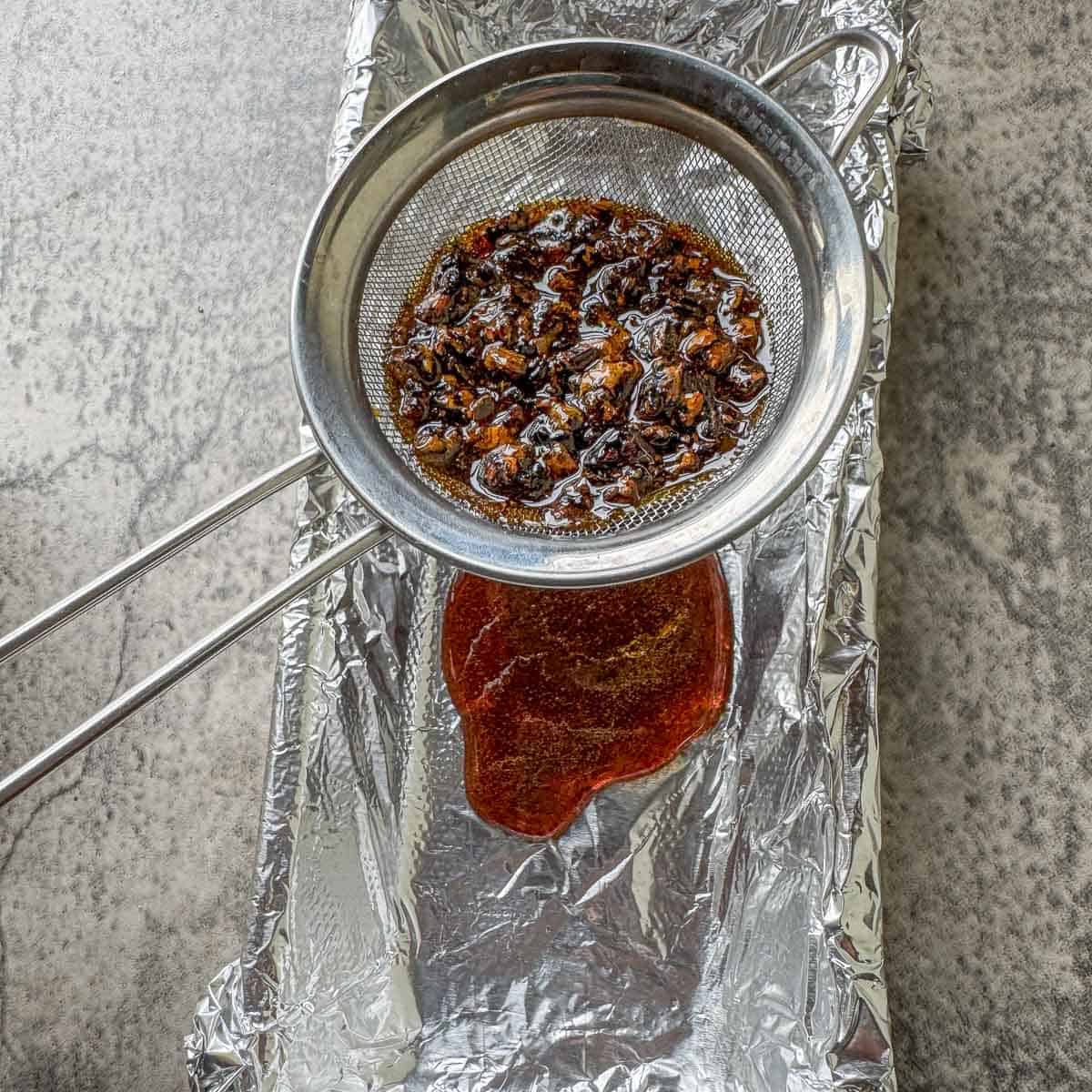
I thought about trying again at a lower temperature, a shorter time, or melting it on the stovetop. However, I was feeling a little lazy and didn't want to go out and collect another cup's worth of resin in the rain.
Then it occurred to me that you don't need to melt the resin at all. All you need to do is find a piece of naturally hardened spruce or pine resin, clean it up, pop it in your mouth, and chew!
Where to Find Spruce Gum
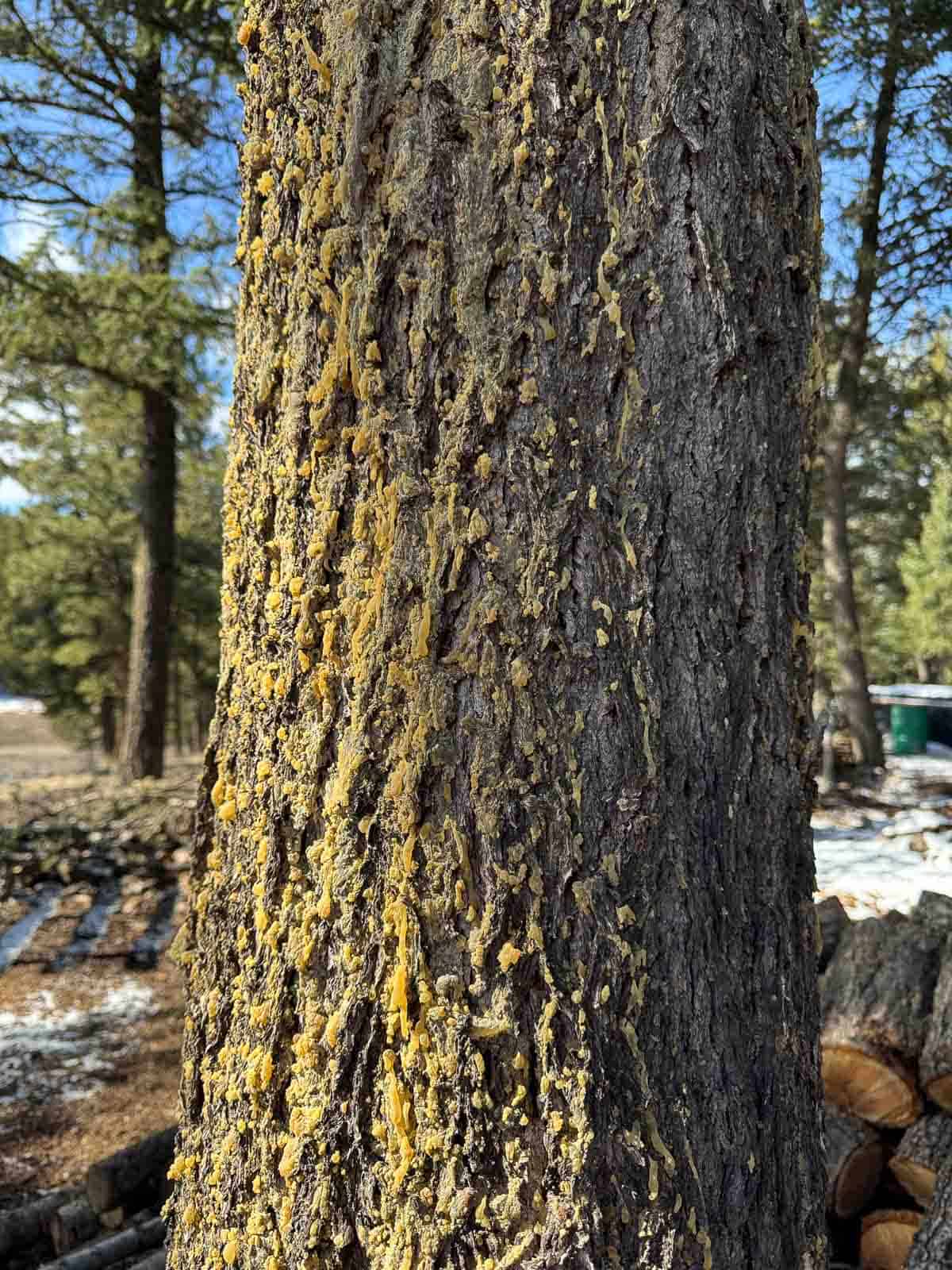
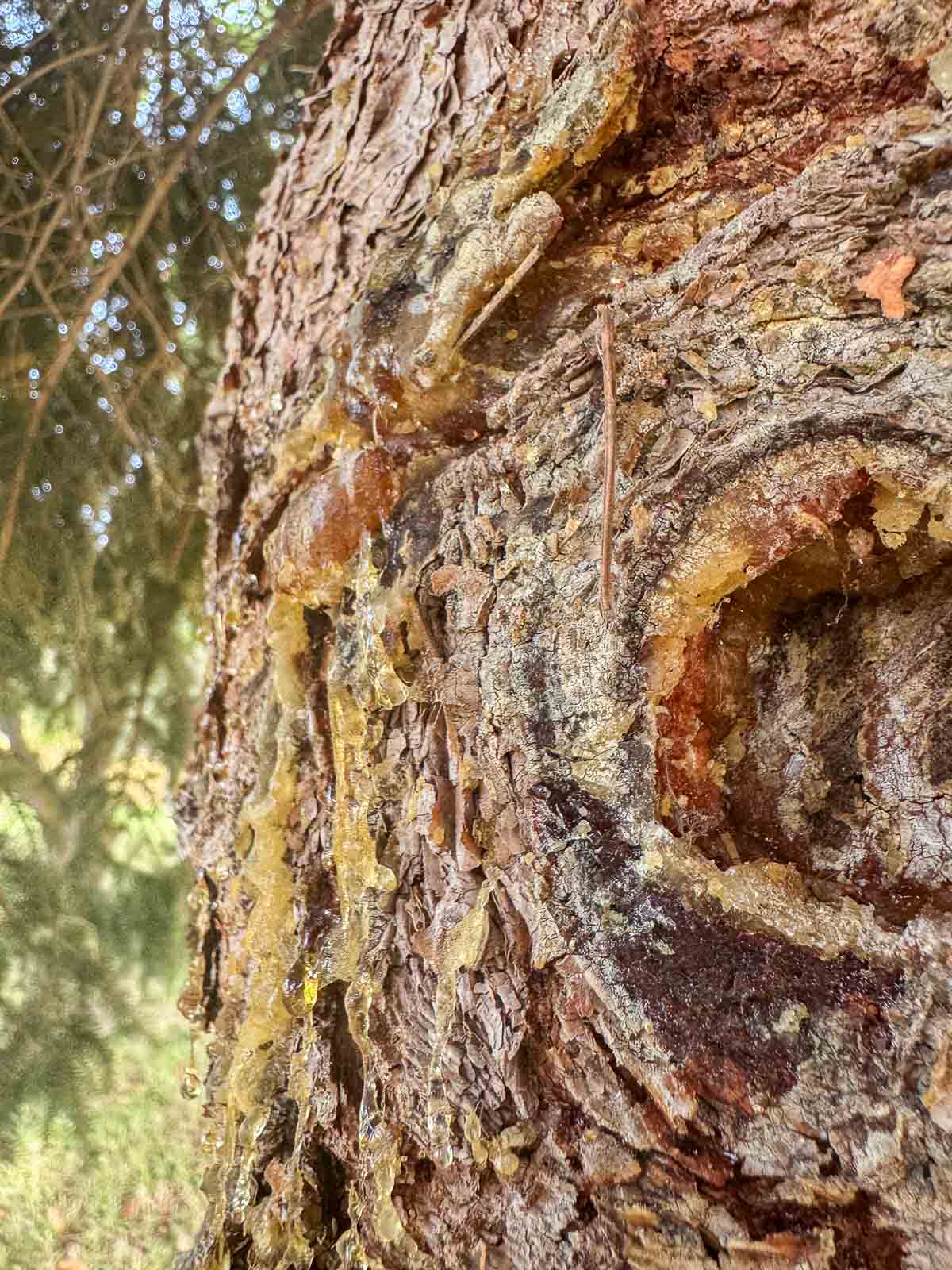
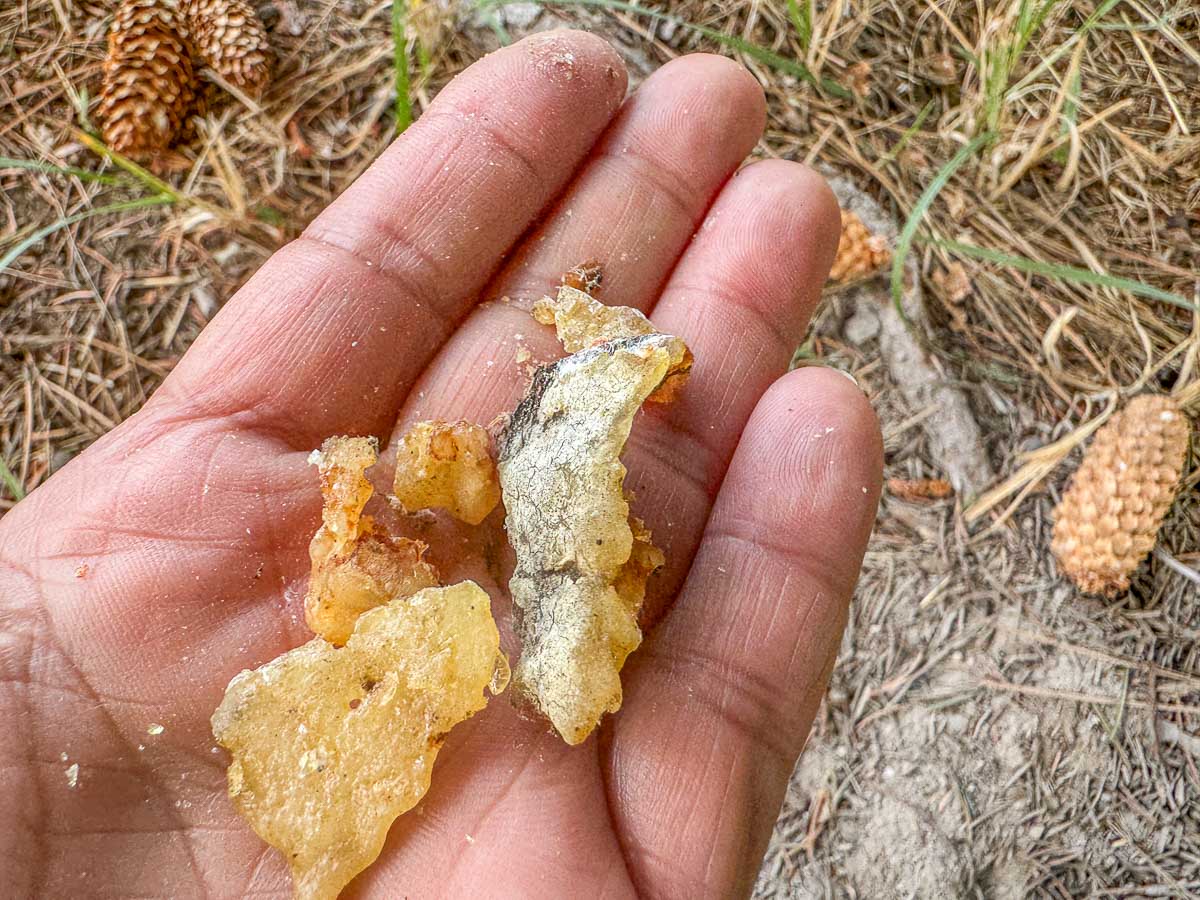
If you don't have access to spruce trees, resin from Douglas fir, pine, and larch can be used. Once you find the right tree, look for hardened, amber colored resin along the trunk. When it's ready to harvest, it will be hard to the touch (won't dent when you push on it). When you break off a piece, the interior will be smooth and shiny, almost like glass.
How to Forage It
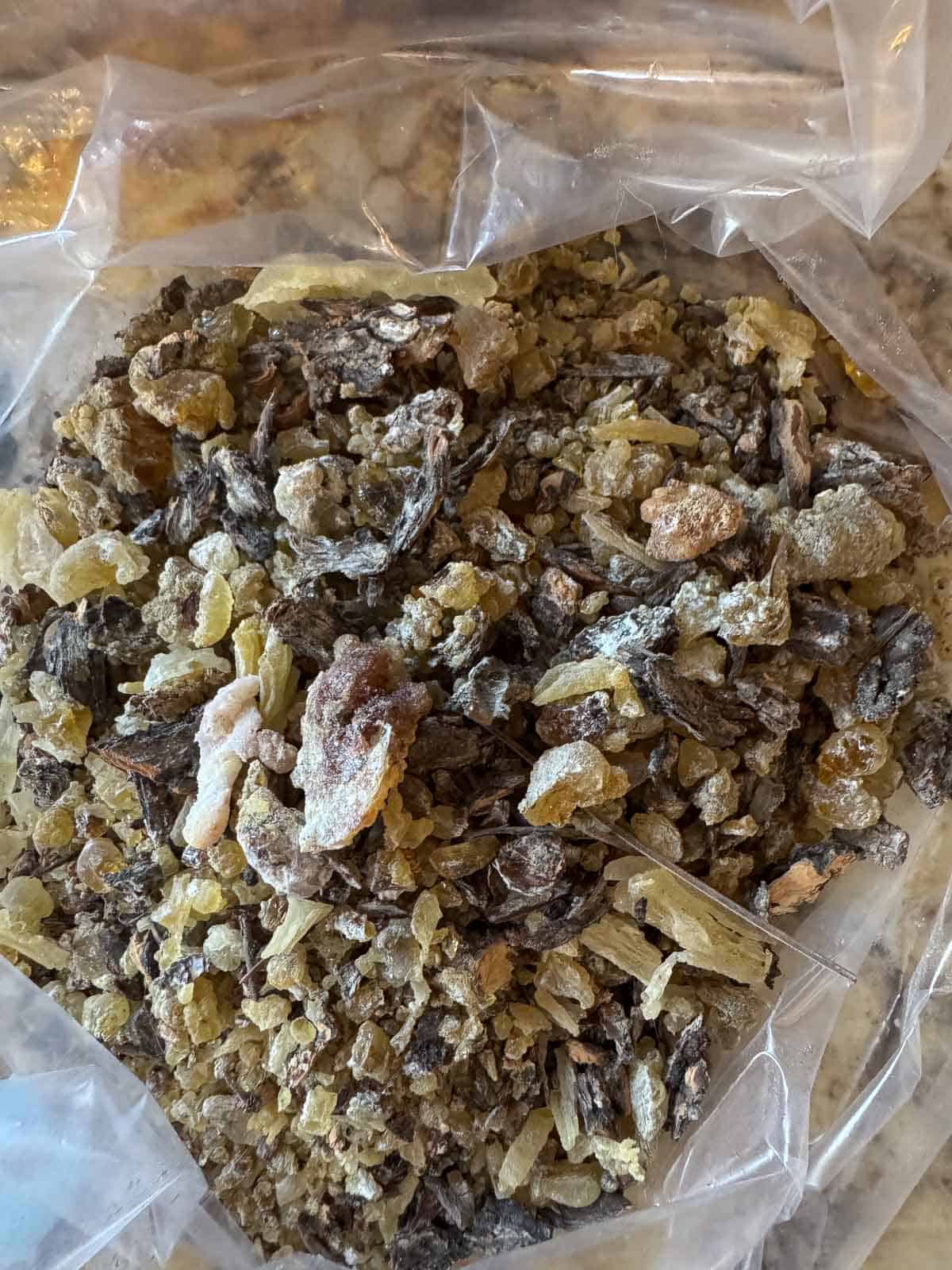
Look for naturally hardened resin and break it off. Take only a small amount from each tree, and avoid wounding the tree. Don't take resin that's contaminated with dirt, insects, pine needles, or other debris. Once collected, place resin in a clean, dry mason jar for storage.
Evergreens to Avoid
Not every evergreen tree is suitable for chewing resin. Never collect resin from yew (Taxus species). Yew is an evergreen conifer that can be mistaken for other conifers, but its needles, bark, seeds, and other parts contain toxic compounds and can be potentially fatal if ingested.
Don't consume resin from ponderosa pine if you're pregnant or nursing. Only harvest resin when you are 100% certain of the tree's identification. When foraging, it's better to leave an unidentified resin where you found it than to take a chance.
For this recipe, I recommend using resin from a properly identified spruce, fir, or larch and avoiding resin from any tree you cannot positively identify.
How to Clean Spruce Sap Gum
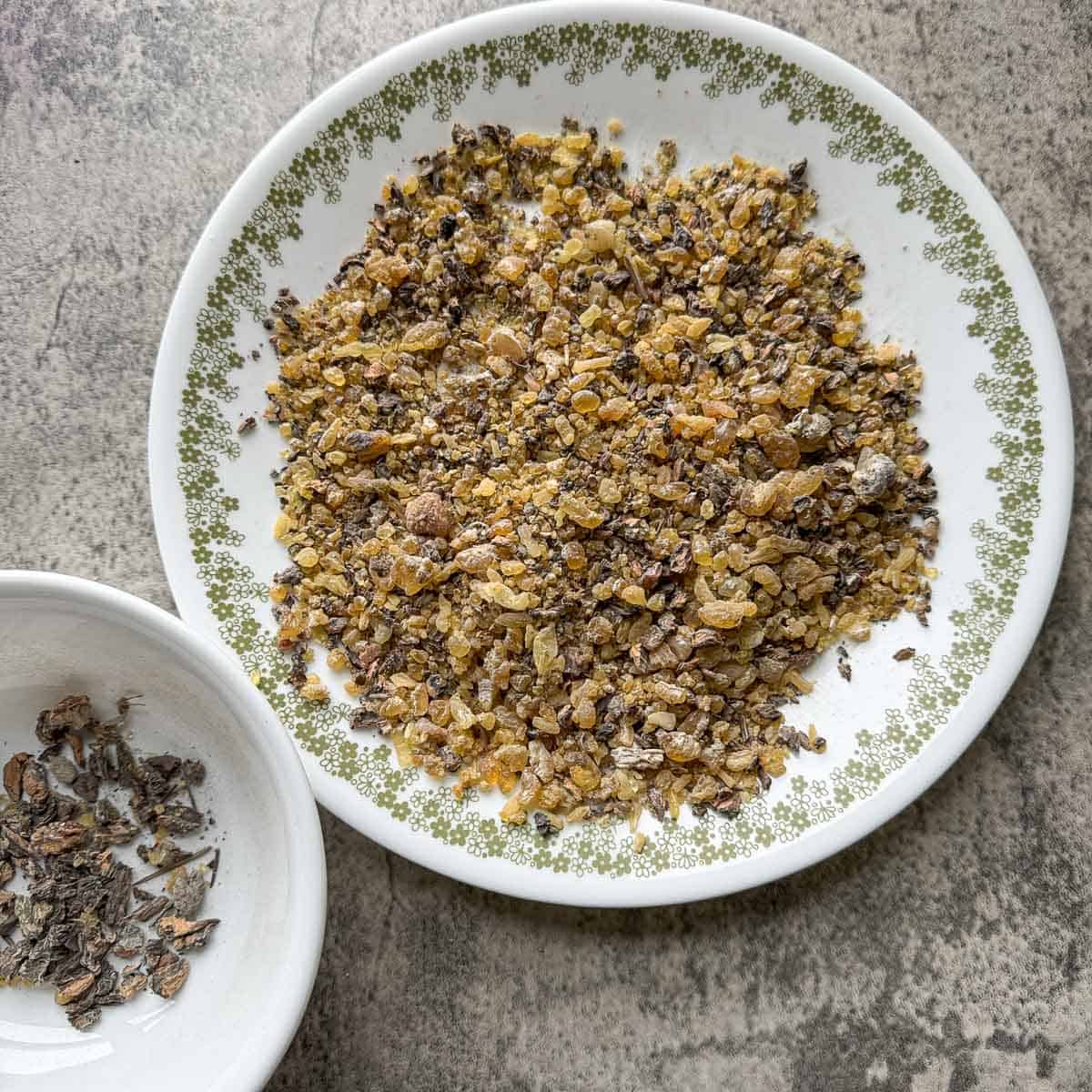
Once you've collected naturally hardened resin, inspect each piece carefully and remove any bark, needles, dirt, insects, or other debris. I like to use a small knife or tweezers to pick away anything stuck to the resin. Once clean, it's ready to chew.
How to Chew Pine Resin Gum
Place a small piece of hardened resin in your mouth and chew; pretty simple, right? At first, the flavor will be quite strong and bitter, but don't spit it out! However, it will produce a lot of saliva, which you will want to spit out.
As you continue chewing, the flavor will mellow, so hang in there! The texture will slowly become more gum-like. You can even blow tiny bubbles! And the best part? Unlike regular gum, the flavor doesn't disappear after a few minutes of chewing; it actually gets better!
My Conifer Resin Taste Test
I decided to put three different conifer resins to the test: larch, spruce, and fir. I was curious whether they would taste and behave differently, and they definitely did!
| Resin | Flavor | Bitterness | Texture |
|---|---|---|---|
| Larch | Mild, pleasant | Least bitter | Came together fastest |
| Spruce | Piney, resinous | Moderately bitter | Took longer to soften |
| Fir | Strong, resinous | Most bitter | Took longest to soften |
Of the three, I liked larch the best. It had the mildest, most pleasant flavor and came together into a chewy gum much faster than the spruce or fir. Fir was by far the most bitter, while spruce fell somewhere in between.
FAQs
What Does Spruce Gum Taste Like?
Spruce gum tastes different from any gum you've tasted before. The flavor can vary depending on the tree or the age of the resin. It has a resinous, woody, piney flavor and can be quite bitter. As you continue to chew it, the intense flavor will start to mellow, leaving you with a milder, piney taste.
How long does spruce gum last?
Spruce sap gum can remain usable for years when stored properly in an airtight container in a cool, dry place. Because tree resin is naturally low in moisture, it doesn't spoil as quickly as many foods.
Is Pine Gum the Same as Spruce Gum
Although the names may be used interchangeably, they are not the same. Both are resins that can be found on evergreens and can be chewed. Pine gum comes from pine trees, while spruce gum comes from spruce trees.
Pro Tips
- Collect only hardened resin. Fresh resin is sticky and hard to work with. Hardened resin is easier to harvest, clean, and work with.
- If the resin is still soft, sticky, or gooey, don't bother trying to chew it. It will stick to your teeth and be nearly impossible to remove.
- A little goes a long way, so only chew small pieces of resin.
- Don't swallow the bitter juices; spit them out instead. As you chew spruce sap gum, the bitterness will lessen.
- Store in a cool, dark location. Warm temperatures may soften the resin and cause it to stick together.
More Foraging Recipes
Looking for other recipes like this? Try these:


Comments
No Comments