
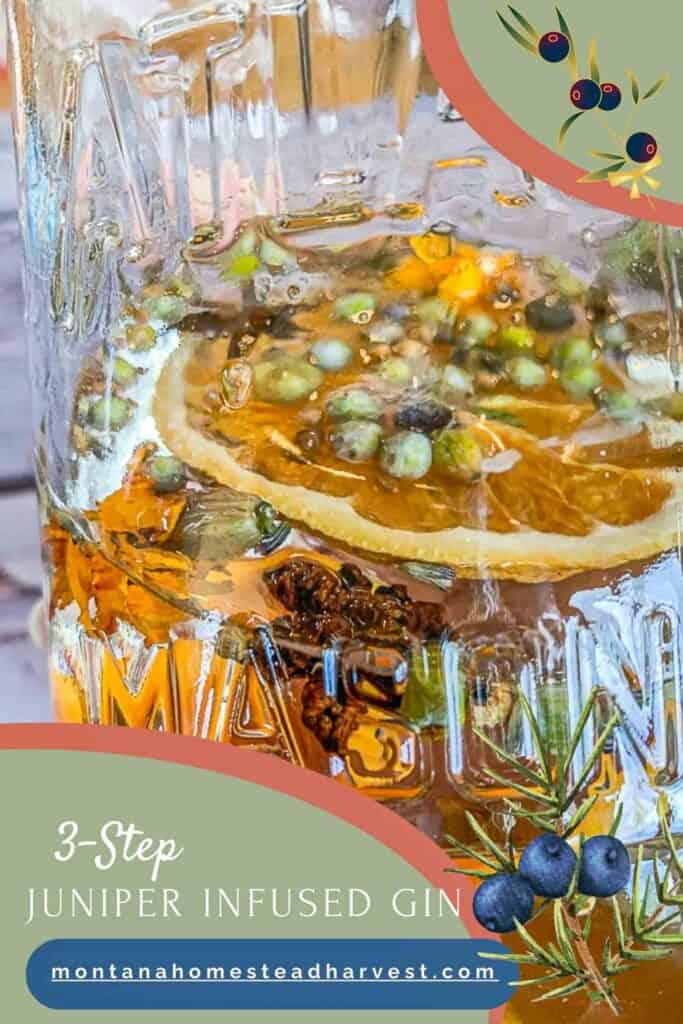
Making juniper berry infused gin is one of the simplest ways to turn wild ingredients into something special. This easy, no-distillation method uses foraged or store-bought juniper berries steeped in vodka to create a homemade gin-style infusion that's perfect for sipping, gifting, or mixing into cocktails. You may also enjoy making pine needle soda!
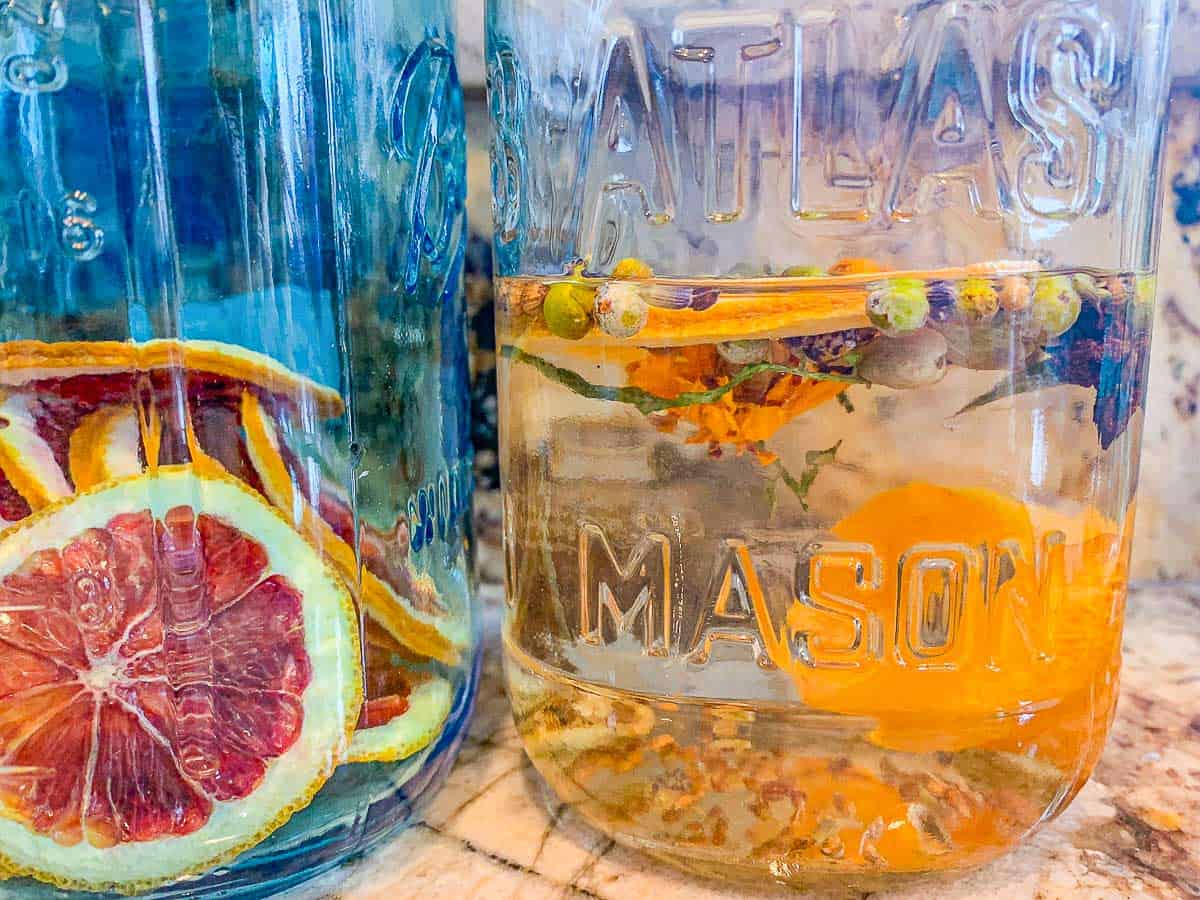
On our Montana homestead, juniper berries are one of the few things you can harvest in winter. This "gin" infusion is one of the ways to preserve their bold, piney flavor long after the season ends.
Making your own homemade gin is pretty darn cool. Sure, you can run down to the store and buy a bottle, but where's the fun in that? I ask you, where's your sense of adventure? Wouldn't you rather experiment with making it yourself?
Jump to:
- Why You'll Love This Method
- What are Juniper Berries?
- Edible Juniper Species (Culinary Use)
- What Juniper Berries Taste Like
- How to Safely Identify Edible Juniper
- Ingredients & Substitutions
- Other Botanical Variations
- How to Make Infused Gin
- Infusion Time vs Flavor Result
- Storage & Labeling Tips
- Top Tip
- FAQ
- Related Posts
- Comments
Why You'll Love This Method
- No distilling equipment required
- Uses foraged or dried juniper berries
- It's shelf-stable and makes a great gift!
- Customizable with garden, forest-foraged, and even pantry botanicals
What are Juniper Berries?
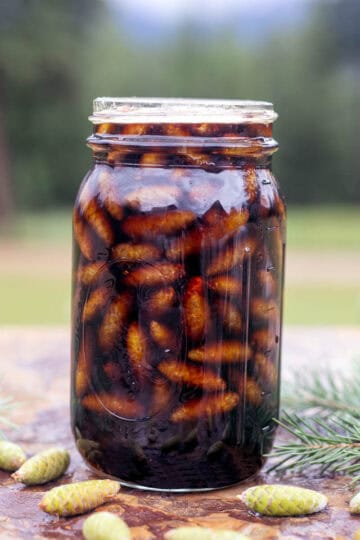
Juniperus communis is an evergreen conifer with edible berries (technically cones). These cones are green, hard, and bitter when unripe. Once ripe, their color transforms into a deep bluish-purple.
Ripe juniper berries have a sweet, piny taste which can be described as peppery. Juniper berries are often harvested for their medicinal properties or used to flavor food, marinades, and drinks. However, some varieties are toxic, so plant identification is critical.
Green juniper berries are commonly used in infused gin. However, some recipes call for ripened purple juniper berries. I decided to use both just to get a more complex flavor. If you can't find juniper berries, buy them online.
Edible Juniper Species (Culinary Use)
Common juniper (Juniperus communis) is traditionally used for food, tea, and gin. It's also used worldwide for teas and infusions. These berries take 2 to 3 years to mature.
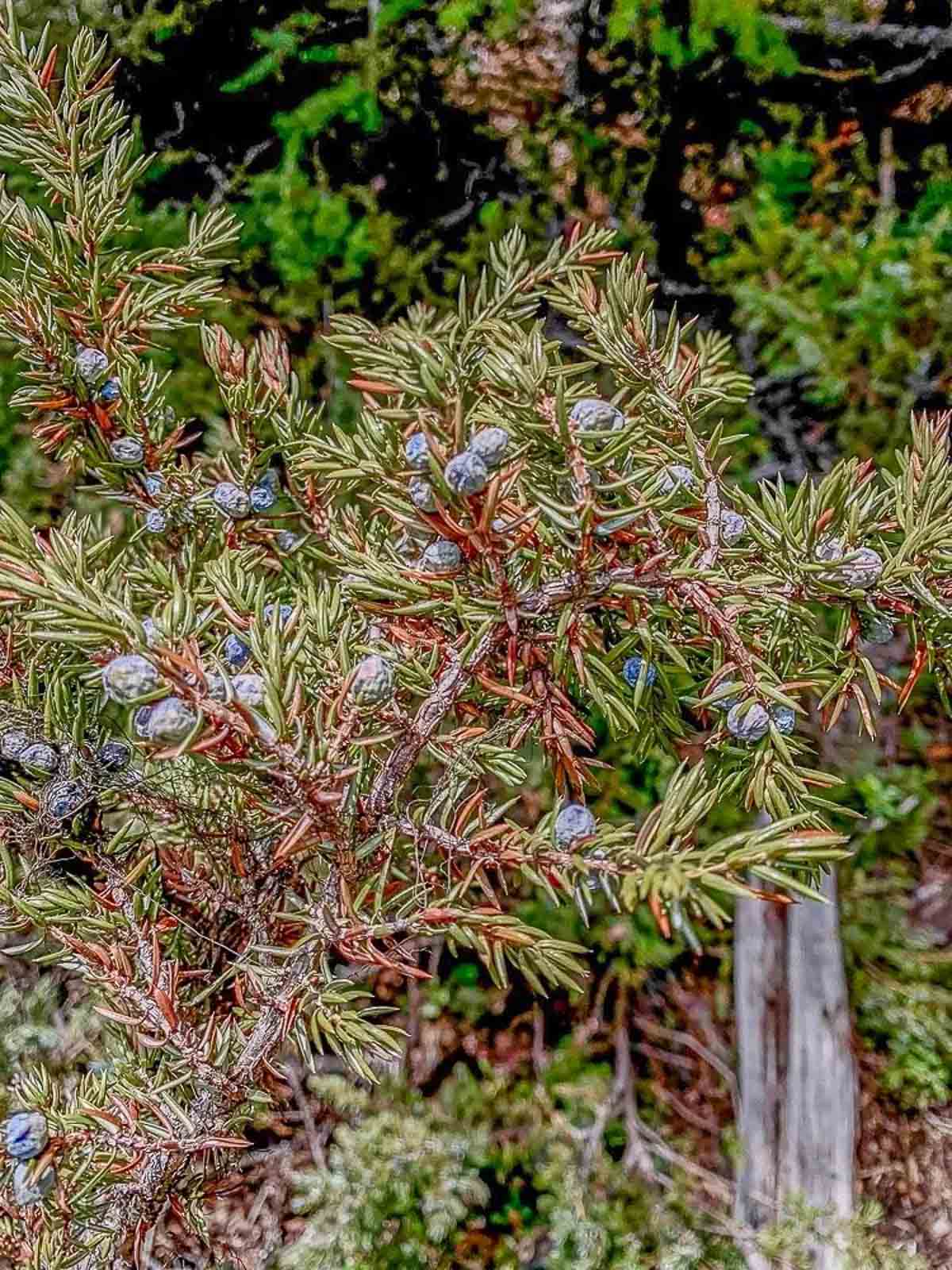
The other edible variety is Rocky Mountain juniper (Juniperus scopulorum). It's native to Montana and the western U.S. It's generally considered safe in small amounts. The flavor is strong, so use it sparingly. If you are foraging, Juniperus communis is the gold standard.
Juniper Species to Avoid
Savin juniper (Juniperus sabina) is considered the most toxic and should never be consumed. Ornamental junipers (used in landscaping) should also be avoided. Some contain toxic compounds. If not positively identified as edible, don't use it.
What Juniper Berries Taste Like
Juniper berries have a bold, resinous, pine-forward flavor with subtle citrus and peppery notes. When infused into alcohol, they create the unmistakable backbone of classic gin-earthy, aromatic, and warming. The longer the infusion sits, the stronger and more complex the flavor becomes, which is why tasting as you go is key!
How to Safely Identify Edible Juniper
Always positively identify your plant before harvesting, and when in doubt, use store-bought dried juniper berries labeled for culinary use.
- Unripe berries are green, ripe ones are blue to blue-black with a dusty, forsted look
- Berries contain 1 to 3 seeds (common juniper usually has 3)
- The plant has sharp needles, not soft, flat scales
- Berries mature over multiple seasons, so you'll often see green and blue berries together on the same plant

* Never rely on smell alone. Always cross-reference with a reputable field guide
Ingredients & Substitutions
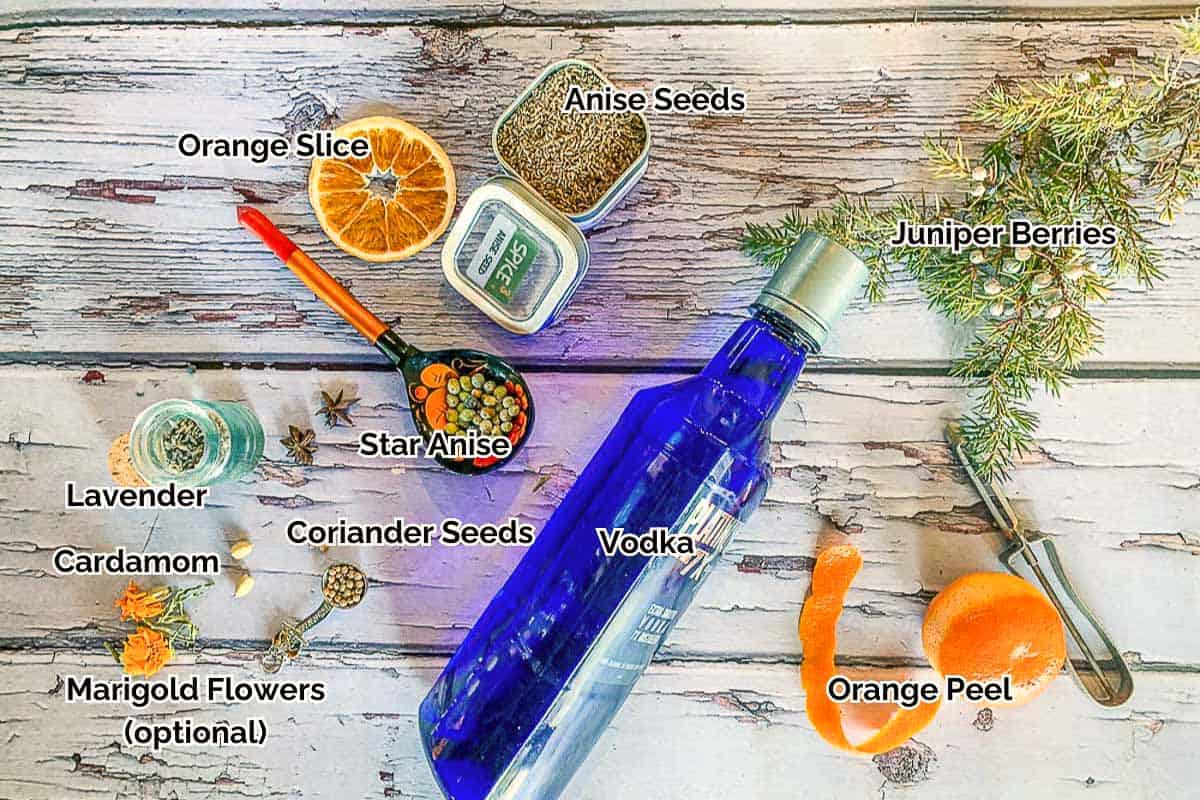
- Vodka: I used Platinum 7 Distilled Vodka, which is a middle-shelf vodka. Feel free to use your favorite brand.
- Juniper Berries: Juniper berries can be picked in late fall or winter. They can also be used to flavor marinades for meat, chicken, and fish. They also have medicinal uses, which is why I sometimes add them to salves. But perhaps the thing juniper berries are most known for is the role they play in flavoring gin.
- Lemon or Orange peel: Citrus fruit is often added to infused gin. This includes lemons, oranges, and grapefruit. I decided to add both dehydrated orange slices and orange peel to my infused gin. However, a strip of lemon or lime peel would also do.
- Anise/Star Anise: Instinct told me that Anise would be the perfect addition. After all, anise is used to flavor Uzo (a dry anise-flavored aperitif). I added both star anise and anise seeds. You can add one or the other if you don't have both.
- Cardamom: Cardamom pods are a popular ingredient in homemade gin. You only need a couple since cardamom can be overpowering. It's ok to leave them out if you don't have them.
- Marigolds: Marigolds are optional; I added them because I had them on hand and wanted some floral notes. You can leave them out if you want.
- Herbs: Although I didn't add any herbs to my infused gin recipe, you can try a sprig of your favorite fresh herbs, such as rosemary, basil, or dill.
Other Botanical Variations
One of the joys of making homemade infused gin is the customization. Try adding:
- Spruce tips (foraged young and tender)
- Rosemary or thyme
- Rose petals
Remember to keep additions minimal. You want the juniper berries to remain the star of the show.
How to Make Infused Gin

- Sterilize a 12-ounce or larger mason jar. Pour ½ of a 750 ml bottle of vodka (approximately 12 ounces) into a mason jar.

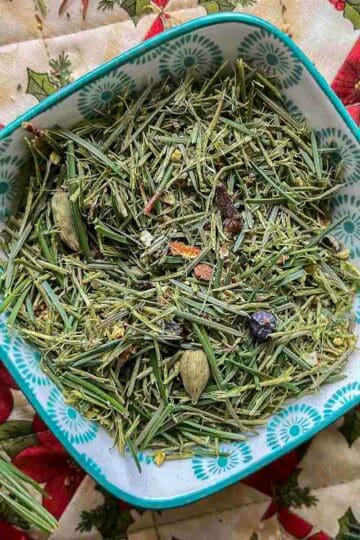
- Add juniper berries, cardamom pods, coriander seeds, dehydrated orange slices, lemon peel, dried lavender, anise seeds, star anise, and marigolds (if adding).
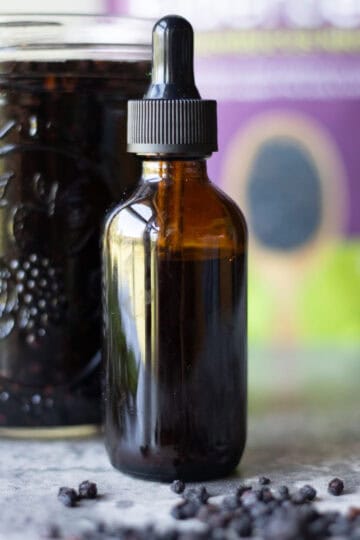
- Seal and shake the bottle, then store it on the counter for 48 hours, shaking often. When it's time, strain the alcohol through a soup bag or a fine mesh sieve into a flip-top bottle.
Infusion Time vs Flavor Result
| Infusion Time | Flavor Result |
|---|---|
| 24 hours | Light, fresh, subtle juniper |
| 48 hours | Balanced, classic gin flavor |
| 72+ hours | Strong, bold, pine-forward |
Storage & Labeling Tips
Store your infused gin in a tightly sealed glass bottle (I prefer these flip-top bottles) away from heat and light. Always label jars with the date and botanicals used. Properly stored, infused spirits last indefinitely.
Top Tip
- Allspice berries, peppercorns, cloves, bay leaves, Hojas De Aguacate (Mexican avocado leaves), which are known for their anise-like flavor, and fennel seeds are just some of the ingredients that you can add to a homemade Infused Gin.
- Infused gin takes on the color of the herbs, spices, and botanicals, which gives it a yellowish tinge. Don't be surprised when your homemade gin is not clear.
- Before serving your homemade gin, garnish with a few juniper berries for a beautiful presentation. Cheers!
FAQ
No. Infused gin involves steeping alcohol (usually vodka) in aromatics to make it taste similar to gin. It does not involve distillation.
Infused juniper gin lasts indefinitely when strained and stored properly.
Once the ripe juniper berries are harvested, washed, and dried, you can air-dry them naturally by placing them on a tray until completely dried. Drying time will depend on temperatures, humidity, and other variables.
A quicker option is to use a dehydrator. Place the juniper berries on the fruit leather trays so that they don't fall through the trays. Dehydrate the berries at 135°F for 12+ hours, or until berries are hard and dry. Store in an air-tight jar or a ziplock bag.
Yes, but dried juniper berries provide a more concentrated flavor.
A botanical is either the whole plant or a specific part of it, which is harvested for its medicinal or therapeutic properties. It can also be useful for adding flavor or scent.
Dried juniper berries can be eaten, but they're not the type of berry that you can eat in large amounts. Instead, they are better suited to infuse drinks, flavor marinades, meats, and desserts. A little goes a long way!

Legal Notice
Infusing alcohol with botanicals is legal in most places. Distilling alcohol at home is not legal without proper licensing. This recipe uses infusion only.

If you enjoy making juniper berry-infused gin, try this rhubarb-infused gin too!
Related Posts
Looking for other recipes like this? Try these:

3-Step Juniper Berry Infused Gin
Equipment
- 1 soup bag
Ingredients
- 12 ounces vodka (½ 750 ML bottle)
- 1 tablespoon juniper berries
- 2 cardamom pods
- ¼ teaspoon coriander seeds
- 2 dehydrated orange slices (or lemon)
- ⅛ teaspoon culinary lavender
- ⅛ teaspoon anise seeds
- 2 star anise
- 2 marigold flowers (optional)
Instructions
- Sterilize a 12-ounce or larger mason jar. Pour ½ of a 750 ml bottle of vodka (approximately 12 ounces) into a mason jar.
- Add juniper berries, cardamom pods, coriander seeds, dehydrated orange slices, lemon peel, dried lavender, anise seeds, star anise, and marigolds (if adding).
- Seal and shake the bottle, then store it on the counter for 48 hours, shaking often. When it's time, strain the alcohol through a soup bag or a fine-mesh sieve into a flip-top bottle.
Notes
- Allspice berries, peppercorns, cloves, bay leaves, Hojas De Aguacate (Mexican avocado leaves), which are known for their anise-like flavor, and fennel seeds are just some of the ingredients that you can add to a homemade Infused Gin.
- Infused gin takes on the color of the herbs, spices, and botanicals, which gives it a yellowish tinge. Don't be surprised when your homemade gin is not clear.
- Before serving your homemade gin, garnish with a few juniper berries for a beautiful presentation. Cheers!
Hilda Sterner says
I hope you enjoyed this post. If so, I'd love to hear about it!
Kelly Methey says
This sounds like such a fun thing to try! You come up with the best ideas!
Hilda Sterner says
Thanks, Kelly, I try to keep the ideas coming!
Lori says
I’m ready to finish my Rhubarb Gin but I don’t have any sugar🤣.
Hilda Sterner says
Why doesn't that surprise me? 🤣
Kern Trembath says
Did I see that you sell the ingredients for Juniper Berry Infused Gin? If so, where on your site? And if not, do you have recommended vendors (esp in the US)? Thanks.
Hilda Sterner says
Hi Kern, I used to sell the kits on my Etsy store, but I no longer have that store. I may add the packets to my blog store in the furture. Mostof the ingredients are either foraged or bought on Amazon.
Mo Thorne says
2 marigold flowers- are they added in with the other ingredients to sit? or is it for garnish in the end? Thanks!
Hilda Sterner says
Hi Mo, Yes, I add them in when I add the other ingredients. I went back and noticed that I didn't mention them in step 3 because they're optional. I can see how that can be confusing, so I will reword that step. Thanks!
George says
Awesome recipe, it turned out great!
Hilda Sterner says
Thanks, George, appreciate the comment and review!