
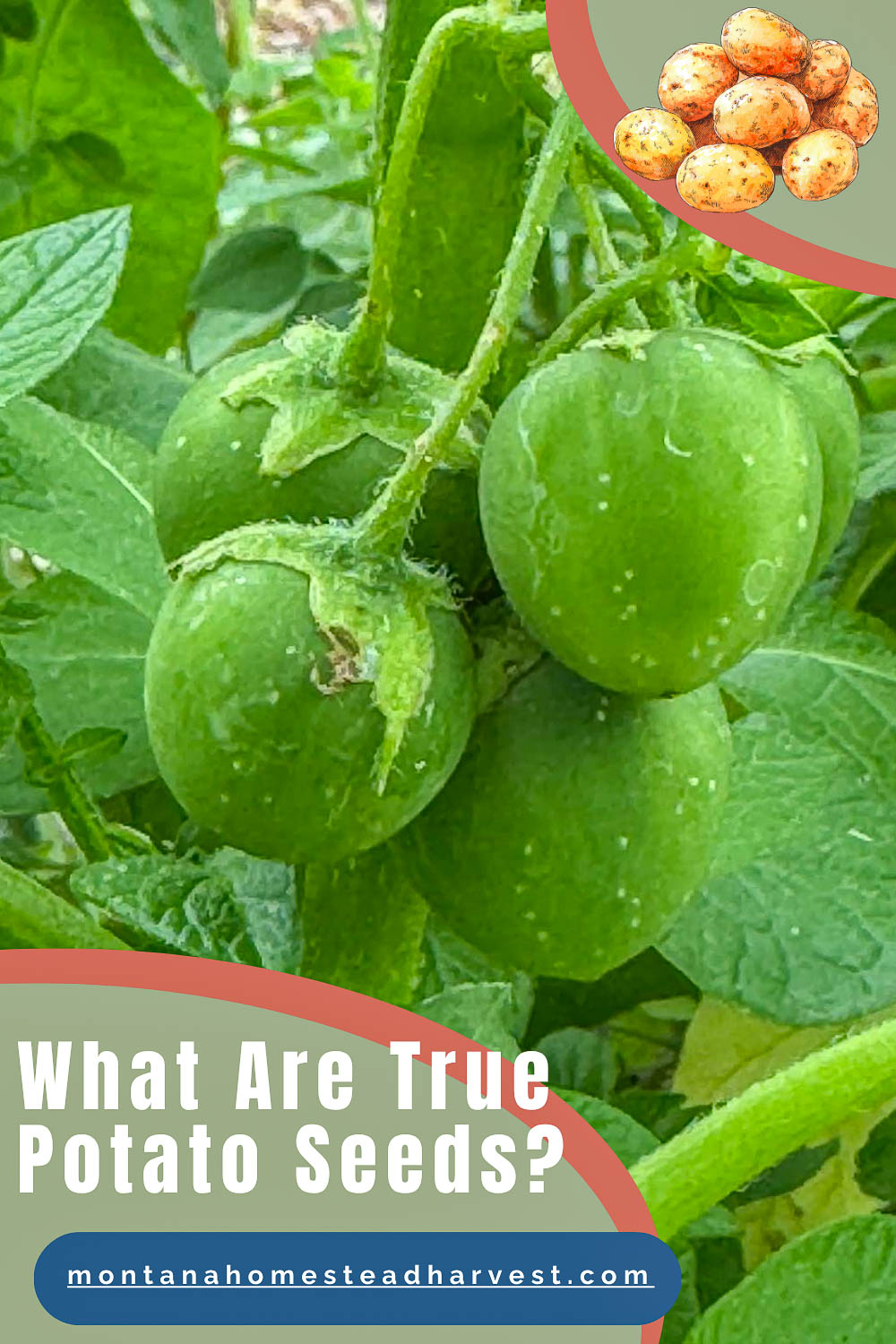
If you've read my guide to growing seed potatoes, you know all about planting tubers. But this year, I spotted something new on one of my potato plants: a cluster of little green fruits hanging above the leaves. They looked exactly like small green cherry tomatoes, and it turns out that's not a coincidence!
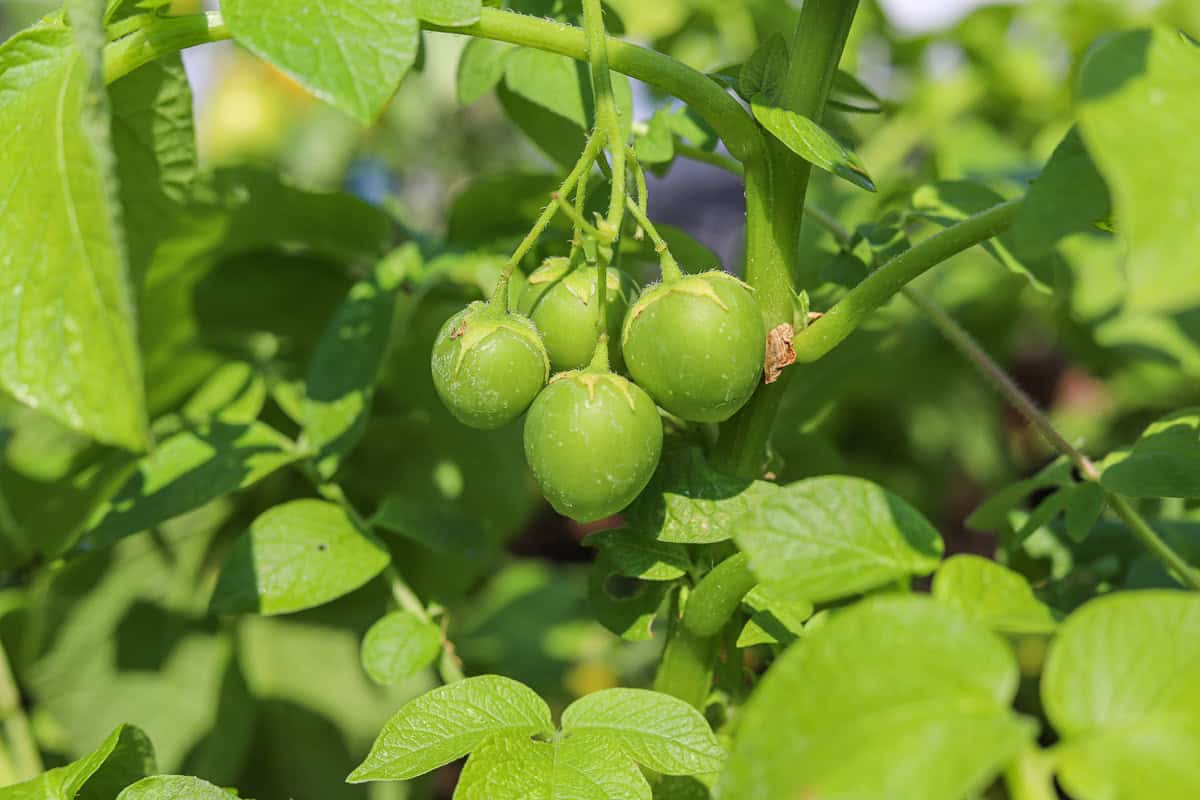
Those little fruits are called potato berries, and they're one of the most overlooked parts of growing potatoes. Inside each one are the plant's actual seeds (what gardeners call true potato seed (TPS)), and if you save and plant them, you can grow entirely new potato plants from scratch.
In this post, I'll show you what potato berries are, why some plants produce them and others don't, and how to grow potatoes from the seeds inside.
Jump to:
What Are Potato Berries?
Potato plants, like tomatoes, peppers, and eggplant, belong to the nightshade family. And like their cousins, potato plants flower, and if that flower gets pollinated, it can form a small fruit. On a potato plant, that fruit is called a potato berry.
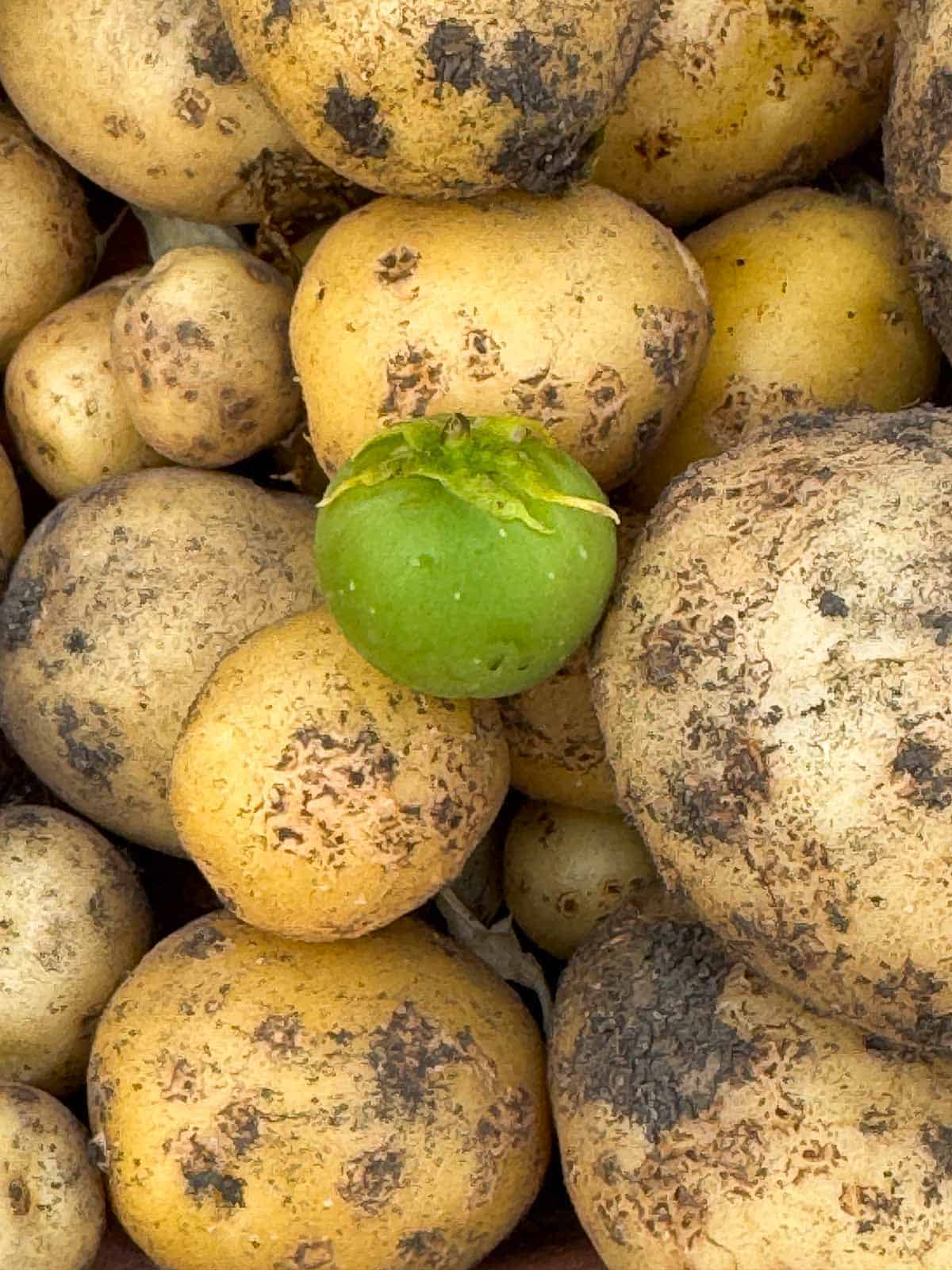
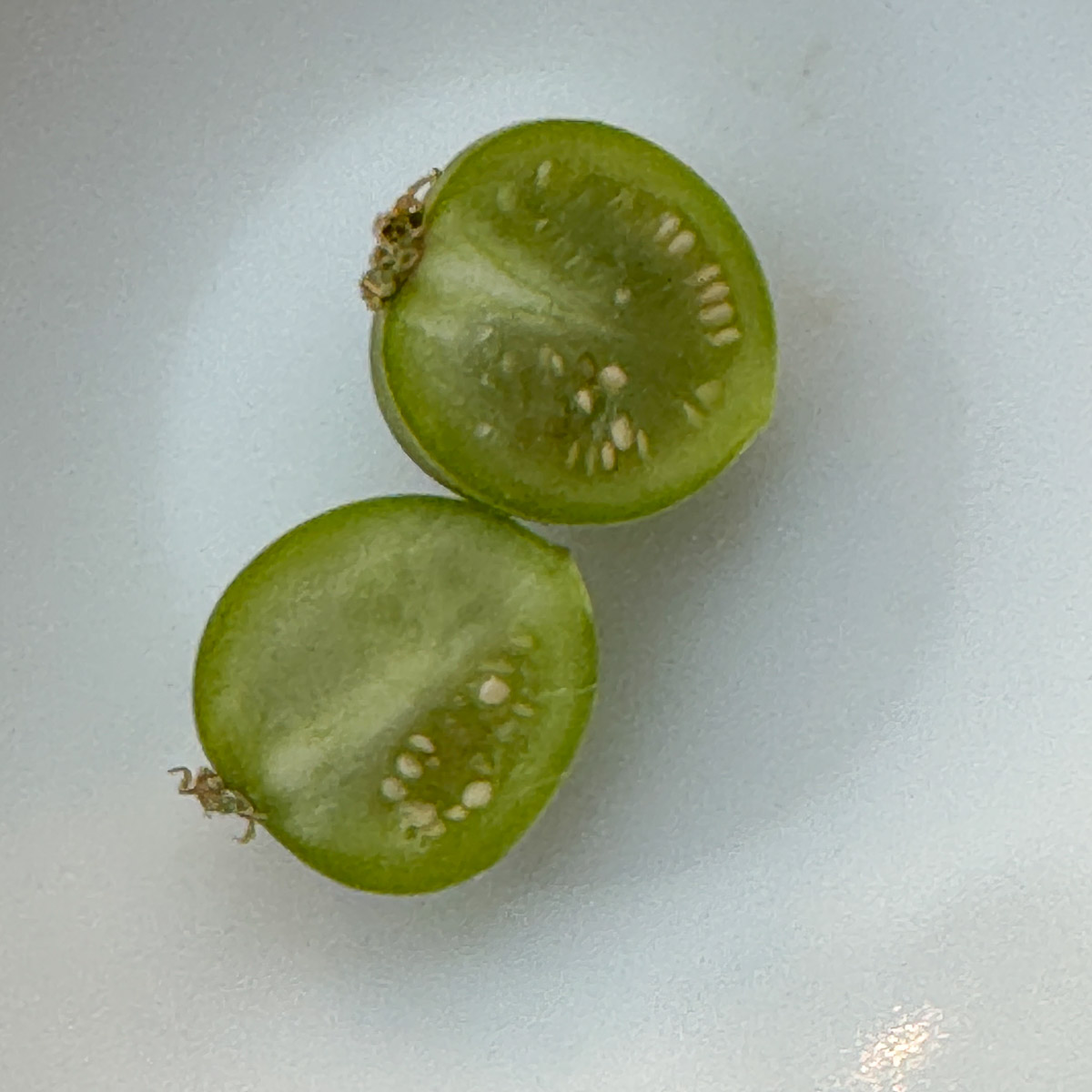
Potato berries look almost exactly like small green cherry tomatoes, usually about half an inch to an inch across. They stay green (sometimes with a slight yellow tint) rather than ripening to red like a tomato. Inside each berry are dozens to a few hundred tiny seeds, sometimes called botanical potato seed.
I found mine growing in a cluster on one of my potato plants this season, and honestly, I almost missed them tucked under the leaves. If you've never looked for berries on your potato plants before, it's worth checking. You might have them and not even realize it.
Potato Berries vs. Seed Potatoes
This is where things get confusing, because the names sound so similar. If you've read my guide to growing seed potatoes, you know that seed potatoes are the tubers you plant in the ground, each one a genetic clone of the parent plant.
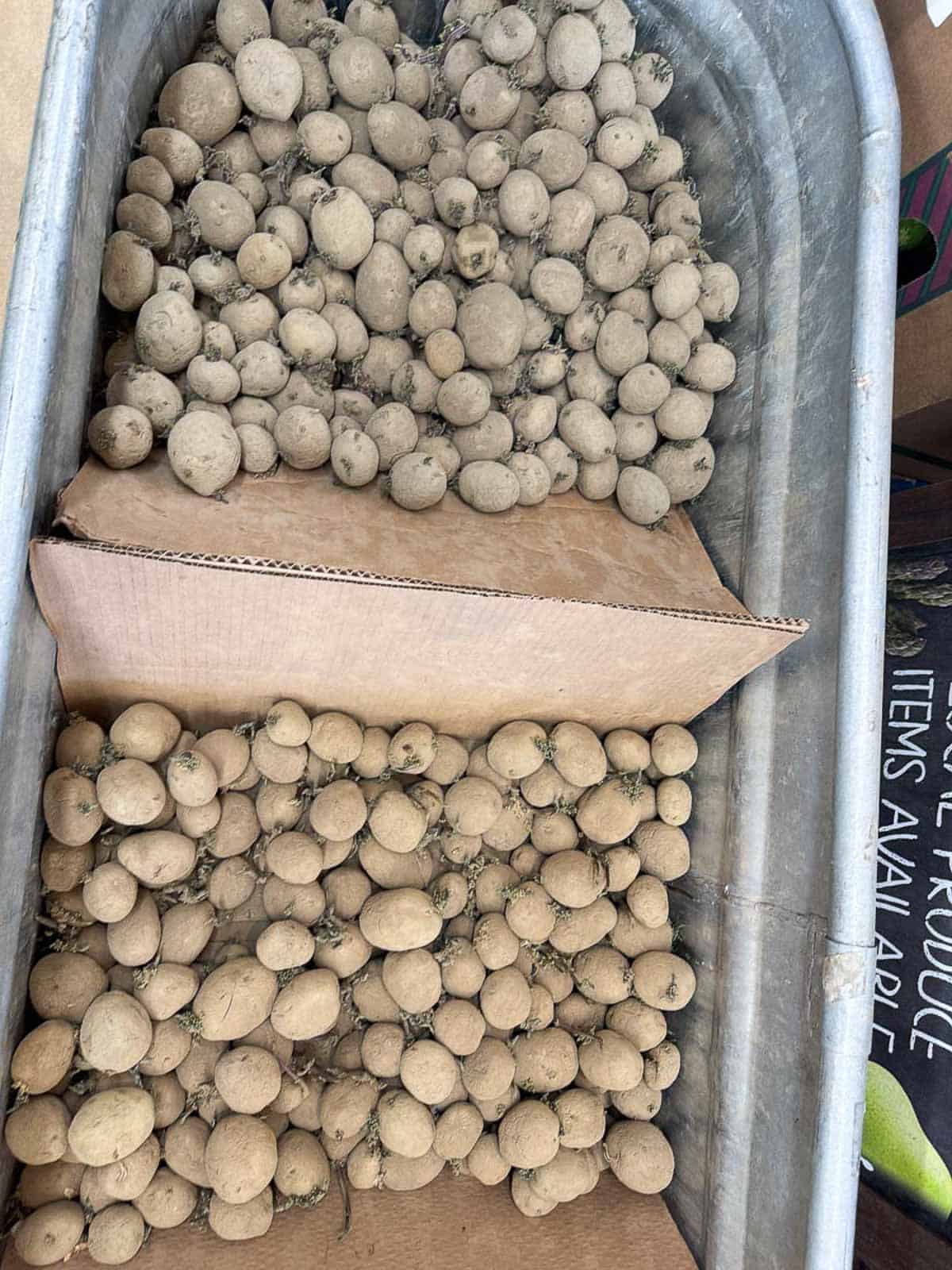
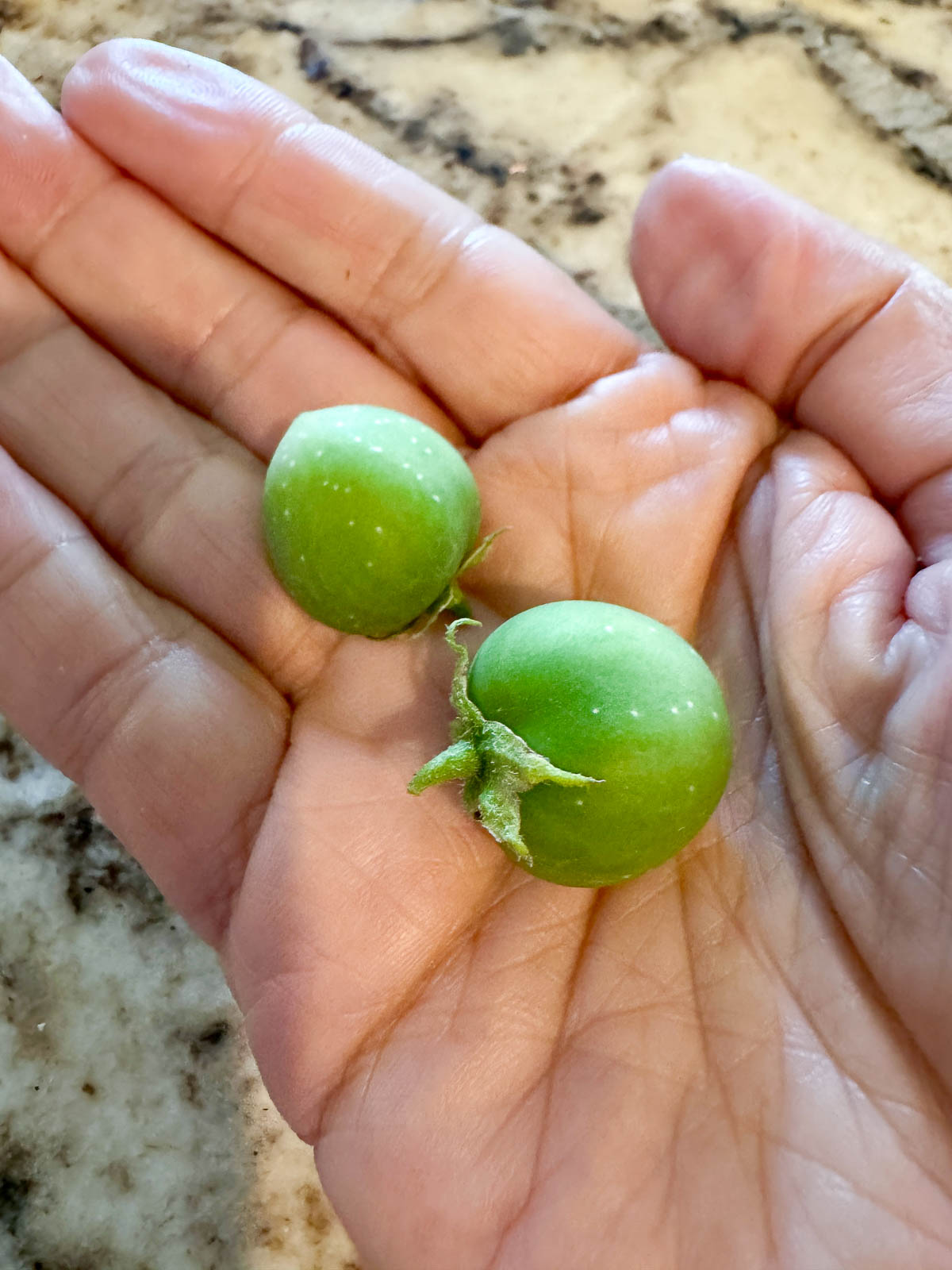
Potato berries are something completely different. They are the small fruits that can develop on a potato plant after flowering, and they contain true potato seeds. Unlike seed potatoes, these seeds are not clones of the parent plant, so the potatoes they produce can have different characteristics. https://extension.umn.edu/vegetables/growing-potatoes
| Seed Potatoes | Potato Berries (True Potato Seed) | |
|---|---|---|
| What it is | A tuber (or piece of one) | A small fruit that grows above ground |
| Where it forms | Underground | On the plant, after flowering |
| What you plant | The tuber itself | Tiny seeds extracted from inside the berry |
| Result | An exact clone of the parent plant | A brand-new, genetically unique potato variety |
That last row is the fun part. Every seed inside a potato berry is genetically different, even though they all came from the same plant and the same berry. Plant ten seeds, and you could end up with ten completely different potatoes: different skin colors, flesh colors, shapes, and yields. It's a bit like a genetic lottery.
Why Do Some Potato Plants Produce Berries?
Not every potato plant flowers and fruits, and even fewer produce berries. A few things make it more likely:
- Cool temperatures, lots of rain, and long days tend to encourage flowering and fruiting.
- The flowers need to get pollinated by bumblebees, which use a specialized "buzz pollination" to shake pollen loose. Honeybees aren't effective pollinators for potatoes, so more bumblebee activity in your garden means better odds of berries.
- Planting more than one variety nearby helps, too. Many modern potato varieties have sterile pollen and won't produce berries at all unless a fertile variety is growing nearby to pollinate them, which is often why gardeners first notice berries after adding a second or third variety to their garden.
- Variety matters; some cultivars are much more prone to producing berries than others.
- Plants grown from true potato seed themselves are more likely to berry than plants grown from store-bought seed potatoes.
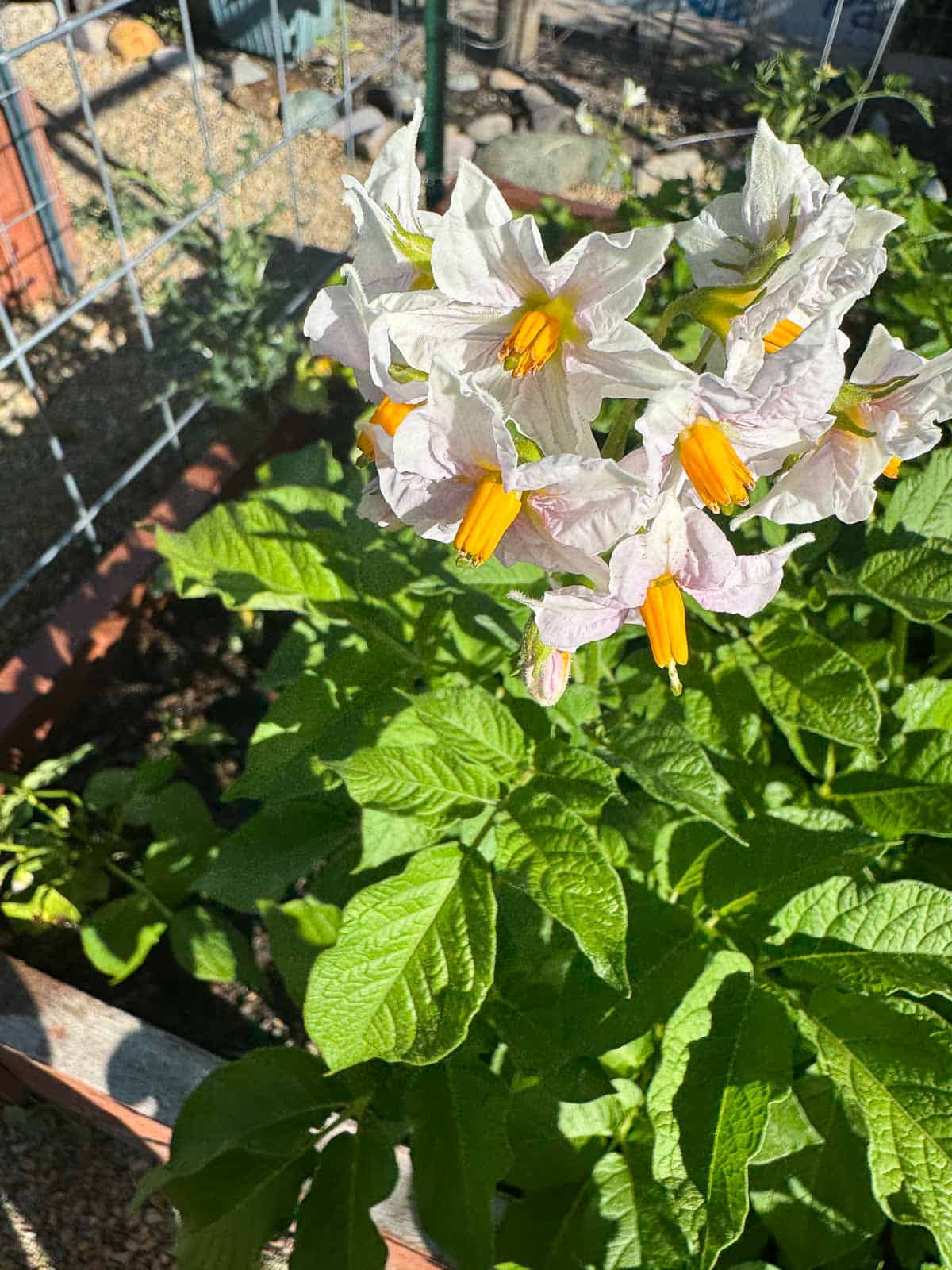
I'm still not sure exactly which variety produced my berries, since the seed potatoes I planted weren't individually labeled. That's part of the adventure with true potato seed, though; you're not always working with a fully known starting point, and that's okay.
Are Potato Berries Edible?
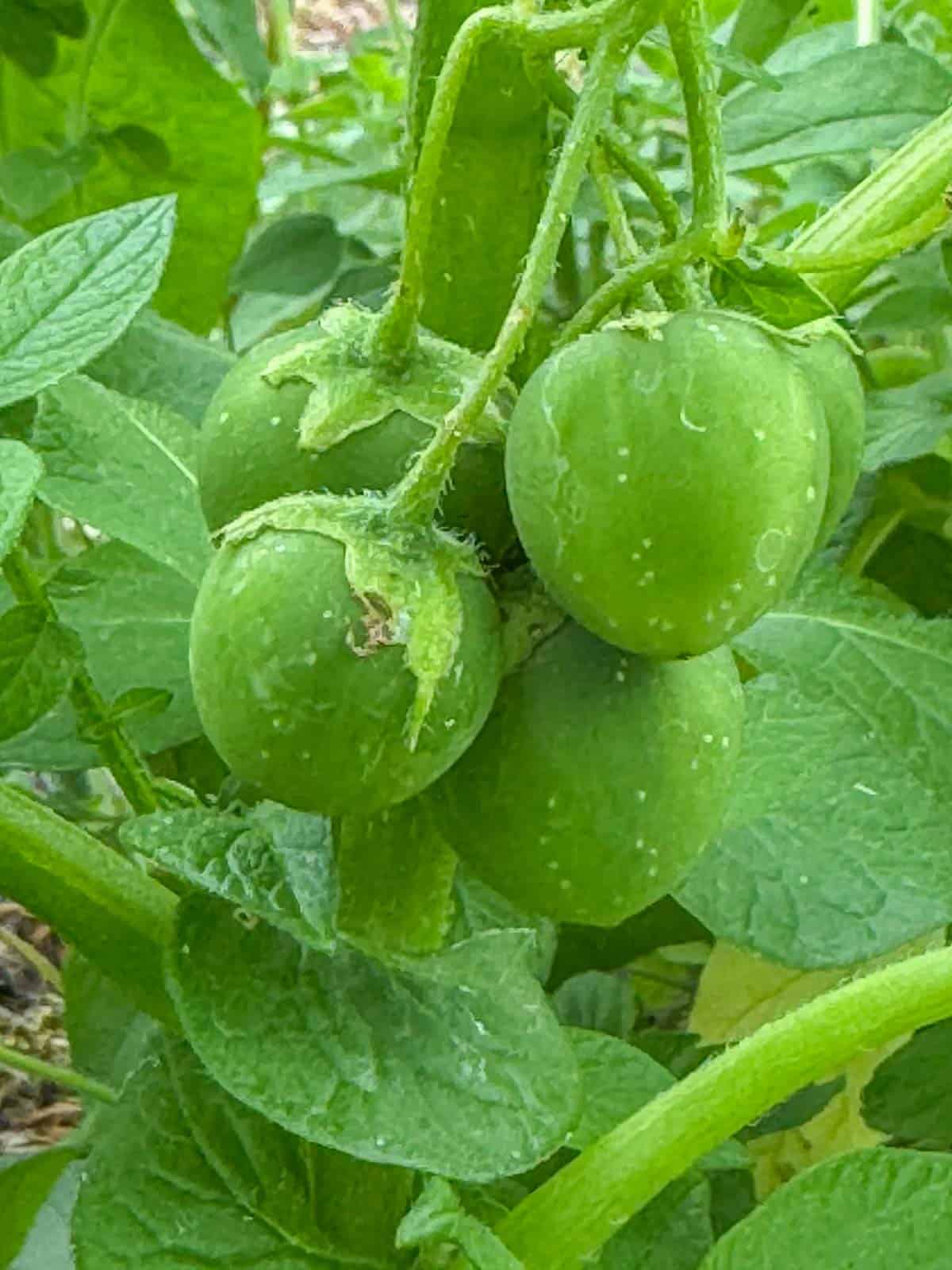
No, do not eat potato berries. Like the green parts of the potato plant (leaves, stems, and any green skin on the tubers), the berries contain solanine, a natural toxin in the nightshade family that can cause illness if eaten. They're for seed-saving only, not for the table.
Keep them away from kids and pets who might mistake them for small tomatoes, and always wash your hands after handling them.
How to Harvest and Save True Potato Seed
Store in a cool, dry place. Small paper envelopes or plastic bags work well. Label them with the year and, if known, the parent plant.
Let the berries mature on the vine. Wait until they start to soften, or until they naturally drop off the plant, often close to your first fall frost.
Let them ripen further off the vine, if needed. If you pick them a bit early, let them sit at room temperature for a few weeks to a month, until they're soft or just starting to shrivel.
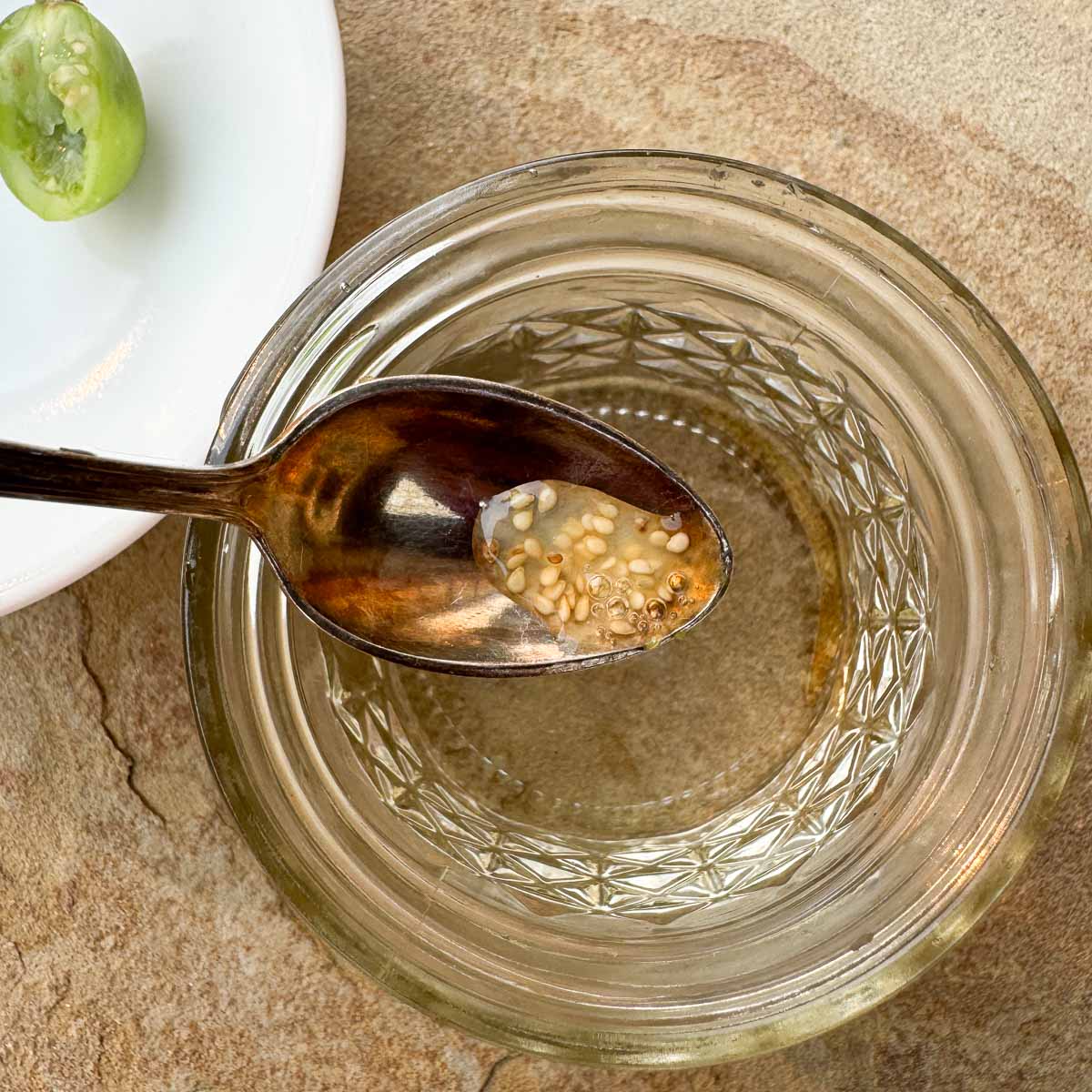
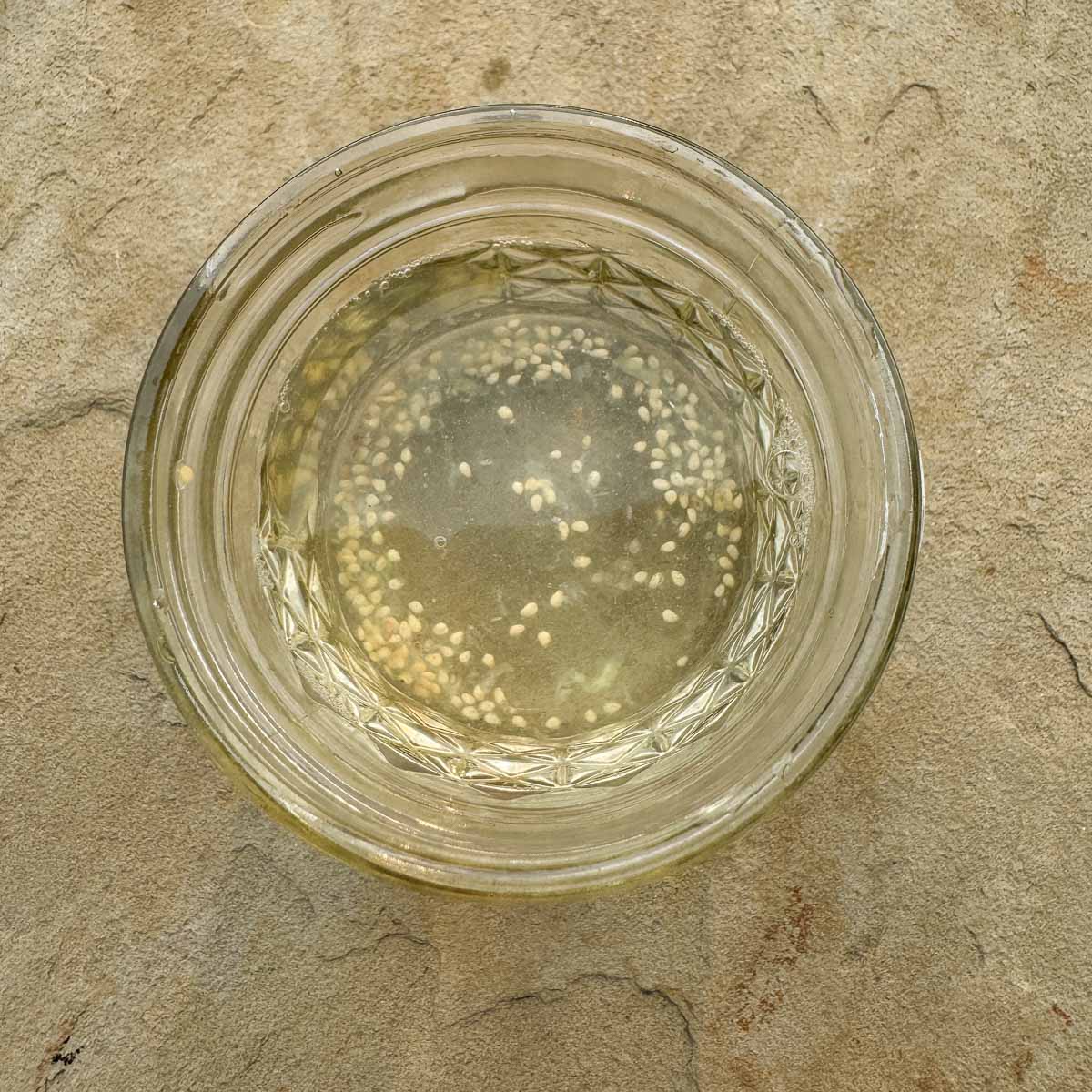
Extract the seeds. Cut or mash the berries open and scoop out the pulp and seeds. You can ferment them for a few days in a jar of water (similar to saving tomato seeds) to help separate the seeds from the pulp, or simply rinse them in a fine strainer until clean.
Dry the seeds completely. Spread them on a paper towel or coffee filter and let them air dry for about a week, out of direct sun.
How to Grow Potatoes From True Potato Seed
Growing potatoes from seed is a lot like starting tomatoes from seed; if you've done that, this process will feel familiar.
- Start seeds indoors, 6 to 8 weeks before your last frost date. Sow seeds about ⅛" deep in seed-starting mix.
- Provide strong light. Ambient windowsill light usually isn't enough; use a grow light for 14 to 16 hours a day.
- Keep temperatures cool, ideally between 60 and 70°F. Skip the heat mat; potato seeds don't need it the way some other seeds do.
- Water consistently but don't let the soil stay soggy. Germination typically takes 1 to 2 weeks.
- Harden off and transplant once seedlings are about 4 to 6 inches tall and outdoor conditions are frost-free. Plant them out just like you would tomato seedlings, burying them up to the first set of leaves.
- Care for them like any potato plant from there: consistent watering, hilling as they grow, and harvesting once the foliage dies back. My seed potato growing guide covers hilling, watering, and harvesting in more detail if you need a refresher.
What to Expect When Growing From Seed
Because every seed is genetically unique, growing from true potato seed is part gardening, part experiment. Some things to keep in mind:
- Plants can vary a lot; you may see different growth habits, leaf shapes, and flowering behavior even among seedlings from the same berry.
- Tubers will vary too; expect a range of sizes, skin colors, and flesh colors. This is actually how new potato varieties get discovered.
- Yields the first year are often smaller than what you'd get from a mature seed potato variety, since you're essentially growing a brand-new, untested plant.
- Save your best tubers to replant next year. If a particular plant produces well and tastes good, you can keep growing it forward; though note that from here on, you'd replant its tubers (which clone it), not more seeds from its berries.
FAQs
Will potato berries grow into potatoes if I just plant the whole berry?
No, you need to extract and dry the individual seeds first, then start those seeds like you would tomato seeds. Planting the whole berry won't work the same way.
Do all potato plants produce berries?
No. Many potato plants flower but never set fruit, and it depends on variety, climate, growing conditions, and if the flowers get pollinated.
Is a potato berry the same as a "seed ball"?
Yes, "seed ball" is an older, less common term for the same thing: the berry that forms on a potato plant after pollination.
How long until I get potatoes from true potato seed?
Expect roughly a full growing season from seed to harvest, similar to timing for seed potatoes, though yields are often smaller in the first year.
Pro Tips
- Check your potato plants for berries before you pull them at the end of the season. They're easy to miss under the foliage.
- Label your seed packets with the year and source plant, since you won't be able to identify the variety otherwise.
- Start more seeds than you think you need; not every seedling will thrive, especially in the first year.
- Keep your seedlings away from tomato and pepper starts if you're worried about cross-contamination of pests or disease. They're related plants and susceptible to some of the same issues.
- Be patient. Growing from true potato seed takes an extra season compared to planting seed potatoes, since you're starting from scratch genetically.
Have you ever found berries on your potato plants? I'd love to hear about it - leave a comment below!
More Gardening Posts
Looking for other recipes like this? Try these:

Comments
No Comments