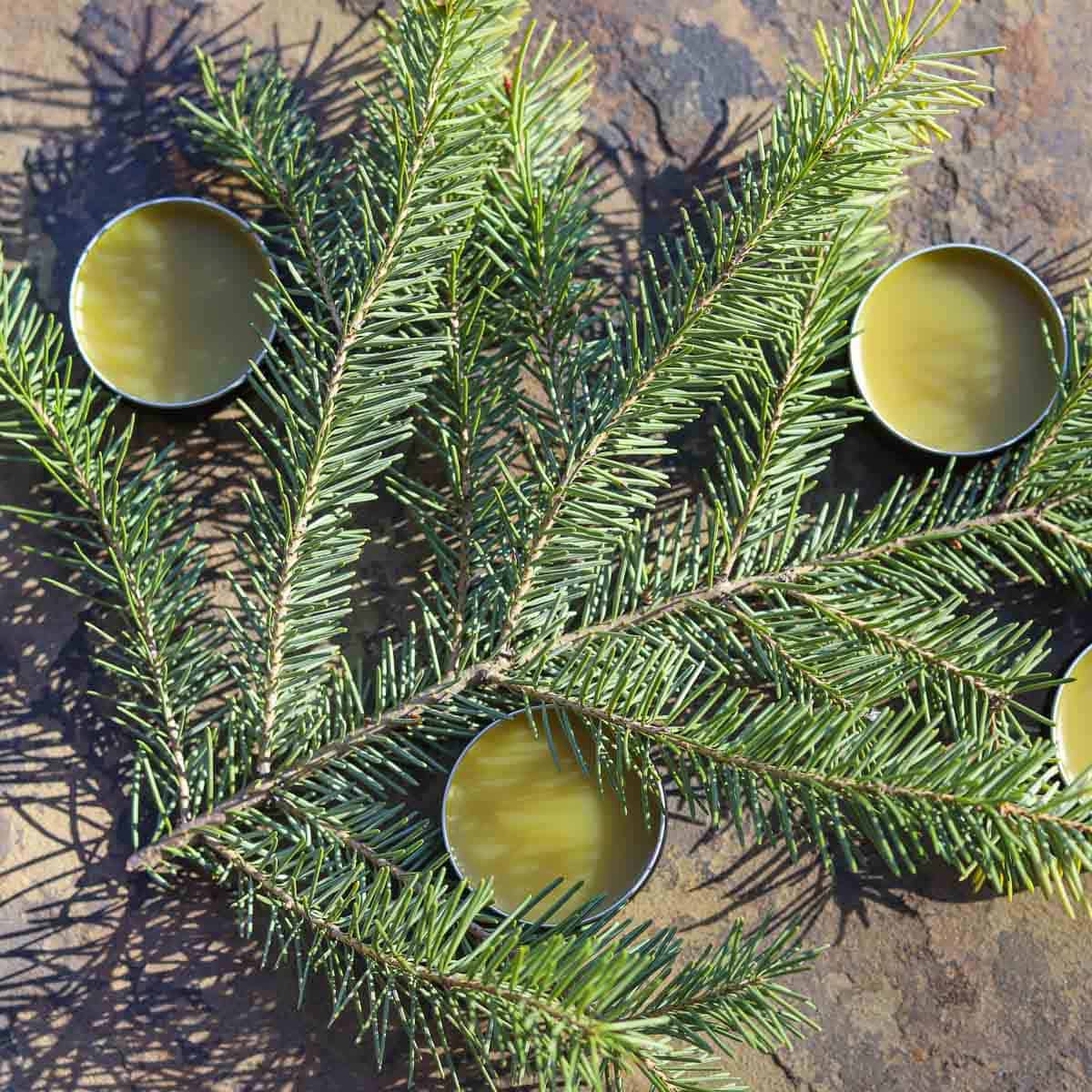
Pine Resin Salve
Learn how to harvest pine resin and use it to make a nourishing salve. Pine resin has anti-inflammatory and antimicrobial properties, making it amazing for dry skin, achy hands, and acts as a drawing salve for splinters!
Print
Pin
Servings: 10 Salves
Equipment
- 10 1-ounce tins
Ingredients
- ¼ cup pine resin
- 2 tablespoon frankincense
- 1 cup olive oil
- 1 ounce beeswax pellets (¼ cup)
- 1 teaspoon Vitamin E
Instructions
- Scrape resin from pine tree bark using a stick or piece of wood into a jar or can. Or spread a large piece of plastic under the tree, if you want to harvest a larger amount.
- Remove tree bark pieces; don't worry about getting every tiny bit. Add Frankinsence (optional), then freeze for an hour. Grind into a powder using an old spice grinder (optional).
- Add ground resin to a small crockpot or a small saucepan, then cover with olive oil and mix. Set on the lowest setting and allow to infuse for at least 2 hours. Longer is even better.
- Use a skimmer to remove bark that rises to the surface, then discard.
- Strain the resin-infused oil through a soup bag. Add oil to a small saucepan with beeswax. Stir over low heat until wax is fully melted.
- Remove from heat and allow to cool for a few minutes. Stir in vitamin E and essential oils, if adding.
- Carefully pour the mixture into tins. Allow to cool completely before putting the lids on. Don't forget to label with contents.
Notes
- Freezing the resin first makes it much easier to grind, but it will stick to your grinder either way. This is why I recommend having a spice grinder dedicated to this purpose.
- Keep your oil between 120°F and 150°F (49°C - 65°C).
- You'll most likely end up with less than a cup of oil after straining. You can make up the difference with more olive oil.
- Before pouring into tins, test the consistency by dropping a spoonful onto a cold plate and letting it set for a minute. Too soft? Add a bit more beeswax. Too hard? Add a splash more oil.
- Resin can be incredibly sticky and difficult to clean off tools. Dedicate an old pot, spoon, and spice grinder (if you grind the resin) to salve-making. Or clean up immediately with rubbing alcohol before the resin sets.
- A little goes a long way. You only need a thin layer on the skin.
- When straining your infused oil, do it while it's still warm (but not hot) so it flows easily and leaves less mess behind in the cheesecloth or strainer.
- Try blending with other herbs, such as dandelion or yarrow, for added skin-soothing benefits.
- Essential oils like lavender or tea tree can add extra antimicrobial benefits, but I prefer the pine scent.
- Don't forget to label your tins with the date and content. Your future self will thank you!
Did you try this recipe? Please leave a review and a star rating!
